×

Tanzania🇹🇿 | festivalsKaribu Music FestivalBongo flava, taarab, ngoma nights, plastic-table chats | things to do and best time to go

Explore Bagamoyo Arts FestivalExplore Unification Day

Backpacking in Karibu Music
🌟 Highlightfestival ranked #5
By Johan Kruseman 🇳🇱 | Updated October 22, 2026

Karibu Music Festival suits curious, flexible travelers who like their live music served with history, sea air and a conversation at every plastic table. If you want polished stadium sound, tight schedules and air-conditioned comfort, you may find it less rewarding. It happens in Bagamoyo, on the coast of Tanzania, north of Dar es Salaam, and runs for a few days of East African and Tanzanian acts, from bongo flava to taarab and traditional ngoma. Bagamoyo is small, so beds vanish fast. Book early, or you will pay for a scramble. Carry Tanzanian shillings in small notes, because change is scarce and card machines are unreliable. Agree on a bajaji or boda fare before you climb on. Arrive with a day in hand: wander the old coral-stone lanes, find the festival grounds, grab grilled fish, then follow the drums after dark.

Discover everything you want to know in the 📖 Tanzania Travel Guide.


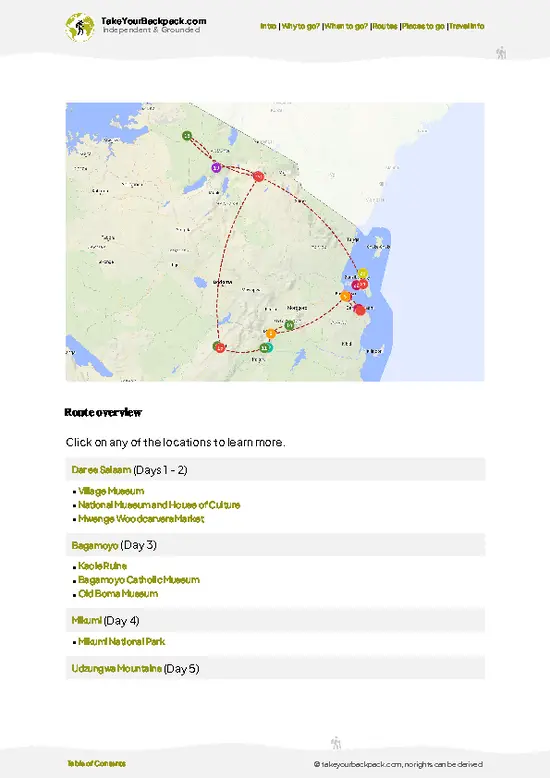
example page 0 from our offline Travel Guide for Tanzania
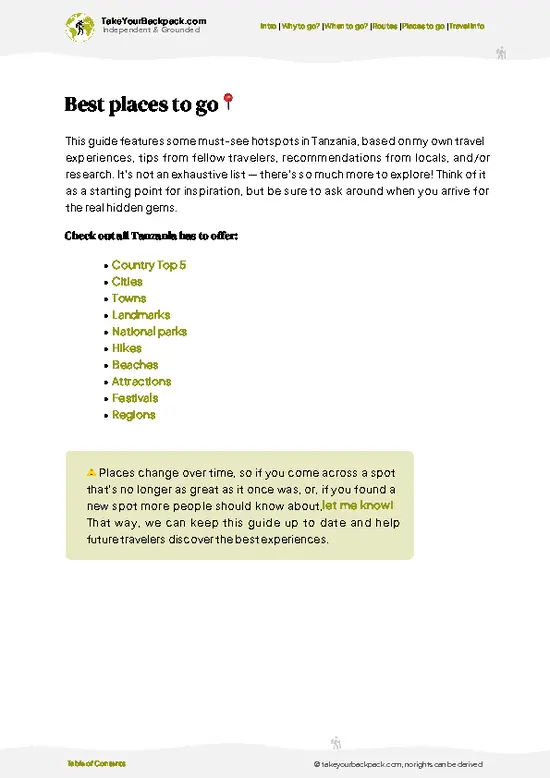
example page 1 from our offline Travel Guide for Tanzania
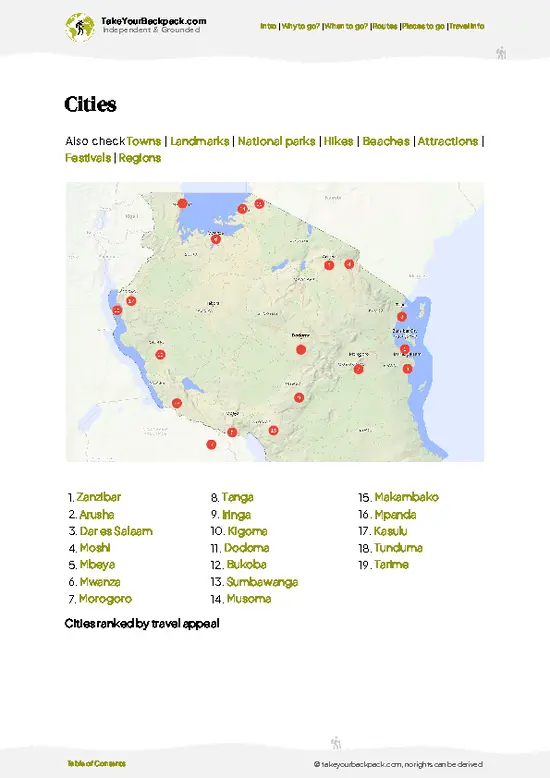
example page 2 from our offline Travel Guide for Tanzania
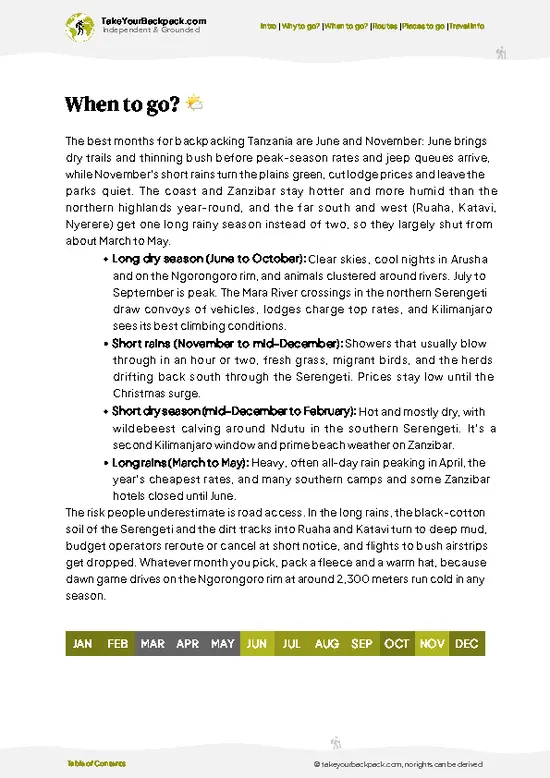
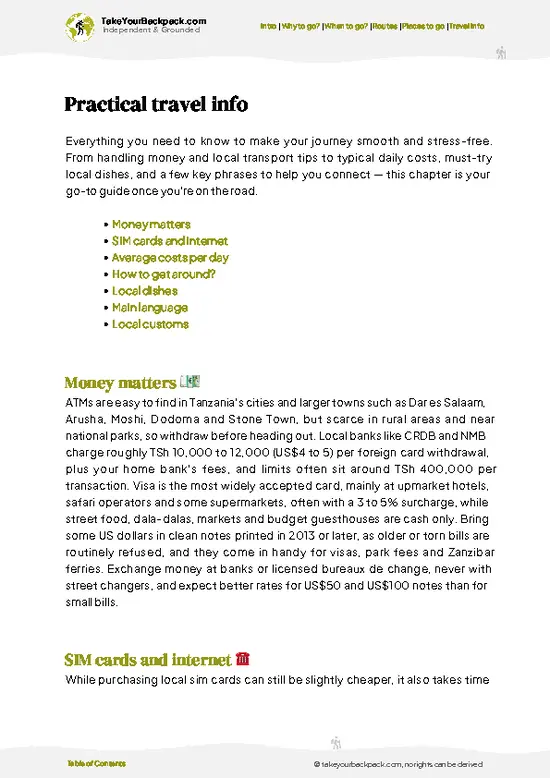
example page 3 from our offline Travel Guide for Tanzania
example page 4 from our offline Travel Guide for Tanzania
example page 5 from our offline Travel Guide for Tanzania
example page 6 from our offline Travel Guide for Tanzania
example page 7 from our offline Travel Guide for Tanzania
Loading the map 🌍
CLICK TO FILTER
cities
towns
landmarks
national parks
hikes
beaches
attractions
festivals
regions
SHOW COUNTRY’S BESTSHOW ALL

✨ Why go?
Ranked #5 festival in Tanzania
What makes this festival worth celebrating

Karibu Music Festival gives you a reason to slow down in Bagamoyo, a town most travelers rush through on a day trip from Dar es Salaam. Staying for the festival means sleeping in town, and that changes everything. Evenings become shared ones: you end up at the same grilled-fish stalls as Tanzanian musicians, art students from TaSUBa and fellow travelers comparing notes on Zanzibar ferries and Kilimanjaro plans. The crowd is mostly Tanzanian and East African, so you hear the sounds locals actually dance to, not a tourist-friendly sample. It also fits neatly into a longer coast itinerary. Bagamoyo sits between the city and the islands, and the festival days give you a fixed anchor before or after the ferry to Zanzibar. Your days stay free for the Old Town ruins, the beach and slow afternoons, … read more 👉
Karibu Music Festival gives you a reason to slow down in Bagamoyo, a town most travelers rush through on a day trip from Dar es Salaam. Staying for the festival means sleeping in town, and that changes everything. Evenings become shared ones: you end up at the same grilled-fish stalls as Tanzanian musicians, art students from TaSUBa and fellow travelers comparing notes on Zanzibar ferries and Kilimanjaro plans. The crowd is mostly Tanzanian and East African, so you hear the sounds locals actually dance to, not a tourist-friendly sample. It also fits neatly into a longer coast itinerary. Bagamoyo sits between the city and the islands, and the festival days give you a fixed anchor before or after the ferry to Zanzibar. Your days stay free for the Old Town ruins, the beach and slow afternoons, while the music takes over the nights. That combination of history by day and live bands by night costs far less than comparable festivals elsewhere in Africa.

💡 HighlightsMust-see experiences and standout moments

  1. Bagamoyo Old Town: The festival's setting is a historic coastal town of coral-stone houses, carved doors and crumbling Omani and German-era buildings. Walking it between sets gives the music a backdrop no purpose-built venue can match.
  2. Live Tanzanian sets on the main stage: Expect bongo flava, taarab, traditional ngoma and fusion bands, with East African guests sharing the bill. The crowd sings along loudly, so you pick up choruses fast.
  3. TaSUBa and the arts community: Bagamoyo's arts college and cultural scene feed the festival with dancers, drummers and acrobats. Their performances are often the most energetic of the weekend.
  4. Kaole Ruins: A short ride south of town, these coral ruins include a mosque and tombs that predate the German period. Visit in the daytime, when the site is quiet and the
… read more 👉
  1. Bagamoyo Old Town: The festival's setting is a historic coastal town of coral-stone houses, carved doors and crumbling Omani and German-era buildings. Walking it between sets gives the music a backdrop no purpose-built venue can match.
  2. Live Tanzanian sets on the main stage: Expect bongo flava, taarab, traditional ngoma and fusion bands, with East African guests sharing the bill. The crowd sings along loudly, so you pick up choruses fast.
  3. TaSUBa and the arts community: Bagamoyo's arts college and cultural scene feed the festival with dancers, drummers and acrobats. Their performances are often the most energetic of the weekend.
  4. Kaole Ruins: A short ride south of town, these coral ruins include a mosque and tombs that predate the German period. Visit in the daytime, when the site is quiet and the light is good for photographs.
  5. Bagamoyo beachfront and fish stalls: Between acts, the shoreline is where people gather for grilled fish, cassava and sugarcane juice. Dhows sit on the sand, and the evening sea breeze cools the whole town.
Karibu Music Festival is best started with Bagamoyo Old Town on foot in the morning, because you learn the lanes and landmarks while it is quiet and can then find your way home easily after dark.
Spotted a mistake or missing something? Contact us.

Things to do near Karibu Music Festival

Ratings based on Tripadvisor reviews. When you book through this link, you support our work at no extra cost to you.

🌤️ When to go?When is the celebration of Karibu Music Festival?

Karibu Music Festival runs over a weekend in early July in Iringa town, with the date set around the dry-season calendar each year and performances held at open-air venues around the town center.
  • Best day: Saturday carries the biggest lineups and the loudest crowds. Friday opening nights are easier for chatting with musicians and finding a spot near the stage.
  • Weather: Iringa sits at about 1,600 meters, so days reach roughly 22 to 26°C (72 to 79°F) and nights drop to 5 to 10°C (41 to 50°F). Rain is rare in July. Bring a fleece, a windbreaker and sunscreen.
  • Booking: Reserve a bed four to six weeks ahead, since town rooms fill and rates rise by roughly 20 to 40 percent. Tickets are usually sold at the gate or from local outlets.
  • Arrival: Buses from Dar es Salaam and Dodoma are packed on Friday afternoons
… read more 👉
Karibu Music Festival runs over a weekend in early July in Iringa town, with the date set around the dry-season calendar each year and performances held at open-air venues around the town center.
  • Best day: Saturday carries the biggest lineups and the loudest crowds. Friday opening nights are easier for chatting with musicians and finding a spot near the stage.
  • Weather: Iringa sits at about 1,600 meters, so days reach roughly 22 to 26°C (72 to 79°F) and nights drop to 5 to 10°C (41 to 50°F). Rain is rare in July. Bring a fleece, a windbreaker and sunscreen.
  • Booking: Reserve a bed four to six weeks ahead, since town rooms fill and rates rise by roughly 20 to 40 percent. Tickets are usually sold at the gate or from local outlets.
  • Arrival: Buses from Dar es Salaam and Dodoma are packed on Friday afternoons and Sunday evenings. Arrive Thursday and leave Monday to avoid the crush on the Morogoro road.
Arrive with a bed booked and a warm layer in your daypack, because the evenings get cold fast.


source: climatestotravel.comJANJanuary: not recommended for travelingFEBFebruary: not recommended for travelingMARMarch: not recommended for travelingAPRApril: not recommended for travelingMAYMay: not recommended for travelingJUNJune: highly recommended for travelingJULJuly: highly recommended for travelingAUGAugust: highly recommended for travelingSEPSeptember: highly recommended for travelingOCTOctober: highly recommended for travelingNOVNovember: not recommended for travelingDECDecember: not recommended for traveling

✈️ The backpacker research shortcutTanzania Travel Guide

An offline-friendly backpacking guide with optimized travel routes, ranked highlights, transport advice, and the best areas to stay.
example page 0 from our offline Travel Guide for Tanzania
example page 1 from our offline Travel Guide for Tanzania
example page 2 from our offline Travel Guide for Tanzania
example page 3 from our offline Travel Guide for Tanzania
example page 4 from our offline Travel Guide for Tanzania
example page 5 from our offline Travel Guide for Tanzania
example page 6 from our offline Travel Guide for Tanzania
example page 7 from our offline Travel Guide for Tanzania
The digital guide (396 pages) contains:
✅ 103 highlights, ranked by travel appeal
✅ Optimized 7, 14 & 21-day travel routes
✅ Cities, national parks, landmarks, beaches
✅ How to get around
✅ Offline-friendly for travel without Wi-Fi
👉 Click to see all 30+ guide features

📅 Plan smarter in minutes, not weeks
✅ Month by month travel advice
✅ Festivals & national holidays
✅ Budget expectations

🗺️ Go to the right places, skip the overrated ones
✅ Honest pros & cons of destinations
✅ Top hikes, parks & viewpoints
✅ Lesser-known places most travelers miss
✅ Clear “worth it vs skip it” guidance

🛏️ Travel smoothly without rookie mistakes
✅ Best areas to stay
✅ Transport systems explained simply
✅ Common scams & safety advice
✅ SIM cards, money & practical tips

🌍 Understand the country, not just visit it
✅ Culture & traditions
✅ 52 Essential phrases & customs
✅ Festivals worth planning around
✅ Traveler-friendly historical context
✅ Insights that make places more meaningful

📱 Built for real travel conditions
✅ Fully downloadable PDF
✅ Works completely offline
✅ Optimized for phone use
✅ Useful in remote areas & buses
✅ Everything in one place
Stop searching, start planning
Get instant access to your full guide. 30‑day money-back guarantee.
+ Add another guide for just

By proceeding you agree to our terms.
Sent to your inbox immediately after payment • 100% Secure Checkout
Best Backpacking Travel Advisor 2025 tourism awardBest Backpacking
Travel Advisor
2025
What others say about Take Your Backpack Guides:
⭐⭐⭐⭐⭐
Fantastic, amazing amount of information!
⭐⭐⭐⭐⭐
My goodness this is amazing, it's what I've been looking for hats off too you!
⭐⭐⭐⭐⭐
I think this is absolutely BRILLIANT
⭐⭐⭐⭐
Very complete and informative. It's still missing places, but I gotta to commend you
⭐⭐⭐⭐⭐
This is truly amazing, thank you, can't wait to explore it with my kids!
⭐⭐⭐⭐⭐
Awesome resource, thank you!
⭐⭐⭐⭐⭐
This is amazing! Can't wait to explore the ones I haven't seen
⭐⭐⭐⭐
I love this! Well done, great idea.
⭐⭐⭐⭐⭐
Thanks for taking the time to make this gem!
⭐⭐⭐⭐⭐
This might be the best website I've ever seen.
⭐⭐⭐⭐⭐
Congratulations, and thank you so much for your work; it's incredibly valuable.
⭐⭐⭐⭐
In all seriousness I think you did a great job pointing out the important spots
⭐⭐⭐⭐⭐
10/10 very good
⭐⭐⭐⭐⭐
As someone who's only just starting to visit regularly this is awesome, thank you.
⭐⭐⭐⭐
Thank you very much! I'm going to visit my dad, it's going to be very useful!
⭐⭐⭐⭐⭐
This is really cool! We'll be travelling for the first time and this definitely come in handy.
⭐⭐⭐⭐⭐
You are now our minister of culture, congratulations 👨‍💼
⭐⭐⭐⭐⭐
Just wanted to tell you that this is a pearl! Going to follow your recommendations.
⭐⭐⭐⭐⭐
This is so cool. I'll definitely be using the resource for my travels soon.
⭐⭐⭐⭐⭐
This is very impressive! Good work.
⭐⭐⭐⭐⭐
This is an amazing and informative site. Very well done!

🛏️ Where to stay?How to pick the right area

The center of Iringa town is the smartest place to sleep, because most festival activity sits within a short walk and you can get home on foot after the music ends. Around the main market and the Uhuru Avenue area you will find guesthouses and budget lodgings packed close together, with plenty of small cafes for breakfast and a steady flow of other travelers. That makes it easy to meet people and split a taxi or bajaji (three-wheeled tuk-tuk) when you need one.
The streets near the bus stand suit anyone arriving late, since you can drop your bag within minutes of stepping off the coach. Expect … read more 👉
The center of Iringa town is the smartest place to sleep, because most festival activity sits within a short walk and you can get home on foot after the music ends. Around the main market and the Uhuru Avenue area you will find guesthouses and budget lodgings packed close together, with plenty of small cafes for breakfast and a steady flow of other travelers. That makes it easy to meet people and split a taxi or bajaji (three-wheeled tuk-tuk) when you need one.
The streets near the bus stand suit anyone arriving late, since you can drop your bag within minutes of stepping off the coach. Expect some early-morning noise from departing buses, so pack earplugs.
The quieter old town side, near the German-era buildings and the Mkwawa museum road, feels calmer and tends to attract couples and solo travelers who want sleep between sets. It is still walkable to the main stages.
Staying on the outskirts, such as the Gangilonga Rock area, gives you views and cooler quiet, though you will rely on motorbike taxis after dark. Use registered drivers, share rides with new friends, and keep valuables in your room. Book early, as the center fills first.

👛 Costs (as of 22 October 2026)Money, prices, and spending tips

Karibu Music Festival costs most independent travelers around US$55 to 90 a day, based on a budget guesthouse bed in high season.
CategoryBudget RangeLocal Reality
Festival ticketsUS$4 to 12Gate or local outlet sales, with some stages and events free to enter; daily passes vary by lineup.
AccommodationUS$15 to 40 (high season); US$8 to 20 (low season)Guesthouse rooms in central Iringa jump in price during the festival weekend; dorm options are scarce.
Local transportUS$5 to 15Bajaji and motorbike taxis cost US$1 to 3 per short ride; long-distance buses from Dar es Salaam run about US$12 to 20 one way, so the daily figure covers local rides only.
Food & drinksUS$12 to 22Nyama choma plates are US$3 to 6, local beer about US$1.50 to 2.50 and street snacks under US$1.50.
MiscellaneousUS$4 to 6Sunscreen,
… read more 👉
Karibu Music Festival costs most independent travelers around US$55 to 90 a day, based on a budget guesthouse bed in high season.
CategoryBudget RangeLocal Reality
Festival ticketsUS$4 to 12Gate or local outlet sales, with some stages and events free to enter; daily passes vary by lineup.
AccommodationUS$15 to 40 (high season); US$8 to 20 (low season)Guesthouse rooms in central Iringa jump in price during the festival weekend; dorm options are scarce.
Local transportUS$5 to 15Bajaji and motorbike taxis cost US$1 to 3 per short ride; long-distance buses from Dar es Salaam run about US$12 to 20 one way, so the daily figure covers local rides only.
Food & drinksUS$12 to 22Nyama choma plates are US$3 to 6, local beer about US$1.50 to 2.50 and street snacks under US$1.50.
MiscellaneousUS$4 to 6Sunscreen, a warm layer, mobile data, small tips and craft souvenirs.
Total Daily BudgetUS$55 to 90Comfortable for one traveler sharing the occasional taxi.
⚠️ Prices can change and everyone travels differently, so take this as a rough guide. Hope it helps you plan your adventure!

🍲 FoodLocal Cuisine & Drinks

Karibu Music Festival feeds you the way Iringa does, with grilled meat as the main event. Stalls near the stages turn out nyama choma (charred goat or beef) with ugali (a firm maize porridge) and a sharp tomato and onion relish called kachumbari. Smoke drifts across the crowd all evening, which is how you will find the best stall.
Make room for mishkaki, small marinated skewers that come off the coals cheap and fast, and chipsi mayai, a chips-and-egg omelet that works as a late-night fix. Iringa is also known for its fresh farm produce, so fruit juices and roasted corn are easy to find.
For drinks, local beer such as Safari or Kilimanjaro flows freely, and you can also find soda, fresh juice and hot chai that is welcome once the highland night turns cold.
Pay in cash in small notes, since stalls … read more 👉
Karibu Music Festival feeds you the way Iringa does, with grilled meat as the main event. Stalls near the stages turn out nyama choma (charred goat or beef) with ugali (a firm maize porridge) and a sharp tomato and onion relish called kachumbari. Smoke drifts across the crowd all evening, which is how you will find the best stall.
Make room for mishkaki, small marinated skewers that come off the coals cheap and fast, and chipsi mayai, a chips-and-egg omelet that works as a late-night fix. Iringa is also known for its fresh farm produce, so fruit juices and roasted corn are easy to find.
For drinks, local beer such as Safari or Kilimanjaro flows freely, and you can also find soda, fresh juice and hot chai that is welcome once the highland night turns cold.
Pay in cash in small notes, since stalls rarely have change for big bills and card readers are uncommon. Meat is often sold by weight, so agree on the amount before it hits the grill. Sharing a platter with strangers is normal and a quick way to make friends, so use your right hand for ugali. Lines are informal, so a polite greeting helps.

FAQCommon questions from travelers

Karibu Music Festival takes place over a weekend in early July in Iringa town, in Tanzania’s southern highlands. Performances usually run from Friday to Sunday, with the main lineup concentrated on Saturday. Exact dates shift slightly each year, so check the organizers’ announcements a month or two ahead.
Attending Karibu Music Festival costs roughly US$4 to 12 for entry, depending on the day and stage. A full weekend including a guesthouse bed at US$15 to 40 a night, food at US$12 to 22 a day and local rides usually comes to US$55 to 90 per day. Long-distance bus fares from Dar es Salaam add about US$12 to 20 each way.
Karibu Music Festival does not require you to buy tickets far in advance, as entry is typically sold at the gate or through local outlets. The bigger concern is your bed, which is worth booking four to six weeks ahead because central Iringa fills up. Arriving Thursday gives you time to sort tickets without the Saturday queues.
⚠️ Things can change over time, so always validate details locally before you go.

Other Tanzanian festivals near Karibu Music

Explore more nearby:


💡 Not sure where to go next?
Create a personalized itinerary for Tanzania including Karibu Music and the places that fit your trip.

Generate my itinerary

👉 Discover all festivals

Or checkout all Tanzania has to offer (think cities, towns, villages, national parks, hikes, beaches, festivals)
Country photo of Tanzania

We 💚 feedbackFinal thoughts on celebrating the Karibu Music

Karibu Music Festival is easy to treat as nights only, but I would spend the mornings at the Kaole Ruins and in the Old Town before the crowds and heat build. Bring a headlamp, since lanes get dark after the bands finish, and keep your accommodation booked well ahead.

✍️ Help improve this page!
The information on this page is based on in-depth research, insights shared by experienced travelers, and feedback from the local travel community in Tanzania. While every effort is made to keep the information accurate and current, conditions can change — so if you spot anything incorrect or outdated, please get in touch.


🙋‍♂️ Give feedback

👋 Meet the founderWho’s Behind Take Your Backpack?

Johan, backpacker and founder of TakeYourBackpackHi, I’m Johan (Netherlands 🇳🇱), the creator of TakeYourBackpack. Over the past 3 decades, I’ve backpacked through 90+ countries across six continents, gaining extensive experience with independent travel, long-term trips, and overland routes.

This site is built on a combination of firsthand travel experience and carefully curated insights from other backpackers. Many guides are based on places I’ve personally visited, while others bring together tips, observations, and practical advice shared by trusted travelers I’ve met along the way.

The goal is to provide realistic, experience-driven guidance — not generic itineraries — so you can explore destinations with better context, clearer expectations, and more confidence.