×

Tanzania🇹🇿 | best festivalsDiscover the 12 Best festivals Across Tanzania

Festivals in Tanzania run on music, ritual and harvest more than on ticketed spectacle, and that shapes everything about how you chase them. On the Swahili coast and in Zanzibar, the calendar fills with film, music and Indian Ocean culture, with crowds, higher bed prices and easy access by ferry or short flight. Inland, Maasai, Sukuma and Chagga gatherings follow cattle, farming and initiation cycles, so dates shift and signposts are scarce. Cities like Dar es Salaam and Arusha deliver the polished stages, while villages deliver the raw ones, often free and unannounced. Costs swing hard: a Zanzibar festival weekend can eat a week of mainland budget. For backpackers and independent travelers, that gap is the fun. Pick your region first, chase the local bus and dala-dala routes, and arrive curious. Tanzania rewards you for showing up with flexibility and a sense of adventure.

By Johan Kruseman 🇳🇱 | Updated October 23, 2026
Explore the best regions in Tanzania

Why go?Why Travelers Love These Spots

Tanzania stands out because more than 120 ethnic groups share one country, and almost none of them dominate. Swahili, the national language, carries every gathering, so a traveler who learns a few greetings can join conversations from the coast to the highlands. That linguistic glue, set in place by Julius Nyerere’s post-independence policies, is why festivals here feel shared rather than tribal showpieces.

Geography does the rest. The Indian Ocean coast carries centuries of Arab, Persian, Indian and African trade, which explains the taarab music, dhow culture and Swahili poetry that drive coastal events. Move to the northern highlands and the Rift Valley, and pastoral life sets the rhythm instead. In the lake zone and south, farming cycles and ancestral ceremonies give the calendar a rural … read more 👉
Tanzania stands out because more than 120 ethnic groups share one country, and almost none of them dominate. Swahili, the national language, carries every gathering, so a traveler who learns a few greetings can join conversations from the coast to the highlands. That linguistic glue, set in place by Julius Nyerere’s post-independence policies, is why festivals here feel shared rather than tribal showpieces.

Geography does the rest. The Indian Ocean coast carries centuries of Arab, Persian, Indian and African trade, which explains the taarab music, dhow culture and Swahili poetry that drive coastal events. Move to the northern highlands and the Rift Valley, and pastoral life sets the rhythm instead. In the lake zone and south, farming cycles and ancestral ceremonies give the calendar a rural pulse.

The climate matters too. Two rainy seasons wash out roads and village ceremonies, so timing and access decide whether an event is a joy or a muddy dead end. Infrastructure is uneven. Zanzibar, Dar es Salaam and Arusha have reliable transport, cash machines and a range of beds. Remote areas have long bus days, few signs and almost no online schedules.

Before you commit, know that dates move. Many events follow the lunar or Islamic calendar, harvests or community decisions, and confirmations often come only days ahead through local guesthouses and cultural offices. Tourist pricing exists at big events, while community ceremonies are best approached through a local host. Tanzania is not a country of mass-scale parades. It is a place where asking, listening and staying flexible turns a rough plan into the best night of the trip.
Why These Made the Cut
The list of best festivals in Tanzania is created based on energy, traditions, crowd experience, activities, and overall excitement. If you feel a festival is missing in this list, please let us know.

When to go?Seasonal Guide to Visiting

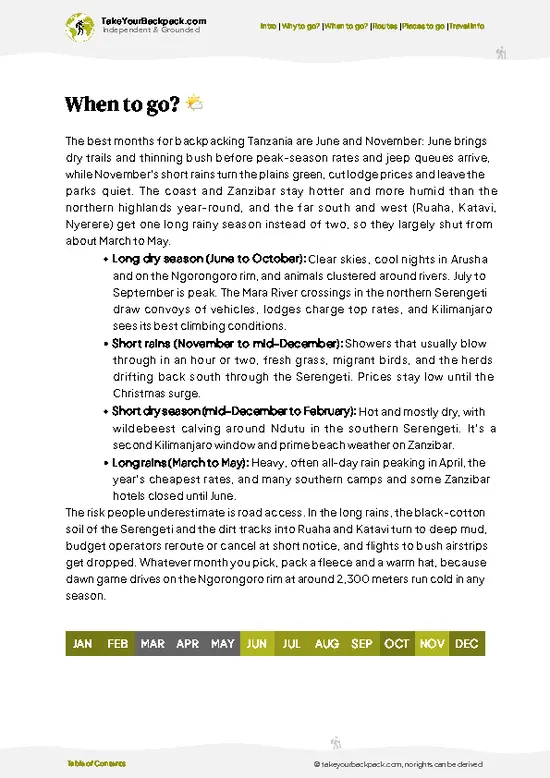
Best months for festivals: June to October is the best window for festivals in Tanzania, because the long dry season keeps roads passable, skies clear and outdoor stages and village gatherings running on schedule. Days sit around 25 to 30°C on the coast and 20 to 27°C in the northern highlands, with almost no rain between July and September.

Shoulder seasons: November to February is the short hot and drier stretch after the brief rains (vuli, roughly November to December). Coastal temperatures climb to 30 to 34°C with heavy humidity, yet showers tend to be short and afternoon-based. January and February often bring beach-friendly weather and fewer travelers, and bed prices drop by roughly 20 to 40 percent outside Christmas week.

Wet season: The long rains (masika) hit from March to May, … read more 👉
Best months for festivals: June to October is the best window for festivals in Tanzania, because the long dry season keeps roads passable, skies clear and outdoor stages and village gatherings running on schedule. Days sit around 25 to 30°C on the coast and 20 to 27°C in the northern highlands, with almost no rain between July and September.

Shoulder seasons: November to February is the short hot and drier stretch after the brief rains (vuli, roughly November to December). Coastal temperatures climb to 30 to 34°C with heavy humidity, yet showers tend to be short and afternoon-based. January and February often bring beach-friendly weather and fewer travelers, and bed prices drop by roughly 20 to 40 percent outside Christmas week.

Wet season: The long rains (masika) hit from March to May, with 200 to 400 mm a month in Dar es Salaam and Zanzibar. Unpaved routes to inland villages turn to mud, buses slow down, and many guesthouses and lodges close or discount heavily, sometimes by 30 to 50 percent. Outdoor events become unreliable and travel days stretch. Anyone with flexible plans can still find indoor and coastal events, but expect delays.

Peak periods that change plans: July to August and the Christmas to New Year weeks are the busiest. Zanzibar rooms can double in price, and ferries and flights between Dar es Salaam and the islands fill days ahead. Book transport early and lock in lodging at least four to six weeks out for those dates.

Regional differences: The north (Arusha, Kilimanjaro) is cooler and has its coldest nights in July, sometimes near 10°C. The coast and islands stay warm year round. The southern highlands around Iringa and Mbeya get cool, dry winters and a wetter summer. Check the local dry months before heading inland.

festival hoppingOptimizing Your Multi-Stop Itinerary

How many days to plan: A trip combining several festivals in Tanzania needs 14 to 21 days, because distances are long, roads are slow and dates rarely line up neatly. Two or three regions is a realistic ceiling.

Which regions pair well: The northern circuit of Arusha, Moshi and the Maasai steppe clusters tightly, with 1 to 2 hours between Arusha and Moshi by minibus. The coast and islands make another pair: Dar es Salaam to Zanzibar takes 2 to 2.5 hours by fast ferry or about 20 minutes by plane. Bagamoyo sits 1.5 to 3 hours north of Dar, depending on traffic. Linking north and coast is possible by a flight between Kilimanjaro or Arusha and Dar es Salaam (about 1.5 hours) or an 8 to 10 hour bus from Arusha to Dar.

Direction of travel: Start in the north when the dry season opens, then head … read more 👉
How many days to plan: A trip combining several festivals in Tanzania needs 14 to 21 days, because distances are long, roads are slow and dates rarely line up neatly. Two or three regions is a realistic ceiling.

Which regions pair well: The northern circuit of Arusha, Moshi and the Maasai steppe clusters tightly, with 1 to 2 hours between Arusha and Moshi by minibus. The coast and islands make another pair: Dar es Salaam to Zanzibar takes 2 to 2.5 hours by fast ferry or about 20 minutes by plane. Bagamoyo sits 1.5 to 3 hours north of Dar, depending on traffic. Linking north and coast is possible by a flight between Kilimanjaro or Arusha and Dar es Salaam (about 1.5 hours) or an 8 to 10 hour bus from Arusha to Dar.

Direction of travel: Start in the north when the dry season opens, then head south and east toward the coast and finish on Zanzibar, where you can rest on a beach after the long road days. This direction also puts your most flexible, weather-sensitive stops first and your most ferry-dependent ones last, with a buffer before your flight out.

Time per stop: Give a city or island festival base 2 to 3 nights, and give inland village events 3 to 4 nights, since access can take half a day each way and dates may slip. Leave a free day between stops for delays.

Planning mistakes to dodge: The classic error is stacking two events on consecutive days in regions 10 hours apart. Leave a day of slack instead. Another is booking nonrefundable transport before a date is confirmed, so hold off until a local host or guesthouse verifies it. Overlooking long bus days, which often leave at 5 or 6 a.m. and arrive after dark, also catches people out. Choose daylight departures, and plan flights only for the longest links.

The ListMust-Visit festivals in Tanzania

1 Sauti za Busara

Old Fort stage, pan-African lineup, taarab, Stone Town parade

Follow the opening street procession through narrow lanes, then dance in the fort courtyard to acts from across the continent.

2 Zanzibar International Film Festival

Old Fort amphitheater, Stone Town venues, filmmaker Q&As, Forodhani suppers

Walk between screening spaces in the old town, watch films under open sky by the sea, and eat grilled octopus afterward.

3 Bagamoyo Arts Festival

TaSUBa campus stages, acrobatics, Old Town courtyards, week-long program

Follow drumbeats from college stages to coral-stone courtyards, then finish on the Bagamoyo shoreline where dhows rest on the sand.

4 Mwaka Kogwa

Banana stem fights, burning hut, Makunduchi, Shirazi new year

Arrive early in the village to see men trade symbolic blows with banana stems before a straw hut goes up in flames.

5 Karibu Music Festival

Bongo flava, taarab, ngoma nights, plastic-table chats

Catch Tanzanian and East African acts in a small coastal town, then eat grilled fish and cassava between sets near the beach.

6 Kilimanjaro Marathon

Moshi Club start, 42K, half marathon, 5K fun run

Run or walk rolling roads past banana farms and coffee country, with Kilimanjaro overhead on clear mornings and a music-filled finish field.

7 Swahili Fashion Week

Kitenge runway, East African designers, Dar evenings, audience street style

Sit through back-to-back collections that rework kanga and batik into sharp cuts, then meet designers at the after-parties.

8 Nane Nane Agricultural Show

Regional pavilions, livestock pens, farm machinery, August 8

Walk through regional stands tasting honey, coffee and spices, then settle at a shared table for grilled goat and ugali.

9 Wanyambo Festival

Kagera heritage, Haya dance, matoke plates, Dar es Salaam

Step into a dance circle, eat matoke in groundnut sauce and share bitter Kagera coffee among families in regional dress.

10 MaKuYa Festival

Mapiko masks, Makonde carvers, Mtwara, cashew-country food

Watch masked dancers lunge from the crowd, then buy small ebony carvings from the makers and sample coconut and cassava dishes.

11 Serengeti Music Festival

Dar and Dodoma, Bongo Flava, Amapiano, sponsor beer tents

Join young crowds on open-air grounds for Swahili rap and log-drum basslines, with skewers and chipsi mayai sold outside the gates.

12 Uhuru Torch Race

Relay flame, regional handovers, project openings, roadside crowds

Pick a town square to watch runners bring the flame in, with speeches, brass bands and drumming at each regional handover.

Loading the map 🌍

Expert viewInsights from Locals and Experts

How many festivals to chase: Two to four festivals in a trip of two to three weeks gives a backpacker the best return. One is thin, since you pay for long transfers and see a single slice of the country. More than four turns the journey into a deadline chase on slow roads, where a late bus can erase an event you planned a month for. Two to four also leaves room for the unplanned village gathering that appears when a guesthouse owner says, “come tonight.”

Which kind suits your style: If you travel on a tight budget and want ease, pick the coastal and city events. You pay more for beds, but you save days of transport and can arrange plans on short notice. If you have time and want depth, choose community and cultural gatherings in the highlands and rural areas. They cost less per day, but they … read more 👉
How many festivals to chase: Two to four festivals in a trip of two to three weeks gives a backpacker the best return. One is thin, since you pay for long transfers and see a single slice of the country. More than four turns the journey into a deadline chase on slow roads, where a late bus can erase an event you planned a month for. Two to four also leaves room for the unplanned village gathering that appears when a guesthouse owner says, “come tonight.”

Which kind suits your style: If you travel on a tight budget and want ease, pick the coastal and city events. You pay more for beds, but you save days of transport and can arrange plans on short notice. If you have time and want depth, choose community and cultural gatherings in the highlands and rural areas. They cost less per day, but they demand patience, a local contact and a lot of bus time. A balanced traveler mixes one polished event with one rural one. That pairing gives the most variety per dollar and avoids burnout on bad roads.

What it costs: Plan on US$30 to 55 a day for a backpacker on the mainland: dorm or basic room at US$8 to 20, local meals at US$3 to 8, dala-dala and bus rides at US$1 to 10. Zanzibar festival weeks push that to US$50 to 90 a day, because rooms in Stone Town often run US$25 to 60 and double in peak weeks. Ticketed urban events usually charge roughly US$10 to 50, with foreigners often paying more than residents. Village ceremonies are often free or ask a donation of about US$5 to 20, and a local guide or translator costs US$15 to 40 a day. Budget another US$5 to 15 for a boda-boda or shared taxi to remote sites, and keep US$20 to 30 aside for late-notice changes. Carry cash in Tanzanian shillings, since cash machines are scarce outside towns and cards fail often.

Safety and etiquette: Crowds at night events attract pickpockets and bag snatchers, so carry a minimal wallet, keep your phone in a front pocket, and take a registered taxi or a trusted boda-boda driver home. Avoid walking alone after dark in Dar es Salaam, even for short distances.

Cultural rules matter more than any other precaution. Tanzania is roughly one-third Muslim, and coastal and Zanzibar events often involve religious communities, so cover shoulders and knees, and skip alcohol in public near mosques or during Ramadan. Ask before you photograph anyone. Maasai and other communities often expect payment for portraits, commonly US$1 to 5, so agree on a price first or put the camera away. Never fly a drone near ceremonies, since permits are required and officials take it seriously. Same-sex affection is illegal and can lead to serious trouble, so keep public behavior discreet.

Smart habits: Confirm dates through a local guesthouse or cultural office two to three days before you commit, because schedules move. Hire a local host for rural ceremonies. They usually open doors that a stranger cannot, and your fee goes directly into the community. A small gift of tea, sugar or school supplies for a host family lands better than cash. Pack a headlamp, rain shell and small bills, and keep a copy of your passport. With a flexible plan and respectful manners, Tanzania repays you with moments no ticket can buy.

✈️ The backpacker research shortcutTanzania Travel Guide

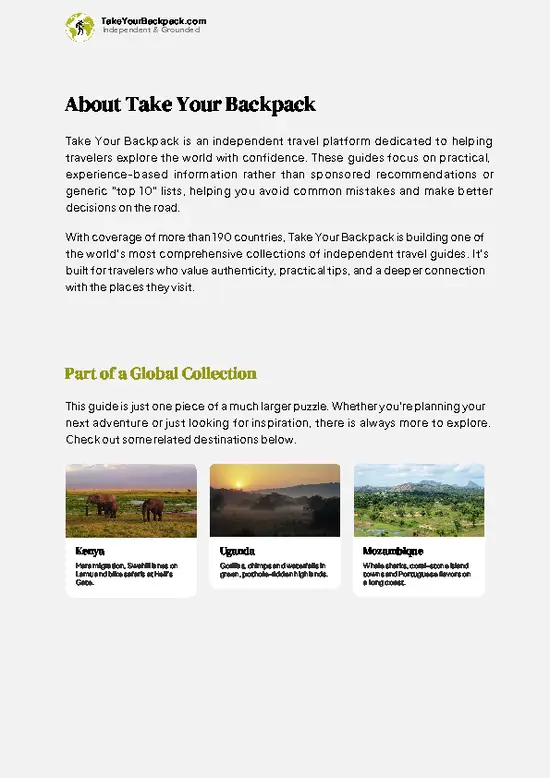
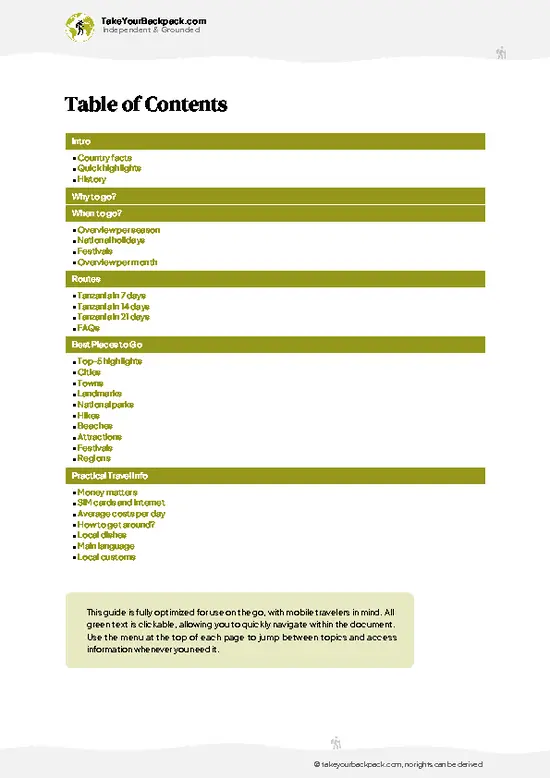
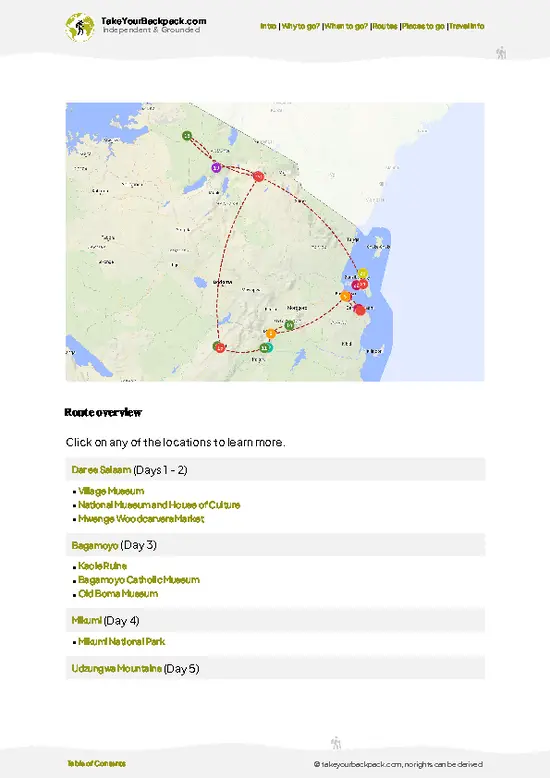
An offline-friendly backpacking guide with optimized travel routes, ranked highlights, transport advice, and the best areas to stay.
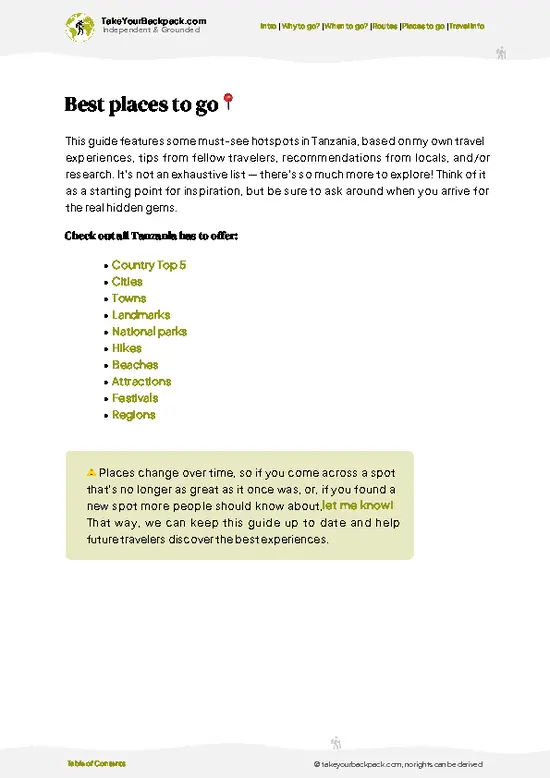
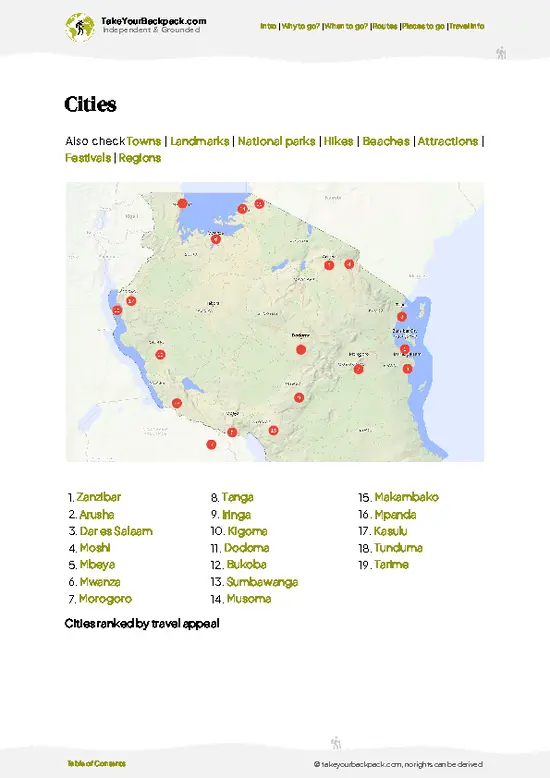
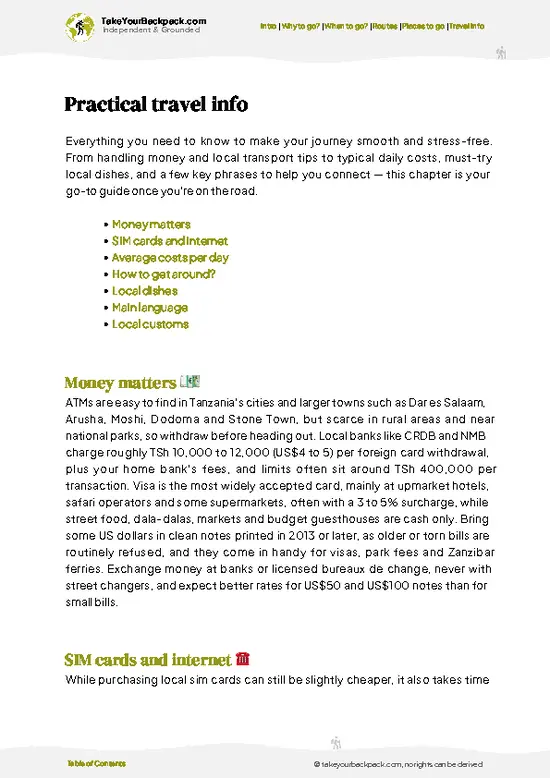
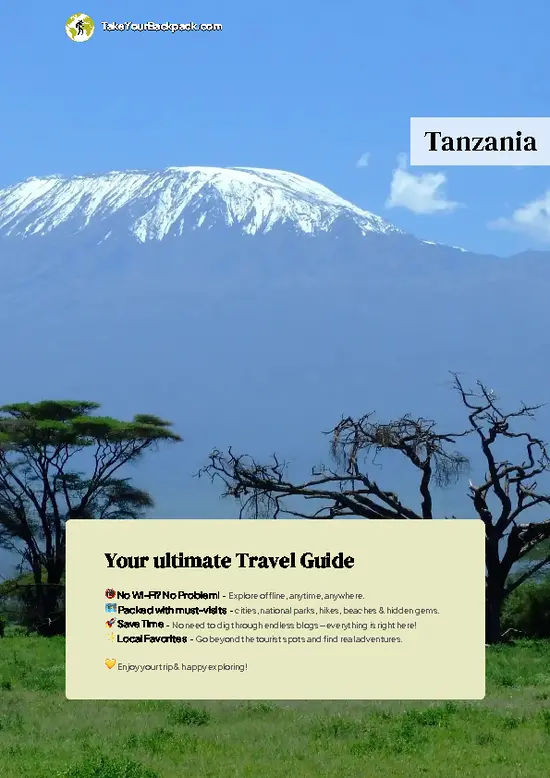
example page 0 from our offline Travel Guide for Tanzania
example page 1 from our offline Travel Guide for Tanzania
example page 2 from our offline Travel Guide for Tanzania
example page 3 from our offline Travel Guide for Tanzania
example page 4 from our offline Travel Guide for Tanzania
example page 5 from our offline Travel Guide for Tanzania
example page 6 from our offline Travel Guide for Tanzania
example page 7 from our offline Travel Guide for Tanzania
The digital guide (396 pages) contains:
✅ 103 highlights, ranked by travel appeal
✅ Optimized 7, 14 & 21-day travel routes
✅ Cities, national parks, landmarks, beaches
✅ How to get around
✅ Offline-friendly for travel without Wi-Fi
👉 Click to see all 30+ guide features

📅 Plan smarter in minutes, not weeks
✅ Month by month travel advice
✅ Festivals & national holidays
✅ Budget expectations

🗺️ Go to the right places, skip the overrated ones
✅ Honest pros & cons of destinations
✅ Top hikes, parks & viewpoints
✅ Lesser-known places most travelers miss
✅ Clear “worth it vs skip it” guidance

🛏️ Travel smoothly without rookie mistakes
✅ Best areas to stay
✅ Transport systems explained simply
✅ Common scams & safety advice
✅ SIM cards, money & practical tips

🌍 Understand the country, not just visit it
✅ Culture & traditions
✅ 52 Essential phrases & customs
✅ Festivals worth planning around
✅ Traveler-friendly historical context
✅ Insights that make places more meaningful

📱 Built for real travel conditions
✅ Fully downloadable PDF
✅ Works completely offline
✅ Optimized for phone use
✅ Useful in remote areas & buses
✅ Everything in one place
Stop searching, start planning
Get instant access to your full guide. 30‑day money-back guarantee.
+ Add another guide for just

By proceeding you agree to our terms.
Sent to your inbox immediately after payment • 100% Secure Checkout
Best Backpacking Travel Advisor 2025 tourism awardBest Backpacking
Travel Advisor
2025
What others say about Take Your Backpack Guides:
⭐⭐⭐⭐⭐
Fantastic, amazing amount of information!
⭐⭐⭐⭐⭐
My goodness this is amazing, it's what I've been looking for hats off too you!
⭐⭐⭐⭐⭐
I think this is absolutely BRILLIANT
⭐⭐⭐⭐
Very complete and informative. It's still missing places, but I gotta to commend you
⭐⭐⭐⭐⭐
This is truly amazing, thank you, can't wait to explore it with my kids!
⭐⭐⭐⭐⭐
Awesome resource, thank you!
⭐⭐⭐⭐⭐
This is amazing! Can't wait to explore the ones I haven't seen
⭐⭐⭐⭐
I love this! Well done, great idea.
⭐⭐⭐⭐⭐
Thanks for taking the time to make this gem!
⭐⭐⭐⭐⭐
This might be the best website I've ever seen.
⭐⭐⭐⭐⭐
Congratulations, and thank you so much for your work; it's incredibly valuable.
⭐⭐⭐⭐
In all seriousness I think you did a great job pointing out the important spots
⭐⭐⭐⭐⭐
10/10 very good
⭐⭐⭐⭐⭐
As someone who's only just starting to visit regularly this is awesome, thank you.
⭐⭐⭐⭐
Thank you very much! I'm going to visit my dad, it's going to be very useful!
⭐⭐⭐⭐⭐
This is really cool! We'll be travelling for the first time and this definitely come in handy.
⭐⭐⭐⭐⭐
You are now our minister of culture, congratulations 👨‍💼
⭐⭐⭐⭐⭐
Just wanted to tell you that this is a pearl! Going to follow your recommendations.
⭐⭐⭐⭐⭐
This is so cool. I'll definitely be using the resource for my travels soon.
⭐⭐⭐⭐⭐
This is very impressive! Good work.
⭐⭐⭐⭐⭐
This is an amazing and informative site. Very well done!

🛏️ Where to stay?Top Areas to Stay

Backpacking Tanzania is easy on a budget: every traveler hub has hostels and guesthouses, with dorm beds at roughly TSh 25,000 to 50,000 (US$10 to 20) and simple private rooms from about TSh 50,000 (US$20). On Zanzibar, Stone Town puts you within walking distance of the old town and the Forodhani night food market but comes with street noise and persistent touts. Paje on the east coast has the most social hostel scene and kitesurf bars, while Nungwi in the north lets you swim at any tide and parties late. On the mainland, Moshi town center is calm, safe on foot and closest to the Kilimanjaro gates, and central Arusha keeps you next to safari operators but is busier and better done by taxi after … read more 👉
Backpacking Tanzania is easy on a budget: every traveler hub has hostels and guesthouses, with dorm beds at roughly TSh 25,000 to 50,000 (US$10 to 20) and simple private rooms from about TSh 50,000 (US$20). On Zanzibar, Stone Town puts you within walking distance of the old town and the Forodhani night food market but comes with street noise and persistent touts. Paje on the east coast has the most social hostel scene and kitesurf bars, while Nungwi in the north lets you swim at any tide and parties late. On the mainland, Moshi town center is calm, safe on foot and closest to the Kilimanjaro gates, and central Arusha keeps you next to safari operators but is busier and better done by taxi after dark. In Dar es Salaam, the Msasani Peninsula is quieter and safer but pricier than the cheap, chaotic streets around Kariakoo.

If you enjoy meeting fellow travelers, consider choosing hostels with high ratings for atmosphere. On the other hand, if you prefer having your own space, a hotel might be a better option.

TanzaniaDiscover the Country

👋 Meet the founderWho’s Behind Take Your Backpack?

Johan, backpacker and founder of TakeYourBackpackHi, I’m Johan (Netherlands 🇳🇱), the creator of TakeYourBackpack. Over the past 3 decades, I’ve backpacked through 90+ countries across six continents, gaining extensive experience with independent travel, long-term trips, and overland routes.

This site is built on a combination of firsthand travel experience and carefully curated insights from other backpackers. Many guides are based on places I’ve personally visited, while others bring together tips, observations, and practical advice shared by trusted travelers I’ve met along the way.

The goal is to provide realistic, experience-driven guidance — not generic itineraries — so you can explore destinations with better context, clearer expectations, and more confidence.