×

Thailand🇹🇭 | citiesUbon RatchathaniMekong proximity, candle festival, Isaan cuisine | things to do and best time to go

Explore Surat ThaniExplore Udon Thani

Backpacking in Ubon Ratchathani
👍 Recommendedcity ranked #11
By Johan Kruseman 🇳🇱 | Updated May 28, 2026

You’re standing at a night market table in Ubon Ratchathani, fingers sticky with grilled pork skewers, incense drifting from a nearby shrine while a slow fan pushes warm air over plastic stools and metal trays of neon desserts. This is far eastern Thailand, near Laos and Cambodia, and Ubon feels more like a lived‑in provincial city than a checklist destination. For backpackers, it’s a calm, low-pressure base: cheap rooms, easy songthaews, a walkable center around Thung Si Muang park, and strong train and bus links that make it a smart pause between Isaan, Laos, and the southern islands. It’s quieter and more local than Udon Thani or Khon Kaen, with fewer hostels and softer nightlife, so you trade instant backpacker crowds for real Thai routines, safer-feeling streets, and slow, late café evenings instead of bar crawls.

Discover everything you want to know in the 📖 Thailand Travel Guide.
Loading the map 🌍
CLICK TO FILTER
cities
towns
landmarks
national parks
hikes
beaches
attractions
festivals
regions
SHOW COUNTRY’S BESTSHOW ALL

✨ Why go?
Ranked #11 city in Thailand
What sets this place apart

Ubon Ratchathani serves as a gateway for backpackers seeking a blend of culture and nature. Its walkable streets invite you to explore local markets and street food stalls, where the aroma of grilled meats and fresh herbs fills the air. This town is a launchpad for nearby hikes in national parks, making it ideal for hikers and nature lovers. Small-scale guesthouses and hostels foster a friendly atmosphere, perfect for solo travelers or those in small groups looking to connect. Most backpackers stay a few days, soaking in the laid-back vibe before moving on. While it’s not a nightlife hub, the social scene is warm and welcoming, making it a great spot for slow travelers who appreciate a genuine local experience.
Want to include Ubon Ratchathani in your Thailand route?
Create a personalized Thailand itinerary that includes Ubon Ratchathani and the places that fit your trip — based on your travel style, budget, and available time. Get your route in seconds.

Generate my trip

💡 HighlightsWhat this place is best known for

  1. Wat Phra That Nong Bua — The city’s signature white, lotus-bud-shaped chedi set in a peaceful temple compound; great for photography, quiet meditation, and to see modern Thai-Lanna influenced sacred architecture up close.
  2. Ubon Ratchathani National Museum — Solid displays of prehistoric archaeology, Isan folk culture, and regional Buddhist art that put the province’s history into context; good indoor refuge from the heat with labeled artifacts and traditional costumes.
  3. Thung Si Mueang (City Park) and the City Pillar Shrine — Central green space where locals gather, with the city pillar (lak mueang), a royal pavilion, and shady paths; it’s the social heart of town and useful for soaking up everyday local life.
  4. Ubon Ratchathani Railway Station — The historic terminus of the northeastern
read more 👉
  1. Wat Phra That Nong Bua — The city’s signature white, lotus-bud-shaped chedi set in a peaceful temple compound; great for photography, quiet meditation, and to see modern Thai-Lanna influenced sacred architecture up close.
  2. Ubon Ratchathani National Museum — Solid displays of prehistoric archaeology, Isan folk culture, and regional Buddhist art that put the province’s history into context; good indoor refuge from the heat with labeled artifacts and traditional costumes.
  3. Thung Si Mueang (City Park) and the City Pillar Shrine — Central green space where locals gather, with the city pillar (lak mueang), a royal pavilion, and shady paths; it’s the social heart of town and useful for soaking up everyday local life.
  4. Ubon Ratchathani Railway Station — The historic terminus of the northeastern rail line with an attractive old station building; watching arrivals/departures and riding the provincial trains gives a proper feel for travel in Isan.
  5. Mun Riverfront Promenade — Riverside stretch popular at sunset for walking, street snacks, and river views; you’ll see families, exercise groups, and boats on the Mun River — simple, local atmosphere without tourist gloss.
  6. Ubon Night Market / Walking Street — Bustling evening market near the city center where you can sample authentic Isan street food, grilled meats, sticky rice desserts, and handicrafts while mingling with locals.
For day trips outside the city, head to Pha Taem National Park (famous cliff paintings and Mekong views), Sam Phan Bok (the “three thousand holes” rock formations), and the Khong Chiam area at the confluence of the Mun and Mekong rivers.
Spotted a mistake or missing something? Contact us.

🏘️ NeighborhoodsNeighborhood guide to Ubon Ratchathani

Ubon Ratchathani is a vibrant blend of culture and convenience, perfect for backpackers seeking authenticity.

City Center: This is the heartbeat of Ubon. Bustling markets, street food stalls, and local shops create a lively atmosphere. It’s walkable, making it easy to explore on foot. Budget accommodations are plentiful, and the nightlife is casual, with bars and cafes that close early. Ideal for short stays.

Thung Si Muang: A quieter neighborhood, perfect for those wanting a more laid-back vibe. The park here is a great spot for morning walks. Accommodations are affordable, and you’ll find local eateries serving delicious Thai food. It’s a bit further from nightlife, making it suitable for longer stays focused on relaxation.

Warin Chamrap: Just a short ride from the city center, this area … read more 👉
Ubon Ratchathani is a vibrant blend of culture and convenience, perfect for backpackers seeking authenticity.

City Center: This is the heartbeat of Ubon. Bustling markets, street food stalls, and local shops create a lively atmosphere. It’s walkable, making it easy to explore on foot. Budget accommodations are plentiful, and the nightlife is casual, with bars and cafes that close early. Ideal for short stays.

Thung Si Muang: A quieter neighborhood, perfect for those wanting a more laid-back vibe. The park here is a great spot for morning walks. Accommodations are affordable, and you’ll find local eateries serving delicious Thai food. It’s a bit further from nightlife, making it suitable for longer stays focused on relaxation.

Warin Chamrap: Just a short ride from the city center, this area offers a mix of local life and convenience. It’s less touristy, with a genuine feel. Transport options are good, and you can find both budget and mid-range stays. Great for backpackers wanting to dive deeper into local culture while still being close to the action.

⌛️ 1 dayHow to make the most of one day

Ubon Ratchathani is a tapestry of culture and warmth, where the scent of street food mingles with the sounds of daily life. This town, often overlooked by travelers, offers a genuine slice of Thai life, rich in history and local charm.

Start your morning at the bustling Ubon Ratchathani Morning Market. The air is thick with the aroma of grilled meats and fresh herbs. Grab a bowl of khao soi, a coconut curry noodle soup that will kickstart your day. As you wander through the stalls, take in the vibrant colors of fresh produce and handmade crafts. It’s a sensory overload that sets the tone for your adventure.

In the afternoon, head to Wat Thung Si Muang, a serene temple that’s a bit off the typical tourist path. The intricate murals and the peaceful atmosphere invite reflection. Spend some … read more 👉
Ubon Ratchathani is a tapestry of culture and warmth, where the scent of street food mingles with the sounds of daily life. This town, often overlooked by travelers, offers a genuine slice of Thai life, rich in history and local charm.

Start your morning at the bustling Ubon Ratchathani Morning Market. The air is thick with the aroma of grilled meats and fresh herbs. Grab a bowl of khao soi, a coconut curry noodle soup that will kickstart your day. As you wander through the stalls, take in the vibrant colors of fresh produce and handmade crafts. It’s a sensory overload that sets the tone for your adventure.

In the afternoon, head to Wat Thung Si Muang, a serene temple that’s a bit off the typical tourist path. The intricate murals and the peaceful atmosphere invite reflection. Spend some time here, absorbing the beauty and tranquility. Afterward, stroll through the nearby neighborhoods, where you’ll find local cafes and shops that showcase the town’s character.

As evening falls, make your way to the Mekong River. The sunset casts a golden hue over the water, creating a perfect backdrop for a leisurely dinner. Try the grilled fish at a riverside restaurant, paired with sticky rice and som tam. The flavors are bold, and the atmosphere is relaxed, wrapping up your day with a taste of local life.

Ubon Ratchathani may not be on every traveler’s radar, but its authenticity and charm make it a rewarding stop.
Turn your Ubon Ratchathani visit into an Thailand adventure
Build a complete Thailand route with Ubon Ratchathani, hidden gems, must-see destinations, and realistic travel times included.

Generate my trip

🌤️ When to go?Seasonal considerations and timing


  • Weather: Ubon Ratchathani’s dry season from November to February offers cooler, drier air, making trekking and exploring much more comfortable than the sticky heat of the monsoon months (May to October) when heavy rains can disrupt plans.

  • Temperature: Expect daytime highs around 28-32°C (82-90°F) in the dry season, dropping to a pleasant 18-22°C (64-72°F) at night. The hot season (March-April) can spike above 35°C (95°F), which saps energy fast.

  • Daylight Hours: Roughly 11-12 hours year-round, but clearer skies in the dry season mean more reliable daylight for early starts and late afternoon adventures without the threat of sudden downpours.

  • Crowds: The cool season draws local tourists and festival-goers, especially around the Candle Festival in July, so expect lively streets but not
read more 👉

  • Weather: Ubon Ratchathani’s dry season from November to February offers cooler, drier air, making trekking and exploring much more comfortable than the sticky heat of the monsoon months (May to October) when heavy rains can disrupt plans.

  • Temperature: Expect daytime highs around 28-32°C (82-90°F) in the dry season, dropping to a pleasant 18-22°C (64-72°F) at night. The hot season (March-April) can spike above 35°C (95°F), which saps energy fast.

  • Daylight Hours: Roughly 11-12 hours year-round, but clearer skies in the dry season mean more reliable daylight for early starts and late afternoon adventures without the threat of sudden downpours.

  • Crowds: The cool season draws local tourists and festival-goers, especially around the Candle Festival in July, so expect lively streets but not overwhelming crowds. The rainy season sees fewer visitors, offering solitude but limited activity options.

  • Seasonal Activities: The Candle Festival in July is a cultural highlight but coincides with the start of the rains. Dry months are best for river cruises and temple visits without mud or interruptions.

  • Price Fluctuations: Accommodation and transport prices peak during the dry season and festivals. The rainy season offers the best deals but comes with trade-offs in accessibility and comfort.


Pro-tip: Aim for late November to early February—cool, dry, and lively enough to soak in local culture without sweating through your shirt or dodging monsoon floods.


source: climatestotravel.comJANJanuary: excellent for travelingFEBFebruary: excellent for travelingMARMarch: good for travelingAPRApril: fair for travelingMAYMay: fair for travelingJUNJune: fair for travelingJULJuly: good for travelingAUGAugust: fair for travelingSEPSeptember: fair for travelingOCTOctober: fair for travelingNOVNovember: highly recommended for travelingDECDecember: excellent for traveling
when-to-go

✈️ The backpacker research shortcutThailand Travel Guide

An offline-friendly backpacking guide with optimized travel routes, ranked highlights, transport advice, and the best areas to stay.
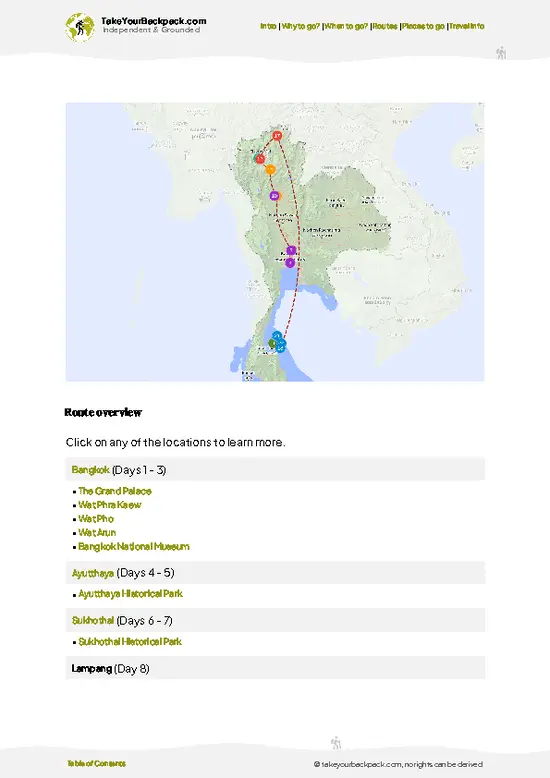
example page 0 from our offline Travel Guide for Thailand
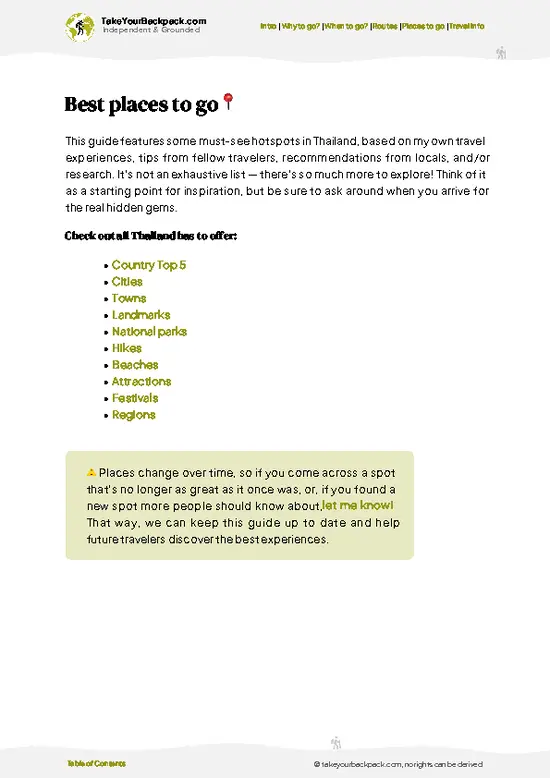
example page 1 from our offline Travel Guide for Thailand
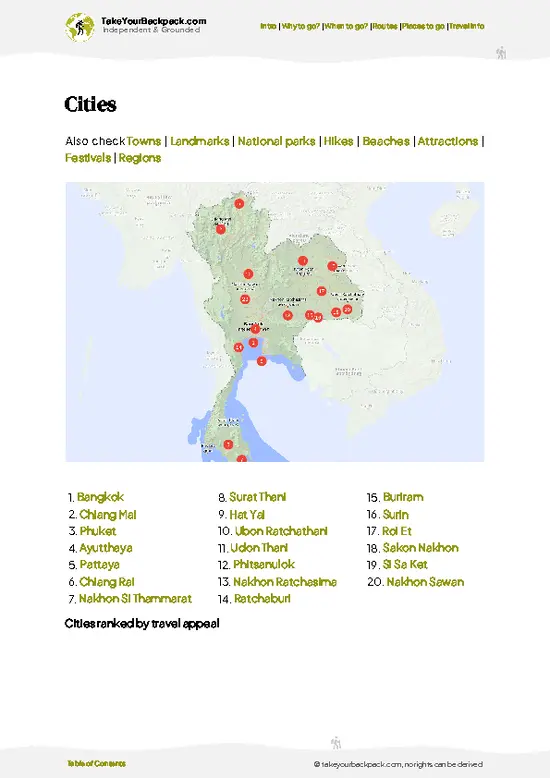
example page 2 from our offline Travel Guide for Thailand
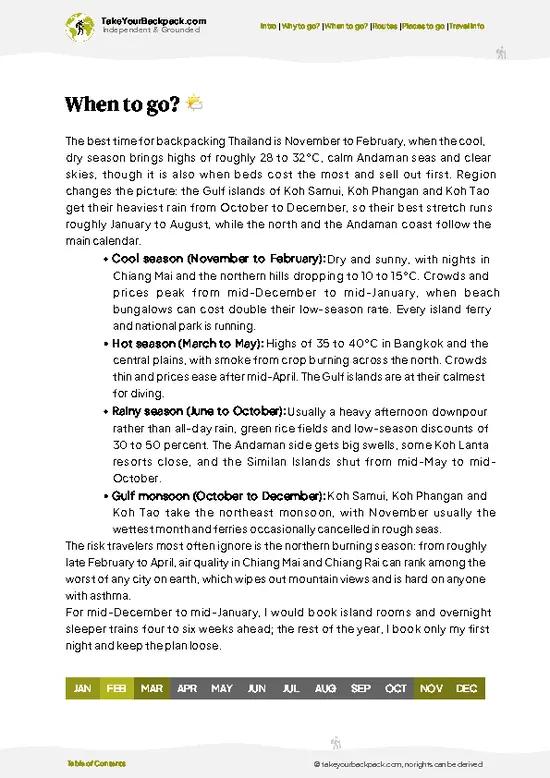
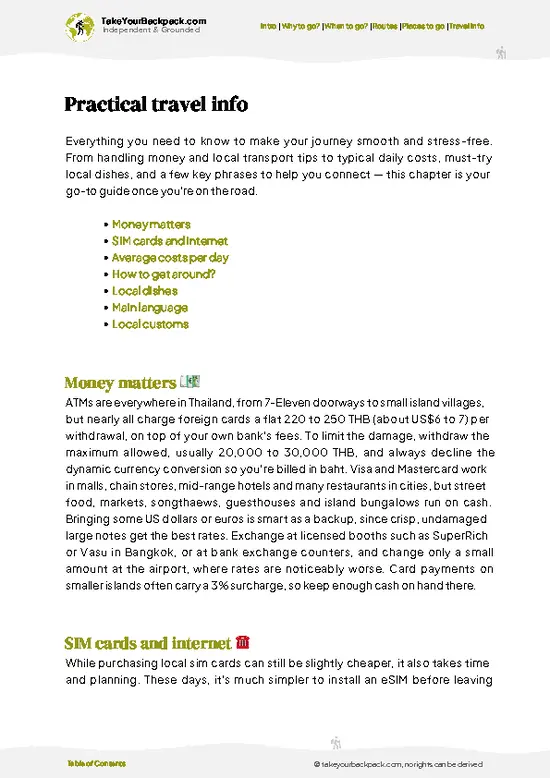
example page 3 from our offline Travel Guide for Thailand
example page 4 from our offline Travel Guide for Thailand
example page 5 from our offline Travel Guide for Thailand
example page 6 from our offline Travel Guide for Thailand
example page 7 from our offline Travel Guide for Thailand
The digital guide (510 pages) contains:
139 highlights, ranked by travel appeal
Optimized 7, 14 & 21-day travel routes
Cities, national parks, landmarks, beaches
How to get around
Offline-friendly for travel without Wi-Fi
👉 Click to see all 30+ guide features

📅 Plan smarter in minutes, not weeks
Month by month travel advice
Festivals & national holidays
Budget expectations

🗺️ Go to the right places, skip the overrated ones
Honest pros & cons of destinations
Top hikes, parks & viewpoints
Lesser-known places most travelers miss
Clear “worth it vs skip it” guidance

🛏️ Travel smoothly without rookie mistakes
Best areas to stay
Transport systems explained simply
Common scams & safety advice
SIM cards, money & practical tips

🌍 Understand the country, not just visit it
Culture & traditions
52 Essential phrases & customs
Festivals worth planning around
Traveler-friendly historical context
Insights that make places more meaningful

📱 Built for real travel conditions
Fully downloadable PDF
Works completely offline
Optimized for phone use
Useful in remote areas & buses
Everything in one place
Save weeks of stressful planning
Get instant access to your full guide. 30‑day money-back guarantee.


By proceeding you agree to our terms.
Sent to your inbox immediately after payment • 100% Secure Checkout
Best Backpacking Travel Advisor 2025 tourism awardBest Backpacking
Travel Advisor
2025
What others say about Take Your Backpack Guides:
⭐⭐⭐⭐⭐
Fantastic, amazing amount of information!
⭐⭐⭐⭐⭐
My goodness this is amazing, it's what I've been looking for hats off too you!
⭐⭐⭐⭐⭐
I think this is absolutely BRILLIANT
⭐⭐⭐⭐
Very complete and informative. It's still missing places, but I gotta to commend you
⭐⭐⭐⭐⭐
This is truly amazing, thank you, can't wait to explore it with my kids!
⭐⭐⭐⭐⭐
Awesome resource, thank you!
⭐⭐⭐⭐⭐
This is amazing! Can't wait to explore the ones I haven't seen
⭐⭐⭐⭐
I love this! Well done, great idea.
⭐⭐⭐⭐⭐
Thanks for taking the time to make this gem!
⭐⭐⭐⭐⭐
This might be the best website I've ever seen.
⭐⭐⭐⭐⭐
Congratulations, and thank you so much for your work; it's incredibly valuable.
⭐⭐⭐⭐
In all seriousness I think you did a great job pointing out the important spots
⭐⭐⭐⭐⭐
10/10 very good
⭐⭐⭐⭐⭐
As someone who's only just starting to visit regularly this is awesome, thank you.
⭐⭐⭐⭐
Thank you very much! I'm going to visit my dad, it's going to be very useful!
⭐⭐⭐⭐⭐
This is really cool! We'll be travelling for the first time and this definitely come in handy.
⭐⭐⭐⭐⭐
You are now our minister of culture, congratulations 👨‍💼
⭐⭐⭐⭐⭐
Just wanted to tell you that this is a pearl! Going to follow your recommendations.
⭐⭐⭐⭐⭐
This is so cool. I'll definitely be using the resource for my travels soon.
⭐⭐⭐⭐⭐
This is very impressive! Good work.
⭐⭐⭐⭐⭐
This is an amazing and informative site. Very well done!

🛏️ Where to stay?Where staying makes the most sense

Downtown Ubon Ratchathani is the heartbeat for backpackers craving a mix of convenience and local flavor. This area hums with life—street vendors frying up sticky rice and mango, the scent of grilled chicken mingling with the humid river breeze. It’s where you’ll find the densest cluster of budget hostels, perfect for meeting fellow travelers without the sterile feel of a tourist trap. The streets are safe, well-lit, and walkable, so late-night noodle runs or spontaneous market visits feel natural, not risky.

Compared to the quieter suburbs, downtown offers a social pulse that’s hard to beat. … read more 👉
Downtown Ubon Ratchathani is the heartbeat for backpackers craving a mix of convenience and local flavor. This area hums with life—street vendors frying up sticky rice and mango, the scent of grilled chicken mingling with the humid river breeze. It’s where you’ll find the densest cluster of budget hostels, perfect for meeting fellow travelers without the sterile feel of a tourist trap. The streets are safe, well-lit, and walkable, so late-night noodle runs or spontaneous market visits feel natural, not risky.

Compared to the quieter suburbs, downtown offers a social pulse that’s hard to beat. You’re steps from the night market, local eateries, and the Mekong River promenade, where the sunset paints the sky in a slow, smoky orange. The vibe is relaxed but alive, a place where you can recharge after a day of temple-hopping or river adventures while still feeling connected to the city’s rhythm.

Avoid the outskirts unless you have wheels; they’re quieter but lack the social buzz and easy access that make backpacking here rewarding.

🚌 Getting aroundHow to get around Ubon Ratchathani

Ubon Ratchathani moves at a pace that feels like a slow river rather than a rushing stream. The air carries the scent of grilled street food mingled with the faint, earthy aroma of nearby rice paddies. Here, time stretches and bends—schedules exist but flex with the heat and the hum of daily life. You won’t find rigid timetables or frantic crowds; instead, there’s a rhythm shaped by local intuition and the gentle buzz of motorbikes weaving through streets lined with faded colonial buildings and vibrant markets. Understanding this flow is your key to moving through Ubon like a local, turning what might seem like chaos into a smooth, sensory experience.


  • Walking: The heart of Ubon is compact enough to explore on foot, especially around the city center and night markets. Walking lets you soak
read more 👉
Ubon Ratchathani moves at a pace that feels like a slow river rather than a rushing stream. The air carries the scent of grilled street food mingled with the faint, earthy aroma of nearby rice paddies. Here, time stretches and bends—schedules exist but flex with the heat and the hum of daily life. You won’t find rigid timetables or frantic crowds; instead, there’s a rhythm shaped by local intuition and the gentle buzz of motorbikes weaving through streets lined with faded colonial buildings and vibrant markets. Understanding this flow is your key to moving through Ubon like a local, turning what might seem like chaos into a smooth, sensory experience.


  • Walking: The heart of Ubon is compact enough to explore on foot, especially around the city center and night markets. Walking lets you soak in the smells of grilled chicken and sticky rice, the chatter of vendors, and the warm, late-afternoon light that softens the edges of the old temples. It’s free, flexible, and the best way to catch the city’s pulse.


  • Songthaews (Red Trucks): These converted pickup trucks run fixed routes but don’t stick to strict schedules—expect them to leave when full. Fares hover around 10-20 THB, making them the cheapest motorized option. They’re slow but reliable, perfect for hopping between neighborhoods without the hassle of taxis.


  • Motorbike Taxis: For quick, point-to-point travel, motorbike taxis are everywhere. Negotiate fares upfront—usually 20-50 THB depending on distance. They’re fast, nimble, and cut through traffic jams, but be ready for the wind, dust, and the occasional honk. Helmets are often optional, so bring your own if safety matters.


  • Local Buses: These larger buses connect Ubon to surrounding districts and the airport. They run roughly from 6 a.m. to 6 p.m., with fares starting around 20 THB. Slower than motorbikes but more comfortable and air-conditioned, they’re ideal for budget travelers heading out of town or to the airport without splurging on taxis.


  • Tuk-Tuks: More expensive than songthaews and motorbike taxis, tuk-tuks offer a colorful, open-air ride through the city. Expect to pay 50-100 THB for short trips. They’re less practical for tight budgets but great if you want a bit of local flair and don’t mind negotiating fares.

👛 Costs (as of 8 June 2026)How expensive it really is

Backpacking in Ubon Ratchathani offers a surprisingly affordable experience, but knowing where your money goes helps you stretch your stay without missing out on the local vibe.
  • Dorm Accommodation: Expect to pay around $5 to $10 per night for a bed in a basic dormitory. These places are simple but clean, often with fans rather than air conditioning, which is fine once you get used to the warm, humid air that lingers in the early morning light.
  • Meals: Street food here is a highlight and incredibly budget-friendly. You’ll spend about $1.50 to $3 per meal on dishes like sticky rice with grilled chicken or papaya salad. Small local eateries offer full meals for under $3, where the scent of lemongrass and chili fills the air, making every bite feel fresh and authentic.
  • Local Transport: Getting
read more 👉
Backpacking in Ubon Ratchathani offers a surprisingly affordable experience, but knowing where your money goes helps you stretch your stay without missing out on the local vibe.
  • Dorm Accommodation: Expect to pay around $5 to $10 per night for a bed in a basic dormitory. These places are simple but clean, often with fans rather than air conditioning, which is fine once you get used to the warm, humid air that lingers in the early morning light.
  • Meals: Street food here is a highlight and incredibly budget-friendly. You’ll spend about $1.50 to $3 per meal on dishes like sticky rice with grilled chicken or papaya salad. Small local eateries offer full meals for under $3, where the scent of lemongrass and chili fills the air, making every bite feel fresh and authentic.
  • Local Transport: Getting around town is cheap and straightforward. Songthaews (shared pickup trucks) and tuk-tuks typically cost between $0.50 and $1.50 per ride, depending on distance. The slow pace of these rides lets you soak in the humid air mixed with the faint aroma of jasmine from roadside stalls.
  • Basic Activities/Entry Fees: Most cultural sites and museums charge nominal fees, usually around $1 to $3. Visiting temples or the National Museum is affordable and gives you a quiet moment away from the heat, where the cool shade and intricate carvings reward your curiosity.
  • Miscellaneous Expenses: Budget about $1 to $2 for bottled water, snacks, or small souvenirs. The heat makes hydration essential, and local markets offer fresh fruit that’s both refreshing and cheap.

All told, you’re looking at roughly $10 to $20 a day to cover the essentials without skimping on the experience. Ubon Ratchathani’s charm is in its slow rhythm and simple pleasures, and with this budget, you’ll have the freedom to explore without the stress of overspending.
⚠️ Prices can change and everyone travels differently, so take this as a rough guide. Hope it helps you plan your adventure!

🚌 Day tripsBest day trips from Ubon Ratchathani

Ubon Ratchathani is a fantastic launchpad for exploring the rich tapestry of northeastern Thailand. With its laid-back vibe and local charm, you can easily dive into unforgettable day trips that reveal the region’s soul.

Phu Chong Na Yoi National Park
Just a two-hour bus ride from Ubon, this park is a nature lover’s dream. Picture yourself trekking through lush forests, where the air is thick with the scent of damp earth and wildflowers. The highlight? The stunning waterfalls cascading into crystal-clear pools. Bring a picnic and soak in the tranquility. The entrance fee is minimal, making it a budget-friendly escape. Aim for the cooler months, from November to February, when the trails are less humid. A common mistake? Underestimating the park’s size—plan for a full day to truly explore. … read more 👉
Ubon Ratchathani is a fantastic launchpad for exploring the rich tapestry of northeastern Thailand. With its laid-back vibe and local charm, you can easily dive into unforgettable day trips that reveal the region’s soul.

Phu Chong Na Yoi National Park
Just a two-hour bus ride from Ubon, this park is a nature lover’s dream. Picture yourself trekking through lush forests, where the air is thick with the scent of damp earth and wildflowers. The highlight? The stunning waterfalls cascading into crystal-clear pools. Bring a picnic and soak in the tranquility. The entrance fee is minimal, making it a budget-friendly escape. Aim for the cooler months, from November to February, when the trails are less humid. A common mistake? Underestimating the park’s size—plan for a full day to truly explore.


Wat Phra That Nong Bua
This temple, just a short tuk-tuk ride away, is a striking sight with its towering stupa glimmering in the sun. The intricate murals and serene atmosphere invite you to linger. Spend a couple of hours here, absorbing the spiritual energy and snapping photos. Entry is free, and the best time to visit is early morning when the light is soft and the crowds are thin. Many first-timers rush through, but take your time to appreciate the details.


Sirindhorn Dam
About an hour’s drive from the city, this dam offers a unique blend of nature and engineering. The shimmering reservoir reflects the sky, creating a picturesque backdrop for a leisurely day. Rent a bike to explore the area or simply relax by the water. The cost is minimal, and it’s best visited during the dry season when the views are at their best. A common oversight is skipping the local food stalls nearby—don’t miss out on the grilled fish and sticky rice!


Kaeng Tana National Park
Roughly an hour from Ubon, this park is known for its stunning river views and unique rock formations. The best time to visit is during the dry season when the river recedes, revealing beautiful sandbanks. You can spend the day hiking or taking a boat ride to see the local wildlife. The entrance fee is low, and it’s a perfect spot for a picnic. Many travelers overlook the early morning hours when the mist rises off the water, creating a magical atmosphere.
Want to know what more Thailand offers?
The Thailand Travel Guide describes 139 highlights, from cities to national parks, from beaches to hikes

Get the Travel Guide -

🍲 FoodWhat to Eat & Drink

In Ubon Ratchathani, food isn’t just fuel—it’s a full-on flavor assault that demands your attention. The city’s signature dish, som tam (spicy green papaya salad), hits your palate with a sharp, tangy punch, balanced by the smoky char of grilled chicken or sticky rice on the side. Don’t miss kai yang, the local grilled chicken, marinated with herbs that smell like a walk through a jungle market.

Backpackers dive into this scene at bustling night markets and street stalls where the air thickens with the scent of lemongrass and chili. Casual eateries spill onto sidewalks, offering a front-row seat to the city’s rhythm—loud, lively, and unapologetically authentic.

Drinking here is low-key but social. Grab a cold Chang beer or a sweet nam manao (limeade) and join locals who sip slowly, chatting … read more 👉
In Ubon Ratchathani, food isn’t just fuel—it’s a full-on flavor assault that demands your attention. The city’s signature dish, som tam (spicy green papaya salad), hits your palate with a sharp, tangy punch, balanced by the smoky char of grilled chicken or sticky rice on the side. Don’t miss kai yang, the local grilled chicken, marinated with herbs that smell like a walk through a jungle market.

Backpackers dive into this scene at bustling night markets and street stalls where the air thickens with the scent of lemongrass and chili. Casual eateries spill onto sidewalks, offering a front-row seat to the city’s rhythm—loud, lively, and unapologetically authentic.

Drinking here is low-key but social. Grab a cold Chang beer or a sweet nam manao (limeade) and join locals who sip slowly, chatting over shared plates. Remember, eating is communal; don’t be shy about grabbing a bite from a friend’s dish. It’s less about formal etiquette and more about joining the flow of genuine connection.

🛡️ SafetyScams, Hazards, and Annoyances

Ubon Ratchathani is generally safe, but a few practical tips can enhance your experience. Stay alert in crowded markets, especially around the bus station; pickpockets can be opportunistic. If you’re solo, avoid wandering too far after dark. The streets can feel quiet, and a little caution goes a long way.

Common scams, like tuk-tuk drivers offering overly priced tours, can be avoided by agreeing on fares upfront. Use ride-hailing apps for a smoother experience. Everyday annoyances include persistent street vendors; a polite “no, thank you” usually does the trick. Carry yourself confidently, and you’ll blend in seamlessly, soaking up the local vibe without a hitch.

Other Thai cities near Ubon Ratchathani

Explore more nearby:

  • Si Sa Ket—border temples, Khmer relics, fruit plantations| 67 km away
  • Surin—elephant festivals, Khmer heritage, silk markets| 120 km away
  • Roi Et—giant Buddha, city moat, Isaan cuisine| 140 km away

💡 Not sure where to go next?
Create a personalized itinerary for Thailand including Ubon Ratchathani and the places that fit your trip.

Generate my itinerary

👉 Discover all cities

Or checkout all Thailand has to offer (think cities, towns, villages, national parks, hikes, beaches, festivals)
Country photo of Thailand

We 💚 feedbackKey takeaways before you go

Ubon Ratchathani pulses with authentic Thai culture, especially during the candle festival when the streets glow with intricate wax sculptures and the air is thick with incense. But be ready for the heat; it can be relentless. Embrace it, hydrate often, and you’ll find that the sweat is just part of the experience, making those moments of connection even sweeter.

✈️ When did I visit Thailand?
Before visiting Vietnam (1998), I had some time in Thailand to explore the country.

✍️ Help improve this page!
The information on this page is based on my own backpacking experience in Thailand, supplemented with up-to-date research and feedback from other travelers. Travel details can change, so if you notice anything outdated or incomplete, feel free to let me know.


🙋‍♂️ Give feedback

👋 Meet the founderWho’s Behind Take Your Backpack?

Johan, backpacker and founder of TakeYourBackpackHi, I’m Johan (Netherlands 🇳🇱), the creator of TakeYourBackpack. Over the past decade, I’ve backpacked through 80+ countries across six continents, gaining extensive experience with independent travel, long-term trips, and overland routes.

This site is built on a combination of firsthand travel experience and carefully curated insights from other backpackers. Many guides are based on places I’ve personally visited, while others bring together tips, observations, and practical advice shared by trusted travelers I’ve met along the way.

The goal is to provide realistic, experience-driven guidance — not generic itineraries — so you can explore destinations with better context, clearer expectations, and more confidence.

Get full Thailand guide •
Instant download • 139 highlights • Full Offline guide