×

Thailand🇹🇭 | landmarksWat Phra Kaewemerald Buddha, gilded halls, royal temple complex | things to do and best time to go

Explore Si ThepExplore Wat Tham Sua

Backpacking in Wat Phra Kaew
🌟 Highlightunique site ranked #3
By Johan Kruseman 🇳🇱 | Updated June 2, 2026

Most people realize too late that Wat Phra Kaew is basically your crash course in Thai Buddhism, art, and monarchy in one hit, so you can skip a dozen lesser temples later and still feel culturally clued-in. It sits inside the Grand Palace complex in Bangkok, right on Rattanakosin Island by the Chao Phraya River. As a backpacker, you’ll feel the entry fee sting and the dress code annoyance, and yes, it’s rammed with tour groups and selfie sticks from opening to closing. But the wow-factor is real: the Emerald Buddha hall feels almost electric, the murals are a graphic novel of Thai cosmology, and every surface seems dipped in gold, glass, or myth. It’s not a chill hang; it’s intense, hot, and policed. Still, if you want one place that explains why Thailand is Thailand, this is the heavyweight.

Discover everything you want to know in the 📖 Thailand Travel Guide.
Loading the map 🌍
CLICK TO FILTER
cities
towns
landmarks
national parks
hikes
beaches
attractions
festivals
regions
SHOW COUNTRY’S BESTSHOW ALL

✨ Why go?
Ranked #3 unique site in Thailand
What makes this unique site worth visiting

Wat Phra Kaew, or the Temple of the Emerald Buddha, is a must-see for backpackers in Thailand, but let’s cut through the Instagram fluff. Yes, it’s crowded. Yes, it can feel like a tourist trap. But here’s the kicker: the authenticity and cultural significance are off the charts.

This isn’t just another pretty building. The intricate details of the architecture tell stories of Thai history and spirituality. You’ll find gorgeous murals and golden stupas that make you pause and reflect. The effort-to-reward ratio is solid; a small entrance fee grants you access to a world of art and devotion that’s hard to find elsewhere.

It fits perfectly into a broader route through Bangkok. Pair it with a stroll through the nearby Grand Palace or a boat ride on the Chao Phraya River. You can easily spend … read more 👉
Wat Phra Kaew, or the Temple of the Emerald Buddha, is a must-see for backpackers in Thailand, but let’s cut through the Instagram fluff. Yes, it’s crowded. Yes, it can feel like a tourist trap. But here’s the kicker: the authenticity and cultural significance are off the charts.

This isn’t just another pretty building. The intricate details of the architecture tell stories of Thai history and spirituality. You’ll find gorgeous murals and golden stupas that make you pause and reflect. The effort-to-reward ratio is solid; a small entrance fee grants you access to a world of art and devotion that’s hard to find elsewhere.

It fits perfectly into a broader route through Bangkok. Pair it with a stroll through the nearby Grand Palace or a boat ride on the Chao Phraya River. You can easily spend a half-day here without feeling rushed.

And let’s talk cost: it’s budget-friendly compared to many attractions worldwide. So, while the crowds can be a drag, the experience is worth it. Dive into the real magic of Wat Phra Kaew, and you’ll walk away with more than just photos—you’ll gain a deeper understanding of Thailand’s soul.
Want to include Wat Phra Kaew in your Thailand route?
Create a personalized Thailand itinerary that includes Wat Phra Kaew and the places that fit your trip — based on your travel style, budget, and available time. Get your route in seconds.

Generate my trip

💡 HighlightsKey sights and experiences for travelers

  • The Emerald Buddha (Phra Kaew Morakot) — The tiny, brilliantly green Buddha carved from a single piece of jade (often called “emerald”) is the temple’s heart and Thailand’s most sacred image; its seasonal gold garments are changed by the king in a ritual that ties the statue to the nation’s weather, monarchy, and luck.
  • The Ubosot (main ordination hall) — The richly layered chapel that houses the Emerald Buddha is a masterclass in Thai royal temple architecture: tiered roofs, gilded interiors and a multi-level throne that feels deliberately theatrical and intensely holy at the same time.
  • Ramakien murals — The outer walls are wrapped in a sprawling painted narrative of Thailand’s version of the Ramayana; the scenes are vivid, long, and packed with tiny figures — great for getting lost in
read more 👉
  • The Emerald Buddha (Phra Kaew Morakot) — The tiny, brilliantly green Buddha carved from a single piece of jade (often called “emerald”) is the temple’s heart and Thailand’s most sacred image; its seasonal gold garments are changed by the king in a ritual that ties the statue to the nation’s weather, monarchy, and luck.
  • The Ubosot (main ordination hall) — The richly layered chapel that houses the Emerald Buddha is a masterclass in Thai royal temple architecture: tiered roofs, gilded interiors and a multi-level throne that feels deliberately theatrical and intensely holy at the same time.
  • Ramakien murals — The outer walls are wrapped in a sprawling painted narrative of Thailand’s version of the Ramayana; the scenes are vivid, long, and packed with tiny figures — great for getting lost in the storytelling and noticing local artistic twists on a pan-Asian epic.
  • Phra Si Ratana Chedi (the golden stupa) — A giant, gleaming stupa cloaked in gold tiles inspired by Sri Lankan design; it’s visually striking and an easy spot to appreciate how Southeast Asian forms blended into Thai royal taste after the Chakri dynasty began.
  • Giant guardian statues (Yaksha) — Colossal, colorfully painted demons stand watch at entrances and bridges; they’re iconic for photos, but also a reminder of how myth and state power are married in Thai sanctuaries.
  • Phra Mondop and the Royal Pantheon — Smaller shrine buildings near the ubosot — the scripture hall’s carved doors, golden spire, and the Pantheon’s enshrined Buddha images show the quieter, museum-like side of the complex where craftsmanship and devotional practice meet.
  • Intricate mosaics, gilding and rooflines — Walk close: the glass mosaics, carved gables, naga balustrades and tiny guardian figures are obsessive in detail. They’re not just decoration — they signal royal money, skilled workshops, and centuries of temple-making ambition.
Spotted a mistake or missing something? Contact us.

🌤️ When to go?Weather, crowds, and seasonal trade-offs


  • Weather: The dry season from November to February is your best bet. Expect clear skies and low humidity, making the temple’s intricate details pop under the sun. Avoid the monsoon months (May to October) when heavy rains can turn your visit into a soggy slog.

  • Temperature: During the dry season, temperatures hover between 25°C to 30°C (77°F to 86°F). It’s warm but bearable, especially in the mornings and late afternoons. The hot season (March to May) can spike above 35°C (95°F), which is brutal if you’re trekking around in full temple attire.

  • Daylight Hours: Thailand enjoys roughly 11 to 12 hours of daylight year-round. Arriving early, right at opening, gives you a head start before the crowds and the midday heat hit.

  • Crowds: Peak tourist season (November to February) means throngs
read more 👉

  • Weather: The dry season from November to February is your best bet. Expect clear skies and low humidity, making the temple’s intricate details pop under the sun. Avoid the monsoon months (May to October) when heavy rains can turn your visit into a soggy slog.

  • Temperature: During the dry season, temperatures hover between 25°C to 30°C (77°F to 86°F). It’s warm but bearable, especially in the mornings and late afternoons. The hot season (March to May) can spike above 35°C (95°F), which is brutal if you’re trekking around in full temple attire.

  • Daylight Hours: Thailand enjoys roughly 11 to 12 hours of daylight year-round. Arriving early, right at opening, gives you a head start before the crowds and the midday heat hit.

  • Crowds: Peak tourist season (November to February) means throngs of visitors, especially mid-morning to afternoon. If you want fewer people, hit the gates at opening or late afternoon, or consider the shoulder months of March and October.

  • Seasonal Activities: The temple itself doesn’t host many seasonal events, but nearby festivals like Loy Krathong (November) add a cultural layer to your visit—just brace for extra crowds.

  • Price Fluctuations: Entry fees remain stable year-round, but accommodation and flights spike during peak season. Booking ahead can save you a headache and some cash.


Pro-tip: Show up early in the dry season to dodge the heat and crowds, and soak in the temple’s artistry without the Instagram mobs breathing down your neck.


source: climatestotravel.comJANJanuary: excellent for travelingFEBFebruary: excellent for travelingMARMarch: highly recommended for travelingAPRApril: fair for travelingMAYMay: below average for travelingJUNJune: below average for travelingJULJuly: below average for travelingAUGAugust: below average for travelingSEPSeptember: below average for travelingOCTOctober: good for travelingNOVNovember: excellent for travelingDECDecember: excellent for traveling
when-to-go

✈️ The backpacker research shortcutThailand Travel Guide

An offline-friendly backpacking guide with optimized travel routes, ranked highlights, transport advice, and the best areas to stay.
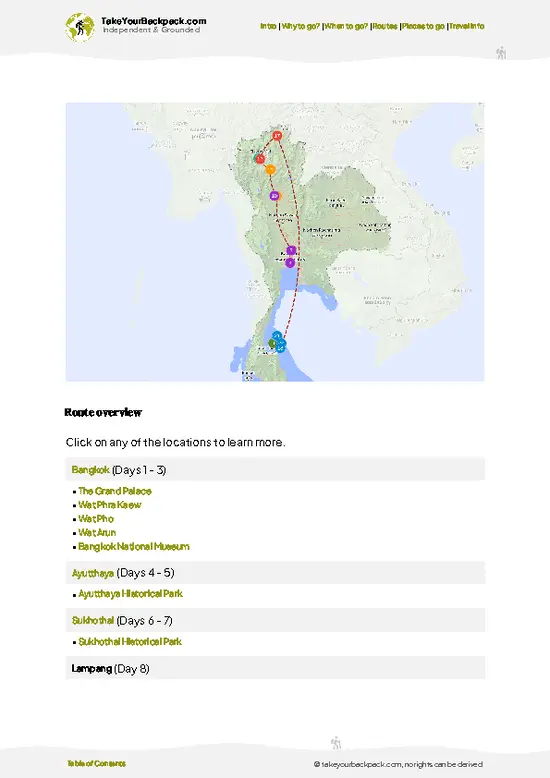
example page 0 from our offline Travel Guide for Thailand
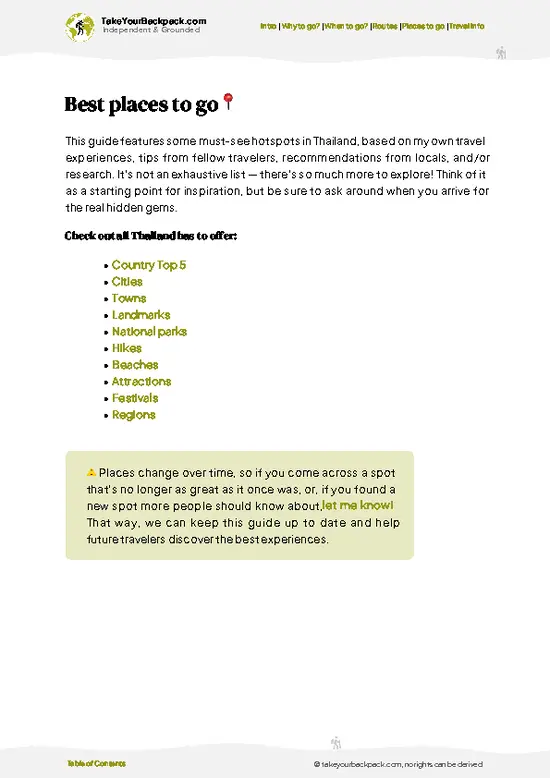
example page 1 from our offline Travel Guide for Thailand
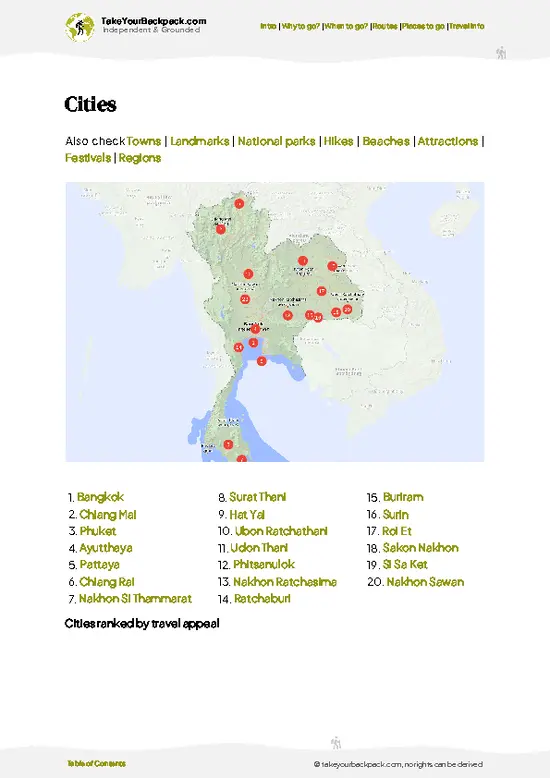
example page 2 from our offline Travel Guide for Thailand
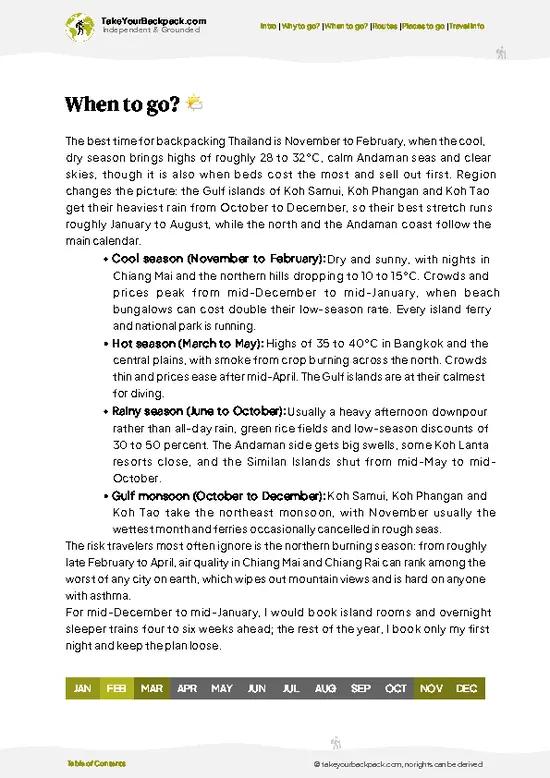
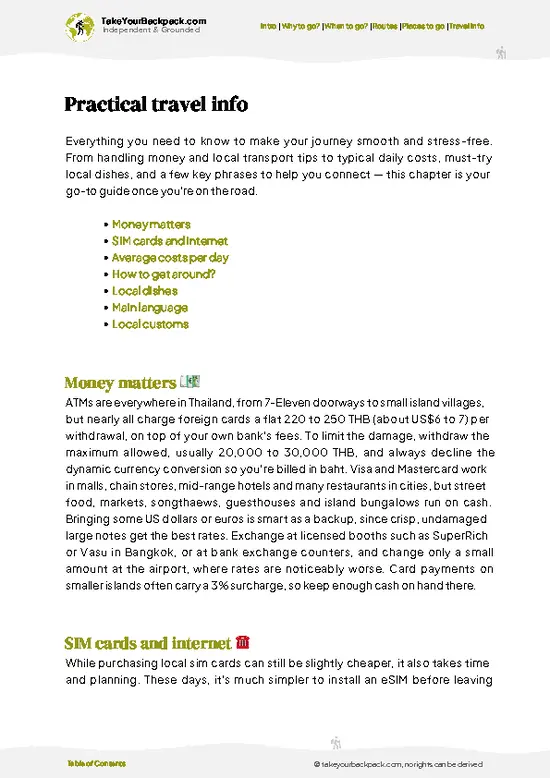
example page 3 from our offline Travel Guide for Thailand
example page 4 from our offline Travel Guide for Thailand
example page 5 from our offline Travel Guide for Thailand
example page 6 from our offline Travel Guide for Thailand
example page 7 from our offline Travel Guide for Thailand
The digital guide (510 pages) contains:
139 highlights, ranked by travel appeal
Optimized 7, 14 & 21-day travel routes
Cities, national parks, landmarks, beaches
How to get around
Offline-friendly for travel without Wi-Fi
👉 Click to see all 30+ guide features

📅 Plan smarter in minutes, not weeks
Month by month travel advice
Festivals & national holidays
Budget expectations

🗺️ Go to the right places, skip the overrated ones
Honest pros & cons of destinations
Top hikes, parks & viewpoints
Lesser-known places most travelers miss
Clear “worth it vs skip it” guidance

🛏️ Travel smoothly without rookie mistakes
Best areas to stay
Transport systems explained simply
Common scams & safety advice
SIM cards, money & practical tips

🌍 Understand the country, not just visit it
Culture & traditions
52 Essential phrases & customs
Festivals worth planning around
Traveler-friendly historical context
Insights that make places more meaningful

📱 Built for real travel conditions
Fully downloadable PDF
Works completely offline
Optimized for phone use
Useful in remote areas & buses
Everything in one place
Save weeks of stressful planning
Get instant access to your full guide. 30‑day money-back guarantee.


By proceeding you agree to our terms.
Sent to your inbox immediately after payment • 100% Secure Checkout
Best Backpacking Travel Advisor 2025 tourism awardBest Backpacking
Travel Advisor
2025
What others say about Take Your Backpack Guides:
⭐⭐⭐⭐⭐
Fantastic, amazing amount of information!
⭐⭐⭐⭐⭐
My goodness this is amazing, it's what I've been looking for hats off too you!
⭐⭐⭐⭐⭐
I think this is absolutely BRILLIANT
⭐⭐⭐⭐
Very complete and informative. It's still missing places, but I gotta to commend you
⭐⭐⭐⭐⭐
This is truly amazing, thank you, can't wait to explore it with my kids!
⭐⭐⭐⭐⭐
Awesome resource, thank you!
⭐⭐⭐⭐⭐
This is amazing! Can't wait to explore the ones I haven't seen
⭐⭐⭐⭐
I love this! Well done, great idea.
⭐⭐⭐⭐⭐
Thanks for taking the time to make this gem!
⭐⭐⭐⭐⭐
This might be the best website I've ever seen.
⭐⭐⭐⭐⭐
Congratulations, and thank you so much for your work; it's incredibly valuable.
⭐⭐⭐⭐
In all seriousness I think you did a great job pointing out the important spots
⭐⭐⭐⭐⭐
10/10 very good
⭐⭐⭐⭐⭐
As someone who's only just starting to visit regularly this is awesome, thank you.
⭐⭐⭐⭐
Thank you very much! I'm going to visit my dad, it's going to be very useful!
⭐⭐⭐⭐⭐
This is really cool! We'll be travelling for the first time and this definitely come in handy.
⭐⭐⭐⭐⭐
You are now our minister of culture, congratulations 👨‍💼
⭐⭐⭐⭐⭐
Just wanted to tell you that this is a pearl! Going to follow your recommendations.
⭐⭐⭐⭐⭐
This is so cool. I'll definitely be using the resource for my travels soon.
⭐⭐⭐⭐⭐
This is very impressive! Good work.
⭐⭐⭐⭐⭐
This is an amazing and informative site. Very well done!

🛏️ Where to stay?Where staying makes the most sense

Staying near Wat Phra Kaew? You’re in for a wild ride. This iconic temple is a magnet for tourists, and yes, the crowds can be overwhelming. But don’t let that scare you off. The area around it has some solid options for backpackers.

First up, look at the Banglamphu neighborhood. It’s a classic for a reason. You’ll find a mix of budget guesthouses and lively hostels. The vibe is social, with plenty of backpackers swapping stories over cheap beers. Plus, you’re just a short walk from the temple, so you can beat the morning rush.

Then there’s Khao San Road. It’s the epicenter of backpacker culture. … read more 👉
Staying near Wat Phra Kaew? You’re in for a wild ride. This iconic temple is a magnet for tourists, and yes, the crowds can be overwhelming. But don’t let that scare you off. The area around it has some solid options for backpackers.

First up, look at the Banglamphu neighborhood. It’s a classic for a reason. You’ll find a mix of budget guesthouses and lively hostels. The vibe is social, with plenty of backpackers swapping stories over cheap beers. Plus, you’re just a short walk from the temple, so you can beat the morning rush.

Then there’s Khao San Road. It’s the epicenter of backpacker culture. Expect a carnival atmosphere, with street food, live music, and a ton of shops. Sure, it’s touristy, but it’s also a great place to meet fellow travelers. Just be prepared for noise and chaos—if you want peace, this isn’t your spot.

For a quieter experience, check out the area around Phra Athit Road. It’s a bit more laid-back, with charming cafes and riverside views. You can still access the temple easily, but you’ll escape some of the madness.

No matter where you land, just remember: the real magic lies in the stories you’ll collect along the way.

👛 Costs (as of 11 June 2026)Travel costs and budget guide for Wat Phra Kaew

Visiting Wat Phra Kaew, the Temple of the Emerald Buddha, is a must, but it comes with its own set of costs that you should know about.
  • Entrance Fee: Expect to pay around 500 THB (about $15 USD). This ticket grants you access to the temple complex, but be prepared for the crowds. It’s a popular spot, so go early to avoid the peak times.
  • Dress Code: You’ll need to dress appropriately. If you don’t have the right attire, you might have to rent or buy a sarong or cover-up, which can cost around 100-200 THB ($3-$6 USD). It’s a hassle, so plan ahead.
  • Guided Tours: If you want to dive deeper into the history and significance, consider a guided tour. Prices range from 1,000 to 2,500 THB ($30-$75 USD) depending on the length and inclusions. It’s worth it for the insights, but shop around for the best
read more 👉
Visiting Wat Phra Kaew, the Temple of the Emerald Buddha, is a must, but it comes with its own set of costs that you should know about.
  • Entrance Fee: Expect to pay around 500 THB (about $15 USD). This ticket grants you access to the temple complex, but be prepared for the crowds. It’s a popular spot, so go early to avoid the peak times.
  • Dress Code: You’ll need to dress appropriately. If you don’t have the right attire, you might have to rent or buy a sarong or cover-up, which can cost around 100-200 THB ($3-$6 USD). It’s a hassle, so plan ahead.
  • Guided Tours: If you want to dive deeper into the history and significance, consider a guided tour. Prices range from 1,000 to 2,500 THB ($30-$75 USD) depending on the length and inclusions. It’s worth it for the insights, but shop around for the best deal.
  • Food and Drinks: There are vendors around, but prices can be inflated due to the tourist traffic. Budget about 100-300 THB ($3-$9 USD) for a meal. If you want something authentic, venture a bit further from the temple.
  • Transportation: Getting there can vary. A tuk-tuk ride from central Bangkok might cost you around 150-300 THB ($4-$9 USD). Public transport is cheaper, but less convenient if you’re carrying gear.

The experience is rich, but be ready for the reality of the crowds and costs. It’s not just about the Instagram shots; it’s about soaking in the culture and history that makes this place truly special.
⚠️ Prices can change and everyone travels differently, so take this as a rough guide. Hope it helps you plan your adventure!

Other Thai landmarks near Wat Phra Kaew

Explore more nearby:


💡 Not sure where to go next?
Create a personalized itinerary for Thailand including Wat Phra Kaew and the places that fit your trip.

Generate my itinerary

👉 Discover all landmarks

Or checkout all Thailand has to offer (think cities, towns, villages, national parks, hikes, beaches, festivals)
Country photo of Thailand

We 💚 feedbackKey takeaways before you go

Wat Phra Kaew is a dazzling spectacle, no doubt. The intricate details of the Emerald Buddha and the surrounding architecture are breathtaking. But let’s be real: the crowds can be overwhelming, especially during peak hours. You’ll be jostling for space with selfie sticks and tour groups. Still, if you can navigate the chaos, the spiritual energy and artistry here are worth every moment. Just go early or late to soak it all in without the frenzy.

✈️ When did I visit Thailand?
Before visiting Vietnam (1998), I had some time in Thailand to explore the country.

✍️ Help improve this page!
The information on this page is based on my own backpacking experience in Thailand, supplemented with up-to-date research and feedback from other travelers. Travel details can change, so if you notice anything outdated or incomplete, feel free to let me know.


🙋‍♂️ Give feedback

👋 Meet the founderWho’s Behind Take Your Backpack?

Johan, backpacker and founder of TakeYourBackpackHi, I’m Johan (Netherlands 🇳🇱), the creator of TakeYourBackpack. Over the past decade, I’ve backpacked through 80+ countries across six continents, gaining extensive experience with independent travel, long-term trips, and overland routes.

This site is built on a combination of firsthand travel experience and carefully curated insights from other backpackers. Many guides are based on places I’ve personally visited, while others bring together tips, observations, and practical advice shared by trusted travelers I’ve met along the way.

The goal is to provide realistic, experience-driven guidance — not generic itineraries — so you can explore destinations with better context, clearer expectations, and more confidence.

Get full Thailand guide •
Instant download • 139 highlights • Full Offline guide