×

Timor-Leste🇹🇱 | attractionsAlola FoundationFixed prices, plant-dyed thread, women's looms, Alola Esperança shop | things to do and best time to go

Explore Motael ChurchExplore Arbiru Beach

Backpacking in Alola Foundation
👀 For curious travelersattraction ranked #9
By Johan Kruseman 🇳🇱 | Updated October 15, 2026

Prices on the shelves are fixed, so you can buy here without the haggling that eats half an hour at stalls elsewhere. The center is in Dili, in the north of Timor-Leste, and the weaving it supports is slow, quiet work. Expect the soft clack of looms, the earthy smell of plant-dyed thread, and cloth that feels dense and slightly rough under your thumb. Check the dye and the stitching before you choose, because natural-dyed pieces cost more and fade differently from chemical ones, and that is why they are worth asking about. Come with small bills, since card machines are unreliable. It is calmer and more orderly than the Tais Market, which is louder, cheaper and entirely about bargaining.

Discover everything you want to know in the 📖 Timor-Leste Travel Guide.


example page 0 from our offline Travel Guide for Timor-Leste
example page 1 from our offline Travel Guide for Timor-Leste
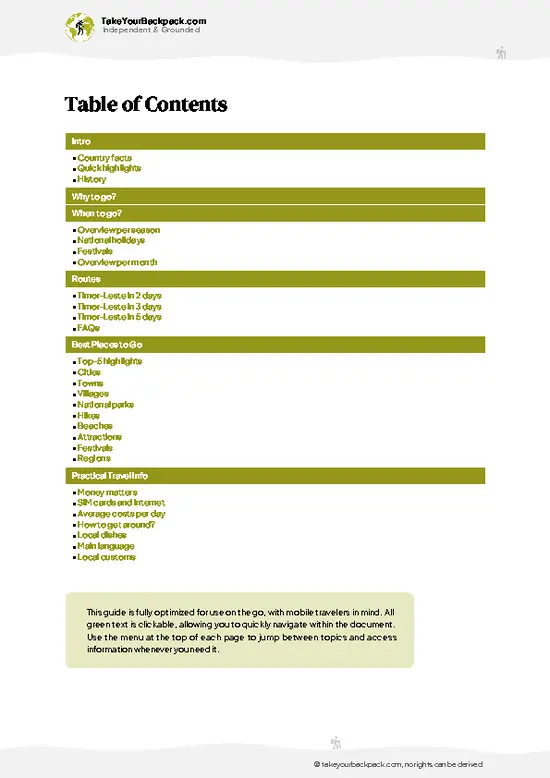
example page 2 from our offline Travel Guide for Timor-Leste
example page 3 from our offline Travel Guide for Timor-Leste
example page 4 from our offline Travel Guide for Timor-Leste
example page 5 from our offline Travel Guide for Timor-Leste
example page 6 from our offline Travel Guide for Timor-Leste
example page 7 from our offline Travel Guide for Timor-Leste
Loading the map 🌍
CLICK TO FILTER
cities
towns
villages
national parks
hikes
beaches
attractions
festivals
regions
SHOW COUNTRY’S BESTSHOW ALL

✨ Why go?
Ranked #9 attraction in Timor-Leste
What sets this place apart

Tais is the cloth Timorese families wear at weddings, funerals and ceremonies, and every district has its own patterns. Here you can learn to read them instead of guessing. The Alola Foundation, started in 2001, links that craft to a cause: income for women weavers and support for women’s health and education. Your purchase goes somewhere you can trace, which is rare in souvenir shopping.

It also earns a place on a Dili day because it takes little time. A browse through the tais shop and weaving area fits between a museum stop and lunch, and it gives you context that makes the villages and highland markets you reach later easier to understand. If you plan to go to Oecusse, Lospalos or Maubisse, the patterns you learn here will help you spot where a cloth came from.

💡 HighlightsEssential experiences to have while visiting Alola Foundation

  1. The Tais weaving workshop: The Alola Foundation, founded in 2001 by former First Lady Kirsty Sword Gusmão, supports women’s livelihoods, and weaving is one strand of that work. Look for looms, spools of hand-spun cotton and women working the warp with practiced fingers. Ask before photographing anyone.
  2. Natural dye colors: Traditional tais draws its reds, browns, indigos and yellows from bark, leaves and roots. Seeing the colors up close explains why a hand-dyed cloth looks deeper and softer than a synthetic one.
  3. Alola Esperança shop: The retail space sells scarves, bags, table runners and wall hangings made by women’s groups. Prices reflect weeks of labor, so expect to pay more than at a roadside stall, and know the money goes back to the weavers.
  4. Regional pattern comparison: Each district has
… read more 👉
  1. The Tais weaving workshop: The Alola Foundation, founded in 2001 by former First Lady Kirsty Sword Gusmão, supports women’s livelihoods, and weaving is one strand of that work. Look for looms, spools of hand-spun cotton and women working the warp with practiced fingers. Ask before photographing anyone.
  2. Natural dye colors: Traditional tais draws its reds, browns, indigos and yellows from bark, leaves and roots. Seeing the colors up close explains why a hand-dyed cloth looks deeper and softer than a synthetic one.
  3. Alola Esperança shop: The retail space sells scarves, bags, table runners and wall hangings made by women’s groups. Prices reflect weeks of labor, so expect to pay more than at a roadside stall, and know the money goes back to the weavers.
  4. Regional pattern comparison: Each district has its own motifs and color habits, from the geometric designs of the highlands to the finer work of the coast. Staff can tell you which region a cloth comes from, and that knowledge makes a better souvenir choice.
  5. The tais as ceremony cloth: In Timor-Leste, tais is worn at weddings and funerals and exchanged between families. Understanding that gives you a reason to buy a piece that is meaningful, not a trinket.
  6. Handmade accessories and smaller pieces: Coin purses, bracelets and bookmarks are light, easy to pack and a good entry point if your backpack is already full. Check stitching and fringes before paying.
Skip the accessories shelf if time is short and spend it watching the weavers instead.
Spotted a mistake or missing something? Contact us.

Things to do near Alola Foundation

Ratings based on Tripadvisor reviews. When you book through this link, you support our work at no extra cost to you.

🌤️ When to go?Best time to visit Alola Foundation

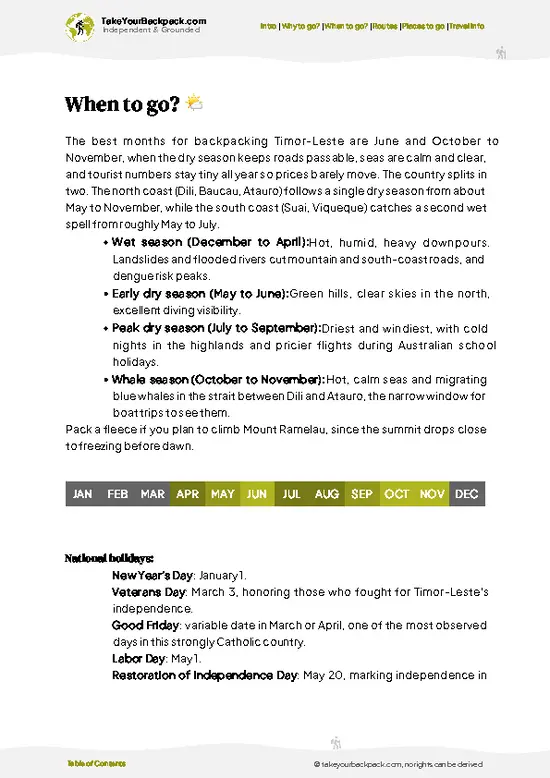
  • Dry Season (May to November): Dili sees little rain, with days around 30 to 33°C (86 to 91°F) and sunrise near 6:30 a.m. Walking between the center and the Dili waterfront is easiest now, and the weaving center is open for visits and shopping during standard weekday hours.
  • Wet Season (December to April): Afternoon downpours arrive, humidity climbs, and temperatures stay near 28 to 32°C (82 to 90°F). Mornings are usually clearer, and the roads in town can flood briefly.
  • Crowds and Prices: Dili has few tourists in any month. Prices barely shift, though flights and guesthouses tighten around Independence Restoration Day on May 20 and the Christmas period.
  • Daylight: Days run about 12 hours all year, with dark by 6:30 p.m.
Visit on a weekday morning, since the workshop is quiet on weekends and holidays.

source: climatestotravel.comJANJanuary: fair for travelingFEBFebruary: fair for travelingMARMarch: fair for travelingAPRApril: fair for travelingMAYMay: highly recommended for travelingJUNJune: excellent for travelingJULJuly: excellent for travelingAUGAugust: excellent for travelingSEPSeptember: excellent for travelingOCTOctober: highly recommended for travelingNOVNovember: fair for travelingDECDecember: fair for traveling
when-to-go

✈️ The backpacker research shortcutTimor-Leste Travel Guide

An offline-friendly backpacking guide with optimized travel routes, ranked highlights, transport advice, and the best areas to stay.
example page 0 from our offline Travel Guide for Timor-Leste
example page 1 from our offline Travel Guide for Timor-Leste
example page 2 from our offline Travel Guide for Timor-Leste
example page 3 from our offline Travel Guide for Timor-Leste
example page 4 from our offline Travel Guide for Timor-Leste
example page 5 from our offline Travel Guide for Timor-Leste
example page 6 from our offline Travel Guide for Timor-Leste
example page 7 from our offline Travel Guide for Timor-Leste
The digital guide (171 pages) contains:
✅ 46 highlights, ranked by travel appeal
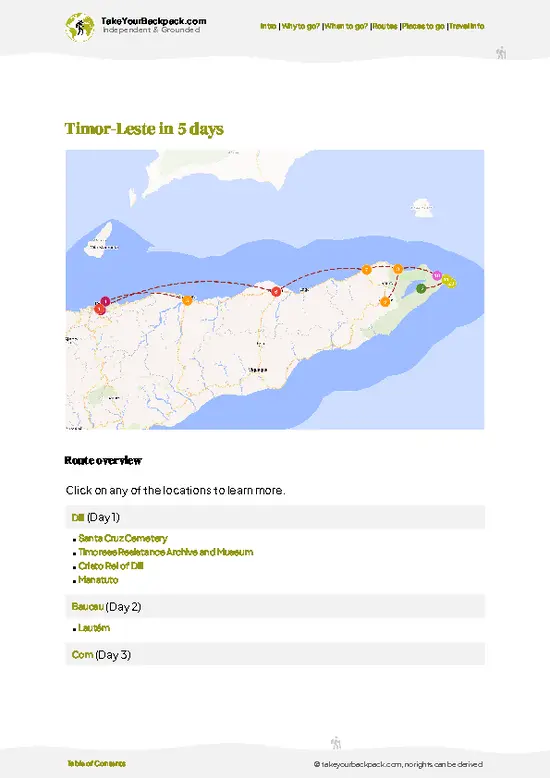
✅ Optimized 2, 3 & 5-day travel routes
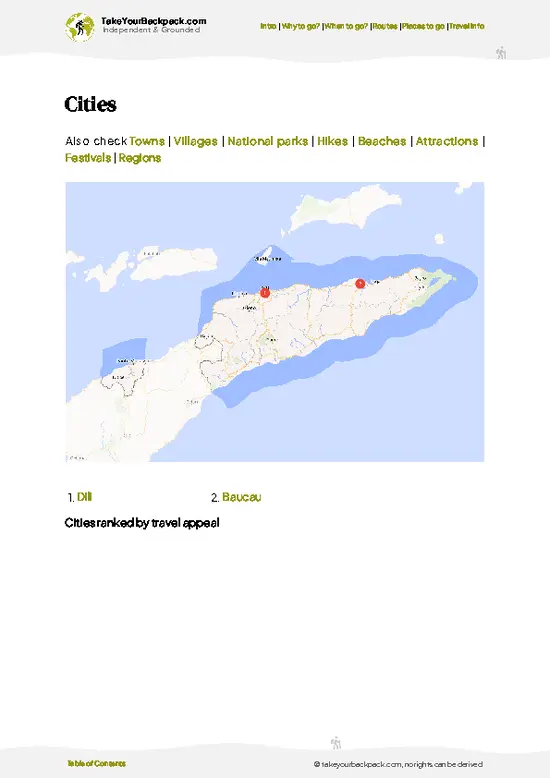
✅ Cities, national parks, landmarks, beaches
✅ How to get around
✅ Offline-friendly for travel without Wi-Fi
👉 Click to see all 30+ guide features

📅 Plan smarter in minutes, not weeks
✅ Month by month travel advice
✅ Festivals & national holidays
✅ Budget expectations

🗺️ Go to the right places, skip the overrated ones
✅ Honest pros & cons of destinations
✅ Top hikes, parks & viewpoints
✅ Lesser-known places most travelers miss
✅ Clear “worth it vs skip it” guidance

🛏️ Travel smoothly without rookie mistakes
✅ Best areas to stay
✅ Transport systems explained simply
✅ Common scams & safety advice
✅ SIM cards, money & practical tips

🌍 Understand the country, not just visit it
✅ Culture & traditions
✅ 52 Essential phrases & customs
✅ Festivals worth planning around
✅ Traveler-friendly historical context
✅ Insights that make places more meaningful

📱 Built for real travel conditions
✅ Fully downloadable PDF
✅ Works completely offline
✅ Optimized for phone use
✅ Useful in remote areas & buses
✅ Everything in one place
Stop searching, start planning
Get instant access to your full guide. 30‑day money-back guarantee.
+ Add another guide for just

By proceeding you agree to our terms.
Sent to your inbox immediately after payment • 100% Secure Checkout
Best Backpacking Travel Advisor 2025 tourism awardBest Backpacking
Travel Advisor
2025
What others say about Take Your Backpack Guides:
⭐⭐⭐⭐⭐
Fantastic, amazing amount of information!
⭐⭐⭐⭐⭐
My goodness this is amazing, it's what I've been looking for hats off too you!
⭐⭐⭐⭐⭐
I think this is absolutely BRILLIANT
⭐⭐⭐⭐
Very complete and informative. It's still missing places, but I gotta to commend you
⭐⭐⭐⭐⭐
This is truly amazing, thank you, can't wait to explore it with my kids!
⭐⭐⭐⭐⭐
Awesome resource, thank you!
⭐⭐⭐⭐⭐
This is amazing! Can't wait to explore the ones I haven't seen
⭐⭐⭐⭐
I love this! Well done, great idea.
⭐⭐⭐⭐⭐
Thanks for taking the time to make this gem!
⭐⭐⭐⭐⭐
This might be the best website I've ever seen.
⭐⭐⭐⭐⭐
Congratulations, and thank you so much for your work; it's incredibly valuable.
⭐⭐⭐⭐
In all seriousness I think you did a great job pointing out the important spots
⭐⭐⭐⭐⭐
10/10 very good
⭐⭐⭐⭐⭐
As someone who's only just starting to visit regularly this is awesome, thank you.
⭐⭐⭐⭐
Thank you very much! I'm going to visit my dad, it's going to be very useful!
⭐⭐⭐⭐⭐
This is really cool! We'll be travelling for the first time and this definitely come in handy.
⭐⭐⭐⭐⭐
You are now our minister of culture, congratulations 👨‍💼
⭐⭐⭐⭐⭐
Just wanted to tell you that this is a pearl! Going to follow your recommendations.
⭐⭐⭐⭐⭐
This is so cool. I'll definitely be using the resource for my travels soon.
⭐⭐⭐⭐⭐
This is very impressive! Good work.
⭐⭐⭐⭐⭐
This is an amazing and informative site. Very well done!

🛏️ Where to stay?Where staying makes the most sense

The best base is central Dili, around the Farol and Colmera districts, since the Alola Foundation sits in the city and everything is reachable by short microlet or taxi ride. Farol has the densest cluster of budget guesthouses and backpacker-friendly places, along with cafes and restaurants on the waterfront road. It is flat, lit at night, and easy to walk in the evening, though solo travelers should still take a taxi after dark. Colmera is busier and more local, with markets, small eateries, and the main microlet hub close by, which makes cheap transport simple. The area near the Government Palace … read more 👉
The best base is central Dili, around the Farol and Colmera districts, since the Alola Foundation sits in the city and everything is reachable by short microlet or taxi ride. Farol has the densest cluster of budget guesthouses and backpacker-friendly places, along with cafes and restaurants on the waterfront road. It is flat, lit at night, and easy to walk in the evening, though solo travelers should still take a taxi after dark. Colmera is busier and more local, with markets, small eateries, and the main microlet hub close by, which makes cheap transport simple. The area near the Government Palace and the Motael church is calmer and good for travelers who want quiet. Many budget travelers meet at waterfront cafes and the Tais Market area, so you will find other backpackers without trying. Book ahead in May and late December, when beds are scarce. Avoid staying far out toward Comoro unless you have your own transport.

👛 Costs (as of 15 October 2026)Travel costs and budget guide for Alola Foundation

A day around the Alola Foundation and Tais Weaving Center costs roughly US$30 to 65 including a bed, food, local transport and a modest weaving purchase. Entry is free, and the main spending goes to accommodation and any textiles you buy. Timor-Leste uses the US dollar.
CategoryBudget RangeLocal Reality
EntryUS$0Visiting the center is free, though staff appreciate you buying something.
Accommodation (high season)US$15 to 30Dorm beds or simple guesthouse rooms in Farol or Colmera.
FoodUS$6 to 15Local warungs serve rice and fish for US$3 to 5; cafes cost more.
Local TransportUS$1 to 8Microlets cost about US$0.25 to 0.50 per ride; taxis run US$3 to 8 across town.
Tais and CraftsUS$8 to 12Small items like bags and scarves start around US$8; large woven cloths cost US$40 and up.
Total Daily BudgetUS$30 to 65Per person, per day, in high season.
⚠️ Prices can change and everyone travels differently, so take this as a rough guide. Hope it helps you plan your adventure!

FAQFrequently asked questions about Alola Foundation

Allow one to two hours for the Alola Foundation and Tais Weaving Center. That covers watching weavers work, browsing the shop, and asking about the natural dyes and regional patterns. Add another hour if you want to visit nearby Tais Market, which is a short walk or ride away.
Yes, because there is no entrance fee, and the money you spend goes to women’s programs and weavers. Small items such as bags and scarves start around US$8, while full tais cloths cost US$40 and up depending on size and dye. Buying here also gives you better information on the origin of each pattern than the open markets.
The center is in Dili, and the easiest way is a taxi from the center or airport, costing about US$3 to 8 depending on distance. Microlets run along the main roads for US$0.25 to 0.50 a ride, and the trip from Farol takes roughly 10 to 20 minutes. Nicolau Lobato International Airport is about 15 minutes away by car.
⚠️ Things can change over time, so always validate details locally before you go.

Other Timorese attractions near Alola Foundation

Explore more nearby:


💡 Not sure where to go next?
Create a personalized itinerary for Timor-Leste including Alola Foundation and the places that fit your trip.

Generate my itinerary

👉 Discover all attractions

Or checkout all Timor-Leste has to offer (think cities, towns, villages, national parks, hikes, beaches, festivals)
Country photo of Timor-Leste

We 💚 feedbackKey takeaways before you go

Go on a weekday morning, when the light is good for judging dye colors and the weavers are usually at work. Bring cash and leave a little room in your pack. I would buy one properly made cloth here rather than several cheap pieces, and ask about the dye before you pay.

✍️ Help improve this page!
The information on this page is based on in-depth research, insights shared by experienced travelers, and feedback from the local travel community in Timor-Leste. While every effort is made to keep the information accurate and current, conditions can change — so if you spot anything incorrect or outdated, please get in touch.


🙋‍♂️ Give feedback

👋 Meet the founderWho’s Behind Take Your Backpack?

Johan, backpacker and founder of TakeYourBackpackHi, I’m Johan (Netherlands 🇳🇱), the creator of TakeYourBackpack. Over the past 3 decades, I’ve backpacked through 90+ countries across six continents, gaining extensive experience with independent travel, long-term trips, and overland routes.

This site is built on a combination of firsthand travel experience and carefully curated insights from other backpackers. Many guides are based on places I’ve personally visited, while others bring together tips, observations, and practical advice shared by trusted travelers I’ve met along the way.

The goal is to provide realistic, experience-driven guidance — not generic itineraries — so you can explore destinations with better context, clearer expectations, and more confidence.