
×

Timor-Leste🇹🇱 | festivalsDili CarnivalDili seafront parade, homemade costumes, brass and drums, neighborhood teams | things to do and best time to go

Explore Baucau Music FestivalExplore Lafaek Diak Festival

Backpacking in Dili Carnival
👀 For curious travelersfestival ranked #6
By Johan Kruseman 🇳🇱 | Updated October 15, 2026

Dili Carnival in Timor-Leste is not one giant street party but a run of separate events, and the biggest crowds gather in Dili, the capital, on the central waterfront along Avenida de Portugal. Expect brass and drum groups, painted faces, costumes, floats of schoolchildren and neighborhood teams moving under hard equatorial light, with grilled corn smoke and diesel in the air. Dates shift each year, so confirm them locally before booking, because guesthouses near the seafront fill early and prices jump. Carry small US dollar bills (the currency used in Timor-Leste), since vendors rarely break big notes. Heat and slow microlet minibuses cause delays, so walk the final stretch and carry water. Roads close without much warning, so arrive early. Friendly, local, and low-key, it suits curious travelers who like watching community life up close. It will disappoint anyone chasing a massive, polished, all-night festival.

Part of Backpacking in Timor-Leste: all 46 places on one map, with routes and the best time to go.
Discover everything you want to know in the 📖 Timor-Leste Travel Guide.
Loading the map 🌍
CLICK TO FILTER
cities
towns
villages
national parks
hikes
beaches
attractions
festivals
regions
SHOW COUNTRY’S BESTSHOW ALL

✨ Why go?
Ranked #6 festival in Timor-Leste
Why visitors keep coming back

Backpackers plan around Dili Carnival because it shows Dili outside its usual embassy-and-expat rhythm. The crowd is mostly local families, so you end up standing beside neighborhood groups rehearsing for weeks, sharing a plastic stool with someone's grandmother, and getting waved into photos. That social ease is rare on the standard Southeast Asia circuit, where festivals are heavily packaged.

The second reason is value. Watching costs nothing, street food is cheap, and the whole thing fits easily inside a normal Dili stay. Compared with the big regional parties, you spend your money on food and a good seat in a cafe instead of a ticket.

It also slots into a longer route through the country. Pair it with a climb up to Cristo Rei for the view over the bay, then head to Atauro Island for … read more 👉
Backpackers plan around Dili Carnival because it shows Dili outside its usual embassy-and-expat rhythm. The crowd is mostly local families, so you end up standing beside neighborhood groups rehearsing for weeks, sharing a plastic stool with someone's grandmother, and getting waved into photos. That social ease is rare on the standard Southeast Asia circuit, where festivals are heavily packaged.

The second reason is value. Watching costs nothing, street food is cheap, and the whole thing fits easily inside a normal Dili stay. Compared with the big regional parties, you spend your money on food and a good seat in a cafe instead of a ticket.

It also slots into a longer route through the country. Pair it with a climb up to Cristo Rei for the view over the bay, then head to Atauro Island for diving or into the mountains around Maubisse once the drums quiet down.

💡 HighlightsEssential experiences to have while celebrating the Dili Carnival

  1. Waterfront parade route in Dili: The main procession follows the seafront, where the bay breeze cuts the heat and you can see groups approach from a long way off. Costumes are homemade and the energy is local rather than staged.
  2. Neighborhood costume groups: Each community builds its own look, from painted faces to feathered headpieces. Watching them pass shows how much organizing goes on behind the scenes.
  3. Drum and brass bands: The percussion rolls through your chest from a block away. Stand close to the front and you feel every beat.
  4. Street food stalls along the route: Grilled corn, fried bananas and skewers are sold from carts and tables. Smoke, sugar and charcoal mark where the crowd is thickest.
  5. Cristo Rei viewpoint: The statue on the headland east of the center gives a wide view of the bay
… read more 👉
  1. Waterfront parade route in Dili: The main procession follows the seafront, where the bay breeze cuts the heat and you can see groups approach from a long way off. Costumes are homemade and the energy is local rather than staged.
  2. Neighborhood costume groups: Each community builds its own look, from painted faces to feathered headpieces. Watching them pass shows how much organizing goes on behind the scenes.
  3. Drum and brass bands: The percussion rolls through your chest from a block away. Stand close to the front and you feel every beat.
  4. Street food stalls along the route: Grilled corn, fried bananas and skewers are sold from carts and tables. Smoke, sugar and charcoal mark where the crowd is thickest.
  5. Cristo Rei viewpoint: The statue on the headland east of the center gives a wide view of the bay and the city. Go in the cooler early hours before the festivities, and expect a long stair climb.
If time is short, skip the viewpoint climb and stay with the parade.
Spotted a mistake or missing something? Contact us.

Things to do near Dili Carnival

Ratings based on Tripadvisor reviews. When you book through this link, you support our work at no extra cost to you.

🌤️ When to go?When is the celebration of Dili Carnival?

Dili Carnival in Dili is held in February or early March, usually over a few days around the Catholic calendar, with the parade running along the seafront Avenida de Portugal (Dili waterfront) near the Palácio do Governo; exact dates shift each year, so check locally.
  • Best day: The main parade day is the one to catch, when school groups, dance troupes and community floats in costume move along the waterfront. Quieter days mean rehearsals and smaller gatherings.
  • Weather: Expect wet-season heat of 27 to 32°C (81 to 90°F), humid air and sudden downpours, mostly in the afternoon. Bring a light rain jacket, sunscreen, a hat and sandals that can get muddy.
  • Booking: Dili has few beds, so reserve a room two to four weeks ahead. Prices rise modestly, perhaps 10 to 20 percent, in central guesthouses.
  • Crowds:
… read more 👉
Dili Carnival in Dili is held in February or early March, usually over a few days around the Catholic calendar, with the parade running along the seafront Avenida de Portugal (Dili waterfront) near the Palácio do Governo; exact dates shift each year, so check locally.
  • Best day: The main parade day is the one to catch, when school groups, dance troupes and community floats in costume move along the waterfront. Quieter days mean rehearsals and smaller gatherings.
  • Weather: Expect wet-season heat of 27 to 32°C (81 to 90°F), humid air and sudden downpours, mostly in the afternoon. Bring a light rain jacket, sunscreen, a hat and sandals that can get muddy.
  • Booking: Dili has few beds, so reserve a room two to four weeks ahead. Prices rise modestly, perhaps 10 to 20 percent, in central guesthouses.
  • Crowds: Arrive on the waterfront early in the morning, before road closures. Leave on foot or by microlet (shared minibus) after the crowds thin.
Stake out a shaded spot along the route by mid-morning, before the heat builds.


source: climatestotravel.comJANJanuary: not recommended for travelingFEBFebruary: not recommended for travelingMARMarch: not recommended for travelingAPRApril: not recommended for travelingMAYMay: excellent for travelingJUNJune: excellent for travelingJULJuly: excellent for travelingAUGAugust: excellent for travelingSEPSeptember: excellent for travelingOCTOctober: excellent for travelingNOVNovember: not recommended for travelingDECDecember: not recommended for traveling

✈️ The backpacker research shortcutTimor-Leste Travel Guide

What the free pages can't give you: ready-made routes, every place ranked, and it works offline. All in 1 guide.
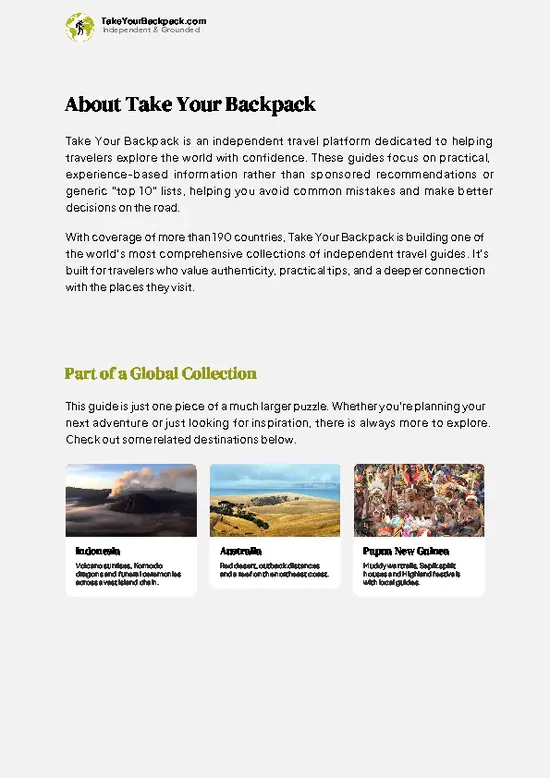
example page 0 from our offline Travel Guide for Timor-Leste
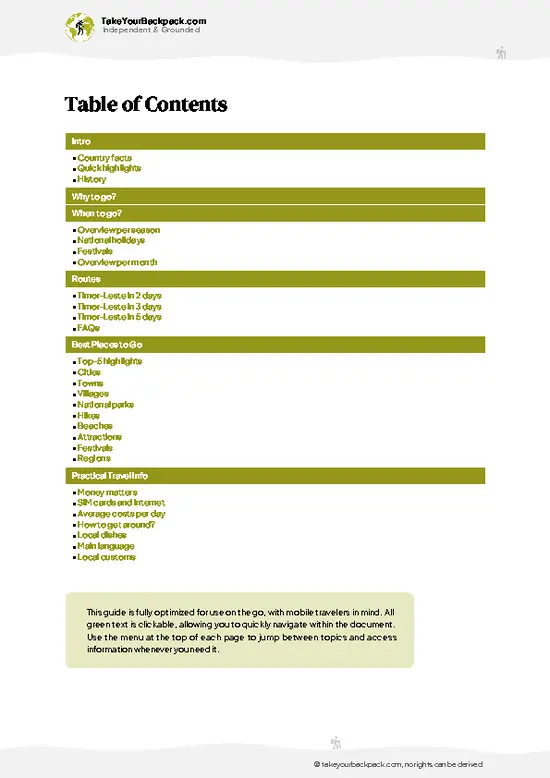
example page 1 from our offline Travel Guide for Timor-Leste
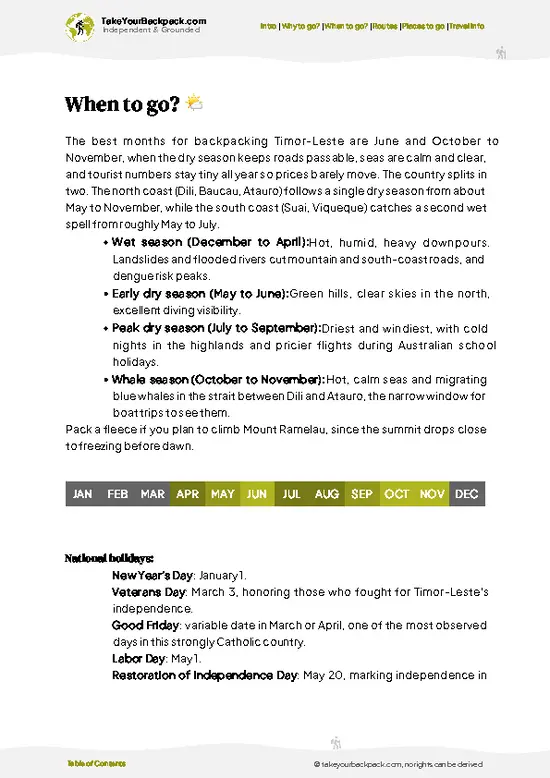
example page 2 from our offline Travel Guide for Timor-Leste
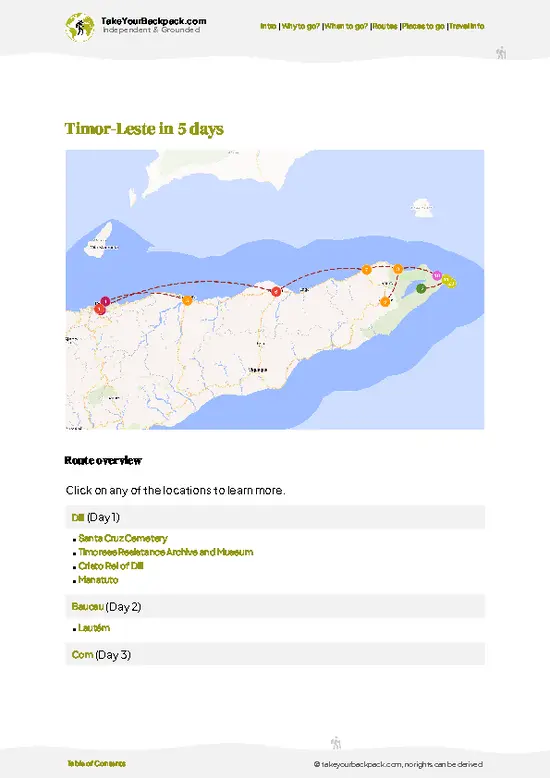
example page 3 from our offline Travel Guide for Timor-Leste
example page 4 from our offline Travel Guide for Timor-Leste
example page 5 from our offline Travel Guide for Timor-Leste
example page 6 from our offline Travel Guide for Timor-Leste
example page 7 from our offline Travel Guide for Timor-Leste
The digital guide (171 pages) contains:
✅ Ready-made 2, 3 & 5-day routes
✅ All 46 places ranked, so you skip the overrated ones
✅ Works offline, all in 1 guide
✅ Cities, national parks, landmarks, beaches
✅ How to get around
👉 Click to see all 30+ guide features

📅 Plan smarter in minutes, not weeks
✅ Month by month travel advice
✅ Festivals & national holidays
✅ Budget expectations

🗺️ Go to the right places, skip the overrated ones
✅ Honest pros & cons of destinations
✅ Top hikes, parks & viewpoints
✅ Lesser-known places most travelers miss
✅ Clear “worth it vs skip it” guidance

🛏️ Travel smoothly without rookie mistakes
✅ Best areas to stay
✅ Transport systems explained simply
✅ Common scams & safety advice
✅ SIM cards, money & practical tips

🌍 Understand the country, not just visit it
✅ Culture & traditions
✅ 52 Essential phrases & customs
✅ Festivals worth planning around
✅ Traveler-friendly historical context
✅ Insights that make places more meaningful

📱 Built for real travel conditions
✅ Fully downloadable PDF
✅ Works completely offline
✅ Optimized for phone use
✅ Useful in remote areas & buses
✅ All in 1 guide
Stop searching, start planning
Get instant access to your full guide. 30‑day money-back guarantee.
+ Add another guide for just

By proceeding you agree to our terms.
Sent to your inbox immediately after payment • 100% Secure Checkout
Best Backpacking Travel Advisor 2025 tourism awardBest Backpacking
Travel Advisor
2025
What others say about Take Your Backpack Guides:
⭐⭐⭐⭐⭐
Fantastic, amazing amount of information!
⭐⭐⭐⭐⭐
My goodness this is amazing, it's what I've been looking for hats off too you!
⭐⭐⭐⭐⭐
I think this is absolutely BRILLIANT
⭐⭐⭐⭐
Very complete and informative. It's still missing places, but I gotta to commend you
⭐⭐⭐⭐⭐
This is truly amazing, thank you, can't wait to explore it with my kids!
⭐⭐⭐⭐⭐
Awesome resource, thank you!
⭐⭐⭐⭐⭐
This is amazing! Can't wait to explore the ones I haven't seen
⭐⭐⭐⭐
I love this! Well done, great idea.
⭐⭐⭐⭐⭐
Thanks for taking the time to make this gem!
⭐⭐⭐⭐⭐
This might be the best website I've ever seen.
⭐⭐⭐⭐⭐
Congratulations, and thank you so much for your work; it's incredibly valuable.
⭐⭐⭐⭐
In all seriousness I think you did a great job pointing out the important spots
⭐⭐⭐⭐⭐
10/10 very good
⭐⭐⭐⭐⭐
As someone who's only just starting to visit regularly this is awesome, thank you.
⭐⭐⭐⭐
Thank you very much! I'm going to visit my dad, it's going to be very useful!
⭐⭐⭐⭐⭐
This is really cool! We'll be travelling for the first time and this definitely come in handy.
⭐⭐⭐⭐⭐
You are now our minister of culture, congratulations 👨‍💼
⭐⭐⭐⭐⭐
Just wanted to tell you that this is a pearl! Going to follow your recommendations.
⭐⭐⭐⭐⭐
This is so cool. I'll definitely be using the resource for my travels soon.
⭐⭐⭐⭐⭐
This is very impressive! Good work.
⭐⭐⭐⭐⭐
This is an amazing and informative site. Very well done!

🛏️ Where to stay?Where staying makes the most sense

Central Dili, the strip between the waterfront and Colmera, is the best base for backpackers, because the parade route is a short walk away and you can skip the cost and hassle of road closures. Look at the guesthouse and hostel streets around Farol and Bidau Santana. The neighborhoods are walkable by day, full of cafes, and the shared dorms and common terraces make it easy to meet other solo travelers, volunteers and expats who tend to gather there. Prices stay low compared with the beachfront hotels. Motorbike taxis and microlets (shared minibuses) run past most corners, so getting to the festival … read more 👉
Central Dili, the strip between the waterfront and Colmera, is the best base for backpackers, because the parade route is a short walk away and you can skip the cost and hassle of road closures. Look at the guesthouse and hostel streets around Farol and Bidau Santana. The neighborhoods are walkable by day, full of cafes, and the shared dorms and common terraces make it easy to meet other solo travelers, volunteers and expats who tend to gather there. Prices stay low compared with the beachfront hotels. Motorbike taxis and microlets (shared minibuses) run past most corners, so getting to the festival takes minutes.
As a second option, Areia Branca and the eastern coast road have quieter guesthouses, close to the sea and a bit calmer at night. They suit travelers who want to sleep soundly after a full day in the sun, though you will need a taxi or a motorbike ride to reach the parade. Avoid walking alone late at night in unlit areas away from the main road. Reserve early, since beds in the capital fill fast during the festival. Staying near the waterfront also helps with the afternoon rain, since you can duck back to your room.

👛 Costs (as of 15 October 2026)Money, prices, and spending tips

A realistic budget for Dili Carnival in Dili is about US$29 to 72 per day, with the parade itself free to watch.
CategoryBudget RangeLocal Reality
Festival ticketsUS$0The street parade along the waterfront is free to watch, with no entry fee.
AccommodationUS$15 to 40Dorm beds and simple guesthouse rooms in central Dili, with prices a little higher in festival week.
Local transportUS$3 to 8Microlets cost about US$0.25 to 0.50 per ride, and motorbike taxis or short taxi trips cost a few dollars.
Food & drinksUS$8 to 18Street grills and rice plates cost US$2 to 4, while a beer or coffee is about US$1 to 3.
Miscellaneous expensesUS$3 to 6Sunscreen, water, a rain poncho, small tips and SIM data.
Total Daily BudgetUS$29 to 72Per person, per day, in high season.
Carry small US dollar notes, since cards are rarely accepted at stalls and in guesthouses.
⚠️ Prices can change and everyone travels differently, so take this as a rough guide. Hope it helps you plan your adventure!

🍲 FoodLocal Flavors for Backpackers

Expect a waterfront full of street stalls during Dili Carnival, with grilled fish, chicken skewers and fried bananas (pisang goreng) sold from smoking charcoal grills. Plates of rice with fish, vegetables and a fiery sambal are the staple, and they fill you up cheaply. Try batar da'an, a comforting stew of corn, beans and pumpkin, if a stall has it, as it is one of the most local dishes you can find.
For drinks, look for fresh coconut cracked open in front of you, sweet iced tea and coffee. Timor-Leste grows excellent coffee, so a small, strong cup from a roadside vendor is worth taking between parade acts. Local Dili beer and bottled water are sold everywhere, and the beer turns warm quickly in the heat.
Carry small cash in US dollars, which is the national currency, as stalls rarely take cards … read more 👉
Expect a waterfront full of street stalls during Dili Carnival, with grilled fish, chicken skewers and fried bananas (pisang goreng) sold from smoking charcoal grills. Plates of rice with fish, vegetables and a fiery sambal are the staple, and they fill you up cheaply. Try batar da'an, a comforting stew of corn, beans and pumpkin, if a stall has it, as it is one of the most local dishes you can find.
For drinks, look for fresh coconut cracked open in front of you, sweet iced tea and coffee. Timor-Leste grows excellent coffee, so a small, strong cup from a roadside vendor is worth taking between parade acts. Local Dili beer and bottled water are sold everywhere, and the beer turns warm quickly in the heat.
Carry small cash in US dollars, which is the national currency, as stalls rarely take cards and big notes are hard to change. Lines are informal, so wait and catch the vendor's eye. Portions are generous, and sharing a plate with new friends is normal. Eat early, before the evening crowd arrives.

FAQCommon questions from travelers

Dili Carnival in Dili takes place in February or early March, tied to the Catholic calendar, so exact dates move each year. The main parade runs along the waterfront Avenida de Portugal near the Palácio do Governo, usually over a few days. Check dates locally a few weeks ahead.
Watching Dili Carnival costs nothing, since the street parade is free. A realistic daily budget is about US$29 to 72, mostly for a dorm or guesthouse bed at US$15 to 40 and food at US$8 to 18. Microlet rides cost about US$0.25 to 0.50.
No, tickets are not needed for the street parade along the Dili waterfront, which is open to anyone. What you should book ahead is a bed, ideally two to four weeks before, since Dili has limited rooms. Arrive early on parade day to find a shaded spot before roads close.
⚠️ Things can change over time, so always validate details locally before you go.

Other Timorese festivals near Dili Carnival

Explore more nearby:


💡 Not sure where to go next?
Create a personalized itinerary for Timor-Leste including Dili Carnival and the places that fit your trip.

Generate my itinerary

👉 Discover all festivals

Or checkout all Timor-Leste has to offer (think cities, towns, villages, national parks, hikes, beaches, festivals)
Country photo of Timor-Leste

We 💚 feedbackKey takeaways before you go

Watch the crowd as much as the parade. The small moments, like children in homemade costumes being fixed up by relatives at the roadside, tell you more about Dili than the main procession. I would bring a hat, a refillable bottle and small bills, and I would arrive early to claim a shady spot.

✍️ Help improve this page!
The information on this page is based on in-depth research, insights shared by experienced travelers, and feedback from the local travel community in Timor-Leste. While every effort is made to keep the information accurate and current, conditions can change — so if you spot anything incorrect or outdated, please get in touch.


🙋‍♂️ Give feedback

👋 Meet the founderWho’s Behind Take Your Backpack?

Johan, backpacker and founder of TakeYourBackpackHi, I’m Johan (Netherlands 🇳🇱), the creator of TakeYourBackpack. Over the past 25 years, I’ve backpacked through 88 countries across six continents, gaining extensive experience with independent travel, long-term trips, and overland routes.

This site is built on a combination of firsthand travel experience and carefully curated insights from other backpackers. Many guides are based on places I’ve personally visited, while others bring together tips, observations, and practical advice shared by trusted travelers I’ve met along the way.

The goal is to provide realistic, experience-driven guidance — not generic itineraries — so you can explore destinations with better context, clearer expectations, and more confidence.