

×

Togo🇹🇬 | beachesAného BeachLagoon and surf spit, German-era facades, dawn net hauling, pirogue rides | things to do and best time to go

Explore Marché de SokodéExplore Lomé Beach

Backpacking in Aného Beach
👍 Recommendedbeach ranked #2
By Johan Kruseman 🇳🇱 | Updated October 22, 2026

Fishermen drag long seine nets onto the sand here, chanting in rhythm while the surf slaps the shore, and you can watch it from the water’s edge on most mornings. Aného Beach lies in the southeast of Togo, east of Lomé and close to the Benin border, on a thin strip of land with the Atlantic on one side and a lagoon on the other. Coconut palms lean over soft, brownish sand that carries drift wood and some litter. Swimming is a poor idea, because the undertow is strong and there are no lifeguards. Skip it for snorkeling or surf too. The beach is quiet, the crowds nonexistent, and basic guesthouses and grilled fish stalls are easy to find in town. The faded German-era facades behind the shore deserve far more of your time than the waterline does. Stay for the salt air, the creak of pirogues and the smell of woodsmoke from fish smokers.

Discover everything you want to know in the 📖 Togo Travel Guide.


example page 0 from our offline Travel Guide for Togo
example page 1 from our offline Travel Guide for Togo
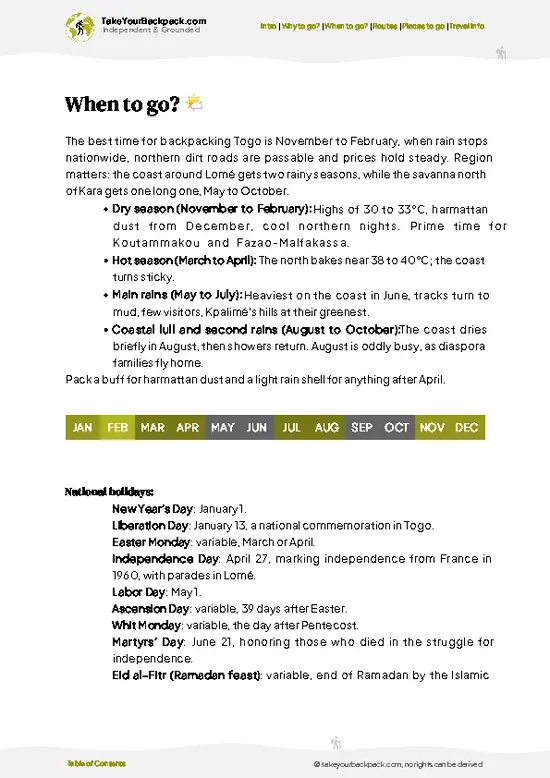
example page 2 from our offline Travel Guide for Togo
example page 3 from our offline Travel Guide for Togo
example page 4 from our offline Travel Guide for Togo
example page 5 from our offline Travel Guide for Togo
example page 6 from our offline Travel Guide for Togo
example page 7 from our offline Travel Guide for Togo
Loading the map 🌍
CLICK TO FILTER
cities
towns
landmarks
national parks
hikes
beaches
attractions
festivals
regions
SHOW COUNTRY’S BESTSHOW ALL

✨ Why go?
Ranked #2 beach in Togo
The unique appeal for travelers

Aného Beach earns its stop because it is one of the few places on the Togolese coast where history sits right behind the sand. This was the colonial capital under the Germans, and the old governor-era buildings of the Zébé quarter still stand a short walk from the shore, peeling and half-swallowed by vegetation. That gives a beach day some substance, and photographers love the textures.

The second reason is the lagoon on the opposite side of the sand strip. You can stand with the ocean on your left and calm water on your right, and local boatmen will take you out in pirogues among the fishing nets and mangroves. Few other beaches along the Gulf of Guinea offer that double view.

The third is the way it works as a connector. Aného sits at the eastern end of the coastal road, which makes it … read more 👉
Aného Beach earns its stop because it is one of the few places on the Togolese coast where history sits right behind the sand. This was the colonial capital under the Germans, and the old governor-era buildings of the Zébé quarter still stand a short walk from the shore, peeling and half-swallowed by vegetation. That gives a beach day some substance, and photographers love the textures.

The second reason is the lagoon on the opposite side of the sand strip. You can stand with the ocean on your left and calm water on your right, and local boatmen will take you out in pirogues among the fishing nets and mangroves. Few other beaches along the Gulf of Guinea offer that double view.

The third is the way it works as a connector. Aného sits at the eastern end of the coastal road, which makes it the natural last pause before crossing into Benin. Expect a slow, social atmosphere: nobody hassles you, locals chat, and the Guin and Mina vodun traditions that shape the town give conversations a depth you rarely get on resort coasts.

💡 HighlightsMust-see experiences and standout moments

  1. The colonial quarter of Zébé: Aného was the seat of German administration, and the crumbling governor’s residence and merchant houses with shuttered windows and deep verandas make this the most distinctive sight here. Walk it in the cooler morning hours and look for the old tile and ironwork.
  2. The sandbar between sea and lagoon: the town stretches along a narrow spit, so you can see the Atlantic breakers and the still lagoon within a few minutes’ walk of each other. The contrast in sound alone, crashing surf then silence, is worth the stroll.
  3. Pirogue ride on the lagoon: local boatmen paddle or pole through shallow water past stilted fishing platforms and mangrove edges. You see how people here fish and smoke their catch, and it feels far removed from the roaring beachfront.
  4. Morning net hauling
… read more 👉
  1. The colonial quarter of Zébé: Aného was the seat of German administration, and the crumbling governor’s residence and merchant houses with shuttered windows and deep verandas make this the most distinctive sight here. Walk it in the cooler morning hours and look for the old tile and ironwork.
  2. The sandbar between sea and lagoon: the town stretches along a narrow spit, so you can see the Atlantic breakers and the still lagoon within a few minutes’ walk of each other. The contrast in sound alone, crashing surf then silence, is worth the stroll.
  3. Pirogue ride on the lagoon: local boatmen paddle or pole through shallow water past stilted fishing platforms and mangrove edges. You see how people here fish and smoke their catch, and it feels far removed from the roaring beachfront.
  4. Morning net hauling on the beach: fishing crews pull heavy seine nets in by hand, singing to keep time, then sort the catch on the sand. Stand back, be polite about photos, and buy a fresh fish if you have a kitchen.
  5. Vodun heritage and the Epe-Ekpe festival: Aného is a center of Guin and Mina vodun, and the Epe-Ekpe ceremony in September, with its ritual stone throwing, is the best-known event. Outside the festival, ask your guesthouse about respectful ways to visit shrines and meet local elders.
Aného Beach costs nothing to walk, and the sandbar stroll and watching the net hauling are free, while a boat ride on the lagoon is the one thing you pay for.
Spotted a mistake or missing something? Contact us.

Things to do near Aného Beach

Ratings based on Tripadvisor reviews. When you book through this link, you support our work at no extra cost to you.

🌤️ When to go?Seasonal considerations and timing

  • Long Dry Season (November to March): Aného gets its sunniest, least humid weather, with highs of 30 to 33°C (86 to 91°F) and nights near 23°C (73°F). Harmattan haze can dull the sky from December to February, but the beach stays pleasant.
  • Short Dry Spell (August to September): A brief lull in the rain, with highs around 27 to 29°C (81 to 84°F) and cooler, cloudier days. The coast is quiet.
  • Wet Months (April to July, October to November): Heavy downpours, peaking in June, with 28 to 31°C (82 to 88°F) and high humidity. Sandy tracks turn muddy and the sea is rougher.
  • Festivals: The Gbagba and Epe Ekpe traditions around Aného draw visitors in September, when rooms can fill and prices rise slightly. Otherwise prices barely shift through the year.
  • Daylight: Close to the equator, days run about 11 to
… read more 👉
  • Long Dry Season (November to March): Aného gets its sunniest, least humid weather, with highs of 30 to 33°C (86 to 91°F) and nights near 23°C (73°F). Harmattan haze can dull the sky from December to February, but the beach stays pleasant.
  • Short Dry Spell (August to September): A brief lull in the rain, with highs around 27 to 29°C (81 to 84°F) and cooler, cloudier days. The coast is quiet.
  • Wet Months (April to July, October to November): Heavy downpours, peaking in June, with 28 to 31°C (82 to 88°F) and high humidity. Sandy tracks turn muddy and the sea is rougher.
  • Festivals: The Gbagba and Epe Ekpe traditions around Aného draw visitors in September, when rooms can fill and prices rise slightly. Otherwise prices barely shift through the year.
  • Daylight: Close to the equator, days run about 11 to 13 hours in every month.
Book a room ahead if you plan to arrive around the September Epe Ekpe ceremonies.


source: climatestotravel.comJANJanuary: excellent for travelingFEBFebruary: excellent for travelingMARMarch: excellent for travelingAPRApril: fair for travelingMAYMay: fair for travelingJUNJune: fair for travelingJULJuly: fair for travelingAUGAugust: fair for travelingSEPSeptember: fair for travelingOCTOctober: fair for travelingNOVNovember: excellent for travelingDECDecember: excellent for traveling
when-to-go

✈️ The backpacker research shortcutTogo Travel Guide

An offline-friendly backpacking guide with optimized travel routes, ranked highlights, transport advice, and the best areas to stay.
example page 0 from our offline Travel Guide for Togo
example page 1 from our offline Travel Guide for Togo
example page 2 from our offline Travel Guide for Togo
example page 3 from our offline Travel Guide for Togo
example page 4 from our offline Travel Guide for Togo
example page 5 from our offline Travel Guide for Togo
example page 6 from our offline Travel Guide for Togo
example page 7 from our offline Travel Guide for Togo
The digital guide (194 pages) contains:
✅ 42 highlights, ranked by travel appeal
✅ Optimized 2, 3 & 5-day travel routes
✅ Cities, national parks, landmarks, beaches
✅ How to get around
✅ Offline-friendly for travel without Wi-Fi
👉 Click to see all 30+ guide features

📅 Plan smarter in minutes, not weeks
✅ Month by month travel advice
✅ Festivals & national holidays
✅ Budget expectations

🗺️ Go to the right places, skip the overrated ones
✅ Honest pros & cons of destinations
✅ Top hikes, parks & viewpoints
✅ Lesser-known places most travelers miss
✅ Clear “worth it vs skip it” guidance

🛏️ Travel smoothly without rookie mistakes
✅ Best areas to stay
✅ Transport systems explained simply
✅ Common scams & safety advice
✅ SIM cards, money & practical tips

🌍 Understand the country, not just visit it
✅ Culture & traditions
✅ 52 Essential phrases & customs
✅ Festivals worth planning around
✅ Traveler-friendly historical context
✅ Insights that make places more meaningful

📱 Built for real travel conditions
✅ Fully downloadable PDF
✅ Works completely offline
✅ Optimized for phone use
✅ Useful in remote areas & buses
✅ Everything in one place
Stop searching, start planning
Get instant access to your full guide. 30‑day money-back guarantee.
+ Add another guide for just

By proceeding you agree to our terms.
Sent to your inbox immediately after payment • 100% Secure Checkout
Best Backpacking Travel Advisor 2025 tourism awardBest Backpacking
Travel Advisor
2025
What others say about Take Your Backpack Guides:
⭐⭐⭐⭐⭐
Fantastic, amazing amount of information!
⭐⭐⭐⭐⭐
My goodness this is amazing, it's what I've been looking for hats off too you!
⭐⭐⭐⭐⭐
I think this is absolutely BRILLIANT
⭐⭐⭐⭐
Very complete and informative. It's still missing places, but I gotta to commend you
⭐⭐⭐⭐⭐
This is truly amazing, thank you, can't wait to explore it with my kids!
⭐⭐⭐⭐⭐
Awesome resource, thank you!
⭐⭐⭐⭐⭐
This is amazing! Can't wait to explore the ones I haven't seen
⭐⭐⭐⭐
I love this! Well done, great idea.
⭐⭐⭐⭐⭐
Thanks for taking the time to make this gem!
⭐⭐⭐⭐⭐
This might be the best website I've ever seen.
⭐⭐⭐⭐⭐
Congratulations, and thank you so much for your work; it's incredibly valuable.
⭐⭐⭐⭐
In all seriousness I think you did a great job pointing out the important spots
⭐⭐⭐⭐⭐
10/10 very good
⭐⭐⭐⭐⭐
As someone who's only just starting to visit regularly this is awesome, thank you.
⭐⭐⭐⭐
Thank you very much! I'm going to visit my dad, it's going to be very useful!
⭐⭐⭐⭐⭐
This is really cool! We'll be travelling for the first time and this definitely come in handy.
⭐⭐⭐⭐⭐
You are now our minister of culture, congratulations 👨‍💼
⭐⭐⭐⭐⭐
Just wanted to tell you that this is a pearl! Going to follow your recommendations.
⭐⭐⭐⭐⭐
This is so cool. I'll definitely be using the resource for my travels soon.
⭐⭐⭐⭐⭐
This is very impressive! Good work.
⭐⭐⭐⭐⭐
This is an amazing and informative site. Very well done!

🛏️ Where to stay?Best areas and accommodation options

The most practical base is Aného town itself, a short walk or a cheap moto-taxi ride from the sand, because that is where guesthouses, shops, and food stalls cluster. Budget rooms here run roughly €10 to 25 a night, and you can eat grilled fish and pâte for a couple of euros.

The old colonial quarter, around the former German-era buildings and the lagoon-side streets, is the best area for wandering on foot. It is calm, residential, and easy to read, and the owners of small guesthouses tend to be talkative hosts who will point you to the right fishing spots and market days. Solo travelers will … read more 👉
The most practical base is Aného town itself, a short walk or a cheap moto-taxi ride from the sand, because that is where guesthouses, shops, and food stalls cluster. Budget rooms here run roughly €10 to 25 a night, and you can eat grilled fish and pâte for a couple of euros.

The old colonial quarter, around the former German-era buildings and the lagoon-side streets, is the best area for wandering on foot. It is calm, residential, and easy to read, and the owners of small guesthouses tend to be talkative hosts who will point you to the right fishing spots and market days. Solo travelers will find this friendlier than the isolated beachfront.

Staying right on the oceanfront strip gives you sea sounds and sunrise walks, though options there are simple and lighting at night is limited, so arrive before dark. Dedicated hostels with dorm life are scarce in Aného, so the social scene comes from guesthouse courtyards and local bars rather than other backpackers.

If you want more company, Lomé, about 45 kilometers west, has a larger hostel scene and works as a base for day trips here. Staying in Aného overnight, though, gets you the quiet mornings on the beach before any day-trippers arrive.

🛡️ SafetyTraveler Safety Guide

Aného Beach faces the open Atlantic along the Gulf of Guinea, and the sea here is powerful, with strong rip currents and a steep shelf that drops quickly. Locals mostly wade, fish, and launch pirogues rather than swim, and you should follow their lead. If you do get in, stay knee to waist deep, go on calm days, and never swim alone. There are no lifeguards or flag systems, so nobody will pull you out.

The sun is fierce on the open sand, with little natural shade, so bring a hat and plenty of water. Midday is hottest, and early morning is the best time to walk the shore. In the rainy months, expect squalls and rougher surf.

Petty theft is uncommon, but keep phones and cash out of sight and do not leave bags unattended. Lighting is poor after dark, so avoid walking the sand alone at night. … read more 👉
Aného Beach faces the open Atlantic along the Gulf of Guinea, and the sea here is powerful, with strong rip currents and a steep shelf that drops quickly. Locals mostly wade, fish, and launch pirogues rather than swim, and you should follow their lead. If you do get in, stay knee to waist deep, go on calm days, and never swim alone. There are no lifeguards or flag systems, so nobody will pull you out.

The sun is fierce on the open sand, with little natural shade, so bring a hat and plenty of water. Midday is hottest, and early morning is the best time to walk the shore. In the rainy months, expect squalls and rougher surf.

Petty theft is uncommon, but keep phones and cash out of sight and do not leave bags unattended. Lighting is poor after dark, so avoid walking the sand alone at night. Ask before photographing fishermen and their boats, as many expect a small payment or conversation first.

FAQFrequently asked questions about Aného Beach

From Lomé, take a shared taxi or minibus east along the coastal road (the N2) to Aného, about 45 kilometers, in roughly 1 to 1.5 hours. Fares run about €1.50 to 3 depending on the vehicle, and a private taxi costs about €25 to 40. Once in Aného, moto-taxis cover the short ride from the town center to Aného Beach for under €1.
Aného Beach is better for walking and watching fishermen than for swimming, because strong rip currents and heavy surf make the sea risky for casual swimmers. There is no surf infrastructure, no board rental, and no reef snorkeling, so surfers and snorkelers do better elsewhere along the coast. Calm days allow wading in shallow water, and the lagoon side of town offers pirogue rides for about €2 to 5.
Aného Beach is free to visit, with no entrance fee or gate on the public stretches of sand. You may be asked for a small tip of about €0.50 to 1 if someone watches your belongings or guides you to a fishing spot. Pirogue trips, drinks, and grilled fish from nearby stalls cost extra, usually €2 to 6.
⚠️ Things can change over time, so always validate details locally before you go.

Ideas for continuing your journey

Aného Beach isn’t the only highlight in Togo. Explore all what Togo has to offer.
Country photo of Togo

We 💚 feedbackWhat to keep in mind

Aného Beach works best as the last stop before the Benin border, after a day or two in Lomé and a detour to Togoville on Lake Togo. Then continue east to Grand-Popo for calmer sand. I would arrive early for the fishermen, walk the colonial streets before noon, and keep your swim for somewhere with a gentler shoreline.

✍️ Help improve this page!
The information on this page is based on in-depth research, insights shared by experienced travelers, and feedback from the local travel community in Togo. While every effort is made to keep the information accurate and current, conditions can change — so if you spot anything incorrect or outdated, please get in touch.


🙋‍♂️ Give feedback

👋 Meet the founderWho’s Behind Take Your Backpack?

Johan, backpacker and founder of TakeYourBackpackHi, I’m Johan (Netherlands 🇳🇱), the creator of TakeYourBackpack. Over the past 3 decades, I’ve backpacked through 90+ countries across six continents, gaining extensive experience with independent travel, long-term trips, and overland routes.

This site is built on a combination of firsthand travel experience and carefully curated insights from other backpackers. Many guides are based on places I’ve personally visited, while others bring together tips, observations, and practical advice shared by trusted travelers I’ve met along the way.

The goal is to provide realistic, experience-driven guidance — not generic itineraries — so you can explore destinations with better context, clearer expectations, and more confidence.