×

Togo🇹🇬 | attractionsMarché de SokodéIndigo cloth, soumbala, shea balls, rotating trading day | things to do and best time to go

Explore Marché de KaraExplore Aného Beach

Backpacking in Marché de Sokodé
👀 For curious travelersattraction ranked #12
By Johan Kruseman 🇳🇱 | Updated October 22, 2026

Sokodé’s market runs on a rotating schedule, and the big trading day is not every day, so arriving on a quiet one gets you half-empty stalls. It sits in the center of Sokodé, in the north of Togo, a few hours’ drive north of Atakpamé. Expect red dust, hot sun, motorbike horns, the smoke of grilling meat and the sharp smell of fermented locust beans. Crowds are thick and pickpockets work the lanes, but entry is free and a bowl of food costs little. Look for the indigo cloth, shea butter and Tem and Kabye vendors. Social travelers and food lovers will like it most. Anyone wanting sights and tidy tours will not.

Discover everything you want to know in the 📖 Togo Travel Guide.


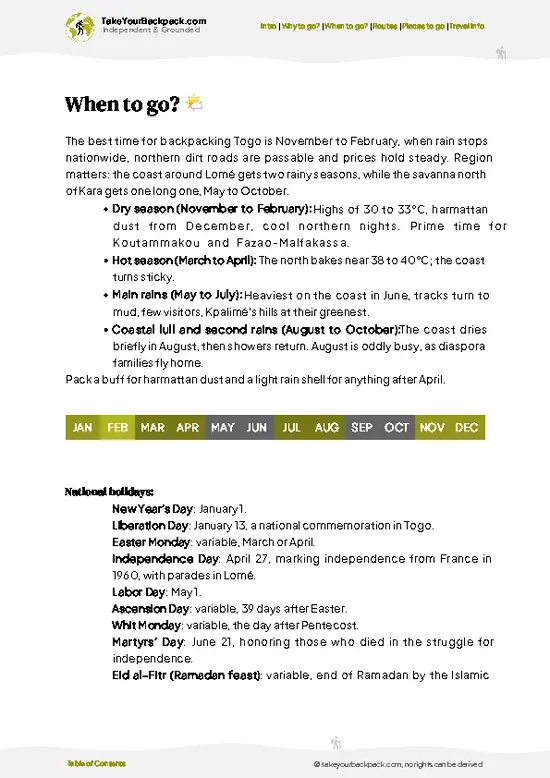
example page 0 from our offline Travel Guide for Togo
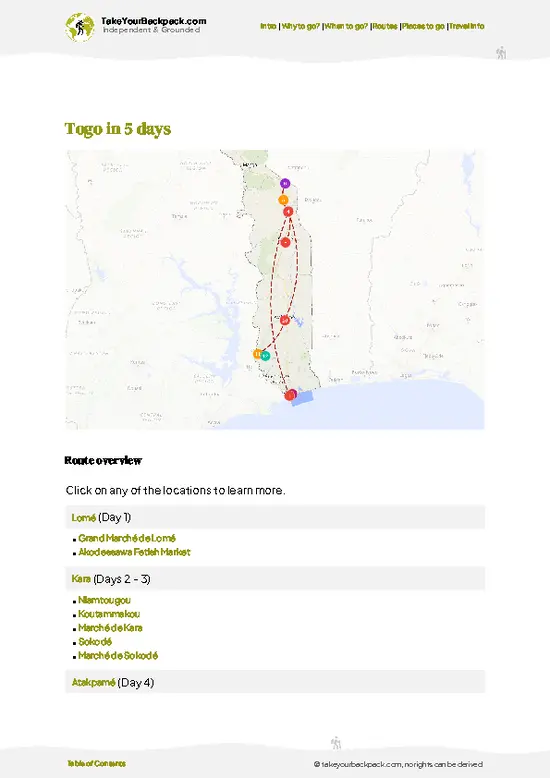
example page 1 from our offline Travel Guide for Togo
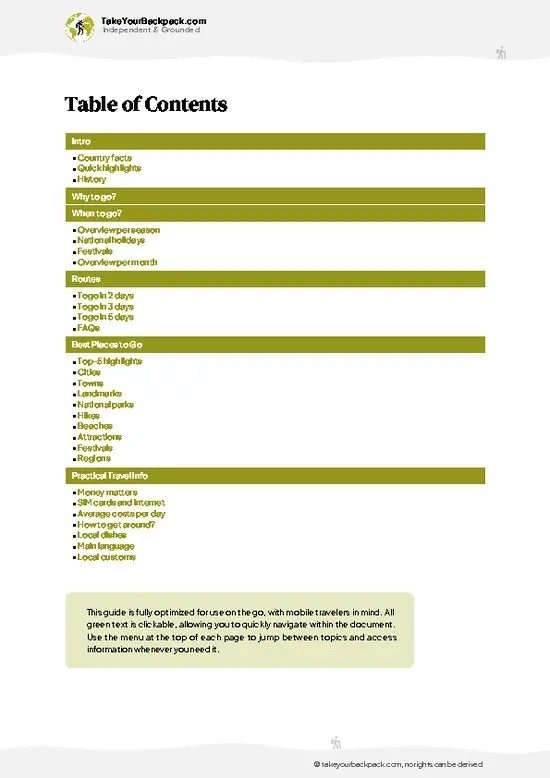
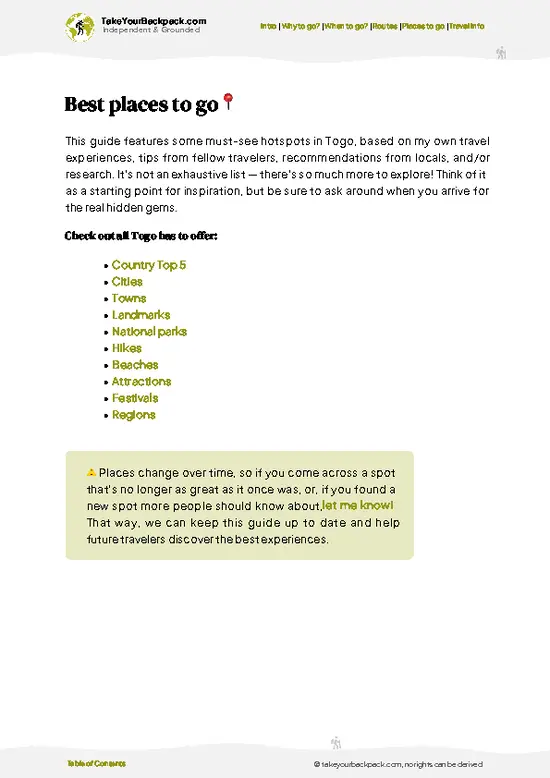
example page 2 from our offline Travel Guide for Togo
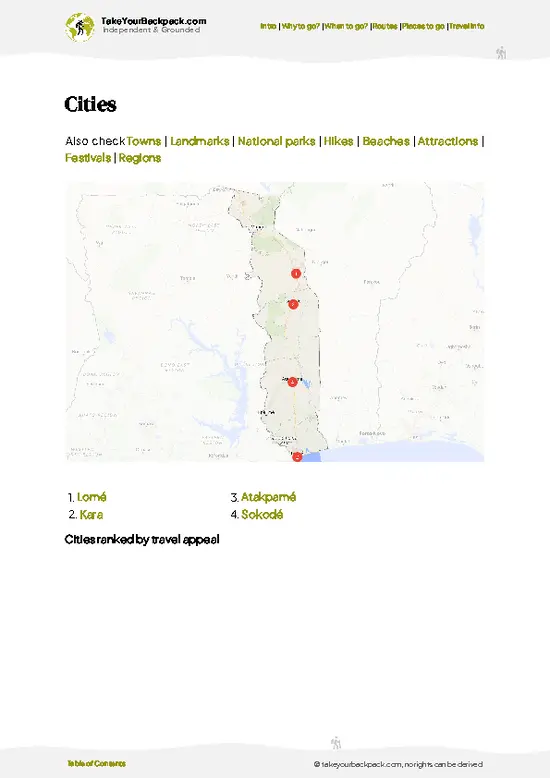
example page 3 from our offline Travel Guide for Togo
example page 4 from our offline Travel Guide for Togo
example page 5 from our offline Travel Guide for Togo
example page 6 from our offline Travel Guide for Togo
example page 7 from our offline Travel Guide for Togo
Loading the map 🌍
CLICK TO FILTER
cities
towns
landmarks
national parks
hikes
beaches
attractions
festivals
regions
SHOW COUNTRY’S BESTSHOW ALL

✨ Why go?
Ranked #12 attraction in Togo
Why visitors keep coming back

Marché de Sokodé gives you northern Togo’s everyday economy at full volume, with none of the staging found at tourist sites. Women sell shea butter in rough golden balls, farmers bring yams and millet from the surrounding hills, and traders haggle in Tem, Kabye and French. That mix tells you more about the region than any museum. It also makes a natural pause on the long road toward Kara and the Kabye highlands, with enough food stalls to refuel properly. Come with small change and a willingness to be stared at, then greeted. Vendors usually warm up fast, and photos go over best if you ask first and buy something.

💡 HighlightsPlaces and moments you shouldn't skip

  1. The main market lanes: a maze of stalls selling cloth, spices, dried fish and secondhand clothes, loudest on the big trading day.
  2. Shea butter sellers: piles of hand-processed butter, creamy and nutty-smelling, sold by the ball and good for skin or cooking.
  3. Indigo and wax-print fabric stalls: bolts of bold cloth that local tailors nearby will sew into shirts or dresses within days.
  4. Food stalls: grilled meat, fried yam, pâte with peppery sauce and sweet doughnuts eaten standing up.
  5. Spice and locust bean section: pungent soumbala balls, dried chilies and ground peppers, a strong smell worth walking through.
  6. Produce heaps: yams, sorghum, groundnuts and tomatoes stacked on tarps, brought in from nearby farms.
  7. Leatherwork and craft corners: sandals, bags and small leather goods made by local artisans,
… read more 👉
  1. The main market lanes: a maze of stalls selling cloth, spices, dried fish and secondhand clothes, loudest on the big trading day.
  2. Shea butter sellers: piles of hand-processed butter, creamy and nutty-smelling, sold by the ball and good for skin or cooking.
  3. Indigo and wax-print fabric stalls: bolts of bold cloth that local tailors nearby will sew into shirts or dresses within days.
  4. Food stalls: grilled meat, fried yam, pâte with peppery sauce and sweet doughnuts eaten standing up.
  5. Spice and locust bean section: pungent soumbala balls, dried chilies and ground peppers, a strong smell worth walking through.
  6. Produce heaps: yams, sorghum, groundnuts and tomatoes stacked on tarps, brought in from nearby farms.
  7. Leatherwork and craft corners: sandals, bags and small leather goods made by local artisans, with haggling expected.
Start with the food stalls early in the morning, when the cooking fires are lit, the lanes are still manageable and you can eat before the heat and crowds build.
Spotted a mistake or missing something? Contact us.

Things to do near Marché de Sokodé

Ratings based on Tripadvisor reviews. When you book through this link, you support our work at no extra cost to you.

🌤️ When to go?When to go for the best experience

  • November to February: Harmattan season brings dry, hazy days of 28 to 34°C (82 to 93°F), cooler mornings near 18°C (64°F), and the most comfortable walking between stalls. Dust softens the light and shortens views.
  • March to May: Hot, with highs of 33 to 37°C (91 to 99°F). Market lanes turn oven-like by midday, so go early.
  • June to October: Rains cool things to 26 to 30°C (79 to 86°F) and turn lanes muddy. Produce is abundant and crowds of foreign visitors are thin, while lodging prices barely move.
  • Market days: Activity peaks on the main market day and in the early morning, and busy stretches drop off after early afternoon.
Arrive by 8 am for the best produce and the coolest air.

source: climatestotravel.comJANJanuary: excellent for travelingFEBFebruary: excellent for travelingMARMarch: highly recommended for travelingAPRApril: highly recommended for travelingMAYMay: fair for travelingJUNJune: fair for travelingJULJuly: fair for travelingAUGAugust: fair for travelingSEPSeptember: fair for travelingOCTOctober: fair for travelingNOVNovember: highly recommended for travelingDECDecember: excellent for traveling
when-to-go

✈️ The backpacker research shortcutTogo Travel Guide

An offline-friendly backpacking guide with optimized travel routes, ranked highlights, transport advice, and the best areas to stay.
example page 0 from our offline Travel Guide for Togo
example page 1 from our offline Travel Guide for Togo
example page 2 from our offline Travel Guide for Togo
example page 3 from our offline Travel Guide for Togo
example page 4 from our offline Travel Guide for Togo
example page 5 from our offline Travel Guide for Togo
example page 6 from our offline Travel Guide for Togo
example page 7 from our offline Travel Guide for Togo
The digital guide (194 pages) contains:
✅ 42 highlights, ranked by travel appeal
✅ Optimized 2, 3 & 5-day travel routes
✅ Cities, national parks, landmarks, beaches
✅ How to get around
✅ Offline-friendly for travel without Wi-Fi
👉 Click to see all 30+ guide features

📅 Plan smarter in minutes, not weeks
✅ Month by month travel advice
✅ Festivals & national holidays
✅ Budget expectations

🗺️ Go to the right places, skip the overrated ones
✅ Honest pros & cons of destinations
✅ Top hikes, parks & viewpoints
✅ Lesser-known places most travelers miss
✅ Clear “worth it vs skip it” guidance

🛏️ Travel smoothly without rookie mistakes
✅ Best areas to stay
✅ Transport systems explained simply
✅ Common scams & safety advice
✅ SIM cards, money & practical tips

🌍 Understand the country, not just visit it
✅ Culture & traditions
✅ 52 Essential phrases & customs
✅ Festivals worth planning around
✅ Traveler-friendly historical context
✅ Insights that make places more meaningful

📱 Built for real travel conditions
✅ Fully downloadable PDF
✅ Works completely offline
✅ Optimized for phone use
✅ Useful in remote areas & buses
✅ Everything in one place
Stop searching, start planning
Get instant access to your full guide. 30‑day money-back guarantee.
+ Add another guide for just

By proceeding you agree to our terms.
Sent to your inbox immediately after payment • 100% Secure Checkout
Best Backpacking Travel Advisor 2025 tourism awardBest Backpacking
Travel Advisor
2025
What others say about Take Your Backpack Guides:
⭐⭐⭐⭐⭐
Fantastic, amazing amount of information!
⭐⭐⭐⭐⭐
My goodness this is amazing, it's what I've been looking for hats off too you!
⭐⭐⭐⭐⭐
I think this is absolutely BRILLIANT
⭐⭐⭐⭐
Very complete and informative. It's still missing places, but I gotta to commend you
⭐⭐⭐⭐⭐
This is truly amazing, thank you, can't wait to explore it with my kids!
⭐⭐⭐⭐⭐
Awesome resource, thank you!
⭐⭐⭐⭐⭐
This is amazing! Can't wait to explore the ones I haven't seen
⭐⭐⭐⭐
I love this! Well done, great idea.
⭐⭐⭐⭐⭐
Thanks for taking the time to make this gem!
⭐⭐⭐⭐⭐
This might be the best website I've ever seen.
⭐⭐⭐⭐⭐
Congratulations, and thank you so much for your work; it's incredibly valuable.
⭐⭐⭐⭐
In all seriousness I think you did a great job pointing out the important spots
⭐⭐⭐⭐⭐
10/10 very good
⭐⭐⭐⭐⭐
As someone who's only just starting to visit regularly this is awesome, thank you.
⭐⭐⭐⭐
Thank you very much! I'm going to visit my dad, it's going to be very useful!
⭐⭐⭐⭐⭐
This is really cool! We'll be travelling for the first time and this definitely come in handy.
⭐⭐⭐⭐⭐
You are now our minister of culture, congratulations 👨‍💼
⭐⭐⭐⭐⭐
Just wanted to tell you that this is a pearl! Going to follow your recommendations.
⭐⭐⭐⭐⭐
This is so cool. I'll definitely be using the resource for my travels soon.
⭐⭐⭐⭐⭐
This is very impressive! Good work.
⭐⭐⭐⭐⭐
This is an amazing and informative site. Very well done!

🛏️ Where to stay?How to pick the right area

The center of Sokodé, within a short walk or a cheap moto-taxi ride of the market, is the best base. Guesthouses and small hotels cluster around the main roundabouts and along the road toward the Grand Marché, so you can reach the stalls at opening time without arranging transport. Evenings are easy here: maquis (open-air restaurants) and beer stands stay busy until late, and the streets feel lived-in rather than risky. Solo travelers should stick to central lanes after dark and use a moto-taxi for longer hops. Dedicated hostels are rare in Sokodé, so expect simple private rooms with fan or air-conditioning, … read more 👉
The center of Sokodé, within a short walk or a cheap moto-taxi ride of the market, is the best base. Guesthouses and small hotels cluster around the main roundabouts and along the road toward the Grand Marché, so you can reach the stalls at opening time without arranging transport. Evenings are easy here: maquis (open-air restaurants) and beer stands stay busy until late, and the streets feel lived-in rather than risky. Solo travelers should stick to central lanes after dark and use a moto-taxi for longer hops. Dedicated hostels are rare in Sokodé, so expect simple private rooms with fan or air-conditioning, and the social side comes from talking to owners, drivers and fellow guests over dinner. Quarters near the bus stations suit early departures toward Kara or Lomé, though they are noisier. Book ahead only around major festivals.

👛 Costs (as of 22 October 2026)Typical daily expenses

Marché de Sokodé costs a backpacker roughly €19 to 36 a day, with entry itself free. The market is open to wander at no charge, so spending goes on bed, food and getting around. Travelers pay in West African CFA francs, and cash is needed almost everywhere.
CategoryBudget RangeLocal Reality
Entrance€0No ticket for the stalls
Accommodation (high season)€12 to 22Basic private room with fan; air-conditioning costs more
Accommodation (low season)€10 to 18Prices move little through the year
Food€4 to 8Street rice, fufu and grilled meat; market snacks cost under €1
Local transport€1 to 3Moto-taxis within town, shared taxis for longer hops
Extras€2 to 5Small purchases, a guide if wanted, bottled water
Total Daily Budget€19 to 36Comfortable mid-range figure around €28


source: republiquetogolaise.com
⚠️ Prices can change and everyone travels differently, so take this as a rough guide. Hope it helps you plan your adventure!

FAQCommon questions from travelers

Two to three hours covers Marché de Sokodé, which is enough to walk the main lanes, taste street food and buy fabric or produce. Go in the morning, when activity peaks, and add a half day if you want to explore the surrounding Tchaoudjo area. Nearly everything sits within a few minutes on foot of the central roundabouts.
Yes, because Marché de Sokodé charges no entrance fee, so the only cost is what you buy. A bowl of street food runs about €1 to 3, and fabric or crafts start from a few euros. Bring small CFA franc notes for bargaining.
Marché de Sokodé sits in the center of Sokodé, roughly 340 km north of Lomé on the national highway RN1. Buses from Lomé take about 6 to 7 hours and cost around €10 to 15, while Kara is about 1 hour away by shared taxi for roughly €2 to 4. Once in town, a moto-taxi to the market costs about €0.50 to 1.
⚠️ Things can change over time, so always validate details locally before you go.

Other Togolese attractions near Marché de Sokodé

Explore more nearby:


💡 Not sure where to go next?
Create a personalized itinerary for Togo including Marché de Sokodé and the places that fit your trip.

Generate my itinerary

👉 Discover all attractions

Or checkout all Togo has to offer (think cities, towns, villages, national parks, hikes, beaches, festivals)
Country photo of Togo

We 💚 feedbackFinal thoughts on visiting Marché de Sokodé

Marché de Sokodé suits curious eaters and people-watchers who like a little chaos and don’t mind being the only foreigner in sight. I would arrive early, carry small bills and eat something fried before browsing. Skip it if crowds, heat and constant haggling drain you.

✍️ Help improve this page!
The information on this page is based on in-depth research, insights shared by experienced travelers, and feedback from the local travel community in Togo. While every effort is made to keep the information accurate and current, conditions can change — so if you spot anything incorrect or outdated, please get in touch.


🙋‍♂️ Give feedback

👋 Meet the founderWho’s Behind Take Your Backpack?

Johan, backpacker and founder of TakeYourBackpackHi, I’m Johan (Netherlands 🇳🇱), the creator of TakeYourBackpack. Over the past 3 decades, I’ve backpacked through 90+ countries across six continents, gaining extensive experience with independent travel, long-term trips, and overland routes.

This site is built on a combination of firsthand travel experience and carefully curated insights from other backpackers. Many guides are based on places I’ve personally visited, while others bring together tips, observations, and practical advice shared by trusted travelers I’ve met along the way.

The goal is to provide realistic, experience-driven guidance — not generic itineraries — so you can explore destinations with better context, clearer expectations, and more confidence.