×

Togo🇹🇬 | festivalsEvalaKabye wrestling, oiled fighters, Kara hill villages, July bouts | things to do and best time to go

Explore AkparabongExplore Gbagba

Backpacking in Evala
🏆 Top pickfestival ranked #1
By Johan Kruseman 🇳🇱 | Updated October 22, 2026

Evala was once a closed, village-level rite: Kabye boys in the hills were initiated through wrestling, and outsiders rarely saw it. Today it draws Togolese from Lomé, diaspora families and a trickle of travelers every July. It sits in the north of Togo, in the Kara region among rust-red hills and stone-walled farms. Expect hot, dusty afternoons, drums you feel in your sternum, the smell of woodsmoke, sorghum beer and sweat, and young fighters slick with oil. Rooms in Kara fill and prices climb as the fights near, so book early. Carry small notes, since village stalls cannot break big bills and cash machines are scarce. Agree motorbike taxi fares before you climb on. Ask before photographing a fighter or a family. Your first day could mean a morning in Kara’s market, then a shared ride out to a village arena before the afternoon bouts.

Discover everything you want to know in the 📖 Togo Travel Guide.


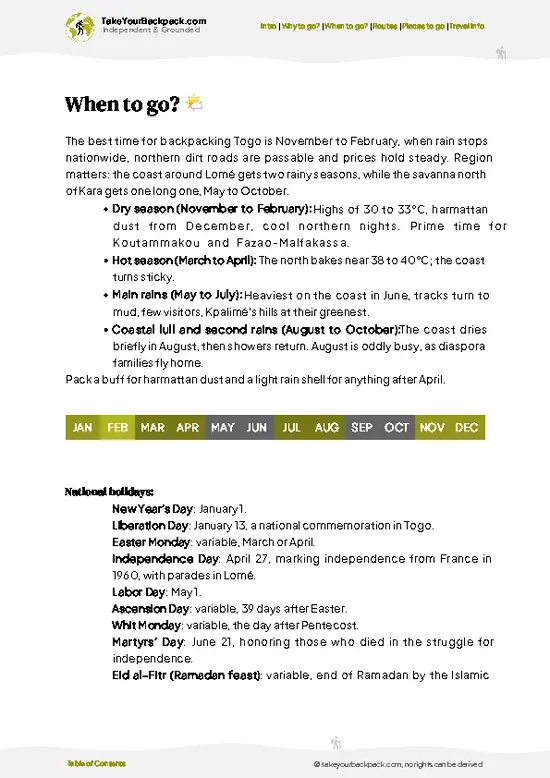
example page 0 from our offline Travel Guide for Togo
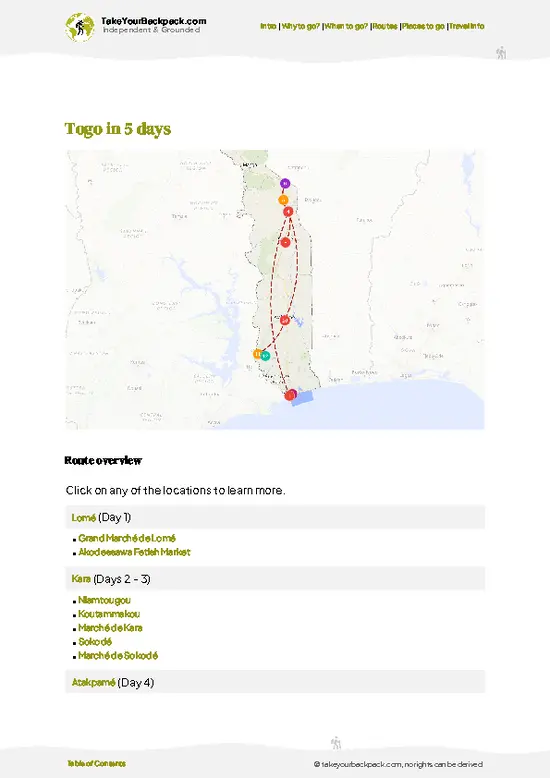
example page 1 from our offline Travel Guide for Togo
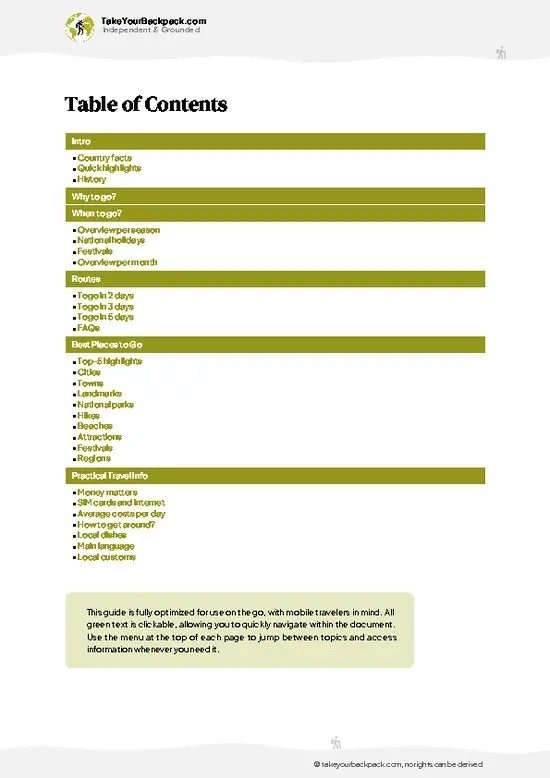
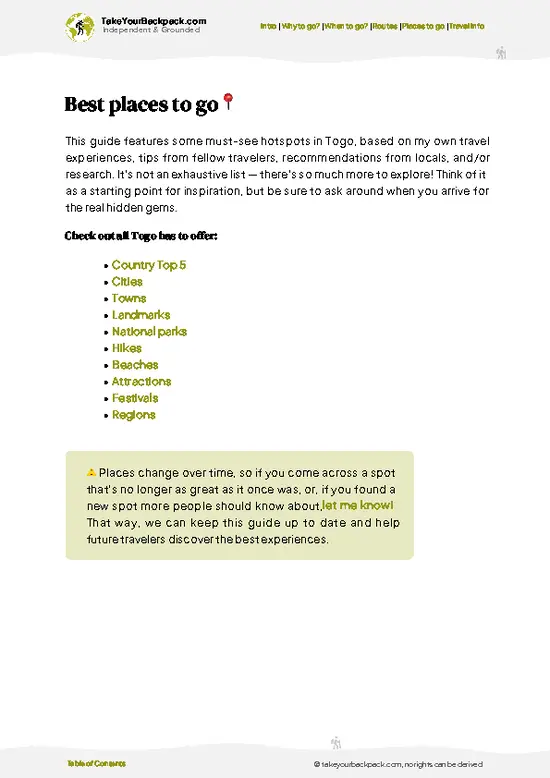
example page 2 from our offline Travel Guide for Togo
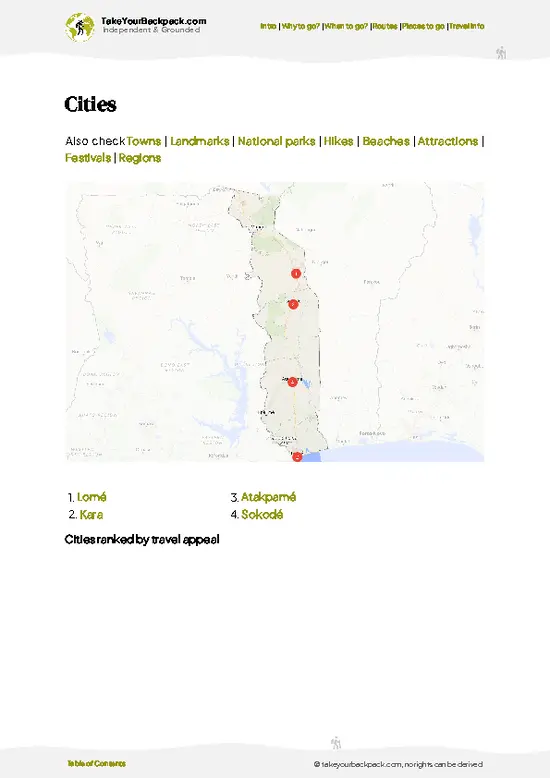
example page 3 from our offline Travel Guide for Togo
example page 4 from our offline Travel Guide for Togo
example page 5 from our offline Travel Guide for Togo
example page 6 from our offline Travel Guide for Togo
example page 7 from our offline Travel Guide for Togo
Loading the map 🌍
CLICK TO FILTER
cities
towns
landmarks
national parks
hikes
beaches
attractions
festivals
regions
SHOW COUNTRY’S BESTSHOW ALL

✨ Why go?
Ranked #1 festival in Togo
What sets this place apart

Evala is a rare chance to watch a living rite of passage instead of a staged show. The fights belong to the Kabye people, and the crowd is made of the fighters’ own relatives, so the energy comes from pride and nerves, not from ticket buyers. You stand shoulder to shoulder with grandmothers, schoolchildren and returning city cousins, and strangers will explain the rules to you if you ask. The timing is useful too. Because it falls in mid-to-late July, it fits into a loop through northern Togo, with the cooler hills around Kara as your anchor, and it is easy to follow with the clay tower-houses of the Tamberma country or a push toward Benin. Compared with music festivals across West Africa, costs stay modest, since there is no entry gate, no campsite fee and food comes from street vendors. … read more 👉
Evala is a rare chance to watch a living rite of passage instead of a staged show. The fights belong to the Kabye people, and the crowd is made of the fighters’ own relatives, so the energy comes from pride and nerves, not from ticket buyers. You stand shoulder to shoulder with grandmothers, schoolchildren and returning city cousins, and strangers will explain the rules to you if you ask. The timing is useful too. Because it falls in mid-to-late July, it fits into a loop through northern Togo, with the cooler hills around Kara as your anchor, and it is easy to follow with the clay tower-houses of the Tamberma country or a push toward Benin. Compared with music festivals across West Africa, costs stay modest, since there is no entry gate, no campsite fee and food comes from street vendors. What you pay for is a bed and transport. Go with patience and a willingness to be a guest, and the days are some of the most memorable of a Togo trip.

💡 HighlightsKey sights and experiences for travelers

  1. The wrestling bouts: The heart of Evala. Young Kabye men, barefoot and rubbed with oil, grapple on packed earth until one is pinned or thrown. Matches are short and tense, and a win is celebrated by the whole village.
  2. Fighters’ processions: Before and after the bouts, fighters are escorted by singers, whistle blowers and drummers. Relatives chant praise names and the dust rises. It is loud, close and easy to join from the edge.
  3. The Kabye hill villages: The farming hamlets around Kara are made of stone-walled compounds, granaries and terraces cut into the slopes. Walking between them gives you the setting that makes sense of the rite.
  4. Kara’s main market: A good place to start your day. Stalls sell fabric, spices, grilled meat and cold drinks, and traders are happy to explain what is happening
… read more 👉
  1. The wrestling bouts: The heart of Evala. Young Kabye men, barefoot and rubbed with oil, grapple on packed earth until one is pinned or thrown. Matches are short and tense, and a win is celebrated by the whole village.
  2. Fighters’ processions: Before and after the bouts, fighters are escorted by singers, whistle blowers and drummers. Relatives chant praise names and the dust rises. It is loud, close and easy to join from the edge.
  3. The Kabye hill villages: The farming hamlets around Kara are made of stone-walled compounds, granaries and terraces cut into the slopes. Walking between them gives you the setting that makes sense of the rite.
  4. Kara’s main market: A good place to start your day. Stalls sell fabric, spices, grilled meat and cold drinks, and traders are happy to explain what is happening in the villages that week.
  5. Pya village: A Kabye village associated with the family of former president Eyadéma. It is a useful stop for understanding how the festival sits in Togo’s modern story, and the surrounding countryside is pleasant to wander.
Evala needs no ticket or advance booking, because the village fights are open to watch, though your bed in Kara is the thing to reserve ahead.
Spotted a mistake or missing something? Contact us.

🌤️ When to go?When is the celebration of Evala?

Evala is held in July, usually over about a week, in Kara and the surrounding Kabye villages of northern Togo, with the wrestling bouts staged on village grounds and in the Kara area. The dates shift each year with the local calendar, so confirm them locally before you book.
  • Best day: The final bouts draw the biggest crowds and the most ceremony, with drummers and families in their best cloth. Earlier days in the village arenas are quieter and easier for photos.
  • Weather: It is rainy season. Expect 24 to 30°C (75 to 86°F), humid air and sudden downpours, often in the afternoon. Bring a light rain jacket, a dry bag for your phone and sandals that handle mud.
  • Booking: Book a bed in Kara about three to four weeks ahead. Prices there rise modestly, roughly 10 to 25 percent, during the main days.
  • Crowds
… read more 👉
Evala is held in July, usually over about a week, in Kara and the surrounding Kabye villages of northern Togo, with the wrestling bouts staged on village grounds and in the Kara area. The dates shift each year with the local calendar, so confirm them locally before you book.
  • Best day: The final bouts draw the biggest crowds and the most ceremony, with drummers and families in their best cloth. Earlier days in the village arenas are quieter and easier for photos.
  • Weather: It is rainy season. Expect 24 to 30°C (75 to 86°F), humid air and sudden downpours, often in the afternoon. Bring a light rain jacket, a dry bag for your phone and sandals that handle mud.
  • Booking: Book a bed in Kara about three to four weeks ahead. Prices there rise modestly, roughly 10 to 25 percent, during the main days.
  • Crowds and roads: Arrive the day before the bouts. Laterite tracks to villages turn slick after rain, so leave before dusk and avoid the busiest road traffic right after the final matches.
Arrive in Kara a full day early so you can arrange a motorbike driver without scrambling.


source: climatestotravel.comJANJanuary: excellent for travelingFEBFebruary: not recommended for travelingMARMarch: not recommended for travelingAPRApril: not recommended for travelingMAYMay: not recommended for travelingJUNJune: not recommended for travelingJULJuly: not recommended for travelingAUGAugust: not recommended for travelingSEPSeptember: not recommended for travelingOCTOctober: not recommended for travelingNOVNovember: not recommended for travelingDECDecember: not recommended for traveling

✈️ The backpacker research shortcutTogo Travel Guide

An offline-friendly backpacking guide with optimized travel routes, ranked highlights, transport advice, and the best areas to stay.
example page 0 from our offline Travel Guide for Togo
example page 1 from our offline Travel Guide for Togo
example page 2 from our offline Travel Guide for Togo
example page 3 from our offline Travel Guide for Togo
example page 4 from our offline Travel Guide for Togo
example page 5 from our offline Travel Guide for Togo
example page 6 from our offline Travel Guide for Togo
example page 7 from our offline Travel Guide for Togo
The digital guide (194 pages) contains:
✅ 42 highlights, ranked by travel appeal
✅ Optimized 2, 3 & 5-day travel routes
✅ Cities, national parks, landmarks, beaches
✅ How to get around
✅ Offline-friendly for travel without Wi-Fi
👉 Click to see all 30+ guide features

📅 Plan smarter in minutes, not weeks
✅ Month by month travel advice
✅ Festivals & national holidays
✅ Budget expectations

🗺️ Go to the right places, skip the overrated ones
✅ Honest pros & cons of destinations
✅ Top hikes, parks & viewpoints
✅ Lesser-known places most travelers miss
✅ Clear “worth it vs skip it” guidance

🛏️ Travel smoothly without rookie mistakes
✅ Best areas to stay
✅ Transport systems explained simply
✅ Common scams & safety advice
✅ SIM cards, money & practical tips

🌍 Understand the country, not just visit it
✅ Culture & traditions
✅ 52 Essential phrases & customs
✅ Festivals worth planning around
✅ Traveler-friendly historical context
✅ Insights that make places more meaningful

📱 Built for real travel conditions
✅ Fully downloadable PDF
✅ Works completely offline
✅ Optimized for phone use
✅ Useful in remote areas & buses
✅ Everything in one place
Stop searching, start planning
Get instant access to your full guide. 30‑day money-back guarantee.
+ Add another guide for just

By proceeding you agree to our terms.
Sent to your inbox immediately after payment • 100% Secure Checkout
Best Backpacking Travel Advisor 2025 tourism awardBest Backpacking
Travel Advisor
2025
What others say about Take Your Backpack Guides:
⭐⭐⭐⭐⭐
Fantastic, amazing amount of information!
⭐⭐⭐⭐⭐
My goodness this is amazing, it's what I've been looking for hats off too you!
⭐⭐⭐⭐⭐
I think this is absolutely BRILLIANT
⭐⭐⭐⭐
Very complete and informative. It's still missing places, but I gotta to commend you
⭐⭐⭐⭐⭐
This is truly amazing, thank you, can't wait to explore it with my kids!
⭐⭐⭐⭐⭐
Awesome resource, thank you!
⭐⭐⭐⭐⭐
This is amazing! Can't wait to explore the ones I haven't seen
⭐⭐⭐⭐
I love this! Well done, great idea.
⭐⭐⭐⭐⭐
Thanks for taking the time to make this gem!
⭐⭐⭐⭐⭐
This might be the best website I've ever seen.
⭐⭐⭐⭐⭐
Congratulations, and thank you so much for your work; it's incredibly valuable.
⭐⭐⭐⭐
In all seriousness I think you did a great job pointing out the important spots
⭐⭐⭐⭐⭐
10/10 very good
⭐⭐⭐⭐⭐
As someone who's only just starting to visit regularly this is awesome, thank you.
⭐⭐⭐⭐
Thank you very much! I'm going to visit my dad, it's going to be very useful!
⭐⭐⭐⭐⭐
This is really cool! We'll be travelling for the first time and this definitely come in handy.
⭐⭐⭐⭐⭐
You are now our minister of culture, congratulations 👨‍💼
⭐⭐⭐⭐⭐
Just wanted to tell you that this is a pearl! Going to follow your recommendations.
⭐⭐⭐⭐⭐
This is so cool. I'll definitely be using the resource for my travels soon.
⭐⭐⭐⭐⭐
This is very impressive! Good work.
⭐⭐⭐⭐⭐
This is an amazing and informative site. Very well done!

🛏️ Where to stay?Where staying makes the most sense

Kara town is the best base for Evala, because it is the northern hub where buses arrive, guesthouses cluster and you can reach the wrestling villages in 20 to 45 minutes by motorbike taxi. Stay near the central market and the main roundabout area. This is where you find the most restaurants, money changers, ATMs and the early-morning vehicles heading out to the Kabye hills. It is also the easiest place to meet other travelers, since most foreign visitors, researchers and photographers end up here and share motorbike drivers to split costs.
The neighborhoods around the university campus are calmer … read more 👉
Kara town is the best base for Evala, because it is the northern hub where buses arrive, guesthouses cluster and you can reach the wrestling villages in 20 to 45 minutes by motorbike taxi. Stay near the central market and the main roundabout area. This is where you find the most restaurants, money changers, ATMs and the early-morning vehicles heading out to the Kabye hills. It is also the easiest place to meet other travelers, since most foreign visitors, researchers and photographers end up here and share motorbike drivers to split costs.
The neighborhoods around the university campus are calmer and good for solo travelers who want quiet evenings. Streets are mostly well lit near the center, but walking late along the outskirts is unwise, so use a moto after dark.
If you want a more rooted experience, look at Pya or Lama-Kara fringe areas. Pya, the village linked with the Togolese presidential family, has a few simple lodgings and sits close to the cultural activity. Staying in a village puts you among families during the initiation season, but beds are basic and few, with no guarantee of hot water or steady electricity.
Sharing a room with another traveler is the usual way to keep costs down, and the center of Kara makes that simple. Avoid sleeping far from town unless you have confirmed a ride back each night.

👛 Costs (as of 22 October 2026)Travel costs and budget guide for Evala

Evala costs roughly €45 to 75 a day for an independent traveler, with most of the money going to a bed in Kara and moto rides to the villages. Watching the bouts is generally free, as they take place in open village grounds.
CategoryBudget RangeLocal Reality
Festival tickets€0 to 5Entry to the village bouts is usually free. Small gifts or contributions to hosts and a photo fee in some places may be asked.
Accommodation€15 to 35A simple room in Kara costs about €15 to 25 normally and rises toward €35 around the main days. Book early.
Local transport€8 to 20Motorbike taxis cost about €1 to 3 per short ride, and a driver for the day to several villages runs about €10 to 20. Shared taxis and minibuses link Kara with nearby towns.
Food & drinks€6 to 12A plate of pâte or rice with sauce costs about €1.
… read more 👉
Evala costs roughly €45 to 75 a day for an independent traveler, with most of the money going to a bed in Kara and moto rides to the villages. Watching the bouts is generally free, as they take place in open village grounds.
CategoryBudget RangeLocal Reality
Festival tickets€0 to 5Entry to the village bouts is usually free. Small gifts or contributions to hosts and a photo fee in some places may be asked.
Accommodation€15 to 35A simple room in Kara costs about €15 to 25 normally and rises toward €35 around the main days. Book early.
Local transport€8 to 20Motorbike taxis cost about €1 to 3 per short ride, and a driver for the day to several villages runs about €10 to 20. Shared taxis and minibuses link Kara with nearby towns.
Food & drinks€6 to 12A plate of pâte or rice with sauce costs about €1.50 to 3. A calabash of tchoukoutou or a bottled beer costs roughly €0.60 to 1.50.
Miscellaneous expenses€4 to 10Water, phone credit, a rain poncho, small tips for guides and cash for ATM fees.
Total Daily Budget€45 to 75Total for one day, using high-season accommodation.
⚠️ Prices can change and everyone travels differently, so take this as a rough guide. Hope it helps you plan your adventure!

🍲 FoodWhat to Eat & Drink

Food at Evala is village food, served in the same open spaces where families gather to watch the bouts. The staple is pâte, a firm maize or sorghum paste you tear with your right hand and dip into a peppery sauce, often with grilled goat, chicken or guinea fowl. Look for fufu with groundnut or okra sauce, and wagashi, the fried or grilled local cheese sold in small bags.
On the roadside you will find grilled skewers, roasted corn, fried yam and plantain, and sweet doughnut-like fritters sold from basins. Women set up charcoal stoves beside the arenas, so the air smells of smoke and chili.
The drink to try is tchoukoutou, the sour, cloudy sorghum beer of the north. It is poured from big calabash bowls and passed around in a shared gourd, so wait to be offered and accept with your right hand. … read more 👉
Food at Evala is village food, served in the same open spaces where families gather to watch the bouts. The staple is pâte, a firm maize or sorghum paste you tear with your right hand and dip into a peppery sauce, often with grilled goat, chicken or guinea fowl. Look for fufu with groundnut or okra sauce, and wagashi, the fried or grilled local cheese sold in small bags.
On the roadside you will find grilled skewers, roasted corn, fried yam and plantain, and sweet doughnut-like fritters sold from basins. Women set up charcoal stoves beside the arenas, so the air smells of smoke and chili.
The drink to try is tchoukoutou, the sour, cloudy sorghum beer of the north. It is poured from big calabash bowls and passed around in a shared gourd, so wait to be offered and accept with your right hand. Bottled beer, sweet sodas and plastic sachets of water are widely sold, and cold drinks tend to run out by afternoon.
Cash is all that works here, in small notes, as vendors rarely have change for large bills. Portions are generous and usually meant to be shared, so ask for one plate between two. Wash your hands before eating, since the paste is eaten by hand, and choose food cooked fresh in front of you.

FAQCommon questions from travelers

Evala takes place every July, normally over about a week, in Kara and the surrounding Kabye villages of northern Togo. The exact days shift each year with the local calendar, so check locally once you reach Kara. The final bouts and ceremonies are the busiest part of the week.
Evala is mostly free to watch, since the bouts take place on open village grounds. Most of your spending goes to a room in Kara at about €15 to 35 a night and motorbike rides at roughly €1 to 3 each, or €10 to 20 for a driver for the day. Plan for €45 to 75 a day all in, plus small gifts for hosts.
Evala has no ticket system, so you do not need to buy anything in advance to watch the bouts. What you should book ahead is a bed in Kara, ideally three to four weeks before July, because rooms fill and prices rise by roughly 10 to 25 percent. Arrange a motorbike driver the day before, as villages are 20 to 45 minutes from town.
⚠️ Things can change over time, so always validate details locally before you go.

Other Togolese festivals near Evala

Explore more nearby:


💡 Not sure where to go next?
Create a personalized itinerary for Togo including Evala and the places that fit your trip.

Generate my itinerary

👉 Discover all festivals

Or checkout all Togo has to offer (think cities, towns, villages, national parks, hikes, beaches, festivals)
Country photo of Togo

We 💚 feedbackFinal thoughts on celebrating the Evala

Evala works best as the middle of a northern loop. Pair it with the stone-walled Kabye villages around Kara, then continue to the Tamberma tower-houses near Koutammakou, or loop on to Benin. I would arrive in Kara two days before the bouts to settle your bed and meet a local guide, and bring a hat, small notes and a respectful attitude with your camera.

✍️ Help improve this page!
The information on this page is based on in-depth research, insights shared by experienced travelers, and feedback from the local travel community in Togo. While every effort is made to keep the information accurate and current, conditions can change — so if you spot anything incorrect or outdated, please get in touch.


🙋‍♂️ Give feedback

👋 Meet the founderWho’s Behind Take Your Backpack?

Johan, backpacker and founder of TakeYourBackpackHi, I’m Johan (Netherlands 🇳🇱), the creator of TakeYourBackpack. Over the past 3 decades, I’ve backpacked through 90+ countries across six continents, gaining extensive experience with independent travel, long-term trips, and overland routes.

This site is built on a combination of firsthand travel experience and carefully curated insights from other backpackers. Many guides are based on places I’ve personally visited, while others bring together tips, observations, and practical advice shared by trusted travelers I’ve met along the way.

The goal is to provide realistic, experience-driven guidance — not generic itineraries — so you can explore destinations with better context, clearer expectations, and more confidence.