×

Togo🇹🇬 | festivalsFête de l’Indépendancemilitary parades, national speeches, flag displays | things to do and best time to go

Explore Fête de la MusiqueExplore Mount Agou

Backpacking in Fête de l’Indépendance
🏆 Top pickfestival ranked #2
By Johan Kruseman 🇳🇱 | Updated September 3, 2026

Here’s the curveball: Fête de l’Indépendance in Togo isn’t just a parade for dignitaries or a sanitized tourist spectacle—it’s a full-body, all-senses-on-deck experience that can swallow you whole if you’re not ready. Most guides skip the fact that the real action happens not just in Lomé, the capital, but in every town and village across the country, with the most electric energy pulsing through the city’s main boulevards and spilling into the neighborhoods. This is West Africa’s Independence Day with the volume cranked—think brass bands, pounding drums, and a sea of locals in their sharpest wax prints, not a crowd of selfie-stick-wielding foreigners. The festival draws everyone from school kids to elders, and the vibe swings from patriotic pride to street-party chaos, depending on where you plant your boots. It’s a one-day sprint, usually April 27th, and if you’re chasing authenticity, you’ll find it here—but only if you’re ready to move with the crowd, dodge the pickpockets, and let the city’s rhythm set your pace.

Discover everything you want to know in the 📖 Togo Travel Guide.


Get your Togo guide
49 ranked highlights, routes & tips, works offline (215 pages)
Loading the map 🌍
CLICK TO FILTER
cities
towns
landmarks
national parks
hikes
beaches
attractions
festivals
regions
SHOW COUNTRY’S BESTSHOW ALL

✨ Why go?
Ranked #2 festival in Togo
What makes it a must-see festival

Backpackers flock to Togo during the Fête de l’Indépendance for a reason: it’s a social energy explosion. This festival isn’t just a date on the calendar; it’s a temporary community where locals and travelers unite, sharing laughter, music, and stories. You’ll feel the pulse of Togo as vibrant parades snake through the streets, showcasing traditional dances and colorful attire.

Planning your route around this festival means diving headfirst into cultural immersion. You’ll taste local dishes, hear the rhythms of Togolese music, and witness the pride of a nation celebrating its freedom. Plus, it’s surprisingly affordable compared to similar events elsewhere in West Africa.

Incorporating the festival into your longer travel plans is a savvy move. It serves as a perfect anchor point, allowing … read more 👉
Backpackers flock to Togo during the Fête de l’Indépendance for a reason: it’s a social energy explosion. This festival isn’t just a date on the calendar; it’s a temporary community where locals and travelers unite, sharing laughter, music, and stories. You’ll feel the pulse of Togo as vibrant parades snake through the streets, showcasing traditional dances and colorful attire.

Planning your route around this festival means diving headfirst into cultural immersion. You’ll taste local dishes, hear the rhythms of Togolese music, and witness the pride of a nation celebrating its freedom. Plus, it’s surprisingly affordable compared to similar events elsewhere in West Africa.

Incorporating the festival into your longer travel plans is a savvy move. It serves as a perfect anchor point, allowing you to explore Togo’s stunning landscapes and rich history before and after the festivities. Don’t miss this chance to connect with the heart of Togo; it’s a journey that fuels both your spirit and your budget.
Want to include Fête de l’Indépendance in your Togo route?
Create a personalized Togo itinerary that includes Fête de l’Indépendance and the places that fit your trip — based on your travel style, budget, and available time. Get your route in seconds.

Generate my trip

💡 HighlightsDon't-miss highlights and experiences

  1. Vibrant Parades and Civic Marches — The streets fill with schoolchildren, civic groups and uniformed units marching in tight formation while colors and flags flutter everywhere. It’s the clearest place to feel national pride and watch local groups show off choreographed dances, floats and costumes that you won’t see outside the holiday atmosphere.
  2. Traditional Dance and Drumming Displays — Heavy percussion and call-and-response singing set the pace for high-energy Ewe and Kabye dances, masked performances and street ensembles. These aren’t staged museum shows; they’re loud, physical, and often invite onlookers to join in, so bring comfortable shoes (and rhythm, if you’ve got it).
  3. Voodoo and Ancestral Ceremonies — Independence Day often overlaps with public displays of traditional spiritual
read more 👉
  1. Vibrant Parades and Civic Marches — The streets fill with schoolchildren, civic groups and uniformed units marching in tight formation while colors and flags flutter everywhere. It’s the clearest place to feel national pride and watch local groups show off choreographed dances, floats and costumes that you won’t see outside the holiday atmosphere.
  2. Traditional Dance and Drumming Displays — Heavy percussion and call-and-response singing set the pace for high-energy Ewe and Kabye dances, masked performances and street ensembles. These aren’t staged museum shows; they’re loud, physical, and often invite onlookers to join in, so bring comfortable shoes (and rhythm, if you’ve got it).
  3. Voodoo and Ancestral Ceremonies — Independence Day often overlaps with public displays of traditional spiritual life: small shrine rites, libations and processions led by local priests. Observing (with respect and permission) reveals how ancestral beliefs continue to shape community celebrations and daily life in a way that’s rarely visible to casual tourists.
  4. Street Food Markets and Craft Stalls — Temporary markets spring up around festival hubs selling grilled fish, cassava dishes, spicy stews, fresh fruit and quick snacks, alongside stalls with textiles, beads and woodcarving. It’s the best way to eat cheaply and authentically while picking up handmade souvenirs directly from artisans.
  5. Communal Nightlife and Informal Concerts — After the daytime ceremonies many towns keep celebrating with open-air concerts, youth choirs, small bands and communal singing late into the night. The vibe is informal and friendly — less polished than big stadium shows, but more personal: you’ll end up chatting with locals, trading songs, and soaking up the genuine communal energy.
Spotted a mistake or missing something? Contact us.

Things to do near Fête de l’Indépendance

Ratings based on Tripadvisor reviews. When you book through this link, you support our work at no extra cost to you.

🌤️ When to go?When is the celebration of Fête de l’Indépendance?


  • Topic: Weather – The festival happens in April, right when Togo’s dry season is winding down. Expect highs around 30°C (86°F) with manageable humidity. Rain is rare but can sneak in late, so pack a light rain jacket just in case.

  • Topic: Temperature – Daytime warmth hits a comfortable 28-32°C (82-90°F), perfect for outdoor celebrations without frying your energy. Nights cool to about 22°C (72°F), so a light layer is handy for evening events.

  • Topic: Daylight Hours – April offers roughly 12 hours of daylight, giving you plenty of time to dive into parades, music, and street food without rushing. The sun sets around 6:30 PM, so plan your main activities accordingly.

  • Topic: Crowds – The festival draws locals and a modest number of tourists. It’s lively but not overwhelming, so you get
read more 👉

  • Topic: Weather – The festival happens in April, right when Togo’s dry season is winding down. Expect highs around 30°C (86°F) with manageable humidity. Rain is rare but can sneak in late, so pack a light rain jacket just in case.

  • Topic: Temperature – Daytime warmth hits a comfortable 28-32°C (82-90°F), perfect for outdoor celebrations without frying your energy. Nights cool to about 22°C (72°F), so a light layer is handy for evening events.

  • Topic: Daylight Hours – April offers roughly 12 hours of daylight, giving you plenty of time to dive into parades, music, and street food without rushing. The sun sets around 6:30 PM, so plan your main activities accordingly.

  • Topic: Crowds – The festival draws locals and a modest number of tourists. It’s lively but not overwhelming, so you get authentic vibes without battling throngs. Arriving early helps you snag the best spots for performances.

  • Topic: Seasonal Activities – April is prime for cultural immersion beyond the festival—markets brim with crafts, and nearby villages host traditional dances. The dry season’s tail end means trails and roads are accessible for side trips.

  • Topic: Price Fluctuations – Accommodation and transport prices spike slightly during the festival but remain reasonable compared to peak tourist seasons. Booking a week ahead locks in better rates and spares last-minute stress.


Pro-tip: Time your visit for early April to catch the festival’s full energy before the rainy season creeps in and before prices climb higher.


source: climatestotravel.comJANJanuary: not recommended for travelingFEBFebruary: not recommended for travelingMARMarch: not recommended for travelingAPRApril: excellent for travelingMAYMay: not recommended for travelingJUNJune: not recommended for travelingJULJuly: not recommended for travelingAUGAugust: not recommended for travelingSEPSeptember: not recommended for travelingOCTOctober: not recommended for travelingNOVNovember: not recommended for travelingDECDecember: not recommended for traveling

✈️ The backpacker research shortcutTogo Travel Guide

An offline-friendly backpacking guide with optimized travel routes, ranked highlights, transport advice, and the best areas to stay.
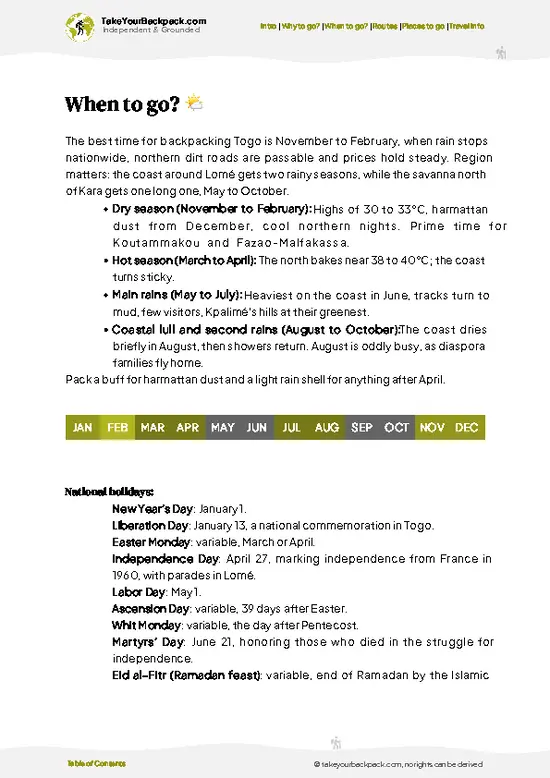
example page 0 from our offline Travel Guide for Togo
example page 1 from our offline Travel Guide for Togo
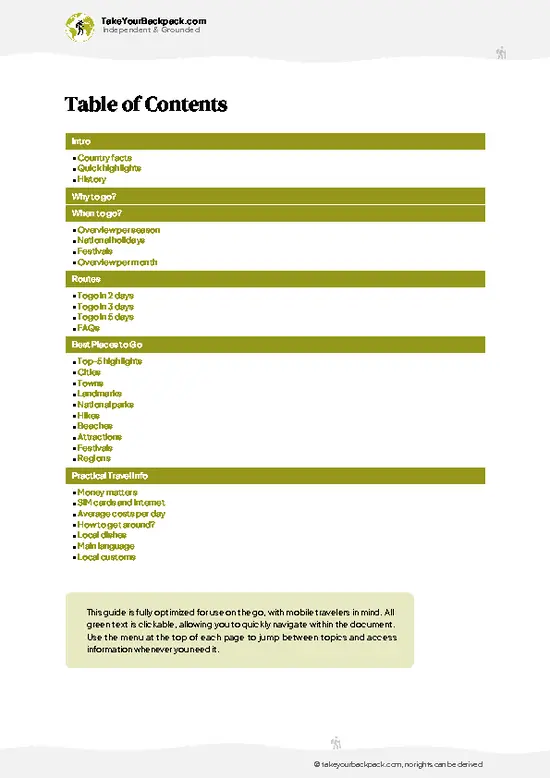
example page 2 from our offline Travel Guide for Togo
example page 3 from our offline Travel Guide for Togo
example page 4 from our offline Travel Guide for Togo
example page 5 from our offline Travel Guide for Togo
example page 6 from our offline Travel Guide for Togo
example page 7 from our offline Travel Guide for Togo
The digital guide (215 pages) contains:
49 highlights, ranked by travel appeal
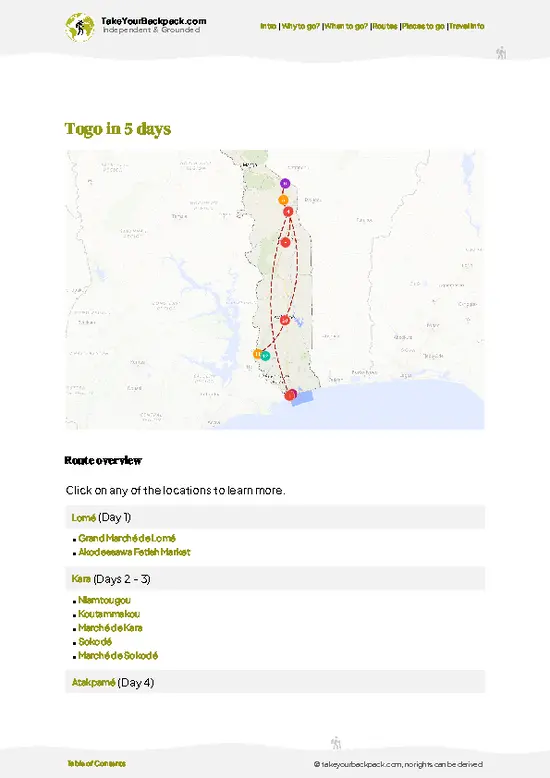
Optimized 2, 3 & 5-day travel routes
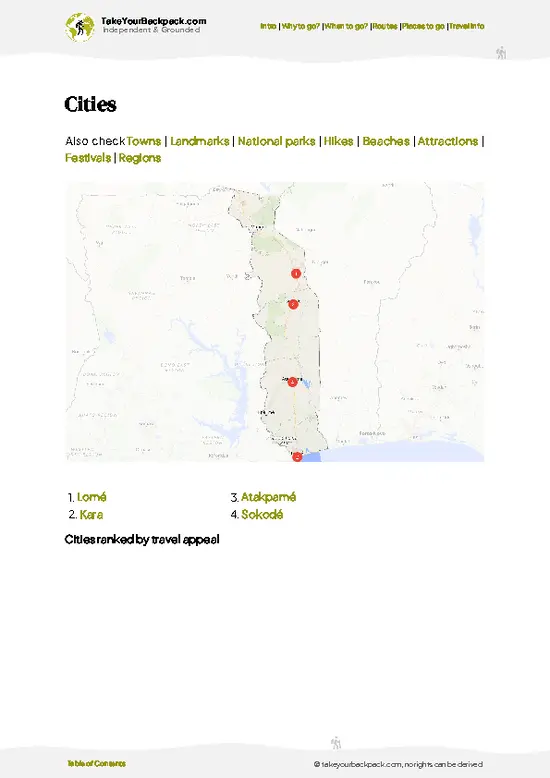
Cities, national parks, landmarks, beaches
How to get around
Offline-friendly for travel without Wi-Fi
👉 Click to see all 30+ guide features

📅 Plan smarter in minutes, not weeks
Month by month travel advice
Festivals & national holidays
Budget expectations

🗺️ Go to the right places, skip the overrated ones
Honest pros & cons of destinations
Top hikes, parks & viewpoints
Lesser-known places most travelers miss
Clear “worth it vs skip it” guidance

🛏️ Travel smoothly without rookie mistakes
Best areas to stay
Transport systems explained simply
Common scams & safety advice
SIM cards, money & practical tips

🌍 Understand the country, not just visit it
Culture & traditions
52 Essential phrases & customs
Festivals worth planning around
Traveler-friendly historical context
Insights that make places more meaningful

📱 Built for real travel conditions
Fully downloadable PDF
Works completely offline
Optimized for phone use
Useful in remote areas & buses
Everything in one place
Save weeks of stressful planning
Get instant access to your full guide. 30‑day money-back guarantee.
+ Add another guide for just US$7.80

By proceeding you agree to our terms.
Sent to your inbox immediately after payment • 100% Secure Checkout
Best Backpacking Travel Advisor 2025 tourism awardBest Backpacking
Travel Advisor
2025
What others say about Take Your Backpack Guides:
⭐⭐⭐⭐⭐
Fantastic, amazing amount of information!
⭐⭐⭐⭐⭐
My goodness this is amazing, it's what I've been looking for hats off too you!
⭐⭐⭐⭐⭐
I think this is absolutely BRILLIANT
⭐⭐⭐⭐
Very complete and informative. It's still missing places, but I gotta to commend you
⭐⭐⭐⭐⭐
This is truly amazing, thank you, can't wait to explore it with my kids!
⭐⭐⭐⭐⭐
Awesome resource, thank you!
⭐⭐⭐⭐⭐
This is amazing! Can't wait to explore the ones I haven't seen
⭐⭐⭐⭐
I love this! Well done, great idea.
⭐⭐⭐⭐⭐
Thanks for taking the time to make this gem!
⭐⭐⭐⭐⭐
This might be the best website I've ever seen.
⭐⭐⭐⭐⭐
Congratulations, and thank you so much for your work; it's incredibly valuable.
⭐⭐⭐⭐
In all seriousness I think you did a great job pointing out the important spots
⭐⭐⭐⭐⭐
10/10 very good
⭐⭐⭐⭐⭐
As someone who's only just starting to visit regularly this is awesome, thank you.
⭐⭐⭐⭐
Thank you very much! I'm going to visit my dad, it's going to be very useful!
⭐⭐⭐⭐⭐
This is really cool! We'll be travelling for the first time and this definitely come in handy.
⭐⭐⭐⭐⭐
You are now our minister of culture, congratulations 👨‍💼
⭐⭐⭐⭐⭐
Just wanted to tell you that this is a pearl! Going to follow your recommendations.
⭐⭐⭐⭐⭐
This is so cool. I'll definitely be using the resource for my travels soon.
⭐⭐⭐⭐⭐
This is very impressive! Good work.
⭐⭐⭐⭐⭐
This is an amazing and informative site. Very well done!

🛏️ Where to stay?Choosing the right base

When you’re gearing up for the Fête de l’Indépendance in Togo, the right base can make all the difference. Head straight to Lomé, the capital. This vibrant city pulses with energy, especially during the festival. Look for areas near the beach; they’re buzzing with fellow travelers and locals alike. You’ll find a mix of budget-friendly accommodations that foster a social vibe.

Stay close to the Grand Marché, where the sights and sounds of the festival come alive. The market is a sensory overload, and being nearby means you can dive into the festivities without hassle. Plus, it’s a great spot … read more 👉
When you’re gearing up for the Fête de l’Indépendance in Togo, the right base can make all the difference. Head straight to Lomé, the capital. This vibrant city pulses with energy, especially during the festival. Look for areas near the beach; they’re buzzing with fellow travelers and locals alike. You’ll find a mix of budget-friendly accommodations that foster a social vibe.

Stay close to the Grand Marché, where the sights and sounds of the festival come alive. The market is a sensory overload, and being nearby means you can dive into the festivities without hassle. Plus, it’s a great spot to grab local street food and mingle with the crowd.

Don’t overlook the neighborhoods around the Place de l’Indépendance. This area is a hub for celebrations, making it easy to join in the fun. Safety is generally good, but keep your wits about you, especially at night.

By choosing these areas, you’re not just securing a place to sleep; you’re positioning yourself at the heart of the action. This way, you preserve your energy and budget for the moments that truly matter—dancing, celebrating, and soaking in the spirit of independence.

👛 Costs (as of 3 September 2026)What things cost and how to budget

The Fête de l’Indépendance in Togo is a vibrant celebration, but navigating costs can be tricky. Here’s what you need to know to keep your budget intact while soaking in the festivities.
  • Festival Tickets: Entry to the main events is typically free, but some special performances or VIP areas might charge between €5 to €20. Keep an eye out for unofficial fees; they can sneak up on you.
  • Accommodation: Expect to pay around €15 to €50 per night for budget hotels or guesthouses. Prices can spike during the festival, so book early. Consider hostels or shared accommodations for a more social vibe and lower rates.
  • Local Transport: Public transport is your friend. A shared taxi or minibus ride within the city usually costs between €0.50 to €2. If you’re venturing further, budget around €10 to €20 for longer
read more 👉
The Fête de l’Indépendance in Togo is a vibrant celebration, but navigating costs can be tricky. Here’s what you need to know to keep your budget intact while soaking in the festivities.
  • Festival Tickets: Entry to the main events is typically free, but some special performances or VIP areas might charge between €5 to €20. Keep an eye out for unofficial fees; they can sneak up on you.
  • Accommodation: Expect to pay around €15 to €50 per night for budget hotels or guesthouses. Prices can spike during the festival, so book early. Consider hostels or shared accommodations for a more social vibe and lower rates.
  • Local Transport: Public transport is your friend. A shared taxi or minibus ride within the city usually costs between €0.50 to €2. If you’re venturing further, budget around €10 to €20 for longer trips. Always confirm prices before hopping in.
  • Food & Drinks: Street food is a must-try and will only set you back about €1 to €5 per meal. Restaurants vary widely; expect to pay €5 to €15 for a sit-down meal. Don’t forget to budget for drinks—local beers are around €1, while bottled water is about €0.50.
  • Miscellaneous Expenses: Set aside around €10 to €30 for souvenirs, tips, or unexpected costs. This is where those hidden fees can creep in, so stay alert and keep some cash handy.

Stay sharp, plan ahead, and you’ll preserve your energy and budget for the moments that truly matter.
⚠️ Prices can change and everyone travels differently, so take this as a rough guide. Hope it helps you plan your adventure!

🍲 FoodWhat to Eat & Drink

At the Fête de l’Indépendance in Togo, food and drink are more than sustenance; they’re a celebration of culture. You’ll find local specialties like fufu, a starchy delight made from cassava or yams, often served with rich, spicy sauces. Don’t miss out on akpan, a fermented corn dish that’s a festival staple. Vendors line the streets, their stalls bursting with vibrant colors and enticing aromas.

For drinks, palm wine is a must-try. It’s fresh, slightly sweet, and served in traditional calabashes. If you’re in the mood for something fizzy, grab a bottle of Bière de Togo—it’s refreshing and pairs perfectly with the local fare.

When diving into the festival atmosphere, remember that sharing is part of the experience. Don’t hesitate to join a group and sample their dishes; it’s a great way … read more 👉
At the Fête de l’Indépendance in Togo, food and drink are more than sustenance; they’re a celebration of culture. You’ll find local specialties like fufu, a starchy delight made from cassava or yams, often served with rich, spicy sauces. Don’t miss out on akpan, a fermented corn dish that’s a festival staple. Vendors line the streets, their stalls bursting with vibrant colors and enticing aromas.

For drinks, palm wine is a must-try. It’s fresh, slightly sweet, and served in traditional calabashes. If you’re in the mood for something fizzy, grab a bottle of Bière de Togo—it’s refreshing and pairs perfectly with the local fare.

When diving into the festival atmosphere, remember that sharing is part of the experience. Don’t hesitate to join a group and sample their dishes; it’s a great way to bond. Lines can be long, but that’s just part of the excitement. Bring cash; many stalls don’t accept cards, and you’ll want to be ready to snag that last serving of grilled fish or spicy kebabs. Serving sizes can vary, so be prepared to share or go back for seconds. Enjoy the vibrant chaos; it’s all part of the adventure!

FAQCommon questions from travelers

Fête de l’Indépendance in Togo takes place annually on April 27th. It is a one-day national holiday celebrating Togo's independence from France in 1960.
Attending Fête de l’Indépendance is generally free as it is a public national celebration. Costs may arise if you choose to participate in specific events or buy food and souvenirs from vendors.
No, you do not need tickets in advance to attend Fête de l’Indépendance. The celebrations are open to the public and held in various locations, including the capital Lomé.
⚠️ Things can change over time, so always validate details locally before you go.

Other Togolese festivals near Fête de l’Indépendance

Explore more nearby:


💡 Not sure where to go next?
Create a personalized itinerary for Togo including Fête de l’Indépendance and the places that fit your trip.

Generate my itinerary

👉 Discover all festivals

Or checkout all Togo has to offer (think cities, towns, villages, national parks, hikes, beaches, festivals)
Country photo of Togo

We 💚 feedbackWhat to keep in mind

The Fête de l’Indépendance in Togo is electric. You’ll feel the pulse of celebration in the air, with vibrant parades and locals bursting with pride. The best surprise? The sheer warmth of the people; they’ll invite you into their joy. But a heads-up: the crowds can be overwhelming. Stay hydrated and keep your belongings close. Embrace the chaos, and you’ll find that the energy fuels your spirit. This isn’t just a festival; it’s a living tapestry of resilience and joy.

✍️ Help improve this page!
The information on this page is based on in-depth research, insights shared by experienced travelers, and feedback from the local travel community in Togo. While every effort is made to keep the information accurate and current, conditions can change — so if you spot anything incorrect or outdated, please get in touch.


🙋‍♂️ Give feedback

👋 Meet the founderWho’s Behind Take Your Backpack?

Johan, backpacker and founder of TakeYourBackpackHi, I’m Johan (Netherlands 🇳🇱), the creator of TakeYourBackpack. Over the past decade, I’ve backpacked through 80+ countries across six continents, gaining extensive experience with independent travel, long-term trips, and overland routes.

This site is built on a combination of firsthand travel experience and carefully curated insights from other backpackers. Many guides are based on places I’ve personally visited, while others bring together tips, observations, and practical advice shared by trusted travelers I’ve met along the way.

The goal is to provide realistic, experience-driven guidance — not generic itineraries — so you can explore destinations with better context, clearer expectations, and more confidence.

Get full Togo guide •
Instant download • 49 highlights • Full Offline guide