×

Tonga🇹🇴 | beachesHa’atafu BeachLeft reef break, marine reserve, west-facing sunsets, low-tide pools | things to do and best time to go

Explore Fafa Island BeachExplore Mānuka Beach

Backpacking in Ha’atafu Beach
🏆 Top pickbeach ranked #1
By Johan Kruseman 🇳🇱 | Updated October 15, 2026

Ha‘atafu is the surf spot Tonga is best known for, a left-hand reef break that peels over shallow coral just beyond a small lagoon. The beach lies on the northwest coast of Tongatapu, in Tonga, west of Nuku’alofa near the village of Kolovai. You get pale sand, the dull thud of swell on the outer reef, and the salty smell of drying seaweed at low tide. It is clean and quiet, and the only real crowd is the handful of surfers who turn up when a swell does. Swimming is limited. The lagoon turns shallow at low tide and the coral is sharp, so reef shoes help. Snorkeling inside the marine reserve is good once the tide comes up. Facilities are thin: a few simple guesthouses, very little food nearby, and no easy way here without your own wheels or a taxi. Surfers and snorkelers who like silence will love it. Nightlife seekers and anyone wanting a long, swimmable beach will not.

Discover everything you want to know in the 📖 Tonga Travel Guide.


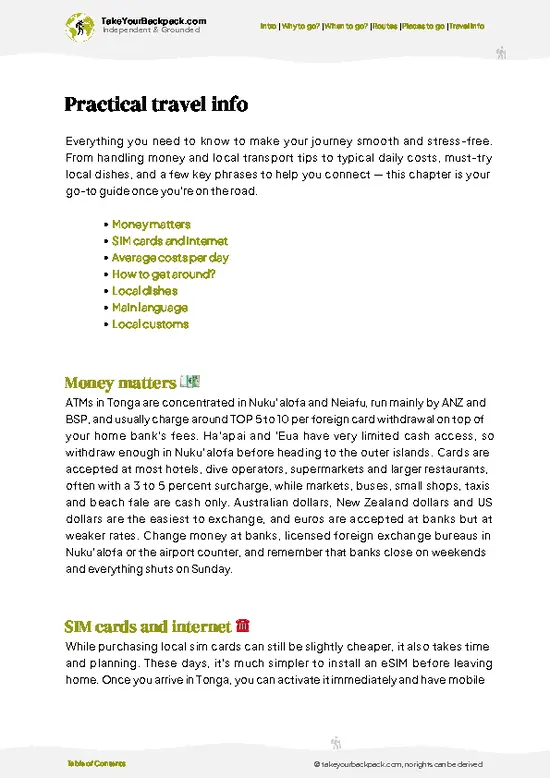
example page 0 from our offline Travel Guide for Tonga
example page 1 from our offline Travel Guide for Tonga
example page 2 from our offline Travel Guide for Tonga
example page 3 from our offline Travel Guide for Tonga
example page 4 from our offline Travel Guide for Tonga
example page 5 from our offline Travel Guide for Tonga
example page 6 from our offline Travel Guide for Tonga
example page 7 from our offline Travel Guide for Tonga
Loading the map 🌍
CLICK TO FILTER
towns
villages
landmarks
national parks
hikes
beaches
attractions
festivals
regions
SHOW COUNTRY’S BESTSHOW ALL

✨ Why go?
Ranked #1 beach in Tonga
Why visitors keep coming back

Most people stop here for one reason: the wave. Ha‘atafu’s left-hand reef break is the easiest Tongan surf to reach from shore, and a short paddle from the sand puts you on the line-up. Because the break is so close to the beach, you can also watch from the shore, which makes it a fine place to sit with a coconut while someone else gets barreled.

The second draw is the water inside the reef. The Ha’atafu Beach Reserve is a protected stretch of coral, and it means snorkelers see healthy reef fish within wading distance, without needing a boat or a guide.

The third is pace. This is the quiet side of Tongatapu, where the road runs past pigs, churches and small plantations, and evenings are spent on a veranda watching the sun drop into the Pacific. It works well as a base for a few slow days, … read more 👉
Most people stop here for one reason: the wave. Ha‘atafu’s left-hand reef break is the easiest Tongan surf to reach from shore, and a short paddle from the sand puts you on the line-up. Because the break is so close to the beach, you can also watch from the shore, which makes it a fine place to sit with a coconut while someone else gets barreled.

The second draw is the water inside the reef. The Ha’atafu Beach Reserve is a protected stretch of coral, and it means snorkelers see healthy reef fish within wading distance, without needing a boat or a guide.

The third is pace. This is the quiet side of Tongatapu, where the road runs past pigs, churches and small plantations, and evenings are spent on a veranda watching the sun drop into the Pacific. It works well as a base for a few slow days, with the sacred fruit bats of Kolovai just up the road. Come with food and a book, because the beach itself will not entertain you at night.

💡 HighlightsDon't-miss highlights and experiences

  1. Surfing the Ha‘atafu reef break: This is the main reason the beach has a name abroad. The left peels along a shallow reef, and good days draw a small, friendly crowd of visitors and a few locals. Intermediate and advanced surfers get the most from it. Beginners are better off watching and learning elsewhere, because the coral sits close to the surface at low tide.
  2. Snorkeling in the Ha’atafu Beach Reserve: The reserve protects the reef in front of the beach, so you find damselfish, parrotfish, sea stars and patches of live coral without swimming far. Go around high tide, when there is enough water over the reef to float without scraping your stomach.
  3. Sunset over the lagoon: The beach faces west, and the sky turns orange and then violet over a flat, glassy lagoon. It costs nothing and needs no
… read more 👉
  1. Surfing the Ha‘atafu reef break: This is the main reason the beach has a name abroad. The left peels along a shallow reef, and good days draw a small, friendly crowd of visitors and a few locals. Intermediate and advanced surfers get the most from it. Beginners are better off watching and learning elsewhere, because the coral sits close to the surface at low tide.
  2. Snorkeling in the Ha’atafu Beach Reserve: The reserve protects the reef in front of the beach, so you find damselfish, parrotfish, sea stars and patches of live coral without swimming far. Go around high tide, when there is enough water over the reef to float without scraping your stomach.
  3. Sunset over the lagoon: The beach faces west, and the sky turns orange and then violet over a flat, glassy lagoon. It costs nothing and needs no plan. Bring a drink, sit on the sand, and watch the surf lines glow as the light goes.
  4. Humpback whale season offshore: From roughly July to October, humpbacks migrate through Tongan waters, and sightings from the shore or from a boat are possible here. Whale-watching and swimming trips are normally organized from the capital. If you are on the beach in those months, keep your eyes on the horizon, because spouts and tail slaps do show up.
  5. Low-tide lagoon walk: When the tide drops, the lagoon opens into a landscape of tide pools, small crabs, sea cucumbers and ridged coral heads. Wear sturdy reef shoes, move slowly, and stay out of anything that looks alive. It is the best hour for photographs and for seeing how thin the line between sand and reef really is.
The item most visitors miss is the low-tide lagoon walk, since many people leave the beach as soon as the water drops.
Spotted a mistake or missing something? Contact us.

🌤️ When to go?Weather, crowds, and seasonal trade-offs

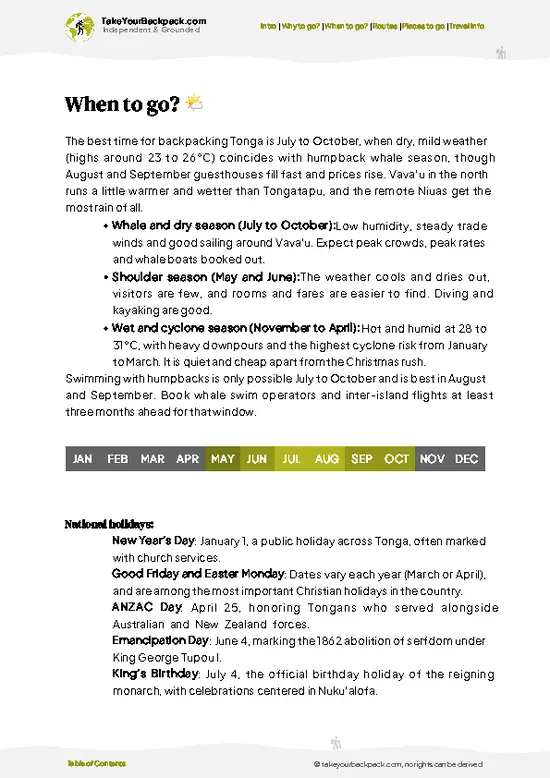
  • May to October (dry season): Ha‘atafu on the northwest tip of Tongatapu has its clearest, calmest weeks now. Days run 24 to 27°C (75 to 81°F), nights dip to about 18 to 20°C (64 to 68°F), and the sun sets around 6:05 to 6:50 pm. Humpback whales are in Tongan waters from roughly July to October, so boats leave from nearby Nuku‘alofa for swim trips. Expect higher prices and tighter beds in July to September.
  • November to April (wet season): Highs reach 29 to 31°C (84 to 88°F) with heavy humidity and downpours, and sunset slips to about 7:20 pm in December. Visibility on the reef can drop after storms. Cyclone risk peaks January to March. Rooms are cheaper and the beach is quiet.
  • Tides and mornings: The reef lagoon is best snorkeled at mid to high tide, when the water is deeper over the coral. Mornings
… read more 👉
  • May to October (dry season): Ha‘atafu on the northwest tip of Tongatapu has its clearest, calmest weeks now. Days run 24 to 27°C (75 to 81°F), nights dip to about 18 to 20°C (64 to 68°F), and the sun sets around 6:05 to 6:50 pm. Humpback whales are in Tongan waters from roughly July to October, so boats leave from nearby Nuku‘alofa for swim trips. Expect higher prices and tighter beds in July to September.
  • November to April (wet season): Highs reach 29 to 31°C (84 to 88°F) with heavy humidity and downpours, and sunset slips to about 7:20 pm in December. Visibility on the reef can drop after storms. Cyclone risk peaks January to March. Rooms are cheaper and the beach is quiet.
  • Tides and mornings: The reef lagoon is best snorkeled at mid to high tide, when the water is deeper over the coral. Mornings are usually calmer, before the trade wind picks up in the afternoon.
Book a snorkel session for the two hours around high tide, and you get the lagoon at its best.


source: climatestotravel.comJANJanuary: fair for travelingFEBFebruary: fair for travelingMARMarch: fair for travelingAPRApril: fair for travelingMAYMay: highly recommended for travelingJUNJune: highly recommended for travelingJULJuly: highly recommended for travelingAUGAugust: highly recommended for travelingSEPSeptember: highly recommended for travelingOCTOctober: highly recommended for travelingNOVNovember: fair for travelingDECDecember: fair for traveling
when-to-go

✈️ The backpacker research shortcutTonga Travel Guide

An offline-friendly backpacking guide with optimized travel routes, ranked highlights, transport advice, and the best areas to stay.
example page 0 from our offline Travel Guide for Tonga
example page 1 from our offline Travel Guide for Tonga
example page 2 from our offline Travel Guide for Tonga
example page 3 from our offline Travel Guide for Tonga
example page 4 from our offline Travel Guide for Tonga
example page 5 from our offline Travel Guide for Tonga
example page 6 from our offline Travel Guide for Tonga
example page 7 from our offline Travel Guide for Tonga
The digital guide (128 pages) contains:
✅ 31 highlights, ranked by travel appeal
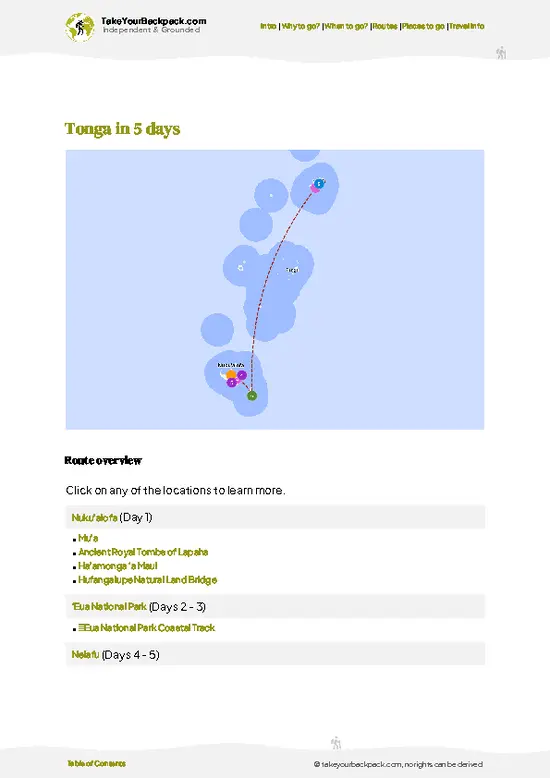
✅ Optimized 2, 3 & 5-day travel routes
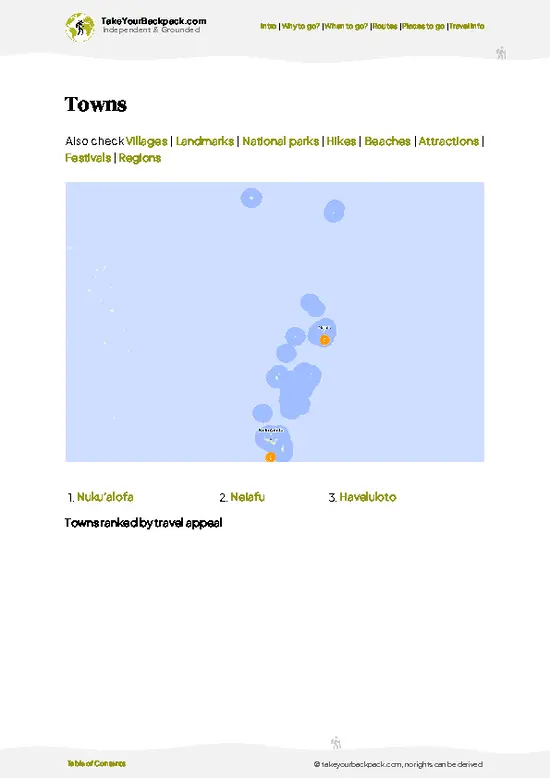
✅ Cities, national parks, landmarks, beaches
✅ How to get around
✅ Offline-friendly for travel without Wi-Fi
👉 Click to see all 30+ guide features

📅 Plan smarter in minutes, not weeks
✅ Month by month travel advice
✅ Festivals & national holidays
✅ Budget expectations

🗺️ Go to the right places, skip the overrated ones
✅ Honest pros & cons of destinations
✅ Top hikes, parks & viewpoints
✅ Lesser-known places most travelers miss
✅ Clear “worth it vs skip it” guidance

🛏️ Travel smoothly without rookie mistakes
✅ Best areas to stay
✅ Transport systems explained simply
✅ Common scams & safety advice
✅ SIM cards, money & practical tips

🌍 Understand the country, not just visit it
✅ Culture & traditions
✅ 52 Essential phrases & customs
✅ Festivals worth planning around
✅ Traveler-friendly historical context
✅ Insights that make places more meaningful

📱 Built for real travel conditions
✅ Fully downloadable PDF
✅ Works completely offline
✅ Optimized for phone use
✅ Useful in remote areas & buses
✅ Everything in one place
Stop searching, start planning
Get instant access to your full guide. 30‑day money-back guarantee.
+ Add another guide for just

By proceeding you agree to our terms.
Sent to your inbox immediately after payment • 100% Secure Checkout
Best Backpacking Travel Advisor 2025 tourism awardBest Backpacking
Travel Advisor
2025
What others say about Take Your Backpack Guides:
⭐⭐⭐⭐⭐
Fantastic, amazing amount of information!
⭐⭐⭐⭐⭐
My goodness this is amazing, it's what I've been looking for hats off too you!
⭐⭐⭐⭐⭐
I think this is absolutely BRILLIANT
⭐⭐⭐⭐
Very complete and informative. It's still missing places, but I gotta to commend you
⭐⭐⭐⭐⭐
This is truly amazing, thank you, can't wait to explore it with my kids!
⭐⭐⭐⭐⭐
Awesome resource, thank you!
⭐⭐⭐⭐⭐
This is amazing! Can't wait to explore the ones I haven't seen
⭐⭐⭐⭐
I love this! Well done, great idea.
⭐⭐⭐⭐⭐
Thanks for taking the time to make this gem!
⭐⭐⭐⭐⭐
This might be the best website I've ever seen.
⭐⭐⭐⭐⭐
Congratulations, and thank you so much for your work; it's incredibly valuable.
⭐⭐⭐⭐
In all seriousness I think you did a great job pointing out the important spots
⭐⭐⭐⭐⭐
10/10 very good
⭐⭐⭐⭐⭐
As someone who's only just starting to visit regularly this is awesome, thank you.
⭐⭐⭐⭐
Thank you very much! I'm going to visit my dad, it's going to be very useful!
⭐⭐⭐⭐⭐
This is really cool! We'll be travelling for the first time and this definitely come in handy.
⭐⭐⭐⭐⭐
You are now our minister of culture, congratulations 👨‍💼
⭐⭐⭐⭐⭐
Just wanted to tell you that this is a pearl! Going to follow your recommendations.
⭐⭐⭐⭐⭐
This is so cool. I'll definitely be using the resource for my travels soon.
⭐⭐⭐⭐⭐
This is very impressive! Good work.
⭐⭐⭐⭐⭐
This is an amazing and informative site. Very well done!

🛏️ Where to stay?Best areas and accommodation options

Stay in the Ha‘atafu and Kolovai area if you want the reef at your door, or in Nuku‘alofa if you want company and cheaper food. The northwest coast near the beach has a handful of small guesthouses and beach fales (simple thatched huts) within walking distance of the sand, usually US$30 to 70 a night (about TOP$70 to 165). It is quiet. You will meet a few surfers, divers and snorkelers in the evenings, but you cook for yourself or eat where you sleep, so bring groceries from the market in town. Kolovai is known for its flying fox colony in the trees, a short walk or ride from the beach.

Nuku‘alofa, … read more 👉
Stay in the Ha‘atafu and Kolovai area if you want the reef at your door, or in Nuku‘alofa if you want company and cheaper food. The northwest coast near the beach has a handful of small guesthouses and beach fales (simple thatched huts) within walking distance of the sand, usually US$30 to 70 a night (about TOP$70 to 165). It is quiet. You will meet a few surfers, divers and snorkelers in the evenings, but you cook for yourself or eat where you sleep, so bring groceries from the market in town. Kolovai is known for its flying fox colony in the trees, a short walk or ride from the beach.

Nuku‘alofa, about 20 to 30 km east (45 minutes to 1 hour by bus or taxi), is where most budget travelers sleep. Hostels and guesthouses along the waterfront and around the central market cluster here, with the most social common rooms, cheaper meals at the market, and boat departures to the outer islands and whale tours. Buses to the northwest leave from the main terminal near the market and run until mid-afternoon, so a day trip is simple. Staying in town makes sense for a short visit. Staying at the beach makes sense if you plan three or more days of snorkeling and want to be in the water by 7:00 am.

🛡️ SafetyScams, Hazards, and Annoyances

Ha‘atafu is a sheltered reef lagoon, and for most visitors it is one of the calmer places to swim on Tongatapu. The reef breaks the open ocean swell, so the inside water is usually flat with little current at mid to high tide. At low tide the lagoon gets shallow, and coral and sea urchins sit close to the surface, so wear reef shoes and avoid standing on the coral. Channels in the reef carry water out toward the break, so stay inside the lagoon and keep away from the pass, particularly on a falling tide. The surf break outside is for experienced surfers only, a short paddle of about 100 meters from the beach. Sun is strong all year, and there is little natural shade on the beach, so bring a rash guard, hat and plenty of water. Afternoon trade winds can chop up the lagoon. The beach is quiet … read more 👉
Ha‘atafu is a sheltered reef lagoon, and for most visitors it is one of the calmer places to swim on Tongatapu. The reef breaks the open ocean swell, so the inside water is usually flat with little current at mid to high tide. At low tide the lagoon gets shallow, and coral and sea urchins sit close to the surface, so wear reef shoes and avoid standing on the coral. Channels in the reef carry water out toward the break, so stay inside the lagoon and keep away from the pass, particularly on a falling tide. The surf break outside is for experienced surfers only, a short paddle of about 100 meters from the beach. Sun is strong all year, and there is little natural shade on the beach, so bring a rash guard, hat and plenty of water. Afternoon trade winds can chop up the lagoon. The beach is quiet and local, and theft is uncommon, but keep your phone and cash out of sight and do not leave bags unattended. Swim and change modestly, as Sunday is a quiet day of rest in Tonga.

FAQCommon questions from travelers

Take a taxi or bus from Nuku‘alofa, roughly 20 to 30 km northwest along the Tongatapu coast. The drive takes 45 minutes to 1 hour, and buses to Kolovai and Ha‘atafu leave from the main terminal near the central market, running mainly in the morning and early afternoon. A taxi costs about TOP$40 to 70 one way (US$17 to 30), and renting a car or scooter gives flexibility for the return.
Ha‘atafu is best known for snorkeling, with a sheltered reef lagoon holding coral and tropical fish, and it is calm enough for swimming at mid to high tide. Surfers paddle or take a boat to the reef break just outside, which suits intermediate and advanced riders, and the lagoon itself has no surf. Bring your own mask and fins, and wear reef shoes because the coral is shallow at low tide.
Yes, the beach itself is free to visit and has no entrance gate. Some stretches of shoreline sit beside private land or small guesthouses, so ask before crossing a property or leaving your belongings. Budget for transport from Nuku‘alofa (about TOP$40 to 70 by taxi) and any gear rental or boat trips to the reef break, which are charged separately.
⚠️ Things can change over time, so always validate details locally before you go.

Other Tongan beaches near Ha’atafu Beach

Explore more nearby:

  • Fafa Island Beach—Resort boat from Nuku’alofa, shallow warm lagoon, house reef, island loop walk| 18 km away
  • Mānuka Beach—Free access, calm green shallows, Tongatapu east coast, royal tomb stops| 25 km away

💡 Not sure where to go next?
Create a personalized itinerary for Tonga including Ha’atafu Beach and the places that fit your trip.

Generate my itinerary

👉 Discover all beaches

Or checkout all Tonga has to offer (think cities, towns, villages, national parks, hikes, beaches, festivals)
Country photo of Tonga

We 💚 feedbackParting advice and final tips

Ha‘atafu suits surfers, snorkelers and anyone who is happy with a book, a veranda and an early night. If that is you, stay several days and let the swell and the tide set your schedule. If you need nightlife, long swims or restaurants, skip it. I would bring reef shoes, snacks and cash, since there is little to buy here.

✍️ Help improve this page!
The information on this page is based on in-depth research, insights shared by experienced travelers, and feedback from the local travel community in Tonga. While every effort is made to keep the information accurate and current, conditions can change — so if you spot anything incorrect or outdated, please get in touch.


🙋‍♂️ Give feedback

👋 Meet the founderWho’s Behind Take Your Backpack?

Johan, backpacker and founder of TakeYourBackpackHi, I’m Johan (Netherlands 🇳🇱), the creator of TakeYourBackpack. Over the past 3 decades, I’ve backpacked through 90+ countries across six continents, gaining extensive experience with independent travel, long-term trips, and overland routes.

This site is built on a combination of firsthand travel experience and carefully curated insights from other backpackers. Many guides are based on places I’ve personally visited, while others bring together tips, observations, and practical advice shared by trusted travelers I’ve met along the way.

The goal is to provide realistic, experience-driven guidance — not generic itineraries — so you can explore destinations with better context, clearer expectations, and more confidence.