
×

Trinidad and Tobago🇹🇹 | regionsChaguaramasYacht marinas, Bocas islands, Macqueripe cove, forest lookouts, former base land | things to do and best time to go

Explore Pointe-à-Pierre Wildfowl TrustExplore Arima

Backpacking in Chaguaramas
🏆 Top pickregion ranked #1
By Johan Kruseman 🇳🇱 | Updated October 22, 2026

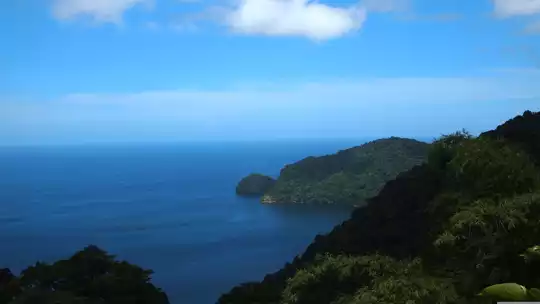
The roadside vendor hands you a coconut, hacks the top off with three casual swings, and you stand there holding it while a container ship drifts past the end of the bay. Chaguaramas sits on the northwest peninsula of Trinidad and Tobago, a thin finger of hills and old American base land pointing toward Venezuela. The roads are wide and oddly empty, so you get long quiet stretches where the only traffic is a cyclist and a stray dog. Hiking trails climb into green forest and end at lookouts over the Bocas islands. Boatyards line the waterfront, and yacht crews swap repair stories over cold beer. Public transport is thin, so a taxi or rental car turns into part of the budget. Nightlife is modest, and the sights are scattered rather than clustered. Compared with Maracas Bay, which fills with day-trippers hunting for bake and shark, Chaguaramas is quieter, greener and far more about hills, boats and open space than beach towels.

Discover everything you want to know in the 📖 Trinidad and Tobago Travel Guide.


example page 0 from our offline Travel Guide for Trinidad and Tobago
example page 1 from our offline Travel Guide for Trinidad and Tobago
example page 2 from our offline Travel Guide for Trinidad and Tobago
example page 3 from our offline Travel Guide for Trinidad and Tobago
example page 4 from our offline Travel Guide for Trinidad and Tobago
example page 5 from our offline Travel Guide for Trinidad and Tobago
example page 6 from our offline Travel Guide for Trinidad and Tobago
example page 7 from our offline Travel Guide for Trinidad and Tobago
Loading the map 🌍
CLICK TO FILTER
cities
towns
villages
landmarks
national parks
hikes
beaches
attractions
festivals
regions
SHOW COUNTRY’S BESTSHOW ALL

✨ Why go?
Ranked #1 region in Trinidad and Tobago
What sets this place apart

Chaguaramas gives you forest, sea and history inside one small peninsula, so you can hike in the morning and be on the water by afternoon without packing your bag. The Tucker Valley trails, the Gasparee Caves island boat trip and the Macqueripe beach cove all sit within a short drive of each other, which suits slow travel better than the long hauls elsewhere on the island. Add the World War II relics scattered through the hills, and the history comes free with every walk. The second reason is the boating scene. The Chaguaramas yacht yards hold hundreds of cruising boats, and the dockside bars are where sailors trade stories about Caribbean anchorages. Chat to a few and you pick up route advice, and sometimes a crew spot heading down the island chain. Third, it is the quietest corner within … read more 👉
Chaguaramas gives you forest, sea and history inside one small peninsula, so you can hike in the morning and be on the water by afternoon without packing your bag. The Tucker Valley trails, the Gasparee Caves island boat trip and the Macqueripe beach cove all sit within a short drive of each other, which suits slow travel better than the long hauls elsewhere on the island. Add the World War II relics scattered through the hills, and the history comes free with every walk. The second reason is the boating scene. The Chaguaramas yacht yards hold hundreds of cruising boats, and the dockside bars are where sailors trade stories about Caribbean anchorages. Chat to a few and you pick up route advice, and sometimes a crew spot heading down the island chain. Third, it is the quietest corner within reach of Port of Spain, with far fewer crowds than the north coast beaches, and the bird life, from parrots to motmots, is better here than in most of the island.

💡 HighlightsKey sights and experiences for travelers

  1. Gasparee Caves: On Gaspar Grande island, a short boat hop from the Chaguaramas marinas. Guides walk you down wooden steps into a limestone cave with a green pool at the bottom, lit by a natural skylight. Bring shoes with grip, because the steps are damp.
  2. Macqueripe Bay: A small, steep-sided cove with a sheltered swimming beach and calm water most mornings. A cliffside trail leads up to lookouts over the Bocas channel, and the old lifeguard huts and shade trees make it easy to spend half a day.
  3. Macqueripe Zipline: A cable run through forest canopy above the bay. It is a quick adrenaline hit if you want a break from sand, and the views of the cove come in short flashes.
  4. Chacachacare Island: The westernmost island, reached by boat. An abandoned leprosarium of crumbling wards and a chapel stands
… read more 👉
  1. Gasparee Caves: On Gaspar Grande island, a short boat hop from the Chaguaramas marinas. Guides walk you down wooden steps into a limestone cave with a green pool at the bottom, lit by a natural skylight. Bring shoes with grip, because the steps are damp.
  2. Macqueripe Bay: A small, steep-sided cove with a sheltered swimming beach and calm water most mornings. A cliffside trail leads up to lookouts over the Bocas channel, and the old lifeguard huts and shade trees make it easy to spend half a day.
  3. Macqueripe Zipline: A cable run through forest canopy above the bay. It is a quick adrenaline hit if you want a break from sand, and the views of the cove come in short flashes.
  4. Chacachacare Island: The westernmost island, reached by boat. An abandoned leprosarium of crumbling wards and a chapel stands above the shore, and a lighthouse sits higher up the hill. Ghostly, quiet and very different from the mainland beaches, it deserves a guided trip.
  5. Nelson Island: A small, low island, once a quarantine station for arriving indentured laborers, where brick ruins still stand among the trees. Few visitors ever land here, so it feels almost private.
  6. Chaguaramas Boardwalk: A flat waterfront promenade along the bay, with benches, pelicans overhead and cargo ships anchored in the gulf. Locals come at dusk to jog, walk dogs and eat from the food stalls.
  7. Tucker Valley: A forested valley road that locals close to cars on some weekends for cycling, running and walking. Hills rise on both sides, and the air is noticeably cooler under the trees than at the shoreline.
  8. Chaguaramas Boatyards and Marinas: Sailors from across the Caribbean haul out yachts here during hurricane season. Wander the docks and yards at Peake and the neighboring marinas for a glimpse of sailing life, and you may find a captain who needs crew.
Seeing all of Chaguaramas takes two full days if you add a boat trip to the islands, and one packed day covers the mainland highlights.
Spotted a mistake or missing something? Contact us.

Things to do near Chaguaramas

Ratings based on Tripadvisor reviews. When you book through this link, you support our work at no extra cost to you.

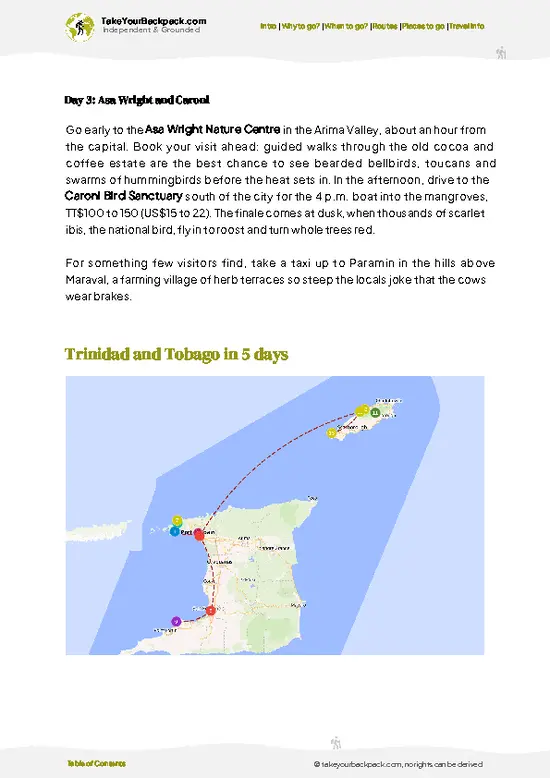
⌛️ 5 days5-day itinerary for Chaguaramas

Pace the days around the heat: walk or paddle early, then rest through the midday sun in shade or a waterside bar, and move again when it cools. Public transport here is thin, so shared taxis from Port of Spain drop you at the peninsula entrance and local rides or a rental car handle the rest.
Day 1: Fort George and the Boardwalk: Begin at the lookout for the wide view while the air is still cool, then drift down to the boardwalk for an easy late afternoon among locals. Starting with a view tells you how the peninsula is laid out, which matters because everything is spread along one road.
Day 2: Macqueripe Bay: Take the forest steps down to the cove, swim, then walk the short trail above it. Mornings are quieter, and the transport gap makes a pre-arranged ride back smart.
Day 3: Tucker Valley: … read more 👉
Pace the days around the heat: walk or paddle early, then rest through the midday sun in shade or a waterside bar, and move again when it cools. Public transport here is thin, so shared taxis from Port of Spain drop you at the peninsula entrance and local rides or a rental car handle the rest.
Day 1: Fort George and the Boardwalk: Begin at the lookout for the wide view while the air is still cool, then drift down to the boardwalk for an easy late afternoon among locals. Starting with a view tells you how the peninsula is laid out, which matters because everything is spread along one road.
Day 2: Macqueripe Bay: Take the forest steps down to the cove, swim, then walk the short trail above it. Mornings are quieter, and the transport gap makes a pre-arranged ride back smart.
Day 3: Tucker Valley: Hike the waterfall trail early and cycle part of the military trail by afternoon. Grouping both here keeps you in one valley and avoids wasted trips.
Day 4: Gasparee Caves: Join a boat tour to the island and cave, a half-day outing that fits neatly before an easy marina evening.
Day 5: Detour to Chacachacare: Hire a boat for the lighthouse and the abandoned leper colony, and swim in empty bays. It adds enormous atmosphere, though sea conditions can change plans, so keep a spare day.
If you only get one day, make it Day 5. The silent ruins and deserted beaches are unlike anything else in the country.

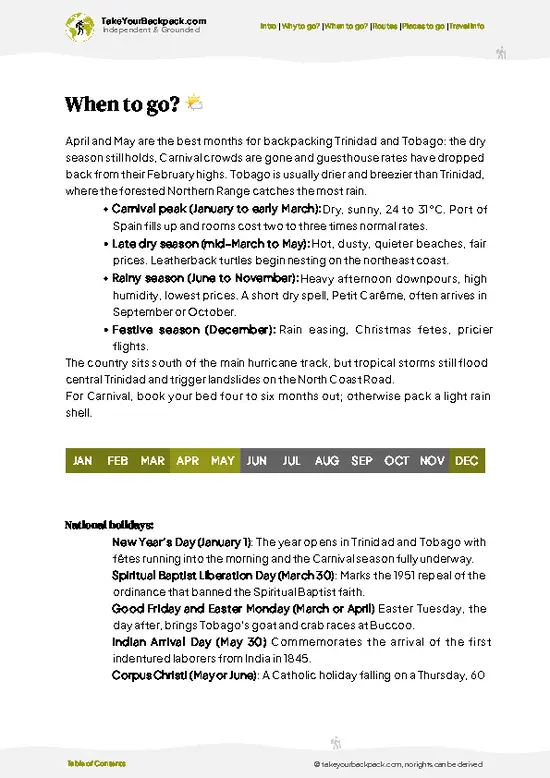
🌤️ When to go?Choosing the right time of year

  • Dry Season (January to May): Chaguaramas is at its most reliable now, with 29 to 32°C (84 to 90°F) days, little rain and steady breezes on the bay. Boat trips to the Gulf islands and the Gasparee Caves run smoothly, and trails stay firm underfoot. Daylight lasts about 11.5 to 12 hours.
  • Carnival (February or March, dates vary): Port of Spain fills up and prices for rooms and rides climb. The peninsula itself stays calmer, which makes it a handy refuge.
  • Wet Season (June to December): Expect 26 to 31°C (79 to 88°F), humid air and short, heavy afternoon downpours. Trails like Gasparee and Tucker Valley turn muddy, but the forest is loud and green and prices drop. Sea can be choppy for island hops.
  • Yacht and Festival Periods: Boat yards fill with cruisers from November to May.
Weekdays are quiet and … read more 👉
  • Dry Season (January to May): Chaguaramas is at its most reliable now, with 29 to 32°C (84 to 90°F) days, little rain and steady breezes on the bay. Boat trips to the Gulf islands and the Gasparee Caves run smoothly, and trails stay firm underfoot. Daylight lasts about 11.5 to 12 hours.
  • Carnival (February or March, dates vary): Port of Spain fills up and prices for rooms and rides climb. The peninsula itself stays calmer, which makes it a handy refuge.
  • Wet Season (June to December): Expect 26 to 31°C (79 to 88°F), humid air and short, heavy afternoon downpours. Trails like Gasparee and Tucker Valley turn muddy, but the forest is loud and green and prices drop. Sea can be choppy for island hops.
  • Yacht and Festival Periods: Boat yards fill with cruisers from November to May.
Weekdays are quiet and weekends bring local picnickers, so plan hikes and beach time for Monday to Thursday.


source: climatestotravel.comJANJanuary: highly recommended for travelingFEBFebruary: highly recommended for travelingMARMarch: excellent for travelingAPRApril: excellent for travelingMAYMay: highly recommended for travelingJUNJune: fair for travelingJULJuly: fair for travelingAUGAugust: fair for travelingSEPSeptember: below average for travelingOCTOctober: below average for travelingNOVNovember: fair for travelingDECDecember: fair for traveling
trinidad-and-tobago-region-chaguaramas
© Google |

✈️ The backpacker research shortcutTrinidad and Tobago Travel Guide

An offline-friendly backpacking guide with optimized travel routes, ranked highlights, transport advice, and the best areas to stay.
example page 0 from our offline Travel Guide for Trinidad and Tobago
example page 1 from our offline Travel Guide for Trinidad and Tobago
example page 2 from our offline Travel Guide for Trinidad and Tobago
example page 3 from our offline Travel Guide for Trinidad and Tobago
example page 4 from our offline Travel Guide for Trinidad and Tobago
example page 5 from our offline Travel Guide for Trinidad and Tobago
example page 6 from our offline Travel Guide for Trinidad and Tobago
example page 7 from our offline Travel Guide for Trinidad and Tobago
The digital guide (222 pages) contains:
✅ 58 highlights, ranked by travel appeal
✅ Optimized 2, 3 & 5-day travel routes
✅ Cities, national parks, landmarks, beaches
✅ How to get around
✅ Offline-friendly for travel without Wi-Fi
👉 Click to see all 30+ guide features

📅 Plan smarter in minutes, not weeks
✅ Month by month travel advice
✅ Festivals & national holidays
✅ Budget expectations

🗺️ Go to the right places, skip the overrated ones
✅ Honest pros & cons of destinations
✅ Top hikes, parks & viewpoints
✅ Lesser-known places most travelers miss
✅ Clear “worth it vs skip it” guidance

🛏️ Travel smoothly without rookie mistakes
✅ Best areas to stay
✅ Transport systems explained simply
✅ Common scams & safety advice
✅ SIM cards, money & practical tips

🌍 Understand the country, not just visit it
✅ Culture & traditions
✅ Local customs
✅ Festivals worth planning around
✅ Traveler-friendly historical context
✅ Insights that make places more meaningful

📱 Built for real travel conditions
✅ Fully downloadable PDF
✅ Works completely offline
✅ Optimized for phone use
✅ Useful in remote areas & buses
✅ Everything in one place
Stop searching, start planning
Get instant access to your full guide. 30‑day money-back guarantee.
+ Add another guide for just

By proceeding you agree to our terms.
Sent to your inbox immediately after payment • 100% Secure Checkout
Best Backpacking Travel Advisor 2025 tourism awardBest Backpacking
Travel Advisor
2025
What others say about Take Your Backpack Guides:
⭐⭐⭐⭐⭐
Fantastic, amazing amount of information!
⭐⭐⭐⭐⭐
My goodness this is amazing, it's what I've been looking for hats off too you!
⭐⭐⭐⭐⭐
I think this is absolutely BRILLIANT
⭐⭐⭐⭐
Very complete and informative. It's still missing places, but I gotta to commend you
⭐⭐⭐⭐⭐
This is truly amazing, thank you, can't wait to explore it with my kids!
⭐⭐⭐⭐⭐
Awesome resource, thank you!
⭐⭐⭐⭐⭐
This is amazing! Can't wait to explore the ones I haven't seen
⭐⭐⭐⭐
I love this! Well done, great idea.
⭐⭐⭐⭐⭐
Thanks for taking the time to make this gem!
⭐⭐⭐⭐⭐
This might be the best website I've ever seen.
⭐⭐⭐⭐⭐
Congratulations, and thank you so much for your work; it's incredibly valuable.
⭐⭐⭐⭐
In all seriousness I think you did a great job pointing out the important spots
⭐⭐⭐⭐⭐
10/10 very good
⭐⭐⭐⭐⭐
As someone who's only just starting to visit regularly this is awesome, thank you.
⭐⭐⭐⭐
Thank you very much! I'm going to visit my dad, it's going to be very useful!
⭐⭐⭐⭐⭐
This is really cool! We'll be travelling for the first time and this definitely come in handy.
⭐⭐⭐⭐⭐
You are now our minister of culture, congratulations 👨‍💼
⭐⭐⭐⭐⭐
Just wanted to tell you that this is a pearl! Going to follow your recommendations.
⭐⭐⭐⭐⭐
This is so cool. I'll definitely be using the resource for my travels soon.
⭐⭐⭐⭐⭐
This is very impressive! Good work.
⭐⭐⭐⭐⭐
This is an amazing and informative site. Very well done!

🛏️ Where to stay?Best areas and accommodation options

Chaguaramas itself is the best base for backpackers who want sea air, boats and hiking, with the marina area around Crews Inn and Williams Bay the most social corner. Cruisers, divers and sailing crews gather here, so you can swap stories over a drink and often find day work or a ride to the islands. Hostel-style beds are limited, and guesthouses and small apartments are the realistic budget options at roughly US$40 to 90 a night.

Port of Spain, about 30 to 45 minutes away, is the practical choice for a shorter budget stay. It has the widest range of cheap rooms and guesthouses at roughly US$30 … read more 👉
Chaguaramas itself is the best base for backpackers who want sea air, boats and hiking, with the marina area around Crews Inn and Williams Bay the most social corner. Cruisers, divers and sailing crews gather here, so you can swap stories over a drink and often find day work or a ride to the islands. Hostel-style beds are limited, and guesthouses and small apartments are the realistic budget options at roughly US$40 to 90 a night.

Port of Spain, about 30 to 45 minutes away, is the practical choice for a shorter budget stay. It has the widest range of cheap rooms and guesthouses at roughly US$30 to 70 a night, plus nightlife, markets and the maxi-taxi terminal. Sleep there, and visit the peninsula for hiking and boat trips.

Western suburbs like Carenage and St. James sit between the two. Carenage is a quiet fishing village with a short route taxi hop to the peninsula. St. James has the liveliest late night street food and music, and is easy to reach by maxi-taxi.

For a calmer stay, look at Tucker Valley edges and the area near the nature trails, where you wake to birds and forest. Book ahead from January to March, when Carnival and the dry season squeeze availability.

🚌 Getting aroundHow to get around Chaguaramas

Chaguaramas is a long, thin peninsula, so walking works within a single cluster, like the marina strip at Crews Inn or the Waterfront at Williams Bay, and then stops making sense. Distances between clusters run several kilometers with little shade, and pavement beside the Western Main Road is narrow in places. Most backpackers combine maxi-taxis, route taxis and the odd private ride. It is dependable until dark, when options thin out fast.
  • Maxi-taxi: Yellow-striped minibuses run from Port of Spain's City Gate to the peninsula for about US$1 to 2 in roughly 30 to 45 minutes. They fill up, play music at a volume that rewires your thoughts, and drop you near the Chaguaramas junction with the bay opening up on your left.
  • Route taxi: Shared cars cost about US$1.50 to 3 on the Carenage and Chaguaramas
… read more 👉
Chaguaramas is a long, thin peninsula, so walking works within a single cluster, like the marina strip at Crews Inn or the Waterfront at Williams Bay, and then stops making sense. Distances between clusters run several kilometers with little shade, and pavement beside the Western Main Road is narrow in places. Most backpackers combine maxi-taxis, route taxis and the odd private ride. It is dependable until dark, when options thin out fast.
  • Maxi-taxi: Yellow-striped minibuses run from Port of Spain's City Gate to the peninsula for about US$1 to 2 in roughly 30 to 45 minutes. They fill up, play music at a volume that rewires your thoughts, and drop you near the Chaguaramas junction with the bay opening up on your left.
  • Route taxi: Shared cars cost about US$1.50 to 3 on the Carenage and Chaguaramas run. You squeeze in with strangers, learn the weather opinions of three families and arrive with a sense of belonging.
  • Private taxi or app ride: A ride from Port of Spain is typically US$15 to 25, and from the airport about US$35 to 50 in an hour or less. Agree on the fare first. It is the sane choice after dark, and it gets you to remote trailheads in Tucker Valley.
  • Boat (pirogue or tour boat): Trips to Gasparee Island and the Bocas islands cost about US$10 to 40 depending on the operator and group size. The water is green and flat in the lee of the islands, and the caves reward you with dripping limestone and a cool break from the sun.
  • Bicycle and walking: The old military roads are pleasantly flat, and bike rental is occasionally available near the Waterfront for about US$10 to 20 a day. The Tucker Valley loop gives birdsong, shade and quiet.
Start early in the morning, since maxi-taxis are plentiful before 9 a.m. and scarce after sunset, and pre-book a ride back if you plan to stay late on the water.

🍲 FoodEating & Drinking in Chaguaramas

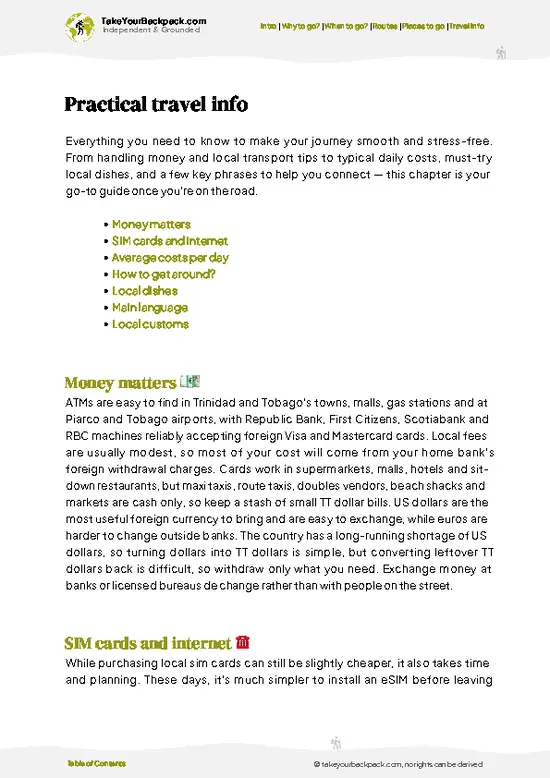
Chaguaramas is best known for doubles, the soft fried bara folded around curried chickpeas with a sting of pepper sauce, which you grab at a roadside stand for about US$1 to 2. Order them “slight pepper” until you know your limit. Fresh fish and shark and bake is the other must, with crisp fried fish stuffed into a hot bake and piled with tamarind sauce, cabbage and garlic sauce.

To eat like a backpacker, look for roadside stalls and food trucks near the marinas, plus casual waterfront bars where a plate of curry or stew with rice and callaloo runs about US$6 to 12. Port of Spain's markets and street vendors are a short ride away if you want more variety. Coconut water chopped open with a cutlass is about US$1 to 2 and tastes of cool sweetness after a hot hike. Try Carib or Stag beer, and … read more 👉
Chaguaramas is best known for doubles, the soft fried bara folded around curried chickpeas with a sting of pepper sauce, which you grab at a roadside stand for about US$1 to 2. Order them “slight pepper” until you know your limit. Fresh fish and shark and bake is the other must, with crisp fried fish stuffed into a hot bake and piled with tamarind sauce, cabbage and garlic sauce.

To eat like a backpacker, look for roadside stalls and food trucks near the marinas, plus casual waterfront bars where a plate of curry or stew with rice and callaloo runs about US$6 to 12. Port of Spain's markets and street vendors are a short ride away if you want more variety. Coconut water chopped open with a cutlass is about US$1 to 2 and tastes of cool sweetness after a hot hike. Try Carib or Stag beer, and a rum punch with fresh lime and nutmeg at sunset.

On customs, people greet you before ordering, so a quick “good afternoon” counts for a lot. Sharing is normal, and pepper sauce is usually on the side, so add it a drop at a time. Many stalls take cash only, close by early evening and are quieter on Sundays, so carry small bills.

FAQCommon questions from travelers

Two to three days covers Chaguaramas well, and a long weekend lets you add a boat trip without rushing. Day one suits the Chaguaramas Heritage Trail or a hike up to Gasparee Island by boat, day two can go to the Macqueripe-style cliff coves along the Bay (Macqueripe Bay itself is a short drive east) and the Tucker Valley hiking and biking roads, and a third day fits kayaking or a sail among the Bocas islands. Many backpackers use it as a half-day or day trip from Port of Spain, which is about 15 to 20 km away.
Chaguaramas is hard to cover fully without a car, but shared taxis and maxi-taxis make it workable. Route taxis run from Port of Spain (City Gate or the Wrightson Road area) to Carenage and Chaguaramas for roughly US$1 to 2, taking 30 to 45 minutes depending on traffic, and a private taxi from the capital costs about US$15 to 25 each way. Within the peninsula distances between the marinas, the Heritage Trail and Tucker Valley are spread out, so expect to pay US$3 to 8 for short taxi hops or arrange a driver for a half day.
Chaguaramas is known for its yacht marinas, which hold one of the Caribbean’s biggest boat-repair and storage clusters, and for the forested hills of the northwest peninsula. The area has old American military base sites from World War II, now walked as the Heritage Trail, plus the Tucker Valley bike and walking roads, kayaking in the Bocas islands (Gasparee Caves on Gaspar Grande are visited by guided tour for roughly US$7 to 15), and waterfront bars and seafood stalls at Williams Bay. Many Trinidadians come on weekends for boat trips and the Chaguaramas Boardwalk, while the quieter weekdays suit hikers and cyclists.
⚠️ Things can change over time, so always validate details locally before you go.

More places to explore across Trinidad and Tobago

Chaguaramas isn’t the only highlight in Trinidad and Tobago. Explore all what Trinidad and Tobago has to offer.
Country photo of Trinidad and Tobago

We 💚 feedbackSumming up the experience

Chaguaramas works best as a two-night add-on to Port of Spain, or paired with the north coast beaches at Maracas for a contrast of forest and surf. I would rent a car for a day, since the sights are scattered, and bring bug spray for the trails. Skip weekends if you want quiet, when the beaches fill with local families.

✍️ Help improve this page!
The information on this page is based on in-depth research, insights shared by experienced travelers, and feedback from the local travel community in Trinidad and Tobago. While every effort is made to keep the information accurate and current, conditions can change — so if you spot anything incorrect or outdated, please get in touch.


🙋‍♂️ Give feedback

👋 Meet the founderWho’s Behind Take Your Backpack?

Johan, backpacker and founder of TakeYourBackpackHi, I’m Johan (Netherlands 🇳🇱), the creator of TakeYourBackpack. Over the past 3 decades, I’ve backpacked through 90+ countries across six continents, gaining extensive experience with independent travel, long-term trips, and overland routes.

This site is built on a combination of firsthand travel experience and carefully curated insights from other backpackers. Many guides are based on places I’ve personally visited, while others bring together tips, observations, and practical advice shared by trusted travelers I’ve met along the way.

The goal is to provide realistic, experience-driven guidance — not generic itineraries — so you can explore destinations with better context, clearer expectations, and more confidence.