×

Trinidad and Tobago🇹🇹 | beachesMayaro BeachSoutheast Atlantic coast, palm-fringed ribbon, beach shacks, quiet weekdays | things to do and best time to go

Explore Blanchisseuse BeachExplore Macqueripe Bay

Backpacking in Mayaro Beach
👀 For curious travelersbeach ranked #12
By Johan Kruseman 🇳🇱 | Updated October 22, 2026

Mayaro Beach is not a resort strip with a dive shop on every corner; it is a long, nearly empty ribbon of coconut-fringed sand, and that is the whole pitch. It sits on the southeast coast of Trinidad and Tobago, facing the Atlantic, a long drive from Port of Spain. The palms give you shade, the sand is wide and fairly clean, and the weekday crowds are mostly pelicans. Currents and surf can be rough, so swimming needs judgment, and snorkeling is not the draw. Beach shacks sell fried fish and bake and shark, and guesthouses are simple. Compared with busy Manzanilla to the north, Mayaro feels roomier and quieter.

Discover everything you want to know in the 📖 Trinidad and Tobago Travel Guide.


example page 0 from our offline Travel Guide for Trinidad and Tobago
example page 1 from our offline Travel Guide for Trinidad and Tobago
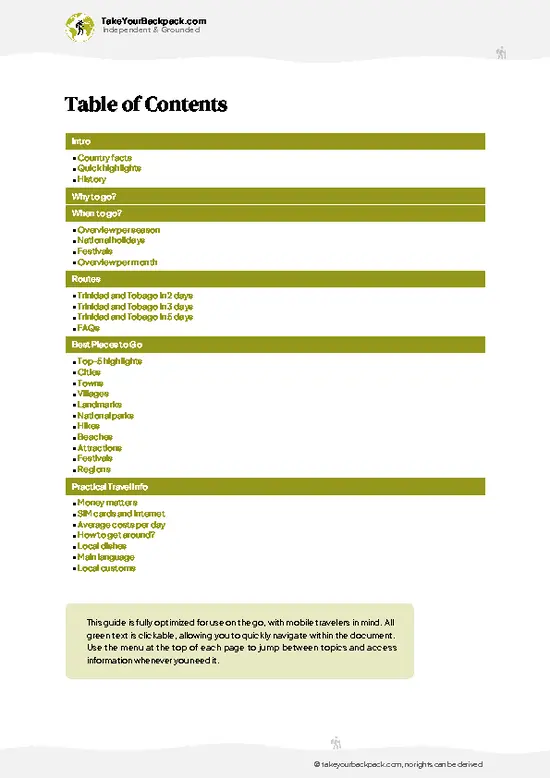
example page 2 from our offline Travel Guide for Trinidad and Tobago
example page 3 from our offline Travel Guide for Trinidad and Tobago
example page 4 from our offline Travel Guide for Trinidad and Tobago
example page 5 from our offline Travel Guide for Trinidad and Tobago
example page 6 from our offline Travel Guide for Trinidad and Tobago
example page 7 from our offline Travel Guide for Trinidad and Tobago
Loading the map 🌍
CLICK TO FILTER
cities
towns
villages
landmarks
national parks
hikes
beaches
attractions
festivals
regions
SHOW COUNTRY’S BESTSHOW ALL

✨ Why go?
Ranked #12 beach in Trinidad and Tobago
What makes it a must-see beach

Mayaro Beach earns its stop through space and a slow rhythm. The shoreline runs for kilometers, so even on a holiday weekend you can walk until the music fades and claim a patch under the coconut palms. Locals treat it as their weekend escape, which means the food stalls and rum shops feel like a Trinidadian family beach day rather than a staged show. It also works as a pause on the Atlantic-facing east coast road, where you can pair it with Manzanilla and the long coconut groves that line the route. If you want a quiet base with cheap local meals and few other backpackers around, this is it.

💡 HighlightsEssential experiences to have while visiting Mayaro Beach

  1. The Long Coconut-Fringed Shoreline: The main reason to come is the sweep of Atlantic sand lined with coconut palms, ideal for an early walk when the beach is almost empty.
  2. Beach Shack Seafood: Casual stalls and cook-ups serve fried fish, shark and bake, and local-style lunches that fit a backpacker budget.
  3. Atlantic Surf Watching: The waves roll in with real force, so watching them from the sand is a pleasure, though strong currents make careful swimming a must.
  4. Weekend Beach Lime: On Saturdays and Sundays families set up tents, speakers and coolers, and the social scene is easy to join if you bring a bit of curiosity.
  5. Evening Walk at the Water’s Edge: As the day cools, the sand is firm for walking, and the open sky and soft surf make the late hours quiet and restful.
Mayaro Beach needs no ticket … read more 👉
  1. The Long Coconut-Fringed Shoreline: The main reason to come is the sweep of Atlantic sand lined with coconut palms, ideal for an early walk when the beach is almost empty.
  2. Beach Shack Seafood: Casual stalls and cook-ups serve fried fish, shark and bake, and local-style lunches that fit a backpacker budget.
  3. Atlantic Surf Watching: The waves roll in with real force, so watching them from the sand is a pleasure, though strong currents make careful swimming a must.
  4. Weekend Beach Lime: On Saturdays and Sundays families set up tents, speakers and coolers, and the social scene is easy to join if you bring a bit of curiosity.
  5. Evening Walk at the Water’s Edge: As the day cools, the sand is firm for walking, and the open sky and soft surf make the late hours quiet and restful.
Mayaro Beach needs no ticket or advance booking for any of these, since everything here is open access.
Spotted a mistake or missing something? Contact us.

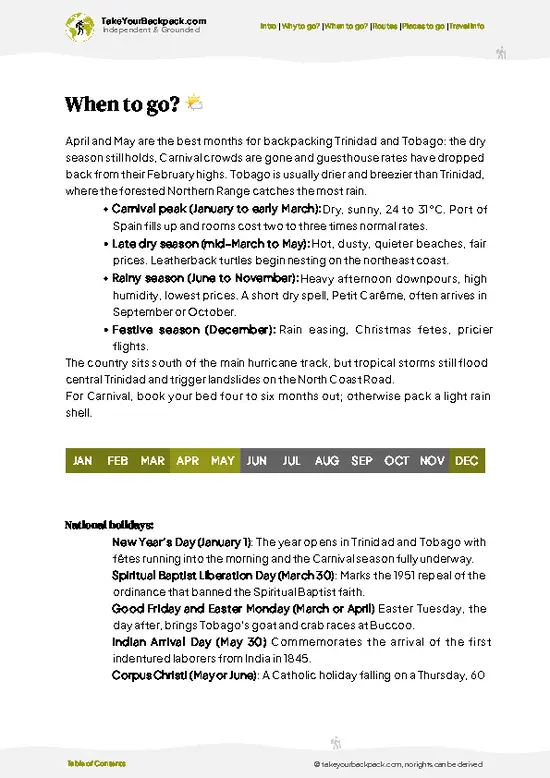
🌤️ When to go?When to go for the best experience

  • Dry Season (January to May): Rain is lightest, days run 27 to 32°C (81 to 90°F) and the sea is calmest. Daylight lasts about 11.5 to 12.5 hours.
  • Wet Season (June to December): Afternoon downpours are common, highs stay near 30°C (86°F) and nights hover around 22 to 24°C (72 to 75°F). Lodging is easier to find and cheaper, though roads and the beach can be muddy and littered with debris.
  • Carnival (February or March): Mayaro fills with Trinidadians escaping Port of Spain, and rentals sell out.
  • Holiday weekends and August: Beach house rentals spike in price and the sand gets crowded with beach lime parties.
Go midweek in March or April for calm water and an empty shoreline.

source: climatestotravel.comJANJanuary: excellent for travelingFEBFebruary: excellent for travelingMARMarch: excellent for travelingAPRApril: highly recommended for travelingMAYMay: highly recommended for travelingJUNJune: fair for travelingJULJuly: fair for travelingAUGAugust: fair for travelingSEPSeptember: fair for travelingOCTOctober: fair for travelingNOVNovember: good for travelingDECDecember: excellent for traveling
when-to-go

✈️ The backpacker research shortcutTrinidad and Tobago Travel Guide

An offline-friendly backpacking guide with optimized travel routes, ranked highlights, transport advice, and the best areas to stay.
example page 0 from our offline Travel Guide for Trinidad and Tobago
example page 1 from our offline Travel Guide for Trinidad and Tobago
example page 2 from our offline Travel Guide for Trinidad and Tobago
example page 3 from our offline Travel Guide for Trinidad and Tobago
example page 4 from our offline Travel Guide for Trinidad and Tobago
example page 5 from our offline Travel Guide for Trinidad and Tobago
example page 6 from our offline Travel Guide for Trinidad and Tobago
example page 7 from our offline Travel Guide for Trinidad and Tobago
The digital guide (222 pages) contains:
✅ 58 highlights, ranked by travel appeal
✅ Optimized 2, 3 & 5-day travel routes
✅ Cities, national parks, landmarks, beaches
✅ How to get around
✅ Offline-friendly for travel without Wi-Fi
👉 Click to see all 30+ guide features

📅 Plan smarter in minutes, not weeks
✅ Month by month travel advice
✅ Festivals & national holidays
✅ Budget expectations

🗺️ Go to the right places, skip the overrated ones
✅ Honest pros & cons of destinations
✅ Top hikes, parks & viewpoints
✅ Lesser-known places most travelers miss
✅ Clear “worth it vs skip it” guidance

🛏️ Travel smoothly without rookie mistakes
✅ Best areas to stay
✅ Transport systems explained simply
✅ Common scams & safety advice
✅ SIM cards, money & practical tips

🌍 Understand the country, not just visit it
✅ Culture & traditions
✅ Local customs
✅ Festivals worth planning around
✅ Traveler-friendly historical context
✅ Insights that make places more meaningful

📱 Built for real travel conditions
✅ Fully downloadable PDF
✅ Works completely offline
✅ Optimized for phone use
✅ Useful in remote areas & buses
✅ Everything in one place
Stop searching, start planning
Get instant access to your full guide. 30‑day money-back guarantee.
+ Add another guide for just

By proceeding you agree to our terms.
Sent to your inbox immediately after payment • 100% Secure Checkout
Best Backpacking Travel Advisor 2025 tourism awardBest Backpacking
Travel Advisor
2025
What others say about Take Your Backpack Guides:
⭐⭐⭐⭐⭐
Fantastic, amazing amount of information!
⭐⭐⭐⭐⭐
My goodness this is amazing, it's what I've been looking for hats off too you!
⭐⭐⭐⭐⭐
I think this is absolutely BRILLIANT
⭐⭐⭐⭐
Very complete and informative. It's still missing places, but I gotta to commend you
⭐⭐⭐⭐⭐
This is truly amazing, thank you, can't wait to explore it with my kids!
⭐⭐⭐⭐⭐
Awesome resource, thank you!
⭐⭐⭐⭐⭐
This is amazing! Can't wait to explore the ones I haven't seen
⭐⭐⭐⭐
I love this! Well done, great idea.
⭐⭐⭐⭐⭐
Thanks for taking the time to make this gem!
⭐⭐⭐⭐⭐
This might be the best website I've ever seen.
⭐⭐⭐⭐⭐
Congratulations, and thank you so much for your work; it's incredibly valuable.
⭐⭐⭐⭐
In all seriousness I think you did a great job pointing out the important spots
⭐⭐⭐⭐⭐
10/10 very good
⭐⭐⭐⭐⭐
As someone who's only just starting to visit regularly this is awesome, thank you.
⭐⭐⭐⭐
Thank you very much! I'm going to visit my dad, it's going to be very useful!
⭐⭐⭐⭐⭐
This is really cool! We'll be travelling for the first time and this definitely come in handy.
⭐⭐⭐⭐⭐
You are now our minister of culture, congratulations 👨‍💼
⭐⭐⭐⭐⭐
Just wanted to tell you that this is a pearl! Going to follow your recommendations.
⭐⭐⭐⭐⭐
This is so cool. I'll definitely be using the resource for my travels soon.
⭐⭐⭐⭐⭐
This is very impressive! Good work.
⭐⭐⭐⭐⭐
This is an amazing and informative site. Very well done!

🛏️ Where to stay?Best areas to stay in Trinidad and Tobago

Mayaro village and the stretch along the Mayaro-Guayaguayare Road is where you should stay. Mayaro Beach is a long, straight coast with no resort strip, so accommodation is spread out in small guesthouses, family-run apartments and holiday rentals within a short walk or drive of the sand. The Radix and Lagon Doux area sits closest to the main swimming sections and has a few shops and rum bars within reach. Manzanilla, further north along the same coast, is quieter and suits travelers who want long walks under coconut palms. There are no backpacker hostels here, so solo travelers should book a … read more 👉
Mayaro village and the stretch along the Mayaro-Guayaguayare Road is where you should stay. Mayaro Beach is a long, straight coast with no resort strip, so accommodation is spread out in small guesthouses, family-run apartments and holiday rentals within a short walk or drive of the sand. The Radix and Lagon Doux area sits closest to the main swimming sections and has a few shops and rum bars within reach. Manzanilla, further north along the same coast, is quieter and suits travelers who want long walks under coconut palms. There are no backpacker hostels here, so solo travelers should book a simple room in Mayaro village and split rental costs with other travelers. Expect roughly US$40 to 90 a night for a basic room. Because evening transport is thin, pick a spot within walking distance of food and the beach, and stock up on groceries in Rio Claro or Mayaro town before settling in.

🛡️ SafetySafety Tips and Common Scams in Mayaro Beach

Mayaro Beach is a long Atlantic-facing beach with moderate surf, and the main risk is currents. The sea can shift quickly, and rip currents form along the open stretches, so swim where locals do near the Radix and Lagon Doux sections and stay within depth. There are no lifeguards for most of the shore. Sun exposure is intense from mid-morning, and shade is limited beyond the coconut palms. Rain squalls come through fast in the wet months. Petty theft from parked cars and unattended bags happens, so leave valuables locked away and avoid empty stretches after dark. Weekends are busy and sociable, and weekdays are very quiet.

FAQTraveler FAQ

Mayaro Beach lies on Trinidad’s southeast coast, about 90 minutes to 2 hours by car from Port of Spain via the Manzanilla-Mayaro Road. Without a car, take a maxi taxi or PH taxi from San Fernando or Rio Claro, with fares around US$3 to 8. Renting a car in Piarco costs roughly US$40 to 70 a day and gives the most flexibility.
Mayaro Beach is best for relaxed swimming and long beach walks, but not for snorkeling because the Atlantic water is often cloudy and there is no reef. Waves are moderate, and the Radix and Lagon Doux sections are favored by locals for swimming. Rip currents can form, and there are no lifeguards on most of the shore. Surfing is possible only on days with good swell, and it is not an established surf spot.
Yes, Mayaro Beach is free to visit and has no entrance fee, with open public access along the Mayaro-Guayaguayare Road. Parking is usually free along the roadside, though some beach facilities may charge small fees around US$1 to 3. Budget for food and drinks from local vendors at about US$3 to 8 a meal.
⚠️ Things can change over time, so always validate details locally before you go.

Other Trinidadian and Tobagonian beaches near Mayaro Beach

Explore more nearby:

  • Manzanilla Beach—Leaning coconut palms, 24-kilometer strip, Atlantic surf, weekend lime| 31 km away
  • Grande Riviere Beach—Leatherback nesting, river mouth, wide dark sand, rainforest trails| 67 km away
  • Blanchisseuse Beach—Marianne River mouth, dark sand, Paria Coastal Trail, forest edge| 72 km away

💡 Not sure where to go next?
Create a personalized itinerary for Trinidad and Tobago including Mayaro Beach and the places that fit your trip.

Generate my itinerary

👉 Discover all beaches

Or checkout all Trinidad and Tobago has to offer (think cities, towns, villages, national parks, hikes, beaches, festivals)
Country photo of Trinidad and Tobago

We 💚 feedbackSumming up the experience

Mayaro Beach suits two nights better than one, because the first day goes on getting there and the second gives you a slow morning walk and a proper beach lunch. Stay midweek if you can. Bring sandals for hot sand and cash for the food stalls.

✍️ Help improve this page!
The information on this page is based on in-depth research, insights shared by experienced travelers, and feedback from the local travel community in Trinidad and Tobago. While every effort is made to keep the information accurate and current, conditions can change — so if you spot anything incorrect or outdated, please get in touch.


🙋‍♂️ Give feedback

👋 Meet the founderWho’s Behind Take Your Backpack?

Johan, backpacker and founder of TakeYourBackpackHi, I’m Johan (Netherlands 🇳🇱), the creator of TakeYourBackpack. Over the past 3 decades, I’ve backpacked through 90+ countries across six continents, gaining extensive experience with independent travel, long-term trips, and overland routes.

This site is built on a combination of firsthand travel experience and carefully curated insights from other backpackers. Many guides are based on places I’ve personally visited, while others bring together tips, observations, and practical advice shared by trusted travelers I’ve met along the way.

The goal is to provide realistic, experience-driven guidance — not generic itineraries — so you can explore destinations with better context, clearer expectations, and more confidence.