×

Tunisia🇹🇳 | villagesDouirettroglodyte dwellings, hillside ruins, Berber heritage | things to do and best time to go

Explore Les AiguillesExplore Chenini

Backpacking in Douiret
👍 Recommendedvillage ranked #2
By Johan Kruseman 🇳🇱 | Updated September 3, 2026

The secret edge of Douiret is how its silence sharpens your senses—most travelers only realize this after they’ve left. Perched in southern Tunisia’s Tataouine region, Douiret is a Berber hill village where the wind carries the scent of wild thyme and the only nightlife is the slow flicker of lanterns in cave guesthouses. For backpackers, Douiret isn’t a hub; it’s a pause. The crumbling ksar and troglodyte dwellings are best explored on foot, and the town’s isolation means you’ll need your own wheels or a rare louage to get in. Compared to Matmata or Tataouine, Douiret is emptier, more honest, and far less tour-bus-polished—expect basic comforts, low costs, and a rare chance to swap stories with the handful of travelers who make it this far.

Discover everything you want to know in the 📖 Tunisia Travel Guide.


Get your Tunisia guide
98 ranked highlights, routes & tips, works offline (371 pages)
Loading the map 🌍
CLICK TO FILTER
cities
towns
villages
landmarks
national parks
hikes
beaches
attractions
festivals
regions
SHOW COUNTRY’S BESTSHOW ALL

✨ Why go?
Ranked #2 village in Tunisia
What makes this village worth visiting

Backpackers flock to Douiret for its strategic location along a route that connects stunning hikes and cultural sites. The walkable streets invite exploration, while small-scale hostels and guesthouses offer a cozy, social atmosphere. You can savor local dishes at family-run eateries, where the aroma of spices fills the air. Many travelers stay a few days, soaking in the friendly vibe and connecting with fellow adventurers. It’s perfect for slow travelers and hikers looking for a base to explore the surrounding landscapes. Douiret balances a sense of community with the tranquility of a less-trodden path, making it a rewarding stopover.
Want to include Douiret in your Tunisia route?
Create a personalized Tunisia itinerary that includes Douiret and the places that fit your trip — based on your travel style, budget, and available time. Get your route in seconds.

Generate my trip

💡 HighlightsWhat this place is best known for

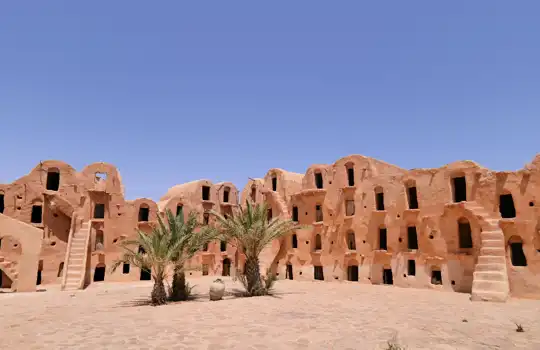
  1. Upper Ksar (the old fortified village) — The crowning feature of Douiret: a compact, cliff-hugging ksar of stacked houses and alleys where you can wander ruined passages, poke into abandoned ghorfas and feel the original settlement’s scale and defensive layout.
  2. Troglodyte cave-homes — Rooms carved directly into the rockface behind the ksar; some are still used or partially restored. Entering them gives a tangible sense of how people adapted to heat and wind here.
  3. Ghorfas (communal granary chambers) — The beehive-like storage vaults built into the ksar walls. Seeing their tight rows and entrances up close explains how grain and goods were stored and shared by the community.
  4. Ruined synagogue and Jewish quarter — Remains of the village’s Jewish heritage tucked among the alleys. It’s a quiet,
read more 👉
  1. Upper Ksar (the old fortified village) — The crowning feature of Douiret: a compact, cliff-hugging ksar of stacked houses and alleys where you can wander ruined passages, poke into abandoned ghorfas and feel the original settlement’s scale and defensive layout.
  2. Troglodyte cave-homes — Rooms carved directly into the rockface behind the ksar; some are still used or partially restored. Entering them gives a tangible sense of how people adapted to heat and wind here.
  3. Ghorfas (communal granary chambers) — The beehive-like storage vaults built into the ksar walls. Seeing their tight rows and entrances up close explains how grain and goods were stored and shared by the community.
  4. Ruined synagogue and Jewish quarter — Remains of the village’s Jewish heritage tucked among the alleys. It’s a quiet, evocative spot showing the multi-faith past of southern Tunisia (visit respectfully).
  5. Jewish cemetery — Older gravestones with Hebrew inscriptions are still visible and make for a moving, real connection to the families who once lived here.
  6. The old mosque and neighborhood mosque courtyard — Simple, traditional mosque architecture set into the village fabric; watching daily life and listening to the call to prayer here feels very local and authentic.
  7. Palm grove and small oasis plots — Pockets of palms and terraced plots right by the houses show the tiny-scale agriculture that sustained the village; good for shade, photos, and seeing date palms up close.
  8. Village lanes and souq spots — Narrow alleys opening onto small squares where locals trade, mend and gossip. Not a tourist market, but the best place to observe everyday Douiret and pick up handmade goods or a mint tea.
  9. Family guesthouses and rooftop terraces — A few maisons d’hôtes inside the village offer rooftop views and home-cooked food; sitting on a terrace at dusk is the most honest way to absorb the place.
  10. Ridge viewpoints and short hiking routes — Walkable paths around the ksar give sweeping views over the surrounding plain and neighboring ruins — excellent at sunrise or sunset for light and solitude.
A few great day trips from Douiret include the nearby hill-ksar of Chenini, the stacked ghorfas at Ksar Ouled Soltane, the restored Ksar Hadada, and the regional center Tataouine — all visitable in a day.
Spotted a mistake or missing something? Contact us.

⌛️ 1 dayHow to make the most of one day

Douiret, a charming hilltop village in Tunisia, offers a glimpse into traditional Berber life, with its sun-baked earth and winding alleys. The morning light casts a warm glow on the ochre buildings, inviting you to explore. Start your day with a stroll through the narrow streets of the old medina, where the scent of fresh mint tea wafts from local cafés. Stop by the ancient granaries, or ”ghorfas,” which tell stories of the past and provide a unique photo opportunity.

In the afternoon, venture to the nearby ruins of the Roman city of Thugga, just a short drive away. The remnants of temples and mosaics are a testament to Tunisia’s rich history. The quiet atmosphere here allows for reflection, making it a perfect contrast to the bustling medina.

As evening approaches, return to Douiret and … read more 👉
Douiret, a charming hilltop village in Tunisia, offers a glimpse into traditional Berber life, with its sun-baked earth and winding alleys. The morning light casts a warm glow on the ochre buildings, inviting you to explore. Start your day with a stroll through the narrow streets of the old medina, where the scent of fresh mint tea wafts from local cafés. Stop by the ancient granaries, or ”ghorfas,” which tell stories of the past and provide a unique photo opportunity.

In the afternoon, venture to the nearby ruins of the Roman city of Thugga, just a short drive away. The remnants of temples and mosaics are a testament to Tunisia’s rich history. The quiet atmosphere here allows for reflection, making it a perfect contrast to the bustling medina.

As evening approaches, return to Douiret and enjoy a meal at a local eatery. Savor traditional dishes like couscous while watching the sunset paint the sky. This day in Douiret, with its blend of history and culture, will leave you with lasting memories and a deeper appreciation for Tunisia’s hidden treasures.
Turn your Douiret visit into an Tunisia adventure
Build a complete Tunisia route with Douiret, hidden gems, must-see destinations, and realistic travel times included.

Generate my trip

🌤️ When to go?Seasonal considerations and timing


  • Weather: Douiret bakes under a Saharan sun most of the year. Spring (March to May) offers mild warmth around 20-25°C (68-77°F), perfect for hiking without frying. Summer scorches above 35°C (95°F), making daytime trekking brutal.

  • Temperature: Nights in spring and autumn dip to a refreshing 10-15°C (50-59°F), a welcome break from the daytime heat. Winter can be chilly, dropping near 5°C (41°F), so pack layers.

  • Daylight Hours: Spring and autumn provide balanced daylight—about 11-13 hours—enough time to explore ruins and trails without rushing or overheating.

  • Crowds: Off-peak seasons (spring and autumn) see fewer tourists, letting you savor the silence of this ancient Berber village without the usual chatter.

  • Seasonal Activities: Spring brings wildflowers and bird migrations, adding
read more 👉

  • Weather: Douiret bakes under a Saharan sun most of the year. Spring (March to May) offers mild warmth around 20-25°C (68-77°F), perfect for hiking without frying. Summer scorches above 35°C (95°F), making daytime trekking brutal.

  • Temperature: Nights in spring and autumn dip to a refreshing 10-15°C (50-59°F), a welcome break from the daytime heat. Winter can be chilly, dropping near 5°C (41°F), so pack layers.

  • Daylight Hours: Spring and autumn provide balanced daylight—about 11-13 hours—enough time to explore ruins and trails without rushing or overheating.

  • Crowds: Off-peak seasons (spring and autumn) see fewer tourists, letting you savor the silence of this ancient Berber village without the usual chatter.

  • Seasonal Activities: Spring brings wildflowers and bird migrations, adding color and life to the rocky landscape. Summer’s intense heat limits outdoor activities to early mornings or late afternoons.

  • Price Fluctuations: Accommodation and local guides are more affordable in shoulder seasons. Summer’s peak heat deters many, so prices dip but so does comfort.


Pro-tip: Aim for late March to early May to catch Douiret’s golden light and cool breezes—this window turns the tough desert into a quietly magical playground.


source: climatestotravel.comJANJanuary: fair for travelingFEBFebruary: fair for travelingMARMarch: highly recommended for travelingAPRApril: excellent for travelingMAYMay: excellent for travelingJUNJune: good for travelingJULJuly: below average for travelingAUGAugust: below average for travelingSEPSeptember: good for travelingOCTOctober: highly recommended for travelingNOVNovember: good for travelingDECDecember: fair for traveling
when-to-go

✈️ The backpacker research shortcutTunisia Travel Guide

An offline-friendly backpacking guide with optimized travel routes, ranked highlights, transport advice, and the best areas to stay.
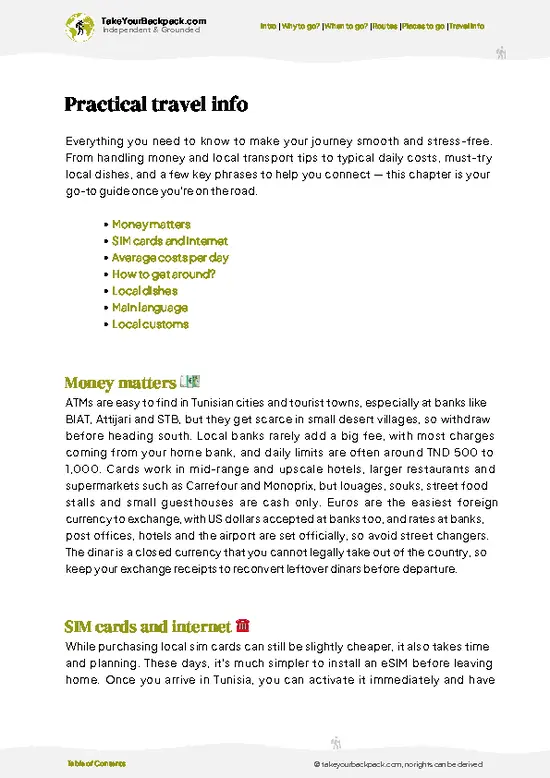
example page 0 from our offline Travel Guide for Tunisia
example page 1 from our offline Travel Guide for Tunisia
example page 2 from our offline Travel Guide for Tunisia
example page 3 from our offline Travel Guide for Tunisia
example page 4 from our offline Travel Guide for Tunisia
example page 5 from our offline Travel Guide for Tunisia
example page 6 from our offline Travel Guide for Tunisia
example page 7 from our offline Travel Guide for Tunisia
The digital guide (371 pages) contains:
98 highlights, ranked by travel appeal
Optimized 5, 10 & 15-day travel routes
Cities, national parks, landmarks, beaches
How to get around
Offline-friendly for travel without Wi-Fi
👉 Click to see all 30+ guide features

📅 Plan smarter in minutes, not weeks
Month by month travel advice
Festivals & national holidays
Budget expectations

🗺️ Go to the right places, skip the overrated ones
Honest pros & cons of destinations
Top hikes, parks & viewpoints
Lesser-known places most travelers miss
Clear “worth it vs skip it” guidance

🛏️ Travel smoothly without rookie mistakes
Best areas to stay
Transport systems explained simply
Common scams & safety advice
SIM cards, money & practical tips

🌍 Understand the country, not just visit it
Culture & traditions
52 Essential phrases & customs
Festivals worth planning around
Traveler-friendly historical context
Insights that make places more meaningful

📱 Built for real travel conditions
Fully downloadable PDF
Works completely offline
Optimized for phone use
Useful in remote areas & buses
Everything in one place
Save weeks of stressful planning
Get instant access to your full guide. 30‑day money-back guarantee.
+ Add another guide for just €6.50

By proceeding you agree to our terms.
Sent to your inbox immediately after payment • 100% Secure Checkout
Best Backpacking Travel Advisor 2025 tourism awardBest Backpacking
Travel Advisor
2025
What others say about Take Your Backpack Guides:
⭐⭐⭐⭐⭐
Fantastic, amazing amount of information!
⭐⭐⭐⭐⭐
My goodness this is amazing, it's what I've been looking for hats off too you!
⭐⭐⭐⭐⭐
I think this is absolutely BRILLIANT
⭐⭐⭐⭐
Very complete and informative. It's still missing places, but I gotta to commend you
⭐⭐⭐⭐⭐
This is truly amazing, thank you, can't wait to explore it with my kids!
⭐⭐⭐⭐⭐
Awesome resource, thank you!
⭐⭐⭐⭐⭐
This is amazing! Can't wait to explore the ones I haven't seen
⭐⭐⭐⭐
I love this! Well done, great idea.
⭐⭐⭐⭐⭐
Thanks for taking the time to make this gem!
⭐⭐⭐⭐⭐
This might be the best website I've ever seen.
⭐⭐⭐⭐⭐
Congratulations, and thank you so much for your work; it's incredibly valuable.
⭐⭐⭐⭐
In all seriousness I think you did a great job pointing out the important spots
⭐⭐⭐⭐⭐
10/10 very good
⭐⭐⭐⭐⭐
As someone who's only just starting to visit regularly this is awesome, thank you.
⭐⭐⭐⭐
Thank you very much! I'm going to visit my dad, it's going to be very useful!
⭐⭐⭐⭐⭐
This is really cool! We'll be travelling for the first time and this definitely come in handy.
⭐⭐⭐⭐⭐
You are now our minister of culture, congratulations 👨‍💼
⭐⭐⭐⭐⭐
Just wanted to tell you that this is a pearl! Going to follow your recommendations.
⭐⭐⭐⭐⭐
This is so cool. I'll definitely be using the resource for my travels soon.
⭐⭐⭐⭐⭐
This is very impressive! Good work.
⭐⭐⭐⭐⭐
This is an amazing and informative site. Very well done!

🛏️ Where to stay?Best areas and accommodation options

Douiret is a small, ancient Berber village perched on a rocky hill, so your choice of where to stay is less about neighborhoods and more about proximity to the heart of the village. The best spot for backpackers is the cluster of homes near the old ksar ruins—the village’s historic core. This area feels alive with local rhythms: the scent of dry earth mixed with thyme, the chatter of families, and the occasional bleat of goats. It’s safe, quiet at night, and offers a chance to connect with locals who are used to visitors but not overwhelmed by tourism.

Hostels here are modest, often family-run … read more 👉
Douiret is a small, ancient Berber village perched on a rocky hill, so your choice of where to stay is less about neighborhoods and more about proximity to the heart of the village. The best spot for backpackers is the cluster of homes near the old ksar ruins—the village’s historic core. This area feels alive with local rhythms: the scent of dry earth mixed with thyme, the chatter of families, and the occasional bleat of goats. It’s safe, quiet at night, and offers a chance to connect with locals who are used to visitors but not overwhelmed by tourism.

Hostels here are modest, often family-run guesthouses rather than flashy dorms, which means you get a more authentic, social vibe. Staying closer to the village center means you’re within walking distance of communal spaces where travelers and locals mingle, sharing stories over mint tea. Skip the outskirts—those spots are quieter but isolate you from the village’s pulse and the easy camaraderie that makes Douiret special.

🚌 Getting aroundGetting around like a local

Douiret moves at the pace of the desert wind—unhurried but deliberate. Time here isn’t dictated by clocks but by the sun’s climb and fall, the call to prayer, and the rhythm of daily chores. Streets are narrow, shaded by ancient stone walls that hold the heat at bay, and the scent of dry earth mingles with faint traces of mint and cumin from nearby homes. This isn’t a place for rigid schedules or polished transit systems. Instead, it’s about reading the flow, catching the right moment, and knowing when to lean into the local pulse. Your best moves here come from blending patience with a bit of street-smart intuition.


  • Walking: The heart of Douiret is best explored on foot. The compact village layout means you can reach most spots within 10-15 minutes. Walking lets you soak in the texture
read more 👉
Douiret moves at the pace of the desert wind—unhurried but deliberate. Time here isn’t dictated by clocks but by the sun’s climb and fall, the call to prayer, and the rhythm of daily chores. Streets are narrow, shaded by ancient stone walls that hold the heat at bay, and the scent of dry earth mingles with faint traces of mint and cumin from nearby homes. This isn’t a place for rigid schedules or polished transit systems. Instead, it’s about reading the flow, catching the right moment, and knowing when to lean into the local pulse. Your best moves here come from blending patience with a bit of street-smart intuition.


  • Walking: The heart of Douiret is best explored on foot. The compact village layout means you can reach most spots within 10-15 minutes. Walking lets you soak in the texture of crumbling stone, the chatter of locals, and the shifting light on the ochre walls. No cost, just bring sturdy shoes for uneven paths.

  • Shared Taxis (Louages): These minibuses run between Douiret and nearby towns like Tataouine or Chenini. They don’t have fixed schedules but usually depart when full, so expect some waiting. Fares are cheap—around 2-3 Tunisian dinars—and the ride is bumpy but fast enough to cover 20-30 km in under an hour.

  • Local Buses: Less frequent and slower than shared taxis, local buses connect Douiret to regional hubs. They run early morning and late afternoon, with tickets costing under 5 dinars. Expect basic comfort and a few stops along the way, perfect if you’re not in a rush.

  • Hitchhiking: Common and generally safe here, hitchhiking taps into the local generosity. Drivers often stop for travelers, especially during market days or festivals. It’s free but requires flexibility and a friendly smile.

👛 Costs (as of 3 September 2026)What things cost and how to budget

Douiret, Tunisia, offers a raw, authentic experience where every dinar spent feels like an investment in local culture and history. Here’s what you can expect to budget for a day of backpacking in this rugged, sun-baked town.
  • Dorm Accommodation: Options here are limited and basic, often in guesthouses or small inns rather than formal hostels. Expect to pay around €10-15 per night for a shared room. The rooms are simple—think cool stone walls and minimal furnishings—but they offer a quiet retreat from the desert heat.
  • Meals: Eating local is both a treat and a budget saver. A hearty meal of couscous or grilled meats with fresh bread and vegetables will run about €3-6. Street food snacks like brik or dates are even cheaper, around €1-2. Tap water isn’t always safe, so factor in bottled water
read more 👉
Douiret, Tunisia, offers a raw, authentic experience where every dinar spent feels like an investment in local culture and history. Here’s what you can expect to budget for a day of backpacking in this rugged, sun-baked town.
  • Dorm Accommodation: Options here are limited and basic, often in guesthouses or small inns rather than formal hostels. Expect to pay around €10-15 per night for a shared room. The rooms are simple—think cool stone walls and minimal furnishings—but they offer a quiet retreat from the desert heat.
  • Meals: Eating local is both a treat and a budget saver. A hearty meal of couscous or grilled meats with fresh bread and vegetables will run about €3-6. Street food snacks like brik or dates are even cheaper, around €1-2. Tap water isn’t always safe, so factor in bottled water at about €0.50 per liter.
  • Local Transport: Douiret is small enough to explore mostly on foot, which is part of its charm. For longer trips or to nearby villages, shared taxis or minibuses cost roughly €1-3 per ride. The roads are dusty and uneven, so rides can be slow but offer a genuine glimpse of rural life.
  • Basic Activities/Entry Fees: Exploring the ancient ksar ruins and local museums typically costs around €2-5. Guided tours, which add context and stories to the stark landscape, might be €10-15, but they’re worth it if you want to unlock the deeper history behind the crumbling walls and narrow alleys.
  • Miscellaneous Expenses: This includes essentials like sunscreen, snacks, or a local SIM card for connectivity. Budget about €2-5 daily here. Keep some cash handy; card payments are rare, and small vendors prefer cash.

All told, a day in Douiret will likely set you back between €18 and €35, depending on how much you lean into local meals and guided experiences. It’s not about luxury here—it’s about stepping into a place where every euro buys a slice of history and a moment away from the tourist trail.
⚠️ Prices can change and everyone travels differently, so take this as a rough guide. Hope it helps you plan your adventure!

🚌 Day tripsEasy escapes and nearby places

Douiret, with its sun-baked earth and whispering winds, is a perfect launchpad for unforgettable day trips. The charm of this Berber village lies not just in its ancient ruins but in its proximity to stunning landscapes and cultural experiences.

Chott el Jerid
A surreal salt flat that stretches endlessly, Chott el Jerid is a photographer’s dream. The shimmering white crust contrasts sharply with the blue sky, creating a canvas that changes with the light. It takes about an hour to reach from Douiret, and you can expect to spend around 10 TND on transport. Early morning or late afternoon is best for the soft light and cooler temperatures. Many first-timers underestimate the heat; pack plenty of water and a hat to avoid sun fatigue.
👉 Explore Chott el Jerid

Matmata
Famous for its troglodyte … read more 👉
Douiret, with its sun-baked earth and whispering winds, is a perfect launchpad for unforgettable day trips. The charm of this Berber village lies not just in its ancient ruins but in its proximity to stunning landscapes and cultural experiences.

Chott el Jerid
A surreal salt flat that stretches endlessly, Chott el Jerid is a photographer’s dream. The shimmering white crust contrasts sharply with the blue sky, creating a canvas that changes with the light. It takes about an hour to reach from Douiret, and you can expect to spend around 10 TND on transport. Early morning or late afternoon is best for the soft light and cooler temperatures. Many first-timers underestimate the heat; pack plenty of water and a hat to avoid sun fatigue.
👉 Explore Chott el Jerid

Matmata
Famous for its troglodyte dwellings, Matmata offers a glimpse into a unique way of life. The journey takes about 45 minutes, and you can explore the homes for around 5 TND. Visit a local café for a traditional meal; the flavors are as rich as the history. The best time to go is in spring when the wildflowers bloom, adding color to the arid landscape. A common mistake is rushing through; take your time to chat with locals and soak in the atmosphere.
👉 Explore Matmata

Douz
Known as the ”Gateway to the Sahara,” Douz is a vibrant town where you can experience the desert’s magic. It’s about a two-hour ride, costing around 15 TND. The camel rides are a must, but don’t forget to haggle for a fair price. Autumn is ideal for visiting, as the temperatures are milder. Many backpackers skip the local market, but it’s a treasure trove of spices and textiles—perfect for souvenirs.
👉 Explore Douz

Ksar Ouled Soltane
This ancient granary is a stunning example of Berber architecture, with its towering walls and intricate designs. Just a 30-minute drive from Douiret, entry is usually free, but consider a small donation to support preservation efforts. The late afternoon light casts beautiful shadows, making it a photographer’s paradise. A common oversight is not checking the opening hours; aim for late afternoon to avoid the midday heat.
👉 Explore Ksar Ouled Soltane
Want to know what more Tunisia offers?
The Tunisia Travel Guide describes 98 highlights, from cities to national parks, from beaches to hikes

Get the Travel Guide -

🛡️ SafetySafety Tips and Common Scams in Douiret

Douiret is generally safe, but staying aware enhances your experience. The winding streets can feel isolated at night; stick to well-lit areas and travel in groups if possible. Locals are friendly, but some may approach with offers that seem too good to be true—like guided tours or souvenirs at inflated prices. Politely decline if it feels off. Keep your belongings close, especially in crowded spots. Embrace the atmosphere, but trust your instincts; they’re your best guide in any unfamiliar setting.

FAQFrequently asked questions about Douiret

You get to Douiret by driving from Tataouine, which is about 40 kilometers away. The road is mostly paved but can be rough in places, so a 4x4 vehicle is recommended. Public transport options are limited, so renting a car or arranging a private transfer is the most practical choice.
Yes, Douiret is worth the trip for those interested in traditional Berber architecture and history. The village features ancient ksars and troglodyte homes carved into the hillside, offering a unique cultural experience. It is especially rewarding for photographers and history enthusiasts.
Yes, Douiret can be visited as a day trip from Tataouine. The round trip drive takes about 2 hours, leaving several hours to explore the village. However, staying overnight allows for a more relaxed visit and the chance to experience the village at different times of day.
⚠️ Things can change over time, so always validate details locally before you go.

Other destinations worth considering

Douiret isn’t the only highlight in Tunisia. Explore all what Tunisia has to offer.
Country photo of Tunisia

We 💚 feedbackParting advice and final tips

Douiret has a raw, earthy vibe that feels like stepping into a living history book. The surprise? The warmth of the locals; they’ll invite you in for mint tea and stories. Just be ready for the steep paths—your legs will burn, but the views are worth every step.

✍️ Help improve this page!
The information on this page is based on in-depth research, insights shared by experienced travelers, and feedback from the local travel community in Tunisia. While every effort is made to keep the information accurate and current, conditions can change — so if you spot anything incorrect or outdated, please get in touch.


🙋‍♂️ Give feedback

👋 Meet the founderWho’s Behind Take Your Backpack?

Johan, backpacker and founder of TakeYourBackpackHi, I’m Johan (Netherlands 🇳🇱), the creator of TakeYourBackpack. Over the past decade, I’ve backpacked through 80+ countries across six continents, gaining extensive experience with independent travel, long-term trips, and overland routes.

This site is built on a combination of firsthand travel experience and carefully curated insights from other backpackers. Many guides are based on places I’ve personally visited, while others bring together tips, observations, and practical advice shared by trusted travelers I’ve met along the way.

The goal is to provide realistic, experience-driven guidance — not generic itineraries — so you can explore destinations with better context, clearer expectations, and more confidence.

Get full Tunisia guide •
Instant download • 98 highlights • Full Offline guide