×

Tunisia🇹🇳 | beachesSousse BeachWide hotel strip, walled medina, Ribat tower, evening promenade | things to do and best time to go

Explore Mahdia BeachExplore Kerkennah Islands Beach

Backpacking in Sousse Beach
👍 Recommendedbeach ranked #4
By Johan Kruseman 🇳🇱 | Updated October 22, 2026

The horn of a louis-bus, the little shuttle carts, competes with a man selling hot corn, while your flip-flops fill with sand that is surprisingly fine and pale. That is Sousse Beach at midday. It sits on the Gulf of Hammamet, in the east of Tunisia, a short ride south of Monastir's airport side and north of the port of Sousse's old medina. The long strip is wide, mostly clean in front of the hotels, and the water is shallow and calm, so swimming is easy and the surf is flat. Crowds thicken in summer, and sunbed vendors and jet-ski touts will find you, which you can handle with a cheerful no. Snorkeling is poor, but cheap grilled fish, sandwiches and simple guesthouses sit a short walk inland. The tram-like tourist train and the medina walls start from the promenade, and the evening ends with kids chasing waves under floodlights.

Discover everything you want to know in the 📖 Tunisia Travel Guide.


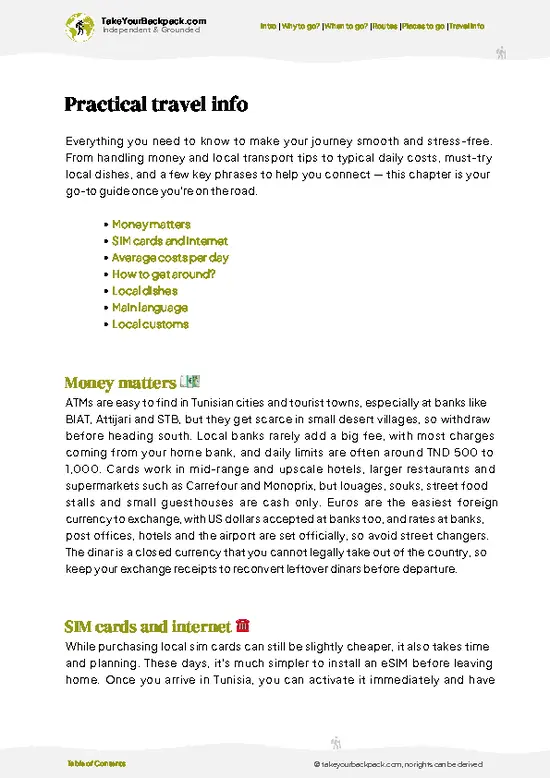
example page 0 from our offline Travel Guide for Tunisia
example page 1 from our offline Travel Guide for Tunisia
example page 2 from our offline Travel Guide for Tunisia
example page 3 from our offline Travel Guide for Tunisia
example page 4 from our offline Travel Guide for Tunisia
example page 5 from our offline Travel Guide for Tunisia
example page 6 from our offline Travel Guide for Tunisia
example page 7 from our offline Travel Guide for Tunisia
Loading the map 🌍
CLICK TO FILTER
cities
towns
villages
landmarks
national parks
hikes
beaches
attractions
festivals
regions
SHOW COUNTRY’S BESTSHOW ALL

✨ Why go?
Ranked #4 beach in Tunisia
What makes this beach worth visiting

Sousse Beach works because it puts a proper UNESCO-listed medina a short stroll from your towel. You can swim in the morning, then be inside the old walls by lunch, eating a cheap sandwich among locals instead of resort buffet crowds. That mix of sea and old-town grit is rare on this coast.

The second reason is the gentle water. The seabed slopes slowly, waves stay small, and the Gulf of Hammamet is warm well into autumn, so it suits nervous swimmers and anyone who wants a lazy pause between harder travel days.

The third is connection. Sousse sits on the main rail and louage corridor between Tunis and the south, so the beach is an easy hinge in a Tunisian route. You can arrive from the capital, rest two nights, then push on to El Jem, Kairouan or Monastir without backtracking. Social life … read more 👉
Sousse Beach works because it puts a proper UNESCO-listed medina a short stroll from your towel. You can swim in the morning, then be inside the old walls by lunch, eating a cheap sandwich among locals instead of resort buffet crowds. That mix of sea and old-town grit is rare on this coast.

The second reason is the gentle water. The seabed slopes slowly, waves stay small, and the Gulf of Hammamet is warm well into autumn, so it suits nervous swimmers and anyone who wants a lazy pause between harder travel days.

The third is connection. Sousse sits on the main rail and louage corridor between Tunis and the south, so the beach is an easy hinge in a Tunisian route. You can arrive from the capital, rest two nights, then push on to El Jem, Kairouan or Monastir without backtracking. Social life stays easy too, since the promenade fills at dusk with families and other travelers.

💡 HighlightsTop highlights of Sousse Beach

  1. Sousse Medina: Walled, whitewashed and maze-like, it is the town's headline sight and sits right behind the waterfront. Climb the Ribat tower for rooftop views over the sea and the domes, and wander the souk lanes for leather, spices and ceramics. Entry to the Ribat is a few dollars.
  2. Beachfront swimming: The sand is soft, the water shallow and warm, and the gentle slope makes it a good place to float rather than fight waves. Go in the morning when it is quiet.
  3. Sousse Archaeological Museum: Housed in the Kasbah, it holds one of the finest Roman mosaic collections in Tunisia, with vivid sea gods and a large Medusa scene. Allow about an hour. Tickets are around US$4 to 5.
  4. Great Mosque of Sousse: A plain, fortress-like ninth-century building with a courtyard of arches. Non-Muslims may usually view
… read more 👉
  1. Sousse Medina: Walled, whitewashed and maze-like, it is the town's headline sight and sits right behind the waterfront. Climb the Ribat tower for rooftop views over the sea and the domes, and wander the souk lanes for leather, spices and ceramics. Entry to the Ribat is a few dollars.
  2. Beachfront swimming: The sand is soft, the water shallow and warm, and the gentle slope makes it a good place to float rather than fight waves. Go in the morning when it is quiet.
  3. Sousse Archaeological Museum: Housed in the Kasbah, it holds one of the finest Roman mosaic collections in Tunisia, with vivid sea gods and a large Medusa scene. Allow about an hour. Tickets are around US$4 to 5.
  4. Great Mosque of Sousse: A plain, fortress-like ninth-century building with a courtyard of arches. Non-Muslims may usually view the courtyard for a small fee, and the austere geometry feels calming after the souk noise.
  5. Evening promenade: As heat drops, locals and visitors walk the seafront for grilled corn, ice cream and fresh juice, with the lit medina walls behind. It is free, social and the best way to end a beach day.
Sousse Beach pairs well with the medina and Ribat in one day: swim early, then walk the souk lanes and climb the tower for sunset views.
Spotted a mistake or missing something? Contact us.

Things to do around Sousse Beach

Ratings based on Tripadvisor reviews. When you book through this link, you support our work at no extra cost to you.

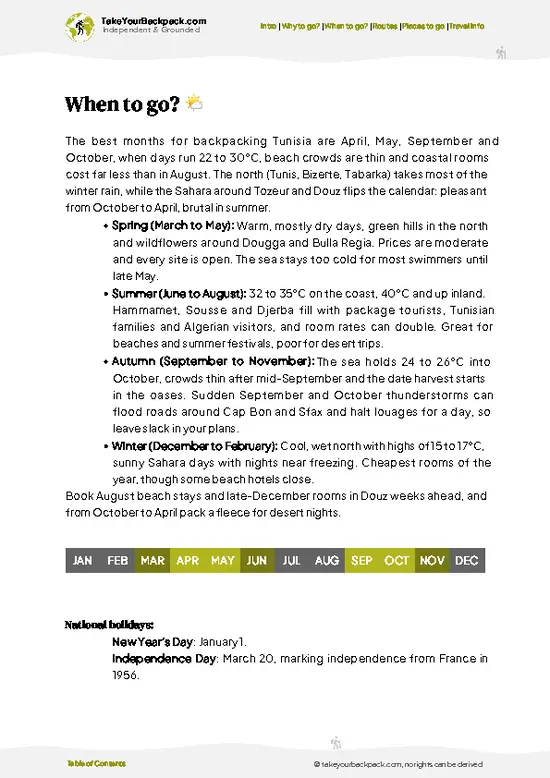
🌤️ When to go?Best time to visit Sousse Beach

  • Summer (June to September): Sea temperatures reach 24 to 27°C (75 to 81°F) and air hits 30 to 35°C (86 to 95°F), so this is the swimming season. Days run about 14 hours, but the beachfront fills with Tunisian families and package tourists, and hotel prices peak, especially in July and August.
  • Autumn (October to November): Air stays at 20 to 26°C (68 to 79°F) and the sea holds warmth into October. Crowds thin and rates drop by roughly a quarter or more.
  • Winter (December to February): Highs of 14 to 17°C (57 to 63°F), lows near 7°C (45°F), and regular rain. Daylight is about 10 hours. Beach time is out, but the medina is quiet and rooms are the cheapest of the year.
  • Spring (March to May): Highs climb from 17 to 25°C (63 to 77°F), the water is still cold at 15 to 18°C (59 to 64°F), and prices stay
… read more 👉
  • Summer (June to September): Sea temperatures reach 24 to 27°C (75 to 81°F) and air hits 30 to 35°C (86 to 95°F), so this is the swimming season. Days run about 14 hours, but the beachfront fills with Tunisian families and package tourists, and hotel prices peak, especially in July and August.
  • Autumn (October to November): Air stays at 20 to 26°C (68 to 79°F) and the sea holds warmth into October. Crowds thin and rates drop by roughly a quarter or more.
  • Winter (December to February): Highs of 14 to 17°C (57 to 63°F), lows near 7°C (45°F), and regular rain. Daylight is about 10 hours. Beach time is out, but the medina is quiet and rooms are the cheapest of the year.
  • Spring (March to May): Highs climb from 17 to 25°C (63 to 77°F), the water is still cold at 15 to 18°C (59 to 64°F), and prices stay low until Easter.
Aim for late May or late September for warm water without the August crush.


source: climatestotravel.comJANJanuary: fair for travelingFEBFebruary: fair for travelingMARMarch: good for travelingAPRApril: good for travelingMAYMay: excellent for travelingJUNJune: excellent for travelingJULJuly: highly recommended for travelingAUGAugust: highly recommended for travelingSEPSeptember: excellent for travelingOCTOctober: highly recommended for travelingNOVNovember: good for travelingDECDecember: fair for traveling
when-to-go

✈️ The backpacker research shortcutTunisia Travel Guide

An offline-friendly backpacking guide with optimized travel routes, ranked highlights, transport advice, and the best areas to stay.
example page 0 from our offline Travel Guide for Tunisia
example page 1 from our offline Travel Guide for Tunisia
example page 2 from our offline Travel Guide for Tunisia
example page 3 from our offline Travel Guide for Tunisia
example page 4 from our offline Travel Guide for Tunisia
example page 5 from our offline Travel Guide for Tunisia
example page 6 from our offline Travel Guide for Tunisia
example page 7 from our offline Travel Guide for Tunisia
The digital guide (355 pages) contains:
✅ 90 highlights, ranked by travel appeal
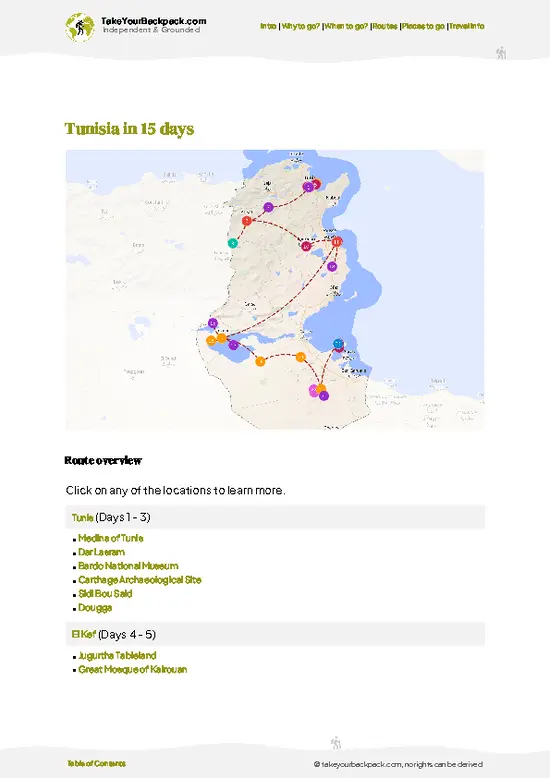
✅ Optimized 5, 10 & 15-day travel routes
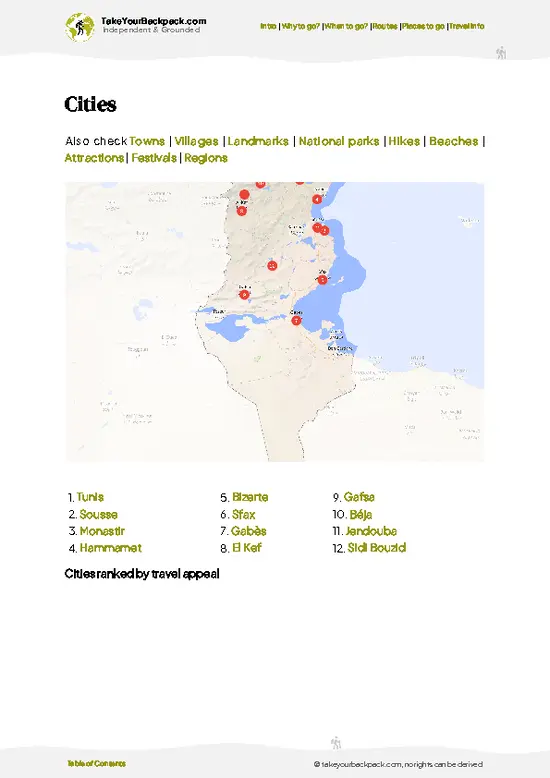
✅ Cities, national parks, landmarks, beaches
✅ How to get around
✅ Offline-friendly for travel without Wi-Fi
👉 Click to see all 30+ guide features

📅 Plan smarter in minutes, not weeks
✅ Month by month travel advice
✅ Festivals & national holidays
✅ Budget expectations

🗺️ Go to the right places, skip the overrated ones
✅ Honest pros & cons of destinations
✅ Top hikes, parks & viewpoints
✅ Lesser-known places most travelers miss
✅ Clear “worth it vs skip it” guidance

🛏️ Travel smoothly without rookie mistakes
✅ Best areas to stay
✅ Transport systems explained simply
✅ Common scams & safety advice
✅ SIM cards, money & practical tips

🌍 Understand the country, not just visit it
✅ Culture & traditions
✅ 52 Essential phrases & customs
✅ Festivals worth planning around
✅ Traveler-friendly historical context
✅ Insights that make places more meaningful

📱 Built for real travel conditions
✅ Fully downloadable PDF
✅ Works completely offline
✅ Optimized for phone use
✅ Useful in remote areas & buses
✅ Everything in one place
Stop searching, start planning
Get instant access to your full guide. 30‑day money-back guarantee.
+ Add another guide for just

By proceeding you agree to our terms.
Sent to your inbox immediately after payment • 100% Secure Checkout
Best Backpacking Travel Advisor 2025 tourism awardBest Backpacking
Travel Advisor
2025
What others say about Take Your Backpack Guides:
⭐⭐⭐⭐⭐
Fantastic, amazing amount of information!
⭐⭐⭐⭐⭐
My goodness this is amazing, it's what I've been looking for hats off too you!
⭐⭐⭐⭐⭐
I think this is absolutely BRILLIANT
⭐⭐⭐⭐
Very complete and informative. It's still missing places, but I gotta to commend you
⭐⭐⭐⭐⭐
This is truly amazing, thank you, can't wait to explore it with my kids!
⭐⭐⭐⭐⭐
Awesome resource, thank you!
⭐⭐⭐⭐⭐
This is amazing! Can't wait to explore the ones I haven't seen
⭐⭐⭐⭐
I love this! Well done, great idea.
⭐⭐⭐⭐⭐
Thanks for taking the time to make this gem!
⭐⭐⭐⭐⭐
This might be the best website I've ever seen.
⭐⭐⭐⭐⭐
Congratulations, and thank you so much for your work; it's incredibly valuable.
⭐⭐⭐⭐
In all seriousness I think you did a great job pointing out the important spots
⭐⭐⭐⭐⭐
10/10 very good
⭐⭐⭐⭐⭐
As someone who's only just starting to visit regularly this is awesome, thank you.
⭐⭐⭐⭐
Thank you very much! I'm going to visit my dad, it's going to be very useful!
⭐⭐⭐⭐⭐
This is really cool! We'll be travelling for the first time and this definitely come in handy.
⭐⭐⭐⭐⭐
You are now our minister of culture, congratulations 👨‍💼
⭐⭐⭐⭐⭐
Just wanted to tell you that this is a pearl! Going to follow your recommendations.
⭐⭐⭐⭐⭐
This is so cool. I'll definitely be using the resource for my travels soon.
⭐⭐⭐⭐⭐
This is very impressive! Good work.
⭐⭐⭐⭐⭐
This is an amazing and informative site. Very well done!

🛏️ Where to stay?How to pick the right area

The best base for backpackers is the medina area, with the Boujaafar beachfront strip as the second choice. The medina sits a 5 to 10 minute walk from the sand, and rooms there run roughly US$15 to 35 a night in guesthouses and small hostel-style places, far cheaper than the big resorts.

Inside and around the medina walls you get narrow lanes, cafes along Rue d’Angleterre and Place des Martyrs, and easy access to the train station and the louage stand for Monastir, Mahdia and El Jem. It is the most social area for solo travelers, since you meet other budget travelers in rooftop cafes and at the … read more 👉
The best base for backpackers is the medina area, with the Boujaafar beachfront strip as the second choice. The medina sits a 5 to 10 minute walk from the sand, and rooms there run roughly US$15 to 35 a night in guesthouses and small hostel-style places, far cheaper than the big resorts.

Inside and around the medina walls you get narrow lanes, cafes along Rue d’Angleterre and Place des Martyrs, and easy access to the train station and the louage stand for Monastir, Mahdia and El Jem. It is the most social area for solo travelers, since you meet other budget travelers in rooftop cafes and at the ribat.

The Boujaafar and Avenue Habib Bourguiba stretch is closer to the water and has more restaurants and nightlife, but it is dominated by large hotels, so budget beds are fewer. Evenings are livelier here.

Port El Kantaoui, about 10 km north, is polished and quiet, aimed at package visitors, and poor value for backpackers. Staying in the medina and walking or taking a short taxi ride to the beach works best.

🛡️ SafetyTraveler Safety Guide

Sousse Beach is a gently shelving sandy beach on the Gulf of Hammamet, and swimming is generally easy. Waves are small most days, tides are barely noticeable, and strong rips are rare. After windy spells, particularly with a northeast wind, the water can turn choppy and the red flag goes up at hotel-run sections, so follow it. Jellyfish appear in some summers, usually in small numbers, and sea urchins sit on rocky patches near the breakwaters, so wading sandals help there.

The sun is the real issue from June to September, when midday heat is intense and shade is limited on public stretches. Bring sunscreen and water, and plan beach time for morning or evening.

The beachfront is busy and well patrolled, but keep phones and cash on you rather than leaving them on a towel while you swim. Vendors … read more 👉
Sousse Beach is a gently shelving sandy beach on the Gulf of Hammamet, and swimming is generally easy. Waves are small most days, tides are barely noticeable, and strong rips are rare. After windy spells, particularly with a northeast wind, the water can turn choppy and the red flag goes up at hotel-run sections, so follow it. Jellyfish appear in some summers, usually in small numbers, and sea urchins sit on rocky patches near the breakwaters, so wading sandals help there.

The sun is the real issue from June to September, when midday heat is intense and shade is limited on public stretches. Bring sunscreen and water, and plan beach time for morning or evening.

The beachfront is busy and well patrolled, but keep phones and cash on you rather than leaving them on a towel while you swim. Vendors and jet-ski touts can be persistent, and a polite no works fine.

FAQTraveler FAQ

Sousse Beach is reached by train, louage or bus from Tunis, which takes about 2 to 2.5 hours. Trains from Tunis cost roughly US$5 to 9 and arrive at the central station, a 10 minute walk from the medina and beachfront. Louages (shared vans) from Tunis cost around US$5 to 7, and Enfidha airport is about 40 minutes away by taxi for US$25 to 35. From the center, a taxi to the sand costs under US$3.
Sousse Beach is good for swimming and fine for casual water sports, but not for surfing or serious snorkeling. The water is calm, shallow and warmest from July to September at around 26°C (79°F), while waves are too small for surfing most of the year. Jet skis, banana boats and pedal boats rent for about US$8 to 25 at the hotel-managed sections. For snorkeling, visibility near the sand is limited, and you are better off at rockier spots further along the coast.
Sousse Beach is free to visit, since the public stretches are open to everyone at no charge. Hotel-managed sections sometimes charge day-pass fees of roughly US$8 to 20, which often include loungers and a drink. Umbrellas and sunbeds on the public sand rent for about US$2 to 5 per set, and beach parking near the Boujaafar strip is cheap or free. Showers and changing rooms are mostly available only at the hotels or paid facilities.
⚠️ Things can change over time, so always validate details locally before you go.

Other Tunisian beaches near Sousse Beach

Explore more nearby:

  • Mahdia Beach—fishing port, soft sand, blue fishing boats, quiet mornings| 56 km away
  • Hammamet Beach—fine white sand, resort-lined coast, citrus groves, medina proximity| 59 km away
  • La Marsa Beach—urban beach, art deco villas, seaside cafés, suburban rail access| 117 km away

💡 Not sure where to go next?
Create a personalized itinerary for Tunisia including Sousse Beach and the places that fit your trip.

Generate my itinerary

👉 Discover all beaches

Or checkout all Tunisia has to offer (think cities, towns, villages, national parks, hikes, beaches, festivals)
Country photo of Tunisia

We 💚 feedbackSumming up the experience

Sousse Beach deserves two nights, three if you want a day for the mosaics and the old walls. One night feels rushed, and past four you will want to move on to El Jem or Kairouan. I would book near the medina side rather than the big resort strip, and bring sandals for the hot sand.

✍️ Help improve this page!
The information on this page is based on in-depth research, insights shared by experienced travelers, and feedback from the local travel community in Tunisia. While every effort is made to keep the information accurate and current, conditions can change — so if you spot anything incorrect or outdated, please get in touch.


🙋‍♂️ Give feedback

👋 Meet the founderWho’s Behind Take Your Backpack?

Johan, backpacker and founder of TakeYourBackpackHi, I’m Johan (Netherlands 🇳🇱), the creator of TakeYourBackpack. Over the past 3 decades, I’ve backpacked through 90+ countries across six continents, gaining extensive experience with independent travel, long-term trips, and overland routes.

This site is built on a combination of firsthand travel experience and carefully curated insights from other backpackers. Many guides are based on places I’ve personally visited, while others bring together tips, observations, and practical advice shared by trusted travelers I’ve met along the way.

The goal is to provide realistic, experience-driven guidance — not generic itineraries — so you can explore destinations with better context, clearer expectations, and more confidence.