×

Tunisia🇹🇳 | best beachesDiscover the 4 Best beaches Across Tunisia

Beaches in Tunisia come in two moods: the package-resort strip and the stretch where a fisherman is mending a net and nobody sells you a banana boat. The Mediterranean north has rocky coves and cooler water near Tabarka and Bizerte. The Gulf of Hammamet and Sousse coast have long sand, big hotels and tout-level persistence. Djerba and the southeast offer shallow, bathtub-warm water and easy flat roads. Independent travelers can reach most of it by louage (shared minibus) and cheap local buses, which means the real question is not whether you can get to the sand, but how much of the hotel-chair economy you want to wade through.

By Johan Kruseman 🇳🇱 | Updated October 23, 2026
Explore the best attractions in Tunisia

Why go?What Makes Them Special

Tunisia has about 1,300 kilometers of coastline on a country small enough to cross in a day, so you get several coastal personalities without much transit. The north faces open sea with pine hills behind it. The east, along the Gulf of Hammamet and beyond, is mostly low, flat and sandy, which is why the tourism industry planted its hotel zones there from the 1960s onward. The south has a gently shelving seabed and calm, shallow water that suits long wading sessions and travelers who dislike surprises.

The history sits right beside the sand. Phoenician and Roman ports became seaside towns, so a swim and a ruin often share a single bus ride, which few beach countries can claim.

Before choosing Tunisia, know that this is a Muslim country with relaxed resort areas and more conservative local … read more 👉
Tunisia has about 1,300 kilometers of coastline on a country small enough to cross in a day, so you get several coastal personalities without much transit. The north faces open sea with pine hills behind it. The east, along the Gulf of Hammamet and beyond, is mostly low, flat and sandy, which is why the tourism industry planted its hotel zones there from the 1960s onward. The south has a gently shelving seabed and calm, shallow water that suits long wading sessions and travelers who dislike surprises.

The history sits right beside the sand. Phoenician and Roman ports became seaside towns, so a swim and a ruin often share a single bus ride, which few beach countries can claim.

Before choosing Tunisia, know that this is a Muslim country with relaxed resort areas and more conservative local ones. Public beaches near towns are often busy with local families, and many resort beaches are fenced off or controlled by hotels. Water is generally clear, but plastic and seaweed can pile up after storms, and facilities outside the main zones are basic. Come for warm sea, history and low prices, not for wilderness. The upside is that the infrastructure works, the sea is excellent, and a bargain is still a bargain.
Why These Made the Cut
The list of best beaches in Tunisia is created based on beauty, vibe, water quality, activities, and surrounding scenery. If you feel a beach is missing in this list, please let us know.

When to go?Timing Your Visit for the Best Experience

Best months for the water: The best months for beaches in Tunisia are June and September, when sea temperatures sit around 22 to 26°C, air temperatures run 28 to 33°C, and rain is nearly absent. July and August are hotter, often 32 to 38°C inland and along the south coast, and the sea reaches 26 to 28°C. That is lovely if you were born in a kiln.
Shoulder seasons and peak prices: May and October are the shoulder months. Air runs about 22 to 28°C and the sea is cooler, around 18 to 23°C. Some find May water brisk, while October is often warm but can bring heavy rain showers, especially in the north. Prices on hotel-zone rooms can drop 20 to 40 percent outside July and August, and beaches are quieter.
Regional differences and closures: The north around Tabarka and Bizerte is cooler and wetter, … read more 👉
Best months for the water: The best months for beaches in Tunisia are June and September, when sea temperatures sit around 22 to 26°C, air temperatures run 28 to 33°C, and rain is nearly absent. July and August are hotter, often 32 to 38°C inland and along the south coast, and the sea reaches 26 to 28°C. That is lovely if you were born in a kiln.
Shoulder seasons and peak prices: May and October are the shoulder months. Air runs about 22 to 28°C and the sea is cooler, around 18 to 23°C. Some find May water brisk, while October is often warm but can bring heavy rain showers, especially in the north. Prices on hotel-zone rooms can drop 20 to 40 percent outside July and August, and beaches are quieter.
Regional differences and closures: The north around Tabarka and Bizerte is cooler and wetter, with more rain from October. Djerba and the southeast hold warmth longest, so late October can still feel like summer. From November to March, expect sea temperatures of 14 to 17°C and many beach cafes, hotels and seasonal stalls closed or reduced. Local holidays and August crowds can fill coastal buses and rooms, so book ahead in those weeks.

beach hoppingSuggested Travel Strategies

How many days to plan: A trip combining several beaches in Tunisia works best with 8 to 12 days, enough for three regions without living on a bus. Tunisia is compact, but coastal transport is slower than the map suggests.
Grouping and direction: Group by coast. The north (Bizerte to Tabarka) fits together. The east (Hammamet, Sousse, Monastir, Mahdia) is a tight cluster with trains and louages linking towns in 1 to 2 hours. The south (Djerba and Zarzis) sits apart. Starting in Tunis and moving south along the east coast is sensible, because you end somewhere warm and flights can leave from Djerba or Monastir. Reversing it works too if you arrive in the south.
Time per stop and transfers: Allow 2 to 4 nights per region. Tunis to Sousse by train takes roughly 2 to 2.5 hours, and Sousse to Djerba … read more 👉
How many days to plan: A trip combining several beaches in Tunisia works best with 8 to 12 days, enough for three regions without living on a bus. Tunisia is compact, but coastal transport is slower than the map suggests.
Grouping and direction: Group by coast. The north (Bizerte to Tabarka) fits together. The east (Hammamet, Sousse, Monastir, Mahdia) is a tight cluster with trains and louages linking towns in 1 to 2 hours. The south (Djerba and Zarzis) sits apart. Starting in Tunis and moving south along the east coast is sensible, because you end somewhere warm and flights can leave from Djerba or Monastir. Reversing it works too if you arrive in the south.
Time per stop and transfers: Allow 2 to 4 nights per region. Tunis to Sousse by train takes roughly 2 to 2.5 hours, and Sousse to Djerba by louage or bus takes around 5 to 7 hours depending on connections. Tunis to Tabarka is about 3 to 4 hours by road.
Planning mistakes: The classic error is trying to do north and south in one short trip, spending half of it in transit. Pick two coasts and enjoy them. Another is assuming every route has frequent transport; louages leave when full, often mornings, so travel early. Also avoid planning a beach day on every transfer day, since heat and hauling a backpack will cancel the plan for you.

The ListTop beaches of Tunisia

1 Hammamet Beach

Kasbah above the sand, shallow gulf, hotel-strip water sports, corniche fish dinners

Climb the Kasbah ramparts for gulf views, wade far out in calm shallows, then finish with grilled fish along the lit seafront.

2 Mahdia Beach

Medina-edge sand, blue fishing boats, Skifa gate, Fatimid graves

Pass through the vaulted Skifa el Kahla, swim in clear shallows near the old town, then watch the fishing port unload.

3 Sousse Beach

Wide hotel strip, walled medina, Ribat tower, evening promenade

Float in warm shallow water by morning, climb the Ribat for rooftop views, and join the seafront walk for corn and fresh juice.

4 La Marsa Beach

TGM train access, corniche cafés, gentle shelving sand, Gulf of Tunis dusk

Ride the TGM out from Tunis, swim on a weekday, then walk the corniche past fishermen and cafés as the evening crowd gathers.

Loading the map 🌍

Expert viewInsights from Locals and Experts

How many beaches to visit: Plan on four to six beach days, spread across two or three coastal areas. Tunisia’s sea is excellent, but one sandy afternoon starts to resemble the next, and the country’s ruins, medinas and desert edge deserve time too. Fewer beach days also protect your budget from the hotel-zone price tag.
Choosing the kind of beach: For budget and local color, use public town beaches, where families picnic and prices stay low. For comfort and facilities, resort-zone beaches offer showers, loungers and water sports, but you pay for each. For quiet, aim for the north’s pine-backed coves and the less-developed stretches of the south, where you will probably carry your own water and snacks. Travelers who like swimming above all should favor the shallow, calm southeast. Those who … read more 👉
How many beaches to visit: Plan on four to six beach days, spread across two or three coastal areas. Tunisia’s sea is excellent, but one sandy afternoon starts to resemble the next, and the country’s ruins, medinas and desert edge deserve time too. Fewer beach days also protect your budget from the hotel-zone price tag.
Choosing the kind of beach: For budget and local color, use public town beaches, where families picnic and prices stay low. For comfort and facilities, resort-zone beaches offer showers, loungers and water sports, but you pay for each. For quiet, aim for the north’s pine-backed coves and the less-developed stretches of the south, where you will probably carry your own water and snacks. Travelers who like swimming above all should favor the shallow, calm southeast. Those who prefer hiking and cooler air should look north.
What it costs: A backpacker can manage on roughly TND 90 to 160 a day (about US$30 to 52) with dorm or budget guesthouse beds, local food and shared transport. Public beaches are usually free. Sun loungers and umbrellas commonly run TND 5 to 20 (about US$1.60 to 6.50), while hotel day passes can run TND 40 to 120 (about US$13 to 39) and sometimes include a meal. Louage and bus rides between nearby coastal towns often cost TND 3 to 15 (about US$1 to 5). Boat trips, jet skis and camel rides add up quickly, so set a limit before the touts set it for you. Bargain politely and agree prices first.
Safety and etiquette: Swim where other people swim. Currents and sudden winds can make the open-sea beaches in the north rougher than they look, and red flags mean it. Not every beach has lifeguards, especially outside July and August. Keep valuables out of sight, ideally leaving them locked in your accommodation, and never leave a bag unattended. Sun is fierce, so bring reef-safe sunscreen, a hat and at least 1.5 liters of water.
Tunisia is relatively relaxed, but local dress norms still matter. Swimwear is normal on resort beaches and busy tourist strips. On quieter town beaches, women may feel more comfortable in a one-piece or with a cover-up, and men should keep shirts on away from the sand. Topless sunbathing is not accepted. Ask before photographing people, especially families. During Ramadan, daytime cafes can close, so carry your own water and keep eating discreet. Be polite, be flexible, and the coast is far easier than the touts suggest.

✈️ The backpacker research shortcutTunisia Travel Guide

An offline-friendly backpacking guide with optimized travel routes, ranked highlights, transport advice, and the best areas to stay.
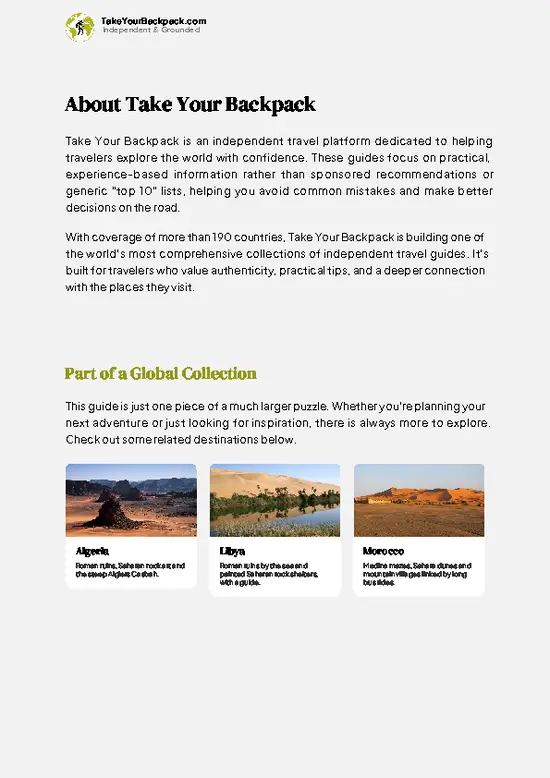
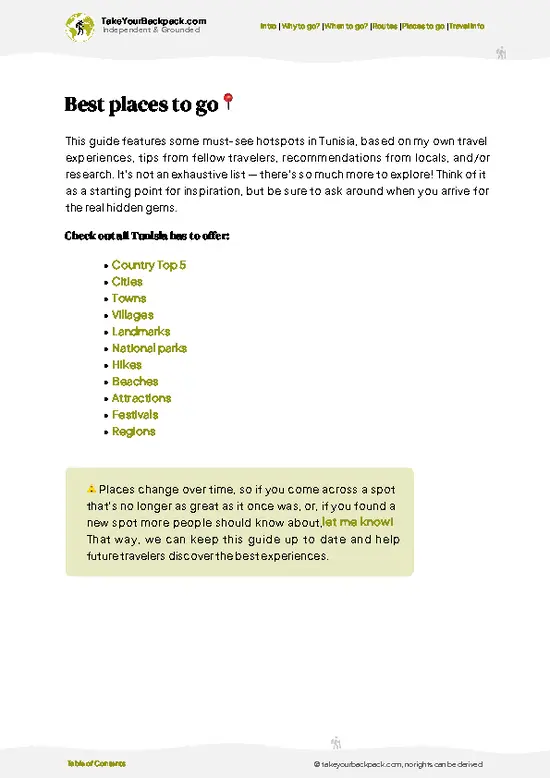
example page 0 from our offline Travel Guide for Tunisia
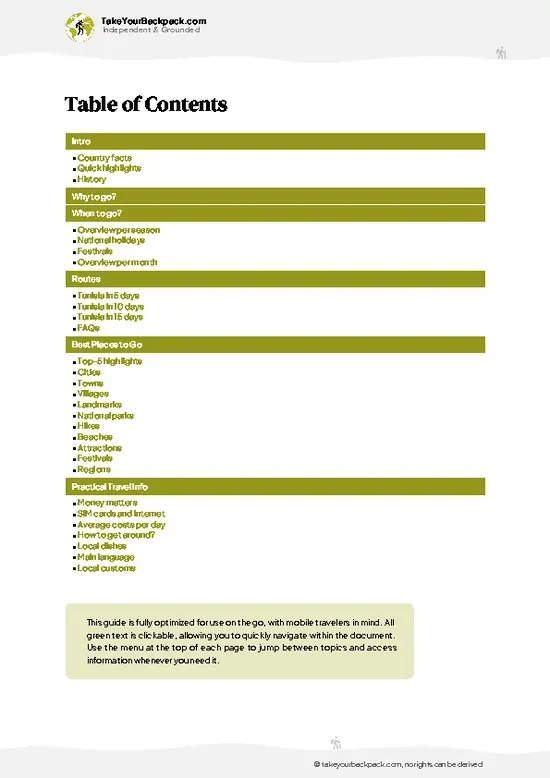
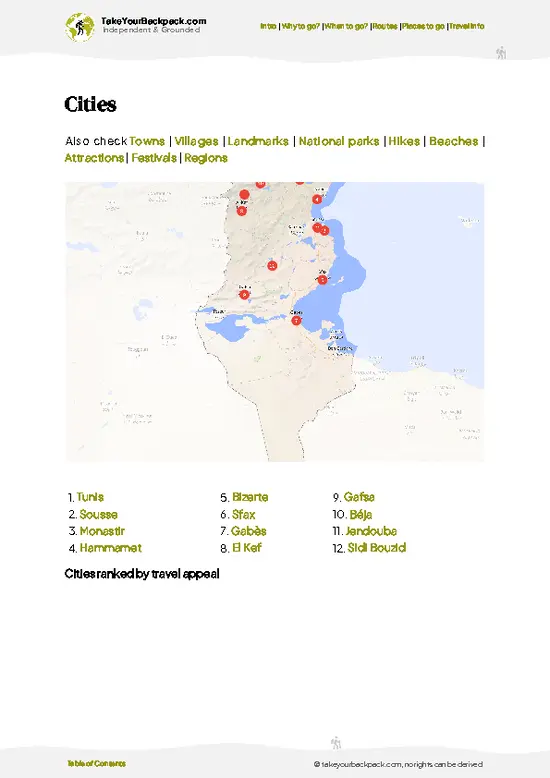
example page 1 from our offline Travel Guide for Tunisia
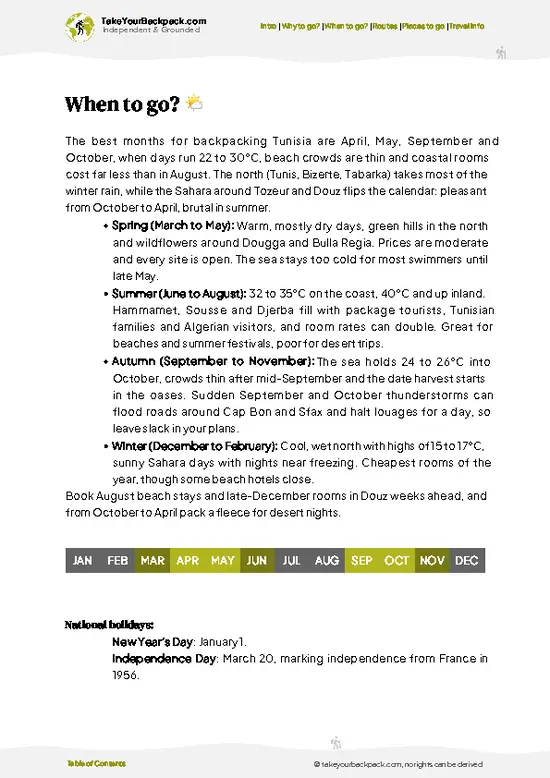
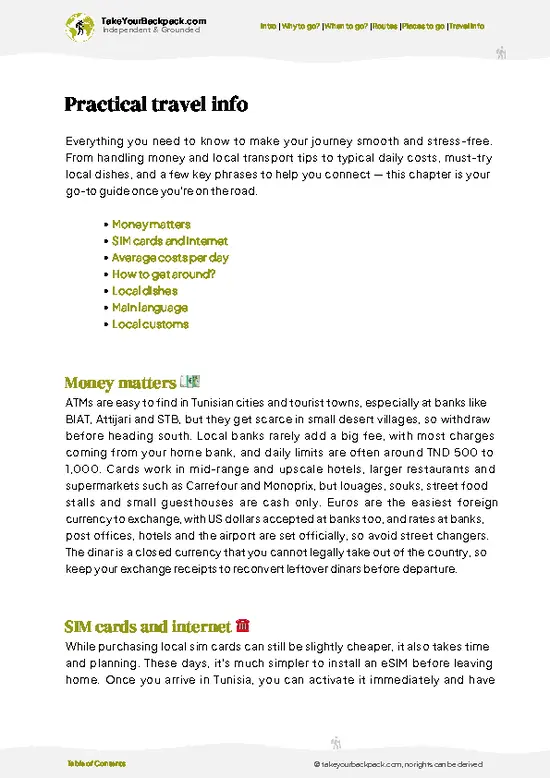
example page 2 from our offline Travel Guide for Tunisia
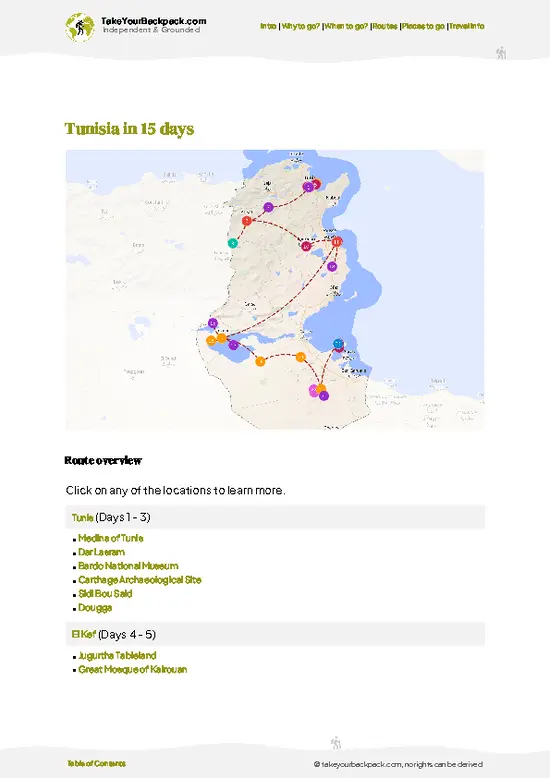
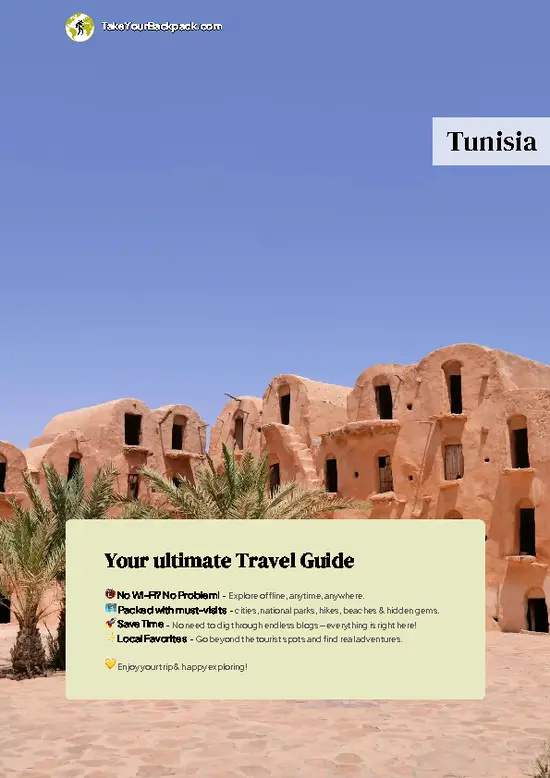
example page 3 from our offline Travel Guide for Tunisia
example page 4 from our offline Travel Guide for Tunisia
example page 5 from our offline Travel Guide for Tunisia
example page 6 from our offline Travel Guide for Tunisia
example page 7 from our offline Travel Guide for Tunisia
The digital guide (355 pages) contains:
✅ 90 highlights, ranked by travel appeal
✅ Optimized 5, 10 & 15-day travel routes
✅ Cities, national parks, landmarks, beaches
✅ How to get around
✅ Offline-friendly for travel without Wi-Fi
👉 Click to see all 30+ guide features

📅 Plan smarter in minutes, not weeks
✅ Month by month travel advice
✅ Festivals & national holidays
✅ Budget expectations

🗺️ Go to the right places, skip the overrated ones
✅ Honest pros & cons of destinations
✅ Top hikes, parks & viewpoints
✅ Lesser-known places most travelers miss
✅ Clear “worth it vs skip it” guidance

🛏️ Travel smoothly without rookie mistakes
✅ Best areas to stay
✅ Transport systems explained simply
✅ Common scams & safety advice
✅ SIM cards, money & practical tips

🌍 Understand the country, not just visit it
✅ Culture & traditions
✅ 52 Essential phrases & customs
✅ Festivals worth planning around
✅ Traveler-friendly historical context
✅ Insights that make places more meaningful

📱 Built for real travel conditions
✅ Fully downloadable PDF
✅ Works completely offline
✅ Optimized for phone use
✅ Useful in remote areas & buses
✅ Everything in one place
Stop searching, start planning
Get instant access to your full guide. 30‑day money-back guarantee.
+ Add another guide for just

By proceeding you agree to our terms.
Sent to your inbox immediately after payment • 100% Secure Checkout
Best Backpacking Travel Advisor 2025 tourism awardBest Backpacking
Travel Advisor
2025
What others say about Take Your Backpack Guides:
⭐⭐⭐⭐⭐
Fantastic, amazing amount of information!
⭐⭐⭐⭐⭐
My goodness this is amazing, it's what I've been looking for hats off too you!
⭐⭐⭐⭐⭐
I think this is absolutely BRILLIANT
⭐⭐⭐⭐
Very complete and informative. It's still missing places, but I gotta to commend you
⭐⭐⭐⭐⭐
This is truly amazing, thank you, can't wait to explore it with my kids!
⭐⭐⭐⭐⭐
Awesome resource, thank you!
⭐⭐⭐⭐⭐
This is amazing! Can't wait to explore the ones I haven't seen
⭐⭐⭐⭐
I love this! Well done, great idea.
⭐⭐⭐⭐⭐
Thanks for taking the time to make this gem!
⭐⭐⭐⭐⭐
This might be the best website I've ever seen.
⭐⭐⭐⭐⭐
Congratulations, and thank you so much for your work; it's incredibly valuable.
⭐⭐⭐⭐
In all seriousness I think you did a great job pointing out the important spots
⭐⭐⭐⭐⭐
10/10 very good
⭐⭐⭐⭐⭐
As someone who's only just starting to visit regularly this is awesome, thank you.
⭐⭐⭐⭐
Thank you very much! I'm going to visit my dad, it's going to be very useful!
⭐⭐⭐⭐⭐
This is really cool! We'll be travelling for the first time and this definitely come in handy.
⭐⭐⭐⭐⭐
You are now our minister of culture, congratulations 👨‍💼
⭐⭐⭐⭐⭐
Just wanted to tell you that this is a pearl! Going to follow your recommendations.
⭐⭐⭐⭐⭐
This is so cool. I'll definitely be using the resource for my travels soon.
⭐⭐⭐⭐⭐
This is very impressive! Good work.
⭐⭐⭐⭐⭐
This is an amazing and informative site. Very well done!

🛏️ Where to stay?Top Places to Consider Staying

Proper hostels are scarce in Tunisia, so most backpackers sleep in budget hotels, family-run guesthouses and restored medina houses called “dars,” with dorm beds or simple doubles running roughly 30 to 80 TND (US$10 to 26) a night. In Tunis, the Medina puts you steps from the souks and has the most atmospheric rooms, but its lanes go quiet and dark after sunset, while the Ville Nouvelle around Avenue Habib Bourguiba has the cheapest hotels, the best transport links and the most noise, and La Marsa and Sidi Bou Said trade higher prices for calm streets, sea air and the capital’s liveliest bars and cafés. Elsewhere, the Sousse medina is the budget hub of the coast, close to the beach and the nightlife … read more 👉
Proper hostels are scarce in Tunisia, so most backpackers sleep in budget hotels, family-run guesthouses and restored medina houses called “dars,” with dorm beds or simple doubles running roughly 30 to 80 TND (US$10 to 26) a night. In Tunis, the Medina puts you steps from the souks and has the most atmospheric rooms, but its lanes go quiet and dark after sunset, while the Ville Nouvelle around Avenue Habib Bourguiba has the cheapest hotels, the best transport links and the most noise, and La Marsa and Sidi Bou Said trade higher prices for calm streets, sea air and the capital’s liveliest bars and cafés. Elsewhere, the Sousse medina is the budget hub of the coast, close to the beach and the nightlife strip, though touts work its gates hard, and Tozeur has quiet, inexpensive guesthouses that make a handy base for the desert.

If you enjoy meeting fellow travelers, consider choosing hostels with high ratings for atmosphere. On the other hand, if you prefer having your own space, a hotel might be a better option.

TunisiaMore Places Across Tunisia

👋 Meet the founderWho’s Behind Take Your Backpack?

Johan, backpacker and founder of TakeYourBackpackHi, I’m Johan (Netherlands 🇳🇱), the creator of TakeYourBackpack. Over the past 3 decades, I’ve backpacked through 90+ countries across six continents, gaining extensive experience with independent travel, long-term trips, and overland routes.

This site is built on a combination of firsthand travel experience and carefully curated insights from other backpackers. Many guides are based on places I’ve personally visited, while others bring together tips, observations, and practical advice shared by trusted travelers I’ve met along the way.

The goal is to provide realistic, experience-driven guidance — not generic itineraries — so you can explore destinations with better context, clearer expectations, and more confidence.