v2.webp)
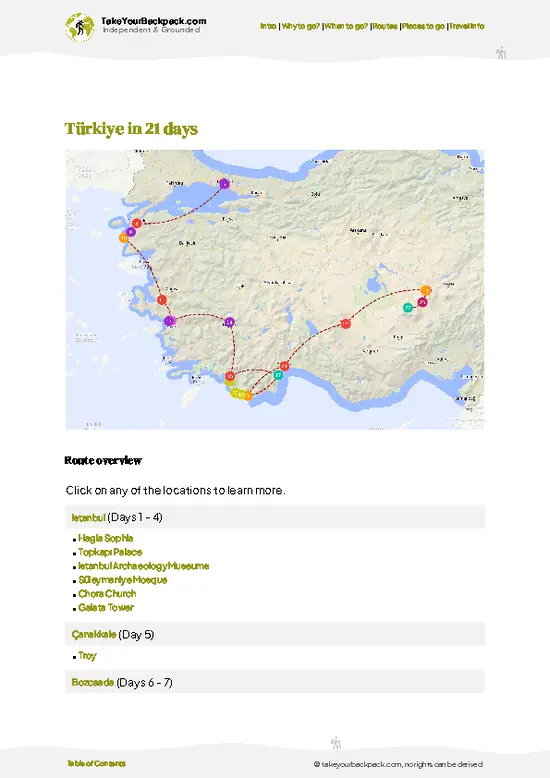
- Pergamon Acropolis — The hilltop heart of ancient Pergamon: terraces, palace foundations, and sweeping views down to the valley. Even though the famous Altar of Zeus is in Berlin, walking the ruined platform and steep streets gives you a real sense of how powerful the city was in antiquity.
- Pergamon Theatre (Hellenistic Theatre) — One of the steepest ancient theatres in the world, carved into the acropolis slope; the acoustics and sheer vertigo of the seats make it unforgettable. Climb up a few rows for the best panorama over Bergama and the surrounding plain.
- Asklepion (Asclepion of Pergamon) — A sprawling hillside healing sanctuary where patients came for therapies, baths and dream incubation. The ruins are atmospheric and human-scale: walk the terraces, see the remnants of treatment
- Pergamon Acropolis — The hilltop heart of ancient Pergamon: terraces, palace foundations, and sweeping views down to the valley. Even though the famous Altar of Zeus is in Berlin, walking the ruined platform and steep streets gives you a real sense of how powerful the city was in antiquity.
- Pergamon Theatre (Hellenistic Theatre) — One of the steepest ancient theatres in the world, carved into the acropolis slope; the acoustics and sheer vertigo of the seats make it unforgettable. Climb up a few rows for the best panorama over Bergama and the surrounding plain.
- Asklepion (Asclepion of Pergamon) — A sprawling hillside healing sanctuary where patients came for therapies, baths and dream incubation. The ruins are atmospheric and human-scale: walk the terraces, see the remnants of treatment rooms and enjoy the quiet views that once soothed the sick.
- Red Basilica / Serapeum (Kızıl Avlu) — A massive Roman-era temple complex later reused by Christians and Ottomans; its red brick halls and surviving columns are dramatic and oddly intimate. It’s a rare spot where imperial cult, Christianity and Ottoman life visibly layered over each other.
- Bergama Archaeological Museum — Small but well-curated: friezes, statues and everyday objects from the Acropolis and Asklepion, including finds that help explain what you’ll see on the sites. Good place to visit before or after the ruins to make the stones make more sense.
- Lower Agora (Roman Agora) — The busy commercial heart of Roman Pergamon down in town; column bases, shops and the street grid are still readable. It’s an easy, atmospheric stroll that connects the acropolis ruins to everyday ancient life.
- Trajaneum / Temple of Trajan — The impressive temple complex dedicated to Trajan on the acropolis plateau: well-preserved podiums and blocks that show imperial architecture in situ. Worth a close look if you like stonework and imagining ancient civic rituals.
- Rock-cut royal tombs and necropolis — Tombs and funerary monuments carved into the slopes around the acropolis; they’re quieter than the main ruins and give a stronger sense of local funerary customs. Perfect for wandering if you want fewer crowds and a moodier vibe.
- Medieval/ Ottoman old town and narrow streets — Timber houses, carved doorways and small mosques tucked into winding lanes—this is where modern Bergama’s character lives. Pop into local tea houses, carpet shops and markets to get a feel for everyday life here.
- Fortification walls and gates — The surviving Hellenistic and medieval walls that still wrap parts of the acropolis and town; you can walk stretches of ramparts and imagine the city defended across ages. The stonework and views make for a compact, rewarding hike without leaving town.
Spotted a mistake or missing something? Contact us.

Pergamon Tour

Pergamon Tour From Izmir

Small-Group Full Day Pergamum and Asklepion Tour from Izmir

4-Day Private Pilgrimage Tour to the 7 Churches of Asia Minor

Pergamon Historical Tour in Izmir

Pergamon Tour from Izmir City by Khalid

Pergamon Tour

Pergamon Tour from Izmir Hotels / Airport

Pergamon Ancient City Tour From Izmir


 Best Backpacking
.jpg) Hi, I’m Johan (Netherlands 🇳🇱), the creator of TakeYourBackpack. Over the past 3 decades, I’ve backpacked through 90+ countries across six continents, gaining extensive experience with independent travel, long-term trips, and overland routes.
Hi, I’m Johan (Netherlands 🇳🇱), the creator of TakeYourBackpack. Over the past 3 decades, I’ve backpacked through 90+ countries across six continents, gaining extensive experience with independent travel, long-term trips, and overland routes.