How many cities to pick:
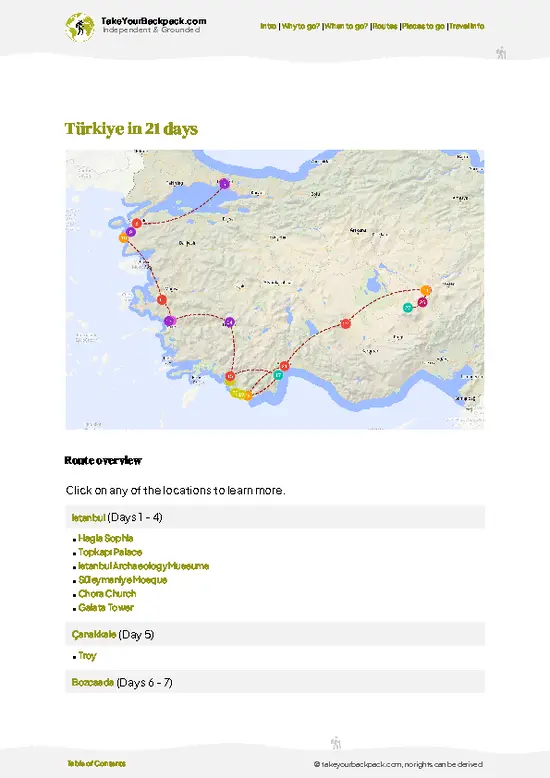
Three or four cities is the number I advise for a trip of two to three weeks. Türkiye is roughly 1,600 kilometers from west to east, and the long gaps between cities eat whole days. A fifth stop usually means a fifth bus station, a fifth bag drop and a quiet sense that you have only seen the inside of terminals. Fewer stops also leave room for the day trips and slow tea sessions that make Turkish cities worth visiting in the first place.
Which kind of city for which traveler:
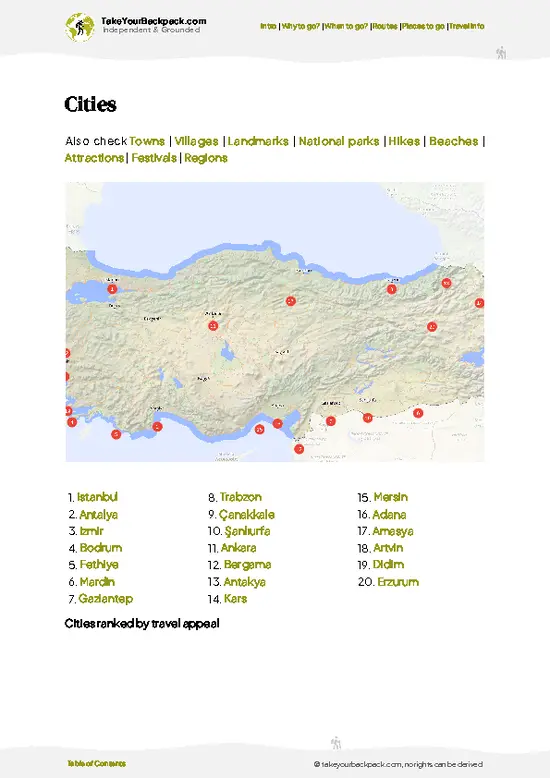
There are broadly four kinds, and one of each makes a balanced trip. The
imperial metropolis is the one nobody should skip on a first visit. It has the mosques, palaces and cisterns, and it also has the crowds, the queues and the highest prices in the country. Give it the most time, but not all …
read more 👉 How many cities to pick:
Three or four cities is the number I advise for a trip of two to three weeks. Türkiye is roughly 1,600 kilometers from west to east, and the long gaps between cities eat whole days. A fifth stop usually means a fifth bus station, a fifth bag drop and a quiet sense that you have only seen the inside of terminals. Fewer stops also leave room for the day trips and slow tea sessions that make Turkish cities worth visiting in the first place.
Which kind of city for which traveler:
There are broadly four kinds, and one of each makes a balanced trip. The
imperial metropolis is the one nobody should skip on a first visit. It has the mosques, palaces and cisterns, and it also has the crowds, the queues and the highest prices in the country. Give it the most time, but not all of it.
The
Aegean and Mediterranean coastal cities suit travelers who want sea air, ruins within a short minibus ride and easy hostel social life. They are the best choice for a first-timer who wants a gentle landing. The
Anatolian interior cities are where your money stretches furthest and where you will be the only foreigner at the lunch counter. They suit veterans and anyone tired of being sold a carpet. The
southeastern cities are the best food cities in the country by a wide margin, with kebab, baklava and breakfast spreads that make the west look timid. They need more planning and a check of current government travel advisories, especially near the Syrian border and in areas affected by the 2023 earthquakes.
If you only have time for two kinds, pick the metropolis and one interior city. That pairing shows you the two Türkiyes that rarely resemble each other.
What it costs:
Prices are quoted in Turkish lira, and inflation moves them quickly, so treat these US$ figures as a guide and confirm locally. A backpacker living sensibly in the interior and on the coast spends about
US$35 to 55 a day. In the big metropolis, plan on US$50 to 80 because rooms cost more.
A dorm bed runs US$12 to 25, and a simple private double US$35 to 70. A meal at a local lokanta, where you point at pots, costs US$5 to 9. A tourist-street restaurant charges double for the same lentil soup. City transit is cheap, around US$0.50 to 1 a ride with a rechargeable card. Intercity buses cost US$10 to 25 for most journeys of four to eight hours, and they are comfortable, with a steward who serves tea and cologne.
For
entry fees, budget US$10 to 25 for each headline mosque-museum, palace or ancient site. A national museum pass can pay for itself within a few days if you visit many state-run sites, so work out your list first. A traditional hamam session costs US$30 to 60 in touristy areas, and it is worth one splurge for the scrubbing alone. A private guide for a day is US$60 to 120. I would hire one only for large archaeological sites, where the stones are meaningless without context. Audio apps are enough for the rest.
What to skip:
Skip the carpet-shop tea invitation unless you actually want a carpet. The tea is free, the pressure is not. Skip hotel-arranged day tours to places a public minibus reaches for a tenth of the price. Skip eating on the main square of any famous site. Walk three streets away and the prices fall by a third.
Safety and etiquette:
Türkiye's cities are generally safe for travelers, including solo women, though the usual city rules apply. Pickpockets work crowded trams and ferries. Taxi drivers in the metropolis sometimes refuse the meter, so use a ride-hailing app or insist on it. Watch for strangers who invite you to a bar and leave you with an enormous bill, and for the shoe-shiner who drops his brush so you will pick it up and owe him a shine.
Dress modestly for mosques: cover shoulders and knees, and women need a scarf for the hair, which most large mosques lend at the door. Remove shoes and keep away from worshippers at prayer times, especially Friday midday. During Ramadan, eating in public is not forbidden for visitors, but a discreet bite out of sight is considerate in conservative interior cities, and many local restaurants open only after sunset.
Criticizing Atatürk or insulting the flag is a legal offense and a social one, so leave the jokes at home. Politics in general is better discussed after a local raises it. Photographing military sites or police is a bad idea. Finally, the dawn call to prayer will wake you in nearly every city. Earplugs are cheaper than irritation.


 Best Backpacking
 Hi, I’m Johan (Netherlands 🇳🇱), the creator of TakeYourBackpack. Over the past 3 decades, I’ve backpacked through 90+ countries across six continents, gaining extensive experience with independent travel, long-term trips, and overland routes.