v2.webp)
- Lake Kovada (the lake itself) — A deep, clear mountain lake tucked into forested hills; the mirror-like water and small bays make it the park’s living postcard. Paddle or stand on the shore and you’ll get the best sense of why the area was protected.
- Shoreline coves and boat access — Little pebble beaches and sheltered inlets are perfect for quiet swims, picnics, or renting a small boat to explore hidden corners. (Personal favorite: a tiny sunrise cove where the mist lifts off the water — peaceful and easy to reach.)
- Forest hiking trails — Trails wind through mixed pine and oak woodland, ranging from short loops to longer day-hikes; they’re shady, well-marked in places, and full of crunchy-needle paths. Good for a relaxed walk or a proper day of exploring without crowds.
- Birdwatching
- Lake Kovada (the lake itself) — A deep, clear mountain lake tucked into forested hills; the mirror-like water and small bays make it the park’s living postcard. Paddle or stand on the shore and you’ll get the best sense of why the area was protected.
- Shoreline coves and boat access — Little pebble beaches and sheltered inlets are perfect for quiet swims, picnics, or renting a small boat to explore hidden corners. (Personal favorite: a tiny sunrise cove where the mist lifts off the water — peaceful and easy to reach.)
- Forest hiking trails — Trails wind through mixed pine and oak woodland, ranging from short loops to longer day-hikes; they’re shady, well-marked in places, and full of crunchy-needle paths. Good for a relaxed walk or a proper day of exploring without crowds.
- Birdwatching at reed beds and marshy edges — The lake margins attract waterfowl, herons, and smaller kingfisher-type birds; bring binoculars and a quiet voice. Early morning is prime time for sightings and photography.
- Scenic viewpoints and sunset terraces — Several ridgelines and lookout clearings give sweeping panoramas of the lake and surrounding valleys; great for golden-hour photos and simple awe. Pack a thermos and stay long enough for the colors to change.
- Wildlife signs and small mammals — You’re likely to see tracks, scat, or the animals themselves: deer grazing at dawn/dusk, foxes slipping through the trees, and the occasional wild boar if you keep your distance. It’s raw, not zoo-like—so quiet observation works best.
- Night sky and peaceful camping spots — Low light pollution means clear starfields on calm nights; the lake reflections add extra drama. If you camp (or stay nearby), expect frogs, owls, and proper night-time quiet—no city hum.
Spotted a mistake or missing something? Contact us.

Pamukkale Hot Air Balloon w/Flight Certificates,Champagne Toast & Hotel Transfer
✓ Free cancellation

Pamukkale : Hot Air Balloon Sunrise Flight w/Transfer
✓ Free cancellation

Pamukkale Paragliding Experience By Local Expert Pilots
✓ Free cancellation

Antalya / Belek : Guided Pamukkale Day Trip & Hierapolis w/ Lunch
✓ Free cancellation
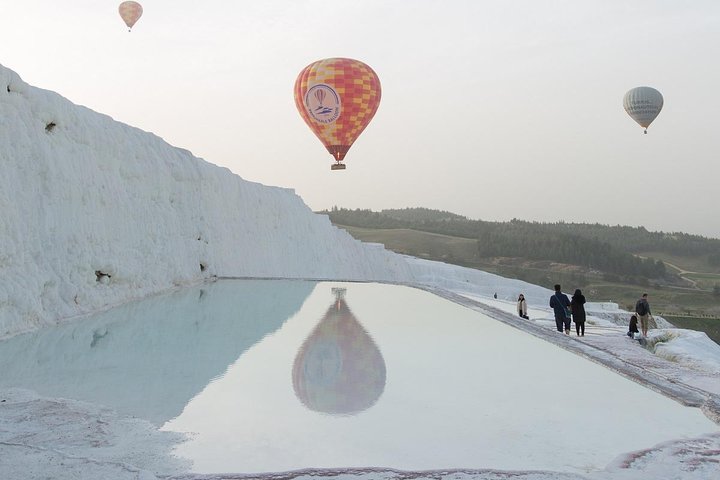
Pamukkale: Sunrise Balloon Flight Above Travertines & Ruins
✓ Free cancellation

Full Day Pamukkale City Tour From Pamukkale And Karahayit Hotels
✓ Free cancellation

Pamukkale and Hierapolis Small Group Tour
✓ Free cancellation

Pamukkale Tour From Pamukkale
✓ Free cancellation

Fethiye -Pamukkale-Hierapolis(Cotton Castle)(1 Day)
✓ Free cancellation

Pamukkale Hot Air Balloon Tours
✓ Free cancellation




 Best Backpacking
.jpg) Hi, I’m Johan (Netherlands 🇳🇱), the creator of TakeYourBackpack. Over the past decade, I’ve backpacked through 80+ countries across six continents, gaining extensive experience with independent travel, long-term trips, and overland routes.
Hi, I’m Johan (Netherlands 🇳🇱), the creator of TakeYourBackpack. Over the past decade, I’ve backpacked through 80+ countries across six continents, gaining extensive experience with independent travel, long-term trips, and overland routes.