v2.webp)
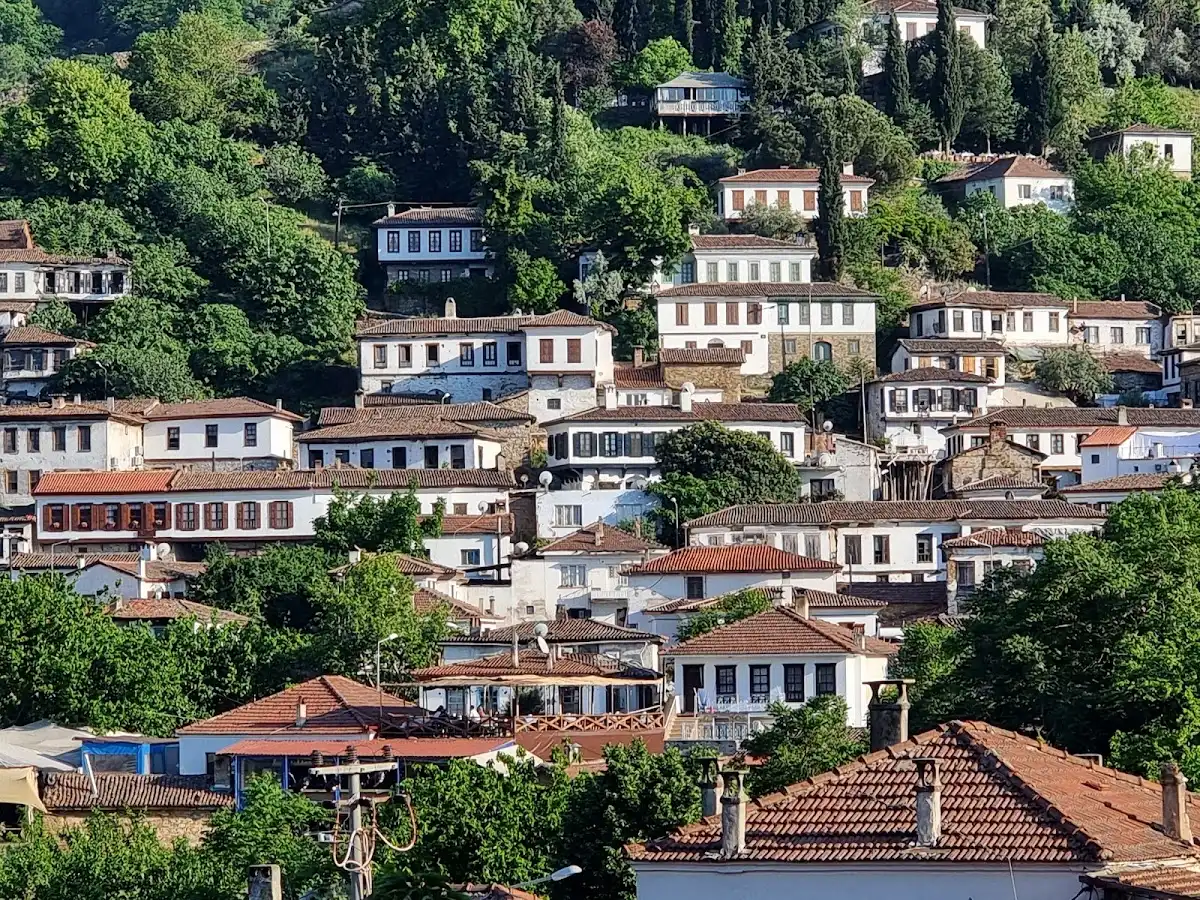
- Rum (Greek) Houses of Şirince — Narrow rows of restored stone and wood houses with carved lintels and bright shutters: they’re the village’s soul and the best way to see how Greek and Ottoman styles mixed here.
- Main cobbled street (the village centre) — Walkable, photogenic, and full of tiny shops, cafés and teahouses; this is where daily life happens and where you overhear locals, sample snacks and watch the light change on the old facades.
- Family-run wine houses (Şirince wine tastings) — Small producers sell fruit and grape wines in the same shops where families have made them for decades; tasting is informal, educational, and often includes stories about local grape varieties.
- Panoramic viewpoints above the village — Short paths lead to terraces that look over olive groves, orchards
- Rum (Greek) Houses of Şirince — Narrow rows of restored stone and wood houses with carved lintels and bright shutters: they’re the village’s soul and the best way to see how Greek and Ottoman styles mixed here.
- Main cobbled street (the village centre) — Walkable, photogenic, and full of tiny shops, cafés and teahouses; this is where daily life happens and where you overhear locals, sample snacks and watch the light change on the old facades.
- Family-run wine houses (Şirince wine tastings) — Small producers sell fruit and grape wines in the same shops where families have made them for decades; tasting is informal, educational, and often includes stories about local grape varieties.
- Panoramic viewpoints above the village — Short paths lead to terraces that look over olive groves, orchards and the distant hills; perfect for sunrise or late-afternoon photos and for feeling how isolated (in a good way) Şirince really is.
- Village mosque — A modest neighborhood mosque that reflects the village’s Ottoman and republican-era life; visiting gives a sense of the local religious rhythm and the village’s multi-layered past.
- Olive oil and soap workshops — Small, hands-on workshops selling cold-pressed olive oil, soaps and cosmetics made from local produce; you can smell and buy the real stuff and sometimes watch a demo.
- Converted historic guesthouses (konak stays) — Staying one night in a restored mansion is an experience in itself: original floors, old stoves, breakfasts with homemade jams — a practical way to sleep inside the village’s history.
- Handicraft and artisan studios — Families and solo craft-makers run tiny studios for embroidery, woodwork and souvenirs; visiting supports local makers and gives you something genuinely local to take home.
- Neighborhood lanes and hidden courtyards — Drift off the main street and you’ll find quiet courtyards, old wells and stone walls where everyday history is visible; they reward slow wandering more than any guidebook stop does.
- Home-cooked meals and village kitchens — Many households and small eateries offer real local food (seasonal pies, preserves, dishes with local fruit); sitting down to a family meal or a hosted lunch is a great way to meet locals and taste traditions.
Spotted a mistake or missing something? Contact us.

Ephesus Tour From Selcuk

FOR CRUISERS /Top Seller Ephesus Private Tour / On Time Return

Private Tour : Customized Ephesus Tour for Cruisers from Kusadasi Ephesus Port

Pamukkale Tour From Selcuk

St. Paul in Ephesus:A Journey into Early Christianity with Expert

For Cruise Guests : Best Seller Ephesus Private Tour / Kusadasi Tours

Quick-Ephesus Private Tour

Private Full-Day Pamukkale Sightseeing Tour

Ephesus Small Group Tour from Kusadasi Port Cruiser Only

 Best Backpacking
.jpg) Hi, I’m Johan (Netherlands 🇳🇱), the creator of TakeYourBackpack. Over the past decade, I’ve backpacked through 80+ countries across six continents, gaining extensive experience with independent travel, long-term trips, and overland routes.
Hi, I’m Johan (Netherlands 🇳🇱), the creator of TakeYourBackpack. Over the past decade, I’ve backpacked through 80+ countries across six continents, gaining extensive experience with independent travel, long-term trips, and overland routes.