×

Türkiye🇹🇷 | best villagesWhere to Find the 3 Best villages in Türkiye

Village life in Türkiye (or Turkey) comes with a teapot, a stray dog with opinions, and an elderly neighbor who has already decided you are staying for lunch. Beyond that, the country refuses to be one thing. The Aegean and Mediterranean coast has stone houses, olive groves and pensions at US$25 to 50 a night, but also minibus timetables and August crowds. Central Anatolia trades sea for rock valleys and cave dwellings, with tour buses by 10 a.m. and near silence by dusk. The Black Sea mountains are green, wet and wonderfully unhurried, with wooden houses and yayla pastures that reward patience with a car or a good phrasebook. The southeast and east bring stone architecture, deep hospitality and fewer foreigners, but longer, slower transport. For backpacking or any independent trip, the question is simply which Türkiye you want: easy and busy, or remote and earnest.

By Johan Kruseman 🇳🇱 | Updated October 19, 2026
Explore the best landmarks in Türkiye

Why go?Key Factors That Shape the Experience

Türkiye is unusually good at villages because it has been a crossroads for about ten thousand years, and every empire left something behind in the countryside. Greek, Armenian, Persian, Roman, Byzantine, Seljuk and Ottoman layers sit side by side, so a single region can hold rock-cut churches, stone mosques and timber farmhouses within a few hours of each other. Geography does the rest. Mountains, plateaus, river gorges and three seas produce building styles shaped by local material: volcanic tuff, limestone, pine, even basalt. That is why villages here do not look alike, which is a relief if you have been to Tuscany and found it was the same hill repeated.

There is also a practical advantage. The country has a dense intercity bus network, and the dolmuş (shared minibus) reaches many settlements … read more 👉
Türkiye is unusually good at villages because it has been a crossroads for about ten thousand years, and every empire left something behind in the countryside. Greek, Armenian, Persian, Roman, Byzantine, Seljuk and Ottoman layers sit side by side, so a single region can hold rock-cut churches, stone mosques and timber farmhouses within a few hours of each other. Geography does the rest. Mountains, plateaus, river gorges and three seas produce building styles shaped by local material: volcanic tuff, limestone, pine, even basalt. That is why villages here do not look alike, which is a relief if you have been to Tuscany and found it was the same hill repeated.

There is also a practical advantage. The country has a dense intercity bus network, and the dolmuş (shared minibus) reaches many settlements for a few dollars. Rural hospitality is a living habit, not a marketing line, and tea is offered before any transaction is discussed. Basic village pensions and family guesthouses are common, which keeps costs well below Western Europe.

Before choosing Türkiye, know a few things. Distances are large, and a map that makes two places look close can hide a four-hour winding road. Dolmuş services thin out sharply in the evenings and on Sundays, and some run only when full. In the east and in conservative areas, cultural norms are more traditional, so modest clothing helps. Many villages near famous sites have been shaped by tourism, while those further off feel more everyday, and English drops away quickly. A few Turkish phrases and a translation app will do more for your trip than any guidebook, and a bit of patience with timetables is part of the bargain.
Why These Made the Cut
The list of best villages in Türkiye is created based on authenticity, scenic beauty, community spirit, traditions, and overall character. If you feel a village is missing in this list, please let us know.

When to go?Best Time to Visit Türkiye for villages

Best months and why: The best months for villages in Türkiye are April to early June and September to October, when daytime highs sit around 18 to 28°C, the trails are walkable and the rooms are cheaper than in summer. Spring brings green hillsides and wildflowers, and autumn brings harvest and warm sea on the coast. Both seasons also let you eat lunch outdoors without negotiating with the sun.
Summer and the regional split: July and August push the Aegean and Mediterranean villages to 33 to 40°C, and Turkish school holidays fill the coast, so pension rates can climb 30 to 60 percent over spring prices. Central Anatolia is hot and dry in summer (30 to 35°C by day) but cools sharply at night. The Black Sea is the exception. It is wet year-round, with 1,000 to over 2,000 mm of rain depending … read more 👉
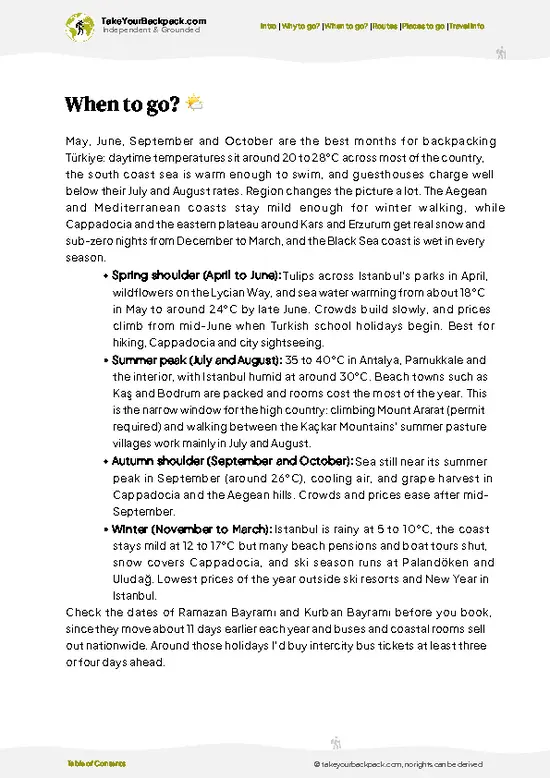
Best months and why: The best months for villages in Türkiye are April to early June and September to October, when daytime highs sit around 18 to 28°C, the trails are walkable and the rooms are cheaper than in summer. Spring brings green hillsides and wildflowers, and autumn brings harvest and warm sea on the coast. Both seasons also let you eat lunch outdoors without negotiating with the sun.
Summer and the regional split: July and August push the Aegean and Mediterranean villages to 33 to 40°C, and Turkish school holidays fill the coast, so pension rates can climb 30 to 60 percent over spring prices. Central Anatolia is hot and dry in summer (30 to 35°C by day) but cools sharply at night. The Black Sea is the exception. It is wet year-round, with 1,000 to over 2,000 mm of rain depending on the area, yet July and August are the most pleasant months for high pastures, which are often only open from roughly June to September. The southeast can exceed 40°C in summer, so spring and autumn are far kinder there.
Winter and shoulder trade-offs: From November to March, many coastal pensions close, boat and minibus schedules shrink, and the Mediterranean cools to 8 to 15°C with rain. Central and eastern Anatolia can drop below freezing, with snow that closes mountain roads, though the quiet can be appealing and prices fall by 30 to 50 percent. Stone houses without good heating are cold indoors, so check that a room has a stove or radiators. Easter, Ramadan Bayram holidays and Kurban Bayram bring national travel rushes, with full buses and higher prices, so book transport early. Ramadan itself (dates move about 11 days earlier each year) does not close villages, but daytime eating options can be limited in conservative areas.

village hoppingPlanning Your Route Efficiently

How long a combined trip takes: A trip linking several villages in Türkiye needs 10 to 16 days, and under a week only works if you stay in one region. The country is roughly 1,600 km from west to east, so the first rule is to choose clusters rather than collect dots on a map.
Which regions pair well: The Aegean and western Mediterranean cluster nicely, linked by the hubs of İzmir, Muğla, Fethiye and Antalya, with 2 to 4 hours between them by bus. Central Anatolia sits well with Konya or Ankara as gateways, around 6 to 10 hours from the coast by bus or a short domestic flight from Antalya or İzmir to Kayseri. The Black Sea is best paired with Trabzon or Rize and works as its own trip, since the coastal road is slow and the mountain roads slower. The southeast and east connect through Gaziantep, … read more 👉
How long a combined trip takes: A trip linking several villages in Türkiye needs 10 to 16 days, and under a week only works if you stay in one region. The country is roughly 1,600 km from west to east, so the first rule is to choose clusters rather than collect dots on a map.
Which regions pair well: The Aegean and western Mediterranean cluster nicely, linked by the hubs of İzmir, Muğla, Fethiye and Antalya, with 2 to 4 hours between them by bus. Central Anatolia sits well with Konya or Ankara as gateways, around 6 to 10 hours from the coast by bus or a short domestic flight from Antalya or İzmir to Kayseri. The Black Sea is best paired with Trabzon or Rize and works as its own trip, since the coastal road is slow and the mountain roads slower. The southeast and east connect through Gaziantep, Mardin, Diyarbakır and Kars, but long distances of 5 to 9 hours between hubs make it a separate journey.
Direction and pace: Travel in one sweep rather than doubling back. Starting in the west and moving east, ending with a flight back to İstanbul, avoids the bus marathon on the return. Allow one to two nights per village, three if you want to hike. A single night leaves you arriving at dusk and leaving at dawn, which suits nobody except the pension’s breakfast schedule.
Common planning mistakes: The classic error is trusting map distance. A 90 km mountain road can take three hours, so budget at least double what a map app suggests. Another is stacking two long transfers on consecutive days, which leaves you seeing mostly bus windows. Insert a buffer day every 4 or 5 days instead. Travelers also forget that rural services fade in the evening, so aim to arrive by mid-afternoon, and check the last dolmuş before settling in for tea.

The ListMust-Visit villages in Türkiye

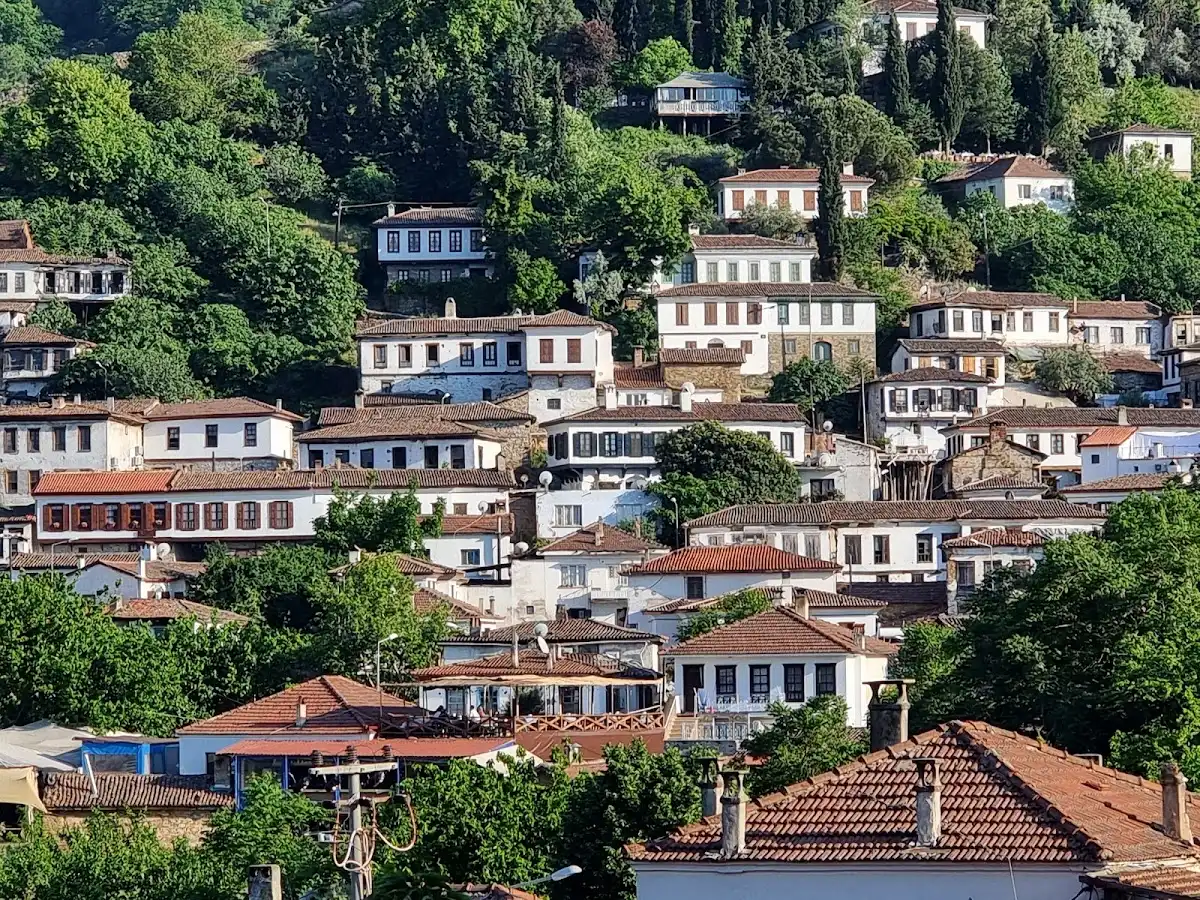
1 Şirince

stone houses, hillside orchards, village wine

Stroll narrow lanes lined with whitewashed homes, sample local fruit wines, and take in views of olive groves stretching toward the Aegean coast.

turkiye-city-sirince
© Google |

2 Assos

acropolis ruins, Aegean views, fishing harbor

Climb to a hilltop temple overlooking the sea, descend to a quiet harbor for fresh seafood, and trace ancient walls along rugged cliffs.

3 Uzungöl

mountain lake, wooden chalets, misty forests

Walk lakeside trails beneath steep green slopes, stay in timber lodges, and experience the cool, damp air of the Pontic Alps.

Loading the map 🌍

Expert viewTips and Advice from Travelers

How many villages to visit: Plan on four to six villages over a two-week trip, no more. Fewer than four and you miss the contrast between regions. More than six and you spend your time loading and unloading a backpack, which is a hobby, not a holiday. Villages reward an evening and a morning, so the number depends on how many nights you can give them, not how many you can tick off.
Which kind to prioritize: For a first trip, favor one coastal or Aegean village, one Anatolian stone or cave-house village and one mountain or Black Sea settlement. That gives you three textures of the country. If you like hiking, put the mountain and highland places first, because trails and pastures are the strongest draw there. If photography and history are your priority, choose Anatolian and southeastern stone … read more 👉
How many villages to visit: Plan on four to six villages over a two-week trip, no more. Fewer than four and you miss the contrast between regions. More than six and you spend your time loading and unloading a backpack, which is a hobby, not a holiday. Villages reward an evening and a morning, so the number depends on how many nights you can give them, not how many you can tick off.
Which kind to prioritize: For a first trip, favor one coastal or Aegean village, one Anatolian stone or cave-house village and one mountain or Black Sea settlement. That gives you three textures of the country. If you like hiking, put the mountain and highland places first, because trails and pastures are the strongest draw there. If photography and history are your priority, choose Anatolian and southeastern stone villages, which carry more architectural weight. If you want a gentle, easy trip, stay on the west coast, where transport is simplest. I would skip any village that exists mainly as a coach stop. Visit it at 8 a.m. or after 5 p.m., or leave it, because midday means crowds and souvenir stalls selling identical evil-eye magnets.
What it costs: A backpacker can manage on US$30 to 50 a day (roughly 1,000 to 1,700 Turkish lira, though prices move quickly with inflation, so treat lira figures loosely). That covers a pension dorm or simple double at US$15 to 35 a night, two meals at local lokantas for US$6 to 12, and local dolmuş rides at US$1 to 5 per hop. Coastal villages in peak season can push rooms to US$50 to 80. Most village visits cost nothing to enter. Small sites, churches or museums charge roughly US$3 to 12, and major attractions near famous villages can reach US$15 to 30. A local guide for a half-day hike or walking tour typically runs US$25 to 60, and is worth paying for in remote highland areas where trails are poorly marked. Skip guides in villages you can walk end to end in an hour. Carry cash in small bills, because card machines in rural pensions are unreliable and ATMs are sparse.
Safety and cultural considerations: Rural Türkiye is generally safe for travelers, and petty theft is rare compared with big cities. The more practical risks are traffic on mountain roads, stray or guard dogs (kangal and other shepherd dogs can be serious, so keep your distance and never run), and heat or cold in remote areas. Check government travel advisories before heading to areas near the Syrian and Iraqi borders, and confirm road conditions locally.

Culturally, dress modestly in conservative villages, especially in the east and the Black Sea interior. Covered shoulders and knees are enough for most travelers, and a scarf is handy for entering mosques. Remove shoes at mosque and home entrances. Accepting tea is polite, and refusing everything can seem cold, though one glass is allowed to be your last. Ask before photographing people, especially women, and do not photograph military sites. Tipping in rural areas is modest, rounding up or leaving 5 to 10 percent where there is table service. Learn basic phrases such as merhaba, teşekkürler and lütfen, since they change how people receive you more than any amount of loud English.

✈️ The backpacker research shortcutTürkiye Travel Guide

An offline-friendly backpacking guide with optimized travel routes, ranked highlights, transport advice, and the best areas to stay.
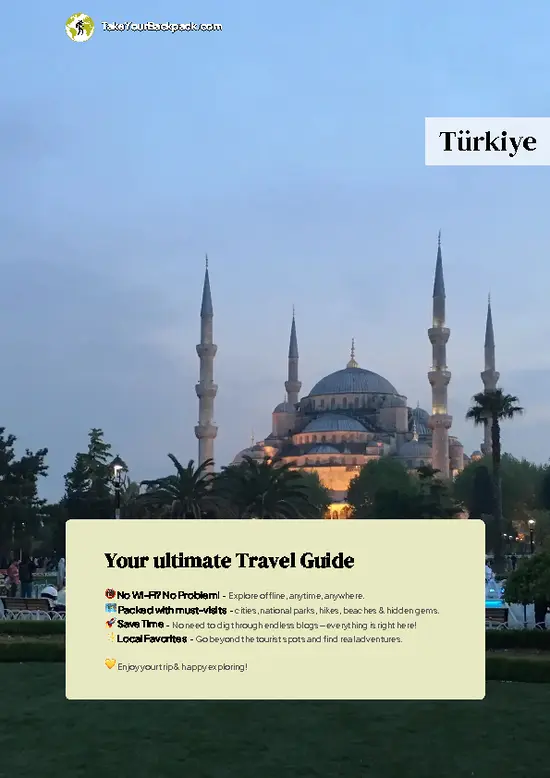
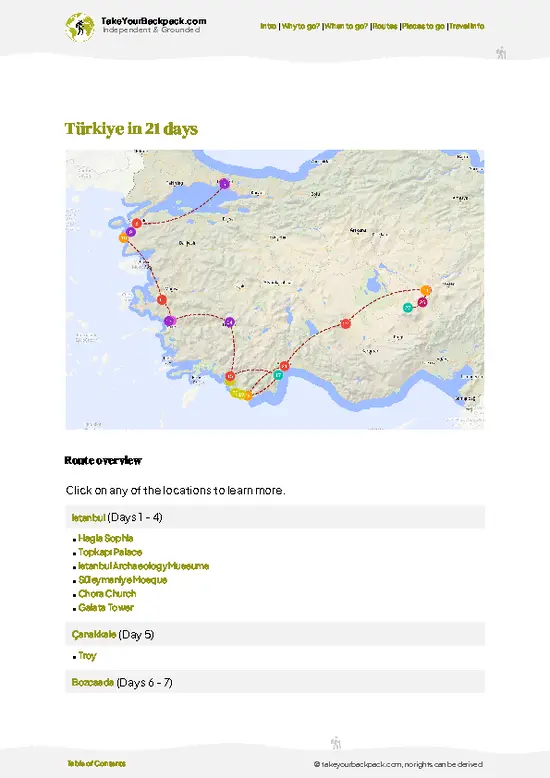
example page 0 from our offline Travel Guide for Türkiye
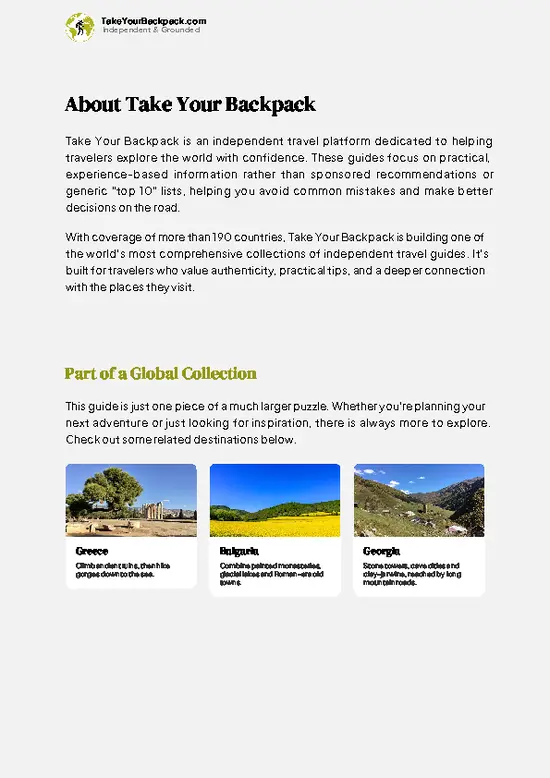
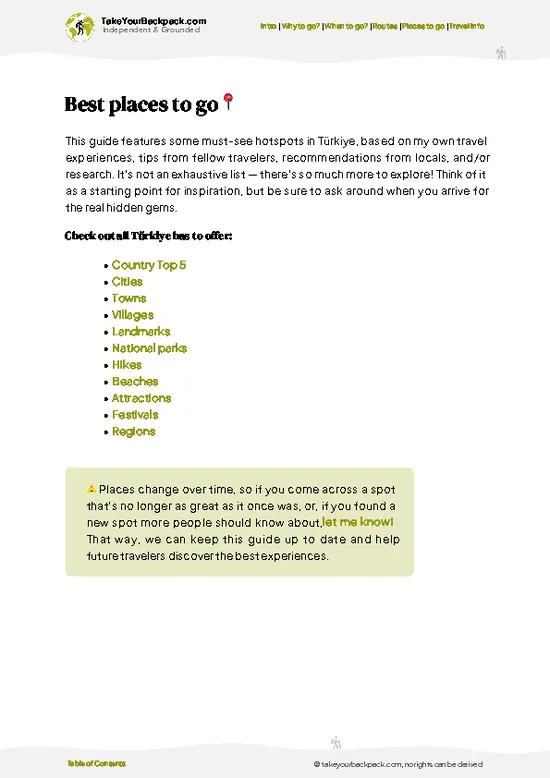
example page 1 from our offline Travel Guide for Türkiye
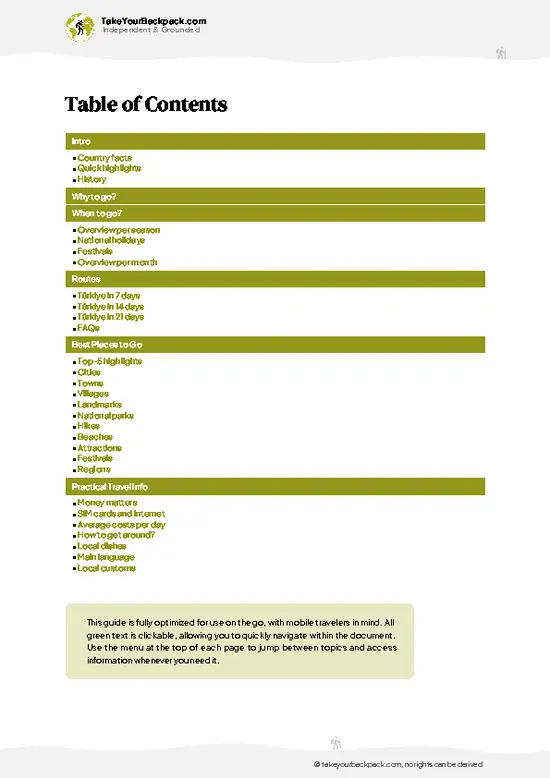
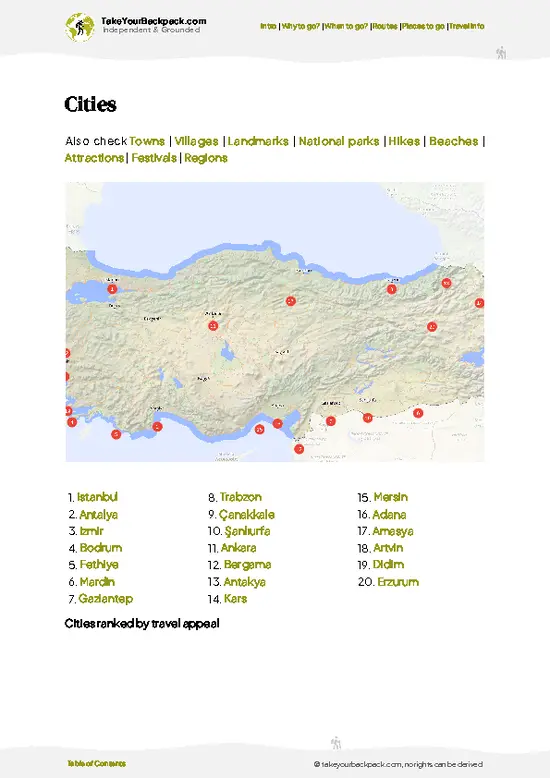
example page 2 from our offline Travel Guide for Türkiye
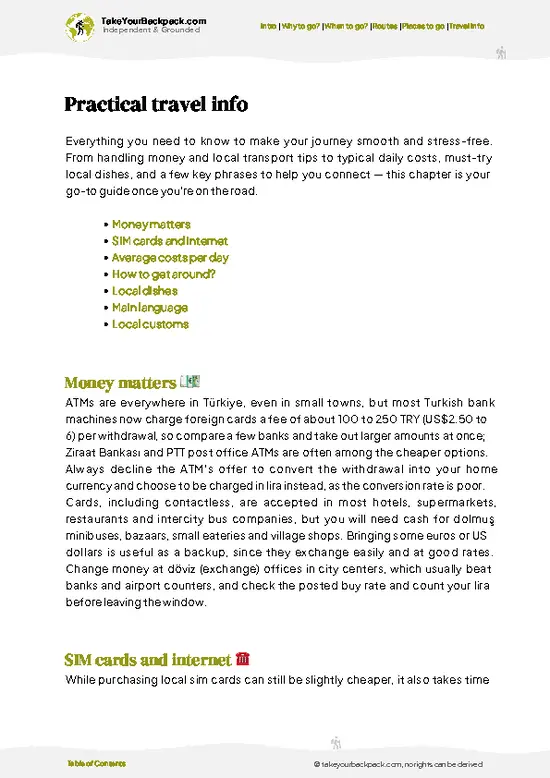
example page 3 from our offline Travel Guide for Türkiye
example page 4 from our offline Travel Guide for Türkiye
example page 5 from our offline Travel Guide for Türkiye
example page 6 from our offline Travel Guide for Türkiye
example page 7 from our offline Travel Guide for Türkiye
The digital guide (445 pages) contains:
✅ 130 highlights, ranked by travel appeal
✅ Optimized 7, 14 & 21-day travel routes
✅ Cities, national parks, landmarks, beaches
✅ How to get around
✅ Offline-friendly for travel without Wi-Fi
👉 Click to see all 30+ guide features

📅 Plan smarter in minutes, not weeks
✅ Month by month travel advice
✅ Festivals & national holidays
✅ Budget expectations

🗺️ Go to the right places, skip the overrated ones
✅ Honest pros & cons of destinations
✅ Top hikes, parks & viewpoints
✅ Lesser-known places most travelers miss
✅ Clear “worth it vs skip it” guidance

🛏️ Travel smoothly without rookie mistakes
✅ Best areas to stay
✅ Transport systems explained simply
✅ Common scams & safety advice
✅ SIM cards, money & practical tips

🌍 Understand the country, not just visit it
✅ Culture & traditions
✅ 52 Essential phrases & customs
✅ Festivals worth planning around
✅ Traveler-friendly historical context
✅ Insights that make places more meaningful

📱 Built for real travel conditions
✅ Fully downloadable PDF
✅ Works completely offline
✅ Optimized for phone use
✅ Useful in remote areas & buses
✅ Everything in one place
Stop searching, start planning
Get instant access to your full guide. 30‑day money-back guarantee.
+ Add another guide for just

By proceeding you agree to our terms.
Sent to your inbox immediately after payment • 100% Secure Checkout
Best Backpacking Travel Advisor 2025 tourism awardBest Backpacking
Travel Advisor
2025
What others say about Take Your Backpack Guides:
⭐⭐⭐⭐⭐
Fantastic, amazing amount of information!
⭐⭐⭐⭐⭐
My goodness this is amazing, it's what I've been looking for hats off too you!
⭐⭐⭐⭐⭐
I think this is absolutely BRILLIANT
⭐⭐⭐⭐
Very complete and informative. It's still missing places, but I gotta to commend you
⭐⭐⭐⭐⭐
This is truly amazing, thank you, can't wait to explore it with my kids!
⭐⭐⭐⭐⭐
Awesome resource, thank you!
⭐⭐⭐⭐⭐
This is amazing! Can't wait to explore the ones I haven't seen
⭐⭐⭐⭐
I love this! Well done, great idea.
⭐⭐⭐⭐⭐
Thanks for taking the time to make this gem!
⭐⭐⭐⭐⭐
This might be the best website I've ever seen.
⭐⭐⭐⭐⭐
Congratulations, and thank you so much for your work; it's incredibly valuable.
⭐⭐⭐⭐
In all seriousness I think you did a great job pointing out the important spots
⭐⭐⭐⭐⭐
10/10 very good
⭐⭐⭐⭐⭐
As someone who's only just starting to visit regularly this is awesome, thank you.
⭐⭐⭐⭐
Thank you very much! I'm going to visit my dad, it's going to be very useful!
⭐⭐⭐⭐⭐
This is really cool! We'll be travelling for the first time and this definitely come in handy.
⭐⭐⭐⭐⭐
You are now our minister of culture, congratulations 👨‍💼
⭐⭐⭐⭐⭐
Just wanted to tell you that this is a pearl! Going to follow your recommendations.
⭐⭐⭐⭐⭐
This is so cool. I'll definitely be using the resource for my travels soon.
⭐⭐⭐⭐⭐
This is very impressive! Good work.
⭐⭐⭐⭐⭐
This is an amazing and informative site. Very well done!

🛏️ Where to stay?Where to Base Yourself

Türkiye has plenty of hostels and budget guesthouses, with dorm beds in Istanbul typically running €10 to 20 a night and private doubles in family pensions from roughly €30 to 50. In Istanbul, Sultanahmet puts you within walking distance of Hagia Sophia and the Blue Mosque but goes quiet after dark, while Beyoğlu and Karaköy around Galata have the liveliest bars and late-night street noise to match, and Kadıköy on the Asian side trades sightseeing convenience for cheaper, more local nightlife a ferry ride away. Beyond the big city, Göreme in Cappadocia is packed with cave-room hostels steps from the valley trails (sleepy at night, with early balloon-launch wake-ups), and Kaleiçi, the walled … read more 👉
Türkiye has plenty of hostels and budget guesthouses, with dorm beds in Istanbul typically running €10 to 20 a night and private doubles in family pensions from roughly €30 to 50. In Istanbul, Sultanahmet puts you within walking distance of Hagia Sophia and the Blue Mosque but goes quiet after dark, while Beyoğlu and Karaköy around Galata have the liveliest bars and late-night street noise to match, and Kadıköy on the Asian side trades sightseeing convenience for cheaper, more local nightlife a ferry ride away. Beyond the big city, Göreme in Cappadocia is packed with cave-room hostels steps from the valley trails (sleepy at night, with early balloon-launch wake-ups), and Kaleiçi, the walled old town of Antalya, mixes pensions near the harbor and beaches with weekend bar noise along its lanes.

If you enjoy meeting fellow travelers, consider choosing hostels with high ratings for atmosphere. On the other hand, if you prefer having your own space, a hotel might be a better option.

TürkiyeExpand Your Journey

👋 Meet the founderWho’s Behind Take Your Backpack?

Johan, backpacker and founder of TakeYourBackpackHi, I’m Johan (Netherlands 🇳🇱), the creator of TakeYourBackpack. Over the past 3 decades, I’ve backpacked through 90+ countries across six continents, gaining extensive experience with independent travel, long-term trips, and overland routes.

This site is built on a combination of firsthand travel experience and carefully curated insights from other backpackers. Many guides are based on places I’ve personally visited, while others bring together tips, observations, and practical advice shared by trusted travelers I’ve met along the way.

The goal is to provide realistic, experience-driven guidance — not generic itineraries — so you can explore destinations with better context, clearer expectations, and more confidence.