v2.webp)
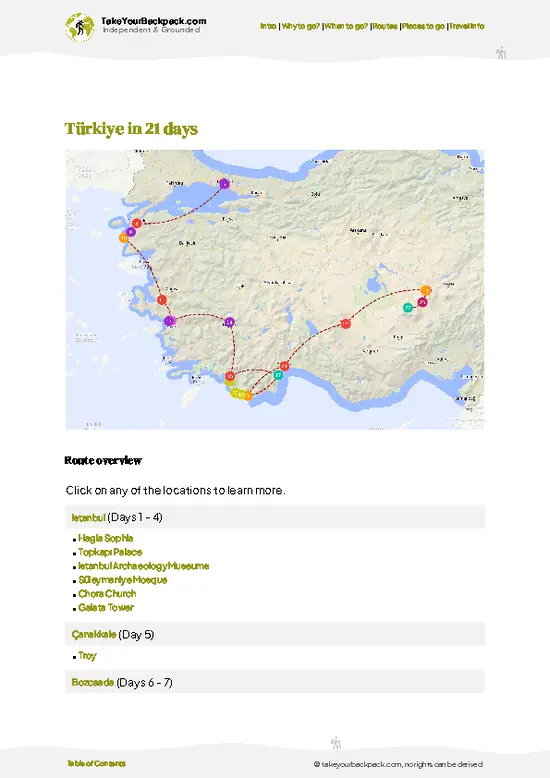
- Cleopatra Gate (Kleopatra Kapısı) — The city’s most famous portal: a short, atmospheric street framed by old stone where local tradition says Cleopatra entered Tarsus. It’s a compact, photo-ready slice of the city’s long history and well worth seeing in person.
- St. Paul’s Well and House (Pavlus Kuyusu / Pavlus’un Evi) — Tarsus claims to be the birthplace of Paul the Apostle, and this small complex of a house reconstruction and a well lets you walk where pilgrims and locals have for centuries. It’s modest but meaningful if you’re interested in early-Christian history and local devotion.
- Tarsus Waterfall (Tarsus Şelalesi) — A surprisingly lush little waterfall and park sitting right in the city center; a great place to cool off, sit with a çay, and watch locals picnic. Not a colossal cascade,
- Cleopatra Gate (Kleopatra Kapısı) — The city’s most famous portal: a short, atmospheric street framed by old stone where local tradition says Cleopatra entered Tarsus. It’s a compact, photo-ready slice of the city’s long history and well worth seeing in person.
- St. Paul’s Well and House (Pavlus Kuyusu / Pavlus’un Evi) — Tarsus claims to be the birthplace of Paul the Apostle, and this small complex of a house reconstruction and a well lets you walk where pilgrims and locals have for centuries. It’s modest but meaningful if you’re interested in early-Christian history and local devotion.
- Tarsus Waterfall (Tarsus Şelalesi) — A surprisingly lush little waterfall and park sitting right in the city center; a great place to cool off, sit with a çay, and watch locals picnic. Not a colossal cascade, but perfectly charming and easy to reach.
- Tarsus Museum (Tarsus Müzesi) — Compact archaeology and ethnography displays that collect finds from nearby excavations (including Gözlükule). If you want context on the area’s long story—from Hittites and Romans to Ottomans—this museum saves you a lot of guesswork.
- Roman Road and Ancient Columns — Walkable stretches of the old colonnaded Roman street run through the center; columns, paving stones and fragments give a real sense of a living ancient city under modern Tarsus. It’s atmospheric, easy to wander, and pairs well with the mosque and bazaar nearby.
- Stone Bridge over the Berdan (Taşköprü) — An old stone bridge crossing the Berdan (Cydnus) River that’s been a local crossing point for centuries. The riverfront here is pleasant for a stroll and listening to the water—historical layers you can actually touch.
- Tarsus Grand Mosque (Ulu Camii) — An architecturally interesting mosque in the heart of town, built on older foundations and surrounded by the old market streets. Quiet, photogenic courtyard and a good stop to observe daily religious life.
- Tarsus Bedesten (Covered Bazaar) — The covered market still hums with small shops selling textiles, spices, and snacks. It’s not a polished tourist souk—this is where locals shop—so you get authentic sights, smells, and bargaining practice.
- Tarsus Clock Tower (Saat Kulesi) and Central Square — A handy meeting point and a slice of civic life: the clock tower anchors a lively square with cafés, simple eateries, and people-watching. Great for an evening coffee and low-key atmosphere.
- Atatürk House Museum (Atatürk Evi) — A small museum in the house where Atatürk stayed; it’s a compact peek into Republican-era history and how national memory is anchored in towns across Turkey. Short, informative, and easy to include on a walking route.
Spotted a mistake or missing something? Contact us.

 Best Backpacking
.jpg) Hi, I’m Johan (Netherlands 🇳🇱), the creator of TakeYourBackpack. Over the past 3 decades, I’ve backpacked through 90+ countries across six continents, gaining extensive experience with independent travel, long-term trips, and overland routes.
Hi, I’m Johan (Netherlands 🇳🇱), the creator of TakeYourBackpack. Over the past 3 decades, I’ve backpacked through 90+ countries across six continents, gaining extensive experience with independent travel, long-term trips, and overland routes.