
×

Turks and Caicos Islands🇹🇨 | regionsGrand TurkCockburn Town lanes, wall diving, lighthouse, cruise-day swings | things to do and best time to go

Explore Salt Cay National ParkExplore North Caicos

Backpacking in Grand Turk
🌟 Highlightregion ranked #2
By Johan Kruseman 🇳🇱 | Updated October 22, 2026

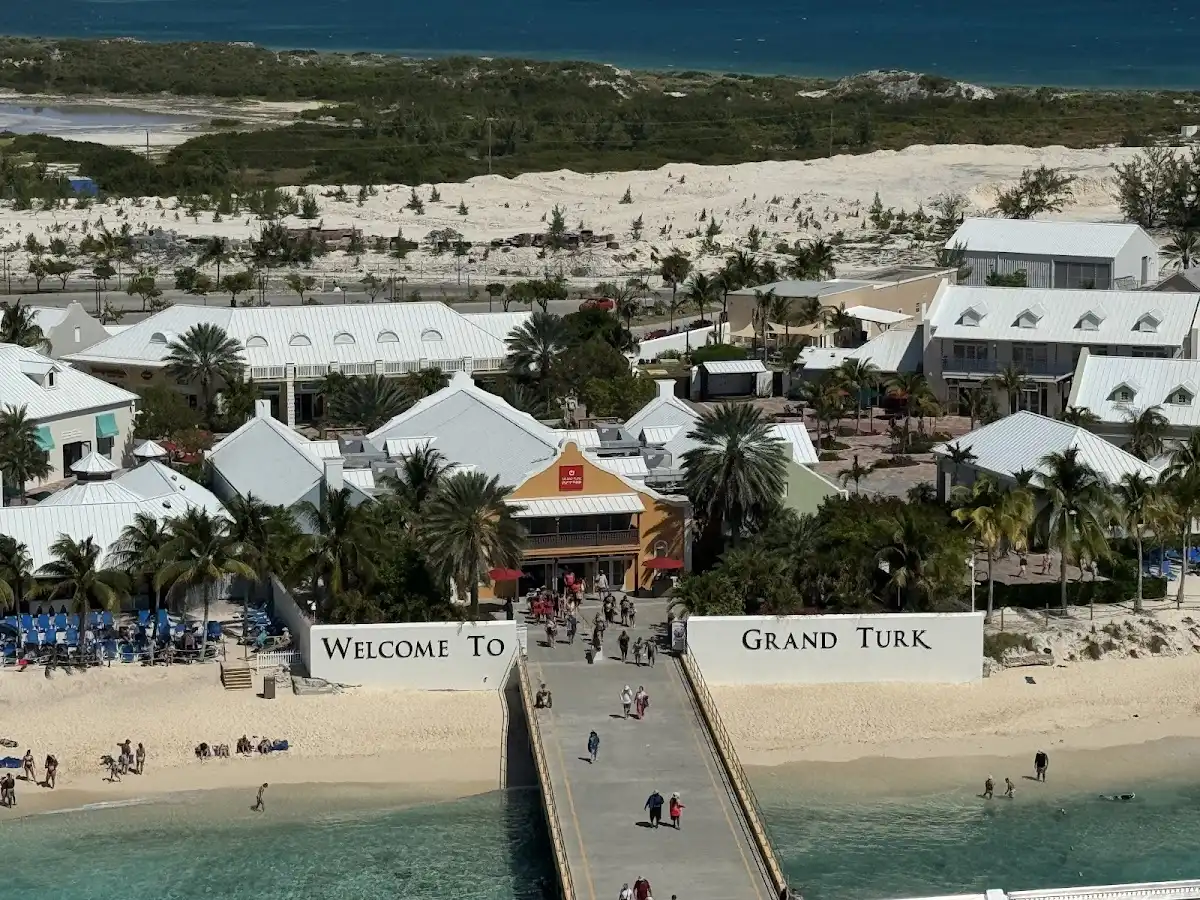
Grand Turk is the easiest island in the Turks and Caicos Islands to cover without a rental car, because the settled strip of Cockburn Town sits within a few miles of nearly every sight. It lies at the eastern edge of the Turks Bank, southeast of Providenciales, and serves as the national capital. Cruise ships dock on the south end, so the island fills on ship days and empties by late afternoon. An experienced traveler sleeps in town and plans the beach and snorkel hours around the ship schedule. Accommodation is limited to small guesthouses and inns, which keeps the pace slow and the crowds thin outside the cruise center. The tradeoff is limited nightlife and few restaurants, so book dinner ahead. Natural beauty is the draw: a wall dive and snorkel site begins a short distance offshore, and humpback whales pass through the channel in winter. Salt-raking history shows in the old stone buildings along Duke and Front Streets, where donkeys still wander near the salt pond.

Discover everything you want to know in the 📖 Turks and Caicos Islands Travel Guide.


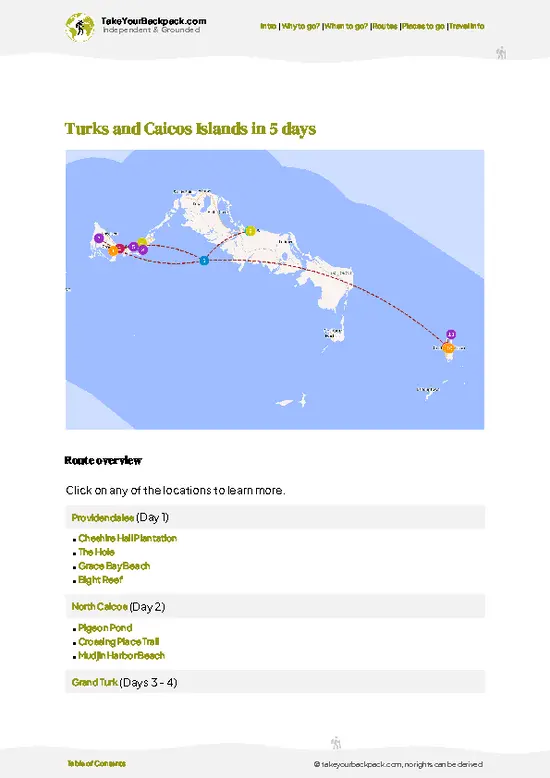
example page 0 from our offline Travel Guide for Turks and Caicos Islands
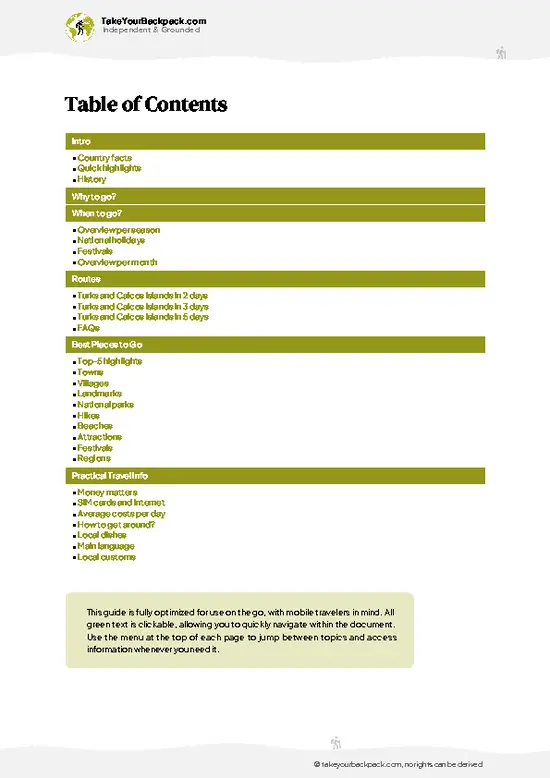
example page 1 from our offline Travel Guide for Turks and Caicos Islands
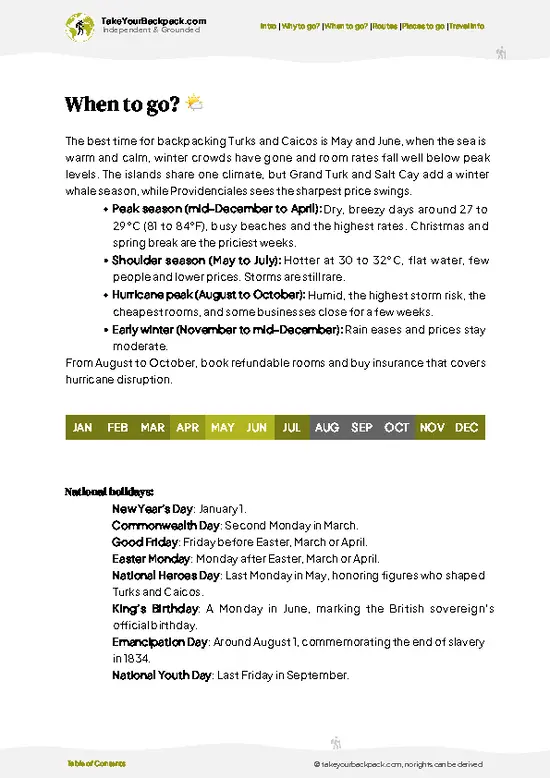
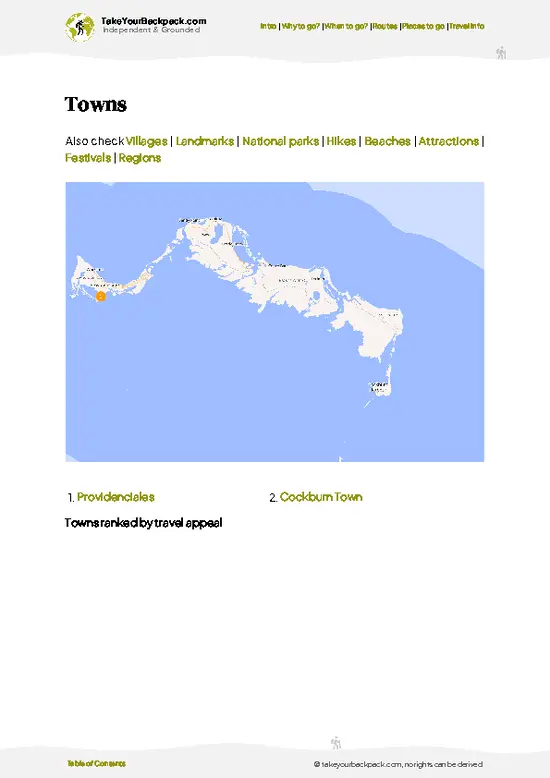
example page 2 from our offline Travel Guide for Turks and Caicos Islands
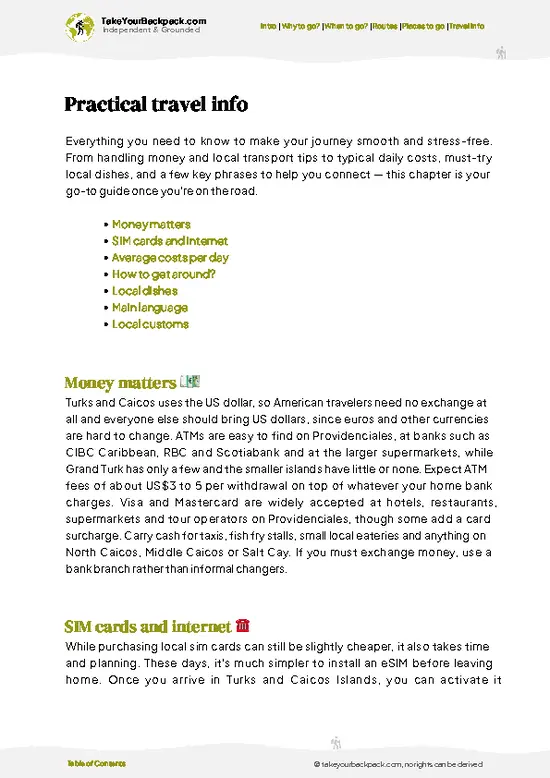
example page 3 from our offline Travel Guide for Turks and Caicos Islands
example page 4 from our offline Travel Guide for Turks and Caicos Islands
example page 5 from our offline Travel Guide for Turks and Caicos Islands
example page 6 from our offline Travel Guide for Turks and Caicos Islands
example page 7 from our offline Travel Guide for Turks and Caicos Islands
Loading the map 🌍
CLICK TO FILTER
towns
villages
landmarks
national parks
hikes
beaches
attractions
festivals
regions
SHOW COUNTRY’S BESTSHOW ALL

✨ Why go?
Ranked #2 region in Turks and Caicos Islands
Reasons people choose to visit here

Grand Turk gives backpackers a compact island where one base covers diving, history and long empty beaches. The reef wall drops from roughly 40 feet of water to depths beyond 7,000 feet, close enough that a Grand Turk Wall dive starts after a short boat ride from town. Because everything sits on one narrow strip, you skip the constant relocation that bigger islands demand, and a rented golf cart or bicycle handles the whole loop in a day. The island also suits slow travel in culture. Cockburn Town keeps its Bermudian-style limestone houses along Duke Street, and the Turks and Caicos National Museum explains how salt shaped the economy. Between January and March, humpback whale season adds boat trips that run from the same harbor. Pair these with snorkeling off the beaches and quiet evenings, … read more 👉
Grand Turk gives backpackers a compact island where one base covers diving, history and long empty beaches. The reef wall drops from roughly 40 feet of water to depths beyond 7,000 feet, close enough that a Grand Turk Wall dive starts after a short boat ride from town. Because everything sits on one narrow strip, you skip the constant relocation that bigger islands demand, and a rented golf cart or bicycle handles the whole loop in a day. The island also suits slow travel in culture. Cockburn Town keeps its Bermudian-style limestone houses along Duke Street, and the Turks and Caicos National Museum explains how salt shaped the economy. Between January and March, humpback whale season adds boat trips that run from the same harbor. Pair these with snorkeling off the beaches and quiet evenings, and a few days feel full without a single long transfer.

💡 HighlightsThe experiences that define the visit

  1. Grand Turk Lighthouse: Built in the 1850s on the northern tip at Northeast Point, this cast-iron tower sits above cliffs and gives sweeping views of the reef line and open Atlantic.
  2. Turks and Caicos National Museum: Housed in a 19th-century limestone building on Front Street, it displays the Molasses Reef shipwreck, among the oldest European wrecks found in the Americas, plus salt-era exhibits.
  3. Grand Turk Wall: The marine park drop-off lies a few hundred feet from shore, and snorkelers can see it with a boat trip while divers go deeper.
  4. Duke and Front Streets: Walk past old stone houses, bougainvillea and colonial-era buildings with balconies, with no ticket needed.
  5. Governor’s Beach: A broad stretch of white sand near the cruise area with calm, shallow water, quieter once ships leave.
  6. Salt Raker
… read more 👉
  1. Grand Turk Lighthouse: Built in the 1850s on the northern tip at Northeast Point, this cast-iron tower sits above cliffs and gives sweeping views of the reef line and open Atlantic.
  2. Turks and Caicos National Museum: Housed in a 19th-century limestone building on Front Street, it displays the Molasses Reef shipwreck, among the oldest European wrecks found in the Americas, plus salt-era exhibits.
  3. Grand Turk Wall: The marine park drop-off lies a few hundred feet from shore, and snorkelers can see it with a boat trip while divers go deeper.
  4. Duke and Front Streets: Walk past old stone houses, bougainvillea and colonial-era buildings with balconies, with no ticket needed.
  5. Governor’s Beach: A broad stretch of white sand near the cruise area with calm, shallow water, quieter once ships leave.
  6. Salt Raker Inn area and salt ponds: The shallow ponds behind town show the old salt industry and attract flamingos and wading birds.
  7. St. Thomas Anglican Church: Grand Turk’s oldest church, dedicated in 1823 on the edge of the Town Salina, has old graves and memorials in its churchyard, and few visitors stop here.
  8. Northeast Point and wild donkeys: The dirt road leads to rugged coast, where wild donkeys and small ponies roam the scrub.
  9. Humpback whale tours: In winter, boats leave from town to see whales in the Turks Island Passage.
You can pair the lighthouse with the donkeys at Northeast Point in one morning, then finish at the museum in town.
Spotted a mistake or missing something? Contact us.

Things to do around Grand Turk

Ratings based on Tripadvisor reviews. When you book through this link, you support our work at no extra cost to you.

🏘️ NeighborhoodsKey areas and districts to know

Grand Turk is a slice of paradise where the Caribbean meets history. Each neighborhood has its own character, making it essential to choose wisely for your backpacking adventure.

Cockburn Town: This is the heart of Grand Turk. The vibe is laid-back, with colonial architecture and vibrant local culture. You’ll find budget-friendly guesthouses and eateries serving fresh conch fritters. Walkability is a breeze; everything is within a short stroll. The nightlife is low-key, perfect for those who prefer a quiet evening by the sea. Ideal for short stays, you can soak in the history at the National Museum or relax on the beach.

Grand Turk Cruise Center: A bustling hub when cruise ships dock. Expect a lively atmosphere with shops and restaurants, but it can feel touristy. Prices here can spike, … read more 👉
Grand Turk is a slice of paradise where the Caribbean meets history. Each neighborhood has its own character, making it essential to choose wisely for your backpacking adventure.

Cockburn Town: This is the heart of Grand Turk. The vibe is laid-back, with colonial architecture and vibrant local culture. You’ll find budget-friendly guesthouses and eateries serving fresh conch fritters. Walkability is a breeze; everything is within a short stroll. The nightlife is low-key, perfect for those who prefer a quiet evening by the sea. Ideal for short stays, you can soak in the history at the National Museum or relax on the beach.

Grand Turk Cruise Center: A bustling hub when cruise ships dock. Expect a lively atmosphere with shops and restaurants, but it can feel touristy. Prices here can spike, especially during peak cruise days. If you’re looking for a quick bite or souvenir, this is your spot. However, it’s less suited for longer stays due to the transient crowd and limited local charm.

Salt Cay: Just a short ferry ride away, this area offers a more secluded experience. The vibe is tranquil, with stunning beaches and a slower pace. Accommodations are limited but affordable. Perfect for longer stays, you can explore the island’s history and enjoy snorkeling without the crowds. Transport is less frequent, so plan ahead.

Each area offers a unique flavor of Grand Turk, allowing you to tailor your experience based on your travel style and preferences.

⌛️ 5 daysSeeing the highlights in 5 days

Start at Cockburn Town early, before cruise ships bring crowds to the waterfront. The island has no meaningful public transit, so a rented golf cart, bike or scooter, or a taxi, sets the pace, and everything fits within a short ride.
Day 1: Cockburn Town: Walk Duke Street and Front Street while the light is soft and the stone houses are quiet. Visit the National Museum in the late morning, since it explains the salt trade and the shipwreck that frame everything else. Settle into a beach afternoon at Governor’s Beach, then eat at a small restaurant in town.
Day 2: Reef and Wall: Spend the day on the water. A morning snorkel or dive trip over the Grand Turk Wall comes first, because winds are lighter and the boat runs are smoother then. Rest in the afternoon, since diving and sun are tiring, and … read more 👉
Start at Cockburn Town early, before cruise ships bring crowds to the waterfront. The island has no meaningful public transit, so a rented golf cart, bike or scooter, or a taxi, sets the pace, and everything fits within a short ride.
Day 1: Cockburn Town: Walk Duke Street and Front Street while the light is soft and the stone houses are quiet. Visit the National Museum in the late morning, since it explains the salt trade and the shipwreck that frame everything else. Settle into a beach afternoon at Governor’s Beach, then eat at a small restaurant in town.
Day 2: Reef and Wall: Spend the day on the water. A morning snorkel or dive trip over the Grand Turk Wall comes first, because winds are lighter and the boat runs are smoother then. Rest in the afternoon, since diving and sun are tiring, and keep the evening easy.
Day 3: Northeast Point: Take your cart north on the rough road past the salt ponds to the lighthouse. Go in the morning for cooler air and the best chance of seeing donkeys on the road. Return by afternoon.
Day 4: Slow Day: Choose a beach, a bike loop or a second dive. This buffer is useful because weather and boat schedules shift.
Day 5: Whales or Wall: In winter, join a whale-watching boat. Otherwise repeat your favorite snorkel spot. The day that justifies the whole trip is Day 2, when the reef wall drops away beneath you.

🌤️ When to go?When to go for the best experience

  • Dry Season (December to April): Days run 27 to 29°C (81 to 84°F) with steady trade winds and little rain. Whale season peaks from late January to March, when humpbacks pass the Columbus Landfall Marine National Park drop-off. Daylight lasts roughly 11 hours. Expect the highest room rates and cruise ships most days.
  • Shoulder Months (May and June): Highs reach 30 to 32°C (86 to 90°F), showers are brief, and the sea is calm and clear for diving. Prices ease and the island feels quieter.
  • Summer (July to September): Hot and humid, 31 to 33°C (88 to 91°F), with daylight stretching to about 13 hours. Some guesthouses and restaurants cut hours or close, and tour operators run fewer trips. Rates are lowest.
  • Hurricane Peak (August to October): Storm risk is highest in September and October. Heavy rain
… read more 👉
  • Dry Season (December to April): Days run 27 to 29°C (81 to 84°F) with steady trade winds and little rain. Whale season peaks from late January to March, when humpbacks pass the Columbus Landfall Marine National Park drop-off. Daylight lasts roughly 11 hours. Expect the highest room rates and cruise ships most days.
  • Shoulder Months (May and June): Highs reach 30 to 32°C (86 to 90°F), showers are brief, and the sea is calm and clear for diving. Prices ease and the island feels quieter.
  • Summer (July to September): Hot and humid, 31 to 33°C (88 to 91°F), with daylight stretching to about 13 hours. Some guesthouses and restaurants cut hours or close, and tour operators run fewer trips. Rates are lowest.
  • Hurricane Peak (August to October): Storm risk is highest in September and October. Heavy rain is common, and flights can be disrupted.
  • Late Autumn (November): Showers fade, temperatures settle near 28°C (82°F), and the island reopens before the winter rush.
Book whale-watching outings a day or two ahead in February, since boats are small and fill early.


source: climatestotravel.comJANJanuary: excellent for travelingFEBFebruary: excellent for travelingMARMarch: excellent for travelingAPRApril: highly recommended for travelingMAYMay: highly recommended for travelingJUNJune: good for travelingJULJuly: fair for travelingAUGAugust: fair for travelingSEPSeptember: fair for travelingOCTOctober: good for travelingNOVNovember: highly recommended for travelingDECDecember: excellent for traveling
turks-and-caicos-islands-region-grand-turk
© Google |

✈️ The backpacker research shortcutTurks and Caicos Islands Travel Guide

An offline-friendly backpacking guide with optimized travel routes, ranked highlights, transport advice, and the best areas to stay.
example page 0 from our offline Travel Guide for Turks and Caicos Islands
example page 1 from our offline Travel Guide for Turks and Caicos Islands
example page 2 from our offline Travel Guide for Turks and Caicos Islands
example page 3 from our offline Travel Guide for Turks and Caicos Islands
example page 4 from our offline Travel Guide for Turks and Caicos Islands
example page 5 from our offline Travel Guide for Turks and Caicos Islands
example page 6 from our offline Travel Guide for Turks and Caicos Islands
example page 7 from our offline Travel Guide for Turks and Caicos Islands
The digital guide (129 pages) contains:
✅ 26 highlights, ranked by travel appeal
✅ Optimized 2, 3 & 5-day travel routes
✅ Cities, national parks, landmarks, beaches
✅ How to get around
✅ Offline-friendly for travel without Wi-Fi
👉 Click to see all 30+ guide features

📅 Plan smarter in minutes, not weeks
✅ Month by month travel advice
✅ Festivals & national holidays
✅ Budget expectations

🗺️ Go to the right places, skip the overrated ones
✅ Honest pros & cons of destinations
✅ Top hikes, parks & viewpoints
✅ Lesser-known places most travelers miss
✅ Clear “worth it vs skip it” guidance

🛏️ Travel smoothly without rookie mistakes
✅ Best areas to stay
✅ Transport systems explained simply
✅ Common scams & safety advice
✅ SIM cards, money & practical tips

🌍 Understand the country, not just visit it
✅ Culture & traditions
✅ Local customs
✅ Festivals worth planning around
✅ Traveler-friendly historical context
✅ Insights that make places more meaningful

📱 Built for real travel conditions
✅ Fully downloadable PDF
✅ Works completely offline
✅ Optimized for phone use
✅ Useful in remote areas & buses
✅ Everything in one place
Stop searching, start planning
Get instant access to your full guide. 30‑day money-back guarantee.
+ Add another guide for just

By proceeding you agree to our terms.
Sent to your inbox immediately after payment • 100% Secure Checkout
Best Backpacking Travel Advisor 2025 tourism awardBest Backpacking
Travel Advisor
2025
What others say about Take Your Backpack Guides:
⭐⭐⭐⭐⭐
Fantastic, amazing amount of information!
⭐⭐⭐⭐⭐
My goodness this is amazing, it's what I've been looking for hats off too you!
⭐⭐⭐⭐⭐
I think this is absolutely BRILLIANT
⭐⭐⭐⭐
Very complete and informative. It's still missing places, but I gotta to commend you
⭐⭐⭐⭐⭐
This is truly amazing, thank you, can't wait to explore it with my kids!
⭐⭐⭐⭐⭐
Awesome resource, thank you!
⭐⭐⭐⭐⭐
This is amazing! Can't wait to explore the ones I haven't seen
⭐⭐⭐⭐
I love this! Well done, great idea.
⭐⭐⭐⭐⭐
Thanks for taking the time to make this gem!
⭐⭐⭐⭐⭐
This might be the best website I've ever seen.
⭐⭐⭐⭐⭐
Congratulations, and thank you so much for your work; it's incredibly valuable.
⭐⭐⭐⭐
In all seriousness I think you did a great job pointing out the important spots
⭐⭐⭐⭐⭐
10/10 very good
⭐⭐⭐⭐⭐
As someone who's only just starting to visit regularly this is awesome, thank you.
⭐⭐⭐⭐
Thank you very much! I'm going to visit my dad, it's going to be very useful!
⭐⭐⭐⭐⭐
This is really cool! We'll be travelling for the first time and this definitely come in handy.
⭐⭐⭐⭐⭐
You are now our minister of culture, congratulations 👨‍💼
⭐⭐⭐⭐⭐
Just wanted to tell you that this is a pearl! Going to follow your recommendations.
⭐⭐⭐⭐⭐
This is so cool. I'll definitely be using the resource for my travels soon.
⭐⭐⭐⭐⭐
This is very impressive! Good work.
⭐⭐⭐⭐⭐
This is an amazing and informative site. Very well done!

🛏️ Where to stay?Best areas to stay in Turks and Caicos Islands

Cockburn Town is the best base on Grand Turk, and the strip along Front Street and the nearby Duke Street is where nearly all budget travelers end up. Guesthouses and small inns line the waterfront, so you can walk to the beach, dive shops, bars and grocery stores without a vehicle. It is a quiet, safe place where people greet you on the street, and solo travelers meet others easily at the beachfront bars and dive operators. Expect basic rooms from about US$90 to 150 a night in high season, with lower rates in summer. Kitchens are common in guesthouses, which helps you save on meals.
The south … read more 👉
Cockburn Town is the best base on Grand Turk, and the strip along Front Street and the nearby Duke Street is where nearly all budget travelers end up. Guesthouses and small inns line the waterfront, so you can walk to the beach, dive shops, bars and grocery stores without a vehicle. It is a quiet, safe place where people greet you on the street, and solo travelers meet others easily at the beachfront bars and dive operators. Expect basic rooms from about US$90 to 150 a night in high season, with lower rates in summer. Kitchens are common in guesthouses, which helps you save on meals.
The south end of Cockburn Town, toward the airport, is slightly quieter and still within a 10 to 15 minute walk of the center. It suits divers who want an early start, since several dive operators work from that part of the coast. Rooms there are often a little cheaper and the beach is calm.
The northern stretch of the island, around the lighthouse and the salt ponds, has a few rentals but no real traveler scene. Staying there only makes sense if you have a cart or scooter and want peace. Most backpackers find the center far easier. Cruise ships dock on many days, so the town is livelier by day and calm by evening.

🚌 Getting aroundTransportation options and practical tips

Grand Turk has no bus or train station, so the first move is from the airport or cruise terminal into Cockburn Town, and it is short. The airport sits about 2 km (1.2 miles) south of the center, and a taxi costs roughly US$10 to 15, while the cruise port sits about 5 km (3 miles) south of town. The island is about 11 km (7 miles) long and flat, which suits low-key travel. Public transport does not exist, so independent travelers rely on rentals, taxis and their own feet. Everything works at an unhurried pace and reliability is good if you plan around cruise-ship days.
  • Golf cart rental: The most common way to see the island, at about US$60 to 90 a day. Roads are narrow and carts are slow, which is why they suit the island so well. Reserve early in winter, since supply is limited and carts run
… read more 👉
Grand Turk has no bus or train station, so the first move is from the airport or cruise terminal into Cockburn Town, and it is short. The airport sits about 2 km (1.2 miles) south of the center, and a taxi costs roughly US$10 to 15, while the cruise port sits about 5 km (3 miles) south of town. The island is about 11 km (7 miles) long and flat, which suits low-key travel. Public transport does not exist, so independent travelers rely on rentals, taxis and their own feet. Everything works at an unhurried pace and reliability is good if you plan around cruise-ship days.
  • Golf cart rental: The most common way to see the island, at about US$60 to 90 a day. Roads are narrow and carts are slow, which is why they suit the island so well. Reserve early in winter, since supply is limited and carts run out when ships are in port.
  • Scooter or bicycle: Scooters run about US$40 to 60 a day, bicycles US$15 to 25. They are cheaper than carts and fine for solo travelers, though the wind on the eastern shore and midday heat make bikes slow work. Go early.
  • Taxi and island tours: Taxis are unmetered vans with fixed rates, usually US$10 to 25 for most trips, and drivers often offer a two-hour island tour for around US$25 to 40 a person. Agree on the fare before you get in. Sharing with other travelers cuts the cost.
  • Walking: Cockburn Town stretches along Front Street, and the beaches, guesthouses and restaurants of the west coast sit within about 2 km (1.2 miles) of each other. It is the best way to see the town, but shade is scarce, so carry water.
  • Ferry and flights to other islands: The ferry to Salt Cay runs on a limited schedule and weather can cancel it. Small planes to Providenciales take about 30 minutes and cost around US$100 to 180 one way. Book ahead, since seats are few.
Rent your cart or scooter for a full day rather than by the hour, and start early. You will cover the lighthouse, the salt ponds and the east coast before the heat peaks, and you avoid the midday cruise crowds in town.

👛 Costs (as of 22 October 2026)What things cost and how to budget

Backpacking in Grand Turk, Turks and Caicos Islands, means balancing the island’s laid-back charm with the reality of its higher Caribbean prices. Here’s what you can expect to spend daily as an independent traveler.
  • Dorm Accommodation: Options are limited and tend to lean toward guesthouses or small inns rather than large hostels. Expect to pay around $30 to $50 USD per night for a dorm bed or budget room. The vibe is simple but clean, often with a fan rather than air conditioning, which keeps costs down.
  • Meals: Local eateries and food trucks offer the best value. A typical meal from a casual spot—think fresh seafood or jerk chicken with rice and peas—runs about $8 to $15 USD. If you shop at local markets and prepare your own food, you can trim costs closer to $5 to $8 per meal, but dining
… read more 👉
Backpacking in Grand Turk, Turks and Caicos Islands, means balancing the island’s laid-back charm with the reality of its higher Caribbean prices. Here’s what you can expect to spend daily as an independent traveler.
  • Dorm Accommodation: Options are limited and tend to lean toward guesthouses or small inns rather than large hostels. Expect to pay around $30 to $50 USD per night for a dorm bed or budget room. The vibe is simple but clean, often with a fan rather than air conditioning, which keeps costs down.
  • Meals: Local eateries and food trucks offer the best value. A typical meal from a casual spot—think fresh seafood or jerk chicken with rice and peas—runs about $8 to $15 USD. If you shop at local markets and prepare your own food, you can trim costs closer to $5 to $8 per meal, but dining out is part of the island experience.
  • Local Transport: Grand Turk is small, so walking is often your best bet. For longer distances, shared taxis or minibuses cost around $2 to $5 USD per ride. Renting a bike is another popular option, usually about $15 to $25 USD per day, giving you freedom without the expense of a car rental.
  • Basic Activities/Entry Fees: Many natural attractions like beaches and snorkeling spots are free or have minimal fees. Organized tours or entry to the National Museum might cost $10 to $20 USD. Renting snorkeling gear runs about $15 to $25 USD per day, which is worth it to explore the vibrant reefs.
  • Miscellaneous Expenses: Think bottled water, occasional coffee, or a cold drink—budget around $5 to $10 USD daily. Internet access can be patchy, so if you rely on data, consider a local SIM card for about $20 USD with a decent data package.

Grand Turk’s daily costs for a backpacker typically fall between $60 and $110 USD. It’s not the cheapest Caribbean stop, but with a bit of planning—walking, eating local, and choosing simple stays—you can enjoy the island’s clear waters and relaxed pace without breaking the bank.


source: visittci.com
⚠️ Prices can change and everyone travels differently, so take this as a rough guide. Hope it helps you plan your adventure!

🚌 Day tripsEasy escapes and nearby places

Grand Turk is a backpacker’s dream base, offering easy access to stunning day trips that reveal the heart of the Turks and Caicos Islands. With its laid-back vibe and rich history, you’ll find that each adventure is a blend of beauty and authenticity.

Snorkeling at Gibbs Cay
Just a short boat ride from Grand Turk, Gibbs Cay is a slice of paradise where you can snorkel with stingrays. The water is a crystal-clear blue, and the soft sand feels like a warm hug underfoot. Expect to spend about half a day here, with trips typically costing around $50, including gear rental. The best time to go is early morning when the rays are most active and the sun isn’t too harsh. A common mistake? Underestimating the sun—bring plenty of sunscreen and a hat.


Exploring Cockburn Town
A stroll through Cockburn … read more 👉
Grand Turk is a backpacker’s dream base, offering easy access to stunning day trips that reveal the heart of the Turks and Caicos Islands. With its laid-back vibe and rich history, you’ll find that each adventure is a blend of beauty and authenticity.

Snorkeling at Gibbs Cay
Just a short boat ride from Grand Turk, Gibbs Cay is a slice of paradise where you can snorkel with stingrays. The water is a crystal-clear blue, and the soft sand feels like a warm hug underfoot. Expect to spend about half a day here, with trips typically costing around $50, including gear rental. The best time to go is early morning when the rays are most active and the sun isn’t too harsh. A common mistake? Underestimating the sun—bring plenty of sunscreen and a hat.


Exploring Cockburn Town
A stroll through Cockburn Town is like stepping back in time. The colonial architecture whispers stories of the past, and the salty breeze carries the scent of the ocean. You can easily spend a few hours wandering the streets, visiting the National Museum, and grabbing a local conch fritter. This trip is free if you’re just exploring, but budget around $10 for snacks. Anytime is good, but the cooler months from November to April are ideal. Many first-timers miss the local art galleries tucked away in side streets—don’t skip them!
👉 Explore Cockburn Town

Beach Day at Pillory Beach
Pillory Beach is a local favorite, known for its soft white sand and gentle waves. It’s a perfect spot to unwind after a few days of adventure. Pack a picnic and spend the day soaking up the sun. It’s only a 15-minute walk from the main town, so you can easily pop back for supplies. This trip is practically free, aside from your food and drink. The best time to visit is during the week when it’s less crowded. A rookie mistake is bringing too much gear—keep it simple and enjoy the moment.


Kayaking at Salt Cay
For a more active day, hop on a ferry to Salt Cay. The kayaking here is phenomenal, with mangroves that are teeming with wildlife. Plan for a full day, as the ferry ride takes about 30 minutes each way. Expect to spend around $70 for the ferry and kayak rental. The best months are from May to October when the weather is warm and the waters are calm. Many newcomers forget to check the ferry schedule—make sure to plan your return trip!
👉 Explore Salt Cay

🍲 FoodWhat to Eat & Drink

Grand Turk eats from the sea. Conch is the national dish, served as crispy fritters, cracked (pounded and fried), or raw in a lime-heavy salad with pepper and onion. Spiny lobster is in season roughly from August to March, and fresh grouper or snapper comes grilled or fried with peas and rice and fried plantain. Heat comes from Scotch bonnet sauce, fruity and sharp. Expect plates at about US$15 to 30 for fish dishes.
To drink, try rum punch on a beachfront deck, a cold Turks Head beer (the local brew), or sorrel and fresh juices in the cooler months. Water is bottled or filtered, so carry a refillable bottle.
Most backpackers eat at small beach bars, casual restaurants along Front Street and local stands that sell patties, fried fish or johnnycakes for around US$5 to 12. Island weekends bring … read more 👉
Grand Turk eats from the sea. Conch is the national dish, served as crispy fritters, cracked (pounded and fried), or raw in a lime-heavy salad with pepper and onion. Spiny lobster is in season roughly from August to March, and fresh grouper or snapper comes grilled or fried with peas and rice and fried plantain. Heat comes from Scotch bonnet sauce, fruity and sharp. Expect plates at about US$15 to 30 for fish dishes.
To drink, try rum punch on a beachfront deck, a cold Turks Head beer (the local brew), or sorrel and fresh juices in the cooler months. Water is bottled or filtered, so carry a refillable bottle.
Most backpackers eat at small beach bars, casual restaurants along Front Street and local stands that sell patties, fried fish or johnnycakes for around US$5 to 12. Island weekends bring the Fish Fry energy: grills, music and neighbors catching up. Supermarkets stock basics for self-catering, though imported goods cost more because everything arrives by boat.
Service is unhurried, so allow time. A greeting before ordering is polite. Tipping of 15 to 18 percent is normal, and some restaurants add a service charge to the bill. Check before adding more. Smaller places often close on Sundays or in the quiet summer months.

🛡️ SafetyStaying Safe: What Travelers Should Know

Grand Turk is generally safe, but a little awareness goes a long way. The main streets are well-trodden, but keep an eye on your belongings in crowded areas, especially near the cruise ship terminal. It’s a hotspot for tourists, and while the locals are friendly, petty theft can happen.

If you’re solo, enjoy the vibrant atmosphere but be mindful after dark. Stick to well-lit areas and avoid wandering too far from the main strip. The beach at night can be enchanting, but it’s best to go with a buddy or join a group.

Scams are rare, but be cautious of overly persistent vendors. A polite “no, thank you” usually suffices. Also, watch for inflated prices at some shops—always ask for the total before you buy.

Overall, carry yourself with confidence, engage with locals, and soak in the laid-back … read more 👉
Grand Turk is generally safe, but a little awareness goes a long way. The main streets are well-trodden, but keep an eye on your belongings in crowded areas, especially near the cruise ship terminal. It’s a hotspot for tourists, and while the locals are friendly, petty theft can happen.

If you’re solo, enjoy the vibrant atmosphere but be mindful after dark. Stick to well-lit areas and avoid wandering too far from the main strip. The beach at night can be enchanting, but it’s best to go with a buddy or join a group.

Scams are rare, but be cautious of overly persistent vendors. A polite “no, thank you” usually suffices. Also, watch for inflated prices at some shops—always ask for the total before you buy.

Overall, carry yourself with confidence, engage with locals, and soak in the laid-back vibe. The more you blend in, the smoother your experience will be.

FAQTraveler FAQ

Two to three days covers Grand Turk comfortably. One day handles Cockburn Town, the lighthouse and the salt ponds by golf cart, and another suits a dive or snorkel trip along the wall that drops off just offshore. Add a third day for whale watching (late January to March) or a day trip to Salt Cay.
A golf cart, scooter or bicycle is the usual way around Grand Turk, since the island is about 11 km (7 miles) long and flat. Carts cost about US$60 to 90 a day and scooters about US$40 to 60. Taxis cost roughly US$10 to 25 a ride, and the cruise port and airport both sit within a few kilometers of Cockburn Town.
Grand Turk is known for diving along a coral wall that drops over 2,000 meters (about 6,500 feet) just offshore, plus humpback whales passing between late January and March. Cockburn Town is a quiet colonial-era settlement with old limestone buildings and Front Street's beach bars. Visitors also come for the Grand Turk Lighthouse, the salt ponds and wild donkeys, as well as the cruise-ship port.
⚠️ Things can change over time, so always validate details locally before you go.

Other Turks and Caicos Islander regions near Grand Turk

Explore more nearby:

  • Salt Cay—Salt pans, coral-stone Balfour Town, humpback season, single loop road| 16 km away
  • North Caicos—Empty eastern beaches, mangrove creeks, Sandy Point docks, birding wetlands| 96 km away

💡 Not sure where to go next?
Create a personalized itinerary for Turks and Caicos Islands including Grand Turk and the places that fit your trip.

Generate my itinerary

👉 Discover all regions

Or checkout all Turks and Caicos Islands has to offer (think cities, towns, villages, national parks, hikes, beaches, festivals)
Country photo of Turks and Caicos Islands

We 💚 feedbackKey takeaways before you go

Grand Turk suits divers, history readers and people who like a quiet island more than a resort scene. I would book a room in town, rent a golf cart for a day and skip the cruise center. Bring cash for small shops and eat dinner early, since kitchens close sooner than you expect.

✍️ Help improve this page!
The information on this page is based on in-depth research, insights shared by experienced travelers, and feedback from the local travel community in Turks and Caicos Islands. While every effort is made to keep the information accurate and current, conditions can change — so if you spot anything incorrect or outdated, please get in touch.


🙋‍♂️ Give feedback

👋 Meet the founderWho’s Behind Take Your Backpack?

Johan, backpacker and founder of TakeYourBackpackHi, I’m Johan (Netherlands 🇳🇱), the creator of TakeYourBackpack. Over the past 3 decades, I’ve backpacked through 90+ countries across six continents, gaining extensive experience with independent travel, long-term trips, and overland routes.

This site is built on a combination of firsthand travel experience and carefully curated insights from other backpackers. Many guides are based on places I’ve personally visited, while others bring together tips, observations, and practical advice shared by trusted travelers I’ve met along the way.

The goal is to provide realistic, experience-driven guidance — not generic itineraries — so you can explore destinations with better context, clearer expectations, and more confidence.