v2.webp)
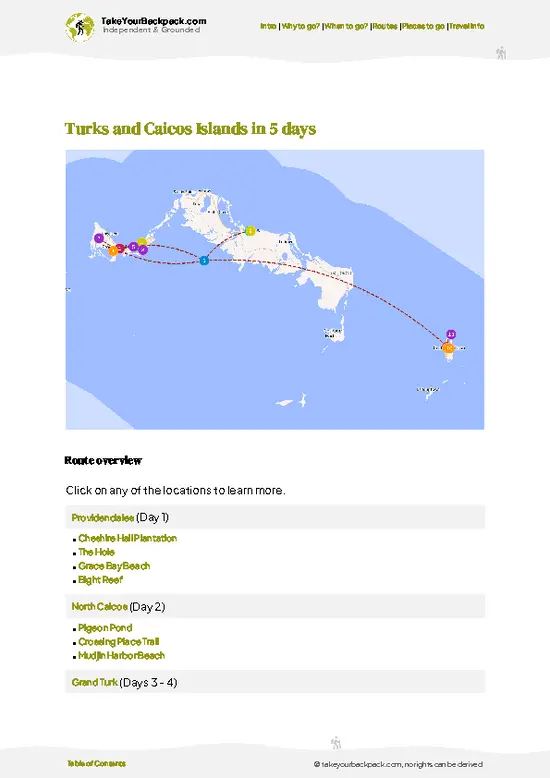
- Humpback whale encounters: From about January to April, humpbacks migrate through the Turks Bank channel, and small boats from the island take swimmers out to meet them.
- The White House: The restored 19th-century home of a salt merchant, with a broad veranda facing the sea and a window into the island’s wealthy salt era.
- Salt ponds and salt sheds: Rectangular shallow ponds, sluice gates and wooden sheds still line the settlement, and flamingos and waders sometimes feed in them.
- Balfour Town: The main settlement, with quiet lanes, old stone walls and Bermudian-style houses, many half-restored.
- North Beach: A calm, pale-sand beach with clear shallows that is good for snorkeling and often has nobody else on it.
- Diving the Salt Cay wall: Reefs drop off close to shore, and operators on the island run
- Humpback whale encounters: From about January to April, humpbacks migrate through the Turks Bank channel, and small boats from the island take swimmers out to meet them.
- The White House: The restored 19th-century home of a salt merchant, with a broad veranda facing the sea and a window into the island’s wealthy salt era.
- Salt ponds and salt sheds: Rectangular shallow ponds, sluice gates and wooden sheds still line the settlement, and flamingos and waders sometimes feed in them.
- Balfour Town: The main settlement, with quiet lanes, old stone walls and Bermudian-style houses, many half-restored.
- North Beach: A calm, pale-sand beach with clear shallows that is good for snorkeling and often has nobody else on it.
- Diving the Salt Cay wall: Reefs drop off close to shore, and operators on the island run dives to the wall, with sponges, turtles and eagle rays.
- Taylor Hill: A deserted hill with the weathered ruins of the old whaling lookout and station, above the windy coast.
- Salt Cay’s wild donkeys: Descendants of the animals once used to haul salt, they wander the roads and scrub, and you will meet them on any golf cart loop.
- Windmill ruins and old cemeteries: Weathered stone ruins and graves tucked into the brush tell the story of those who worked the ponds, and few visitors walk out to them.
Spotted a mistake or missing something? Contact us.

 Best Backpacking
.jpg) Hi, I’m Johan (Netherlands 🇳🇱), the creator of TakeYourBackpack. Over the past 3 decades, I’ve backpacked through 90+ countries across six continents, gaining extensive experience with independent travel, long-term trips, and overland routes.
Hi, I’m Johan (Netherlands 🇳🇱), the creator of TakeYourBackpack. Over the past 3 decades, I’ve backpacked through 90+ countries across six continents, gaining extensive experience with independent travel, long-term trips, and overland routes.