×

Tuvalu🇹🇻 | beachesFunafuti LagoonAirstrip sunsets, calm town shallows, high-tide swims, lagoon road | things to do and best time to go

Explore Tuvalu National Library and ArchivesExplore Motulalo Island

Backpacking in Funafuti Lagoon
🏆 Top pickbeach ranked #1
By Johan Kruseman 🇳🇱 | Updated October 15, 2026

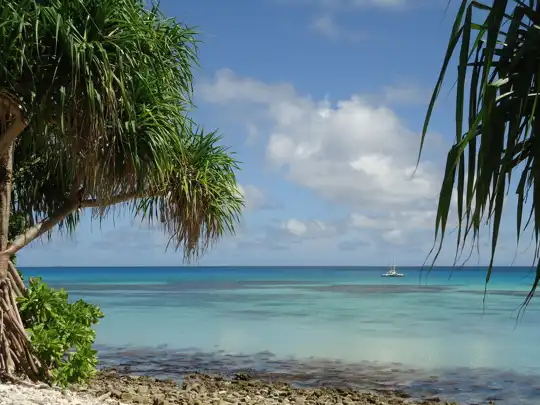
On days when no plane is due, the airstrip beside the lagoon shore becomes the town’s football and volleyball ground, and the beach crowd drifts over with it. Funafuti Lagoon beach sits on the lagoon side of Fongafale island, in Tuvalu’s capital, so the water is calm and the whole scene is walkable. Be realistic. This is not a postcard strip of powder sand. Parts of the shoreline near the harbor and houses collect plastic and the odd bit of debris, and shade is patchy. Crowds are never an issue, though, and the lagoon is warm, shallow and easy for weak swimmers. There is no surf here, and diving and snorkeling are better out in the conservation area by boat. Cheap noodles and simple guesthouse rooms are a short walk away. Swim around high tide, when the water is clearer and deeper. Start with a slow ride along the lagoon road, swim before lunch, then claim a seat for sunset.

Discover everything you want to know in the 📖 Tuvalu Travel Guide.


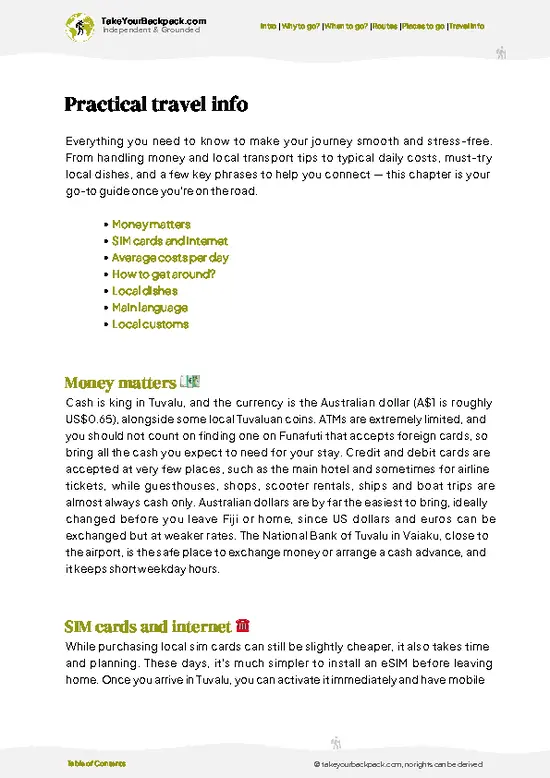
example page 0 from our offline Travel Guide for Tuvalu
example page 1 from our offline Travel Guide for Tuvalu
example page 2 from our offline Travel Guide for Tuvalu
example page 3 from our offline Travel Guide for Tuvalu
example page 4 from our offline Travel Guide for Tuvalu
example page 5 from our offline Travel Guide for Tuvalu
example page 6 from our offline Travel Guide for Tuvalu
example page 7 from our offline Travel Guide for Tuvalu
Loading the map 🌍
CLICK TO FILTER
towns
villages
beaches
attractions
festivals
regions
SHOW COUNTRY’S BESTSHOW ALL

✨ Why go?
Ranked #1 beach in Tuvalu
What makes this beach worth visiting

Backpackers stop here because Funafuti is the only way in. Almost every traveler arriving in Tuvalu lands on the narrow island, and the lagoon side is where daily life happens. You do not need a tour to join in. Kids jump off jetties, women rinse laundry, and men haul in nets, and you can simply walk up and be part of it.

The second reason is the water itself. The lagoon covers a vast area inside the atoll, which is why the shoreline stays glassy and swimmable while the ocean side is rough reef. It also works as your launch point. Boats to the protected sandbars and islets of the Funafuti Conservation Area leave from this side, so a beach morning easily turns into a snorkeling day.

Finally, the pace. Nothing is scheduled and nothing is sold hard. Evenings are social in a low-key way, with … read more 👉
Backpackers stop here because Funafuti is the only way in. Almost every traveler arriving in Tuvalu lands on the narrow island, and the lagoon side is where daily life happens. You do not need a tour to join in. Kids jump off jetties, women rinse laundry, and men haul in nets, and you can simply walk up and be part of it.

The second reason is the water itself. The lagoon covers a vast area inside the atoll, which is why the shoreline stays glassy and swimmable while the ocean side is rough reef. It also works as your launch point. Boats to the protected sandbars and islets of the Funafuti Conservation Area leave from this side, so a beach morning easily turns into a snorkeling day.

Finally, the pace. Nothing is scheduled and nothing is sold hard. Evenings are social in a low-key way, with locals playing sport and chatting by the shore, and visitors get waved over more often than ignored. If your route through the Pacific is long and rushed, a few lazy days here reset you without costing much effort or planning.

💡 HighlightsWhat this place is best known for

  1. Funafuti Conservation Area: The protected zone on the western side of the atoll is the main reason to get on a boat. Its sandbars and islets, including Tepuka Vilivili, have clear water, coral heads and seabirds. Snorkeling here is far better than off the town shore. Arrange a boat through your guesthouse or a local operator, and bring your own mask and reef-safe sunscreen.
  2. Lagoon swimming at high tide: The calm water beside Fongafale is the easiest swim in the country. At high tide it is deeper and cleaner, and the sand bottom is gentle. At low tide the shallows turn warm and murky, so check the tide before you go.
  3. Sunset on the lagoon shore: Because the island is so narrow, the sun drops straight into the lagoon, with light on the water and silhouetted boats. Find a spot along the shoreline
… read more 👉
  1. Funafuti Conservation Area: The protected zone on the western side of the atoll is the main reason to get on a boat. Its sandbars and islets, including Tepuka Vilivili, have clear water, coral heads and seabirds. Snorkeling here is far better than off the town shore. Arrange a boat through your guesthouse or a local operator, and bring your own mask and reef-safe sunscreen.
  2. Lagoon swimming at high tide: The calm water beside Fongafale is the easiest swim in the country. At high tide it is deeper and cleaner, and the sand bottom is gentle. At low tide the shallows turn warm and murky, so check the tide before you go.
  3. Sunset on the lagoon shore: Because the island is so narrow, the sun drops straight into the lagoon, with light on the water and silhouetted boats. Find a spot along the shoreline away from the harbor, where you will have fewer cables and moored boats in the frame.
  4. The airstrip in the evening: When no flight is due, the runway becomes the island’s public square. Locals play football, volleyball and touch games, kids ride bikes, and families sit on the edge. Walk over from the beach, watch for a while, and you will probably be invited to join a game. Keep clear whenever a flight is expected.
  5. Cycling the lagoon road: A slow ride or walk along the lagoon side shows you Fongafale properly. You pass pulaka pits, churches, small shops, fishing boats on the sand and the narrowest parts of the island, where you can see ocean and lagoon almost at once. Go early, before the heat builds.
Pair the boat trip to the conservation area in the morning with the airstrip evening, since you return in time to wash off the salt and join the game.
Spotted a mistake or missing something? Contact us.

🌤️ When to go?When to go for the best experience

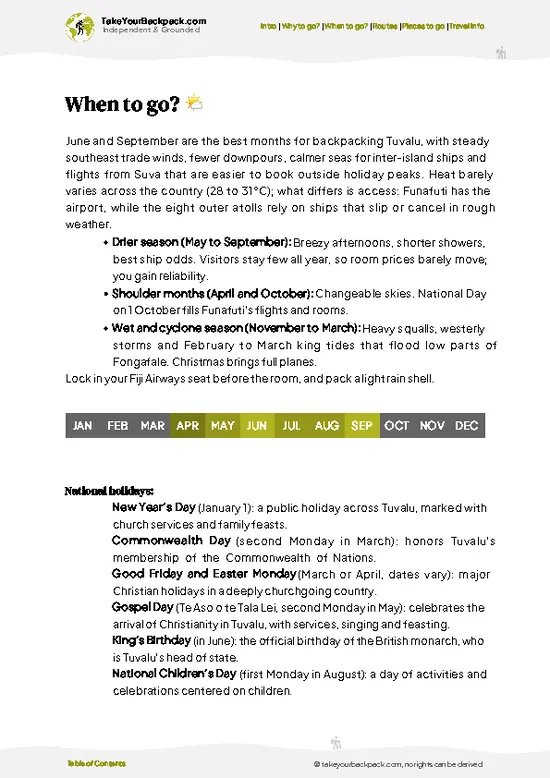
  • Dry Season (May to October): Trade winds keep the air at roughly 28 to 31°C (82 to 88°F), with less rain and calmer afternoons for lagoon swimming. This is the easiest window for boat trips to the outer islets. Days run about 12 hours from around 6 a.m. to 6 p.m.
  • Wet Season (November to April): Expect 28 to 32°C (82 to 90°F), thick humidity, frequent squalls, and often 300 mm or more of rain in a wet month. Cyclone risk is highest from roughly November to March, and flights can be delayed or canceled.
  • King Tides (February and other peak months): The highest tides flood low roads and yards around the airstrip side of the island. The beach narrows to almost nothing at the top of the tide. It is dramatic, and worth seeing for the climate story.
  • Crowds and Prices: Visitor numbers are tiny all year.
… read more 👉
  • Dry Season (May to October): Trade winds keep the air at roughly 28 to 31°C (82 to 88°F), with less rain and calmer afternoons for lagoon swimming. This is the easiest window for boat trips to the outer islets. Days run about 12 hours from around 6 a.m. to 6 p.m.
  • Wet Season (November to April): Expect 28 to 32°C (82 to 90°F), thick humidity, frequent squalls, and often 300 mm or more of rain in a wet month. Cyclone risk is highest from roughly November to March, and flights can be delayed or canceled.
  • King Tides (February and other peak months): The highest tides flood low roads and yards around the airstrip side of the island. The beach narrows to almost nothing at the top of the tide. It is dramatic, and worth seeing for the climate story.
  • Crowds and Prices: Visitor numbers are tiny all year. Flights and guesthouse rooms are limited, so prices barely move, but seats sell out around Christmas and government events.
Book flights early and aim for June to September, when the weather is steadiest.


source: climatestotravel.comJANJanuary: fair for travelingFEBFebruary: fair for travelingMARMarch: fair for travelingAPRApril: fair for travelingMAYMay: highly recommended for travelingJUNJune: excellent for travelingJULJuly: excellent for travelingAUGAugust: excellent for travelingSEPSeptember: excellent for travelingOCTOctober: highly recommended for travelingNOVNovember: fair for travelingDECDecember: fair for traveling
when-to-go

✈️ The backpacker research shortcutTuvalu Travel Guide

An offline-friendly backpacking guide with optimized travel routes, ranked highlights, transport advice, and the best areas to stay.
example page 0 from our offline Travel Guide for Tuvalu
example page 1 from our offline Travel Guide for Tuvalu
example page 2 from our offline Travel Guide for Tuvalu
example page 3 from our offline Travel Guide for Tuvalu
example page 4 from our offline Travel Guide for Tuvalu
example page 5 from our offline Travel Guide for Tuvalu
example page 6 from our offline Travel Guide for Tuvalu
example page 7 from our offline Travel Guide for Tuvalu
The digital guide (97 pages) contains:
✅ 20 highlights, ranked by travel appeal
✅ Optimized 2, 3 & 5-day travel routes
✅ Cities, national parks, landmarks, beaches
✅ How to get around
✅ Offline-friendly for travel without Wi-Fi
👉 Click to see all 30+ guide features

📅 Plan smarter in minutes, not weeks
✅ Month by month travel advice
✅ Festivals & national holidays
✅ Budget expectations

🗺️ Go to the right places, skip the overrated ones
✅ Honest pros & cons of destinations
✅ Top hikes, parks & viewpoints
✅ Lesser-known places most travelers miss
✅ Clear “worth it vs skip it” guidance

🛏️ Travel smoothly without rookie mistakes
✅ Best areas to stay
✅ Transport systems explained simply
✅ Common scams & safety advice
✅ SIM cards, money & practical tips

🌍 Understand the country, not just visit it
✅ Culture & traditions
✅ 52 Essential phrases & customs
✅ Festivals worth planning around
✅ Traveler-friendly historical context
✅ Insights that make places more meaningful

📱 Built for real travel conditions
✅ Fully downloadable PDF
✅ Works completely offline
✅ Optimized for phone use
✅ Useful in remote areas & buses
✅ Everything in one place
Stop searching, start planning
Get instant access to your full guide. 30‑day money-back guarantee.
+ Add another guide for just

By proceeding you agree to our terms.
Sent to your inbox immediately after payment • 100% Secure Checkout
Best Backpacking Travel Advisor 2025 tourism awardBest Backpacking
Travel Advisor
2025
What others say about Take Your Backpack Guides:
⭐⭐⭐⭐⭐
Fantastic, amazing amount of information!
⭐⭐⭐⭐⭐
My goodness this is amazing, it's what I've been looking for hats off too you!
⭐⭐⭐⭐⭐
I think this is absolutely BRILLIANT
⭐⭐⭐⭐
Very complete and informative. It's still missing places, but I gotta to commend you
⭐⭐⭐⭐⭐
This is truly amazing, thank you, can't wait to explore it with my kids!
⭐⭐⭐⭐⭐
Awesome resource, thank you!
⭐⭐⭐⭐⭐
This is amazing! Can't wait to explore the ones I haven't seen
⭐⭐⭐⭐
I love this! Well done, great idea.
⭐⭐⭐⭐⭐
Thanks for taking the time to make this gem!
⭐⭐⭐⭐⭐
This might be the best website I've ever seen.
⭐⭐⭐⭐⭐
Congratulations, and thank you so much for your work; it's incredibly valuable.
⭐⭐⭐⭐
In all seriousness I think you did a great job pointing out the important spots
⭐⭐⭐⭐⭐
10/10 very good
⭐⭐⭐⭐⭐
As someone who's only just starting to visit regularly this is awesome, thank you.
⭐⭐⭐⭐
Thank you very much! I'm going to visit my dad, it's going to be very useful!
⭐⭐⭐⭐⭐
This is really cool! We'll be travelling for the first time and this definitely come in handy.
⭐⭐⭐⭐⭐
You are now our minister of culture, congratulations 👨‍💼
⭐⭐⭐⭐⭐
Just wanted to tell you that this is a pearl! Going to follow your recommendations.
⭐⭐⭐⭐⭐
This is so cool. I'll definitely be using the resource for my travels soon.
⭐⭐⭐⭐⭐
This is very impressive! Good work.
⭐⭐⭐⭐⭐
This is an amazing and informative site. Very well done!

🛏️ Where to stay?Best areas and accommodation options

The best area to stay is the central strip of Funafuti atoll between the airport and the main government and harbor area, because everything is within a short walk or scooter ride of the lagoon. Funafuti has only a handful of guesthouses and small lodges, and nearly all sit along the single main road. Expect roughly A$60 to 130 (US$40 to 85) a night for a basic room, usually with air conditioning and often a shared kitchen or breakfast on request. There are no hostels or dorms, so the social side comes from the owners, other guests, and the community.

The airport end is handy if your flight is … read more 👉
The best area to stay is the central strip of Funafuti atoll between the airport and the main government and harbor area, because everything is within a short walk or scooter ride of the lagoon. Funafuti has only a handful of guesthouses and small lodges, and nearly all sit along the single main road. Expect roughly A$60 to 130 (US$40 to 85) a night for a basic room, usually with air conditioning and often a shared kitchen or breakfast on request. There are no hostels or dorms, so the social side comes from the owners, other guests, and the community.

The airport end is handy if your flight is early, and you can reach the lagoon shore in minutes. The middle of the island, near the main shops, the post office, and the Vaiaku area, puts you closest to small food stores, cafés, and the evening volleyball and kilikiti games. Lagoon-facing rooms catch the breeze and sunsets, which helps a lot in the humid months. The north end is quieter and more residential, good for sleep but with fewer food options after dark.

Book ahead, since rooms are few, and ask your host about renting a scooter or arranging a boat trip across the lagoon.

🛡️ SafetyStaying Safe: What Travelers Should Know

Funafuti Lagoon beach is generally calm and safe, with the main considerations being sun, tides, and local etiquette. The lagoon side is sheltered, so there are no real surf or rip currents, and the water is usually shallow and warm enough to float around in for an hour. Currents can pick up near channels and during tide changes, so stay away from passes. Coral and sharp rubble sit close to shore in places, so reef shoes make wading much easier, and you should avoid stepping on coral. Reef sharks are around the outer reef, but they rarely bother people in the lagoon.

Sun exposure is intense, particularly from late morning to mid-afternoon, so cover up. Locals swim mainly in the early morning and evening, and Sundays are quiet, so keep swimwear modest and avoid swimming during church hours. … read more 👉
Funafuti Lagoon beach is generally calm and safe, with the main considerations being sun, tides, and local etiquette. The lagoon side is sheltered, so there are no real surf or rip currents, and the water is usually shallow and warm enough to float around in for an hour. Currents can pick up near channels and during tide changes, so stay away from passes. Coral and sharp rubble sit close to shore in places, so reef shoes make wading much easier, and you should avoid stepping on coral. Reef sharks are around the outer reef, but they rarely bother people in the lagoon.

Sun exposure is intense, particularly from late morning to mid-afternoon, so cover up. Locals swim mainly in the early morning and evening, and Sundays are quiet, so keep swimwear modest and avoid swimming during church hours. Theft is uncommon, though keep valuables with you rather than on the sand. Roaming dogs can be a nuisance at dusk.

FAQCommon questions from travelers

Funafuti Lagoon beach is reached from Funafuti International Airport, the only airport in Tuvalu, which is a few minutes by taxi or scooter from the lagoon shore. Fiji Airways flies from Suva and Nadi, about five times a week in total, in about 2.5 hours. A scooter rental costs roughly A$15 to 25 a day, while walking along the main road is feasible since the inhabited strip is only a few kilometers long.
Swimming is good here because the lagoon is sheltered, warm at around 28 to 30°C (82 to 86°F), and mostly shallow with no real surf. Snorkeling is decent near coral patches, but visibility varies and tide channels can pull, so go on a calm day with a local guide or boat operator, often A$30 to 60 per person. Surfing is not a draw here, and the waves are small inside the lagoon.
Yes, there is no entrance fee, and the shoreline is open for walking and swimming. You may pay for extras such as a boat trip to outer islets, usually about A$30 to 80 per person depending on distance, or rented gear. Land is customary and shared by families, so ask before crossing private ground, and avoid swimming in front of homes during Sunday church services.
⚠️ Things can change over time, so always validate details locally before you go.

Other Tuvaluan beaches near Funafuti Lagoon

Explore more nearby:

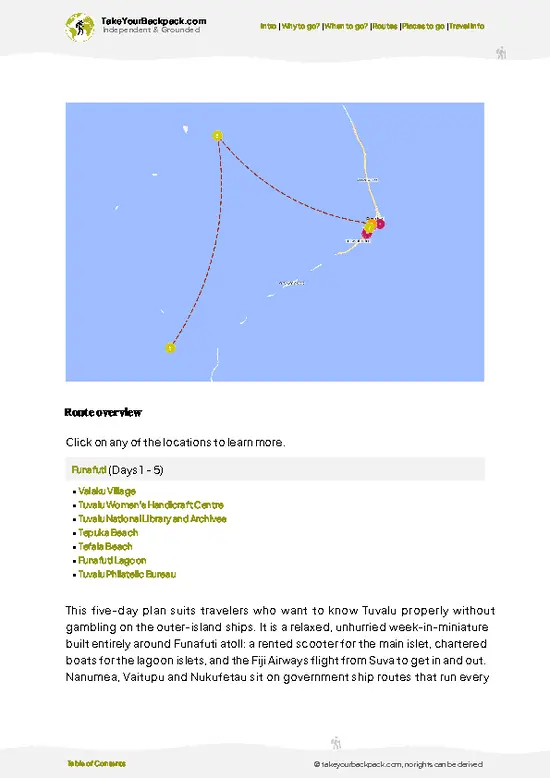
  • Tepuka Beach—WWII bunker, wooded islet, calm lagoon, reef-edge snorkeling| 14 km away
  • Tefala Beach—Western rim, empty sand, conservation-area reef, low-tide flats| 16 km away
  • Motulalo Island—1943 airfield runway, Nukufetau lagoon, empty sand, starry nights| 103 km away

💡 Not sure where to go next?
Create a personalized itinerary for Tuvalu including Funafuti Lagoon and the places that fit your trip.

Generate my itinerary

👉 Discover all beaches

Or checkout all Tuvalu has to offer (think cities, towns, villages, national parks, hikes, beaches, festivals)
Country photo of Tuvalu

We 💚 feedbackWhat to keep in mind

Treat Funafuti Lagoon beach as the quiet end of a Pacific route, ideally after the busier islands of Fiji or Kiribati. I would book the conservation area boat on your first morning, since weather and tides decide whether it runs. Bring a snorkel mask from home and leave your evenings open for the airstrip, because that is where you will actually meet people.

✍️ Help improve this page!
The information on this page is based on in-depth research, insights shared by experienced travelers, and feedback from the local travel community in Tuvalu. While every effort is made to keep the information accurate and current, conditions can change — so if you spot anything incorrect or outdated, please get in touch.


🙋‍♂️ Give feedback

👋 Meet the founderWho’s Behind Take Your Backpack?

Johan, backpacker and founder of TakeYourBackpackHi, I’m Johan (Netherlands 🇳🇱), the creator of TakeYourBackpack. Over the past 3 decades, I’ve backpacked through 90+ countries across six continents, gaining extensive experience with independent travel, long-term trips, and overland routes.

This site is built on a combination of firsthand travel experience and carefully curated insights from other backpackers. Many guides are based on places I’ve personally visited, while others bring together tips, observations, and practical advice shared by trusted travelers I’ve met along the way.

The goal is to provide realistic, experience-driven guidance — not generic itineraries — so you can explore destinations with better context, clearer expectations, and more confidence.