
×

Uganda🇺🇬 | townsAmuriaTeso sub-region, cattle trading, rural landscape | things to do and best time to go

Explore PaderExplore Yumbe

Backpacking in Amuria
👍 Recommendedtown ranked #11
By Johan Kruseman 🇳🇱 | Updated September 3, 2026

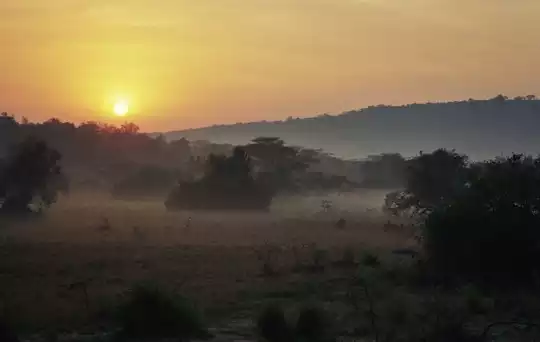
The first real fork in the road for Amuria is whether you treat it as a destination or a detour. That choice matters: Amuria sits in Uganda’s northeast, a few hours north of Soroti, and it’s the kind of place where the red dust clings to your boots and the air smells faintly of woodsmoke at dusk. For backpackers, Amuria is less a hub than a pause—practical for resupplying or breaking up a long, hot bus ride toward Karamoja or Kidepo, but not a magnet for nightlife or postcard markets. The town’s rhythm is slow, with basic guesthouses and a handful of chapati stalls, but little in the way of hostels or a social backpacker scene. You’ll find honest Ugandan hospitality and a sense of real, everyday life—no curated experiences, just the hum of motorcycles and the chatter of market mornings. Getting around is mostly on foot or by boda-boda; buses are infrequent but reliable enough if you’re patient. Compared to Soroti, Amuria is quieter, less scenic, and more utilitarian, but also less touristed and more affordable. Safety is typical for rural Uganda: keep your wits about you, but the vibe is more curious than threatening.

Discover everything you want to know in the 📖 Uganda Travel Guide.
Safety warning

The current risk level for Uganda is high. Check the advice before going.


Get your Uganda guide
106 ranked highlights, routes & tips, works offline (408 pages)
Loading the map 🌍
CLICK TO FILTER
cities
towns
landmarks
national parks
hikes
beaches
attractions
festivals
regions
SHOW COUNTRY’S BESTSHOW ALL

✨ Why go?
Ranked #11 town in Uganda
Reasons people choose to visit here

Amuria is a strategic stop for backpackers navigating Uganda. Its proximity to hikes like the nearby Kidepo Valley National Park makes it a perfect base for those seeking adventure. The local guesthouses offer a cozy, budget-friendly atmosphere, ideal for solo travelers or small groups looking to connect. Strolling through the walkable streets, you’ll find street food stalls serving up local dishes that burst with flavor, adding to the cultural experience. Most travelers stay a couple of days, soaking in the friendly vibe and sharing stories with fellow adventurers. It’s a place that rewards those who linger, making the effort feel worthwhile.
Want to include Amuria in your Uganda route?
Create a personalized Uganda itinerary that includes Amuria and the places that fit your trip — based on your travel style, budget, and available time. Get your route in seconds.

Generate my trip

💡 HighlightsTop highlights of Amuria

  • Amuria Central Market — The real heartbeat of the town: open-air stalls piled high with millet, groundnuts, vegetables and seasonally moving produce, plus traders from surrounding parishes. Great for street-food snacks, people-watching, bargain shopping and getting an honest feel for daily life in Teso.
  • Amuria Weekly Livestock Market — A loud, chaotic, unforgettable market day where cattle, goats and sheep change hands, local herders haggle and porters load animals for transport. Visiting on market day delivers raw cultural experience and excellent photo opportunities of Teso pastoral life.
  • Town Hub / Main Street and Roadside Eateries — The compact center where town life concentrates: small shops, boda-boda ranks, chapatti and rolex stalls, and local bars. Walkable, easy to absorb local
read more 👉
  • Amuria Central Market — The real heartbeat of the town: open-air stalls piled high with millet, groundnuts, vegetables and seasonally moving produce, plus traders from surrounding parishes. Great for street-food snacks, people-watching, bargain shopping and getting an honest feel for daily life in Teso.
  • Amuria Weekly Livestock Market — A loud, chaotic, unforgettable market day where cattle, goats and sheep change hands, local herders haggle and porters load animals for transport. Visiting on market day delivers raw cultural experience and excellent photo opportunities of Teso pastoral life.
  • Town Hub / Main Street and Roadside Eateries — The compact center where town life concentrates: small shops, boda-boda ranks, chapatti and rolex stalls, and local bars. Walkable, easy to absorb local rhythms, and where you’ll meet traders, drivers and farmers who shape Amuria’s character.
For day trips just outside the town try Pian Upe Wildlife Reserve, Soroti (check out Soroti Rock) and nearby Lake Kyoga — Soroti Rock is my personal favorite.
Spotted a mistake or missing something? Contact us.

🏘️ NeighborhoodsHow different areas shape the experience

Amuria, Uganda, is a vibrant hub that offers a unique blend of local culture and accessibility for backpackers. Here’s how to navigate its neighborhoods:

Central Amuria: This is the heart of the town, buzzing with local markets and street vendors. The atmosphere is lively, perfect for those who thrive on energy. Costs are low, making it ideal for budget travelers. Walkability is high; everything is within a short stroll. Nightlife is minimal, but you’ll find cozy spots to enjoy local brews.

Amuria Trading Centre: A bit quieter, this area is great for longer stays. It has a more laid-back vibe, with guesthouses that offer a homey feel. Transport access is solid, with easy connections to surrounding areas. It’s a peaceful retreat after a day of exploring.

Ngora Road: This neighborhood offers … read more 👉
Amuria, Uganda, is a vibrant hub that offers a unique blend of local culture and accessibility for backpackers. Here’s how to navigate its neighborhoods:

Central Amuria: This is the heart of the town, buzzing with local markets and street vendors. The atmosphere is lively, perfect for those who thrive on energy. Costs are low, making it ideal for budget travelers. Walkability is high; everything is within a short stroll. Nightlife is minimal, but you’ll find cozy spots to enjoy local brews.

Amuria Trading Centre: A bit quieter, this area is great for longer stays. It has a more laid-back vibe, with guesthouses that offer a homey feel. Transport access is solid, with easy connections to surrounding areas. It’s a peaceful retreat after a day of exploring.

Ngora Road: This neighborhood offers a mix of local life and convenience. It’s slightly more upscale, with cafes and shops catering to both locals and travelers. Ideal for those seeking a balance between quiet and activity, it’s a good spot for short visits.

⌛️ 1 daySeeing the highlights in 24 hours

Amuria, Uganda, is a tapestry of vibrant culture and rich history, often overlooked by travelers. The town pulses with life, from the bustling markets to the warm smiles of locals. Start your day at the Amuria Market, where the air is thick with the scent of fresh produce and spices. Grab a local breakfast of posho and beans from a vendor; it’s hearty and energizing.

In the afternoon, head to the nearby Kapelebyong, a lesser-known village that offers a glimpse into traditional Ugandan life. The rhythmic sounds of drums and laughter will draw you in. Engage with the community; they’re eager to share their stories and crafts. This connection adds depth to your experience, making it more than just sightseeing.

As evening falls, return to Amuria and find a local eatery. Enjoy a plate of matoke … read more 👉
Amuria, Uganda, is a tapestry of vibrant culture and rich history, often overlooked by travelers. The town pulses with life, from the bustling markets to the warm smiles of locals. Start your day at the Amuria Market, where the air is thick with the scent of fresh produce and spices. Grab a local breakfast of posho and beans from a vendor; it’s hearty and energizing.

In the afternoon, head to the nearby Kapelebyong, a lesser-known village that offers a glimpse into traditional Ugandan life. The rhythmic sounds of drums and laughter will draw you in. Engage with the community; they’re eager to share their stories and crafts. This connection adds depth to your experience, making it more than just sightseeing.

As evening falls, return to Amuria and find a local eatery. Enjoy a plate of matoke while the sun sets, painting the sky in hues of orange and purple. The day wraps up with a sense of belonging, having tasted the heart of Uganda in just one day.
Turn your Amuria visit into an Uganda adventure
Build a complete Uganda route with Amuria, hidden gems, must-see destinations, and realistic travel times included.

Generate my trip

🌤️ When to go?When to go for the best experience


  • Weather: Amuria’s dry seasons from December to February and June to August offer clear skies and dusty trails, perfect for trekking without the mud. The rainy seasons, March to May and September to November, bring lush greenery but slippery paths and frequent downpours.

  • Temperature: Daytime highs hover around 28-32°C (82-90°F) year-round, but mornings and evenings cool to a comfortable 18-20°C (64-68°F), making early starts essential for comfort.

  • Daylight Hours: Near the equator, daylight is steady—about 12 hours daily—so plan hikes early to avoid the afternoon heat and sudden showers.

  • Crowds: Tourist traffic peaks during the dry months, especially December and July, so expect busier guesthouses and higher prices then.

  • Seasonal Activities: Dry months are best for wildlife spotting and cultural
read more 👉

  • Weather: Amuria’s dry seasons from December to February and June to August offer clear skies and dusty trails, perfect for trekking without the mud. The rainy seasons, March to May and September to November, bring lush greenery but slippery paths and frequent downpours.

  • Temperature: Daytime highs hover around 28-32°C (82-90°F) year-round, but mornings and evenings cool to a comfortable 18-20°C (64-68°F), making early starts essential for comfort.

  • Daylight Hours: Near the equator, daylight is steady—about 12 hours daily—so plan hikes early to avoid the afternoon heat and sudden showers.

  • Crowds: Tourist traffic peaks during the dry months, especially December and July, so expect busier guesthouses and higher prices then.

  • Seasonal Activities: Dry months are best for wildlife spotting and cultural festivals, while the wet season reveals vibrant birdlife and blooming landscapes, rewarding those who don’t mind the rain.

  • Price Fluctuations: Accommodation and transport costs spike in the dry season’s peak months; the rainy season offers better deals but fewer services.


Pro-tip: Aim for the shoulder months of late February or early September—fewer crowds, manageable weather, and a sweet spot for both nature and culture.


source: climatestotravel.comJANJanuary: excellent for travelingFEBFebruary: highly recommended for travelingMARMarch: fair for travelingAPRApril: fair for travelingMAYMay: fair for travelingJUNJune: excellent for travelingJULJuly: excellent for travelingAUGAugust: excellent for travelingSEPSeptember: good for travelingOCTOctober: fair for travelingNOVNovember: fair for travelingDECDecember: excellent for traveling
when-to-go

✈️ The backpacker research shortcutUganda Travel Guide

An offline-friendly backpacking guide with optimized travel routes, ranked highlights, transport advice, and the best areas to stay.
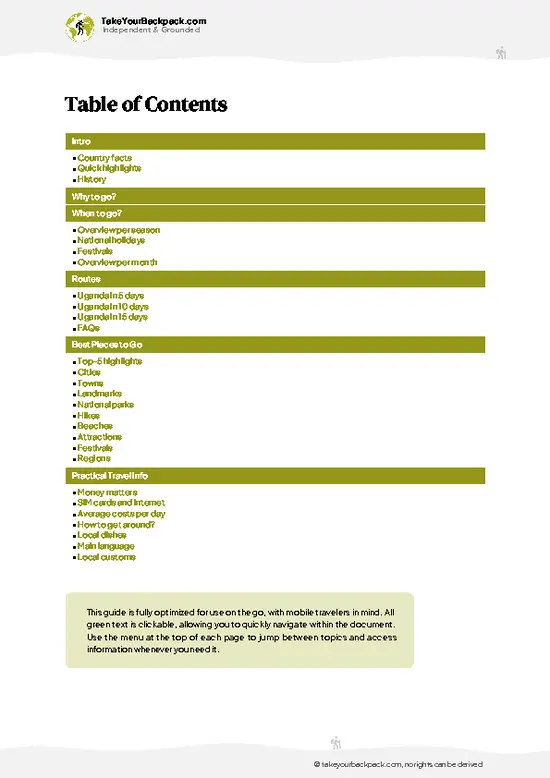
example page 0 from our offline Travel Guide for Uganda
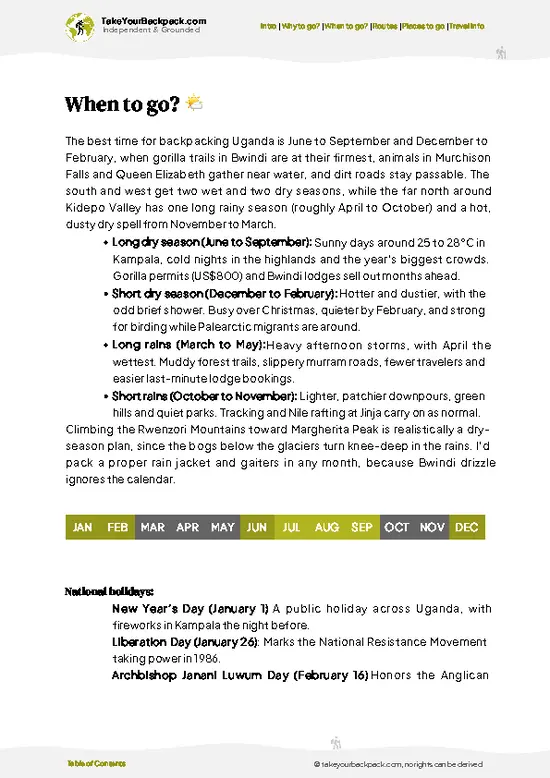
example page 1 from our offline Travel Guide for Uganda
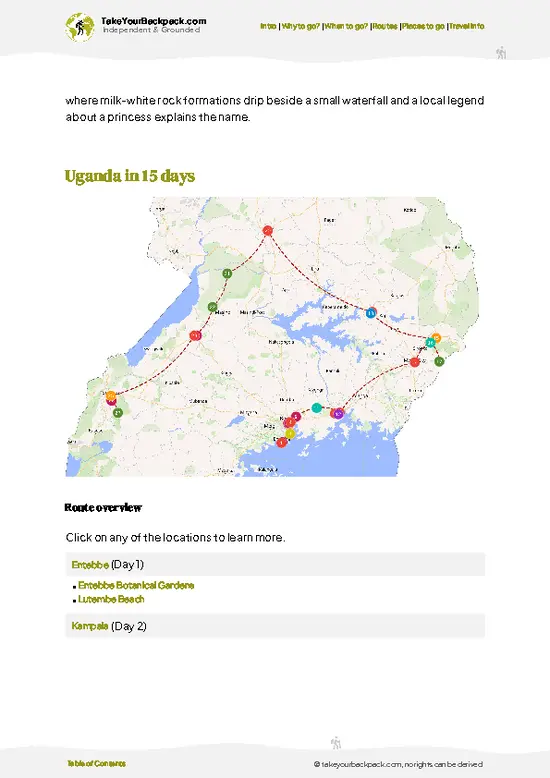
example page 2 from our offline Travel Guide for Uganda
example page 3 from our offline Travel Guide for Uganda
example page 4 from our offline Travel Guide for Uganda
example page 5 from our offline Travel Guide for Uganda
example page 6 from our offline Travel Guide for Uganda
example page 7 from our offline Travel Guide for Uganda
The digital guide (408 pages) contains:
106 highlights, ranked by travel appeal
Optimized 5, 10 & 15-day travel routes
Cities, national parks, landmarks, beaches
How to get around
Offline-friendly for travel without Wi-Fi
👉 Click to see all 30+ guide features

📅 Plan smarter in minutes, not weeks
Month by month travel advice
Festivals & national holidays
Budget expectations

🗺️ Go to the right places, skip the overrated ones
Honest pros & cons of destinations
Top hikes, parks & viewpoints
Lesser-known places most travelers miss
Clear “worth it vs skip it” guidance

🛏️ Travel smoothly without rookie mistakes
Best areas to stay
Transport systems explained simply
Common scams & safety advice
SIM cards, money & practical tips

🌍 Understand the country, not just visit it
Culture & traditions
52 Essential phrases & customs
Festivals worth planning around
Traveler-friendly historical context
Insights that make places more meaningful

📱 Built for real travel conditions
Fully downloadable PDF
Works completely offline
Optimized for phone use
Useful in remote areas & buses
Everything in one place
Save weeks of stressful planning
Get instant access to your full guide. 30‑day money-back guarantee.
+ Add another guide for just US$7.80

By proceeding you agree to our terms.
Sent to your inbox immediately after payment • 100% Secure Checkout
Best Backpacking Travel Advisor 2025 tourism awardBest Backpacking
Travel Advisor
2025
What others say about Take Your Backpack Guides:
⭐⭐⭐⭐⭐
Fantastic, amazing amount of information!
⭐⭐⭐⭐⭐
My goodness this is amazing, it's what I've been looking for hats off too you!
⭐⭐⭐⭐⭐
I think this is absolutely BRILLIANT
⭐⭐⭐⭐
Very complete and informative. It's still missing places, but I gotta to commend you
⭐⭐⭐⭐⭐
This is truly amazing, thank you, can't wait to explore it with my kids!
⭐⭐⭐⭐⭐
Awesome resource, thank you!
⭐⭐⭐⭐⭐
This is amazing! Can't wait to explore the ones I haven't seen
⭐⭐⭐⭐
I love this! Well done, great idea.
⭐⭐⭐⭐⭐
Thanks for taking the time to make this gem!
⭐⭐⭐⭐⭐
This might be the best website I've ever seen.
⭐⭐⭐⭐⭐
Congratulations, and thank you so much for your work; it's incredibly valuable.
⭐⭐⭐⭐
In all seriousness I think you did a great job pointing out the important spots
⭐⭐⭐⭐⭐
10/10 very good
⭐⭐⭐⭐⭐
As someone who's only just starting to visit regularly this is awesome, thank you.
⭐⭐⭐⭐
Thank you very much! I'm going to visit my dad, it's going to be very useful!
⭐⭐⭐⭐⭐
This is really cool! We'll be travelling for the first time and this definitely come in handy.
⭐⭐⭐⭐⭐
You are now our minister of culture, congratulations 👨‍💼
⭐⭐⭐⭐⭐
Just wanted to tell you that this is a pearl! Going to follow your recommendations.
⭐⭐⭐⭐⭐
This is so cool. I'll definitely be using the resource for my travels soon.
⭐⭐⭐⭐⭐
This is very impressive! Good work.
⭐⭐⭐⭐⭐
This is an amazing and informative site. Very well done!

🛏️ Where to stay?Best areas and accommodation options

Amuria’s backpacker sweet spot is the town center, where the pulse of daily life hums strongest. Streets here are alive with market chatter and the scent of roasting maize, making it easy to strike up conversations with fellow travelers and locals alike. This area offers a handful of budget hostels clustered close enough to swap stories over evening fires or shared meals. Safety feels tangible—well-lit streets and a steady flow of people keep the vibe grounded and welcoming. Venture farther out, and you lose that social buzz and easy access to essentials, turning your stay into a logistical headache … read more 👉
Amuria’s backpacker sweet spot is the town center, where the pulse of daily life hums strongest. Streets here are alive with market chatter and the scent of roasting maize, making it easy to strike up conversations with fellow travelers and locals alike. This area offers a handful of budget hostels clustered close enough to swap stories over evening fires or shared meals. Safety feels tangible—well-lit streets and a steady flow of people keep the vibe grounded and welcoming. Venture farther out, and you lose that social buzz and easy access to essentials, turning your stay into a logistical headache rather than a chance to soak in Amuria’s authentic rhythm.

🚌 Getting aroundTransportation options and practical tips

Amuria moves at its own rhythm—neither a frantic rush nor a lazy drift. The streets pulse with a mix of old-school hustle and laid-back charm, where vendors shout over the hum of scooters and the scent of grilled street food hangs thick in the air. Time here isn’t a strict master but a flexible guide. You’ll find that catching a ride or hopping on a bus isn’t about rigid schedules but reading the flow of the crowd and the moment. This is a place where patience rewards you with local stories and unexpected shortcuts.


  • Walking: The heart of Amuria is compact enough to explore on foot; expect 20-30 minute strolls between major spots, with narrow alleys revealing the city’s character best—watch for uneven cobblestones and the occasional stray dog.

  • Local Minibuses: Running roughly from 6:00
read more 👉
Amuria moves at its own rhythm—neither a frantic rush nor a lazy drift. The streets pulse with a mix of old-school hustle and laid-back charm, where vendors shout over the hum of scooters and the scent of grilled street food hangs thick in the air. Time here isn’t a strict master but a flexible guide. You’ll find that catching a ride or hopping on a bus isn’t about rigid schedules but reading the flow of the crowd and the moment. This is a place where patience rewards you with local stories and unexpected shortcuts.


  • Walking: The heart of Amuria is compact enough to explore on foot; expect 20-30 minute strolls between major spots, with narrow alleys revealing the city’s character best—watch for uneven cobblestones and the occasional stray dog.

  • Local Minibuses: Running roughly from 6:00 AM to 9:00 PM, these are the cheapest way to cover longer distances, costing under $1 per ride; they’re packed and noisy but offer a front-row seat to daily life.

  • Motorbike Taxis: Available 24/7, these dart through traffic with ease; fares start around $2 for short trips, perfect when you’re pressed for time but want to avoid the heat and crowds.

  • Shared Tuk-Tuks: Operating mainly during daylight, these three-wheeled rides cost about $1.50 per person and follow semi-fixed routes; they’re slower than motorbikes but more comfortable and social.

  • City Bicycles: A growing option with rental spots near main squares; about $3 per day, ideal for quick, flexible trips while soaking in the city’s scents and sounds at your own pace.

👛 Costs (as of 3 September 2026)Typical daily expenses

Backpacking in Amuria, Uganda, is a raw, grounded experience where costs stay modest but every shilling counts toward a genuine connection with the place.
  • Dorm Accommodation: Expect to pay around $5 to $10 per night for a basic dorm bed. These are simple setups—think mosquito nets, a fan if you’re lucky, and a shared bathroom. It’s not luxury, but it’s clean enough and keeps you close to the local rhythm.
  • Meals: Street food and local eateries dominate here. A filling meal of matoke, beans, or grilled meat will run you about $1 to $3. If you want something a bit more substantial or a soda, budget closer to $4. Fresh fruit and roadside snacks are cheap and plentiful, perfect for quick energy boosts.
  • Local Transport: Boda bodas (motorcycle taxis) are the go-to for getting around town and nearby
read more 👉
Backpacking in Amuria, Uganda, is a raw, grounded experience where costs stay modest but every shilling counts toward a genuine connection with the place.
  • Dorm Accommodation: Expect to pay around $5 to $10 per night for a basic dorm bed. These are simple setups—think mosquito nets, a fan if you’re lucky, and a shared bathroom. It’s not luxury, but it’s clean enough and keeps you close to the local rhythm.
  • Meals: Street food and local eateries dominate here. A filling meal of matoke, beans, or grilled meat will run you about $1 to $3. If you want something a bit more substantial or a soda, budget closer to $4. Fresh fruit and roadside snacks are cheap and plentiful, perfect for quick energy boosts.
  • Local Transport: Boda bodas (motorcycle taxis) are the go-to for getting around town and nearby villages. Fares usually range from $0.50 to $1.50 depending on distance. Walking is often the best way to soak in the atmosphere, but for anything beyond a couple of kilometers, a boda boda saves time and sweat.
  • Basic Activities/Entry Fees: Amuria isn’t packed with tourist traps, so entry fees are low or nonexistent. Visiting local markets, cultural spots, or nearby natural areas might cost $1 to $3 if there’s a small fee. Guided tours or special experiences could push that higher, but they’re rare and usually arranged locally.
  • Miscellaneous Expenses: Think bottled water, occasional snacks, phone credit, and small tips. These add up to about $1 to $3 daily. Water is crucial—tap water isn’t safe, so factor in the cost of buying clean water regularly.

Altogether, you’re looking at roughly $8 to $20 per day to cover the essentials in Amuria. It’s a place where simplicity rules, and every dollar stretches if you lean into the local pace. The payoff is a grounded, unfiltered experience that feels earned with every step and shilling spent.
⚠️ Prices can change and everyone travels differently, so take this as a rough guide. Hope it helps you plan your adventure!

🚌 Day tripsWhere to go beyond the main area

Amuria, Uganda, is a backpacker’s dream base for day trips that blend adventure with local culture. The town’s laid-back vibe and friendly locals set the stage for exploration.

Kidepo Valley National Park
A trip to Kidepo Valley National Park is a must. The park is a wildlife haven, where you can spot elephants, lions, and even the elusive cheetah. It’s about a three-hour drive from Amuria, so leave early to catch the sunrise over the savannah. Expect to pay around $40 for park entry and transport if you share a ride. The dry season, from December to February, offers the best wildlife viewing. A common mistake? Underestimating the park’s vastness; plan for a full day to soak it all in.
👉 Explore Kidepo Valley National Park

Mount Moroto
Hiking Mount Moroto is a rewarding challenge. … read more 👉
Amuria, Uganda, is a backpacker’s dream base for day trips that blend adventure with local culture. The town’s laid-back vibe and friendly locals set the stage for exploration.

Kidepo Valley National Park
A trip to Kidepo Valley National Park is a must. The park is a wildlife haven, where you can spot elephants, lions, and even the elusive cheetah. It’s about a three-hour drive from Amuria, so leave early to catch the sunrise over the savannah. Expect to pay around $40 for park entry and transport if you share a ride. The dry season, from December to February, offers the best wildlife viewing. A common mistake? Underestimating the park’s vastness; plan for a full day to soak it all in.
👉 Explore Kidepo Valley National Park

Mount Moroto
Hiking Mount Moroto is a rewarding challenge. The trek takes about five hours round trip, but the panoramic views from the summit are worth every step. You’ll encounter local Karamojong communities along the way, adding a rich cultural layer to your adventure. Budget around $10 for a guide, which is essential for safety and local insights. The best time to hike is during the dry months, from June to September. Many first-timers forget to bring enough water; pack extra to stay hydrated.


Sipi Falls
Sipi Falls offers a refreshing escape. Just a two-hour drive from Amuria, the three-tiered waterfalls are perfect for a day of hiking and picnicking. The sound of cascading water and the scent of lush vegetation create a serene atmosphere. Entry is typically free, but you might want to hire a local guide for about $15 to navigate the trails. The rainy season, from March to May, makes the falls more spectacular, but be cautious of slippery paths. A common oversight is not bringing a camera; the views are Instagram gold.
👉 Explore Sipi Falls

Ngora
A visit to Ngora is a dive into local life. It’s only an hour away, making it an easy jaunt. Here, you can explore local markets and sample traditional Ugandan dishes. Expect to spend around $5 on food and transport. The best time to visit is during market days, typically on Wednesdays and Saturdays. First-timers often miss the chance to engage with locals; don’t be shy—ask questions and share stories.
Want to know what more Uganda offers?
The Uganda Travel Guide describes 106 highlights, from cities to national parks, from beaches to hikes

Get the Travel Guide -

🛡️ SafetyScams, Hazards, and Annoyances

Amuria is generally safe, but a few practical tips can enhance your experience. Stay aware in crowded markets; keep your belongings close, as pickpockets can be opportunistic. If you’re solo, avoid wandering too far after dark; the streets can feel different at night, and it’s best to stick to well-lit areas.

Be cautious of overly friendly locals offering unsolicited help; they might expect a tip. Carry yourself confidently, engage with locals, and trust your instincts. This approach not only keeps you safe but also opens doors to genuine connections.

FAQTraveler FAQ

Amuria is primarily a stopover rather than a major tourist destination. It offers basic amenities and local markets but lacks significant attractions for extended visits. Travelers usually pass through while exploring the Teso sub-region.
One day is sufficient to experience Amuria, mainly to rest and explore local markets or nearby villages. Longer stays are generally unnecessary unless you have specific reasons like community visits or local events.
Yes, Amuria can be visited as a day trip from Soroti, which is about 70 kilometers away. The journey takes around 2 hours by road, making it feasible for a day return trip if planned early.
⚠️ Things can change over time, so always validate details locally before you go.

Other Ugandan towns near Amuria

Explore more nearby:

  • Kaberamaido—Lake Kyoga shore, Iteso communities, fishing villages| 62 km away
  • Bukedea—Teso plains, market center, roadside stop| 88 km away
  • Pader—post-conflict recovery, Acholi region, rural hub| 113 km away

💡 Not sure where to go next?
Create a personalized itinerary for Uganda including Amuria and the places that fit your trip.

Generate my itinerary

👉 Discover all towns

Or checkout all Uganda has to offer (think cities, towns, villages, national parks, hikes, beaches, festivals)
Country photo of Uganda

We 💚 feedbackWhat to keep in mind

Amuria’s charm lies in its vibrant local markets, where the air is thick with the scent of fresh produce and spices. But be ready for the heat; it can be relentless. Embrace the sweat, and you’ll find the warmth of the people makes every drop worth it.

✈️ When did I visit Uganda?
In September 2019 I have done a backpacking trip through Uganda. Seeing gorilla’s in the wild from up close was a pure unexpected highlight!

✍️ Help improve this page!
The information on this page is based on my own backpacking experience in Uganda, supplemented with up-to-date research and feedback from other travelers. Travel details can change, so if you notice anything outdated or incomplete, feel free to let me know.


🙋‍♂️ Give feedback

👋 Meet the founderWho’s Behind Take Your Backpack?

Johan, backpacker and founder of TakeYourBackpackHi, I’m Johan (Netherlands 🇳🇱), the creator of TakeYourBackpack. Over the past decade, I’ve backpacked through 80+ countries across six continents, gaining extensive experience with independent travel, long-term trips, and overland routes.

This site is built on a combination of firsthand travel experience and carefully curated insights from other backpackers. Many guides are based on places I’ve personally visited, while others bring together tips, observations, and practical advice shared by trusted travelers I’ve met along the way.

The goal is to provide realistic, experience-driven guidance — not generic itineraries — so you can explore destinations with better context, clearer expectations, and more confidence.

Get full Uganda guide •
Instant download • 106 highlights • Full Offline guide