×

Uganda🇺🇬 | festivalsImbalu Circumcision Ceremonyinitiation rites, public processions, Bugisu traditions | things to do and best time to go

Explore Bamasaba Cultural FestivalExplore Jinja Agricultural Show

Backpacking in Imbalu Circumcision Ceremony
👍 Recommendedfestival ranked #10
By Johan Kruseman 🇳🇱 | Updated May 20, 2026

Most travelers expect the Imbalu Circumcision Ceremony to be a private, somber rite—wrong. It’s a full-throttle, public spectacle, with pounding drums, ululating crowds, and young men parading through the streets of Mbale and the Bugisu region in eastern Uganda. This isn’t a quiet affair; it’s a kinetic, communal test of courage, with thousands of locals and a handful of wide-eyed backpackers swept up in the energy. The festival runs from July to December in even-numbered years, peaking in August, and the air crackles with anticipation and raw, unfiltered celebration. You’ll hear traditional Kadodi music—think relentless percussion and hypnotic rhythms—fueling a marathon of dancing and ritual. If you crave authenticity and don’t mind being the outsider, this is the real deal. But it’s not for the squeamish or the selfie-obsessed.

Discover everything you want to know in the 📖 Uganda Travel Guide.
Safety warning

The current risk level for Uganda is high. Check the advice before going.


Get your Uganda guide
109 ranked highlights, routes & tips, works offline (422 pages)
Loading the map 🌍
CLICK TO FILTER
cities
towns
landmarks
national parks
hikes
beaches
attractions
festivals
regions
SHOW COUNTRY’S BESTSHOW ALL

✨ Why go?
Ranked #10 festival in Uganda
What sets this place apart

Backpackers flock to the Imbalu Circumcision Ceremony in Uganda for a taste of social energy that’s hard to find elsewhere. This festival isn’t just a rite of passage; it’s a temporary community where you’ll feel the pulse of local culture. The vibrant atmosphere invites cultural immersion, allowing you to witness traditions that have shaped generations. Plus, it’s surprisingly affordable compared to similar global events, making it a savvy choice for budget-conscious travelers. Planning your route around this festival can seamlessly fit into longer travel plans, adding depth to your journey. Embrace the challenge of navigating new experiences, and you’ll find that the moments spent here are what truly enrich your adventure.
Want to include Imbalu Circumcision Ceremony in your Uganda route?
Create a personalized Uganda itinerary that includes Imbalu Circumcision Ceremony and the places that fit your trip — based on your travel style, budget, and available time. Get your route in seconds.

Generate my trip

💡 HighlightsWhat this place is best known for

  1. The Grand Procession of Initiates — Seeing the newly initiated men parade through town is the emotional heart of Imbalu: singing, dancing, wearing traditional regalia and sometimes still in recovery. It’s a rare mix of public celebration and solemn recognition of a life-stage change, and my personal favorite because the atmosphere pulses with pride and raw, unfiltered joy.
  2. Traditional Music and Dance Circles — Drums, rattles, call-and-response singing and high-energy dances keep the whole place moving. The rhythms are hypnotic and very participatory — you’ll want to clap along or join a circle if invited.
  3. Elders’ Speeches and Storytelling — Public teachings, proverbs and speeches by community elders are woven through the festival, explaining the social meanings behind the rite. That oral
read more 👉
  1. The Grand Procession of Initiates — Seeing the newly initiated men parade through town is the emotional heart of Imbalu: singing, dancing, wearing traditional regalia and sometimes still in recovery. It’s a rare mix of public celebration and solemn recognition of a life-stage change, and my personal favorite because the atmosphere pulses with pride and raw, unfiltered joy.
  2. Traditional Music and Dance Circles — Drums, rattles, call-and-response singing and high-energy dances keep the whole place moving. The rhythms are hypnotic and very participatory — you’ll want to clap along or join a circle if invited.
  3. Elders’ Speeches and Storytelling — Public teachings, proverbs and speeches by community elders are woven through the festival, explaining the social meanings behind the rite. That oral transmission of values and history gives the event depth you won’t get from photos alone.
  4. Feasting and Communal Food — Large communal meals and food stalls serve regional staples and celebratory dishes, plus locally made brews. Eating together is part of the ritual: it’s how people bond, celebrate, and show generosity — and you’ll taste things you won’t easily find elsewhere.
  5. Crafts, Regalia and Local Markets — Artisans display barkcloth, beadwork, carved items and ceremonial accessories used in the ceremonies. Browsing and buying directly supports makers, and seeing the regalia up close helps you appreciate the craftsmanship behind the pageantry.
Spotted a mistake or missing something? Contact us.

🌤️ When to go?When is the celebration of Imbalu Circumcision Ceremony?


  • Topic: Timing of the Ceremony – The Imbalu Circumcision Ceremony happens annually in August, marking a non-negotiable date for your visit. Missing this window means missing the core event, so plan your trip around this fixed schedule.

  • Topic: Weather – August falls in Uganda’s dry season, with daytime temperatures around 22-26°C (72-79°F). This means less mud, fewer mosquitoes, and more comfortable trekking conditions. Rain would only slow you down and dampen the experience.

  • Topic: Daylight Hours – Expect roughly 12 hours of daylight, giving you ample time to explore before and after the ceremony. Early mornings and late afternoons are cooler, perfect for hiking or village visits.

  • Topic: Crowds – The ceremony draws large crowds, including locals and tourists. Arrive early to secure
read more 👉

  • Topic: Timing of the Ceremony – The Imbalu Circumcision Ceremony happens annually in August, marking a non-negotiable date for your visit. Missing this window means missing the core event, so plan your trip around this fixed schedule.

  • Topic: Weather – August falls in Uganda’s dry season, with daytime temperatures around 22-26°C (72-79°F). This means less mud, fewer mosquitoes, and more comfortable trekking conditions. Rain would only slow you down and dampen the experience.

  • Topic: Daylight Hours – Expect roughly 12 hours of daylight, giving you ample time to explore before and after the ceremony. Early mornings and late afternoons are cooler, perfect for hiking or village visits.

  • Topic: Crowds – The ceremony draws large crowds, including locals and tourists. Arrive early to secure a good spot and avoid the crush. This is not a quiet, off-the-beaten-path event.

  • Topic: Seasonal Activities – August is prime for cultural immersion beyond the ceremony—think traditional dances and storytelling. The dry season also opens up nearby trails and wildlife viewing without the hassle of rain.

  • Topic: Price Fluctuations – Expect a spike in accommodation and transport costs during August due to demand. Booking well in advance can lock in better rates and save you from last-minute price gouging.


Pro-tip: Lock in your travel and lodging early, and use the dry, cool mornings to explore surrounding villages—this is where the real stories unfold beyond the ceremony itself.


source: climatestotravel.comJANJanuary: not recommended for travelingFEBFebruary: not recommended for travelingMARMarch: not recommended for travelingAPRApril: not recommended for travelingMAYMay: not recommended for travelingJUNJune: not recommended for travelingJULJuly: not recommended for travelingAUGAugust: excellent for travelingSEPSeptember: not recommended for travelingOCTOctober: not recommended for travelingNOVNovember: not recommended for travelingDECDecember: not recommended for traveling

✈️ The backpacker research shortcutUganda Travel Guide

An offline-friendly backpacking guide with optimized travel routes, ranked highlights, transport advice, and the best areas to stay.
example page 0 from our offline Travel Guide for Uganda
example page 1 from our offline Travel Guide for Uganda
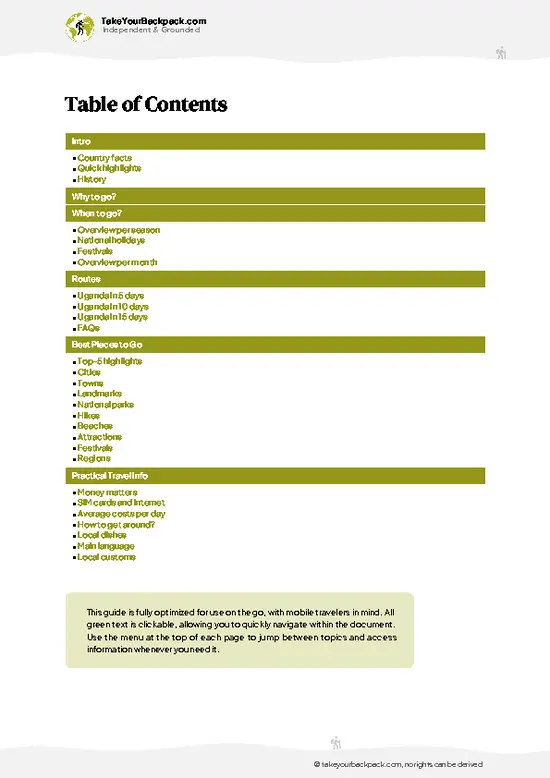
example page 2 from our offline Travel Guide for Uganda
example page 3 from our offline Travel Guide for Uganda
example page 4 from our offline Travel Guide for Uganda
example page 5 from our offline Travel Guide for Uganda
example page 6 from our offline Travel Guide for Uganda
example page 7 from our offline Travel Guide for Uganda
The digital guide (422 pages) contains:
109 highlights, ranked by travel appeal
Optimized 5, 10 & 15-day travel routes
Cities, national parks, landmarks, beaches
How to get around
Offline-friendly for travel without Wi-Fi
👉 Click to see all 30+ guide features

📅 Plan smarter in minutes, not weeks
Month by month travel advice
Festivals & national holidays
Budget expectations

🗺️ Go to the right places, skip the overrated ones
Honest pros & cons of destinations
Top hikes, parks & viewpoints
Lesser-known places most travelers miss
Clear “worth it vs skip it” guidance

🛏️ Travel smoothly without rookie mistakes
Best areas to stay
Transport systems explained simply
Common scams & safety advice
SIM cards, money & practical tips

🌍 Understand the country, not just visit it
Culture & traditions
52 Essential phrases & customs
Festivals worth planning around
Traveler-friendly historical context
Insights that make places more meaningful

📱 Built for real travel conditions
Fully downloadable PDF
Works completely offline
Optimized for phone use
Useful in remote areas & buses
Everything in one place
Save weeks of stressful planning
Get instant access to your full guide. 30‑day money-back guarantee.


By proceeding you agree to our terms.
Sent to your inbox immediately after payment • 100% Secure Checkout
Best Backpacking Travel Advisor 2025 tourism awardBest Backpacking
Travel Advisor
2025
What others say about Take Your Backpack Guides:
⭐⭐⭐⭐⭐
Fantastic, amazing amount of information!
⭐⭐⭐⭐⭐
My goodness this is amazing, it's what I've been looking for hats off too you!
⭐⭐⭐⭐⭐
I think this is absolutely BRILLIANT
⭐⭐⭐⭐
Very complete and informative. It's still missing places, but I gotta to commend you
⭐⭐⭐⭐⭐
This is truly amazing, thank you, can't wait to explore it with my kids!
⭐⭐⭐⭐⭐
Awesome resource, thank you!
⭐⭐⭐⭐⭐
This is amazing! Can't wait to explore the ones I haven't seen
⭐⭐⭐⭐
I love this! Well done, great idea.
⭐⭐⭐⭐⭐
Thanks for taking the time to make this gem!
⭐⭐⭐⭐⭐
This might be the best website I've ever seen.
⭐⭐⭐⭐⭐
Congratulations, and thank you so much for your work; it's incredibly valuable.
⭐⭐⭐⭐
In all seriousness I think you did a great job pointing out the important spots
⭐⭐⭐⭐⭐
10/10 very good
⭐⭐⭐⭐⭐
As someone who's only just starting to visit regularly this is awesome, thank you.
⭐⭐⭐⭐
Thank you very much! I'm going to visit my dad, it's going to be very useful!
⭐⭐⭐⭐⭐
This is really cool! We'll be travelling for the first time and this definitely come in handy.
⭐⭐⭐⭐⭐
You are now our minister of culture, congratulations 👨‍💼
⭐⭐⭐⭐⭐
Just wanted to tell you that this is a pearl! Going to follow your recommendations.
⭐⭐⭐⭐⭐
This is so cool. I'll definitely be using the resource for my travels soon.
⭐⭐⭐⭐⭐
This is very impressive! Good work.
⭐⭐⭐⭐⭐
This is an amazing and informative site. Very well done!

🛏️ Where to stay?How to pick the right area

For the ’Imbalu Circumcision Ceremony’ in Uganda, you want to be close to the action without breaking the bank. Head to Mbale, the vibrant hub where the festival unfolds. This area buzzes with energy, making it perfect for solo backpackers and budget travelers.

Look for spots near the town center; they’re safe and social, ideal for meeting fellow adventurers. The local markets and eateries are just a stroll away, offering authentic Ugandan flavors and a chance to mingle with locals.

Another option is the nearby villages, where you can immerse yourself in the culture. Staying here gives you … read more 👉
For the ’Imbalu Circumcision Ceremony’ in Uganda, you want to be close to the action without breaking the bank. Head to Mbale, the vibrant hub where the festival unfolds. This area buzzes with energy, making it perfect for solo backpackers and budget travelers.

Look for spots near the town center; they’re safe and social, ideal for meeting fellow adventurers. The local markets and eateries are just a stroll away, offering authentic Ugandan flavors and a chance to mingle with locals.

Another option is the nearby villages, where you can immerse yourself in the culture. Staying here gives you a front-row seat to the ceremony while enjoying the warmth of community life. Just remember, book early to snag the best spots and avoid last-minute stress.

👛 Costs (as of 24 April 2026)How expensive it really is

The Imbalu Circumcision Ceremony in Uganda is a vibrant cultural event, but navigating the costs can be tricky. Here’s how to budget effectively for this unique experience.
  • Festival Tickets: Expect to pay around $10 to $20 for entry. Prices can vary based on the specific events or performances you want to see. Some ceremonies may have additional fees for special seating or guided experiences.
  • Accommodation: Options range from budget hostels at about $10 to $30 per night to mid-range hotels costing $50 to $100. Booking in advance is wise, especially during festival season, as places fill up quickly.
  • Local Transport: Budget around $5 to $15 for local transport, depending on how far you need to travel. Matatus (shared taxis) are a common choice, but hiring a private taxi for convenience can run
read more 👉
The Imbalu Circumcision Ceremony in Uganda is a vibrant cultural event, but navigating the costs can be tricky. Here’s how to budget effectively for this unique experience.
  • Festival Tickets: Expect to pay around $10 to $20 for entry. Prices can vary based on the specific events or performances you want to see. Some ceremonies may have additional fees for special seating or guided experiences.
  • Accommodation: Options range from budget hostels at about $10 to $30 per night to mid-range hotels costing $50 to $100. Booking in advance is wise, especially during festival season, as places fill up quickly.
  • Local Transport: Budget around $5 to $15 for local transport, depending on how far you need to travel. Matatus (shared taxis) are a common choice, but hiring a private taxi for convenience can run you $20 to $40 for a day.
  • Food & Drinks: Street food is a steal, with meals costing as little as $2 to $5. If you prefer dining in restaurants, budget $10 to $20 per meal. Don’t forget to factor in drinks, which can add another $1 to $5, depending on your choices.
  • Miscellaneous Expenses: Set aside $10 to $30 for souvenirs, tips, or unexpected costs. This cushion helps you enjoy spontaneous moments without stress.

Planning ahead and being aware of these costs will keep your energy focused on the experience rather than financial surprises.
⚠️ Prices can change and everyone travels differently, so take this as a rough guide. Hope it helps you plan your adventure!

🍲 FoodWhat to Eat & Drink

At the Imbalu Circumcision Ceremony in Uganda, food and drinks pulse with local flavor. You’ll find stalls brimming with matoke (steamed green bananas) and posho (maize porridge), staples that fuel the festivities. Don’t miss the chance to savor ugali or groundnut stew; these dishes are not just meals, they’re a taste of culture.

For drinks, grab a malwa, a traditional brew made from fermented millet. It’s a communal experience—sharing a cup fosters connection. Expect lines, but that’s part of the vibe. Cash is king here; card payments are rare, so stock up on local currency.

Serving sizes can be generous, so don’t hesitate to share. This isn’t just about eating; it’s about bonding over flavors and stories. Dive in, and let the atmosphere wash over you.

Other Ugandan festivals near Imbalu Circumcision Ceremony

Explore more nearby:


💡 Not sure where to go next?
Create a personalized itinerary for Uganda including Imbalu Circumcision Ceremony and the places that fit your trip.

Generate my itinerary

👉 Discover all festivals

Or checkout all Uganda has to offer (think cities, towns, villages, national parks, hikes, beaches, festivals)
Country photo of Uganda

We 💚 feedbackParting advice and final tips

The Imbalu Ceremony is a raw, electrifying experience that connects you to the heart of Ugandan culture. But brace yourself: the crowds can be intense, and accommodations may not meet your usual standards. Embrace the chaos; it’s part of the adventure. Focus on the moments that matter, and let the energy of the festival fuel your journey.

✈️ When did I visit Uganda?
In September 2019 I have done a backpacking trip through Uganda. Seeing gorilla’s in the wild from up close was a pure unexpected highlight!

✍️ Help improve this page!
The information on this page is based on my own backpacking experience in Uganda, supplemented with up-to-date research and feedback from other travelers. Travel details can change, so if you notice anything outdated or incomplete, feel free to let me know.


🙋‍♂️ Give feedback

👋 Meet the founderWho’s Behind Take Your Backpack?

Johan, backpacker and founder of TakeYourBackpackHi, I’m Johan (Netherlands 🇳🇱), the creator of TakeYourBackpack. Over the past decade, I’ve backpacked through 80+ countries across six continents, gaining extensive experience with independent travel, long-term trips, and overland routes.

This site is built on a combination of firsthand travel experience and carefully curated insights from other backpackers. Many guides are based on places I’ve personally visited, while others bring together tips, observations, and practical advice shared by trusted travelers I’ve met along the way.

The goal is to provide realistic, experience-driven guidance — not generic itineraries — so you can explore destinations with better context, clearer expectations, and more confidence.

Get full Uganda guide •
Instant download • 109 highlights • Full Offline guide