×

Uganda🇺🇬 | festivalsRolex Festivalstreet food stalls, Ugandan chapati, culinary demonstrations | things to do and best time to go

Explore Laba! Street Art FestivalExplore Uganda International Cultural Fair

Backpacking in Rolex
🏆 Top pickfestival ranked #4
By Johan Kruseman 🇳🇱 | Updated June 3, 2026

Your fingers glisten with oil and chili as you juggle a hot, egg-stuffed chapati, the crowd’s laughter rising over the thump of Afrobeats and the sizzle of frying pans. That’s the Rolex Festival—smack in the heart of Kampala, Uganda’s restless capital—where the air smells like fried onions and possibility. This isn’t your average food fair. It’s a one-day, open-air riot of street food, live DJs, and local bands, drawing everyone from university kids to grinning aunties in kitenge. The theme? Celebrate Uganda’s iconic “rolex”—a rolled omelet in chapati—by eating, dancing, and arguing over who makes it best. The vibe is kinetic, messy, and welcoming; you’ll sweat, you’ll spill, you’ll laugh with strangers. If you crave polished, air-conditioned order, skip it. But if you want to taste Kampala’s pulse and burn through your comfort zone, this is the festival that delivers.

Discover everything you want to know in the 📖 Uganda Travel Guide.
Safety warning

The current risk level for Uganda is high. Check the advice before going.


Get your Uganda guide
109 ranked highlights, routes & tips, works offline (422 pages)
Loading the map 🌍
CLICK TO FILTER
cities
towns
landmarks
national parks
hikes
beaches
attractions
festivals
regions
SHOW COUNTRY’S BESTSHOW ALL

✨ Why go?
Ranked #4 festival in Uganda
What makes it a must-see festival

Backpackers flock to the Rolex Festival in Uganda for a reason. It’s not just about the food—though those Rolex rolls are a must-try. It’s the social energy that electrifies the air. You’re not just a spectator; you’re part of a temporary community that pulses with laughter and shared experiences.

This festival offers a deep dive into cultural immersion without breaking the bank. Compared to similar events worldwide, it’s a steal. You can savor local flavors, dance to vibrant beats, and connect with fellow travelers and locals alike—all while keeping your budget intact.

Plus, it fits seamlessly into longer travel plans. You can explore Uganda’s stunning landscapes before or after, making the festival a perfect anchor in your adventure. Embrace the chaos, the joy, and the unforgettable moments that come with it.
Want to include Rolex Festival in your Uganda route?
Create a personalized Uganda itinerary that includes Rolex Festival and the places that fit your trip — based on your travel style, budget, and available time. Get your route in seconds.

Generate my trip

💡 HighlightsKey sights and experiences for travelers

  • All the Rolex Varieties and Street Stalls — The festival is a roaming buffet of chapati-rolled omelettes stuffed with everything from fried bananas to spiced beef; vendors compete on creativity, price and speed, so you can sample tiny portions of dozens of versions. (Personal favorite — nothing beats wandering with a hot rolex in hand.)
  • Hands-on Rolex-making Workshops — Short, practical sessions where locals show you chapati technique and the perfect roll; you actually get to make and eat your own, which is way better than watching a video back home.
  • Cooking Demos & Friendly Competitions — Live demos by street chefs and foodies plus playful contests (fastest roll, most inventive filling) deliver showmanship and tips you can steal for your next camp kitchen experiment.
  • Music, Dance, and
read more 👉
  • All the Rolex Varieties and Street Stalls — The festival is a roaming buffet of chapati-rolled omelettes stuffed with everything from fried bananas to spiced beef; vendors compete on creativity, price and speed, so you can sample tiny portions of dozens of versions. (Personal favorite — nothing beats wandering with a hot rolex in hand.)
  • Hands-on Rolex-making Workshops — Short, practical sessions where locals show you chapati technique and the perfect roll; you actually get to make and eat your own, which is way better than watching a video back home.
  • Cooking Demos & Friendly Competitions — Live demos by street chefs and foodies plus playful contests (fastest roll, most inventive filling) deliver showmanship and tips you can steal for your next camp kitchen experiment.
  • Music, Dance, and Street Atmosphere — A mix of local bands, DJs and traditional dance troupes keeps the energy high; it’s less formal concert, more block party where everyone ends up clapping and joining in.
  • Local Crafts, Drinks and Community Stalls — Small artisan markets, fresh fruit juices, local brews and NGO booths sit alongside the food lanes, so you can buy a handcrafted memento, support community projects, and refuel between tastings.
Spotted a mistake or missing something? Contact us.

Things to do around Rolex Festival

Ratings based on Tripadvisor reviews. When you book through this link, you support our work at no extra cost to you.

🌤️ When to go?When is the celebration of Rolex Festival?


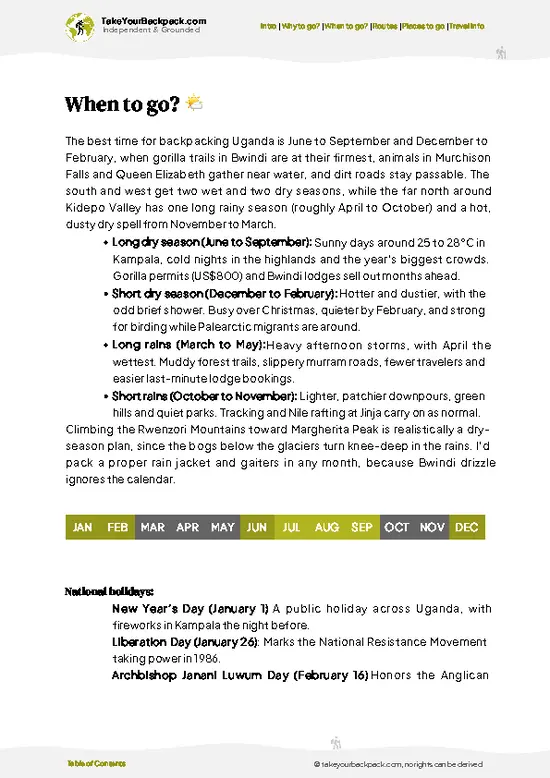
  • Topic: Weather – The Rolex Festival thrives in Uganda’s dry seasons, mainly from June to August and December to February. Expect minimal rain, which means no soggy shoes or ruined gear. Rainy months (March-May, September-November) can turn the streets into mud traps, killing your vibe and your pace.

  • Topic: Temperature – Daytime temps hover around 22-28°C (72-82°F) during the dry season, perfect for wandering without overheating. Nights dip to a comfortable 15-18°C (59-64°F), so pack a light jacket but don’t overthink it.

  • Topic: Daylight Hours – Uganda sits near the equator, so daylight stays steady year-round, roughly 12 hours. This consistency means you can plan your Rolex hunts and street strolls without racing the sunset.

  • Topic: Crowds – The festival draws more locals and tourists
read more 👉

  • Topic: Weather – The Rolex Festival thrives in Uganda’s dry seasons, mainly from June to August and December to February. Expect minimal rain, which means no soggy shoes or ruined gear. Rainy months (March-May, September-November) can turn the streets into mud traps, killing your vibe and your pace.

  • Topic: Temperature – Daytime temps hover around 22-28°C (72-82°F) during the dry season, perfect for wandering without overheating. Nights dip to a comfortable 15-18°C (59-64°F), so pack a light jacket but don’t overthink it.

  • Topic: Daylight Hours – Uganda sits near the equator, so daylight stays steady year-round, roughly 12 hours. This consistency means you can plan your Rolex hunts and street strolls without racing the sunset.

  • Topic: Crowds – The festival draws more locals and tourists during dry months, but it’s never overwhelming. Arriving early in the dry season lets you enjoy the buzz without elbowing through crowds.

  • Topic: Seasonal Activities – Dry seasons open up more street performances, live music, and outdoor markets around the festival. Wet seasons see fewer extras, so you miss out on that electric street energy.

  • Topic: Price Fluctuations – Accommodation and transport costs spike slightly during peak dry months due to higher demand. Booking early locks in better rates and keeps your budget intact for the festival itself.


Pro-tip: Aim for early dry season—June or December—when the weather is crisp, the crowds are manageable, and prices haven’t hit their peak. You’ll save energy, cash, and sanity for the real Rolex magic.


source: climatestotravel.comJANJanuary: excellent for travelingFEBFebruary: not recommended for travelingMARMarch: not recommended for travelingAPRApril: not recommended for travelingMAYMay: not recommended for travelingJUNJune: not recommended for travelingJULJuly: not recommended for travelingAUGAugust: not recommended for travelingSEPSeptember: not recommended for travelingOCTOctober: not recommended for travelingNOVNovember: not recommended for travelingDECDecember: not recommended for traveling

✈️ The backpacker research shortcutUganda Travel Guide

An offline-friendly backpacking guide with optimized travel routes, ranked highlights, transport advice, and the best areas to stay.
example page 0 from our offline Travel Guide for Uganda
example page 1 from our offline Travel Guide for Uganda
example page 2 from our offline Travel Guide for Uganda
example page 3 from our offline Travel Guide for Uganda
example page 4 from our offline Travel Guide for Uganda
example page 5 from our offline Travel Guide for Uganda
example page 6 from our offline Travel Guide for Uganda
example page 7 from our offline Travel Guide for Uganda
The digital guide (422 pages) contains:
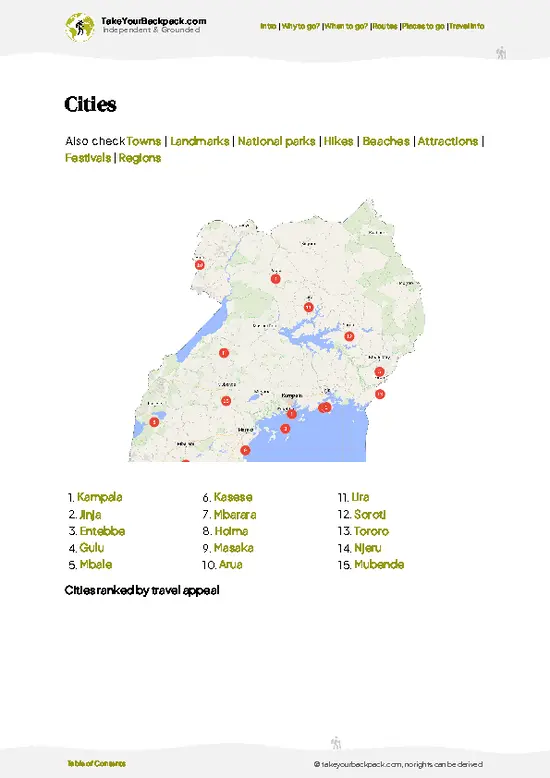
109 highlights, ranked by travel appeal
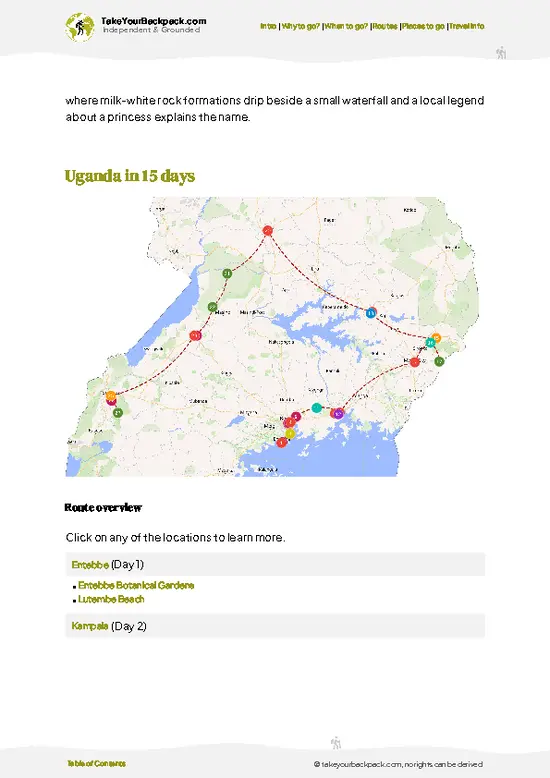
Optimized 5, 10 & 15-day travel routes
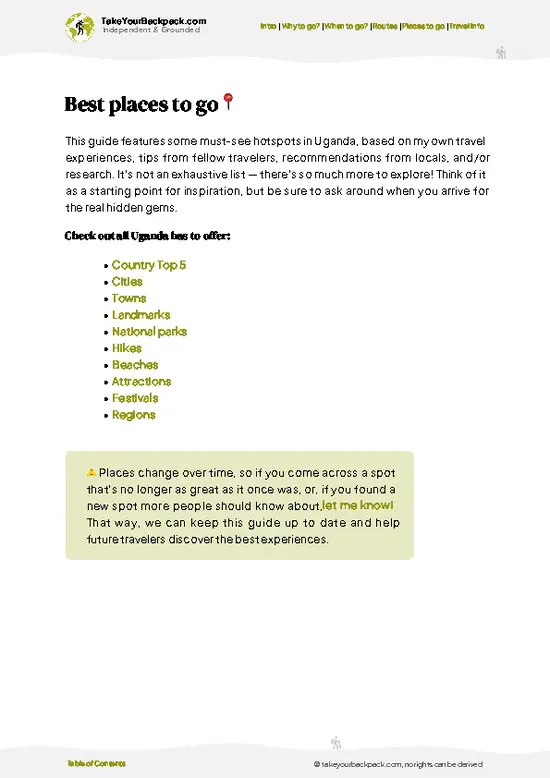
Cities, national parks, landmarks, beaches
How to get around
Offline-friendly for travel without Wi-Fi
👉 Click to see all 30+ guide features

📅 Plan smarter in minutes, not weeks
Month by month travel advice
Festivals & national holidays
Budget expectations

🗺️ Go to the right places, skip the overrated ones
Honest pros & cons of destinations
Top hikes, parks & viewpoints
Lesser-known places most travelers miss
Clear “worth it vs skip it” guidance

🛏️ Travel smoothly without rookie mistakes
Best areas to stay
Transport systems explained simply
Common scams & safety advice
SIM cards, money & practical tips

🌍 Understand the country, not just visit it
Culture & traditions
52 Essential phrases & customs
Festivals worth planning around
Traveler-friendly historical context
Insights that make places more meaningful

📱 Built for real travel conditions
Fully downloadable PDF
Works completely offline
Optimized for phone use
Useful in remote areas & buses
Everything in one place
Save weeks of stressful planning
Get instant access to your full guide. 30‑day money-back guarantee.


By proceeding you agree to our terms.
Sent to your inbox immediately after payment • 100% Secure Checkout
Best Backpacking Travel Advisor 2025 tourism awardBest Backpacking
Travel Advisor
2025
What others say about Take Your Backpack Guides:
⭐⭐⭐⭐⭐
Fantastic, amazing amount of information!
⭐⭐⭐⭐⭐
My goodness this is amazing, it's what I've been looking for hats off too you!
⭐⭐⭐⭐⭐
I think this is absolutely BRILLIANT
⭐⭐⭐⭐
Very complete and informative. It's still missing places, but I gotta to commend you
⭐⭐⭐⭐⭐
This is truly amazing, thank you, can't wait to explore it with my kids!
⭐⭐⭐⭐⭐
Awesome resource, thank you!
⭐⭐⭐⭐⭐
This is amazing! Can't wait to explore the ones I haven't seen
⭐⭐⭐⭐
I love this! Well done, great idea.
⭐⭐⭐⭐⭐
Thanks for taking the time to make this gem!
⭐⭐⭐⭐⭐
This might be the best website I've ever seen.
⭐⭐⭐⭐⭐
Congratulations, and thank you so much for your work; it's incredibly valuable.
⭐⭐⭐⭐
In all seriousness I think you did a great job pointing out the important spots
⭐⭐⭐⭐⭐
10/10 very good
⭐⭐⭐⭐⭐
As someone who's only just starting to visit regularly this is awesome, thank you.
⭐⭐⭐⭐
Thank you very much! I'm going to visit my dad, it's going to be very useful!
⭐⭐⭐⭐⭐
This is really cool! We'll be travelling for the first time and this definitely come in handy.
⭐⭐⭐⭐⭐
You are now our minister of culture, congratulations 👨‍💼
⭐⭐⭐⭐⭐
Just wanted to tell you that this is a pearl! Going to follow your recommendations.
⭐⭐⭐⭐⭐
This is so cool. I'll definitely be using the resource for my travels soon.
⭐⭐⭐⭐⭐
This is very impressive! Good work.
⭐⭐⭐⭐⭐
This is an amazing and informative site. Very well done!

🛏️ Where to stay?How to pick the right area

When you’re gearing up for the Rolex Festival in Uganda, your choice of where to stay can make or break your experience. Head to the bustling streets of Kampala, particularly around the vibrant neighborhoods of Kololo and Nakasero. These areas are not just safe; they pulse with energy and camaraderie. You’ll find plenty of budget-friendly hostels and guesthouses where fellow travelers gather, swapping stories over a shared meal or a cold drink.

For a more laid-back vibe, consider the Makerere area. It’s close enough to the festival action but offers a quieter retreat when you need to recharge. … read more 👉
When you’re gearing up for the Rolex Festival in Uganda, your choice of where to stay can make or break your experience. Head to the bustling streets of Kampala, particularly around the vibrant neighborhoods of Kololo and Nakasero. These areas are not just safe; they pulse with energy and camaraderie. You’ll find plenty of budget-friendly hostels and guesthouses where fellow travelers gather, swapping stories over a shared meal or a cold drink.

For a more laid-back vibe, consider the Makerere area. It’s close enough to the festival action but offers a quieter retreat when you need to recharge. Plus, you’ll find local eateries serving up delicious Rolex rolls—perfect fuel for your festival adventures.

Avoid the tourist traps that can drain your wallet. Instead, immerse yourself in the local culture. Engage with the community, and you’ll discover that the real magic of the festival lies in the connections you make along the way.

👛 Costs (as of 8 May 2026)How expensive it really is

The Rolex Festival in Uganda is an exhilarating experience, but understanding the costs can keep your adventure smooth and enjoyable.
  • Festival Tickets: Expect to pay between $20 and $50 for a day pass. Prices can vary based on the lineup and special events. Grab your tickets early to avoid last-minute price hikes.
  • Accommodation: Budget options start around $15 per night for hostels or shared rooms. Mid-range hotels will set you back about $50 to $100. If you’re feeling fancy, upscale lodges can go for $150 and up. Book ahead, especially during the festival, to secure a spot.
  • Local Transport: Public transport is your friend here. Matatus (shared taxis) cost around $1 to $3 for short distances. If you prefer more comfort, budget $10 to $30 for a private taxi ride. Always negotiate fares beforehand
read more 👉
The Rolex Festival in Uganda is an exhilarating experience, but understanding the costs can keep your adventure smooth and enjoyable.
  • Festival Tickets: Expect to pay between $20 and $50 for a day pass. Prices can vary based on the lineup and special events. Grab your tickets early to avoid last-minute price hikes.
  • Accommodation: Budget options start around $15 per night for hostels or shared rooms. Mid-range hotels will set you back about $50 to $100. If you’re feeling fancy, upscale lodges can go for $150 and up. Book ahead, especially during the festival, to secure a spot.
  • Local Transport: Public transport is your friend here. Matatus (shared taxis) cost around $1 to $3 for short distances. If you prefer more comfort, budget $10 to $30 for a private taxi ride. Always negotiate fares beforehand to avoid surprises.
  • Food & Drinks: Street food is a steal, with meals costing between $2 and $5. Restaurants range from $5 to $15 for a decent meal. Don’t forget to budget for drinks; local beers are about $2, while imported ones can be $4 or more.
  • Miscellaneous Expenses: Set aside $10 to $30 for souvenirs, tips, or unexpected costs. This cushion will keep your budget flexible for those spontaneous moments that make travel special.

Planning ahead with these estimates will help you focus on the festival’s energy rather than stressing over finances.
⚠️ Prices can change and everyone travels differently, so take this as a rough guide. Hope it helps you plan your adventure!

🍲 FoodEating & Drinking in Rolex

At the Rolex Festival in Uganda, food is a vibrant celebration. You’ll find Rolex, a local specialty that’s a must-try: a chapati rolled around eggs and veggies, bursting with flavor. Street stalls serve up samosas and kebabs, sizzling with spices that dance on your palate. Don’t miss the matoke—steamed green bananas that are a staple here, often served with rich sauces.

For drinks, grab a malwa, a traditional brew that’s both refreshing and a bit of a rite of passage. If you’re feeling adventurous, try the ajon, a local millet beer that packs a punch.

Etiquette is key; sharing is part of the experience, so don’t hesitate to swap bites with fellow festival-goers. Lines can get long, so be patient and enjoy the buzz around you. Cash is king here, so keep some on hand for those spontaneous … read more 👉
At the Rolex Festival in Uganda, food is a vibrant celebration. You’ll find Rolex, a local specialty that’s a must-try: a chapati rolled around eggs and veggies, bursting with flavor. Street stalls serve up samosas and kebabs, sizzling with spices that dance on your palate. Don’t miss the matoke—steamed green bananas that are a staple here, often served with rich sauces.

For drinks, grab a malwa, a traditional brew that’s both refreshing and a bit of a rite of passage. If you’re feeling adventurous, try the ajon, a local millet beer that packs a punch.

Etiquette is key; sharing is part of the experience, so don’t hesitate to swap bites with fellow festival-goers. Lines can get long, so be patient and enjoy the buzz around you. Cash is king here, so keep some on hand for those spontaneous snack attacks. Serving sizes are generous, so pace yourself and savor each bite.

Other Ugandan festivals near Rolex

Explore more nearby:


💡 Not sure where to go next?
Create a personalized itinerary for Uganda including Rolex and the places that fit your trip.

Generate my itinerary

👉 Discover all festivals

Or checkout all Uganda has to offer (think cities, towns, villages, national parks, hikes, beaches, festivals)
Country photo of Uganda

We 💚 feedbackFinal thoughts on celebrating the Rolex

The Rolex Festival in Uganda is a must for the food lover in you. Picture this: fresh rolex rolls, bursting with flavor, served by locals who know their craft. But here’s the catch—crowds can get intense, especially during peak hours. Plan your timing wisely to savor every bite without the chaos. Embrace the energy, but keep your wits about you. It’s all part of the adventure!

✈️ When did I visit Uganda?
In September 2019 I have done a backpacking trip through Uganda. Seeing gorilla’s in the wild from up close was a pure unexpected highlight!

✍️ Help improve this page!
The information on this page is based on my own backpacking experience in Uganda, supplemented with up-to-date research and feedback from other travelers. Travel details can change, so if you notice anything outdated or incomplete, feel free to let me know.


🙋‍♂️ Give feedback

👋 Meet the founderWho’s Behind Take Your Backpack?

Johan, backpacker and founder of TakeYourBackpackHi, I’m Johan (Netherlands 🇳🇱), the creator of TakeYourBackpack. Over the past decade, I’ve backpacked through 80+ countries across six continents, gaining extensive experience with independent travel, long-term trips, and overland routes.

This site is built on a combination of firsthand travel experience and carefully curated insights from other backpackers. Many guides are based on places I’ve personally visited, while others bring together tips, observations, and practical advice shared by trusted travelers I’ve met along the way.

The goal is to provide realistic, experience-driven guidance — not generic itineraries — so you can explore destinations with better context, clearer expectations, and more confidence.

Get full Uganda guide •
Instant download • 109 highlights • Full Offline guide