×

Uganda🇺🇬 | landmarksSource of the Nileriverhead viewpoint, colonial-era monuments, local boat crossings | things to do and best time to go

Explore BukedeaExplore Kasubi Royal Tombs

Backpacking in Source of the Nile
🏆 Top pickunique site ranked #1
By Johan Kruseman 🇳🇱 | Updated May 31, 2026

Your shoes crunch on red dirt as a boatman’s call cuts through the morning haze, the Nile’s surface flickering with the first gold of sunrise. The air smells like river mud and woodsmoke. You’re in Jinja, southeastern Uganda, where the world’s longest river officially begins its 4,000-mile sprint to the Mediterranean.

Let’s get real: the Source of the Nile is not some untouched Eden. There are selfie sticks, tour buses, and a ticket booth that feels more theme park than Livingstone. The “source” itself? A modest swirl of water, marked by a sign and a few hopeful vendors. But here’s the kicker—stand on that rickety jetty, watch the Nile muscle its way north, and you feel the weight of centuries. This is where empires dreamed and explorers obsessed. It’s not cheap by Ugandan standards, and the crowds can be thick, but the sheer audacity of the place—the idea that you’re at the starting line of history—makes it worth every shilling.

Discover everything you want to know in the 📖 Uganda Travel Guide.
Safety warning

The current risk level for Uganda is high. Check the advice before going.


Get your Uganda guide
109 ranked highlights, routes & tips, works offline (422 pages)
Loading the map 🌍
CLICK TO FILTER
cities
towns
landmarks
national parks
hikes
beaches
attractions
festivals
regions
SHOW COUNTRY’S BESTSHOW ALL

✨ Why go?
Ranked #1 unique site in Uganda
The unique appeal for travelers

The Source of the Nile in Uganda is often overshadowed by its Instagram hype, but let’s cut through the fluff. Yes, it can get crowded, especially during peak tourist season, but that’s part of the experience. You’re standing at a place where history flows—literally. The effort-to-reward ratio is solid. A modest entry fee gets you access to a site that’s steeped in exploration lore.

What makes it unique? The cultural richness surrounding the Nile. Local guides share stories that you won’t find in any travel brochure. You can hop on a boat for a closer look, or just chill by the banks, soaking in the vibe.

Accessibility is a breeze; it fits perfectly into a broader route through Uganda. Pair it with a visit to Murchison Falls or Queen Elizabeth National Park for a well-rounded adventure. … read more 👉
The Source of the Nile in Uganda is often overshadowed by its Instagram hype, but let’s cut through the fluff. Yes, it can get crowded, especially during peak tourist season, but that’s part of the experience. You’re standing at a place where history flows—literally. The effort-to-reward ratio is solid. A modest entry fee gets you access to a site that’s steeped in exploration lore.

What makes it unique? The cultural richness surrounding the Nile. Local guides share stories that you won’t find in any travel brochure. You can hop on a boat for a closer look, or just chill by the banks, soaking in the vibe.

Accessibility is a breeze; it fits perfectly into a broader route through Uganda. Pair it with a visit to Murchison Falls or Queen Elizabeth National Park for a well-rounded adventure.

And let’s talk costs. It’s budget-friendly, especially compared to other global landmarks. You’re not just ticking a box; you’re diving into a living narrative. The real magic lies in the connections you make and the stories you gather along the way.
Want to include Source of the Nile in your Uganda route?
Create a personalized Uganda itinerary that includes Source of the Nile and the places that fit your trip — based on your travel style, budget, and available time. Get your route in seconds.

Generate my trip

💡 HighlightsWhat this place is best known for

  1. The exact source spot (the jetty and monument) — The small jetty where the Nile peels away from Lake Victoria is oddly powerful: it’s literally the place the world’s longest river begins. There’s a modest monument and a chance to stand where explorers like Speke once pointed north. Quiet, photo-ready and oddly humbling — don’t expect a grand cathedral, but do expect a good story to tell over a cheap beer later.
  2. Short boat cruises into the first channels — Local launches take you into the shallow, papyrus-fringed channels that mark the Nile’s newborn steps. Wildlife, fishermen, lily pads and small islands roll by; it’s peaceful, surprisingly wild and cheap if you haggle a bit. Personal favorite — best early-morning calm you’ll find, and it feels more like discovering than touring.
  3. Owen/Nalubaale
read more 👉
  1. The exact source spot (the jetty and monument) — The small jetty where the Nile peels away from Lake Victoria is oddly powerful: it’s literally the place the world’s longest river begins. There’s a modest monument and a chance to stand where explorers like Speke once pointed north. Quiet, photo-ready and oddly humbling — don’t expect a grand cathedral, but do expect a good story to tell over a cheap beer later.
  2. Short boat cruises into the first channels — Local launches take you into the shallow, papyrus-fringed channels that mark the Nile’s newborn steps. Wildlife, fishermen, lily pads and small islands roll by; it’s peaceful, surprisingly wild and cheap if you haggle a bit. Personal favorite — best early-morning calm you’ll find, and it feels more like discovering than touring.
  3. Owen/Nalubaale Dam and hydro station — This concrete giant changed the Nile and Uganda’s power supply. Seeing the dam and the controlled rush of water gives you context: the Source isn’t just romantic — it’s industrial, political and essential. Good spot for photos that show the clash of nature and modern needs.
  4. White-water rafting and kayaking — The Nile near Jinja is one of Africa’s top rafting spots. Operators run safe half- and full-day trips suitable for beginners up to seasoned paddlers. It’s loud, wet and addictive — the kind of thing that turns a peaceful river trip into a proper adventure day.
  5. Bujagali rapids & local crafts — The rapids area (partly altered by a dam) still draws people for its power and for the markets nearby. You’ll find crafts, small galleries and stalls selling carvings and beaded goods. It’s where local culture and river tourism meet — good for souvenirs and short cultural chats.
  6. Birdwatching and papyrus swamp walks — The wetlands around the source are alive with kingfishers, herons, African jacanas and migrant species. Bring binoculars, go early, and you can spend hours spotting birds and watching the tiny ecosystem that helps feed the Nile’s start.
  7. Sunset riverside life — Come evening the riverfront comes alive with fishermen pulling nets, kids launching wooden boats and small bars filling up. Sit on a low wall, drink something cold, and watch color slide across the water — an easy, cheap way to soak up local life and shake off travel dust.
Spotted a mistake or missing something? Contact us.

Things to do near Source of the Nile

Ratings based on Tripadvisor reviews. When you book through this link, you support our work at no extra cost to you.

🌤️ When to go?When to go for the best experience


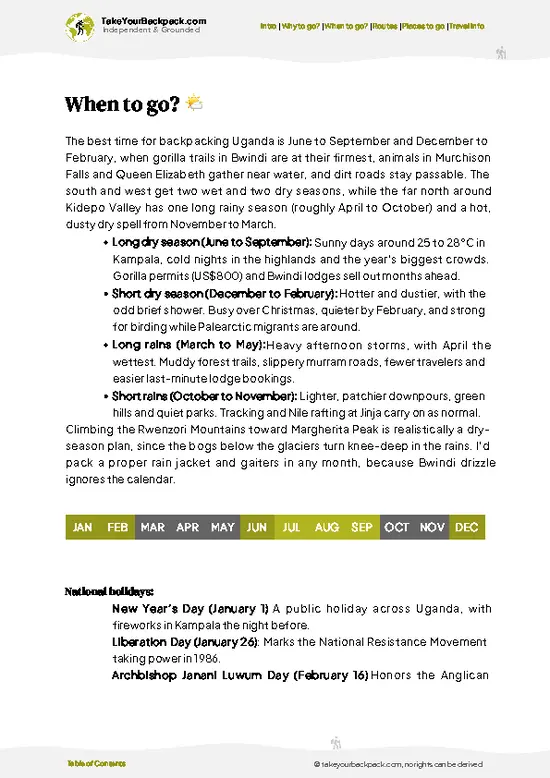
  • Weather: The best time to visit the Source of the Nile is during Uganda’s dry seasons, from June to September and December to February. Rain can turn trails into mud pits and make boat trips on Lake Victoria less enjoyable. Expect occasional showers outside these windows.

  • Temperature: Daytime temps hover between 22-28°C (72-82°F), which feels comfortable but can spike in the dry season. Nights cool down to around 15°C (59°F), so pack layers for early mornings and evenings.

  • Daylight Hours: Uganda sits near the equator, so daylight is steady year-round—about 12 hours daily. This means you won’t lose precious hiking or sightseeing time to early sunsets.

  • Crowds: Peak tourist months align with dry seasons, especially July and August. Expect more groups and higher prices then. The shoulder
read more 👉

  • Weather: The best time to visit the Source of the Nile is during Uganda’s dry seasons, from June to September and December to February. Rain can turn trails into mud pits and make boat trips on Lake Victoria less enjoyable. Expect occasional showers outside these windows.

  • Temperature: Daytime temps hover between 22-28°C (72-82°F), which feels comfortable but can spike in the dry season. Nights cool down to around 15°C (59°F), so pack layers for early mornings and evenings.

  • Daylight Hours: Uganda sits near the equator, so daylight is steady year-round—about 12 hours daily. This means you won’t lose precious hiking or sightseeing time to early sunsets.

  • Crowds: Peak tourist months align with dry seasons, especially July and August. Expect more groups and higher prices then. The shoulder months offer fewer tourists and a more intimate experience, but risk some rain.

  • Seasonal Activities: Dry seasons are prime for hiking, boat tours, and wildlife spotting around Jinja. The wet season brings lush greenery and swollen rivers, perfect for adrenaline junkies into white-water rafting but less so for casual trekkers.

  • Price Fluctuations: Accommodation and tours spike in the dry season’s peak months. Booking in shoulder seasons can save you 20-30%, but be ready to adapt plans if weather turns.


Pro-tip: Aim for early July or late September—dry enough to enjoy the Nile’s power without the crowds or inflated costs.


source: climatestotravel.comJANJanuary: highly recommended for travelingFEBFebruary: highly recommended for travelingMARMarch: fair for travelingAPRApril: fair for travelingMAYMay: good for travelingJUNJune: excellent for travelingJULJuly: excellent for travelingAUGAugust: excellent for travelingSEPSeptember: highly recommended for travelingOCTOctober: good for travelingNOVNovember: fair for travelingDECDecember: excellent for traveling
uganda-unique-site-source-of-the-nile
© Google |

✈️ The backpacker research shortcutUganda Travel Guide

An offline-friendly backpacking guide with optimized travel routes, ranked highlights, transport advice, and the best areas to stay.
example page 0 from our offline Travel Guide for Uganda
example page 1 from our offline Travel Guide for Uganda
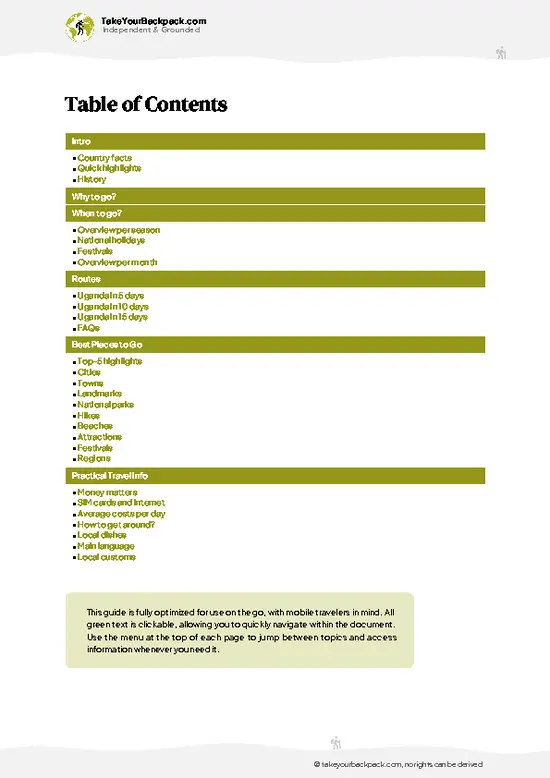
example page 2 from our offline Travel Guide for Uganda
example page 3 from our offline Travel Guide for Uganda
example page 4 from our offline Travel Guide for Uganda
example page 5 from our offline Travel Guide for Uganda
example page 6 from our offline Travel Guide for Uganda
example page 7 from our offline Travel Guide for Uganda
The digital guide (422 pages) contains:
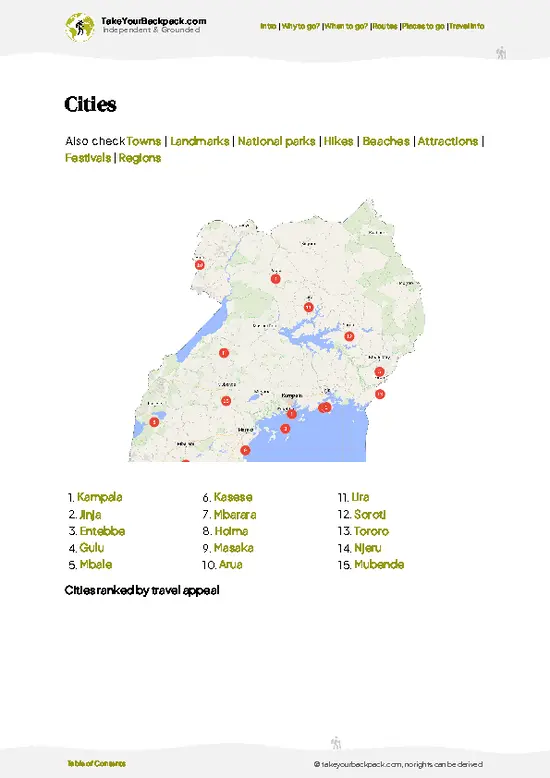
109 highlights, ranked by travel appeal
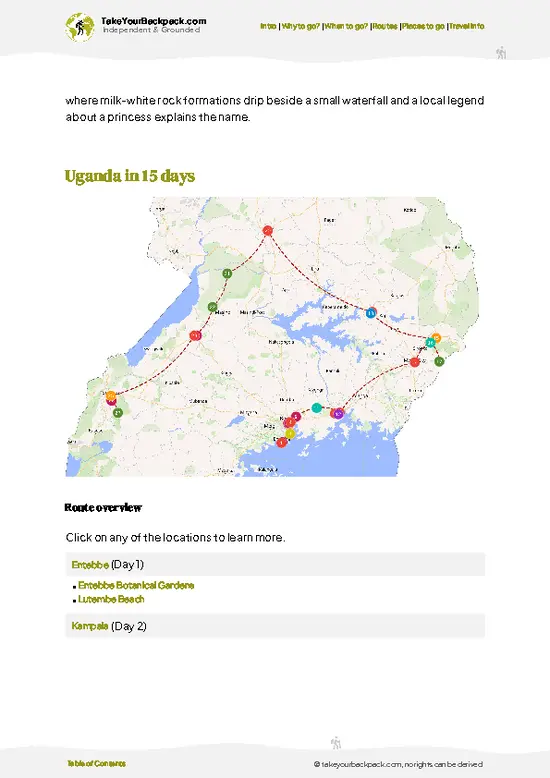
Optimized 5, 10 & 15-day travel routes
Cities, national parks, landmarks, beaches
How to get around
Offline-friendly for travel without Wi-Fi
👉 Click to see all 30+ guide features

📅 Plan smarter in minutes, not weeks
Month by month travel advice
Festivals & national holidays
Budget expectations

🗺️ Go to the right places, skip the overrated ones
Honest pros & cons of destinations
Top hikes, parks & viewpoints
Lesser-known places most travelers miss
Clear “worth it vs skip it” guidance

🛏️ Travel smoothly without rookie mistakes
Best areas to stay
Transport systems explained simply
Common scams & safety advice
SIM cards, money & practical tips

🌍 Understand the country, not just visit it
Culture & traditions
52 Essential phrases & customs
Festivals worth planning around
Traveler-friendly historical context
Insights that make places more meaningful

📱 Built for real travel conditions
Fully downloadable PDF
Works completely offline
Optimized for phone use
Useful in remote areas & buses
Everything in one place
Save weeks of stressful planning
Get instant access to your full guide. 30‑day money-back guarantee.


By proceeding you agree to our terms.
Sent to your inbox immediately after payment • 100% Secure Checkout
Best Backpacking Travel Advisor 2025 tourism awardBest Backpacking
Travel Advisor
2025
What others say about Take Your Backpack Guides:
⭐⭐⭐⭐⭐
Fantastic, amazing amount of information!
⭐⭐⭐⭐⭐
My goodness this is amazing, it's what I've been looking for hats off too you!
⭐⭐⭐⭐⭐
I think this is absolutely BRILLIANT
⭐⭐⭐⭐
Very complete and informative. It's still missing places, but I gotta to commend you
⭐⭐⭐⭐⭐
This is truly amazing, thank you, can't wait to explore it with my kids!
⭐⭐⭐⭐⭐
Awesome resource, thank you!
⭐⭐⭐⭐⭐
This is amazing! Can't wait to explore the ones I haven't seen
⭐⭐⭐⭐
I love this! Well done, great idea.
⭐⭐⭐⭐⭐
Thanks for taking the time to make this gem!
⭐⭐⭐⭐⭐
This might be the best website I've ever seen.
⭐⭐⭐⭐⭐
Congratulations, and thank you so much for your work; it's incredibly valuable.
⭐⭐⭐⭐
In all seriousness I think you did a great job pointing out the important spots
⭐⭐⭐⭐⭐
10/10 very good
⭐⭐⭐⭐⭐
As someone who's only just starting to visit regularly this is awesome, thank you.
⭐⭐⭐⭐
Thank you very much! I'm going to visit my dad, it's going to be very useful!
⭐⭐⭐⭐⭐
This is really cool! We'll be travelling for the first time and this definitely come in handy.
⭐⭐⭐⭐⭐
You are now our minister of culture, congratulations 👨‍💼
⭐⭐⭐⭐⭐
Just wanted to tell you that this is a pearl! Going to follow your recommendations.
⭐⭐⭐⭐⭐
This is so cool. I'll definitely be using the resource for my travels soon.
⭐⭐⭐⭐⭐
This is very impressive! Good work.
⭐⭐⭐⭐⭐
This is an amazing and informative site. Very well done!

🛏️ Where to stay?Where staying makes the most sense

When you’re heading to the Source of the Nile in Uganda, you’ll want to stay in areas that balance safety, social vibes, and affordability.

First up, look at Jinja town. It’s buzzing with backpacker energy. You’ll find plenty of budget accommodations that cater to solo travelers. The local scene is vibrant, with cafes and bars where you can swap stories with fellow adventurers. Plus, it’s just a short ride to the Nile itself.

Next, consider the riverbanks. Staying near the water offers stunning views and a laid-back atmosphere. Many places here have communal spaces, perfect for meeting like-minded … read more 👉
When you’re heading to the Source of the Nile in Uganda, you’ll want to stay in areas that balance safety, social vibes, and affordability.

First up, look at Jinja town. It’s buzzing with backpacker energy. You’ll find plenty of budget accommodations that cater to solo travelers. The local scene is vibrant, with cafes and bars where you can swap stories with fellow adventurers. Plus, it’s just a short ride to the Nile itself.

Next, consider the riverbanks. Staying near the water offers stunning views and a laid-back atmosphere. Many places here have communal spaces, perfect for meeting like-minded travelers. You can chill by the river, soak in the scenery, and maybe even catch a local musician strumming a tune.

Don’t overlook the outskirts of Jinja. You’ll find quieter spots that still keep you close to the action. These areas often have eco-lodges or guesthouses run by locals who can share insider tips.

Crowds can be intense at the Source, especially during peak season. But if you choose your base wisely, you’ll find the real magic in the connections you make and the stories you gather along the way.

👛 Costs (as of 4 May 2026)What things cost and how to budget

Visiting the Source of the Nile in Uganda can be a rewarding experience, but it’s essential to know what you’re getting into financially.
  • Entry Fees: Expect to pay around $10 to $20 for entry to the park. This fee grants you access to the main viewing areas and some basic facilities. It’s a small price for a piece of history, but don’t forget to check if there are any additional fees for guided tours or special activities.
  • Guided Tours: If you want a deeper dive into the area’s significance, guided tours range from $30 to $100. Prices vary based on group size and the length of the tour. A knowledgeable guide can enhance your experience, sharing stories and insights that you won’t find in a brochure.
  • Transportation: Getting there can be a bit of a journey. Expect to spend $50 to $150 for a round-trip
read more 👉
Visiting the Source of the Nile in Uganda can be a rewarding experience, but it’s essential to know what you’re getting into financially.
  • Entry Fees: Expect to pay around $10 to $20 for entry to the park. This fee grants you access to the main viewing areas and some basic facilities. It’s a small price for a piece of history, but don’t forget to check if there are any additional fees for guided tours or special activities.
  • Guided Tours: If you want a deeper dive into the area’s significance, guided tours range from $30 to $100. Prices vary based on group size and the length of the tour. A knowledgeable guide can enhance your experience, sharing stories and insights that you won’t find in a brochure.
  • Transportation: Getting there can be a bit of a journey. Expect to spend $50 to $150 for a round-trip taxi or shuttle from nearby towns like Jinja or Kampala. Public transport is cheaper but less convenient, so weigh your options based on comfort and time.
  • Accommodation: Options vary widely. Budget travelers can find dorms or basic guesthouses for as low as $10 per night. Mid-range hotels typically cost between $50 and $100. For a splurge, upscale lodges can go for $150 and up. Choose based on your comfort level and proximity to the Nile.
  • Food and Drink: Meals can range from $5 for local street food to $20 at a nicer restaurant. If you’re on a budget, local eateries offer delicious options that won’t break the bank. Just be cautious about hygiene, especially with street food.

Understanding these costs will help you plan better and enjoy the real magic of the Source of the Nile without any surprises.


source: visituganda.com
⚠️ Prices can change and everyone travels differently, so take this as a rough guide. Hope it helps you plan your adventure!

Where to go next

Source of the Nile isn’t the only highlight in Uganda. Explore all what Uganda has to offer.
Country photo of Uganda

We 💚 feedbackWhat to keep in mind

Visiting the Source of the Nile is like tapping into a pulse of history. Standing there, you feel the weight of ancient journeys and the thrill of adventure. But let’s be real: the crowds can be overwhelming, especially during peak season. You’ll share the view with a lot of selfie-takers. Still, if you can navigate the chaos, the chance to connect with such a legendary waterway is worth every moment. Just go in with your eyes wide open.

✈️ When did I visit Uganda?
In September 2019 I have done a backpacking trip through Uganda. Seeing gorilla’s in the wild from up close was a pure unexpected highlight!

✍️ Help improve this page!
The information on this page is based on my own backpacking experience in Uganda, supplemented with up-to-date research and feedback from other travelers. Travel details can change, so if you notice anything outdated or incomplete, feel free to let me know.


🙋‍♂️ Give feedback

👋 Meet the founderWho’s Behind Take Your Backpack?

Johan, backpacker and founder of TakeYourBackpackHi, I’m Johan (Netherlands 🇳🇱), the creator of TakeYourBackpack. Over the past decade, I’ve backpacked through 80+ countries across six continents, gaining extensive experience with independent travel, long-term trips, and overland routes.

This site is built on a combination of firsthand travel experience and carefully curated insights from other backpackers. Many guides are based on places I’ve personally visited, while others bring together tips, observations, and practical advice shared by trusted travelers I’ve met along the way.

The goal is to provide realistic, experience-driven guidance — not generic itineraries — so you can explore destinations with better context, clearer expectations, and more confidence.

Get full Uganda guide •
Instant download • 109 highlights • Full Offline guide