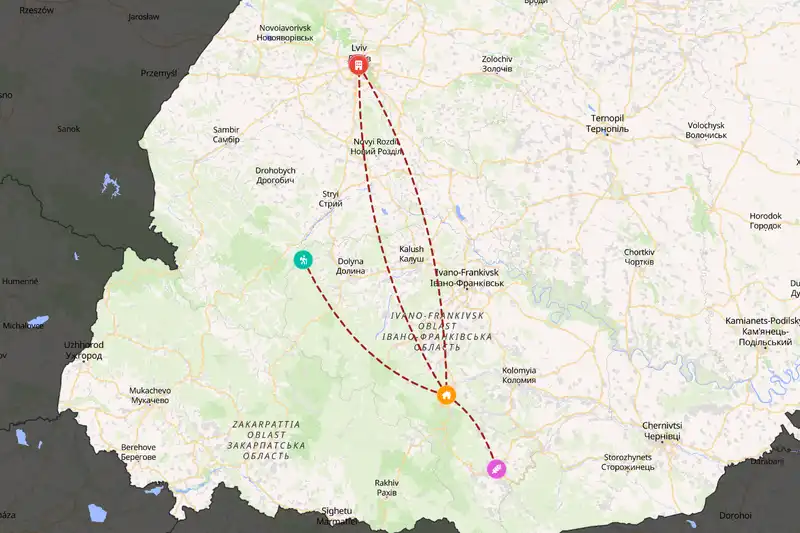
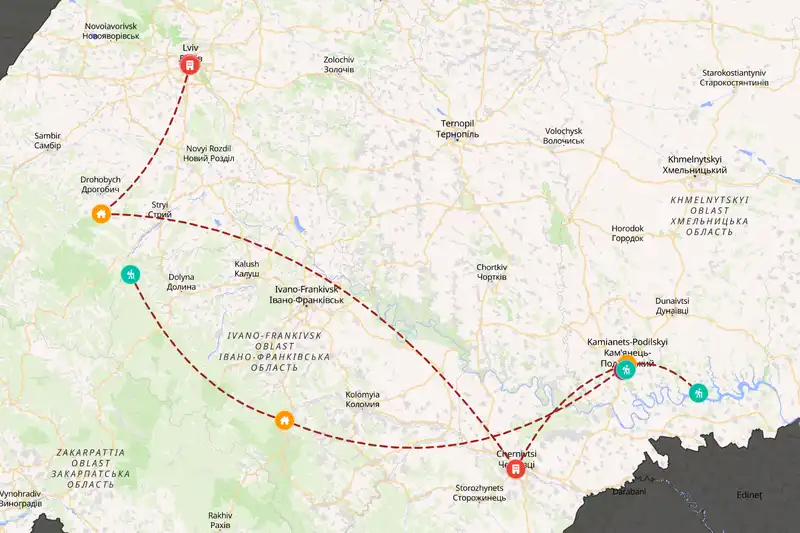
This 14-day route is for travelers who want a deeper cross-section of Western and Central Ukraine: historic cities, fortress towns, river canyons, and Carpathian hikes, moving mainly by intercity trains and regional buses with a moderate, steady pace. You’ll change bases several times—
Lviv,
Chernivtsi,
Kamianets-Podilskyi, and
Yaremche—but stay long enough in each to actually feel the place rather than just ticking boxes.
Days 1-3: Lviv as Your Cultural Launchpad
Begin in
Lviv, giving yourself three nights to really settle in before you start bouncing between regions. Spend your first full day in the
Lviv Historic Center Ensemble of the National Museum, using the old town as your orientation lab for Ukrainian history, architecture, and café etiquette. On your second day, lean into the performing arts: book an evening at the
Lviv Theatre of Opera and Ballet and, if you’re keen, add the more local-feeling
Lviv National Academic Theatre of Maria Zankovetska for a different style of stagecraft. …
read more 👉This 14-day route is for travelers who want a deeper cross-section of Western and Central Ukraine: historic cities, fortress towns, river canyons, and Carpathian hikes, moving mainly by intercity trains and regional buses with a moderate, steady pace. You’ll change bases several times—Lviv, Chernivtsi, Kamianets-Podilskyi, and Yaremche—but stay long enough in each to actually feel the place rather than just ticking boxes.
Days 1-3: Lviv as Your Cultural Launchpad
Begin in Lviv, giving yourself three nights to really settle in before you start bouncing between regions. Spend your first full day in the Lviv Historic Center Ensemble of the National Museum, using the old town as your orientation lab for Ukrainian history, architecture, and café etiquette. On your second day, lean into the performing arts: book an evening at the Lviv Theatre of Opera and Ballet and, if you’re keen, add the more local-feeling Lviv National Academic Theatre of Maria Zankovetska for a different style of stagecraft. This phase is about building context and comfort so the rest of the trip feels like a story, not a scatter of stops.Days 4-5: Spa Town Pause in Truskavets
Head by regional train or bus to Truskavets, a classic spa town that gives you a breather between city intensity and fortress country. Two nights here let you slow down: stroll the parks, sample mineral waters, and watch how domestic travelers use this place as a reset button. The value here isn’t in big-ticket sights but in the contrast—this is where you realize how varied Ukrainian travel can be without crossing huge distances.Days 6-7: Chernivtsi’s Architectural Mix
Continue by bus or train to Chernivtsi, one of the country’s most characterful cities, and give it two nights. Use your time to wander its central streets and squares, noticing how the architecture and café culture feel distinct from Lviv even though both are in the west. This stop is your bridge between spa-town calm and fortress drama, and it’s a good place to catch up on laundry, journaling, and slow dinners before you dive into more active days.Days 8-10: Fortresses & Canyon Landscapes around Kamianets-Podilskyi
Travel to Kamianets-Podilskyi and stay three nights so you can explore without rushing. Dedicate one full day to the Kamianets-Podilskyi Castle Complex, walking the walls and viewpoints at different times of day to see how the light changes the whole scene. Use another day to get out into the surrounding nature: hike the Bakota Bay Trail for river cliffs and wide views, and, if you have the energy, add a shorter outing into the Kamianets-Podilskyi Canyon area to see the town from below rather than above. This phase balances history and landscape, giving you a strong sense of why this region has always been strategically important.Days 11-14: Carpathian Finale in Yaremche & Dovbush Rocks
Finish with four nights in Yaremche, reached by bus or train via Ivano-Frankivsk region, to let your legs and lungs have some fun in the Carpathians. Use one day for the Dovbush Rocks hike, which offers a satisfying mix of forest, rock formations, and viewpoints without requiring mountaineering skills. Keep another day flexible for local walks, markets, and hearty Hutsul meals, and if you’re still hungry for culture, consider a day trip deeper into nearby valleys before looping back to your departure city. Ending in the mountains after fortresses and cities gives the whole two weeks a natural arc: you arrive curious, you learn, and then you exhale in the hills before heading home.
For a future return, tacking on a side trip to the quiet village of Kosmach opens up a whole different layer of Hutsul craft and mountain life.v2.webp)






 Best Backpacking