v2.webp)

- Lacock Abbey & Fox Talbot Museum — The big one: a 13th-century abbey turned manor where William Henry Fox Talbot invented early photography. You can wander the rooms, see original glass negatives and early cameras, and get the full context of why Lacock matters to photo history.
- The Abbey Cloister and monastic rooms — That atmospheric stone cloister you’ve seen in films is real and walkable. The geometry, worn steps and low light give a proper medieval vibe — great for photos and imagining monastic life (and yes, it doubled as Hogwarts).
- St Cyriac’s Church — A compact, layered medieval parish church with an interesting tower, historic monuments and a peaceful churchyard. It’s a proper slice of village history and quiet reflection right by the main street.
- Fox Talbot’s grave and photographic
- Lacock Abbey & Fox Talbot Museum — The big one: a 13th-century abbey turned manor where William Henry Fox Talbot invented early photography. You can wander the rooms, see original glass negatives and early cameras, and get the full context of why Lacock matters to photo history.
- The Abbey Cloister and monastic rooms — That atmospheric stone cloister you’ve seen in films is real and walkable. The geometry, worn steps and low light give a proper medieval vibe — great for photos and imagining monastic life (and yes, it doubled as Hogwarts).
- St Cyriac’s Church — A compact, layered medieval parish church with an interesting tower, historic monuments and a peaceful churchyard. It’s a proper slice of village history and quiet reflection right by the main street.
- Fox Talbot’s grave and photographic memorials — Scattered around the Abbey and churchyard are plaques, displays and his grave that mark Lacock as the birthplace of modern photography. For anyone into cameras or history, seeing this ground in person is oddly moving.
- The Old Lacock Post Office — A tiny time-capsule of a Victorian village post office/shop, preserved by the National Trust. It’s a short visit but nails the feel of 19th-century rural life in a way a textbook won’t.
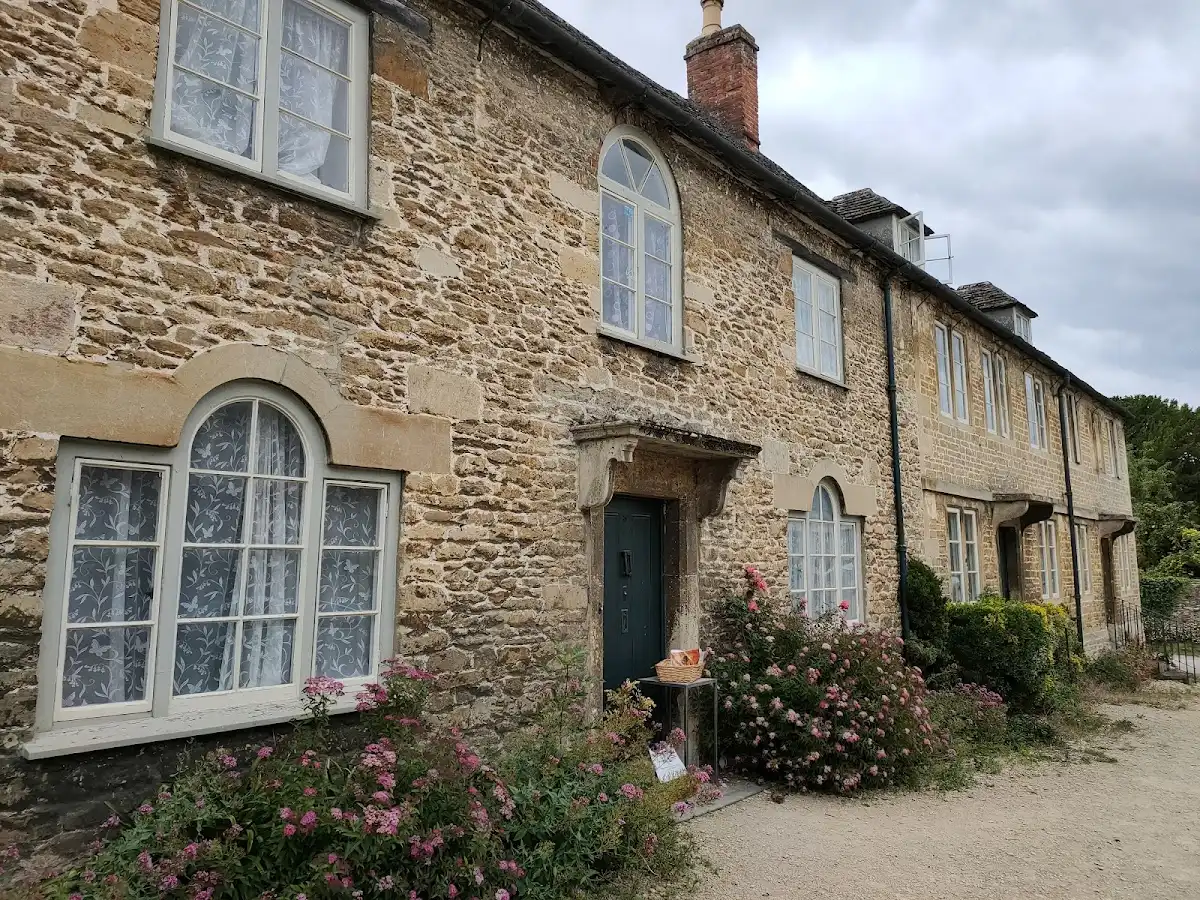
- High Street and timber-framed cottages — The whole village is basically an open-air period film set: narrow lanes, honey-coloured stone houses and quirky little doorways. Wander slowly — the details (mullioned windows, old signboards) are the payoff.
- The Tithe Barn — Part of the Abbey complex: a large medieval barn that speaks to Lacock’s monastic agricultural past. It’s architecturally interesting and often used for small exhibitions or events, so check what’s on when you visit.
- Abbey Mill and the riverside by the Avon — A pretty watermill and millpond sit right beside the Abbey. The riverside stretch is ideal for a short walk, reflections, and seeing how water helped power local life for centuries.
- Film-location trail around the village — Lacock punches above its weight in screen fame. From cloisters to cobbles you can point out spots used in Harry Potter, Downton Abbey and other productions. It’s a fun, tangible way to connect history with popular culture.
- The George Inn (historic coaching inn) — A proper old village pub with character — good for warming up, getting local tips, and sitting outside to watch the world go by. Food and atmosphere here feel like part of the visit, not just an afterthought.
Spotted a mistake or missing something? Contact us.
 Best Backpacking
.jpg) Hi, I’m Johan (Netherlands 🇳🇱), the creator of TakeYourBackpack. Over the past 3 decades, I’ve backpacked through 90+ countries across six continents, gaining extensive experience with independent travel, long-term trips, and overland routes.
Hi, I’m Johan (Netherlands 🇳🇱), the creator of TakeYourBackpack. Over the past 3 decades, I’ve backpacked through 90+ countries across six continents, gaining extensive experience with independent travel, long-term trips, and overland routes.