How many villages to visit: Plan on 5 to 8 villages across a one to two week trip, with two nights in each base. That number gives you one full day of walking and one pub evening per stop, which is the point of a village anyway. Past eight, you are collecting names rather than places, and the average rural bus timetable will punish you.
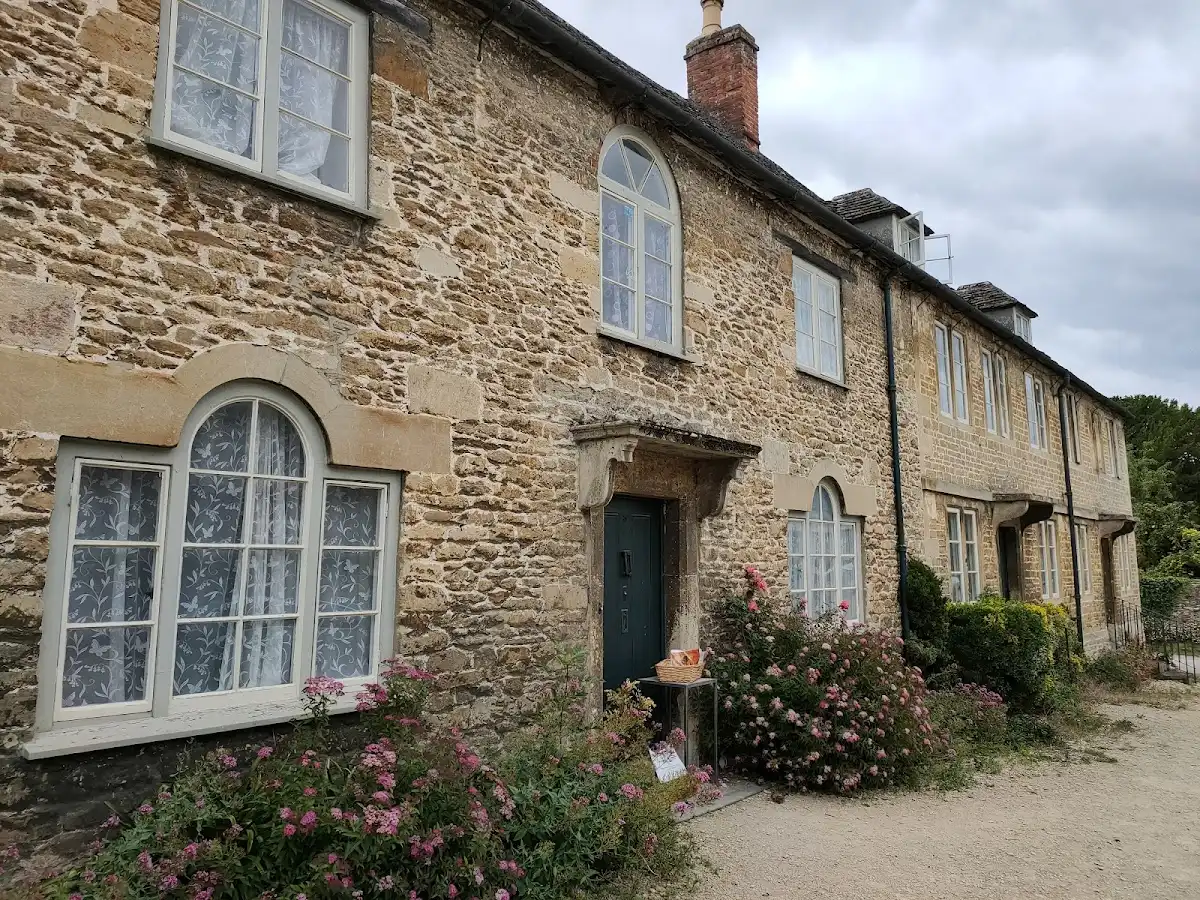
Choosing the kind that suits you: If you want classic honey-stone postcards and easy transport, pick the Cotswolds or the South Downs, accepting higher prices and weekend crowds. If hiking is the priority, choose Yorkshire Dales, Peak District or Lake District settlements that sit on long-distance paths. For solitude and drama, aim for the Scottish Highlands, Welsh coast or Northern Ireland’s Antrim coast, where beds are fewer and wild weather is guaranteed. …
read more 👉 How many villages to visit: Plan on 5 to 8 villages across a one to two week trip, with two nights in each base. That number gives you one full day of walking and one pub evening per stop, which is the point of a village anyway. Past eight, you are collecting names rather than places, and the average rural bus timetable will punish you.
Choosing the kind that suits you: If you want classic honey-stone postcards and easy transport, pick the Cotswolds or the South Downs, accepting higher prices and weekend crowds. If hiking is the priority, choose Yorkshire Dales, Peak District or Lake District settlements that sit on long-distance paths. For solitude and drama, aim for the Scottish Highlands, Welsh coast or Northern Ireland’s Antrim coast, where beds are fewer and wild weather is guaranteed. Mix one famous place with two quiet ones for balance.
What it costs: Budget about £60 to 100 (US$75 to 125) a day on a lean independent plan: hostel or campsite £20 to 40, a pub meal £12 to 20, local transport £5 to 20. A B&B double usually runs £80 to 150 a night, and village rooms in peak season can top £180. Car rental starts around £35 to 60 a day, plus fuel at roughly £1.40 to 1.60 a liter, and parking £3 to 10 a day in popular spots. Most villages are free to wander. Church visits are free or by donation (£2 to 5 is polite), while manor houses and gardens charge £10 to 25. National Trust or English Heritage passes pay back after about three visits.
Costs and delays that catch people out: Weekend pricing is the first trap. Book Friday and Saturday nights weeks ahead, or shift your stay to Sunday through Thursday and save 20 to 40 percent. Second is the one-bus-a-day schedule: check the last return before setting out, and carry a taxi number, since a ride home can cost £25 to 50. Third is pub kitchens, which often stop serving at 8:30 or 9 p.m. (earlier on Sundays). Eat by 8, or you will discover the joy of crisps. Fourth is mobile signal, which disappears in valleys and glens, so download offline maps. Fifth is parking fines in tiny car parks; read the tariff board and carry coins or the local app.
Safety and village manners: Village crime is low, and walking alone is generally fine, though leave valuables out of parked cars at trailheads, where break-ins happen. The bigger risk is weather. Fog and sudden rain turn hill paths dangerous, so carry a waterproof, map and spare layer, and tell your accommodation your route. Emergency number is 999 or 112; mountain rescue is requested through the police.
Cultural rules are modest but firm. Close farm gates behind you, keep dogs on a lead near livestock (cattle in particular can be aggressive), and stay on marked paths across fields. Greet people on lanes with a nod or hello, since silence reads as odd. In pubs, order at the bar and do not wait for table service. Wild camping is legal in much of Scotland but generally not in England or Wales without permission, so do not pitch up on a village green. Park considerately, because blocked farm gates and narrow lanes are a genuine local frustration.



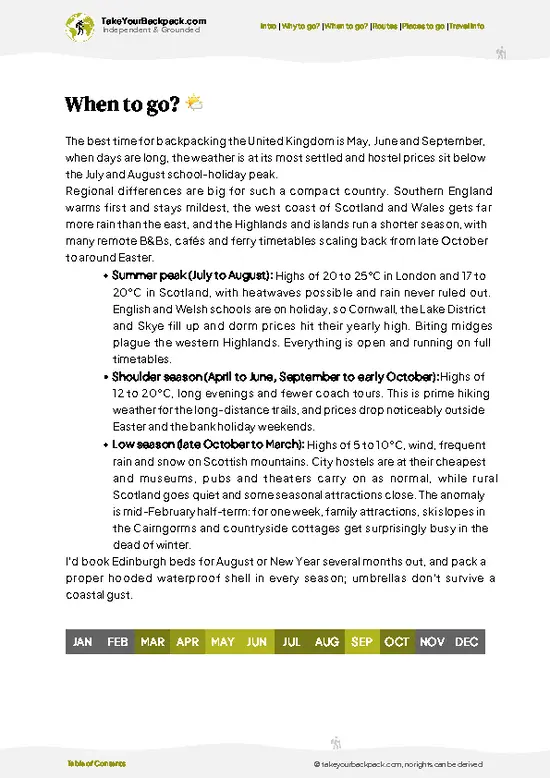
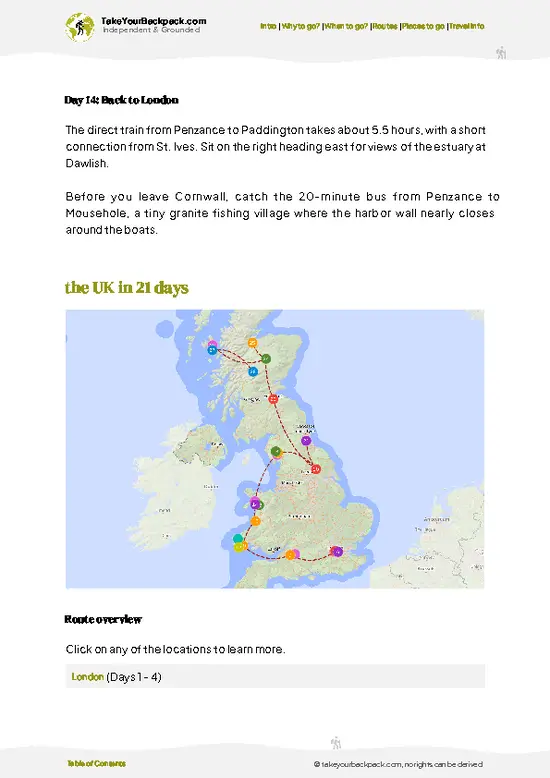
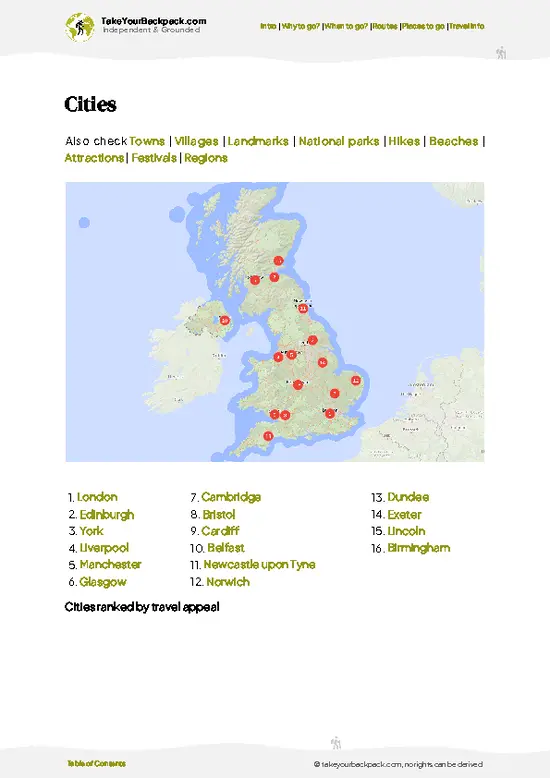
 Best Backpacking
 Hi, I’m Johan (Netherlands 🇳🇱), the creator of TakeYourBackpack. Over the past 3 decades, I’ve backpacked through 90+ countries across six continents, gaining extensive experience with independent travel, long-term trips, and overland routes.