

×

the UK🇬🇧 | attractionsNatural History Museumdinosaur skeletons, ornate architecture, minerals collection, Earth sciences | things to do and best time to go

Explore Edinburgh CastleExplore Science Museum

Backpacking in Natural History Museum
🏆 Top pickattraction ranked #2
By Johan Kruseman 🇳🇱 | Updated October 15, 2026

Here’s the curveball: the Natural History Museum in London is one of the only world-class museums where you can sprawl out on the floor and nap under a blue whale skeleton—no ticket required. That’s right, entry is free, and nobody’s hustling you along, which is a rare gift in the UK’s capital. But let’s kill the Instagram fantasy: you’re not going to have the dinosaur hall to yourself unless you show up at opening or during a rainstorm when everyone else is hiding in a pub. The crowds are real, especially on weekends and school holidays, and the main halls can feel like a human pinball machine. Still, the place is a sensory overload in the best way—Victorian architecture, the smell of old wood and fossils, and exhibits that actually make you want to touch, poke, and ask questions. Compared to the British Museum or the Tower of London, the vibe is younger, more chaotic, and refreshingly unpretentious. If you’re a backpacker chasing value, history, and a bit of childlike awe, this is one of the UK’s rare “tourist magnets” that actually earns its reputation.

Discover everything you want to know in the 📖 the UK Travel Guide.


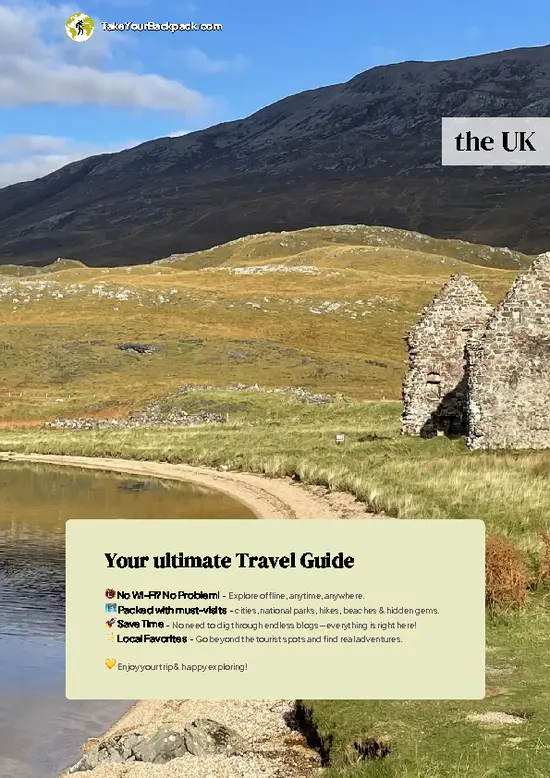
example page 0 from our offline Travel Guide for United Kingdom
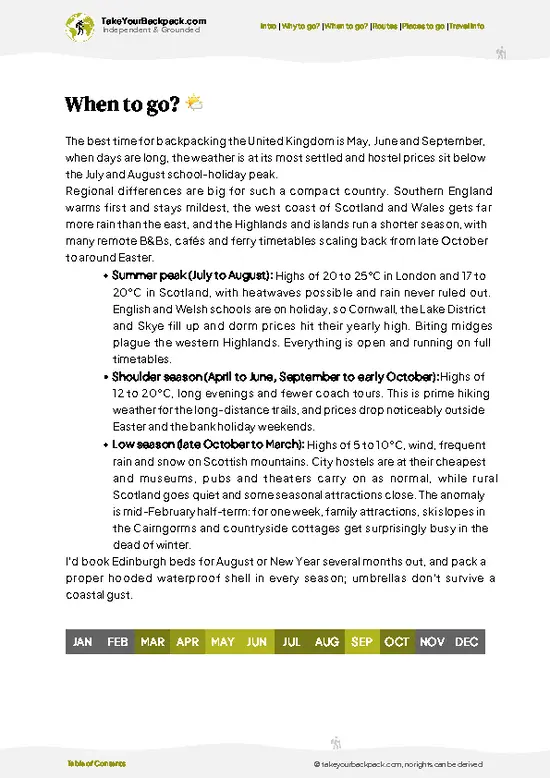
example page 1 from our offline Travel Guide for United Kingdom
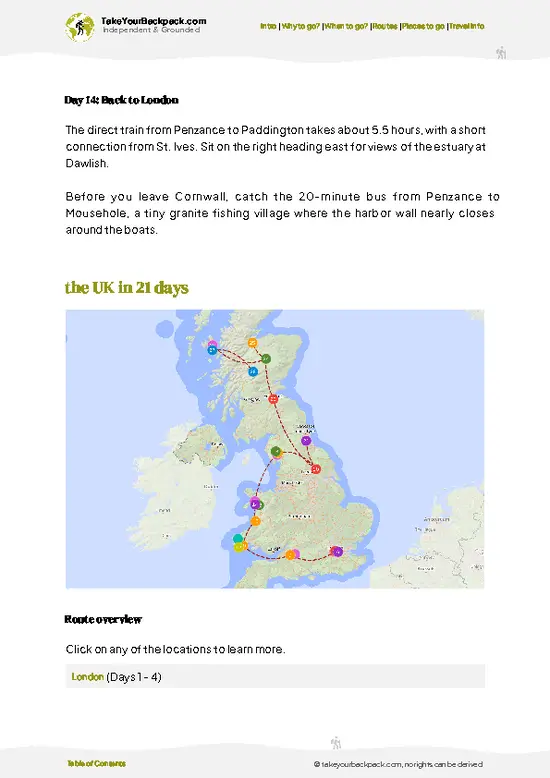
example page 2 from our offline Travel Guide for United Kingdom
example page 3 from our offline Travel Guide for United Kingdom
example page 4 from our offline Travel Guide for United Kingdom
example page 5 from our offline Travel Guide for United Kingdom
example page 6 from our offline Travel Guide for United Kingdom
example page 7 from our offline Travel Guide for United Kingdom
Loading the map 🌍
CLICK TO FILTER
cities
towns
villages
landmarks
national parks
hikes
beaches
attractions
festivals
regions
SHOW COUNTRY’S BESTSHOW ALL

✨ Why go?
Ranked #2 attraction in the UK
Why Natural History Museum should be on your travel list

The Natural History Museum in the UK is not just another stop on the tourist checklist—it’s a heavyweight in the world of museums. Sure, it’s crowded, especially during peak hours, and yes, the entrance is free, but don’t let that fool you into thinking it’s just a casual stroll. This place packs a punch with its sheer scale and depth. You’re walking into a vault of Earth’s story, from towering dinosaur skeletons that still wow after centuries, to intricate displays of human evolution and biodiversity that demand your full attention.

Backpackers make time here because it’s a rare chance to connect with the planet’s past in a way that’s both visceral and intellectual. It’s not just about ticking off an iconic London landmark; it’s about standing in a space where science, history, and culture … read more 👉
The Natural History Museum in the UK is not just another stop on the tourist checklist—it’s a heavyweight in the world of museums. Sure, it’s crowded, especially during peak hours, and yes, the entrance is free, but don’t let that fool you into thinking it’s just a casual stroll. This place packs a punch with its sheer scale and depth. You’re walking into a vault of Earth’s story, from towering dinosaur skeletons that still wow after centuries, to intricate displays of human evolution and biodiversity that demand your full attention.

Backpackers make time here because it’s a rare chance to connect with the planet’s past in a way that’s both visceral and intellectual. It’s not just about ticking off an iconic London landmark; it’s about standing in a space where science, history, and culture collide. The museum’s architecture alone—a Victorian masterpiece—sets the tone for the kind of immersive experience you’re in for. It’s a major milestone on any UK route because it grounds your journey in something bigger than sightseeing: a real, tangible link to the natural world that shaped us. The effort to navigate the crowds and absorb the exhibits pays off with a kind of awe that sticks with you long after you leave.

💡 HighlightsThe experiences that define the visit

Hintze Hall (and “Dippy” the Diplodocus)
Let’s get real: you’re not coming to the UK’s Natural History Museum for a quiet, meditative stroll. Hintze Hall is a cathedral of chaos—kids on sugar highs, tourists wielding selfie sticks, and the echo of a thousand languages bouncing off Victorian arches. But walk in, and you’ll see why it’s worth elbowing through the crowd. The blue whale skeleton, “Hope,” suspended mid-dive, is a jaw-dropper—an actual blue whale, not a fiberglass knockoff. Before Hope, “Dippy” the Diplodocus reigned here, and when he’s on tour, the nostalgia is palpable. This is the museum’s beating heart: grand, noisy, and impossible to forget.

The Vault
Skip the generic gemstone halls you’ll find in every other museum. The Vault is where the Natural History Museum flexes its muscle. … read more 👉
Hintze Hall (and “Dippy” the Diplodocus)
Let’s get real: you’re not coming to the UK’s Natural History Museum for a quiet, meditative stroll. Hintze Hall is a cathedral of chaos—kids on sugar highs, tourists wielding selfie sticks, and the echo of a thousand languages bouncing off Victorian arches. But walk in, and you’ll see why it’s worth elbowing through the crowd. The blue whale skeleton, “Hope,” suspended mid-dive, is a jaw-dropper—an actual blue whale, not a fiberglass knockoff. Before Hope, “Dippy” the Diplodocus reigned here, and when he’s on tour, the nostalgia is palpable. This is the museum’s beating heart: grand, noisy, and impossible to forget.

The Vault
Skip the generic gemstone halls you’ll find in every other museum. The Vault is where the Natural History Museum flexes its muscle. We’re talking rare meteorites, radioactive minerals, and the Aurora Pyramid of Hope—a collection of colored diamonds that would make a Bond villain sweat. It’s dark, it’s dramatic, and it’s the closest you’ll get to a real-life treasure hoard. If you want to see the kind of rocks that make geologists weep, this is your spot.

Earth Hall and the Giant Earth Sculpture
You don’t just walk into Earth Hall—you ascend an escalator through a glowing, cracked planet. It’s pure sci-fi, and it’s not just for show. The hall is a crash course in the violent, beautiful chaos that built our planet: earthquakes, volcanoes, and tectonic drama. The interactive displays are genuinely fun, not just for kids. If you’ve ever wanted to touch a chunk of real meteorite or see what an earthquake feels like, this is your playground.

Dinosaurs Gallery
Yes, it’s crowded. Yes, you’ll have to dodge strollers. But the animatronic T. rex is worth every second of the wait. It’s loud, it’s a little cheesy, and it’s absolutely magnetic—kids and adults alike are transfixed. The rest of the gallery is packed with real fossils and skeletons, not just plastic models. If you want to feel like a kid again (or actually are one), this is the place.

Wildlife Garden
This is my personal favorite. Step outside and you’re suddenly in a pocket of wild UK countryside, right in the middle of London. Forget manicured lawns—this is a living, breathing ecosystem, with ponds, meadows, and hedgerows. In spring, it’s buzzing with bees and butterflies. It’s the antidote to museum fatigue and a reminder that natural history isn’t just behind glass.

Cocoon in the Darwin Centre
This is where the museum drops the “look but don’t touch” act. The Cocoon is a spiraling, futuristic pod where you can peer into real working labs, see scientists prepping specimens, and get hands-on with interactive exhibits. It’s the backstage pass to the world of natural history—no filter, no sugarcoating. If you want to see science in action, this is the real deal.
Spotted a mistake or missing something? Contact us.

Things to do around Natural History Museum

Ratings based on Tripadvisor reviews. When you book through this link, you support our work at no extra cost to you.

🌤️ When to go?Weather, crowds, and seasonal trade-offs

  • Weather & Temperature: The UK’s Natural History Museum is best visited in late spring (May to June) or early autumn (September). Temperatures hover around 15-20°C (59-68°F), which is comfortable for walking between exhibits without sweating buckets or shivering. Winter months (December to February) can be chilly, around 5°C (41°F), and damp, which makes the museum a cozy refuge but less pleasant for outdoor strolls nearby.
  • Daylight Hours: Longer daylight in May and June means you can combine your museum visit with other London explorations without rushing. Expect about 16-18 hours of daylight. By contrast, December offers only 7-8 hours, squeezing your sightseeing time and making the museum feel like a refuge from the dark.
  • Crowds: The museum is a magnet for tourists year-round, but July
… read more 👉
  • Weather & Temperature: The UK’s Natural History Museum is best visited in late spring (May to June) or early autumn (September). Temperatures hover around 15-20°C (59-68°F), which is comfortable for walking between exhibits without sweating buckets or shivering. Winter months (December to February) can be chilly, around 5°C (41°F), and damp, which makes the museum a cozy refuge but less pleasant for outdoor strolls nearby.
  • Daylight Hours: Longer daylight in May and June means you can combine your museum visit with other London explorations without rushing. Expect about 16-18 hours of daylight. By contrast, December offers only 7-8 hours, squeezing your sightseeing time and making the museum feel like a refuge from the dark.
  • Crowds: The museum is a magnet for tourists year-round, but July and August bring the worst crowds—families, school groups, and selfie-stick armies. If you want elbow room, avoid summer holidays and weekends. Late September and October see fewer visitors, giving you a better chance to enjoy the exhibits without feeling like a sardine.
  • Seasonal Activities: Special exhibitions and events often launch in spring and autumn, adding fresh layers to the experience. Winter holidays bring festive decorations and themed activities, but these also attract more families and kids, so expect noise and lines.
  • Price Fluctuations: Entry to the main museum is free, but special exhibitions can cost £15-25. Prices don’t vary much by season, but booking in advance during peak times (summer and holidays) is essential to avoid sold-out slots and premium last-minute rates.
Pro-tip: Aim for a weekday morning in late September—cool but not cold, light but not glaring, and just quiet enough to soak in the dinosaur bones without a crowd breathing down your neck.


source: climatestotravel.comJANJanuary: fair for travelingFEBFebruary: fair for travelingMARMarch: good for travelingAPRApril: good for travelingMAYMay: excellent for travelingJUNJune: excellent for travelingJULJuly: fair for travelingAUGAugust: fair for travelingSEPSeptember: highly recommended for travelingOCTOctober: highly recommended for travelingNOVNovember: good for travelingDECDecember: fair for traveling
when-to-go

✈️ The backpacker research shortcutthe UK Travel Guide

An offline-friendly backpacking guide with optimized travel routes, ranked highlights, transport advice, and the best areas to stay.
example page 0 from our offline Travel Guide for United Kingdom
example page 1 from our offline Travel Guide for United Kingdom
example page 2 from our offline Travel Guide for United Kingdom
example page 3 from our offline Travel Guide for United Kingdom
example page 4 from our offline Travel Guide for United Kingdom
example page 5 from our offline Travel Guide for United Kingdom
example page 6 from our offline Travel Guide for United Kingdom
example page 7 from our offline Travel Guide for United Kingdom
The digital guide (526 pages) contains:
✅ 146 highlights, ranked by travel appeal
✅ Optimized 7, 14 & 21-day travel routes
✅ Cities, national parks, landmarks, beaches
✅ How to get around
✅ Offline-friendly for travel without Wi-Fi
👉 Click to see all 30+ guide features

📅 Plan smarter in minutes, not weeks
✅ Month by month travel advice
✅ Festivals & national holidays
✅ Budget expectations

🗺️ Go to the right places, skip the overrated ones
✅ Honest pros & cons of destinations
✅ Top hikes, parks & viewpoints
✅ Lesser-known places most travelers miss
✅ Clear “worth it vs skip it” guidance

🛏️ Travel smoothly without rookie mistakes
✅ Best areas to stay
✅ Transport systems explained simply
✅ Common scams & safety advice
✅ SIM cards, money & practical tips

🌍 Understand the country, not just visit it
✅ Culture & traditions
✅ Local customs
✅ Festivals worth planning around
✅ Traveler-friendly historical context
✅ Insights that make places more meaningful

📱 Built for real travel conditions
✅ Fully downloadable PDF
✅ Works completely offline
✅ Optimized for phone use
✅ Useful in remote areas & buses
✅ Everything in one place
Stop searching, start planning
Get instant access to your full guide. 30‑day money-back guarantee.
+ Add another guide for just

By proceeding you agree to our terms.
Sent to your inbox immediately after payment • 100% Secure Checkout
Best Backpacking Travel Advisor 2025 tourism awardBest Backpacking
Travel Advisor
2025
What others say about Take Your Backpack Guides:
⭐⭐⭐⭐⭐
Fantastic, amazing amount of information!
⭐⭐⭐⭐⭐
My goodness this is amazing, it's what I've been looking for hats off too you!
⭐⭐⭐⭐⭐
I think this is absolutely BRILLIANT
⭐⭐⭐⭐
Very complete and informative. It's still missing places, but I gotta to commend you
⭐⭐⭐⭐⭐
This is truly amazing, thank you, can't wait to explore it with my kids!
⭐⭐⭐⭐⭐
Awesome resource, thank you!
⭐⭐⭐⭐⭐
This is amazing! Can't wait to explore the ones I haven't seen
⭐⭐⭐⭐
I love this! Well done, great idea.
⭐⭐⭐⭐⭐
Thanks for taking the time to make this gem!
⭐⭐⭐⭐⭐
This might be the best website I've ever seen.
⭐⭐⭐⭐⭐
Congratulations, and thank you so much for your work; it's incredibly valuable.
⭐⭐⭐⭐
In all seriousness I think you did a great job pointing out the important spots
⭐⭐⭐⭐⭐
10/10 very good
⭐⭐⭐⭐⭐
As someone who's only just starting to visit regularly this is awesome, thank you.
⭐⭐⭐⭐
Thank you very much! I'm going to visit my dad, it's going to be very useful!
⭐⭐⭐⭐⭐
This is really cool! We'll be travelling for the first time and this definitely come in handy.
⭐⭐⭐⭐⭐
You are now our minister of culture, congratulations 👨‍💼
⭐⭐⭐⭐⭐
Just wanted to tell you that this is a pearl! Going to follow your recommendations.
⭐⭐⭐⭐⭐
This is so cool. I'll definitely be using the resource for my travels soon.
⭐⭐⭐⭐⭐
This is very impressive! Good work.
⭐⭐⭐⭐⭐
This is an amazing and informative site. Very well done!

🛏️ Where to stay?How to pick the right area

If you’re backpacking to see the Natural History Museum in the UK, brace yourself: South Kensington is the obvious choice, but it’s not a budget paradise. This area is safe and polished, packed with tourists and locals alike, but expect prices to reflect that. It’s a hotspot for culture vultures, so you’ll find plenty of fellow travelers, but the vibe leans more polished than gritty backpacker. If you want to be steps away from the museum’s dinosaur skeletons and blue whale, this is your base—but don’t expect cheap dorm beds.

For a more authentic, wallet-friendly experience, look just a bit east … read more 👉
If you’re backpacking to see the Natural History Museum in the UK, brace yourself: South Kensington is the obvious choice, but it’s not a budget paradise. This area is safe and polished, packed with tourists and locals alike, but expect prices to reflect that. It’s a hotspot for culture vultures, so you’ll find plenty of fellow travelers, but the vibe leans more polished than gritty backpacker. If you want to be steps away from the museum’s dinosaur skeletons and blue whale, this is your base—but don’t expect cheap dorm beds.

For a more authentic, wallet-friendly experience, look just a bit east toward Earl’s Court or Gloucester Road. These neighborhoods are still within a 15-minute walk or a quick Tube ride, but they offer a more lived-in feel. You’ll find hostels and budget guesthouses where solo travelers and backpackers mingle over cheap eats and pub nights. Safety is solid, and the streets hum with a mix of locals and travelers, giving you a real slice of London life without the inflated South Kensington price tag.

Skip the tourist bubble. Stay where you can soak in the city’s pulse after museum hours, not just the polished facade during the day. That’s where the real magic happens.

👛 Costs (as of 15 October 2026)Travel costs and budget guide for Natural History Museum

Entry to the Natural History Museum in the UK is free of charge. However, special exhibitions or events may require a ticket, typically ranging from £10 to £25 (approximately USD12 to USD30). Additional costs may include parking or guided tours if chosen.

source: nhm.ac.uk
⚠️ Prices can change and everyone travels differently, so take this as a rough guide. Hope it helps you plan your adventure!

FAQFrequently asked questions about Natural History Museum

3 to 4 hours is sufficient to see the main exhibits at the Natural History Museum. If you want to explore in detail or attend special exhibitions, plan for up to half a day. The museum is large, with over 80 million items, so prioritize key sections like dinosaurs and human biology.
Yes, the Natural History Museum is worth the entrance fee because it offers a unique and extensive collection of natural specimens and interactive exhibits. Admission is free, but special exhibitions may charge around £15-£20. The educational value and iconic architecture justify any additional costs.
The Natural History Museum is located in South Kensington, London. The easiest way to get there is by taking the London Underground to South Kensington station, served by the Circle, District, and Piccadilly lines, and then walking about 5 minutes. Several bus routes also stop nearby.
⚠️ Things can change over time, so always validate details locally before you go.

Other British attractions near Natural History Museum

Explore more nearby:

  • Science Museum—interactive galleries, space exploration, technology history, family exhibits| 0 km away
  • Victoria and Albert Museum—decorative arts, fashion galleries, design collections, sculpture courts| 0 km away
  • National Gallery—European paintings, Renaissance art, Trafalgar Square, iconic masterpieces| 4 km away

💡 Not sure where to go next?
Create a personalized itinerary for the UK including Natural History Museum and the places that fit your trip.

Generate my itinerary

👉 Discover all attractions

Or checkout all the UK has to offer (think cities, towns, villages, national parks, hikes, beaches, festivals)
Country photo of the UK

We 💚 feedbackIs it worth it?

The Natural History Museum in the UK is a heavyweight in the world of museums—its dinosaur skeletons alone can make you forget the crowds. But brace yourself: weekends and school holidays turn it into a packed maze, testing your patience more than your curiosity. Still, if you carve out time on a quieter day, the blend of jaw-dropping exhibits and that old-school Victorian charm makes it a rare spot where science feels alive, not just displayed.

✈️ When did I visit the UK?
United Kingdom being my neighbour country with just the North Sea separating us, I visited it multiple times. In May 2015 I had a car trip through Southern England and Wales. In July 2023 I backpacked through Northern Ireland and in October 2023 I visited a friend I met in Pakistan, who showed me around Isle of Skye and Ullapool.

✍️ Help improve this page!
The information on this page is based on my own backpacking experience in the UK, supplemented with up-to-date research and feedback from other travelers. Travel details can change, so if you notice anything outdated or incomplete, feel free to let me know.


🙋‍♂️ Give feedback

👋 Meet the founderWho’s Behind Take Your Backpack?

Johan, backpacker and founder of TakeYourBackpackHi, I’m Johan (Netherlands 🇳🇱), the creator of TakeYourBackpack. Over the past 3 decades, I’ve backpacked through 90+ countries across six continents, gaining extensive experience with independent travel, long-term trips, and overland routes.

This site is built on a combination of firsthand travel experience and carefully curated insights from other backpackers. Many guides are based on places I’ve personally visited, while others bring together tips, observations, and practical advice shared by trusted travelers I’ve met along the way.

The goal is to provide realistic, experience-driven guidance — not generic itineraries — so you can explore destinations with better context, clearer expectations, and more confidence.