×

United States Virgin Islands🇻🇮 | hikesCinnamon Bay TrailSteep forest climb, plantation foundations, beachside start, reef snorkeling | things to do and best time to go

Explore Annaberg Plantation TrailExplore Ram Head Trail

Backpacking in Cinnamon Bay Trail
👍 Recommendedhike ranked #3
By Johan Kruseman 🇳🇱 | Updated October 22, 2026

Cinnamon Bay Trail is a walk through ruins and forest, and the cinnamon trees it was named for are a small part of it; the bay itself is better known for its beach and campground. The trail sits on the north shore of St. John in the United States Virgin Islands, inside Virgin Islands National Park. It climbs gently from the road across from the beach, past the stone walls and chimney of an old sugar plantation works, then keeps going uphill through dry forest to meet Centerline Road. The grade is moderate, the path is rocky in places, and the whole thing is a short outing of a couple of hours. You get shade, bird calls and a close look at the island’s colonial ruins. The views are filtered through trees, so there is no big overlook. Taxis and the open-air safari buses run along North Shore Road to the bay. Bring plenty of water, because the forest is humid and the climb is sweaty.

Discover everything you want to know in the 📖 United States Virgin Islands Travel Guide.
Best time to go: November - May
Duration: 2 hours
Distance: 3 kilometers
Total ascent: 230 meters


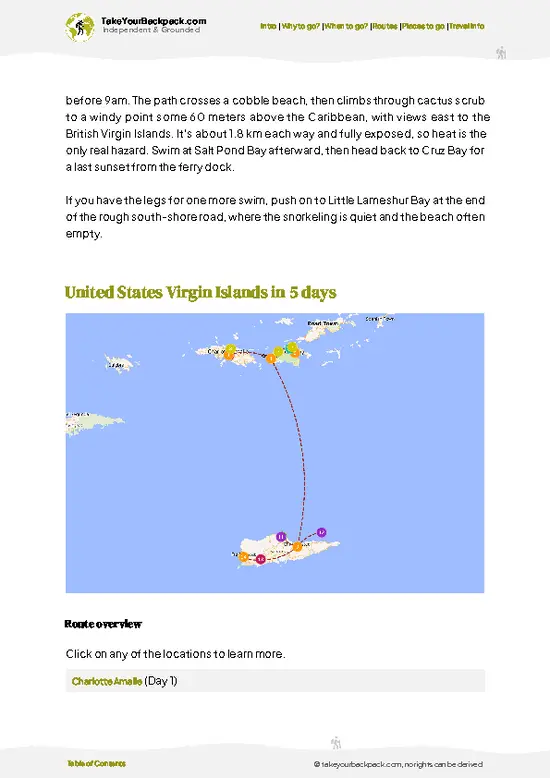
example page 0 from our offline Travel Guide for United States Virgin Islands
example page 1 from our offline Travel Guide for United States Virgin Islands
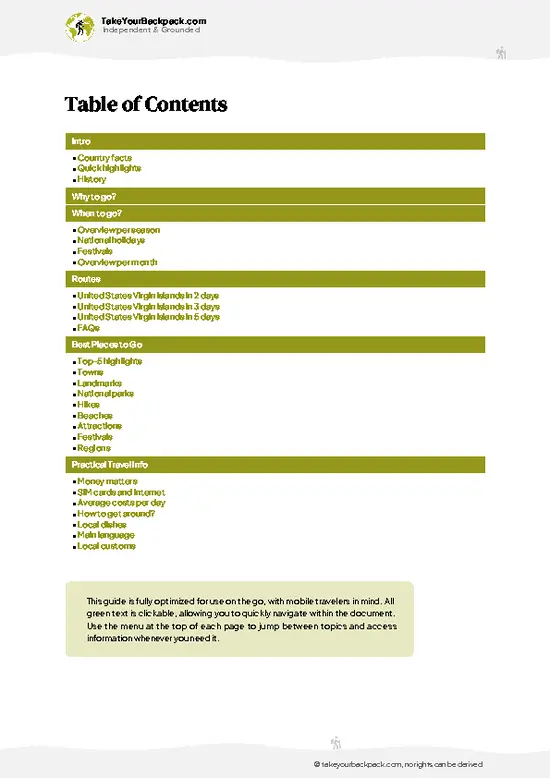
example page 2 from our offline Travel Guide for United States Virgin Islands
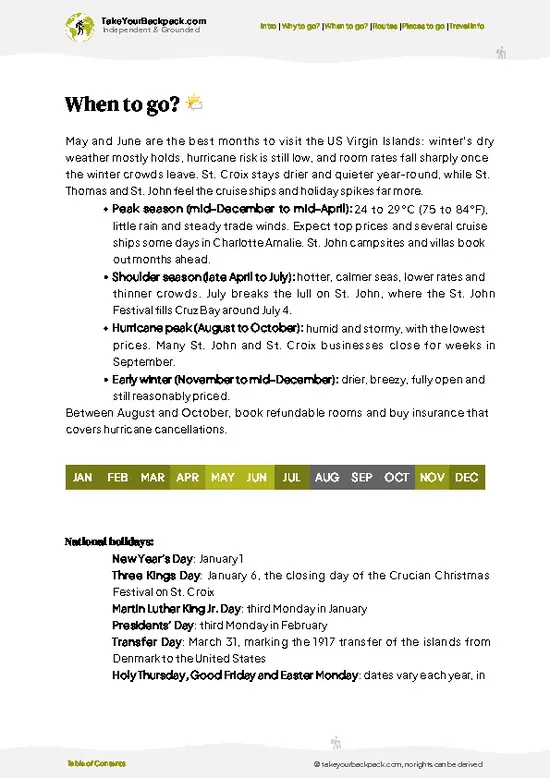
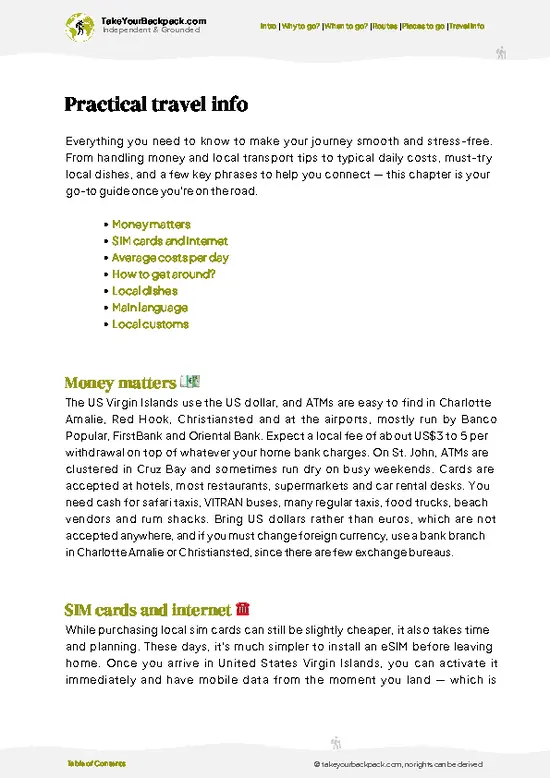
example page 3 from our offline Travel Guide for United States Virgin Islands
example page 4 from our offline Travel Guide for United States Virgin Islands
example page 5 from our offline Travel Guide for United States Virgin Islands
example page 6 from our offline Travel Guide for United States Virgin Islands
example page 7 from our offline Travel Guide for United States Virgin Islands
Loading the map 🌍
CLICK TO FILTER
towns
landmarks
national parks
hikes
beaches
attractions
festivals
regions
SHOW COUNTRY’S BESTSHOW ALL

✨ Why go?
Ranked #3 hike in United States Virgin Islands
The unique appeal for travelers

Cinnamon Bay Trail gives you something the beaches on St. John can’t: a look at the island’s plantation past, set in woods rather than behind a rope. The Cinnamon Bay sugar mill ruins sit within minutes of the trailhead, so even a short walk delivers real history. The route is also flexible. You can turn around after the ruins for a quick loop, or push up toward Centerline Road and make it a proper uphill workout with a ride back down. That makes it easy to fit between swims, or into a longer day linking the campground with other park trails. If you are staying at the campground, the trail starts almost at your tent, and the shade makes it a good morning option before the heat settles in. The beach below is a few steps away for the cool-off afterward, and the forest holds more birds than most … read more 👉
Cinnamon Bay Trail gives you something the beaches on St. John can’t: a look at the island’s plantation past, set in woods rather than behind a rope. The Cinnamon Bay sugar mill ruins sit within minutes of the trailhead, so even a short walk delivers real history. The route is also flexible. You can turn around after the ruins for a quick loop, or push up toward Centerline Road and make it a proper uphill workout with a ride back down. That makes it easy to fit between swims, or into a longer day linking the campground with other park trails. If you are staying at the campground, the trail starts almost at your tent, and the shade makes it a good morning option before the heat settles in. The beach below is a few steps away for the cool-off afterward, and the forest holds more birds than most visitors expect, including bananaquits and hummingbirds.

💡 HighlightsDon't-miss highlights and experiences

  1. Cinnamon Bay Sugar Mill Ruins: The best-known sight on the trail is the stone ruin of the old plantation works, with its tall chimney and thick walls, a short walk from the trailhead. It shows how the island’s estates once processed cane, and the signs explain the setting.
  2. Cinnamon Trees: The bay leaf and cinnamon trees along the path give the area its name. Scratch a leaf gently and you get a spicy smell that you won’t find on the beach.
  3. Dry Forest Canopy: The walk passes through shaded woodland with mango, kapok and tropical hardwoods. It stays cooler than the sunny coast, and the filtered light is easy on the eyes.
  4. Birdlife: Listen for bananaquits, pearly-eyed thrashers and hummingbirds along the shaded stretches. Early morning is quietest and gives the best chance of seeing them.
  5. Centerline
… read more 👉
  1. Cinnamon Bay Sugar Mill Ruins: The best-known sight on the trail is the stone ruin of the old plantation works, with its tall chimney and thick walls, a short walk from the trailhead. It shows how the island’s estates once processed cane, and the signs explain the setting.
  2. Cinnamon Trees: The bay leaf and cinnamon trees along the path give the area its name. Scratch a leaf gently and you get a spicy smell that you won’t find on the beach.
  3. Dry Forest Canopy: The walk passes through shaded woodland with mango, kapok and tropical hardwoods. It stays cooler than the sunny coast, and the filtered light is easy on the eyes.
  4. Birdlife: Listen for bananaquits, pearly-eyed thrashers and hummingbirds along the shaded stretches. Early morning is quietest and gives the best chance of seeing them.
  5. Centerline Road Junction: The upper end of the trail meets the island’s spine road, where the air is a little breezier and the forest thins. It marks the turnaround point for most hikers and the place to catch a ride if you are not returning on foot.
Cinnamon Bay Trail itself has no separate fee beyond the park’s normal access, and the ruins cost nothing to see.
Spotted a mistake or missing something? Contact us.

🌤️ When to go?Choosing the right time of year

The best window for Cinnamon Bay Trail is December through April, when mornings are dry and the forested climb stays comfortable.
  • Peak Season (December to April): Highs run 28 to 30°C (82 to 86°F), lows 22 to 24°C (72 to 75°F), with little rain. Campground cottages and tent sites at Cinnamon Bay fill early, and lodging across St. John climbs to its highest rates.
  • Shoulder Months (May, June, November): Showers get more frequent but usually pass quickly. Temperatures sit around 29 to 31°C (84 to 88°F), the trail is quiet, and rooms drop noticeably in price.
  • Hot and Wet (July to October): Expect 30 to 32°C (86 to 90°F), heavy humidity, muddy patches and standing water on the lower path. This is hurricane season, with September the riskiest, and some businesses close. Lodging is cheapest.
  • Daylight:
… read more 👉
The best window for Cinnamon Bay Trail is December through April, when mornings are dry and the forested climb stays comfortable.
  • Peak Season (December to April): Highs run 28 to 30°C (82 to 86°F), lows 22 to 24°C (72 to 75°F), with little rain. Campground cottages and tent sites at Cinnamon Bay fill early, and lodging across St. John climbs to its highest rates.
  • Shoulder Months (May, June, November): Showers get more frequent but usually pass quickly. Temperatures sit around 29 to 31°C (84 to 88°F), the trail is quiet, and rooms drop noticeably in price.
  • Hot and Wet (July to October): Expect 30 to 32°C (86 to 90°F), heavy humidity, muddy patches and standing water on the lower path. This is hurricane season, with September the riskiest, and some businesses close. Lodging is cheapest.
  • Daylight: Winter gives roughly 11 to 11.5 hours of light, summer about 13. Either way, start early to beat the heat under the canopy.
Start walking by 8 a.m. in any season, since the trail’s mid-morning humidity is the real limiter.


source: climatestotravel.comJANJanuary: excellent for travelingFEBFebruary: excellent for travelingMARMarch: excellent for travelingAPRApril: excellent for travelingMAYMay: highly recommended for travelingJUNJune: fair for travelingJULJuly: fair for travelingAUGAugust: fair for travelingSEPSeptember: below average for travelingOCTOctober: fair for travelingNOVNovember: highly recommended for travelingDECDecember: excellent for traveling
when-to-go

✈️ The backpacker research shortcutUnited States Virgin Islands Travel Guide

An offline-friendly backpacking guide with optimized travel routes, ranked highlights, transport advice, and the best areas to stay.
example page 0 from our offline Travel Guide for United States Virgin Islands
example page 1 from our offline Travel Guide for United States Virgin Islands
example page 2 from our offline Travel Guide for United States Virgin Islands
example page 3 from our offline Travel Guide for United States Virgin Islands
example page 4 from our offline Travel Guide for United States Virgin Islands
example page 5 from our offline Travel Guide for United States Virgin Islands
example page 6 from our offline Travel Guide for United States Virgin Islands
example page 7 from our offline Travel Guide for United States Virgin Islands
The digital guide (144 pages) contains:
✅ 35 highlights, ranked by travel appeal
✅ Optimized 2, 3 & 5-day travel routes
✅ Cities, national parks, landmarks, beaches
✅ How to get around
✅ Offline-friendly for travel without Wi-Fi
👉 Click to see all 30+ guide features

📅 Plan smarter in minutes, not weeks
✅ Month by month travel advice
✅ Festivals & national holidays
✅ Budget expectations

🗺️ Go to the right places, skip the overrated ones
✅ Honest pros & cons of destinations
✅ Top hikes, parks & viewpoints
✅ Lesser-known places most travelers miss
✅ Clear “worth it vs skip it” guidance

🛏️ Travel smoothly without rookie mistakes
✅ Best areas to stay
✅ Transport systems explained simply
✅ Common scams & safety advice
✅ SIM cards, money & practical tips

🌍 Understand the country, not just visit it
✅ Culture & traditions
✅ Local customs
✅ Festivals worth planning around
✅ Traveler-friendly historical context
✅ Insights that make places more meaningful

📱 Built for real travel conditions
✅ Fully downloadable PDF
✅ Works completely offline
✅ Optimized for phone use
✅ Useful in remote areas & buses
✅ Everything in one place
Stop searching, start planning
Get instant access to your full guide. 30‑day money-back guarantee.
+ Add another guide for just

By proceeding you agree to our terms.
Sent to your inbox immediately after payment • 100% Secure Checkout
Best Backpacking Travel Advisor 2025 tourism awardBest Backpacking
Travel Advisor
2025
What others say about Take Your Backpack Guides:
⭐⭐⭐⭐⭐
Fantastic, amazing amount of information!
⭐⭐⭐⭐⭐
My goodness this is amazing, it's what I've been looking for hats off too you!
⭐⭐⭐⭐⭐
I think this is absolutely BRILLIANT
⭐⭐⭐⭐
Very complete and informative. It's still missing places, but I gotta to commend you
⭐⭐⭐⭐⭐
This is truly amazing, thank you, can't wait to explore it with my kids!
⭐⭐⭐⭐⭐
Awesome resource, thank you!
⭐⭐⭐⭐⭐
This is amazing! Can't wait to explore the ones I haven't seen
⭐⭐⭐⭐
I love this! Well done, great idea.
⭐⭐⭐⭐⭐
Thanks for taking the time to make this gem!
⭐⭐⭐⭐⭐
This might be the best website I've ever seen.
⭐⭐⭐⭐⭐
Congratulations, and thank you so much for your work; it's incredibly valuable.
⭐⭐⭐⭐
In all seriousness I think you did a great job pointing out the important spots
⭐⭐⭐⭐⭐
10/10 very good
⭐⭐⭐⭐⭐
As someone who's only just starting to visit regularly this is awesome, thank you.
⭐⭐⭐⭐
Thank you very much! I'm going to visit my dad, it's going to be very useful!
⭐⭐⭐⭐⭐
This is really cool! We'll be travelling for the first time and this definitely come in handy.
⭐⭐⭐⭐⭐
You are now our minister of culture, congratulations 👨‍💼
⭐⭐⭐⭐⭐
Just wanted to tell you that this is a pearl! Going to follow your recommendations.
⭐⭐⭐⭐⭐
This is so cool. I'll definitely be using the resource for my travels soon.
⭐⭐⭐⭐⭐
This is very impressive! Good work.
⭐⭐⭐⭐⭐
This is an amazing and informative site. Very well done!

🛏️ Where to stay?Best areas to stay in United States Virgin Islands

If you enjoy meeting fellow travelers, consider choosing hostels with high ratings for atmosphere. On the other hand, if you prefer having your own space, a hotel might be a better option.

🥾 Hike detailsHike details: route, duration, and difficulty of Cinnamon Bay Trail

Total Distance: Cinnamon Bay Trail runs about 1.8 kilometers (1.1 miles) one way, so a round trip is roughly 3.5 kilometers.
Estimated Duration: Plan on 1.5 to 2 hours round trip at an easy pace, with time for the ruins.
Difficulty: Moderate. The climb is steady, and the surface is rocky and uneven in places.
Starting Point: The trailhead is on North Shore Road across from Cinnamon Bay Beach and its campground. Taxis and open-air safari buses serve the bay from Cruz Bay.
Major Landmarks:
  • Sugar Mill Ruins: Stone walls and a chimney close to the start.
  • Forest Midsection: Shaded, rocky path with stone-lined
… read more 👉
Total Distance: Cinnamon Bay Trail runs about 1.8 kilometers (1.1 miles) one way, so a round trip is roughly 3.5 kilometers.
Estimated Duration: Plan on 1.5 to 2 hours round trip at an easy pace, with time for the ruins.
Difficulty: Moderate. The climb is steady, and the surface is rocky and uneven in places.
Starting Point: The trailhead is on North Shore Road across from Cinnamon Bay Beach and its campground. Taxis and open-air safari buses serve the bay from Cruz Bay.
Major Landmarks:
  • Sugar Mill Ruins: Stone walls and a chimney close to the start.
  • Forest Midsection: Shaded, rocky path with stone-lined sections.
  • Centerline Road: The upper end, where the trail meets the paved road.
Terrain and Scenery: The path climbs from the coast on packed dirt and loose stone, with old stone walls beside it. Views are mostly of trees, with glimpses of the bay at the start.
Vegetation: Dry tropical forest with cinnamon and bay trees, mango, kapok and thorny scrub in drier patches.
Wildlife: Bananaquits, thrashers, hummingbirds and lizards are common. Deer and mongoose appear occasionally, and mosquitoes are active in the shade.
Practical Notes: Carry water, wear closed shoes and use insect repellent, especially in the morning and evening.
⚠️ Hiking info can sometimes be outdated or inaccurate. Before you hit the trail, check the latest conditions with locals. If you do spot anything that's off, I'd love to hear from you, so I can update it for fellow travelers.

🛡️ SafetyTraveler Safety Guide

Cinnamon Bay Trail is a well-marked, moderate path inside Virgin Islands National Park, and most problems come from heat and humidity rather than danger. The route climbs through shaded forest past old plantation ruins, and the footing is rocky in places and slick with leaf litter after rain. Carry at least 2 liters of water per person, wear closed shoes with grip, and add sun protection for any open stretches. Start early, because afternoons are sticky and hot. Stay on the marked path, since side tracks can fade quickly in dense growth. Wild donkeys and mongoose are common, and the donkeys can be pushy around food, so keep snacks packed and give them space. Mosquitoes are noticeable near damp areas, so bring repellent. Cell coverage is patchy, so tell someone your plan. After heavy rain, … read more 👉
Cinnamon Bay Trail is a well-marked, moderate path inside Virgin Islands National Park, and most problems come from heat and humidity rather than danger. The route climbs through shaded forest past old plantation ruins, and the footing is rocky in places and slick with leaf litter after rain. Carry at least 2 liters of water per person, wear closed shoes with grip, and add sun protection for any open stretches. Start early, because afternoons are sticky and hot. Stay on the marked path, since side tracks can fade quickly in dense growth. Wild donkeys and mongoose are common, and the donkeys can be pushy around food, so keep snacks packed and give them space. Mosquitoes are noticeable near damp areas, so bring repellent. Cell coverage is patchy, so tell someone your plan. After heavy rain, expect mud and allow extra time on the descent. In hurricane season, check forecasts before heading out.

FAQTraveler FAQ

Cinnamon Bay Trail takes about 1.5 to 2.5 hours for a round trip, depending on how long you linger. It runs roughly 1.1 miles (1.8 km) one way from the Cinnamon Bay area up toward Centerline Road, passing the old sugar mill ruins. Add extra time if you plan to swim at Cinnamon Bay Beach afterward.
Cinnamon Bay Trail is moderate. The climb is steady with a few rocky and root-covered sections, and the elevation gain is around 700 to 800 feet (215 to 245 m), which is manageable for most fit beginners. Heat and humidity make it feel harder, so go early and carry 2 liters of water. Sturdy sneakers or light hiking shoes are enough.
No guide or permit is needed for Cinnamon Bay Trail. It lies within Virgin Islands National Park on St. John, and hiking is free, and the only fee in the park is the US$5 per person amenity fee at Trunk Bay. Overnight stays at the Cinnamon Bay Campground are booked separately, with bare sites from about US$50 a night.
⚠️ Things can change over time, so always validate details locally before you go.

Other Virgin Islander hikes near Cinnamon Bay Trail

Explore more nearby:


💡 Not sure where to go next?
Create a personalized itinerary for United States Virgin Islands including Cinnamon Bay Trail and the places that fit your trip.

Generate my itinerary

👉 Discover all hikes

Or checkout all United States Virgin Islands has to offer (think cities, towns, villages, national parks, hikes, beaches, festivals)
Country photo of United States Virgin Islands

We 💚 feedbackParting advice and final tips

Cinnamon Bay Trail works best as a morning walk before you claim a spot on the sand below. I would pair it with a snorkel at Cinnamon Bay Beach, then continue by taxi or safari bus to Trunk Bay or Maho Bay for the afternoon. Bring repellent and skip midday.

✍️ Help improve this page!
The information on this page is based on in-depth research, insights shared by experienced travelers, and feedback from the local travel community in United States Virgin Islands. While every effort is made to keep the information accurate and current, conditions can change — so if you spot anything incorrect or outdated, please get in touch.


🙋‍♂️ Give feedback

👋 Meet the founderWho’s Behind Take Your Backpack?

Johan, backpacker and founder of TakeYourBackpackHi, I’m Johan (Netherlands 🇳🇱), the creator of TakeYourBackpack. Over the past 3 decades, I’ve backpacked through 90+ countries across six continents, gaining extensive experience with independent travel, long-term trips, and overland routes.

This site is built on a combination of firsthand travel experience and carefully curated insights from other backpackers. Many guides are based on places I’ve personally visited, while others bring together tips, observations, and practical advice shared by trusted travelers I’ve met along the way.

The goal is to provide realistic, experience-driven guidance — not generic itineraries — so you can explore destinations with better context, clearer expectations, and more confidence.