×

United States Virgin Islands🇻🇮 | townsChristianstedYellow fort, Queen Street, sugar wharf, boardwalk | things to do and best time to go

Explore Charlotte AmalieExplore Coral Bay

Backpacking in Christiansted
🌟 Highlighttown ranked #3
By Johan Kruseman 🇳🇱 | Updated October 22, 2026

The decision most travelers face is whether to sleep in Christiansted or just pass through on the way to the beaches, and a rental car or taxi budget usually tips it. Christiansted sits on the north coast of St. Croix, in the United States Virgin Islands, and it is the island’s main historic harbor town. The old center is small and flat, with Danish colonial buildings, a national historic site and a boardwalk, so you can cover it on foot in an afternoon. Beds are limited and not cheap, because the island has few hostels, so experienced travelers book a guesthouse early and split a car with others. Evenings are quiet, with a handful of bars and restaurants, and meeting other backpackers happens mostly at dive shops and on tours. Flights land on the island’s south side, and the town is a short drive away. Bring cash for small vendors, since some places do not take cards.

Discover everything you want to know in the 📖 United States Virgin Islands Travel Guide.


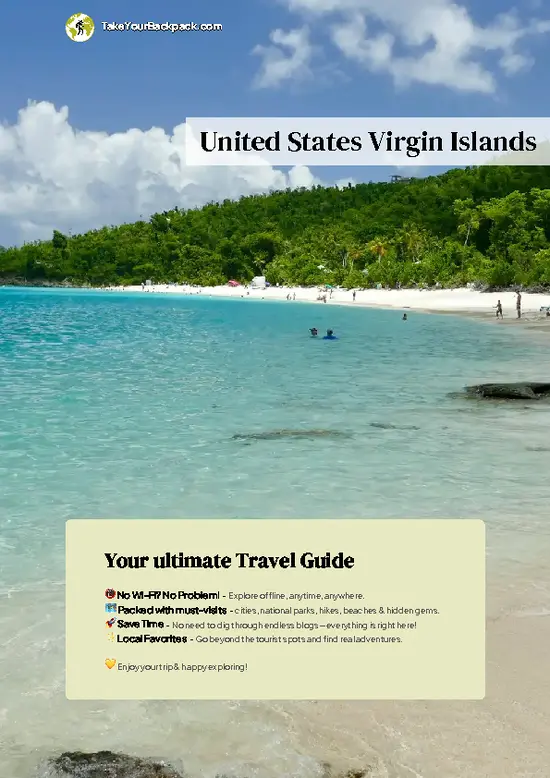
example page 0 from our offline Travel Guide for United States Virgin Islands
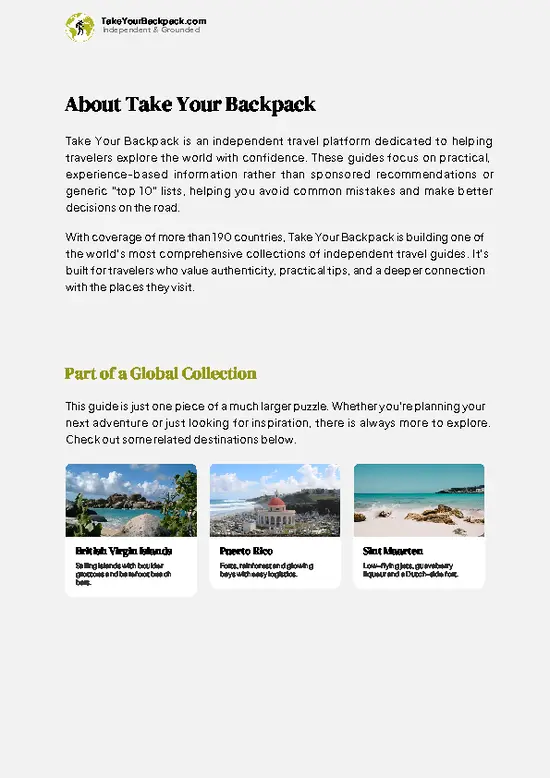
example page 1 from our offline Travel Guide for United States Virgin Islands
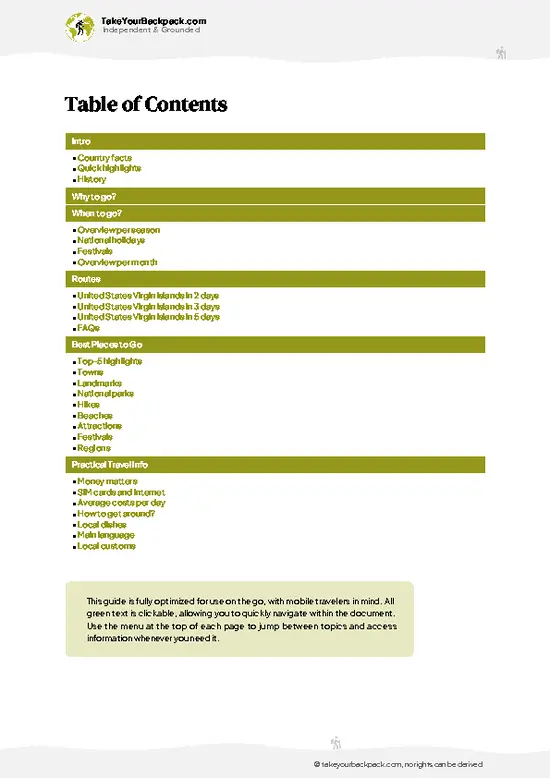
example page 2 from our offline Travel Guide for United States Virgin Islands
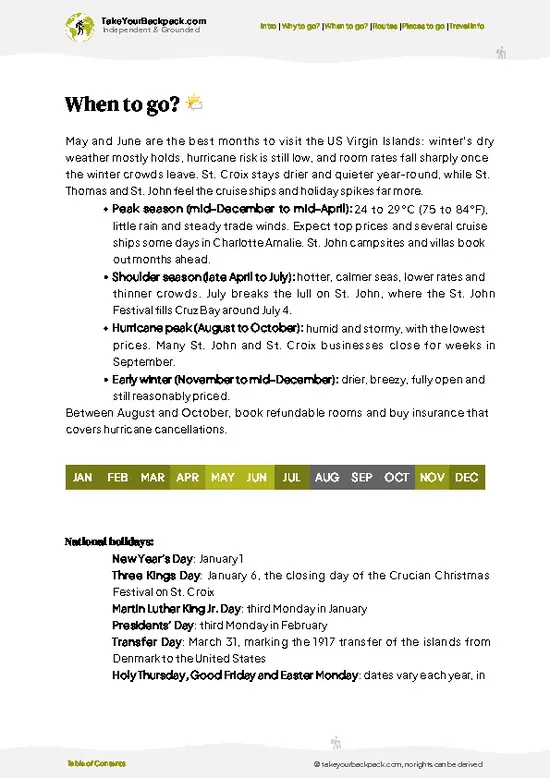
example page 3 from our offline Travel Guide for United States Virgin Islands
example page 4 from our offline Travel Guide for United States Virgin Islands
example page 5 from our offline Travel Guide for United States Virgin Islands
example page 6 from our offline Travel Guide for United States Virgin Islands
example page 7 from our offline Travel Guide for United States Virgin Islands
Loading the map 🌍
CLICK TO FILTER
towns
landmarks
national parks
hikes
beaches
attractions
festivals
regions
SHOW COUNTRY’S BESTSHOW ALL

✨ Why go?
Ranked #3 town in United States Virgin Islands
What sets this place apart

Christiansted works for travelers who like their history compact and their water close. The streets around the harbor are walkable, and the Christiansted National Historic Site anchors the waterfront with its yellow Danish fort. Boats leave from the dock for Buck Island Reef National Monument, where a marked underwater trail runs over elkhorn coral and barracuda patrol the shallows. Most people stay two or three nights, long enough for the boat day, a dive or two and an evening at a harborside bar. It is a better fit for solo travelers and pairs who want a calm base than for anyone chasing nightlife. Local food is the other draw, with Cruzan rum flavoring many menus and roadside stands selling johnnycakes and fish. Slow travelers will find the pace easy, while hikers need to go west to the … read more 👉
Christiansted works for travelers who like their history compact and their water close. The streets around the harbor are walkable, and the Christiansted National Historic Site anchors the waterfront with its yellow Danish fort. Boats leave from the dock for Buck Island Reef National Monument, where a marked underwater trail runs over elkhorn coral and barracuda patrol the shallows. Most people stay two or three nights, long enough for the boat day, a dive or two and an evening at a harborside bar. It is a better fit for solo travelers and pairs who want a calm base than for anyone chasing nightlife. Local food is the other draw, with Cruzan rum flavoring many menus and roadside stands selling johnnycakes and fish. Slow travelers will find the pace easy, while hikers need to go west to the rainforest. Expect to be sociable on tours, quiet after dark.

💡 HighlightsPlaces and moments you shouldn't skip

  1. Fort Christiansvaern: The yellow fort, finished in the 1700s, is the town’s best-known landmark. You can walk the ramparts, see the dungeon and look out over the harbor. Go in the morning before the heat builds. Entry is US$10 for adults (under 16 free) for the national historic site, and an hour is enough.
  2. Christiansted Boardwalk: This waterfront walk links the dock, the restaurants and the fort. Late afternoon is best, when boats come in and the light softens. It is free and takes 30 to 45 minutes.
  3. Steeple Building: A former Lutheran church from the Danish era, now part of the national historic site, with its steeple rising over the old town. Allow 15 minutes.
  4. Old Danish Customs House: A neat 18th century building at the harbor that once handled the island’s sugar trade. The exterior is the
… read more 👉
  1. Fort Christiansvaern: The yellow fort, finished in the 1700s, is the town’s best-known landmark. You can walk the ramparts, see the dungeon and look out over the harbor. Go in the morning before the heat builds. Entry is US$10 for adults (under 16 free) for the national historic site, and an hour is enough.
  2. Christiansted Boardwalk: This waterfront walk links the dock, the restaurants and the fort. Late afternoon is best, when boats come in and the light softens. It is free and takes 30 to 45 minutes.
  3. Steeple Building: A former Lutheran church from the Danish era, now part of the national historic site, with its steeple rising over the old town. Allow 15 minutes.
  4. Old Danish Customs House: A neat 18th century building at the harbor that once handled the island’s sugar trade. The exterior is the draw, and it fits well into a walk around the waterfront. It takes about 15 minutes and is free from the outside.
  5. Buck Island Reef boat trip: Half-day and full-day boats leave from the Christiansted dock, and the snorkel trail runs over healthy reef. Mornings have calmer water. Expect to pay about US$70 to 120 and plan on four to five hours.
Day trips from Christiansted can reach Salt River Bay National Historical Park, the Cruzan Rum distillery and the town of Frederiksted on the west coast. The Buck Island trip should be reserved ahead with an operator, while the other items need no ticket booking.
Spotted a mistake or missing something? Contact us.

🏘️ NeighborhoodsKey areas and districts to know

Christiansted is compact, and the historic core, the waterfront and the edges of town can all be covered on foot in an afternoon. Each area works differently, so a little context saves effort.
  • Downtown and Fort Christiansvaern: The Danish-era grid of yellow-ochre buildings around the National Park Service fort, the Steeple Building and the old Scale House. Arcaded sidewalks exist because the sun is fierce, so walk the shaded side and go before 11 a.m. Restaurants cluster on King Street and Strand Street, and lunch counters are cheaper than waterfront tables.
  • The Boardwalk and Waterfront: A short harbor-side promenade lined with bars and open-air restaurants, and the departure point for the Buck Island boats and the seaplane to St. Thomas. It is the liveliest part of town at night, with live
… read more 👉
Christiansted is compact, and the historic core, the waterfront and the edges of town can all be covered on foot in an afternoon. Each area works differently, so a little context saves effort.
  • Downtown and Fort Christiansvaern: The Danish-era grid of yellow-ochre buildings around the National Park Service fort, the Steeple Building and the old Scale House. Arcaded sidewalks exist because the sun is fierce, so walk the shaded side and go before 11 a.m. Restaurants cluster on King Street and Strand Street, and lunch counters are cheaper than waterfront tables.
  • The Boardwalk and Waterfront: A short harbor-side promenade lined with bars and open-air restaurants, and the departure point for the Buck Island boats and the seaplane to St. Thomas. It is the liveliest part of town at night, with live music on weekends. Eat one block inland, where plates cost less and the view loses nothing.
  • Gallows Bay: A ten-minute walk east, a working strip of dive shops, bakeries, small bars and a few galleries. Locals use it, so prices run lower than on the boardwalk. It is quiet after dark, so move on by taxi if you want nightlife.
  • Protestant Cay: A tiny island just off the waterfront, reached by a short ferry hop. It has a small beach and a hotel bar, and is useful for a swim without a car.
  • Company Street and the residential edges: Everyday Christiansted, with local bakeries and churches. It is walkable by day, but locals avoid wandering the back streets after dark, and you should too.

⌛️ 1 dayHow to make the most of one day

7:30 AM: Christiansted Boardwalk
The day is built for walking, with a long break indoors or in the water when the heat peaks around noon, and no taxi needed inside town. Start on the waterfront boardwalk while the air is still cool and the fishing boats and seaplane traffic are quiet. Coffee at one of the harborside cafés suits this hour.
8:30 AM: Fort Christiansvaern
Walk two minutes east to the yellow Danish fort, built in the 1700s. The National Park Service charges a small entry fee (US$10 for adults, valid for three days). Allow 45 minutes for the cannon deck, the dungeon cells and the view over Protestant Cay and the harbor.
10:00 AM: Steeple Building and Danish Custom House
Stroll along King Street and Company Street. The Steeple Building, once a Lutheran church, is part of the national … read more 👉
7:30 AM: Christiansted Boardwalk
The day is built for walking, with a long break indoors or in the water when the heat peaks around noon, and no taxi needed inside town. Start on the waterfront boardwalk while the air is still cool and the fishing boats and seaplane traffic are quiet. Coffee at one of the harborside cafés suits this hour.
8:30 AM: Fort Christiansvaern
Walk two minutes east to the yellow Danish fort, built in the 1700s. The National Park Service charges a small entry fee (US$10 for adults, valid for three days). Allow 45 minutes for the cannon deck, the dungeon cells and the view over Protestant Cay and the harbor.
10:00 AM: Steeple Building and Danish Custom House
Stroll along King Street and Company Street. The Steeple Building, once a Lutheran church, is part of the national historic site. Look at the Custom House and the Scale House nearby, where sugar was weighed. Give this loop about an hour.
11:15 AM: Alexander Hamilton Sites
Walk up toward the old streets behind the waterfront where Hamilton worked as a young clerk. Few people wander here. Plaques and quiet lanes of yellow and pink colonial buildings make a calm, shaded detour.
12:30 PM: Lunch and Midday Break
Eat at a local spot along Strand Street, then take the short ferry to Protestant Cay (a few minutes, a few dollars round trip). Swim and rest under the palms until the sun softens.
3:00 PM: Salt River or Judith’s Fancy Detour
Share a taxi west along the coast to the Salt River Bay area, where Columbus’s crew landed in 1493. Few backpackers go beyond town, yet the mangrove shoreline and trails are quiet and cool. Kayaking here is lovely if you book ahead. Allow two hours.
6:00 PM: Return to the Boardwalk
Taxi back, shower, and finish with dinner and a drink on the waterfront as the harbor lights come on. Fresh fish and a rum punch end a day that never had to hurry.

🌤️ When to go?When to go for the best experience

Christiansted is best from December through April, when days are dry, sunny and breezy. Plan around hurricane season and holiday pricing.
  • Winter and Spring (December to April): Highs of 28 to 30°C (82 to 86°F), lows near 22°C (72°F), and the least rain. Daylight runs roughly 11 to 12 hours. Crowds and lodging rates are highest, especially at Christmas and in February.
  • Shoulder Months (May to June): Warmer at 29 to 31°C (84 to 88°F), with showers but plenty of sun. Rates drop noticeably and Buck Island boats still run daily.
  • Summer (July to October): Hot and humid, 30 to 32°C (86 to 90°F), with the heaviest rain and the peak of hurricane season in August and September. Some restaurants close for a few weeks. Rooms are the cheapest of the year.
  • Late Fall (November): Humidity eases and rain tapers
… read more 👉
Christiansted is best from December through April, when days are dry, sunny and breezy. Plan around hurricane season and holiday pricing.
  • Winter and Spring (December to April): Highs of 28 to 30°C (82 to 86°F), lows near 22°C (72°F), and the least rain. Daylight runs roughly 11 to 12 hours. Crowds and lodging rates are highest, especially at Christmas and in February.
  • Shoulder Months (May to June): Warmer at 29 to 31°C (84 to 88°F), with showers but plenty of sun. Rates drop noticeably and Buck Island boats still run daily.
  • Summer (July to October): Hot and humid, 30 to 32°C (86 to 90°F), with the heaviest rain and the peak of hurricane season in August and September. Some restaurants close for a few weeks. Rooms are the cheapest of the year.
  • Late Fall (November): Humidity eases and rain tapers off before the winter rush, with prices still moderate.
Book Buck Island trips a few days ahead in winter, since boats fill up.


source: climatestotravel.comJANJanuary: highly recommended for travelingFEBFebruary: highly recommended for travelingMARMarch: highly recommended for travelingAPRApril: highly recommended for travelingMAYMay: good for travelingJUNJune: fair for travelingJULJuly: fair for travelingAUGAugust: fair for travelingSEPSeptember: fair for travelingOCTOctober: good for travelingNOVNovember: highly recommended for travelingDECDecember: highly recommended for traveling
when-to-go

✈️ The backpacker research shortcutUnited States Virgin Islands Travel Guide

An offline-friendly backpacking guide with optimized travel routes, ranked highlights, transport advice, and the best areas to stay.
example page 0 from our offline Travel Guide for United States Virgin Islands
example page 1 from our offline Travel Guide for United States Virgin Islands
example page 2 from our offline Travel Guide for United States Virgin Islands
example page 3 from our offline Travel Guide for United States Virgin Islands
example page 4 from our offline Travel Guide for United States Virgin Islands
example page 5 from our offline Travel Guide for United States Virgin Islands
example page 6 from our offline Travel Guide for United States Virgin Islands
example page 7 from our offline Travel Guide for United States Virgin Islands
The digital guide (144 pages) contains:
✅ 35 highlights, ranked by travel appeal
✅ Optimized 2, 3 & 5-day travel routes
✅ Cities, national parks, landmarks, beaches
✅ How to get around
✅ Offline-friendly for travel without Wi-Fi
👉 Click to see all 30+ guide features

📅 Plan smarter in minutes, not weeks
✅ Month by month travel advice
✅ Festivals & national holidays
✅ Budget expectations

🗺️ Go to the right places, skip the overrated ones
✅ Honest pros & cons of destinations
✅ Top hikes, parks & viewpoints
✅ Lesser-known places most travelers miss
✅ Clear “worth it vs skip it” guidance

🛏️ Travel smoothly without rookie mistakes
✅ Best areas to stay
✅ Transport systems explained simply
✅ Common scams & safety advice
✅ SIM cards, money & practical tips

🌍 Understand the country, not just visit it
✅ Culture & traditions
✅ Local customs
✅ Festivals worth planning around
✅ Traveler-friendly historical context
✅ Insights that make places more meaningful

📱 Built for real travel conditions
✅ Fully downloadable PDF
✅ Works completely offline
✅ Optimized for phone use
✅ Useful in remote areas & buses
✅ Everything in one place
Stop searching, start planning
Get instant access to your full guide. 30‑day money-back guarantee.
+ Add another guide for just

By proceeding you agree to our terms.
Sent to your inbox immediately after payment • 100% Secure Checkout
Best Backpacking Travel Advisor 2025 tourism awardBest Backpacking
Travel Advisor
2025
What others say about Take Your Backpack Guides:
⭐⭐⭐⭐⭐
Fantastic, amazing amount of information!
⭐⭐⭐⭐⭐
My goodness this is amazing, it's what I've been looking for hats off too you!
⭐⭐⭐⭐⭐
I think this is absolutely BRILLIANT
⭐⭐⭐⭐
Very complete and informative. It's still missing places, but I gotta to commend you
⭐⭐⭐⭐⭐
This is truly amazing, thank you, can't wait to explore it with my kids!
⭐⭐⭐⭐⭐
Awesome resource, thank you!
⭐⭐⭐⭐⭐
This is amazing! Can't wait to explore the ones I haven't seen
⭐⭐⭐⭐
I love this! Well done, great idea.
⭐⭐⭐⭐⭐
Thanks for taking the time to make this gem!
⭐⭐⭐⭐⭐
This might be the best website I've ever seen.
⭐⭐⭐⭐⭐
Congratulations, and thank you so much for your work; it's incredibly valuable.
⭐⭐⭐⭐
In all seriousness I think you did a great job pointing out the important spots
⭐⭐⭐⭐⭐
10/10 very good
⭐⭐⭐⭐⭐
As someone who's only just starting to visit regularly this is awesome, thank you.
⭐⭐⭐⭐
Thank you very much! I'm going to visit my dad, it's going to be very useful!
⭐⭐⭐⭐⭐
This is really cool! We'll be travelling for the first time and this definitely come in handy.
⭐⭐⭐⭐⭐
You are now our minister of culture, congratulations 👨‍💼
⭐⭐⭐⭐⭐
Just wanted to tell you that this is a pearl! Going to follow your recommendations.
⭐⭐⭐⭐⭐
This is so cool. I'll definitely be using the resource for my travels soon.
⭐⭐⭐⭐⭐
This is very impressive! Good work.
⭐⭐⭐⭐⭐
This is an amazing and informative site. Very well done!

🛏️ Where to stay?Best areas and accommodation options

Downtown Christiansted and Gallows Bay are the two best areas for a budget stay, and both let you manage without a car. Beds are limited on St. Croix, so guesthouses, small inns and rooms in private homes make up most of the cheaper options, with only a few true hostels. Dorm beds are rare, and a basic private room usually runs US$80 to 140 a night in winter, less in summer.

Downtown puts you within a short walk of restaurants, the boardwalk, the seaplane dock and the Buck Island boats. It is lively but not loud, apart from music on weekend nights near the waterfront, so ask for a room away from … read more 👉
Downtown Christiansted and Gallows Bay are the two best areas for a budget stay, and both let you manage without a car. Beds are limited on St. Croix, so guesthouses, small inns and rooms in private homes make up most of the cheaper options, with only a few true hostels. Dorm beds are rare, and a basic private room usually runs US$80 to 140 a night in winter, less in summer.

Downtown puts you within a short walk of restaurants, the boardwalk, the seaplane dock and the Buck Island boats. It is lively but not loud, apart from music on weekend nights near the waterfront, so ask for a room away from the harbor side. Streets are lit and busy until the bars close, though after midnight a short taxi is wiser than walking alone.

Gallows Bay, ten minutes east on foot, is quieter and slightly cheaper, with dive operators, a grocery store and bakeries close by. Having a kitchen saves money, since eating out is costly on the island. Transport links are the same as downtown, meaning taxis and the occasional bus. Book well ahead from December to April, when the cheapest rooms vanish first.

🚌 Getting aroundTransportation options and practical tips

Christiansted is easiest on foot, because the historic center, the boardwalk and Gallows Bay sit within about a mile of each other. Public transport exists but is thin, and the island of St. Croix is built around cars. Anyone heading beyond town should plan for a rental or shared taxis.
  • Walking: Free, flat and shaded by arcades downtown. Sidewalks end quickly on the outskirts and lighting is poor, so walk before dark and use a taxi for the return at night.
  • VITRAN buses: The island’s public buses cost about US$1 to 2 and run on fixed routes between Christiansted and Frederiksted. Service is infrequent, often hourly, and mostly stops by early evening, so check the schedule at the stop and do not rely on them for flights or late returns. Experienced travelers use them for a single daytime cross-island
… read more 👉
Christiansted is easiest on foot, because the historic center, the boardwalk and Gallows Bay sit within about a mile of each other. Public transport exists but is thin, and the island of St. Croix is built around cars. Anyone heading beyond town should plan for a rental or shared taxis.
  • Walking: Free, flat and shaded by arcades downtown. Sidewalks end quickly on the outskirts and lighting is poor, so walk before dark and use a taxi for the return at night.
  • VITRAN buses: The island’s public buses cost about US$1 to 2 and run on fixed routes between Christiansted and Frederiksted. Service is infrequent, often hourly, and mostly stops by early evening, so check the schedule at the stop and do not rely on them for flights or late returns. Experienced travelers use them for a single daytime cross-island trip.
  • Taxis: Licensed taxis are unmetered and charge fixed zone rates, so agree on the fare before getting in. A ride to the airport runs roughly US$25 to 35, and shared vans stretch costs when you split them. Hotels and the waterfront stand can call one, which is more reliable than hailing.
  • Rental car: About US$60 to 100 a day. Traffic keeps left, as in the rest of the U.S. Virgin Islands, while the steering wheel stays on the left, which confuses first-timers. Book early in winter because the fleet is small, and choose one for a day or two to see the west end and the beaches.
  • Ferry and seaplane: Protestant Cay’s short ferry costs a few dollars round trip. The seaplane to St. Thomas costs roughly US$100 to 150 one way and saves a day compared to an overnight option, though the fast catamaran to St. John via St. Thomas is not available from here.

👛 Costs (as of 22 October 2026)Typical daily expenses

Christiansted costs roughly US$190 to 240 a day for a backpacker, and the total below is US$224 with high-season lodging. St. Croix is an island with imported goods, so food and rooms cost more than on the mainland.
CategoryBudget RangeLocal Reality
Dorm or budget accommodationUS$90 to 130 (high season), US$65 to 95 (low season)True dorms are rare, so this is a basic guesthouse room or small inn. Book early from December to April.
MealsUS$40 to 60Bakery breakfasts about US$8 to 10, lunch counters US$12 to 18, boardwalk dinners US$25 and up. Groceries cost more than in the mainland U.S.
Local transportUS$10 to 30Walking is free downtown. Taxis cost US$10 to 35 per ride, and buses US$1 to 2.
Basic activities and entry feesUS$15 to 40Fort Christiansvaern is US$10. A Buck Island trip costs US$75 to
… read more 👉
Christiansted costs roughly US$190 to 240 a day for a backpacker, and the total below is US$224 with high-season lodging. St. Croix is an island with imported goods, so food and rooms cost more than on the mainland.
CategoryBudget RangeLocal Reality
Dorm or budget accommodationUS$90 to 130 (high season), US$65 to 95 (low season)True dorms are rare, so this is a basic guesthouse room or small inn. Book early from December to April.
MealsUS$40 to 60Bakery breakfasts about US$8 to 10, lunch counters US$12 to 18, boardwalk dinners US$25 and up. Groceries cost more than in the mainland U.S.
Local transportUS$10 to 30Walking is free downtown. Taxis cost US$10 to 35 per ride, and buses US$1 to 2.
Basic activities and entry feesUS$15 to 40Fort Christiansvaern is US$10. A Buck Island trip costs US$75 to 120 on the days you go.
MiscellaneousUS$10 to 20Sunscreen, drinks, tips of 15 to 20 percent, and a local beer around US$5 to 7.
Total Daily BudgetUS$224Based on high-season lodging, the midpoint of each other row, and no car rental.
Cooking with groceries from a supermarket in Gallows Bay and eating lunch at local counters instead of the boardwalk can cut food costs by about a third.
⚠️ Prices can change and everyone travels differently, so take this as a rough guide. Hope it helps you plan your adventure!

🚌 Day tripsExploring the surroundings

Christiansted works well as a base for day trips, since the island is small and the main sights sit within an hour, but most need a boat, taxi or rental car.
Buck Island Reef National Monument:
The underwater snorkel trail around this uninhabited island is the reason to come. Half-day boat trips leave from the waterfront and cost roughly US$75 to 120 including gear, and full-day sails cost more. The crossing takes about 30 to 45 minutes. Go between December and May for calmer seas, and bring reef-safe sunscreen, since many visitors burn on the boat deck.

Frederiksted:
The island’s west-end town is a 30 to 40 minute drive across the island. It has a pier for sunset, the fort and a quieter beach scene. Shared taxis or a VITRAN bus can do it for under US$10 each way, but buses are sparse, so … read more 👉
Christiansted works well as a base for day trips, since the island is small and the main sights sit within an hour, but most need a boat, taxi or rental car.
Buck Island Reef National Monument:
The underwater snorkel trail around this uninhabited island is the reason to come. Half-day boat trips leave from the waterfront and cost roughly US$75 to 120 including gear, and full-day sails cost more. The crossing takes about 30 to 45 minutes. Go between December and May for calmer seas, and bring reef-safe sunscreen, since many visitors burn on the boat deck.

Frederiksted:
The island’s west-end town is a 30 to 40 minute drive across the island. It has a pier for sunset, the fort and a quieter beach scene. Shared taxis or a VITRAN bus can do it for under US$10 each way, but buses are sparse, so confirm the last return before leaving. Most first-timers underestimate how early service stops.
👉 Explore Frederiksted
Salt River Bay National Historical Park:
About 25 minutes by car on the north shore, this is where Columbus’s crew landed in 1493 and where mangroves shelter kayak tours. A guided kayak runs about US$50 to 80. The bioluminescent evening paddles are best on dark, moonless nights.
👉 Explore Salt River Bay National Historical Park
Point Udall:
The easternmost point of the United States is about 40 minutes by car, with a short walk to a lookout and a monument. It is free, windy and best at midday, but there is no shade or services, so carry water.

🛡️ SafetySafety Tips and Common Scams in Christiansted

Christiansted is generally safe in the daytime and around the waterfront, but petty theft and some street crime exist, so basic habits matter. Keep phones and cameras out of sight on the boardwalk and never leave anything visible in a rental car, which is the most common problem here. After dark, stay on the lit streets near King Street and the harbor, and take a taxi instead of walking to Gallows Bay or the back streets around Company Street. Solo travelers, including women, usually have no trouble in the central area if they follow that rule. Scams are rare, though taxi fares are unmetered, so agree the price first. Sun and heat cause more trouble than crime, so carry water and cover up on boat trips. Beaches away from town can be isolated, so avoid leaving valuables there. In an emergency, dial 911.

FAQFrequently asked questions about Christiansted

Christiansted is worth a few days rather than a stopover, mainly for the Danish-colonial historic center and Buck Island Reef, one of the best snorkeling sites in the Caribbean. Fort Christiansvaern and the boardwalk fill a relaxed afternoon, and the beaches and rainforest elsewhere on St. Croix need a car. Costs run higher than most Caribbean islands, with rooms around US$90 to 130 in winter.
Three to four days suits Christiansted: one for the historic town and waterfront, one for the Buck Island boat trip (half-day trips cost about US$75 to 120), and one or two for Frederiksted, Salt River Bay and the beaches. A week lets you slow down or add diving. Rental cars at roughly US$60 to 100 a day make the extra days easier.
Christiansted cannot realistically be a day trip from another city, since the nearest major hub, St. Thomas, is across open water. The seaplane takes about 25 minutes and costs roughly US$100 to 150 each way, so it is possible but expensive and rushed. Visitors from St. Thomas do better staying at least one night, and cruise passengers usually dock at Frederiksted, about a 30 to 40 minute drive away.
⚠️ Things can change over time, so always validate details locally before you go.

Other Virgin Islander towns near Christiansted

Explore more nearby:

  • Frederiksted—Fort Frederik, pier snorkeling, Fireburn memorials, rum shacks| 19 km away
  • Cruz Bay—Ferry dock, park visitor center, Mongoose Junction, rum bars| 66 km away
  • Red Hook—BVI ferries, charter row, marina, provisioning stores| 67 km away

💡 Not sure where to go next?
Create a personalized itinerary for United States Virgin Islands including Christiansted and the places that fit your trip.

Generate my itinerary

👉 Discover all towns

Or checkout all United States Virgin Islands has to offer (think cities, towns, villages, national parks, hikes, beaches, festivals)
Country photo of United States Virgin Islands

We 💚 feedbackIs it worth it?

Christiansted is best in the early morning, when the harbor is calm, the fort is empty and the heat has not arrived. I would book the Buck Island boat for that hour too, because the water is clearer and the crowds are smaller. Winter is the easiest season, but I would still bring a hat and reef-safe sunscreen.

✍️ Help improve this page!
The information on this page is based on in-depth research, insights shared by experienced travelers, and feedback from the local travel community in United States Virgin Islands. While every effort is made to keep the information accurate and current, conditions can change — so if you spot anything incorrect or outdated, please get in touch.


🙋‍♂️ Give feedback

👋 Meet the founderWho’s Behind Take Your Backpack?

Johan, backpacker and founder of TakeYourBackpackHi, I’m Johan (Netherlands 🇳🇱), the creator of TakeYourBackpack. Over the past 3 decades, I’ve backpacked through 90+ countries across six continents, gaining extensive experience with independent travel, long-term trips, and overland routes.

This site is built on a combination of firsthand travel experience and carefully curated insights from other backpackers. Many guides are based on places I’ve personally visited, while others bring together tips, observations, and practical advice shared by trusted travelers I’ve met along the way.

The goal is to provide realistic, experience-driven guidance — not generic itineraries — so you can explore destinations with better context, clearer expectations, and more confidence.