×

the USA🇺🇸 | regionsMontanaGoing-to-the-Sun Road, ghost towns, Flathead cherries, hot springs | things to do and best time to go

Explore MissouriExplore Nebraska

Backpacking in Montana
🌟 Highlightregion ranked #11
By Johan Kruseman 🇳🇱 | Updated October 22, 2026

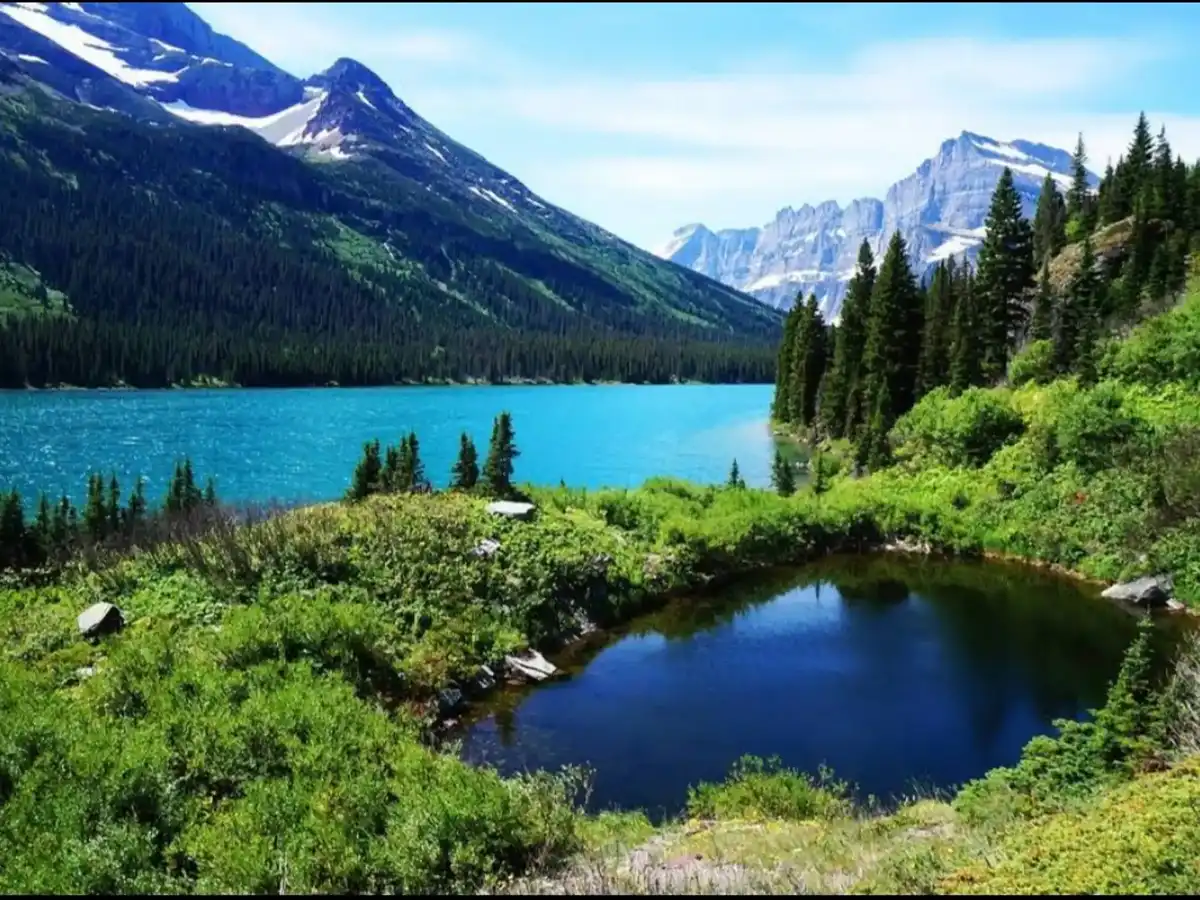
Glacier National Park is why most people come to Montana, with its glacier-carved valleys and the Going-to-the-Sun Road, but the empty miles between the postcards matter just as much. Montana sits in the northwest of the United States, and a drive here means long, quiet stretches, a cattle gate or two, and a bar in every town. At a café in a small town I asked the cook what to order, and she said, “Whatever’s still hot, hon.” It was a huckleberry pancake, and it was right. Distances humble you, cell service sulks, but the elk in the road make up for it.

Discover everything you want to know in the 📖 the USA Travel Guide.


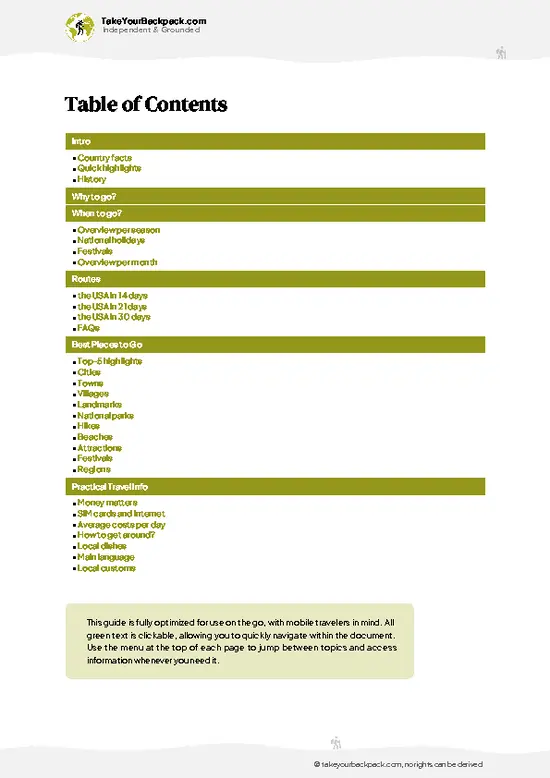
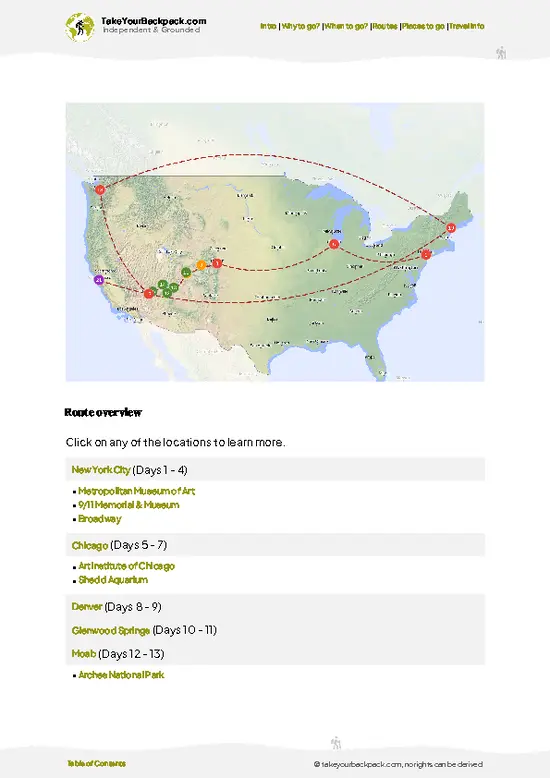
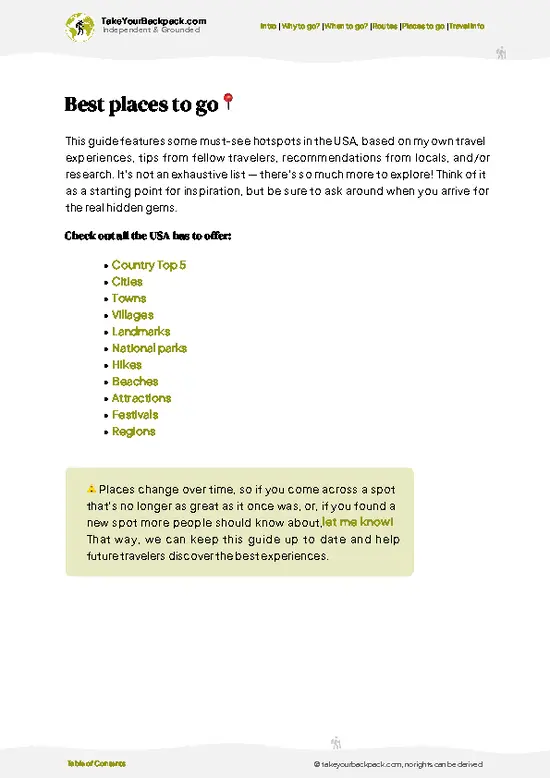
example page 0 from our offline Travel Guide for United States
example page 1 from our offline Travel Guide for United States
example page 2 from our offline Travel Guide for United States
example page 3 from our offline Travel Guide for United States
example page 4 from our offline Travel Guide for United States
example page 5 from our offline Travel Guide for United States
example page 6 from our offline Travel Guide for United States
example page 7 from our offline Travel Guide for United States
Loading the map 🌍
CLICK TO FILTER
cities
towns
villages
landmarks
national parks
hikes
beaches
attractions
festivals
regions
SHOW COUNTRY’S BESTSHOW ALL

✨ Why go?
Ranked #11 region in the USA
What makes it a must-see region

Montana rewards backpackers who want big landscapes without a tight schedule. The state packs the Rocky Mountain Front, prairie, and river valleys into one region, so a single trip can swap alpine lakes for open range and hot springs. Gateway towns like Missoula and Bozeman have hostels, outfitters, and trailheads close by, which cuts planning to almost nothing. Public lands are huge, and dispersed camping on national forest ground keeps nights cheap. Slow travel suits it: pair a hike in Glacier National Park with a float on the Yellowstone River, then spend evenings in old mining and ranching towns where the bartender will give you directions and an opinion.

💡 HighlightsTop highlights of Montana

  1. Glacier National Park: Going-to-the-Sun Road crosses the Continental Divide at Logan Pass, with goat-spotted trails like Highline.
  2. Yellowstone National Park (north entrance at Gardiner): Mammoth Hot Springs terraces and elk wandering the streets of the park’s headquarters.
  3. Bannack State Park: A genuine ghost town with more than 50 weathered buildings you can walk into.
  4. Little Bighorn Battlefield National Monument: Grassy ridges and markers tell the story of the 1876 battle from Crow and Cheyenne perspectives too.
  5. Flathead Lake: The largest natural freshwater lake west of the Mississippi, with cherry stands along the east shore in summer.
  6. Virginia City: A preserved gold rush main street with boardwalks, a saloon, and a quiet evening after the day crowds leave.
  7. Lewis and Clark Caverns: Guided tours
… read more 👉
  1. Glacier National Park: Going-to-the-Sun Road crosses the Continental Divide at Logan Pass, with goat-spotted trails like Highline.
  2. Yellowstone National Park (north entrance at Gardiner): Mammoth Hot Springs terraces and elk wandering the streets of the park’s headquarters.
  3. Bannack State Park: A genuine ghost town with more than 50 weathered buildings you can walk into.
  4. Little Bighorn Battlefield National Monument: Grassy ridges and markers tell the story of the 1876 battle from Crow and Cheyenne perspectives too.
  5. Flathead Lake: The largest natural freshwater lake west of the Mississippi, with cherry stands along the east shore in summer.
  6. Virginia City: A preserved gold rush main street with boardwalks, a saloon, and a quiet evening after the day crowds leave.
  7. Lewis and Clark Caverns: Guided tours through limestone formations, an easy detour from the highway near Whitehall.
  8. Chico Hot Springs: Soak in a historic pool in Paradise Valley with the Absaroka peaks behind you.
  9. Makoshika State Park: Badlands near Glendive with dinosaur fossils and odd rock formations that almost nobody visits.
  10. Giant Springs State Park: One of the largest freshwater springs in the country, beside the Missouri River in Great Falls, and cheap to enter.
Montana’s cheapest stop is Giant Springs, where the walk along the river costs next to nothing.
Spotted a mistake or missing something? Contact us.

Things to do around Montana

Ratings based on Tripadvisor reviews. When you book through this link, you support our work at no extra cost to you.

⌛️ 5 daysWhat you can realistically do in a week

Day 1: Glacier National Park: Start here, because nothing else in the state matches Logan Pass, and the shuttle and road schedule means an early start gets you the best light and parking. Spend the day on the Highline or Hidden Lake trails. Distances between regions are long, so a rental car or a shared ride sets the pace more than any bus.
Day 2: Flathead Lake: Drive south along the lake and swim, kayak, or buy cherries in season. It breaks the long run and rests your legs.
Day 3: Missoula: Use this college town as a resupply and laundry stop, with river floats and decent coffee.
Day 4: Bannack State Park: Detour to the ghost town for a few hours. It adds a lot of history for very little extra driving, and you can wander empty cabins freely.
Day 5: Virginia City: Finish with boardwalk saloons … read more 👉
Day 1: Glacier National Park: Start here, because nothing else in the state matches Logan Pass, and the shuttle and road schedule means an early start gets you the best light and parking. Spend the day on the Highline or Hidden Lake trails. Distances between regions are long, so a rental car or a shared ride sets the pace more than any bus.
Day 2: Flathead Lake: Drive south along the lake and swim, kayak, or buy cherries in season. It breaks the long run and rests your legs.
Day 3: Missoula: Use this college town as a resupply and laundry stop, with river floats and decent coffee.
Day 4: Bannack State Park: Detour to the ghost town for a few hours. It adds a lot of history for very little extra driving, and you can wander empty cabins freely.
Day 5: Virginia City: Finish with boardwalk saloons and a quiet evening. If one day justifies the trip, I would pick Day 1 in Glacier, because the pass at first light is the reason Montana has its reputation.

🌤️ When to go?Choosing the right time of year

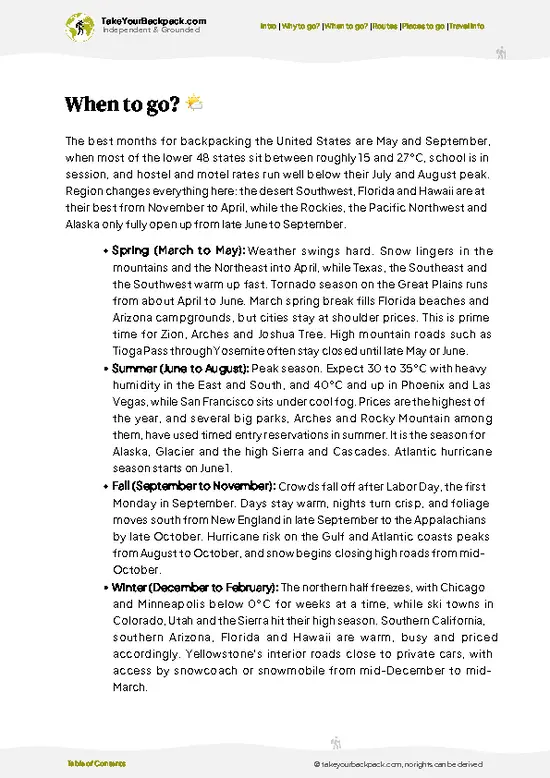
  • Summer (July to September): Highs run 24 to 32°C (75 to 90°F) with long daylight into the evening. Glacier and Yellowstone-side trails are fully open, but lodging costs peak and campgrounds fill weeks ahead.
  • Fall (September to October): Highs of 10 to 21°C (50 to 70°F), cool nights near freezing, golden larches and quiet trails. Hunting season brings orange-clad hikers, and prices drop.
  • Winter (December to March): Highs of -7 to 2°C (20 to 35°F), with deep cold snaps well below -18°C (0°F). Daylight is short, ski towns are busy and rates climb around holidays.
  • Spring (April to June): Highs of 7 to 21°C (45 to 70°F), mud, snowmelt and rain. High passes stay closed into June, but crowds are thin and rooms are cheap.
Book summer campsites by early spring, or aim for mid-September when the weather still holds.

source: climatestotravel.comJANJanuary: below average for travelingFEBFebruary: below average for travelingMARMarch: fair for travelingAPRApril: fair for travelingMAYMay: good for travelingJUNJune: highly recommended for travelingJULJuly: excellent for travelingAUGAugust: excellent for travelingSEPSeptember: highly recommended for travelingOCTOctober: good for travelingNOVNovember: fair for travelingDECDecember: below average for traveling
united-states-region-montana
© Google | Neha Kankar

✈️ The backpacker research shortcutthe USA Travel Guide

An offline-friendly backpacking guide with optimized travel routes, ranked highlights, transport advice, and the best areas to stay.
example page 0 from our offline Travel Guide for United States
example page 1 from our offline Travel Guide for United States
example page 2 from our offline Travel Guide for United States
example page 3 from our offline Travel Guide for United States
example page 4 from our offline Travel Guide for United States
example page 5 from our offline Travel Guide for United States
example page 6 from our offline Travel Guide for United States
example page 7 from our offline Travel Guide for United States
The digital guide (451 pages) contains:
✅ 159 highlights, ranked by travel appeal
✅ Optimized 14, 21 & 30-day travel routes
✅ Cities, national parks, landmarks, beaches
✅ How to get around
✅ Offline-friendly for travel without Wi-Fi
👉 Click to see all 30+ guide features

📅 Plan smarter in minutes, not weeks
✅ Month by month travel advice
✅ Festivals & national holidays
✅ Budget expectations

🗺️ Go to the right places, skip the overrated ones
✅ Honest pros & cons of destinations
✅ Top hikes, parks & viewpoints
✅ Lesser-known places most travelers miss
✅ Clear “worth it vs skip it” guidance

🛏️ Travel smoothly without rookie mistakes
✅ Best areas to stay
✅ Transport systems explained simply
✅ Common scams & safety advice
✅ SIM cards, money & practical tips

🌍 Understand the country, not just visit it
✅ Culture & traditions
✅ Local customs
✅ Festivals worth planning around
✅ Traveler-friendly historical context
✅ Insights that make places more meaningful

📱 Built for real travel conditions
✅ Fully downloadable PDF
✅ Works completely offline
✅ Optimized for phone use
✅ Useful in remote areas & buses
✅ Everything in one place
Stop searching, start planning
Get instant access to your full guide. 30‑day money-back guarantee.
+ Add another guide for just

By proceeding you agree to our terms.
Sent to your inbox immediately after payment • 100% Secure Checkout
Best Backpacking Travel Advisor 2025 tourism awardBest Backpacking
Travel Advisor
2025
What others say about Take Your Backpack Guides:
⭐⭐⭐⭐⭐
Fantastic, amazing amount of information!
⭐⭐⭐⭐⭐
My goodness this is amazing, it's what I've been looking for hats off too you!
⭐⭐⭐⭐⭐
I think this is absolutely BRILLIANT
⭐⭐⭐⭐
Very complete and informative. It's still missing places, but I gotta to commend you
⭐⭐⭐⭐⭐
This is truly amazing, thank you, can't wait to explore it with my kids!
⭐⭐⭐⭐⭐
Awesome resource, thank you!
⭐⭐⭐⭐⭐
This is amazing! Can't wait to explore the ones I haven't seen
⭐⭐⭐⭐
I love this! Well done, great idea.
⭐⭐⭐⭐⭐
Thanks for taking the time to make this gem!
⭐⭐⭐⭐⭐
This might be the best website I've ever seen.
⭐⭐⭐⭐⭐
Congratulations, and thank you so much for your work; it's incredibly valuable.
⭐⭐⭐⭐
In all seriousness I think you did a great job pointing out the important spots
⭐⭐⭐⭐⭐
10/10 very good
⭐⭐⭐⭐⭐
As someone who's only just starting to visit regularly this is awesome, thank you.
⭐⭐⭐⭐
Thank you very much! I'm going to visit my dad, it's going to be very useful!
⭐⭐⭐⭐⭐
This is really cool! We'll be travelling for the first time and this definitely come in handy.
⭐⭐⭐⭐⭐
You are now our minister of culture, congratulations 👨‍💼
⭐⭐⭐⭐⭐
Just wanted to tell you that this is a pearl! Going to follow your recommendations.
⭐⭐⭐⭐⭐
This is so cool. I'll definitely be using the resource for my travels soon.
⭐⭐⭐⭐⭐
This is very impressive! Good work.
⭐⭐⭐⭐⭐
This is an amazing and informative site. Very well done!

🛏️ Where to stay?Where staying makes the most sense

Missoula is the easiest base in Montana for backpackers, a university town with riverside trails, brewery patios, cheap hostel beds and plenty of other travelers swapping route ideas. Bozeman works just as well, with a young outdoor crowd, ski access in winter and a short run south toward Yellowstone. Both are walkable, safe and full of casual cafés where solo travelers strike up conversation easily.
West Glacier and Whitefish serve Glacier National Park. Whitefish has the livelier evenings and a ski-town buzz, while West Glacier is quiet and close to the park entrance. Expect summer dorm beds … read more 👉
Missoula is the easiest base in Montana for backpackers, a university town with riverside trails, brewery patios, cheap hostel beds and plenty of other travelers swapping route ideas. Bozeman works just as well, with a young outdoor crowd, ski access in winter and a short run south toward Yellowstone. Both are walkable, safe and full of casual cafés where solo travelers strike up conversation easily.
West Glacier and Whitefish serve Glacier National Park. Whitefish has the livelier evenings and a ski-town buzz, while West Glacier is quiet and close to the park entrance. Expect summer dorm beds around US$40 to 70 and campgrounds from US$15 to 30.
Livingston is a smaller, quirkier option with a historic main street, fly-fishing culture and Yellowstone’s north gate nearby. Helena and Butte suit history fans and cheaper stays, though they are quieter for meeting people. Gardiner is the practical pick for early park entry.

🚌 Getting aroundHow to get from A to B

Montana has no real city transit, so the most common ride is your own wheels, and a rental car runs US$50 to 100 a day, paid by card at the airport counter. Distances are the main character here: Billings to Missoula is about 5.5 hours of highway, and you will pass more cattle than gas stations. Buses and trains exist but thin out fast, so plan around them or hitch a lift.
  • Rental car: US$50 to 100 a day plus fuel, and the only way to reach most trailheads. Expect empty two-lane roads, sudden antelope and a sky that takes up most of the windshield, which is the whole point.
  • Intercity bus: Routes along I-90 and I-15 cost roughly US$30 to 90 per leg, with one or two departures a day. Seats are comfortable and the plains roll by without you steering.
  • Amtrak Empire Builder: Runs east to west along
… read more 👉
Montana has no real city transit, so the most common ride is your own wheels, and a rental car runs US$50 to 100 a day, paid by card at the airport counter. Distances are the main character here: Billings to Missoula is about 5.5 hours of highway, and you will pass more cattle than gas stations. Buses and trains exist but thin out fast, so plan around them or hitch a lift.
  • Rental car: US$50 to 100 a day plus fuel, and the only way to reach most trailheads. Expect empty two-lane roads, sudden antelope and a sky that takes up most of the windshield, which is the whole point.
  • Intercity bus: Routes along I-90 and I-15 cost roughly US$30 to 90 per leg, with one or two departures a day. Seats are comfortable and the plains roll by without you steering.
  • Amtrak Empire Builder: Runs east to west along the northern edge, with fares of about US$40 to 120 between stops like Whitefish and Glacier Park. It often arrives in the middle of the night, but the daylight stretch through the mountains is worth the wait.
  • Local shuttles and free summer buses: Glacier’s Going-to-the-Sun shuttle is free with park entry (US$35 per vehicle, US$20 on foot or bike, plus a US$100 nonresident fee per person since 2026). It saves you from circling a full parking lot, and the driver narrates the views.
  • Hitchhiking and rideshare boards: Common among seasonal workers. Rides cost gas money and give you a local’s opinion of everything.
Fill the tank whenever you pass a station over half empty, because the next one can be 80 kilometers (50 miles) away.

🍲 FoodEating & Drinking in Montana

Montana eats big. Think bison burgers and thick ribeye steaks with a char that crackles, plus huckleberry everything: pie, pancakes, jam, even ice cream, tart and purple-stained. In Butte, try a pasty, the flaky miners’ hand pie stuffed with beef and potato, around US$8 to 12.
For drinks, the state is crowded with craft breweries, and a pint costs roughly US$6 to 8. Missoula and Bozeman have taprooms where locals trade trail beta over IPAs, and many allow dogs and outside food. Farmers markets on summer weekends sell cherries from Flathead Lake, fresh bread and hot breakfast burritos.
Backpackers eat cheapest at diners, bakeries and grocery delis, with meals around US$10 to 18. Casual dress is normal everywhere, and servers expect a 18 to 20 percent tip. Bar patrons often say hello to strangers, so answer back.

FAQFrequently asked questions about Montana

Plan on 7 to 10 days to cover Montana's highlights, and 2 weeks if you want Glacier and Yellowstone without rushing. Glacier National Park alone deserves 3 to 4 days, including a drive over Going-to-the-Sun Road (about 50 miles, open fully roughly late June to mid-October). Add 2 days around Missoula and Flathead Lake, and 1 to 2 days in Bozeman or Great Falls. The distances are huge, with Missoula to Glacier taking about 3 hours by road.
Getting around Montana without a car is possible but slow, so pick a few bases and stay put. Intercity buses such as Jefferson Lines link Billings, Bozeman, Butte, Missoula and Great Falls, with fares often US$30 to 80 per leg. Amtrak’s Empire Builder crosses the northern edge, stopping at East Glacier, West Glacier, Whitefish and Shelby. In summer, the free Glacier park shuttle runs along Going-to-the-Sun Road, and towns like Missoula and Bozeman have local buses at about US$1 to 2 a ride.
Montana is known for wide-open ranch country, Glacier National Park and its alpine lakes, and the northern gate to Yellowstone near Gardiner and West Yellowstone. Fly fishing on rivers like the Madison and Gallatin draws anglers, and skiing at Big Sky and Whitefish draws winter crowds. Its towns carry real Old West history, including Virginia City and Butte’s copper-mining past, and Little Bighorn Battlefield sits near Crow Agency. Expect more cattle than people in many counties, and a population around 1.1 million spread across about 147,000 square miles.
⚠️ Things can change over time, so always validate details locally before you go.

Other American regions near Montana

Explore more nearby:

  • Idaho—Sawtooth lakes, lava fields, Hells Canyon, Boise Greenbelt| 436 km away
  • Wyoming—Oregon Trail relics, Casper badlands, red-cliff reservoir, empty highways| 518 km away
  • Washington—Rainier meadows, Hoh rain forest, Pike Place, San Juan ferries| 731 km away

💡 Not sure where to go next?
Create a personalized itinerary for the USA including Montana and the places that fit your trip.

Generate my itinerary

👉 Discover all regions

Or checkout all the USA has to offer (think cities, towns, villages, national parks, hikes, beaches, festivals)
Country photo of the USA

We 💚 feedbackKey takeaways before you go

Montana works best paired with Yellowstone or Wyoming’s Grand Teton on a loop, since the distances are huge and the towns between are the fun part. I would book Glacier lodging early, fill the gas tank whenever you can, and keep a paper map for dead zones.

✈️ When did I visit the USA?
In January 2023 I visited New York. Many years before, before digital cameras existed, I discovered most of the national parks in the West.

✍️ Help improve this page!
The information on this page is based on my own backpacking experience in the USA, supplemented with up-to-date research and feedback from other travelers. Travel details can change, so if you notice anything outdated or incomplete, feel free to let me know.


🙋‍♂️ Give feedback

👋 Meet the founderWho’s Behind Take Your Backpack?

Johan, backpacker and founder of TakeYourBackpackHi, I’m Johan (Netherlands 🇳🇱), the creator of TakeYourBackpack. Over the past 3 decades, I’ve backpacked through 90+ countries across six continents, gaining extensive experience with independent travel, long-term trips, and overland routes.

This site is built on a combination of firsthand travel experience and carefully curated insights from other backpackers. Many guides are based on places I’ve personally visited, while others bring together tips, observations, and practical advice shared by trusted travelers I’ve met along the way.

The goal is to provide realistic, experience-driven guidance — not generic itineraries — so you can explore destinations with better context, clearer expectations, and more confidence.