×

the USA🇺🇸 | regionsOregonCrater Lake blue, Columbia Gorge falls, coastal sea stacks, high desert playas | things to do and best time to go

Explore OklahomaExplore Pennsylvania

Backpacking in Oregon
🏆 Top pickregion ranked #10
By Johan Kruseman 🇳🇱 | Updated October 22, 2026

Oregon has no sales tax, and at the gas station an attendant pumps your fuel, because self-serve was long illegal and is now only partly allowed. Oregon sits in the Pacific Northwest of the United States, north of California, with a public coastline and a high desert east of the Cascades. Here is how it works: the coast is free to walk, yet beach towns jam on summer weekends, so experienced travelers go midweek. Distances are huge and buses thin out east of the mountains, so renting a car for the desert is smarter than waiting for a schedule. I expected Crater Lake to be a bit blue. It looked like spilled ink, and the silence at the rim was total. Pack a cooler for the long empty stretches, where the only landmark is a lone juniper.

Discover everything you want to know in the 📖 the USA Travel Guide.


example page 0 from our offline Travel Guide for United States
example page 1 from our offline Travel Guide for United States
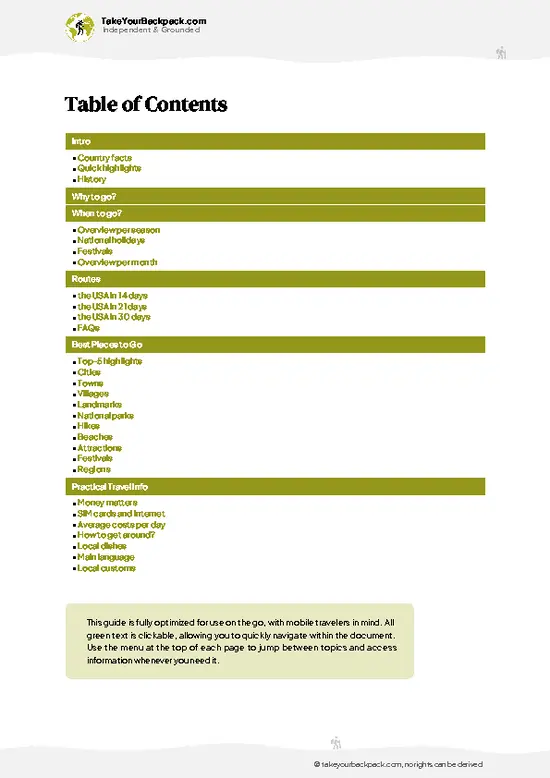
example page 2 from our offline Travel Guide for United States
example page 3 from our offline Travel Guide for United States
example page 4 from our offline Travel Guide for United States
example page 5 from our offline Travel Guide for United States
example page 6 from our offline Travel Guide for United States
example page 7 from our offline Travel Guide for United States
Loading the map 🌍
CLICK TO FILTER
cities
towns
villages
landmarks
national parks
hikes
beaches
attractions
festivals
regions
SHOW COUNTRY’S BESTSHOW ALL

✨ Why go?
Ranked #10 region in the USA
What sets this place apart

Oregon packs rainforest, volcanic peaks and desert into one state, so you can change ecosystems in a morning drive instead of flying anywhere. The big draw is the sheer contrast: ocean cliffs at Cannon Beach and sagebrush canyons near Painted Hills sit within a long day's drive of each other, with farmland and ski slopes between. Portland and Bend give you cheap-ish hostels and good craft beer, and both double as bases where gear rentals, trailheads and food carts sit close together. Slow travel works well here because every region has its own rhythm: coastal fog, river-gorge waterfalls, and the dry Alvord Desert playa, where you can camp under a sky with almost no light pollution. Public land is abundant, so camping is often free or low-cost, and that stretches a backpacker's budget further than hotels ever could.

💡 HighlightsWhat this place is best known for

  1. Crater Lake National Park: The deepest lake in the United States, about 1,943 feet, sits in a collapsed volcano and is a blue so saturated it looks edited. Rim Drive circles it, and the park entry is roughly US$30 per vehicle in summer. Snow often closes parts of the road into July.
  2. Multnomah Falls: A 620-foot, two-tier drop in the Columbia River Gorge, free to see, with a stone bridge over the lower tier. Go early, because the lot fills fast.
  3. Painted Hills (John Day Fossil Beds): Rounded hills striped red, gold and black by ancient soils, with short boardwalk and trail loops. Free to enter, and the colors deepen after rain.
  4. Smith Rock State Park: Orange volcanic cliffs above the Crooked River, where sport climbing was pioneered in the US. The Misery Ridge loop is steep and about 4 miles.
  5. Cannon
… read more 👉
  1. Crater Lake National Park: The deepest lake in the United States, about 1,943 feet, sits in a collapsed volcano and is a blue so saturated it looks edited. Rim Drive circles it, and the park entry is roughly US$30 per vehicle in summer. Snow often closes parts of the road into July.
  2. Multnomah Falls: A 620-foot, two-tier drop in the Columbia River Gorge, free to see, with a stone bridge over the lower tier. Go early, because the lot fills fast.
  3. Painted Hills (John Day Fossil Beds): Rounded hills striped red, gold and black by ancient soils, with short boardwalk and trail loops. Free to enter, and the colors deepen after rain.
  4. Smith Rock State Park: Orange volcanic cliffs above the Crooked River, where sport climbing was pioneered in the US. The Misery Ridge loop is steep and about 4 miles.
  5. Cannon Beach and Haystack Rock: A 235-foot sea stack you can walk to at low tide, with tide pools full of anemones and nesting puffins in summer.
  6. Oregon Dunes National Recreation Area: Sand hills up to 500 feet high stretch for about 40 miles near Reedsport and Florence, with trails through to the surf.
  7. Steens Mountain: A huge fault-block ridge in the southeast with a gravel loop road to nearly 10,000 feet. Summer only, and almost empty.
  8. Alvord Desert: A flat, bone-white dry lake bed where locals park a camper and soak in nearby hot springs. Food and fuel are far away, so bring both.
  9. Wallowa Lake and Joseph: A glacial lake under granite peaks in the northeast, with a tramway up Mount Howard and a main street lined with bronze foundry galleries.
  10. Fort Rock: A circular tuff ring rising from high desert, where 9,000-year-old sandals were found in a nearby cave. Few outsiders ever come, and the walk-in crater is free.
Oregon rewards pairing Painted Hills with Smith Rock, since both sit in the central high desert and fit a single long day of driving and short hikes.
Spotted a mistake or missing something? Contact us.

Things to do around Oregon

Ratings based on Tripadvisor reviews. When you book through this link, you support our work at no extra cost to you.

⌛️ 5 daysWhat you can realistically do in a week

Day 1: Crater Lake: Start at the rim, because nothing else in Oregon matches that blue and it is hard to reach without a car. Public transport barely serves the park, so driving or renting is what sets the pace for the whole trip. Spend the day on the rim road and a short trail to the water.
Day 2: Bend: Head north to Bend, the easiest hub in the central part of the state for gear, food and hostels. Climb at Smith Rock in the afternoon, since the sun clears the cliffs by then.
Day 3: Painted Hills: Drive east into the desert for the striped hills. Distances grow and services thin out, so fill the tank before you leave town. A detour to Fort Rock on the way adds a strange ancient landscape without costing much time.
Day 4 and 5: Portland and the Gorge: Return west to Portland, where buses and … read more 👉
Day 1: Crater Lake: Start at the rim, because nothing else in Oregon matches that blue and it is hard to reach without a car. Public transport barely serves the park, so driving or renting is what sets the pace for the whole trip. Spend the day on the rim road and a short trail to the water.
Day 2: Bend: Head north to Bend, the easiest hub in the central part of the state for gear, food and hostels. Climb at Smith Rock in the afternoon, since the sun clears the cliffs by then.
Day 3: Painted Hills: Drive east into the desert for the striped hills. Distances grow and services thin out, so fill the tank before you leave town. A detour to Fort Rock on the way adds a strange ancient landscape without costing much time.
Day 4 and 5: Portland and the Gorge: Return west to Portland, where buses and trains finally work, then use the gorge for waterfalls and Mount Hood.
If I could keep only one day, I would keep Day 1: that lake is the reason to come.

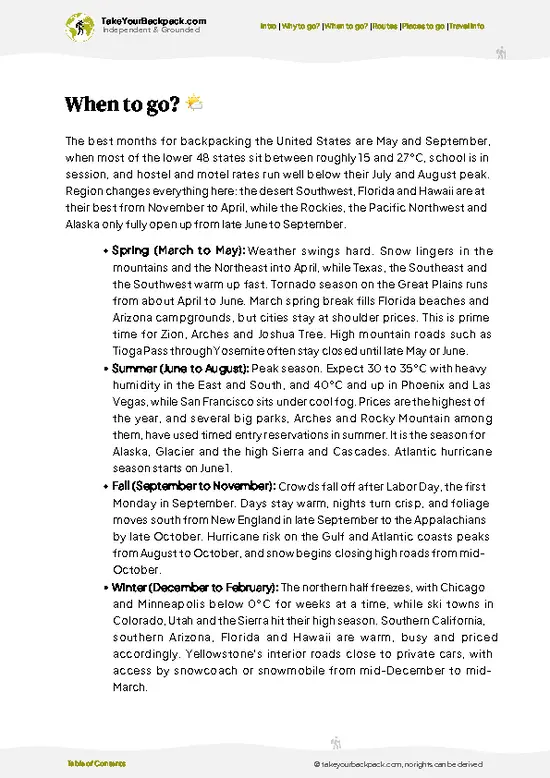
🌤️ When to go?When to go for the best experience

Oregon is at its most dependable from July through September, when the Cascades are snow-free and the coast is dry.
  • Summer (Jul to Sep): Highs run 24 to 32°C (75 to 90°F) west of the Cascades and hotter in the high desert, with long daylight and the busiest crowds. Coast lodging and campsites peak in price and book out weeks ahead.
  • Fall (Oct to Nov): Days of 10 to 18°C (50 to 65°F), thinner crowds, lower rates, and rain returning to the coast and Portland.
  • Winter (Dec to Feb): Valley temperatures hover at 1 to 9°C (34 to 48°F) with gray, drizzly days. Mount Hood and Bachelor have snow sports, and storm-watching on the coast is popular.
  • Spring (Mar to Jun): Waterfalls peak and wildflowers bloom, but mountain passes and Crater Lake’s rim stay snowy into June.
Book Crater Lake and coast stays early if you travel in July or August.

source: climatestotravel.comJANJanuary: below average for travelingFEBFebruary: below average for travelingMARMarch: fair for travelingAPRApril: good for travelingMAYMay: good for travelingJUNJune: highly recommended for travelingJULJuly: excellent for travelingAUGAugust: excellent for travelingSEPSeptember: highly recommended for travelingOCTOctober: good for travelingNOVNovember: fair for travelingDECDecember: below average for traveling
when-to-go

✈️ The backpacker research shortcutthe USA Travel Guide

An offline-friendly backpacking guide with optimized travel routes, ranked highlights, transport advice, and the best areas to stay.
example page 0 from our offline Travel Guide for United States
example page 1 from our offline Travel Guide for United States
example page 2 from our offline Travel Guide for United States
example page 3 from our offline Travel Guide for United States
example page 4 from our offline Travel Guide for United States
example page 5 from our offline Travel Guide for United States
example page 6 from our offline Travel Guide for United States
example page 7 from our offline Travel Guide for United States
The digital guide (451 pages) contains:
✅ 159 highlights, ranked by travel appeal
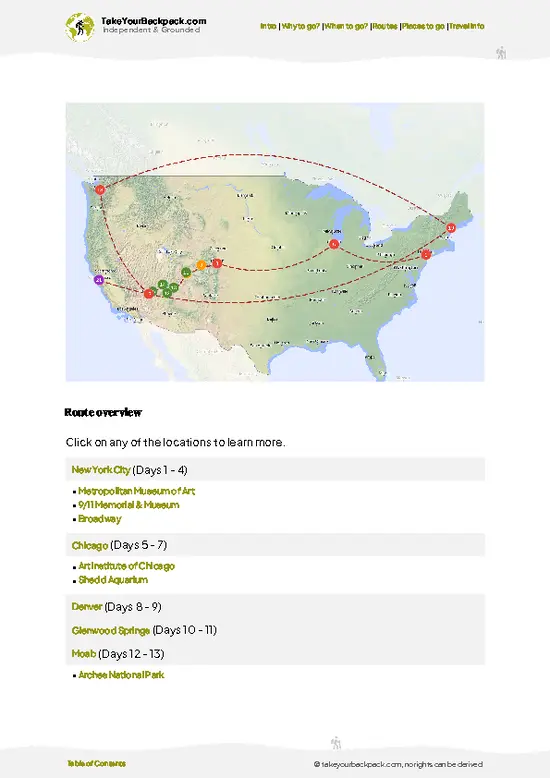
✅ Optimized 14, 21 & 30-day travel routes
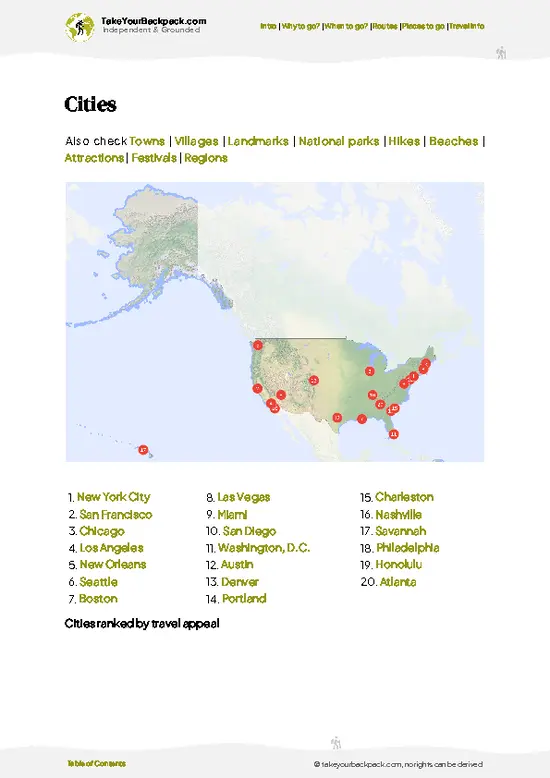
✅ Cities, national parks, landmarks, beaches
✅ How to get around
✅ Offline-friendly for travel without Wi-Fi
👉 Click to see all 30+ guide features

📅 Plan smarter in minutes, not weeks
✅ Month by month travel advice
✅ Festivals & national holidays
✅ Budget expectations

🗺️ Go to the right places, skip the overrated ones
✅ Honest pros & cons of destinations
✅ Top hikes, parks & viewpoints
✅ Lesser-known places most travelers miss
✅ Clear “worth it vs skip it” guidance

🛏️ Travel smoothly without rookie mistakes
✅ Best areas to stay
✅ Transport systems explained simply
✅ Common scams & safety advice
✅ SIM cards, money & practical tips

🌍 Understand the country, not just visit it
✅ Culture & traditions
✅ Local customs
✅ Festivals worth planning around
✅ Traveler-friendly historical context
✅ Insights that make places more meaningful

📱 Built for real travel conditions
✅ Fully downloadable PDF
✅ Works completely offline
✅ Optimized for phone use
✅ Useful in remote areas & buses
✅ Everything in one place
Stop searching, start planning
Get instant access to your full guide. 30‑day money-back guarantee.
+ Add another guide for just

By proceeding you agree to our terms.
Sent to your inbox immediately after payment • 100% Secure Checkout
Best Backpacking Travel Advisor 2025 tourism awardBest Backpacking
Travel Advisor
2025
What others say about Take Your Backpack Guides:
⭐⭐⭐⭐⭐
Fantastic, amazing amount of information!
⭐⭐⭐⭐⭐
My goodness this is amazing, it's what I've been looking for hats off too you!
⭐⭐⭐⭐⭐
I think this is absolutely BRILLIANT
⭐⭐⭐⭐
Very complete and informative. It's still missing places, but I gotta to commend you
⭐⭐⭐⭐⭐
This is truly amazing, thank you, can't wait to explore it with my kids!
⭐⭐⭐⭐⭐
Awesome resource, thank you!
⭐⭐⭐⭐⭐
This is amazing! Can't wait to explore the ones I haven't seen
⭐⭐⭐⭐
I love this! Well done, great idea.
⭐⭐⭐⭐⭐
Thanks for taking the time to make this gem!
⭐⭐⭐⭐⭐
This might be the best website I've ever seen.
⭐⭐⭐⭐⭐
Congratulations, and thank you so much for your work; it's incredibly valuable.
⭐⭐⭐⭐
In all seriousness I think you did a great job pointing out the important spots
⭐⭐⭐⭐⭐
10/10 very good
⭐⭐⭐⭐⭐
As someone who's only just starting to visit regularly this is awesome, thank you.
⭐⭐⭐⭐
Thank you very much! I'm going to visit my dad, it's going to be very useful!
⭐⭐⭐⭐⭐
This is really cool! We'll be travelling for the first time and this definitely come in handy.
⭐⭐⭐⭐⭐
You are now our minister of culture, congratulations 👨‍💼
⭐⭐⭐⭐⭐
Just wanted to tell you that this is a pearl! Going to follow your recommendations.
⭐⭐⭐⭐⭐
This is so cool. I'll definitely be using the resource for my travels soon.
⭐⭐⭐⭐⭐
This is very impressive! Good work.
⭐⭐⭐⭐⭐
This is an amazing and informative site. Very well done!

🛏️ Where to stay?Best areas to stay in the USA

Portland is the easiest base for Oregon, with the largest hostel scene, a walkable core, and the airport and train station close by. Stay in the Central Eastside or Southeast neighborhoods near Hawthorne and Belmont for food carts, breweries and easy MAX or bus access. Dorm beds usually run US$35 to 60 a night.

Bend suits outdoorsy travelers, with river floats, climbing, skiing and brewery patios, and a social crowd of climbers and cyclists. Expect higher prices in summer, about US$40 to 70 for a dorm bed.

Eugene is cheaper and youthful thanks to the university, with bike paths and a lively … read more 👉
Portland is the easiest base for Oregon, with the largest hostel scene, a walkable core, and the airport and train station close by. Stay in the Central Eastside or Southeast neighborhoods near Hawthorne and Belmont for food carts, breweries and easy MAX or bus access. Dorm beds usually run US$35 to 60 a night.

Bend suits outdoorsy travelers, with river floats, climbing, skiing and brewery patios, and a social crowd of climbers and cyclists. Expect higher prices in summer, about US$40 to 70 for a dorm bed.

Eugene is cheaper and youthful thanks to the university, with bike paths and a lively music scene. Cannon Beach and Astoria are good coastal stops with a relaxed, surfy feel, though beds disappear on summer weekends. Hood River is the pick for windsurfing and Gorge waterfalls, with a small, friendly traveler crowd.

🚌 Getting aroundMoving around without the hassle

Oregon’s cities are walkable, but the state itself is bigger than most people expect, nearly 400 miles across, so walking stops making sense the moment you leave a downtown. Portland, Eugene, Bend and Astoria reward feet and bikes. Everything between them is a long empty highway that treats a bus schedule as a polite suggestion.
  • Amtrak Cascades and Coast Starlight: Trains link Portland, Salem, Albany and Eugene for roughly US$20 to 45 one way. They are scenic and relaxed, but run only a few times daily, so check times before building a plan around them.
  • Flixbus and Greyhound-style intercity coaches: Portland to Eugene or Bend costs about US$15 to 40 and takes 2 to 4 hours. Coverage thins out east of the Cascades, so expert travelers book ahead and treat these as the backbone between major towns.
… read more 👉
Oregon’s cities are walkable, but the state itself is bigger than most people expect, nearly 400 miles across, so walking stops making sense the moment you leave a downtown. Portland, Eugene, Bend and Astoria reward feet and bikes. Everything between them is a long empty highway that treats a bus schedule as a polite suggestion.
  • Amtrak Cascades and Coast Starlight: Trains link Portland, Salem, Albany and Eugene for roughly US$20 to 45 one way. They are scenic and relaxed, but run only a few times daily, so check times before building a plan around them.
  • Flixbus and Greyhound-style intercity coaches: Portland to Eugene or Bend costs about US$15 to 40 and takes 2 to 4 hours. Coverage thins out east of the Cascades, so expert travelers book ahead and treat these as the backbone between major towns.
  • Public transit in Portland: TriMet MAX light rail, buses and streetcars cost about US$2.80 for a 2.5 hour ticket, with a daily cap of US$5.60. The MAX also runs to the airport, which beats a US$40 to 50 taxi.
  • Regional buses: Cascades East Transit serves Bend and Central Oregon, and Northwestern Stage Lines runs Bend to Portland. NorthWest POINT connects some coastal towns. Fares range from free to about US$40, but services are limited and stop early.
  • Rental car or car share: A compact runs about US$40 to 80 a day. Public transport misses most trailheads, lava fields and the Oregon Coast Highway, so renting for a few days beats waiting at a roadside stop. At many gas stations an attendant still pumps your fuel, although self-serve has been partly allowed since 2023.
Take transit between cities, then rent a car for just two or three days in the places buses cannot reach, such as the coast or Crater Lake.

🍲 FoodLocal Cuisine & Drinks

Oregon eats well on a budget, starting with food carts. Portland’s clustered cart pods serve everything from Thai khao man gai to Georgian dumplings for US$8 to 15, with smoke, lemongrass and fryer oil drifting between picnic tables. Eugene and Bend have their own pod scenes too.

The state is famous for craft beer. Pints cost US$6 to 9, and many taprooms hand out small tasting flights, so you can compare hazy IPAs before committing. The Willamette Valley pours Pinot Noir, with tasting rooms charging about US$15 to 40. Look for marionberries, hazelnuts, Tillamook cheese and fresh Dungeness crab on the coast. Chowder from a harbor shack, eaten from a paper bowl in sea wind, is hard to beat.

Farmers markets run Saturdays in summer and are the best place for cheap picnic fixings. Tipping 18 … read more 👉
Oregon eats well on a budget, starting with food carts. Portland’s clustered cart pods serve everything from Thai khao man gai to Georgian dumplings for US$8 to 15, with smoke, lemongrass and fryer oil drifting between picnic tables. Eugene and Bend have their own pod scenes too.

The state is famous for craft beer. Pints cost US$6 to 9, and many taprooms hand out small tasting flights, so you can compare hazy IPAs before committing. The Willamette Valley pours Pinot Noir, with tasting rooms charging about US$15 to 40. Look for marionberries, hazelnuts, Tillamook cheese and fresh Dungeness crab on the coast. Chowder from a harbor shack, eaten from a paper bowl in sea wind, is hard to beat.

Farmers markets run Saturdays in summer and are the best place for cheap picnic fixings. Tipping 18 to 20 percent is standard at sit-down places, and often expected even at counters with a tablet screen. Tap water is safe, and portions are large, so splitting a plate works.

FAQCommon questions from travelers

Plan 7 to 10 days to cover Oregon's main highlights without rushing. That fits Portland (2 days), the Columbia River Gorge waterfalls (1 day), the Oregon Coast between Cannon Beach and Newport (2 to 3 days), Bend and the High Desert (2 days), and Crater Lake National Park (1 day). Add 3 to 5 more days if you want the Wallowa Mountains, Smith Rock climbing or the Painted Hills.
Oregon is workable without a car only along a few corridors, and it takes patience. Portland has MAX light rail and buses (TriMet day pass about US$5.60), Amtrak Cascades and Greyhound-style buses like FlixBus link Portland with Eugene and Salem, and the Columbia Gorge Express shuttle runs to Multnomah Falls in season for roughly US$10 to 15. Bend is reached by Redmond-bound flights or the Cascades East Transit bus, and the coast is served by slow Lincoln County and Tillamook County buses, so budget extra days. Renting a car for the coast and Crater Lake usually costs US$50 to 90 a day.
Oregon is known for its varied landscapes packed into one state: a public Pacific coastline with sea stacks like Haystack Rock at Cannon Beach, the snowy Cascade volcanoes including Mount Hood (3,429 m, 11,249 ft), and the deep blue of Crater Lake, the deepest lake in the United States at 592 m (1,943 ft). Portland adds craft beer, food carts and coffee culture, while the Willamette Valley is a major Pinot Noir wine region. Outdoor fans also come for Smith Rock climbing, Bend's mountain biking and skiing, and the high desert of the Painted Hills. Oregon has no sales tax and full-service gas stations are handled by attendants, two quirks you notice quickly.
⚠️ Things can change over time, so always validate details locally before you go.

Other American regions near Oregon

Explore more nearby:

  • Washington—Rainier meadows, Hoh rain forest, Pike Place, San Juan ferries| 336 km away
  • Idaho—Sawtooth lakes, lava fields, Hells Canyon, Boise Greenbelt| 461 km away
  • Nevada—Neon Strip, Valley of Fire, Great Basin darkness, ghost mining towns| 594 km away

💡 Not sure where to go next?
Create a personalized itinerary for the USA including Oregon and the places that fit your trip.

Generate my itinerary

👉 Discover all regions

Or checkout all the USA has to offer (think cities, towns, villages, national parks, hikes, beaches, festivals)
Country photo of the USA

We 💚 feedbackParting advice and final tips

Oregon deserves at least a week, and ten days if you want the coast and the eastern desert both. Two days in Portland alone misses the point. I would book a rental car for the middle stretch and skip trying to link it all by bus, because the best places sit far from any stop.

✈️ When did I visit the USA?
In January 2023 I visited New York. Many years before, before digital cameras existed, I discovered most of the national parks in the West.

✍️ Help improve this page!
The information on this page is based on my own backpacking experience in the USA, supplemented with up-to-date research and feedback from other travelers. Travel details can change, so if you notice anything outdated or incomplete, feel free to let me know.


🙋‍♂️ Give feedback

👋 Meet the founderWho’s Behind Take Your Backpack?

Johan, backpacker and founder of TakeYourBackpackHi, I’m Johan (Netherlands 🇳🇱), the creator of TakeYourBackpack. Over the past 3 decades, I’ve backpacked through 90+ countries across six continents, gaining extensive experience with independent travel, long-term trips, and overland routes.

This site is built on a combination of firsthand travel experience and carefully curated insights from other backpackers. Many guides are based on places I’ve personally visited, while others bring together tips, observations, and practical advice shared by trusted travelers I’ve met along the way.

The goal is to provide realistic, experience-driven guidance — not generic itineraries — so you can explore destinations with better context, clearer expectations, and more confidence.