

×

Uruguay🇺🇾 | villagesAguas DulcesFishermen’s landing, sand streets, dunes behind town, empty shoreline | things to do and best time to go

Explore Fray Bentos Industrial LandscapeExplore Cabo Polonio

Backpacking in Aguas Dulces
👀 For curious travelersvillage ranked #9
By Johan Kruseman 🇳🇱 | Updated October 19, 2026

Aguas Dulces sits on the open Atlantic coast, not beside a river or a lake, and the name comes from the fresh water of a stream that reaches the sea here. The village lies in the east of Uruguay, in Rocha department, with Cabo Polonio to its south and the Santa Teresa park to its northeast. Streets are sand, dunes roll right up to the last houses, and the beach runs for kilometers with almost nobody on it. Fishing families set the pace, and you hear surf more than traffic. Services are thin, nights are quiet, and meeting other travelers happens mostly in the few guesthouses and at the dune trailheads. A first day could go like this: walk the sand to the fishermen’s boats, eat fresh fish for lunch, and watch the dunes darken at dusk.

Discover everything you want to know in the 📖 Uruguay Travel Guide.


example page 0 from our offline Travel Guide for Uruguay
example page 1 from our offline Travel Guide for Uruguay
example page 2 from our offline Travel Guide for Uruguay
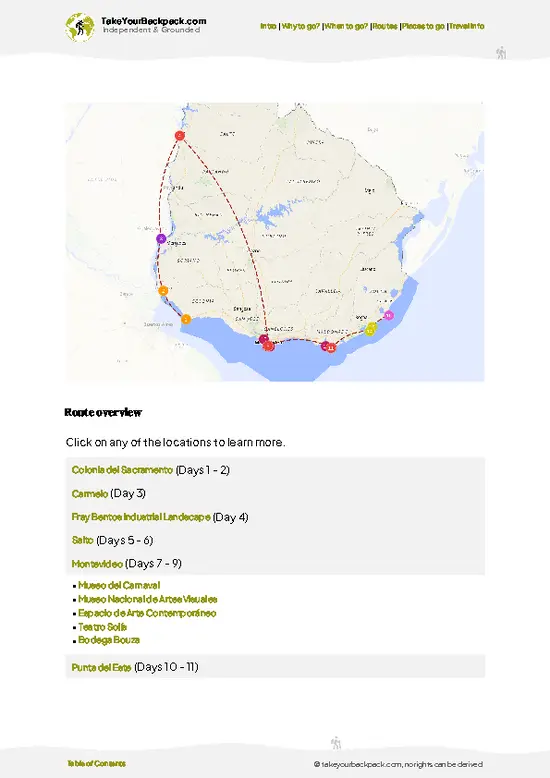
example page 3 from our offline Travel Guide for Uruguay
example page 4 from our offline Travel Guide for Uruguay
example page 5 from our offline Travel Guide for Uruguay
example page 6 from our offline Travel Guide for Uruguay
example page 7 from our offline Travel Guide for Uruguay
Loading the map 🌍
CLICK TO FILTER
cities
towns
villages
landmarks
national parks
hikes
beaches
attractions
festivals
SHOW COUNTRY’S BESTSHOW ALL

✨ Why go?
Ranked #9 village in Uruguay
What makes it a must-see village

Aguas Dulces suits backpackers who want a pause between the busier stops of the Rocha coast. The first reason is the shoreline itself: a wide, empty beach backed by moving dunes, where you can walk for an hour and meet only a fisherman and his dog. The second is the artisanal fishing community, whose small boats launch straight from the sand and supply the village with corvina, brótola and shrimp. Most travelers stay one or two nights, though slow travelers and writers linger for a week because there is little to interrupt the day. It is calm rather than social, so solo travelers looking for company will find only a handful of people at the guesthouses. Couples, walkers, birdwatchers and anyone who likes sleeping to the sound of surf will be happy. If you need nightlife or cash machines, treat it as a short stop.

💡 HighlightsKey sights and experiences for travelers

  1. The main beach and fishermen’s landing: This is what Aguas Dulces is known for. Small wooden boats are hauled up the sand, and in the morning you can watch the catch being cleaned. Go early or late in the day, when the light is soft and the wind is lighter. Free, and an hour or two is enough, longer if you walk along the shore.
  2. The dunes behind the village: Large sand dunes rise right behind the last streets and make a good walk to the crest, where you see ocean on one side and lagoon country on the other. Late afternoon is best for cooler sand and long shadows. Free, and allow 1 to 2 hours. Bring water and shoes you do not mind filling with sand.
  3. The lighthouse-side coastal walk toward Valizas and Cabo Polonio: The long beach walk south leads past dune fields and wrecked hulls of fishing gear,
… read more 👉
  1. The main beach and fishermen’s landing: This is what Aguas Dulces is known for. Small wooden boats are hauled up the sand, and in the morning you can watch the catch being cleaned. Go early or late in the day, when the light is soft and the wind is lighter. Free, and an hour or two is enough, longer if you walk along the shore.
  2. The dunes behind the village: Large sand dunes rise right behind the last streets and make a good walk to the crest, where you see ocean on one side and lagoon country on the other. Late afternoon is best for cooler sand and long shadows. Free, and allow 1 to 2 hours. Bring water and shoes you do not mind filling with sand.
  3. The lighthouse-side coastal walk toward Valizas and Cabo Polonio: The long beach walk south leads past dune fields and wrecked hulls of fishing gear, with seabirds and sea lions sometimes offshore. Choose a calm, overcast or cool day and start early, since there is no shade. Free, and a few hours cover the first stretch. Carry food and water.
Start with the beach and landing at first light, because the boats return then and the fish is sold fresh, which also sets up lunch. Day trips from the village include Cabo Polonio with its sea lion colony and lighthouse, Santa Teresa National Park with its fortress and beaches, and the lagoon town of Valizas.
Spotted a mistake or missing something? Contact us.

🌤️ When to go?When to go for the best experience

January and February are the peak window for Aguas Dulces, and the beach is at its best then.
  • Summer (Dec to Feb): Highs of 26 to 30°C (79 to 86°F), warm sea, and about 14 hours of daylight. Uruguayan holidaymakers fill the rentals, and prices peak, especially the first two weeks of January.
  • Autumn (Mar to May): Highs of 18 to 24°C (64 to 75°F). The crowds vanish, the sand empties, and many places start to close.
  • Winter (Jun to Aug): Highs of 12 to 16°C (54 to 61°F), nights near 5°C (41°F), strong wind, and roughly 10 hours of light. Most of the village is shut and quiet.
  • Spring (Sep to Nov): Highs of 17 to 24°C (63 to 75°F). Wildlife watching and long walks work well, with rooms cheap.
Book early for January, or come in the first half of December for warm days without the crush.

source: climatestotravel.comJANJanuary: highly recommended for travelingFEBFebruary: highly recommended for travelingMARMarch: highly recommended for travelingAPRApril: fair for travelingMAYMay: fair for travelingJUNJune: below average for travelingJULJuly: below average for travelingAUGAugust: below average for travelingSEPSeptember: fair for travelingOCTOctober: good for travelingNOVNovember: highly recommended for travelingDECDecember: highly recommended for traveling
when-to-go

✈️ The backpacker research shortcutUruguay Travel Guide

An offline-friendly backpacking guide with optimized travel routes, ranked highlights, transport advice, and the best areas to stay.
example page 0 from our offline Travel Guide for Uruguay
example page 1 from our offline Travel Guide for Uruguay
example page 2 from our offline Travel Guide for Uruguay
example page 3 from our offline Travel Guide for Uruguay
example page 4 from our offline Travel Guide for Uruguay
example page 5 from our offline Travel Guide for Uruguay
example page 6 from our offline Travel Guide for Uruguay
example page 7 from our offline Travel Guide for Uruguay
The digital guide (198 pages) contains:
✅ 56 highlights, ranked by travel appeal
✅ Optimized 5, 10 & 15-day travel routes
✅ Cities, national parks, landmarks, beaches
✅ How to get around
✅ Offline-friendly for travel without Wi-Fi
👉 Click to see all 30+ guide features

📅 Plan smarter in minutes, not weeks
✅ Month by month travel advice
✅ Festivals & national holidays
✅ Budget expectations

🗺️ Go to the right places, skip the overrated ones
✅ Honest pros & cons of destinations
✅ Top hikes, parks & viewpoints
✅ Lesser-known places most travelers miss
✅ Clear “worth it vs skip it” guidance

🛏️ Travel smoothly without rookie mistakes
✅ Best areas to stay
✅ Transport systems explained simply
✅ Common scams & safety advice
✅ SIM cards, money & practical tips

🌍 Understand the country, not just visit it
✅ Culture & traditions
✅ 52 Essential phrases & customs
✅ Festivals worth planning around
✅ Traveler-friendly historical context
✅ Insights that make places more meaningful

📱 Built for real travel conditions
✅ Fully downloadable PDF
✅ Works completely offline
✅ Optimized for phone use
✅ Useful in remote areas & buses
✅ Everything in one place
Stop searching, start planning
Get instant access to your full guide. 30‑day money-back guarantee.
+ Add another guide for just

By proceeding you agree to our terms.
Sent to your inbox immediately after payment • 100% Secure Checkout
Best Backpacking Travel Advisor 2025 tourism awardBest Backpacking
Travel Advisor
2025
What others say about Take Your Backpack Guides:
⭐⭐⭐⭐⭐
Fantastic, amazing amount of information!
⭐⭐⭐⭐⭐
My goodness this is amazing, it's what I've been looking for hats off too you!
⭐⭐⭐⭐⭐
I think this is absolutely BRILLIANT
⭐⭐⭐⭐
Very complete and informative. It's still missing places, but I gotta to commend you
⭐⭐⭐⭐⭐
This is truly amazing, thank you, can't wait to explore it with my kids!
⭐⭐⭐⭐⭐
Awesome resource, thank you!
⭐⭐⭐⭐⭐
This is amazing! Can't wait to explore the ones I haven't seen
⭐⭐⭐⭐
I love this! Well done, great idea.
⭐⭐⭐⭐⭐
Thanks for taking the time to make this gem!
⭐⭐⭐⭐⭐
This might be the best website I've ever seen.
⭐⭐⭐⭐⭐
Congratulations, and thank you so much for your work; it's incredibly valuable.
⭐⭐⭐⭐
In all seriousness I think you did a great job pointing out the important spots
⭐⭐⭐⭐⭐
10/10 very good
⭐⭐⭐⭐⭐
As someone who's only just starting to visit regularly this is awesome, thank you.
⭐⭐⭐⭐
Thank you very much! I'm going to visit my dad, it's going to be very useful!
⭐⭐⭐⭐⭐
This is really cool! We'll be travelling for the first time and this definitely come in handy.
⭐⭐⭐⭐⭐
You are now our minister of culture, congratulations 👨‍💼
⭐⭐⭐⭐⭐
Just wanted to tell you that this is a pearl! Going to follow your recommendations.
⭐⭐⭐⭐⭐
This is so cool. I'll definitely be using the resource for my travels soon.
⭐⭐⭐⭐⭐
This is very impressive! Good work.
⭐⭐⭐⭐⭐
This is an amazing and informative site. Very well done!

🛏️ Where to stay?Best areas and accommodation options

Aguas Dulces has no true hostels, so backpackers mostly choose between simple cabañas, campsites and rented rooms. A basic cabaña for two runs about US$40 to 90 a night in high season (January and February) and drops to US$25 to 50 outside it, with prices rising around Carnival and Easter week. Cabañas with kitchens suit budget travelers best, since you can cook with supplies bought in the village or the larger town of Castillos, and split the cost between four or more people for much lower per-head rates. Campers can pitch at campgrounds near the beach for roughly US$8 to 15 per person, though … read more 👉
Aguas Dulces has no true hostels, so backpackers mostly choose between simple cabañas, campsites and rented rooms. A basic cabaña for two runs about US$40 to 90 a night in high season (January and February) and drops to US$25 to 50 outside it, with prices rising around Carnival and Easter week. Cabañas with kitchens suit budget travelers best, since you can cook with supplies bought in the village or the larger town of Castillos, and split the cost between four or more people for much lower per-head rates. Campers can pitch at campgrounds near the beach for roughly US$8 to 15 per person, though facilities are basic and the wind can be fierce. Staying near the main street keeps you close to the few shops and restaurants, while the quieter streets toward the dunes give better sleep and stargazing. In winter many owners close, so message ahead. Book January stays months in advance.

🚌 Day tripsWhere to go beyond the main area

Aguas Dulces works well as a base for day trips, though with limited buses you need to plan around the schedules or share a rental car.
Cabo Polonio:
The car-free dunes, sea lion colony and lighthouse are the big draw. Reaching the park entrance at Barra de Valizas takes about 1.5 to 2 hours with a change in Castillos or by taxi, then a 4x4 truck (around US$10 to 15 return) or a 7 km (4 mile) walk across the dunes. Go in the shoulder months and leave early, since the last trucks fill up and first-timers often forget cash.
👉 Explore Cabo Polonio
Santa Teresa National Park:
The park lies about 40 minutes to an hour up the coast, with forested trails, an 18th-century fortress (Fortaleza de Santa Teresa) and long, calm beaches. Entry is around US$3 to 5, and camping is cheap. Visit from November … read more 👉
Aguas Dulces works well as a base for day trips, though with limited buses you need to plan around the schedules or share a rental car.
Cabo Polonio:
The car-free dunes, sea lion colony and lighthouse are the big draw. Reaching the park entrance at Barra de Valizas takes about 1.5 to 2 hours with a change in Castillos or by taxi, then a 4x4 truck (around US$10 to 15 return) or a 7 km (4 mile) walk across the dunes. Go in the shoulder months and leave early, since the last trucks fill up and first-timers often forget cash.
👉 Explore Cabo Polonio
Santa Teresa National Park:
The park lies about 40 minutes to an hour up the coast, with forested trails, an 18th-century fortress (Fortaleza de Santa Teresa) and long, calm beaches. Entry is around US$3 to 5, and camping is cheap. Visit from November to March, and bring insect repellent because mosquitoes are fierce at dusk.

Laguna de Castillos:
This lagoon and its wetlands sit close to the village and are good for birdwatching and quiet kayaking. Expect about US$5 to 20 for a short outing. Spring and early summer bring the most birds.

Castillos:
The nearest real town, about 20 minutes away, has a supermarket, ATMs and bus connections. A round trip costs roughly US$3 to 8 by bus or shared taxi, and it is the practical place to stock up before returning.

🛡️ SafetyScams, Hazards, and Annoyances

Aguas Dulces beach is generally a chill spot for backpackers, but let’s keep it real. The waves can get a bit feisty, especially if you’re not used to the Atlantic’s energy. Watch for rip currents; they’re not lurking like ninjas, but they can surprise you. Locals know where to swim, so follow their lead.

As for marine life, jellyfish occasionally drift by, but they’re more of a nuisance than a threat. Sharks? Rarely seen, but it’s always good to keep your eyes peeled.

Weather shifts throughout the day, with the sun cranking up the heat by noon. Slather on that sunscreen early and often. Theft isn’t rampant, but don’t leave your stuff unattended while you’re frolicking in the waves. Stay aware, enjoy the vibe, and you’ll be just fine.

FAQFrequently asked questions about Aguas Dulces

Take a bus from Montevideo's Tres Cruces terminal to Castillos, which takes roughly 3.5 to 4 hours and costs about US$12 to 18, then continue about 20 minutes to Aguas Dulces by taxi or local bus. Schedules thin out in the off-season, so confirm the last connection from Castillos before you leave. A rental car cuts the trip to around 3 hours via Ruta 9 and Ruta 10.
Yes, if you like empty beaches, dunes and quiet more than nightlife. Aguas Dulces has a long, wide shoreline, wildlife nearby at Laguna de Castillos and Cabo Polonio, and cabañas from about US$25 to 90 a night depending on season. Plan at least two days, and expect little to do after dark outside January and February.
Aguas Dulces is possible as a long day trip from Punta del Este or Rocha, but not comfortably from Montevideo, which is 3.5 to 4 hours each way by bus. Staying one or two nights lets you add Cabo Polonio and the Santa Teresa park without rushing. With a rental car, a day visit from Rocha takes only about an hour each way.
⚠️ Things can change over time, so always validate details locally before you go.

Other Uruguayan villages near Aguas Dulces

Explore more nearby:

  • Valizas—Stream mouth, dune walk to Cabo Polonio, kayak rentals, hostel dinners| 7 km away
  • Cabo Polonio—No grid power, 4x4 dune trucks, sea lion rocks, candlelit nights| 14 km away
  • José Ignacio—Twin beaches, white lighthouse, kite and surf waves, high prices| 101 km away

💡 Not sure where to go next?
Create a personalized itinerary for Uruguay including Aguas Dulces and the places that fit your trip.

Generate my itinerary

👉 Discover all villages

Or checkout all Uruguay has to offer (think cities, towns, villages, national parks, hikes, beaches, festivals)
Country photo of Uruguay

We 💚 feedbackWhat to keep in mind

Aguas Dulces works best as a quiet stop near Valizas and Cabo Polonio to the south, between La Paloma to the southwest and Punta del Diablo to the northeast. I would stay one or two nights, bring cash and groceries, and arrive before dark. Skip it in midsummer weekends if you want the empty beach.

✍️ Help improve this page!
The information on this page is based on in-depth research, insights shared by experienced travelers, and feedback from the local travel community in Uruguay. While every effort is made to keep the information accurate and current, conditions can change — so if you spot anything incorrect or outdated, please get in touch.


🙋‍♂️ Give feedback

👋 Meet the founderWho’s Behind Take Your Backpack?

Johan, backpacker and founder of TakeYourBackpackHi, I’m Johan (Netherlands 🇳🇱), the creator of TakeYourBackpack. Over the past 3 decades, I’ve backpacked through 90+ countries across six continents, gaining extensive experience with independent travel, long-term trips, and overland routes.

This site is built on a combination of firsthand travel experience and carefully curated insights from other backpackers. Many guides are based on places I’ve personally visited, while others bring together tips, observations, and practical advice shared by trusted travelers I’ve met along the way.

The goal is to provide realistic, experience-driven guidance — not generic itineraries — so you can explore destinations with better context, clearer expectations, and more confidence.