×

Uruguay🇺🇾 | villagesValizasStream mouth, dune walk to Cabo Polonio, kayak rentals, hostel dinners | things to do and best time to go

Explore Pueblo EdénExplore Cerro Chapeu

Backpacking in Valizas
🏆 Top pickvillage ranked #1
By Johan Kruseman 🇳🇱 | Updated October 19, 2026

Valizas has no cash machine worth relying on and little in the way of nightlife, which is exactly why it keeps its calm: bring pesos from Montevideo or Punta del Diablo and you will not spend an afternoon hunting for a bank. The village sits in Rocha department in the east of Uruguay, at the mouth of the Arroyo Valizas, on a long Atlantic beach just south of the Brazilian border region. Streets are sand, so experienced travelers pack light and wear sandals instead of dragging wheeled luggage. Dunes run along the coast, and the Cabo Polonio route starts on foot from here, which is why people who skip the crowded truck access at the other end save money and see more. Evenings are quiet. Hostels and campsites run on shared dinners, mate and guitars, so meeting people takes no effort, though most lights are out early. Wind and ocean noise fill the night. The village ends where the dunes begin, and the first one is a few minutes from the last house.

Discover everything you want to know in the 📖 Uruguay Travel Guide.


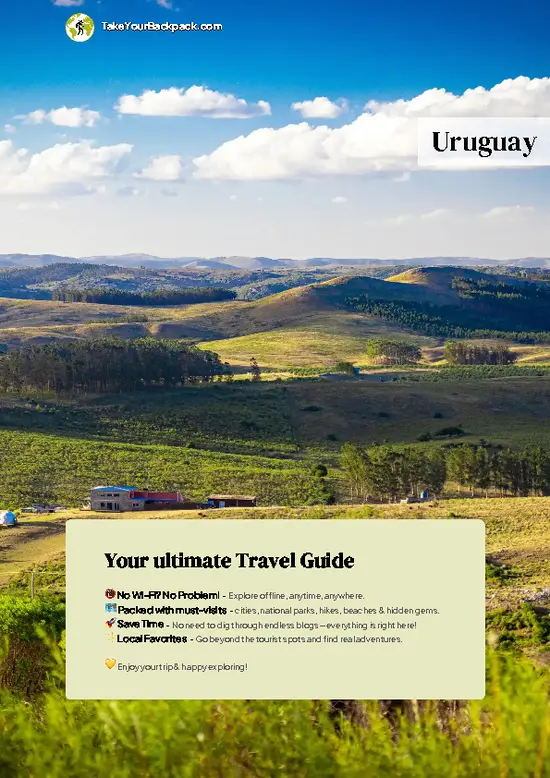
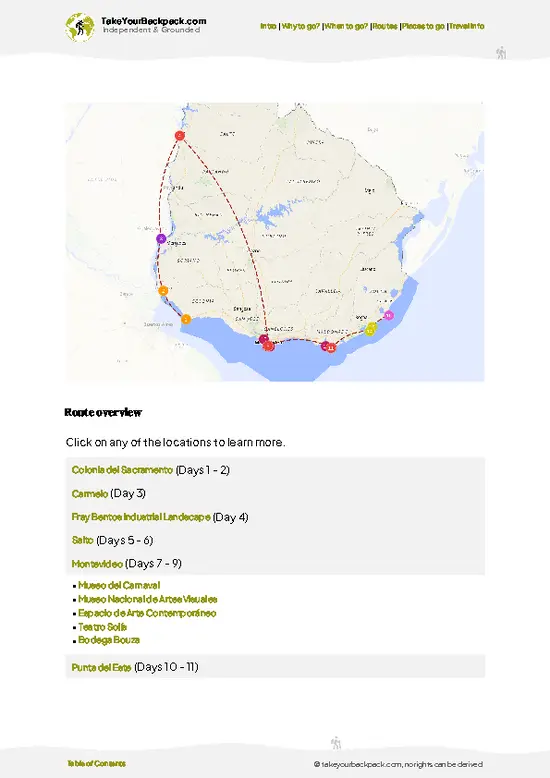
example page 0 from our offline Travel Guide for Uruguay
example page 1 from our offline Travel Guide for Uruguay
example page 2 from our offline Travel Guide for Uruguay
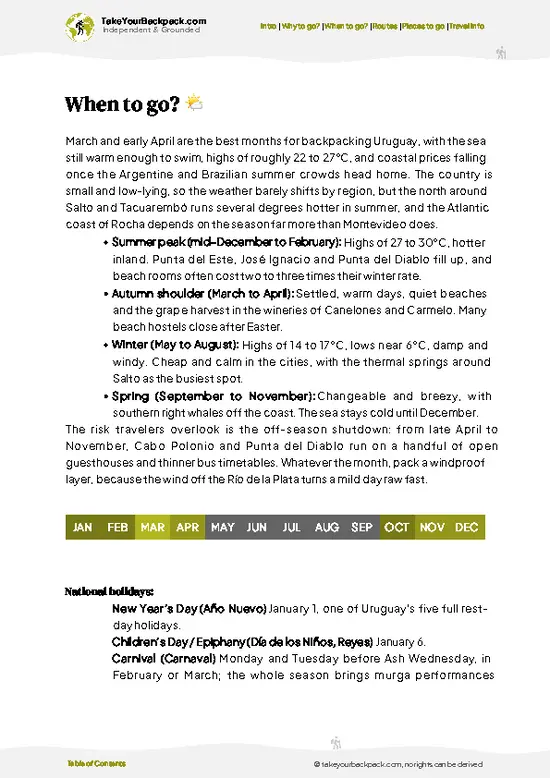
example page 3 from our offline Travel Guide for Uruguay
example page 4 from our offline Travel Guide for Uruguay
example page 5 from our offline Travel Guide for Uruguay
example page 6 from our offline Travel Guide for Uruguay
example page 7 from our offline Travel Guide for Uruguay
Loading the map 🌍
CLICK TO FILTER
cities
towns
villages
landmarks
national parks
hikes
beaches
attractions
festivals
SHOW COUNTRY’S BESTSHOW ALL

✨ Why go?
Ranked #1 village in Uruguay
What makes it a must-see village

Valizas works because it is the walking gateway to the Cabo Polonio dunes, a route of roughly 7 kilometers along sand that most travelers cover in the morning and finish with a swim. Backpackers who prefer their own pace over the tourist trucks tend to stay here, and many linger two or three nights because nothing pulls them onward. The village itself is small, with a handful of hostels, a few restaurants and a general store, and a pace set by tides and weather. It suits solo travelers who want calm but still expect to share a table with others, couples who like long beach walks, and slow travelers breaking up the coast between Punta del Diablo and the capital. The Arroyo Valizas gives a second kind of day, with kayaking and wading in brackish water as the stream bends toward the sea. It is … read more 👉
Valizas works because it is the walking gateway to the Cabo Polonio dunes, a route of roughly 7 kilometers along sand that most travelers cover in the morning and finish with a swim. Backpackers who prefer their own pace over the tourist trucks tend to stay here, and many linger two or three nights because nothing pulls them onward. The village itself is small, with a handful of hostels, a few restaurants and a general store, and a pace set by tides and weather. It suits solo travelers who want calm but still expect to share a table with others, couples who like long beach walks, and slow travelers breaking up the coast between Punta del Diablo and the capital. The Arroyo Valizas gives a second kind of day, with kayaking and wading in brackish water as the stream bends toward the sea. It is a poor fit if you need nightlife, shopping or fast internet. Come for the dunes, the sound of surf and the habit of walking everywhere, and leave when the sand starts to feel like home.

💡 HighlightsPlaces and moments you shouldn't skip

  1. Walk to Cabo Polonio along the dunes. The best-known thing to do from Valizas is the 7 kilometer beach and dune walk to the lighthouse peninsula, with sea lions and a fishing hamlet at the end. Go early, before the midday sun and wind, and check the tide so you walk on firm wet sand. It is free, takes 2 to 3 hours each way, and carrying water and a hat matters because shade is scarce. Many travelers return by truck from Cabo Polonio for roughly US$10 to 15.
  2. The beach and dunes of Valizas. The wide Atlantic beach has strong surf, so swim only where locals do and stay close to shore. Late afternoon is best for walking the dune edge and watching the sand shift in the wind. It costs nothing and an hour or two is plenty, longer if you just sit.
  3. Arroyo Valizas. The stream separates the village from
… read more 👉
  1. Walk to Cabo Polonio along the dunes. The best-known thing to do from Valizas is the 7 kilometer beach and dune walk to the lighthouse peninsula, with sea lions and a fishing hamlet at the end. Go early, before the midday sun and wind, and check the tide so you walk on firm wet sand. It is free, takes 2 to 3 hours each way, and carrying water and a hat matters because shade is scarce. Many travelers return by truck from Cabo Polonio for roughly US$10 to 15.
  2. The beach and dunes of Valizas. The wide Atlantic beach has strong surf, so swim only where locals do and stay close to shore. Late afternoon is best for walking the dune edge and watching the sand shift in the wind. It costs nothing and an hour or two is plenty, longer if you just sit.
  3. Arroyo Valizas. The stream separates the village from the dunes and can be crossed on foot when the water is low or by small boat when it is not. Mornings are calmer and better for birds, and local operators rent kayaks for about US$10 to 20 an hour. Plan 1 to 2 hours, more if you paddle upstream.
Day trips from Valizas include Cabo Polonio itself, Barra de Valizas to Aguas Dulces along the coast, and the Santa Teresa National Park farther north, with its fortress and campsites. Together the three highlights fill a relaxed full day, or two if you stretch the dune walk.
Spotted a mistake or missing something? Contact us.

🌤️ When to go?When to go for the best experience

  • Summer (December to February): Valizas peaks here, with highs of 26 to 29°C (79 to 84°F), about 14 hours of daylight, packed beaches and the highest bed prices. Book ahead around New Year and Carnival.
  • Autumn (March to May): Days of 18 to 24°C (64 to 75°F), empty sand and lower rates make this the best window for the dune walk to Cabo Polonio.
  • Winter (June to August): Highs of 12 to 16°C (54 to 61°F), nights near 5 to 8°C (41 to 46°F), roughly 10 hours of light, wind off the Atlantic and many shops shut. Beds are cheap, but the place feels asleep.
  • Spring (September to November): Temperatures climb from 15 to 23°C (59 to 73°F), rain showers pass quickly, and from October the first southern right whales show up offshore nearby.
Arrive on a weekday in early December or mid-March and you get warm days without summer rates.

source: climatestotravel.comJANJanuary: highly recommended for travelingFEBFebruary: highly recommended for travelingMARMarch: good for travelingAPRApril: highly recommended for travelingMAYMay: good for travelingJUNJune: fair for travelingJULJuly: fair for travelingAUGAugust: fair for travelingSEPSeptember: good for travelingOCTOctober: highly recommended for travelingNOVNovember: highly recommended for travelingDECDecember: highly recommended for traveling
when-to-go

✈️ The backpacker research shortcutUruguay Travel Guide

An offline-friendly backpacking guide with optimized travel routes, ranked highlights, transport advice, and the best areas to stay.
example page 0 from our offline Travel Guide for Uruguay
example page 1 from our offline Travel Guide for Uruguay
example page 2 from our offline Travel Guide for Uruguay
example page 3 from our offline Travel Guide for Uruguay
example page 4 from our offline Travel Guide for Uruguay
example page 5 from our offline Travel Guide for Uruguay
example page 6 from our offline Travel Guide for Uruguay
example page 7 from our offline Travel Guide for Uruguay
The digital guide (198 pages) contains:
✅ 56 highlights, ranked by travel appeal
✅ Optimized 5, 10 & 15-day travel routes
✅ Cities, national parks, landmarks, beaches
✅ How to get around
✅ Offline-friendly for travel without Wi-Fi
👉 Click to see all 30+ guide features

📅 Plan smarter in minutes, not weeks
✅ Month by month travel advice
✅ Festivals & national holidays
✅ Budget expectations

🗺️ Go to the right places, skip the overrated ones
✅ Honest pros & cons of destinations
✅ Top hikes, parks & viewpoints
✅ Lesser-known places most travelers miss
✅ Clear “worth it vs skip it” guidance

🛏️ Travel smoothly without rookie mistakes
✅ Best areas to stay
✅ Transport systems explained simply
✅ Common scams & safety advice
✅ SIM cards, money & practical tips

🌍 Understand the country, not just visit it
✅ Culture & traditions
✅ 52 Essential phrases & customs
✅ Festivals worth planning around
✅ Traveler-friendly historical context
✅ Insights that make places more meaningful

📱 Built for real travel conditions
✅ Fully downloadable PDF
✅ Works completely offline
✅ Optimized for phone use
✅ Useful in remote areas & buses
✅ Everything in one place
Stop searching, start planning
Get instant access to your full guide. 30‑day money-back guarantee.
+ Add another guide for just

By proceeding you agree to our terms.
Sent to your inbox immediately after payment • 100% Secure Checkout
Best Backpacking Travel Advisor 2025 tourism awardBest Backpacking
Travel Advisor
2025
What others say about Take Your Backpack Guides:
⭐⭐⭐⭐⭐
Fantastic, amazing amount of information!
⭐⭐⭐⭐⭐
My goodness this is amazing, it's what I've been looking for hats off too you!
⭐⭐⭐⭐⭐
I think this is absolutely BRILLIANT
⭐⭐⭐⭐
Very complete and informative. It's still missing places, but I gotta to commend you
⭐⭐⭐⭐⭐
This is truly amazing, thank you, can't wait to explore it with my kids!
⭐⭐⭐⭐⭐
Awesome resource, thank you!
⭐⭐⭐⭐⭐
This is amazing! Can't wait to explore the ones I haven't seen
⭐⭐⭐⭐
I love this! Well done, great idea.
⭐⭐⭐⭐⭐
Thanks for taking the time to make this gem!
⭐⭐⭐⭐⭐
This might be the best website I've ever seen.
⭐⭐⭐⭐⭐
Congratulations, and thank you so much for your work; it's incredibly valuable.
⭐⭐⭐⭐
In all seriousness I think you did a great job pointing out the important spots
⭐⭐⭐⭐⭐
10/10 very good
⭐⭐⭐⭐⭐
As someone who's only just starting to visit regularly this is awesome, thank you.
⭐⭐⭐⭐
Thank you very much! I'm going to visit my dad, it's going to be very useful!
⭐⭐⭐⭐⭐
This is really cool! We'll be travelling for the first time and this definitely come in handy.
⭐⭐⭐⭐⭐
You are now our minister of culture, congratulations 👨‍💼
⭐⭐⭐⭐⭐
Just wanted to tell you that this is a pearl! Going to follow your recommendations.
⭐⭐⭐⭐⭐
This is so cool. I'll definitely be using the resource for my travels soon.
⭐⭐⭐⭐⭐
This is very impressive! Good work.
⭐⭐⭐⭐⭐
This is an amazing and informative site. Very well done!

🛏️ Where to stay?Where staying makes the most sense

Valizas has a small, walkable cluster of hostels, campsites and rented cabins, and a dorm bed runs about US$18 to 35 a night in high season. Most places sit within ten minutes on foot of the stream mouth and the beach, so location matters less than the type of stay you want.
Hostels are the social choice. Expect dorms, a shared kitchen and a garden or terrace where people swap notes on the dune crossing to Cabo Polonio. Private rooms in the hostels cost roughly US$45 to 80 in summer, dropping by a third or more in autumn and spring.
Campsites are the cheapest bed in town, at about US$8 to 15 per … read more 👉
Valizas has a small, walkable cluster of hostels, campsites and rented cabins, and a dorm bed runs about US$18 to 35 a night in high season. Most places sit within ten minutes on foot of the stream mouth and the beach, so location matters less than the type of stay you want.
Hostels are the social choice. Expect dorms, a shared kitchen and a garden or terrace where people swap notes on the dune crossing to Cabo Polonio. Private rooms in the hostels cost roughly US$45 to 80 in summer, dropping by a third or more in autumn and spring.
Campsites are the cheapest bed in town, at about US$8 to 15 per person, and several sit in the trees behind the dunes where it is calmer and shadier than on the beach. Bring a sturdy tent, because the wind comes in hard off the sea.
Cabins and small posadas suit groups of three or four. A simple cabin goes for about US$50 to 120 a night in season and is often the best value when split. Many have kitchens, which helps because supermarkets are few and the stock is limited.
Months of December to February sell out fast, and some places only open on weekends in winter. Message ahead before you arrive.

🚌 Day tripsWhere to go beyond the main area

Valizas works well as a base for day trips, since the best targets are either walkable or one short bus or shared ride away on Ruta 10, though public transport thins out in winter.
Cabo Polonio on foot:
The classic walk crosses about 7 km of dunes and beach from Valizas to the sea lion colony and lighthouse village, taking roughly 2 to 3 hours each way. Go early in autumn or spring, carry at least 2 liters of water, and do not walk the dunes in a strong wind. Many first-timers underestimate the sun and wind here.
👉 Explore Cabo Polonio
Aguas Dulces:
This quiet fishing village lies about 7 km north along the coast, reachable in about 1.5 hours on foot, or about 10 minutes by taxi for US$5 to 8. You can eat fresh fish at small seafront places for roughly US$10 to 18 a plate and watch boats get … read more 👉
Valizas works well as a base for day trips, since the best targets are either walkable or one short bus or shared ride away on Ruta 10, though public transport thins out in winter.
Cabo Polonio on foot:
The classic walk crosses about 7 km of dunes and beach from Valizas to the sea lion colony and lighthouse village, taking roughly 2 to 3 hours each way. Go early in autumn or spring, carry at least 2 liters of water, and do not walk the dunes in a strong wind. Many first-timers underestimate the sun and wind here.
👉 Explore Cabo Polonio
Aguas Dulces:
This quiet fishing village lies about 7 km north along the coast, reachable in about 1.5 hours on foot, or about 10 minutes by taxi for US$5 to 8. You can eat fresh fish at small seafront places for roughly US$10 to 18 a plate and watch boats get hauled onto the sand. Go in the morning when the fishermen are working. Check the tide before you walk the beach.
👉 Explore Aguas Dulces
Castillos and Laguna de Castillos:
The town of Castillos sits less than 20 km inland, around 40 minutes by bus or car for US$2 to 4, and gives you the nearest bank, supermarket and pharmacy. The nearby lagoon has wetland birdlife, best seen from spring to early summer, though getting around the shoreline without a vehicle is hard.

Punta del Diablo:
About 70 km northeast, this surf town makes a full day out. Allow roughly 1.5 to 2 hours each way by bus with a change at Castillos, and plan US$10 to 20 for transport. Leave early, because last buses back leave by late afternoon.

FAQTraveler FAQ

Most travelers reach Valizas by direct bus from Montevideo’s Tres Cruces terminal, a trip of about 4 to 4.5 hours that costs roughly US$15 to 22. Services run daily in summer and fewer in winter, so check the schedule the day before. Outside the season you can also take a bus to Castillos and change for a local connection of about 40 minutes.
Valizas is worth the trip if you want a low-key beach village with a hippie feel, sand streets and the starting point for the 7 km dune walk to Cabo Polonio. Two or three days is enough to cover the beach, the dunes and Aguas Dulces, with beds from about US$18. It is a poor choice if you want nightlife or a wide choice of restaurants, as options are limited and many places close in winter.
Valizas can be a day trip from Montevideo, but it is a long one, with about 4 hours each way by bus and only a few hours left on the ground. Better is to stay at least one night and have time for the walk across the dunes to Cabo Polonio, which takes 2 to 3 hours one way. From Punta del Diablo or Castillos, a day visit is more realistic, at about 40 minutes to 2 hours by bus.
⚠️ Things can change over time, so always validate details locally before you go.

Other Uruguayan villages near Valizas

Explore more nearby:

  • Aguas Dulces—Fishermen’s landing, sand streets, dunes behind town, empty shoreline| 7 km away
  • Cabo Polonio—No grid power, 4x4 dune trucks, sea lion rocks, candlelit nights| 8 km away
  • José Ignacio—Twin beaches, white lighthouse, kite and surf waves, high prices| 96 km away

💡 Not sure where to go next?
Create a personalized itinerary for Uruguay including Valizas and the places that fit your trip.

Generate my itinerary

👉 Discover all villages

Or checkout all Uruguay has to offer (think cities, towns, villages, national parks, hikes, beaches, festivals)
Country photo of Uruguay

We 💚 feedbackWhat to keep in mind

Valizas pairs well with Punta del Diablo to the north and Cabo Polonio just along the dunes, so I would plan it as the middle stop of a coastal run rather than an end point. Bring cash, a headlamp and a windproof layer, and skip the truck at least once so you walk the sand.

✍️ Help improve this page!
The information on this page is based on in-depth research, insights shared by experienced travelers, and feedback from the local travel community in Uruguay. While every effort is made to keep the information accurate and current, conditions can change — so if you spot anything incorrect or outdated, please get in touch.


🙋‍♂️ Give feedback

👋 Meet the founderWho’s Behind Take Your Backpack?

Johan, backpacker and founder of TakeYourBackpackHi, I’m Johan (Netherlands 🇳🇱), the creator of TakeYourBackpack. Over the past 3 decades, I’ve backpacked through 90+ countries across six continents, gaining extensive experience with independent travel, long-term trips, and overland routes.

This site is built on a combination of firsthand travel experience and carefully curated insights from other backpackers. Many guides are based on places I’ve personally visited, while others bring together tips, observations, and practical advice shared by trusted travelers I’ve met along the way.

The goal is to provide realistic, experience-driven guidance — not generic itineraries — so you can explore destinations with better context, clearer expectations, and more confidence.