×

Uruguay🇺🇾 | festivalsCarnivalcandombe drumming, colorful parades, street theater | things to do and best time to go

Explore PaysandúExplore Festival Internacional de Jazz de Punta del Este

Backpacking in Carnival
🏆 Top pickfestival ranked #1
By Johan Kruseman 🇳🇱 | Updated May 26, 2026

Most people picture Carnival as one wild weekend of parades and glitter, then done. Uruguay laughs at that. Carnival here stretches for weeks, mostly in Montevideo and spilling into other cities along the Río de la Plata coast, and it’s less a blowout than a full-season obsession.

For backpackers, this is a street-level festival built on drums, satire, and stamina. You get candombe (Afro-Uruguayan drum lines that shake your ribs), murga (sharp, political musical theater in face paint), and neighborhood tablado stages where locals bring chairs and thermoses instead of selfie sticks. The crowd skews local, multigenerational, and low-ego; you’re stepping into their annual ritual, not a show built for tourists. The vibe is intense but relaxed, late-night but not chaotic. It’s worth it if you want culture over spectacle and can handle long evenings, slower logistics, and a festival that rewards patience more than instant fireworks.

Discover everything you want to know in the 📖 Uruguay Travel Guide.
Loading the map 🌍
CLICK TO FILTER
city
town
village
unique site
national park
hike
beach
attraction
festival
region
SHOW COUNTRY’S BESTSHOW ALL

✨ Why go?
Ranked #1 festival in Uruguay
Why visitors keep coming back

Backpackers flock to Carnival in Uruguay for a whirlwind of social energy and temporary community. This isn’t just a party; it’s a cultural immersion that pulses with life. Imagine vibrant parades, infectious rhythms, and the smell of street food wafting through the air. You’re not just a spectator; you’re part of something bigger, a fleeting moment where locals and travelers unite in celebration.

Planning your route around Carnival isn’t just smart; it’s essential. The festival offers an affordable alternative to similar events worldwide, allowing you to experience the heart of Uruguayan culture without breaking the bank. Plus, it fits seamlessly into longer travel plans. You can explore Montevideo’s charming neighborhoods before diving into the festivities, then hop over to Punta del Este … read more 👉
Backpackers flock to Carnival in Uruguay for a whirlwind of social energy and temporary community. This isn’t just a party; it’s a cultural immersion that pulses with life. Imagine vibrant parades, infectious rhythms, and the smell of street food wafting through the air. You’re not just a spectator; you’re part of something bigger, a fleeting moment where locals and travelers unite in celebration.

Planning your route around Carnival isn’t just smart; it’s essential. The festival offers an affordable alternative to similar events worldwide, allowing you to experience the heart of Uruguayan culture without breaking the bank. Plus, it fits seamlessly into longer travel plans. You can explore Montevideo’s charming neighborhoods before diving into the festivities, then hop over to Punta del Este for some beach time afterward.

By aligning your travels with Carnival, you preserve your energy and budget for the moments that truly matter. You’ll leave with stories that resonate long after the confetti settles. This is where the journey transforms into an adventure, and every beat of the drum pulls you deeper into the soul of Uruguay.
Get the complete Travel Guide for Uruguay
Everything organized for offline planning — routes, highlights, costs & tips

See what’s inside 👉

Get the Travel Guide -

💡 HighlightsThe experiences that define the visit

  1. Candombe and the Llamadas — A raw, hypnotic drum tradition rooted in Afro-Uruguayan culture. Lines of drummers (comparsa) march through neighborhoods beating three complementary drums (piano, repique, chico), creating a syncopated groove that’s irresistible to dance to. It’s less polished spectacle and more communal heartbeat of Carnival — perfect for getting swept up in the crowd and feeling the city’s pulse.
  2. Murga: satirical musical theatre — Think sharp, funny, often political songs and sketches performed by colorful troupes. Murga mixes choral singing, theatrical bits and distinctive makeup; the lyrics hit local issues hard but in a way that’s entertaining even if you don’t catch every reference. The performances are smart, loud and one of the clearest expressions of Uruguayan popular
read more 👉
  1. Candombe and the Llamadas — A raw, hypnotic drum tradition rooted in Afro-Uruguayan culture. Lines of drummers (comparsa) march through neighborhoods beating three complementary drums (piano, repique, chico), creating a syncopated groove that’s irresistible to dance to. It’s less polished spectacle and more communal heartbeat of Carnival — perfect for getting swept up in the crowd and feeling the city’s pulse.
  2. Murga: satirical musical theatre — Think sharp, funny, often political songs and sketches performed by colorful troupes. Murga mixes choral singing, theatrical bits and distinctive makeup; the lyrics hit local issues hard but in a way that’s entertaining even if you don’t catch every reference. The performances are smart, loud and one of the clearest expressions of Uruguayan popular culture during Carnival.
  3. Grand parades and the blended spectacle — The big parade nights bring together comparsas, murgas, floats, dancers and massive costume creativity into one continuous show. What’s special is the mash-up: African rhythms, European-style costuming and local humor all happen side by side, so you get variety every few minutes instead of one single vibe.
  4. Tablados and neighborhood shows — Small outdoor stages pop up across barrios where local groups perform for a few coins and a lot of energy. These are cheaper and way more intimate than the main parade; you can stand a few meters from performers, shout, laugh, and meet locals. For budget travelers, tablados are the best way to see authentic acts without paying big-ticket prices.
  5. Street life, late nights and food stalls — Carnival isn’t just shows; it’s a long, social party where streets fill with dancers, kids, families and makeshift bars selling choripán, empanadas and local beers. Events go late; daytime parades are family-friendly, nights are louder and rawer. The mix of friendly crowds, cheap snacks and spontaneous dancing makes Carnival uniquely accessible and fun on a budget.
Spotted a mistake or missing something? Contact us.
🌤️ When to go?When is the celebration of Carnival?


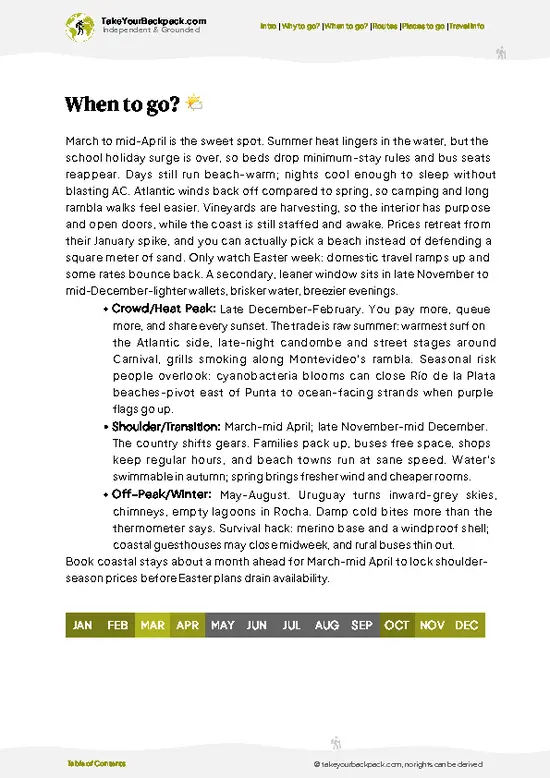
  • Topic: Weather and Temperature – Carnival in Uruguay hits its stride in summer, from late January to early March. Expect highs around 28-32°C (82-90°F). Nights cool down to a comfortable 18-22°C (64-72°F), perfect for late-night street parades without sweating buckets.

  • Topic: Daylight Hours – Summer days stretch long, with up to 14 hours of daylight. This means more time to explore beyond the festival—hit the beaches or wander Montevideo’s historic streets before the main events kick off.

  • Topic: Crowds – Peak Carnival draws a lively, packed crowd. If you want the full-throttle party, dive in mid-February. For a slightly quieter vibe with easier access to shows, aim for late January or early March when the buzz is still strong but less overwhelming.

  • Topic: Seasonal Activities – Summer’s heat
read more 👉

  • Topic: Weather and Temperature – Carnival in Uruguay hits its stride in summer, from late January to early March. Expect highs around 28-32°C (82-90°F). Nights cool down to a comfortable 18-22°C (64-72°F), perfect for late-night street parades without sweating buckets.

  • Topic: Daylight Hours – Summer days stretch long, with up to 14 hours of daylight. This means more time to explore beyond the festival—hit the beaches or wander Montevideo’s historic streets before the main events kick off.

  • Topic: Crowds – Peak Carnival draws a lively, packed crowd. If you want the full-throttle party, dive in mid-February. For a slightly quieter vibe with easier access to shows, aim for late January or early March when the buzz is still strong but less overwhelming.

  • Topic: Seasonal Activities – Summer’s heat fuels outdoor concerts, street dances, and beach hangouts. The festival’s energy syncs with Uruguay’s summer rhythm—expect vibrant nights and sun-soaked days filled with local traditions and spontaneous celebrations.

  • Topic: Price Fluctuations – Prices spike during peak Carnival weeks, especially in Montevideo. Booking early can lock in better rates on accommodation and transport. Arriving just before or after the main festival dates can save you serious cash without missing the core experience.


Pro-tip: Time your visit to catch the festival’s crescendo mid-February but secure your spot early to dodge inflated costs and burnout—balance energy, budget, and access like a pro.


source: climatestotravel.comJANJanuary: highly recommended for travelingFEBFebruary: highly recommended for travelingMARMarch: highly recommended for travelingAPRApril: not recommended for travelingMAYMay: not recommended for travelingJUNJune: not recommended for travelingJULJuly: not recommended for travelingAUGAugust: not recommended for travelingSEPSeptember: not recommended for travelingOCTOctober: not recommended for travelingNOVNovember: not recommended for travelingDECDecember: not recommended for traveling

✈️ The backpacker research shortcutUruguay Travel Guide

An offline-friendly backpacking guide with optimized travel routes, ranked highlights, transport advice, and the best areas to stay.
example page 0 from our offline Travel Guide for Uruguayexample page 1 from our offline Travel Guide for Uruguayexample page 2 from our offline Travel Guide for Uruguayexample page 3 from our offline Travel Guide for Uruguayexample page 4 from our offline Travel Guide for Uruguayexample page 5 from our offline Travel Guide for Uruguayexample page 6 from our offline Travel Guide for Uruguayexample page 7 from our offline Travel Guide for Uruguay
The digital guide (256 pages) contains:
64 highlights, ranked by travel appeal
Optimized 5, 10 & 15-day travel routes
Cities, national parks, beaches, historical sites, ...
How to get around
Offline-friendly for travel without Wi-Fi
👉 Click to see all 30+ guide features

📅 Plan smarter in minutes, not weeks
Month by month travel advice
Festivals & national holidays
Budget expectations

🗺️ Go to the right places, skip the overrated ones
Honest pros & cons of destinations
Top hikes, parks & viewpoints
Lesser-known places most travelers miss
Clear “worth it vs skip it” guidance

🛏️ Travel smoothly without rookie mistakes
Best areas to stay
Transport systems explained simply
Common scams & safety advice
SIM cards, money & practical tips

🌍 Understand the country, not just visit it
Culture & traditions
52 Essential phrases & customs
Festivals worth planning around
Traveler-friendly historical context
Insights that make places more meaningful

📱 Built for real travel conditions
Fully downloadable PDF
Works completely offline
Optimized for phone use
Useful in remote areas & buses
Everything in one place
Save weeks of stressful planning
Get instant access to the full guide directly. 30-day money-back guarantee.


Sent to your inbox immediately after payment • 100% Secure Checkout
Best Backpacking Travel Advisor 2025 tourism awardBest Backpacking
Travel Advisor
2025
What others say about Take Your Backpack Guides:
⭐⭐⭐⭐⭐
Fantastic, amazing amount of information!
⭐⭐⭐⭐⭐
My goodness this is amazing, it's what I've been looking for hats off too you!
⭐⭐⭐⭐⭐
I think this is absolutely BRILLIANT
⭐⭐⭐⭐
Very complete and informative. It's still missing places, but I gotta to commend you
⭐⭐⭐⭐⭐
This is truly amazing, thank you, can't wait to explore it with my kids!
⭐⭐⭐⭐⭐
Awesome resource, thank you!
⭐⭐⭐⭐⭐
This is amazing! Can't wait to explore the ones I haven't seen
⭐⭐⭐⭐
I love this! Well done, great idea.
⭐⭐⭐⭐⭐
Thanks for taking the time to make this gem!
⭐⭐⭐⭐⭐
This might be the best website I've ever seen.
⭐⭐⭐⭐⭐
Congratulations, and thank you so much for your work; it's incredibly valuable.
⭐⭐⭐⭐
In all seriousness I think you did a great job pointing out the important spots
⭐⭐⭐⭐⭐
10/10 very good
⭐⭐⭐⭐⭐
As someone who's only just starting to visit regularly this is awesome, thank you.
⭐⭐⭐⭐
Thank you very much! I'm going to visit my dad, it's going to be very useful!
⭐⭐⭐⭐⭐
This is really cool! We'll be travelling for the first time and this definitely come in handy.
⭐⭐⭐⭐⭐
You are now our minister of culture, congratulations 👨‍💼
⭐⭐⭐⭐⭐
Just wanted to tell you that this is a pearl! Going to follow your recommendations.
⭐⭐⭐⭐⭐
This is so cool. I'll definitely be using the resource for my travels soon.
⭐⭐⭐⭐⭐
This is very impressive! Good work.
⭐⭐⭐⭐⭐
This is an amazing and informative site. Very well done!

🛏️ Where to stay?Best areas and accommodation options

When Carnival hits Uruguay, the energy is electric, and you want to be right in the thick of it. Montevideo is your best bet. The Ciudad Vieja area pulses with life, filled with vibrant street art and lively bars. You’ll find fellow travelers here, sharing stories over a mate or a local brew. The atmosphere is welcoming, making it easy to connect with others.

Don’t overlook the Parque Rodó neighborhood. It’s a bit quieter but still close enough to the action. You can enjoy the park during the day and then dive into the festival at night. Plus, it’s a great spot for budget-friendly eateries where … read more 👉
When Carnival hits Uruguay, the energy is electric, and you want to be right in the thick of it. Montevideo is your best bet. The Ciudad Vieja area pulses with life, filled with vibrant street art and lively bars. You’ll find fellow travelers here, sharing stories over a mate or a local brew. The atmosphere is welcoming, making it easy to connect with others.

Don’t overlook the Parque Rodó neighborhood. It’s a bit quieter but still close enough to the action. You can enjoy the park during the day and then dive into the festival at night. Plus, it’s a great spot for budget-friendly eateries where you can fuel up before the festivities.

If you’re feeling adventurous, head to Punta del Este. It’s a bit of a trek but worth it for the beach vibe and the chance to meet other backpackers. The hostels here are known for their social scenes, perfect for swapping tips and planning your next move.

Avoid the tourist traps that pop up during Carnival. They’ll drain your wallet and energy. Stick to areas where locals hang out, and you’ll find the real spirit of the festival, keeping your budget intact for the moments that truly matter.

👛 Costs (as of 12 March 2025)How expensive it really is

Carnival in Uruguay is a whirlwind of color, rhythm, and energy, but navigating the costs can feel like a maze. Here’s how to budget wisely so you can dive into the festivities without draining your wallet.
  • Festival Tickets: Expect to pay between $10 to $50 for entry to various events. Some parades are free, but premium seating or special events can hit the higher end. Plan ahead; tickets can sell out fast, especially for popular shows.
  • Accommodation: Prices vary widely. Hostels start around $15 per night, while mid-range hotels can range from $60 to $120. If you want a private room or a more upscale experience, budget up to $200. Book early to avoid inflated last-minute rates.
  • Local Transport: Public transport is your friend. Buses are cheap, costing about $1 per ride. If you prefer
read more 👉
Carnival in Uruguay is a whirlwind of color, rhythm, and energy, but navigating the costs can feel like a maze. Here’s how to budget wisely so you can dive into the festivities without draining your wallet.
  • Festival Tickets: Expect to pay between $10 to $50 for entry to various events. Some parades are free, but premium seating or special events can hit the higher end. Plan ahead; tickets can sell out fast, especially for popular shows.
  • Accommodation: Prices vary widely. Hostels start around $15 per night, while mid-range hotels can range from $60 to $120. If you want a private room or a more upscale experience, budget up to $200. Book early to avoid inflated last-minute rates.
  • Local Transport: Public transport is your friend. Buses are cheap, costing about $1 per ride. If you prefer taxis, expect to pay around $5 to $15 for short trips. Rideshares can be a bit pricier, so factor that in if you’re out late.
  • Food & Drinks: Street food is a must-try and costs about $5 to $10 for a meal. Restaurants vary; casual dining can run $10 to $25 per person, while upscale dining might push $30 to $60. Don’t forget to budget for drinks—local wines and beers are affordable, usually around $3 to $8.
  • Miscellaneous Expenses: Set aside $50 to $100 for souvenirs, tips, or unexpected costs. Carnival is full of surprises, and you’ll want to capture the experience without worrying about the budget.

Keep these figures in mind as you plan. Carnival is all about the experience, so allocate your funds wisely to savor every moment.
⚠️ Prices can change and everyone travels differently, so take this as a rough guide. Hope it helps you plan your adventure!

🍲 FoodWhat to Eat & Drink

At the Carnival in Uruguay, food and drinks pulse with local flavor. You’ll find chivitos, a hearty sandwich stacked with beef, cheese, and veggies, served hot and messy. Don’t skip the empanadas—these flaky pastries are filled with everything from spiced beef to gooey cheese. Grab one from a bustling stall, and you’ll taste the festival’s spirit in every bite.

For drinks, mate is the lifeblood here. You’ll see locals sipping from shared gourds, so don’t hesitate to join in. Just remember the etiquette: if you’re offered the bombilla (straw), take a sip and pass it back. It’s a rite of passage. If you’re craving something sweeter, try fernet con cola, a popular local cocktail that packs a punch.

Lines can get long, especially for the best stalls, so be patient. The wait is part of the experience. … read more 👉
At the Carnival in Uruguay, food and drinks pulse with local flavor. You’ll find chivitos, a hearty sandwich stacked with beef, cheese, and veggies, served hot and messy. Don’t skip the empanadas—these flaky pastries are filled with everything from spiced beef to gooey cheese. Grab one from a bustling stall, and you’ll taste the festival’s spirit in every bite.

For drinks, mate is the lifeblood here. You’ll see locals sipping from shared gourds, so don’t hesitate to join in. Just remember the etiquette: if you’re offered the bombilla (straw), take a sip and pass it back. It’s a rite of passage. If you’re craving something sweeter, try fernet con cola, a popular local cocktail that packs a punch.

Lines can get long, especially for the best stalls, so be patient. The wait is part of the experience. Cash is king here; many vendors don’t accept cards, so stock up before diving into the food frenzy. Serving sizes can vary, so don’t be shy about sharing dishes with friends—it’s a great way to sample more flavors without overloading your plate.

Embrace the chaos, savor the bites, and let the festival fuel your adventure!

Other Uruguayan festivals near Carnival

Explore more nearby:


👉 Discover all festivals

Or checkout all Uruguay has to offer (think cities, towns, villages, national parks, hikes, beaches, festivals)
Country photo of Uruguay

We 💚 feedbackFinal thoughts on celebrating the Carnival

Carnival in Uruguay is a whirlwind of color and rhythm. You’ll feel the pulse of the candombe drums in your bones. The best surprise? The street parties—locals dance like nobody’s watching, and you’ll want to join in. But here’s the kicker: plan your transport ahead. The crowds can be overwhelming, and getting stuck in traffic can drain your energy. Embrace the chaos, but keep your wits about you. This is where the real magic happens, so savor every moment!

✍️ Help improve this page!
The information on this page is based on in-depth research, insights shared by experienced travelers, and feedback from the local travel community in Uruguay. While every effort is made to keep the information accurate and current, conditions can change — so if you spot anything incorrect or outdated, please get in touch.


🙋‍♂️ Give feedback

👋 Meet the founderWho’s Behind Take Your Backpack?

Johan, backpacker and founder of TakeYourBackpackHi, I’m Johan (Netherlands 🇳🇱), the creator of TakeYourBackpack. Over the past decade, I’ve backpacked through 80+ countries across six continents, gaining extensive experience with independent travel, long-term trips, and overland routes.

This site is built on a combination of firsthand travel experience and carefully curated insights from other backpackers. Many guides are based on places I’ve personally visited, while others bring together tips, observations, and practical advice shared by trusted travelers I’ve met along the way.

The goal is to provide realistic, experience-driven guidance — not generic itineraries — so you can explore destinations with better context, clearer expectations, and more confidence.

Get full Uruguay guide •
Instant download • 64 highlights • Full Offline guide