×

Uruguay🇺🇾 | citiesPaysandúUruguay River banks, twin-towered basilica, mate on the plaza, quiet river town | things to do and best time to go

Explore SaltoExplore Carnaval de Montevideo

Backpacking in Paysandú
👌 Worth visitingcity ranked #4
By Johan Kruseman 🇳🇱 | Updated October 19, 2026

The Uruguay River slides past the waterfront while a man in a Paysandú Fútbol Club shirt pours hot water into a gourd, and nobody hurries him. The city sits in the northwest of Uruguay, on the river's eastern bank across from Colón in Argentina. Things here run on a slow clock, so shops close for a long midday break. That is why mornings and early evenings are the useful hours for errands and sightseeing, and why you should eat lunch late and walk after four. Hostels are few, so book ahead in the busy weeks around the beach season. Paysandú suits travelers who like quiet streets, river light and good beef. It does not suit anyone chasing nightlife or a long list of sights. Compared with Salto, farther north, it is calmer, with fewer thermal resorts and more everyday river-town life.

Discover everything you want to know in the 📖 Uruguay Travel Guide.


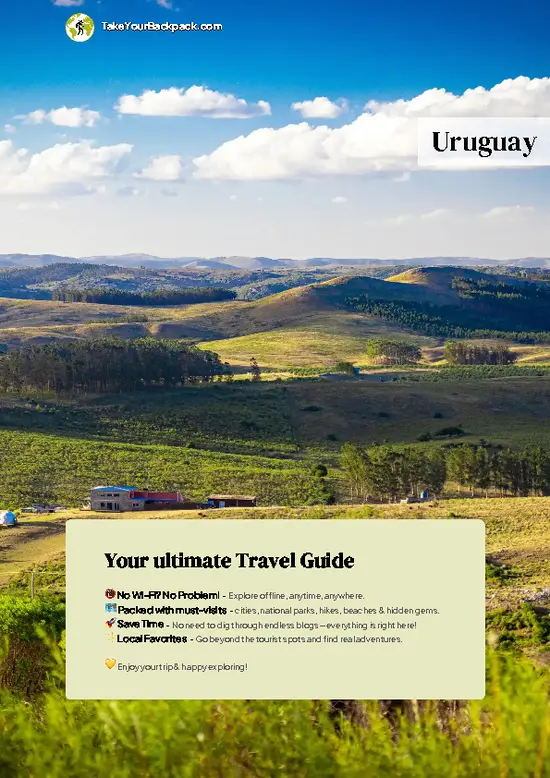
example page 0 from our offline Travel Guide for Uruguay
example page 1 from our offline Travel Guide for Uruguay
example page 2 from our offline Travel Guide for Uruguay
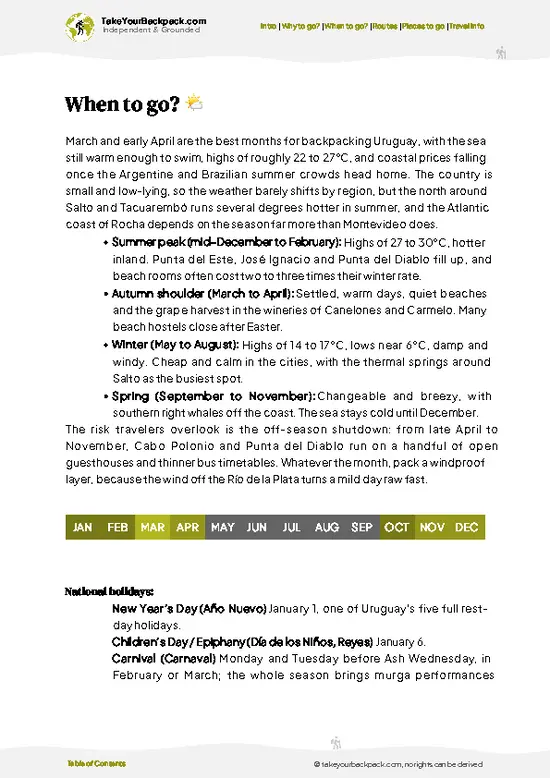
example page 3 from our offline Travel Guide for Uruguay
example page 4 from our offline Travel Guide for Uruguay
example page 5 from our offline Travel Guide for Uruguay
example page 6 from our offline Travel Guide for Uruguay
example page 7 from our offline Travel Guide for Uruguay
Loading the map 🌍
CLICK TO FILTER
cities
towns
villages
landmarks
national parks
hikes
beaches
attractions
festivals
SHOW COUNTRY’S BESTSHOW ALL

✨ Why go?
Ranked #4 city in Uruguay
What makes this city worth visiting

Paysandú earns its place on a northern Uruguay route as a practical river stop rather than a destination that fills several days. One full day covers the old center, and the international bridge to Colón makes it an easy way into Argentina's Entre Ríos province without backtracking. The streets are flat and laid out on a grid, so you can walk everywhere and skip taxis. Food is a real draw: parrilla restaurants and bakeries serve cheap, filling plates, and the city is known for its local Semana de la Cerveza festival, when the riverfront beach fills with music and crowds. Outside that week the city is quiet, which suits anyone recovering from big-city hostels. It also works as a base for countryside outings by bus. If you want nightlife, a packed sightseeing list or surf, move on. If you want … read more 👉
Paysandú earns its place on a northern Uruguay route as a practical river stop rather than a destination that fills several days. One full day covers the old center, and the international bridge to Colón makes it an easy way into Argentina's Entre Ríos province without backtracking. The streets are flat and laid out on a grid, so you can walk everywhere and skip taxis. Food is a real draw: parrilla restaurants and bakeries serve cheap, filling plates, and the city is known for its local Semana de la Cerveza festival, when the riverfront beach fills with music and crowds. Outside that week the city is quiet, which suits anyone recovering from big-city hostels. It also works as a base for countryside outings by bus. If you want nightlife, a packed sightseeing list or surf, move on. If you want a slow, friendly day with a river view, stay one night.

💡 HighlightsTop highlights of Paysandú

  1. Basílica de Nuestra Señora del Rosario y San Benito: The twin-towered church on Plaza Constitución is the city's best-known landmark, rebuilt after the long siege of the 1860s. Go in the morning for cool light and quiet pews. Entry is free and 20 to 30 minutes is enough.
  2. Plaza Constitución: The main square, shaded by old trees, is where locals sit with mate and the city feels most itself. Late afternoon is best. Free, 30 minutes.
  3. Museo de la Tradición: A small museum of gaucho and rural life in Parque Municipal, with saddles, tools and old photographs. Check opening days before going. Entry is free or about US$1, and 45 minutes works.
  4. Monumento a Perpetuidad: The old cemetery south of the center, used since 1835, became the country’s first cemetery museum, with marble tombs and victims of the
… read more 👉
  1. Basílica de Nuestra Señora del Rosario y San Benito: The twin-towered church on Plaza Constitución is the city's best-known landmark, rebuilt after the long siege of the 1860s. Go in the morning for cool light and quiet pews. Entry is free and 20 to 30 minutes is enough.
  2. Plaza Constitución: The main square, shaded by old trees, is where locals sit with mate and the city feels most itself. Late afternoon is best. Free, 30 minutes.
  3. Museo de la Tradición: A small museum of gaucho and rural life in Parque Municipal, with saddles, tools and old photographs. Check opening days before going. Entry is free or about US$1, and 45 minutes works.
  4. Monumento a Perpetuidad: The old cemetery south of the center, used since 1835, became the country’s first cemetery museum, with marble tombs and victims of the 1864 to 1865 siege. Visit on a mild morning. About 30 minutes.
  5. Puente Internacional General Artigas: The bridge across the Uruguay River to Argentina is best viewed from the riverfront at golden hour. Free to look at, 20 minutes. Crossing needs your passport.
  6. Costanera and Playa Municipal: The riverside promenade and sandy beach are good for a walk, a swim in summer and mate at sunset. Free, 1 to 2 hours.
Outside the city, Termas de Guaviyú, Parque Nacional Esteros de Farrapos and the town of Colón across the river all work as day trips. The church and the plaza combine neatly in one morning, with the Costanera saved for sunset.
Spotted a mistake or missing something? Contact us.

🏘️ NeighborhoodsNeighborhood guide to Paysandú

Paysandú is compact, flat and laid out on a grid, so you can cover nearly all of it on foot. The areas below are a few blocks apart, which is why a bus is rarely needed inside town.
  • Centro and Plaza Constitución: The old core sits around the plaza, with the Basilica of Nuestra Señora del Rosario and the Italianate-style municipal buildings. Cafés and bakeries here serve the local fried pastries and mate-carrying crowds. Go in the morning, because many shops shut for a long midday break and reopen around 4 or 5 pm.
  • Avenida 18 de Julio: The main commercial street runs east to west from the plaza. Banks, ATMs, pharmacies and supermarkets are here, so sort out cash and supplies in one pass. It is quiet after dark outside Friday and Saturday.
  • Costanera and the Río Uruguay waterfront: A long riverside
… read more 👉
Paysandú is compact, flat and laid out on a grid, so you can cover nearly all of it on foot. The areas below are a few blocks apart, which is why a bus is rarely needed inside town.
  • Centro and Plaza Constitución: The old core sits around the plaza, with the Basilica of Nuestra Señora del Rosario and the Italianate-style municipal buildings. Cafés and bakeries here serve the local fried pastries and mate-carrying crowds. Go in the morning, because many shops shut for a long midday break and reopen around 4 or 5 pm.
  • Avenida 18 de Julio: The main commercial street runs east to west from the plaza. Banks, ATMs, pharmacies and supermarkets are here, so sort out cash and supplies in one pass. It is quiet after dark outside Friday and Saturday.
  • Costanera and the Río Uruguay waterfront: A long riverside promenade with the port area, fishing spots and sunset views over Argentina. Locals walk it in the evening with thermoses of mate, so do the same rather than paying for a seat. It is a 15 to 20 minute walk from the plaza.
  • Barrio Hipódromo and the Balneario Municipal area: Residential and spread out, with the riverside beach and campsites. Distances are longer here, so take a taxi or the local bus, and expect it to be empty outside summer.
  • Old Port: The historic quarter near the river holds the siege-era memorials. Go by day, because streets near the port are poorly lit and thin out at night.

⌛️ 1 dayHow to make the most of one day

A slow river-town day, built around walking, long lunches and the waterfront.
8:30 AM: Bakery breakfast near Plaza Constitución. Start with coffee and medialunas, then walk five minutes to the square before the heat builds.
9:30 AM: Basílica de Nuestra Señora del Rosario. Step inside while it is cool and quiet, then look at the Leandro Gómez monument nearby for the story of the siege.
11:00 AM: Museo de la Tradición. Walk or take a short taxi to Parque Municipal for gaucho tools, saddles and rural history. It is rarely crowded.
1:00 PM: Parrilla lunch. Order a mixed grill or a chivito at a local spot in the center. Lunch is the main meal here, so take your time and let the midday break pass.
3:30 PM: Monumento a Perpetuidad. The old cemetery, in use since 1835 and now a museum of marble tombs, … read more 👉
A slow river-town day, built around walking, long lunches and the waterfront.
8:30 AM: Bakery breakfast near Plaza Constitución. Start with coffee and medialunas, then walk five minutes to the square before the heat builds.
9:30 AM: Basílica de Nuestra Señora del Rosario. Step inside while it is cool and quiet, then look at the Leandro Gómez monument nearby for the story of the siege.
11:00 AM: Museo de la Tradición. Walk or take a short taxi to Parque Municipal for gaucho tools, saddles and rural history. It is rarely crowded.
1:00 PM: Parrilla lunch. Order a mixed grill or a chivito at a local spot in the center. Lunch is the main meal here, so take your time and let the midday break pass.
3:30 PM: Monumento a Perpetuidad. The old cemetery, in use since 1835 and now a museum of marble tombs, holds victims of the 1864 to 1865 siege. Walk back toward the river afterward.
5:30 PM: Costanera and Playa Municipal. Stroll the promenade, buy a thermos of hot water if you have a mate gourd, or just sit on the sand and watch the Uruguay River slide by.
7:30 PM: Dinner by the bridge. Finish with fish from the river or another grill. The bridge to Colón lights up and makes a calm end to the day.

🌤️ When to go?Seasonal considerations and timing

Late spring and early autumn give Paysandú its most comfortable weather for walking and river time.
  • Summer (December to February): Hot and humid, with highs of 30 to 35°C (86 to 95°F) and long daylight. The river beach fills with locals, and lodging rises in beach weeks.
  • Autumn (March to May): Highs of 20 to 27°C (68 to 81°F), steady light and few crowds. Prices ease after Easter.
  • Winter (June to August): Cool and damp, with lows of 5 to 8°C (41 to 46°F) and occasional frost. Daylight is short, and riverside sights are quiet. Beds are cheapest now.
  • Spring (September to November): Highs of 20 to 28°C (68 to 82°F), with storms possible. Orange blossoms and mild nights make it pleasant.
Book ahead only if you plan to arrive during Easter week, when the beer festival takes most beds.

source: climatestotravel.comJANJanuary: highly recommended for travelingFEBFebruary: highly recommended for travelingMARMarch: highly recommended for travelingAPRApril: highly recommended for travelingMAYMay: good for travelingJUNJune: good for travelingJULJuly: good for travelingAUGAugust: good for travelingSEPSeptember: highly recommended for travelingOCTOctober: highly recommended for travelingNOVNovember: highly recommended for travelingDECDecember: highly recommended for traveling
when-to-go

✈️ The backpacker research shortcutUruguay Travel Guide

An offline-friendly backpacking guide with optimized travel routes, ranked highlights, transport advice, and the best areas to stay.
example page 0 from our offline Travel Guide for Uruguay
example page 1 from our offline Travel Guide for Uruguay
example page 2 from our offline Travel Guide for Uruguay
example page 3 from our offline Travel Guide for Uruguay
example page 4 from our offline Travel Guide for Uruguay
example page 5 from our offline Travel Guide for Uruguay
example page 6 from our offline Travel Guide for Uruguay
example page 7 from our offline Travel Guide for Uruguay
The digital guide (198 pages) contains:
✅ 56 highlights, ranked by travel appeal
✅ Optimized 5, 10 & 15-day travel routes
✅ Cities, national parks, landmarks, beaches
✅ How to get around
✅ Offline-friendly for travel without Wi-Fi
👉 Click to see all 30+ guide features

📅 Plan smarter in minutes, not weeks
✅ Month by month travel advice
✅ Festivals & national holidays
✅ Budget expectations

🗺️ Go to the right places, skip the overrated ones
✅ Honest pros & cons of destinations
✅ Top hikes, parks & viewpoints
✅ Lesser-known places most travelers miss
✅ Clear “worth it vs skip it” guidance

🛏️ Travel smoothly without rookie mistakes
✅ Best areas to stay
✅ Transport systems explained simply
✅ Common scams & safety advice
✅ SIM cards, money & practical tips

🌍 Understand the country, not just visit it
✅ Culture & traditions
✅ 52 Essential phrases & customs
✅ Festivals worth planning around
✅ Traveler-friendly historical context
✅ Insights that make places more meaningful

📱 Built for real travel conditions
✅ Fully downloadable PDF
✅ Works completely offline
✅ Optimized for phone use
✅ Useful in remote areas & buses
✅ Everything in one place
Stop searching, start planning
Get instant access to your full guide. 30‑day money-back guarantee.
+ Add another guide for just

By proceeding you agree to our terms.
Sent to your inbox immediately after payment • 100% Secure Checkout
Best Backpacking Travel Advisor 2025 tourism awardBest Backpacking
Travel Advisor
2025
What others say about Take Your Backpack Guides:
⭐⭐⭐⭐⭐
Fantastic, amazing amount of information!
⭐⭐⭐⭐⭐
My goodness this is amazing, it's what I've been looking for hats off too you!
⭐⭐⭐⭐⭐
I think this is absolutely BRILLIANT
⭐⭐⭐⭐
Very complete and informative. It's still missing places, but I gotta to commend you
⭐⭐⭐⭐⭐
This is truly amazing, thank you, can't wait to explore it with my kids!
⭐⭐⭐⭐⭐
Awesome resource, thank you!
⭐⭐⭐⭐⭐
This is amazing! Can't wait to explore the ones I haven't seen
⭐⭐⭐⭐
I love this! Well done, great idea.
⭐⭐⭐⭐⭐
Thanks for taking the time to make this gem!
⭐⭐⭐⭐⭐
This might be the best website I've ever seen.
⭐⭐⭐⭐⭐
Congratulations, and thank you so much for your work; it's incredibly valuable.
⭐⭐⭐⭐
In all seriousness I think you did a great job pointing out the important spots
⭐⭐⭐⭐⭐
10/10 very good
⭐⭐⭐⭐⭐
As someone who's only just starting to visit regularly this is awesome, thank you.
⭐⭐⭐⭐
Thank you very much! I'm going to visit my dad, it's going to be very useful!
⭐⭐⭐⭐⭐
This is really cool! We'll be travelling for the first time and this definitely come in handy.
⭐⭐⭐⭐⭐
You are now our minister of culture, congratulations 👨‍💼
⭐⭐⭐⭐⭐
Just wanted to tell you that this is a pearl! Going to follow your recommendations.
⭐⭐⭐⭐⭐
This is so cool. I'll definitely be using the resource for my travels soon.
⭐⭐⭐⭐⭐
This is very impressive! Good work.
⭐⭐⭐⭐⭐
This is an amazing and informative site. Very well done!

🛏️ Where to stay?How to pick the right area

The best area for a budget stay in Paysandú is the Centro, within a few blocks of Plaza Constitución. Budget beds are limited in this city, with a small number of hostels and many simple guesthouses and family-run hotels, so expect private rooms at around US$25 to 45 rather than a big dorm scene. Book ahead in Easter week, when the beer festival fills almost everything.
Staying in the Centro puts the bus terminal a short taxi ride away and supermarkets, ATMs and bakeries on foot. The streets are quiet at night and feel safe for walking back after dinner, though a few blocks of Avenida 18 de Julio … read more 👉
The best area for a budget stay in Paysandú is the Centro, within a few blocks of Plaza Constitución. Budget beds are limited in this city, with a small number of hostels and many simple guesthouses and family-run hotels, so expect private rooms at around US$25 to 45 rather than a big dorm scene. Book ahead in Easter week, when the beer festival fills almost everything.
Staying in the Centro puts the bus terminal a short taxi ride away and supermarkets, ATMs and bakeries on foot. The streets are quiet at night and feel safe for walking back after dinner, though a few blocks of Avenida 18 de Julio can be noisy on weekend evenings, so ask for a room away from the street.
The second option is the stretch near the Costanera on the riverfront. Rooms there tend to be calmer and often have river views, and the walk to the center is about 15 minutes. Lighting is patchy late at night, so take a taxi back if you return after midnight. Campsites near the river beach suit travelers with a tent, mostly in summer, and tend to be far from food options.

🚌 Getting aroundMoving around without the hassle

Walking is the easiest way to get around Paysandú, because the center is a flat grid where the plaza, Avenida 18 de Julio and the waterfront all sit within about 20 minutes of each other. Traffic is light and there is no metro. The city bus network is modest, so most visitors only use buses and taxis for the outskirts and the river beach.
  • Walking: Free and quick in the center. Midday heat in summer is strong, so go early or after 5 pm, when streets cool and people come out.
  • City buses: Fares are roughly US$0.80 to 1. Lines run from early morning until around 11 pm, with fewer on Sundays. Ask the driver for your stop, as stops are not always signed, and carry small change since drivers rarely handle large notes.
  • Taxis and remises: A ride within town costs about US$3 to 6. Fares are metered for
… read more 👉
Walking is the easiest way to get around Paysandú, because the center is a flat grid where the plaza, Avenida 18 de Julio and the waterfront all sit within about 20 minutes of each other. Traffic is light and there is no metro. The city bus network is modest, so most visitors only use buses and taxis for the outskirts and the river beach.
  • Walking: Free and quick in the center. Midday heat in summer is strong, so go early or after 5 pm, when streets cool and people come out.
  • City buses: Fares are roughly US$0.80 to 1. Lines run from early morning until around 11 pm, with fewer on Sundays. Ask the driver for your stop, as stops are not always signed, and carry small change since drivers rarely handle large notes.
  • Taxis and remises: A ride within town costs about US$3 to 6. Fares are metered for taxis, while remises (phone-booked cars) often quote a price in advance. Ask for the price before you start, and book by phone or through your lodging after dark.
  • Intercity buses: The terminal sits a short taxi ride from the center, with services to Montevideo (about 5 hours, US$20 to 30), Salto (around 1.5 to 2 hours, US$6 to 9) and Colón in Argentina via the bridge. Buy tickets at the counter a day ahead on weekends and holidays, as popular departures fill.
  • Bicycle: Flat streets suit cycling, and rentals from some lodgings cost around US$5 to 10 a day. Keep the bike locked, since theft of unattended bikes happens.

👛 Costs (as of 19 October 2026)Money, prices, and spending tips

A backpacker in Paysandú can expect to spend about US$58 a day in high season. The city is a little cheaper than Montevideo or Punta del Este, though Uruguay overall is among the pricier countries in South America.
CategoryBudget RangeLocal Reality
Dorm accommodation (high season)US$18 to 28Few hostels exist, so private rooms in simple guesthouses are common at US$25 to 45. Prices rise in Easter week.
Dorm accommodation (off-season)US$14 to 22Winter brings discounts and plenty of space.
MealsUS$15 to 25A bakery breakfast, a lunch plate or chivito for US$6 to 12 and a simple dinner.
Local transportUS$2 to 6City buses cost under US$1 and short taxi rides US$3 to 6.
City transport passUS$0 to 3No tourist pass is used. Pay per ride in cash.
Basic activities and entry feesUS$3 to 10Museums are cheap or
… read more 👉
A backpacker in Paysandú can expect to spend about US$58 a day in high season. The city is a little cheaper than Montevideo or Punta del Este, though Uruguay overall is among the pricier countries in South America.
CategoryBudget RangeLocal Reality
Dorm accommodation (high season)US$18 to 28Few hostels exist, so private rooms in simple guesthouses are common at US$25 to 45. Prices rise in Easter week.
Dorm accommodation (off-season)US$14 to 22Winter brings discounts and plenty of space.
MealsUS$15 to 25A bakery breakfast, a lunch plate or chivito for US$6 to 12 and a simple dinner.
Local transportUS$2 to 6City buses cost under US$1 and short taxi rides US$3 to 6.
City transport passUS$0 to 3No tourist pass is used. Pay per ride in cash.
Basic activities and entry feesUS$3 to 10Museums are cheap or free. The river beach costs nothing.
MiscellaneousUS$4 to 8Water, snacks, a beer and laundry.
Total Daily BudgetUS$58Based on high-season accommodation at around US$28.
Cook some meals if your lodging has a kitchen, and buy lunch as the main meal, since set lunch plates cost less than dinner.
⚠️ Prices can change and everyone travels differently, so take this as a rough guide. Hope it helps you plan your adventure!

🚌 Day tripsExploring the surroundings

Paysandú works well as a base for short river and countryside outings, with all of these done and back in a day.
Termas de Guaviyú:
Hot springs about 60 km north on Ruta 3, with several thermal pools and a campground. Public transport is thin, so a taxi or rented car is easier, and the day costs roughly US$15 to 30 including entry. Winter is the best season, when the warm water feels best. First-timers often underestimate the heat in midsummer.

Colón, Argentina:
Cross the General Artigas bridge to this river town of cobbled streets and artisan stalls. The bus ride takes around 30 to 45 minutes plus border formalities, and the day costs about US$15 to 25. Bring your passport and check border hours, since the crossing can close or slow late in the day.

Parque Nacional El Palmar:
On the Argentine … read more 👉
Paysandú works well as a base for short river and countryside outings, with all of these done and back in a day.
Termas de Guaviyú:
Hot springs about 60 km north on Ruta 3, with several thermal pools and a campground. Public transport is thin, so a taxi or rented car is easier, and the day costs roughly US$15 to 30 including entry. Winter is the best season, when the warm water feels best. First-timers often underestimate the heat in midsummer.

Colón, Argentina:
Cross the General Artigas bridge to this river town of cobbled streets and artisan stalls. The bus ride takes around 30 to 45 minutes plus border formalities, and the day costs about US$15 to 25. Bring your passport and check border hours, since the crossing can close or slow late in the day.

Parque Nacional El Palmar:
On the Argentine side, this park holds the largest remaining stands of yatay palm, with trails and capybaras. It is roughly 1.5 to 2 hours by car, so a tour or rental is more practical than buses. Budget about US$30 to 60 with entry. Visit in the cooler months, as summer midday is draining.

Salto:
The regional city to the north is reached by a 1.5 to 2 hour bus ride, US$6 to 9 each way. It has a river promenade, a cultural center and the nearby thermal pools. A common mistake is leaving late, as the last return buses depart in the evening.
👉 Explore Salto

🍲 FoodLocal Cuisine & Drinks

Paysandú sits on the Río Uruguay, so freshwater fish such as dorado and surubí show up grilled or in a stew, which is less common inland. Order them at riverside spots, where they usually come with simple sides. The city is also known for asado cooked over wood coals at a parrilla, and for hearty chivito sandwiches that appear everywhere in Uruguay but are piled generously here.
The city's signature drink is its cerveza, which has a festival around Easter and a strong local following. Pair it with fried empanadas or torta frita from corner bakeries. Citrus from nearby orchards makes fresh juice cheap and sharp, and you can buy it from market stalls.
For budget meals, look to the bakeries and small parrillas around the plaza and Avenida 18 de Julio, where a plate costs around US$6 to 12. Locals … read more 👉
Paysandú sits on the Río Uruguay, so freshwater fish such as dorado and surubí show up grilled or in a stew, which is less common inland. Order them at riverside spots, where they usually come with simple sides. The city is also known for asado cooked over wood coals at a parrilla, and for hearty chivito sandwiches that appear everywhere in Uruguay but are piled generously here.
The city's signature drink is its cerveza, which has a festival around Easter and a strong local following. Pair it with fried empanadas or torta frita from corner bakeries. Citrus from nearby orchards makes fresh juice cheap and sharp, and you can buy it from market stalls.
For budget meals, look to the bakeries and small parrillas around the plaza and Avenida 18 de Julio, where a plate costs around US$6 to 12. Locals carry mate along the Costanera in the evening, and you will see them refill thermoses at gas stations. Lunch is the main meal, and many restaurants close mid-afternoon.

🛡️ SafetyStaying Safe: What Travelers Should Know

Paysandú is a calm, broadly safe city where most problems are petty. Opportunistic theft of phones and bags from cafe tables, bikes and parked cars is the most common issue, so keep your belongings on your lap or in sight and lock your bike properly. Streets near the old port and the waterfront are poorly lit late at night, so take a taxi or remise rather than walking alone after about midnight. Solo travelers, including women, usually find the center easy and relaxed in the evening, though dressing down and staying alert applies as anywhere. No notable tourist scams exist. Taxi disputes are rare, but agree the fare first with unmetered cars. In summer, sun and river currents are bigger risks than crime, so swim only at the marked beach.

FAQCommon questions from travelers

Two days are enough for Paysandú, with a third if you add a day trip. Spend one day on the plaza, the museums and the Costanera, and another on the river beach or a trip to Colón in Argentina, about 30 to 45 minutes away. A third day suits the Termas de Guaviyú, roughly 60 km north.
Paysandú is generally safe for solo backpackers, and the center is calm in the evening. Petty theft from tables and unattended bikes is the main concern, so keep phones out of sight. After around midnight, take a taxi (US$3 to 6) rather than walking dim waterfront streets near the old port.
Paysandú is known for its Semana de la Cerveza, a beer festival held around Easter week that draws large crowds, and for its position on the Río Uruguay across from Argentina. It also has a historic center with the Basilica of Nuestra Señora del Rosario and the memory of the 1865 siege. The General Artigas bridge links it to Colón, and thermal springs lie nearby.
⚠️ Things can change over time, so always validate details locally before you go.

Other Uruguayan cities near Paysandú

Explore more nearby:

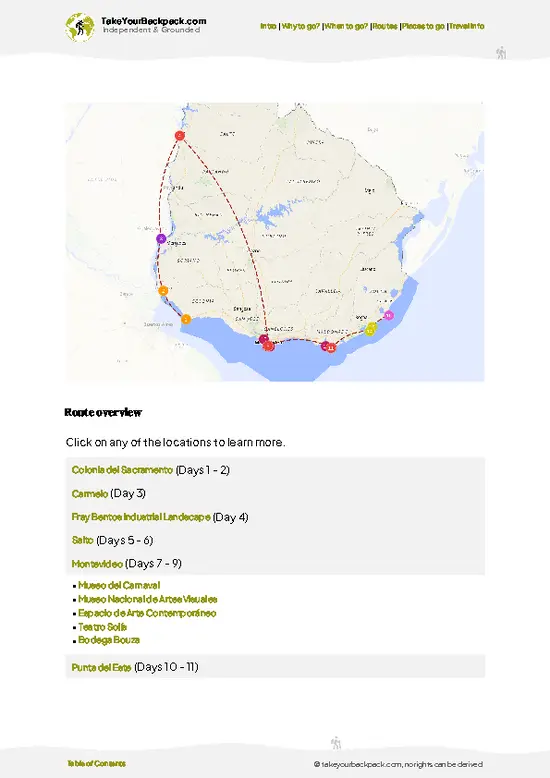
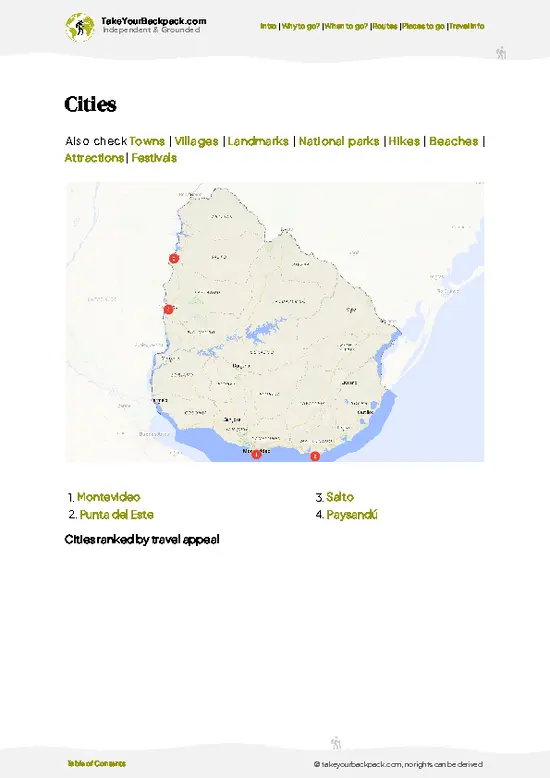
  • Salto—Thermal pools, Salto Grande Dam, Costanera, Quiroga house| 104 km away
  • Montevideo—Río de la Plata waterfront, Mercado del Puerto parrillas, Rambla sunsets, Ciudad Vieja theaters| 337 km away
  • Punta del Este—Peninsula beaches, sea lion port, Playa Brava hand sculpture, Isla de Lobos boats| 412 km away

💡 Not sure where to go next?
Create a personalized itinerary for Uruguay including Paysandú and the places that fit your trip.

Generate my itinerary

👉 Discover all cities

Or checkout all Uruguay has to offer (think cities, towns, villages, national parks, hikes, beaches, festivals)
Country photo of Uruguay

We 💚 feedbackSumming up the experience

Come in the evening, ideally in the warm months when the riverfront fills with families and mate thermoses. Paysandú is at its best from about five o'clock, when the heat drops and the Costanera comes alive. I would book a bed early if the beer festival week is near, and skip midday sightseeing altogether.

✍️ Help improve this page!
The information on this page is based on in-depth research, insights shared by experienced travelers, and feedback from the local travel community in Uruguay. While every effort is made to keep the information accurate and current, conditions can change — so if you spot anything incorrect or outdated, please get in touch.


🙋‍♂️ Give feedback

👋 Meet the founderWho’s Behind Take Your Backpack?

Johan, backpacker and founder of TakeYourBackpackHi, I’m Johan (Netherlands 🇳🇱), the creator of TakeYourBackpack. Over the past 3 decades, I’ve backpacked through 90+ countries across six continents, gaining extensive experience with independent travel, long-term trips, and overland routes.

This site is built on a combination of firsthand travel experience and carefully curated insights from other backpackers. Many guides are based on places I’ve personally visited, while others bring together tips, observations, and practical advice shared by trusted travelers I’ve met along the way.

The goal is to provide realistic, experience-driven guidance — not generic itineraries — so you can explore destinations with better context, clearer expectations, and more confidence.