×

Uruguay🇺🇾 | beachesPlaya MansaShallow bay, west-facing sunsets, paddleboarding, rambla cycling | things to do and best time to go

Explore PiriápolisExplore Punta del Este

Backpacking in Playa Mansa
🏆 Top pickbeach ranked #3
By Johan Kruseman 🇳🇱 | Updated October 19, 2026

Playa Mansa gives you calm, shallow water with almost no waves, so you can swim, float or let a child wade without watching the sea. It sits on the western, Río de la Plata side of the Punta del Este peninsula in Maldonado, Uruguay. The rambla runs right beside the sand, so you can walk from beach to café to bus stop in minutes, and the bay ends in a view of moored yachts. The water is tan and estuarine rather than clear, and it is no place for surf, diving or snorkeling. Sand is generally well kept in season, but January turns it into a dense field of umbrellas. Punta del Este is expensive, so cheaper beds and bakery lunches are mostly found back in Maldonado town. Families, swimmers and sunset watchers will like it most. Surfers and travelers who want empty, wild coast will not.

Discover everything you want to know in the 📖 Uruguay Travel Guide.


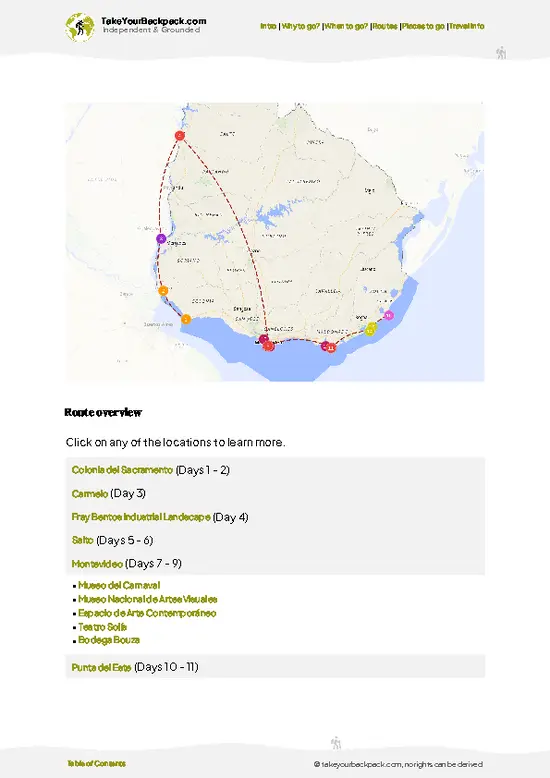
example page 0 from our offline Travel Guide for Uruguay
example page 1 from our offline Travel Guide for Uruguay
example page 2 from our offline Travel Guide for Uruguay
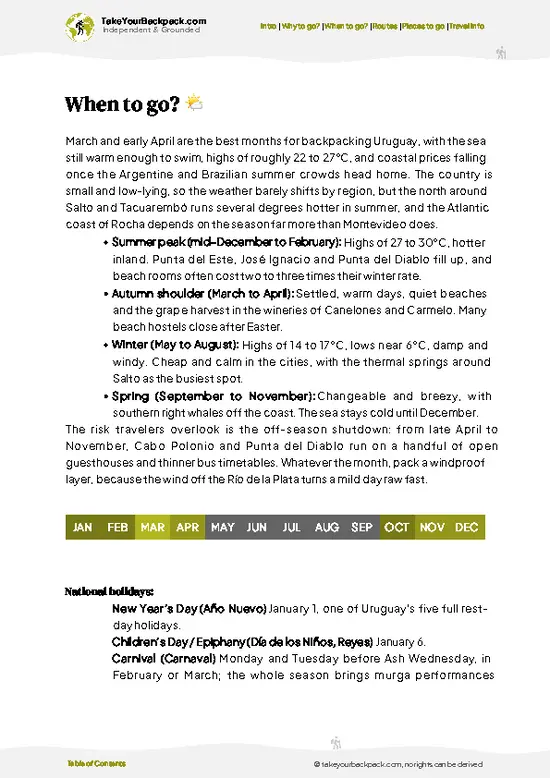
example page 3 from our offline Travel Guide for Uruguay
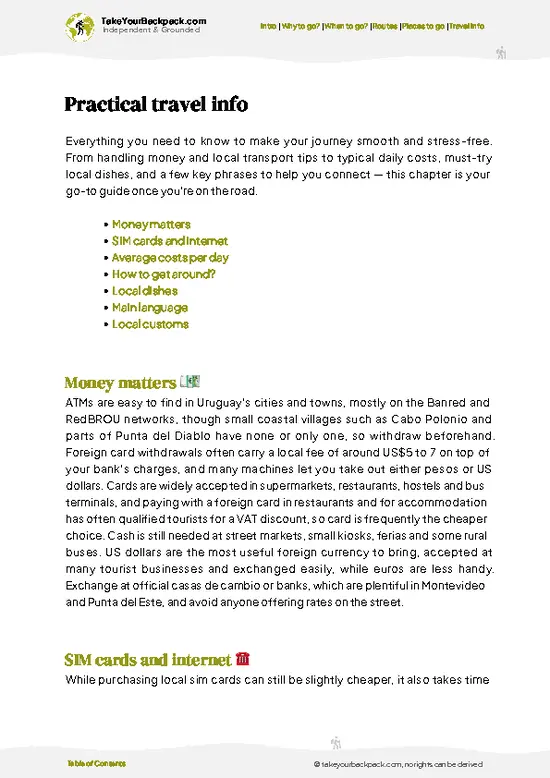
example page 4 from our offline Travel Guide for Uruguay
example page 5 from our offline Travel Guide for Uruguay
example page 6 from our offline Travel Guide for Uruguay
example page 7 from our offline Travel Guide for Uruguay
Loading the map 🌍
CLICK TO FILTER
cities
towns
villages
landmarks
national parks
hikes
beaches
attractions
festivals
SHOW COUNTRY’S BESTSHOW ALL

✨ Why go?
Ranked #3 beach in Uruguay
The unique appeal for travelers

Playa Mansa earns its stop because the water is the gentlest on the peninsula, and that changes how you spend a day. Where the Atlantic side throws waves, here you can swim laps parallel to shore, rent a paddleboard, or simply stand waist deep with a book. For a trip along Uruguay’s coast, that makes it a real rest day between rougher beaches.
The second reason is the setting. The Rambla Claudio Williman runs the length of the bay, flat and shaded in places, so a morning swim, a long bike ride and a coffee stop happen without a bus. At the end of the day the sun drops over the water, and locals bring thermoses of mate to watch it.
The third is its position. Playa Mansa lies a short walk or ride from the port and the peninsula center, which means boats to Isla Gorriti, the sea lion dock and the … read more 👉
Playa Mansa earns its stop because the water is the gentlest on the peninsula, and that changes how you spend a day. Where the Atlantic side throws waves, here you can swim laps parallel to shore, rent a paddleboard, or simply stand waist deep with a book. For a trip along Uruguay’s coast, that makes it a real rest day between rougher beaches.
The second reason is the setting. The Rambla Claudio Williman runs the length of the bay, flat and shaded in places, so a morning swim, a long bike ride and a coffee stop happen without a bus. At the end of the day the sun drops over the water, and locals bring thermoses of mate to watch it.
The third is its position. Playa Mansa lies a short walk or ride from the port and the peninsula center, which means boats to Isla Gorriti, the sea lion dock and the restaurants are all close. Sleeping cheaply is the harder part, since Punta del Este prices are high in summer.

💡 HighlightsDon't-miss highlights and experiences

  1. Swimming in the calm bay: This is what Playa Mansa is known for. The bottom slopes gently and the water stays shallow far out, with small ripples instead of breaking waves. Mornings are the quietest, and in winter and shoulder months you can have long stretches of sand to yourself.
  2. Sunset on the Río de la Plata side: Because this shore faces west, the sky colors over the water at day’s end. Bring a mate thermos like the locals, sit on the sand or the rambla wall, and watch the masts in the marina go dark against the glow.
  3. Paddleboarding and kayaking: The sheltered water makes it easy for beginners to stand up on a board without being tossed around. Rental stands operate along the beach in the warm season. Wind can pick up in the afternoon, so mornings are smoother.
  4. Cycling or walking the Rambla
… read more 👉
  1. Swimming in the calm bay: This is what Playa Mansa is known for. The bottom slopes gently and the water stays shallow far out, with small ripples instead of breaking waves. Mornings are the quietest, and in winter and shoulder months you can have long stretches of sand to yourself.
  2. Sunset on the Río de la Plata side: Because this shore faces west, the sky colors over the water at day’s end. Bring a mate thermos like the locals, sit on the sand or the rambla wall, and watch the masts in the marina go dark against the glow.
  3. Paddleboarding and kayaking: The sheltered water makes it easy for beginners to stand up on a board without being tossed around. Rental stands operate along the beach in the warm season. Wind can pick up in the afternoon, so mornings are smoother.
  4. Cycling or walking the Rambla Claudio Williman: The seafront path follows the curve of the bay toward the peninsula. It is level, easy and lined with views of the water on one side and apartment blocks and pine-shaded gardens on the other. Bikes can be rented nearby in summer, and a full out-and-back is comfortable at a slow pace.
  5. Port of Punta del Este and boats to Isla Gorriti: A short distance along the bay, the port is where fishermen clean their catch and sea lions loll around the dock waiting for scraps. Boats leave from here for Isla Gorriti, an island with its own beaches and old fortifications, which makes a good half-day add-on to a day at Playa Mansa.
For a first visit, start with the swim in the calm bay, then stay for the sunset, since Playa Mansa is at its best when you give it a full afternoon.
Spotted a mistake or missing something? Contact us.

Things to do around Playa Mansa

Ratings based on Tripadvisor reviews. When you book through this link, you support our work at no extra cost to you.

🌤️ When to go?Seasonal considerations and timing

  • Summer (December to February): Peak season, with highs of 27 to 30°C (81 to 86°F) and long daylight of roughly 14 hours. Playa Mansa in Punta del Este fills with Argentine and Brazilian holidaymakers, and beds cost two to three times the winter rate, with the highest prices around New Year and the first half of January.
  • Autumn (March to May): Highs of 17 to 25°C (63 to 77°F), calmer streets and falling prices. March still gives swimmable afternoons.
  • Winter (June to August): Highs of 11 to 15°C (52 to 59°F), short days of about 10 hours, and a nearly empty peninsula. Many restaurants and hostels close or cut hours, but it suits walking and whale watching offshore from late winter into spring.
  • Spring (September to November): Highs of 16 to 24°C (61 to 75°F), blooming gardens and low prices, though
… read more 👉
  • Summer (December to February): Peak season, with highs of 27 to 30°C (81 to 86°F) and long daylight of roughly 14 hours. Playa Mansa in Punta del Este fills with Argentine and Brazilian holidaymakers, and beds cost two to three times the winter rate, with the highest prices around New Year and the first half of January.
  • Autumn (March to May): Highs of 17 to 25°C (63 to 77°F), calmer streets and falling prices. March still gives swimmable afternoons.
  • Winter (June to August): Highs of 11 to 15°C (52 to 59°F), short days of about 10 hours, and a nearly empty peninsula. Many restaurants and hostels close or cut hours, but it suits walking and whale watching offshore from late winter into spring.
  • Spring (September to November): Highs of 16 to 24°C (61 to 75°F), blooming gardens and low prices, though the water stays cold until about December.
For beach time on a budget, aim for the first two weeks of March, when the sea is warm and the rates have dropped.


source: climatestotravel.comJANJanuary: highly recommended for travelingFEBFebruary: highly recommended for travelingMARMarch: highly recommended for travelingAPRApril: good for travelingMAYMay: good for travelingJUNJune: fair for travelingJULJuly: fair for travelingAUGAugust: fair for travelingSEPSeptember: good for travelingOCTOctober: highly recommended for travelingNOVNovember: highly recommended for travelingDECDecember: highly recommended for traveling
when-to-go

✈️ The backpacker research shortcutUruguay Travel Guide

An offline-friendly backpacking guide with optimized travel routes, ranked highlights, transport advice, and the best areas to stay.
example page 0 from our offline Travel Guide for Uruguay
example page 1 from our offline Travel Guide for Uruguay
example page 2 from our offline Travel Guide for Uruguay
example page 3 from our offline Travel Guide for Uruguay
example page 4 from our offline Travel Guide for Uruguay
example page 5 from our offline Travel Guide for Uruguay
example page 6 from our offline Travel Guide for Uruguay
example page 7 from our offline Travel Guide for Uruguay
The digital guide (198 pages) contains:
✅ 56 highlights, ranked by travel appeal
✅ Optimized 5, 10 & 15-day travel routes
✅ Cities, national parks, landmarks, beaches
✅ How to get around
✅ Offline-friendly for travel without Wi-Fi
👉 Click to see all 30+ guide features

📅 Plan smarter in minutes, not weeks
✅ Month by month travel advice
✅ Festivals & national holidays
✅ Budget expectations

🗺️ Go to the right places, skip the overrated ones
✅ Honest pros & cons of destinations
✅ Top hikes, parks & viewpoints
✅ Lesser-known places most travelers miss
✅ Clear “worth it vs skip it” guidance

🛏️ Travel smoothly without rookie mistakes
✅ Best areas to stay
✅ Transport systems explained simply
✅ Common scams & safety advice
✅ SIM cards, money & practical tips

🌍 Understand the country, not just visit it
✅ Culture & traditions
✅ 52 Essential phrases & customs
✅ Festivals worth planning around
✅ Traveler-friendly historical context
✅ Insights that make places more meaningful

📱 Built for real travel conditions
✅ Fully downloadable PDF
✅ Works completely offline
✅ Optimized for phone use
✅ Useful in remote areas & buses
✅ Everything in one place
Stop searching, start planning
Get instant access to your full guide. 30‑day money-back guarantee.
+ Add another guide for just

By proceeding you agree to our terms.
Sent to your inbox immediately after payment • 100% Secure Checkout
Best Backpacking Travel Advisor 2025 tourism awardBest Backpacking
Travel Advisor
2025
What others say about Take Your Backpack Guides:
⭐⭐⭐⭐⭐
Fantastic, amazing amount of information!
⭐⭐⭐⭐⭐
My goodness this is amazing, it's what I've been looking for hats off too you!
⭐⭐⭐⭐⭐
I think this is absolutely BRILLIANT
⭐⭐⭐⭐
Very complete and informative. It's still missing places, but I gotta to commend you
⭐⭐⭐⭐⭐
This is truly amazing, thank you, can't wait to explore it with my kids!
⭐⭐⭐⭐⭐
Awesome resource, thank you!
⭐⭐⭐⭐⭐
This is amazing! Can't wait to explore the ones I haven't seen
⭐⭐⭐⭐
I love this! Well done, great idea.
⭐⭐⭐⭐⭐
Thanks for taking the time to make this gem!
⭐⭐⭐⭐⭐
This might be the best website I've ever seen.
⭐⭐⭐⭐⭐
Congratulations, and thank you so much for your work; it's incredibly valuable.
⭐⭐⭐⭐
In all seriousness I think you did a great job pointing out the important spots
⭐⭐⭐⭐⭐
10/10 very good
⭐⭐⭐⭐⭐
As someone who's only just starting to visit regularly this is awesome, thank you.
⭐⭐⭐⭐
Thank you very much! I'm going to visit my dad, it's going to be very useful!
⭐⭐⭐⭐⭐
This is really cool! We'll be travelling for the first time and this definitely come in handy.
⭐⭐⭐⭐⭐
You are now our minister of culture, congratulations 👨‍💼
⭐⭐⭐⭐⭐
Just wanted to tell you that this is a pearl! Going to follow your recommendations.
⭐⭐⭐⭐⭐
This is so cool. I'll definitely be using the resource for my travels soon.
⭐⭐⭐⭐⭐
This is very impressive! Good work.
⭐⭐⭐⭐⭐
This is an amazing and informative site. Very well done!

🛏️ Where to stay?Best areas to stay in Uruguay

The best base for backpackers is the Punta del Este peninsula and the streets just north of it, where Playa Mansa is a short walk or local bus ride away. Dorm beds run roughly US$20 to 45 a night in summer and drop to US$12 to 25 outside it, and the cheapest options sit away from the water.
The peninsula itself is compact, walkable and the most social area, with a handful of hostels, cafes and the port within a few blocks. You can reach both the calm Mansa side and the wavy Brava side on foot, and it is easy to meet other travelers in the evening around the port and Gorlero Avenue. It is also the … read more 👉
The best base for backpackers is the Punta del Este peninsula and the streets just north of it, where Playa Mansa is a short walk or local bus ride away. Dorm beds run roughly US$20 to 45 a night in summer and drop to US$12 to 25 outside it, and the cheapest options sit away from the water.
The peninsula itself is compact, walkable and the most social area, with a handful of hostels, cafes and the port within a few blocks. You can reach both the calm Mansa side and the wavy Brava side on foot, and it is easy to meet other travelers in the evening around the port and Gorlero Avenue. It is also the safest area to come home to after dark.
The residential area around the bus terminal and the center of Punta del Este is quieter and cheaper. You give up the atmosphere but gain easy bus connections to Maldonado, Montevideo and Punta Ballena, plus supermarkets where you can cook your own meals.
Maldonado city, about 10 minutes inland by bus, is the cheapest option and works well if you are staying a week or more. Book ahead for late December through January, when the better-priced beds go early.

🛡️ SafetySafety Tips and Common Scams in Playa Mansa

Playa Mansa is one of the easier beaches in Uruguay for swimming, and most travelers will find it low drama. It faces the Río de la Plata side of the peninsula, so the water is sheltered, with gentle small waves, little current and a gradual, sandy entry. Families and kids swim here all summer, and in season lifeguards staff the busier stretches. The water is brackish and brown-green rather than clear, and it stays cool even in January.
Sun is the main issue. Midday exposure on the open sand is strong in summer, and the breeze hides the burn, so bring a hat and reapply sunscreen. Wind can pick up in the afternoon and change quickly, with cool evenings even in summer.
The peninsula is generally safe and well patrolled, but petty theft of phones and bags left on the sand happens in high season, … read more 👉
Playa Mansa is one of the easier beaches in Uruguay for swimming, and most travelers will find it low drama. It faces the Río de la Plata side of the peninsula, so the water is sheltered, with gentle small waves, little current and a gradual, sandy entry. Families and kids swim here all summer, and in season lifeguards staff the busier stretches. The water is brackish and brown-green rather than clear, and it stays cool even in January.
Sun is the main issue. Midday exposure on the open sand is strong in summer, and the breeze hides the burn, so bring a hat and reapply sunscreen. Wind can pick up in the afternoon and change quickly, with cool evenings even in summer.
The peninsula is generally safe and well patrolled, but petty theft of phones and bags left on the sand happens in high season, so keep valuables with you or leave them at the hostel. Swim where other people are and leave the Brava side for strong swimmers.

FAQTraveler FAQ

Take a direct bus from Montevideo’s Tres Cruces terminal to Punta del Este, which takes about 2 to 2.5 hours and costs roughly US$10 to 18 one way, with buses running throughout the day in summer. From the Punta del Este terminal, Playa Mansa is a 10 to 20 minute walk or a short local bus or taxi ride of a few dollars. Coming from Montevideo airport, you can also take a taxi or transfer for around US$100 to 140.
Swimming is what Playa Mansa does best, with calm, shallow water on the Río de la Plata side and gentle waves that suit families and nervous swimmers. Surfing is poor here, so surfers head to Playa Brava on the opposite side of the peninsula, a 10 minute walk away, or farther afield to José Ignacio. Snorkeling is not a draw because the water is murky, and visibility is better around Isla Gorriti, a short boat ride of about 10 to 15 minutes from the port.
Yes, Playa Mansa is free to visit, as all beaches in Uruguay are public and there is no entrance fee. Costs come from extras, such as sun loungers and umbrellas at beach clubs, which run roughly US$15 to 40 a day in January and February. Free open sand is available along the whole stretch, and you can bring your own food, drinks and a mate thermos.
⚠️ Things can change over time, so always validate details locally before you go.

Other Uruguayan beaches near Playa Mansa

Explore more nearby:

  • Punta del Este—skyscraper skyline, marina, sculpture park| 6 km away
  • La Barra—Wave-shaped bridge, Atlantic surf, river-mouth sunsets, late summer nights| 10 km away
  • Piriápolis—seaside promenade, hilltop castle, vintage hotels| 30 km away

💡 Not sure where to go next?
Create a personalized itinerary for Uruguay including Playa Mansa and the places that fit your trip.

Generate my itinerary

👉 Discover all beaches

Or checkout all Uruguay has to offer (think cities, towns, villages, national parks, hikes, beaches, festivals)
Country photo of Uruguay

We 💚 feedbackSumming up the experience

Many travelers arrive at Playa Mansa expecting Atlantic waves or clear blue water, then feel let down by the tan, flat bay. Come for what it does well: an easy swim, a long rambla walk and a sunset. If you want surf, cross the peninsula to the ocean side. I would bring a thermos and a towel, and plan the evening here.

✍️ Help improve this page!
The information on this page is based on in-depth research, insights shared by experienced travelers, and feedback from the local travel community in Uruguay. While every effort is made to keep the information accurate and current, conditions can change — so if you spot anything incorrect or outdated, please get in touch.


🙋‍♂️ Give feedback

👋 Meet the founderWho’s Behind Take Your Backpack?

Johan, backpacker and founder of TakeYourBackpackHi, I’m Johan (Netherlands 🇳🇱), the creator of TakeYourBackpack. Over the past 3 decades, I’ve backpacked through 90+ countries across six continents, gaining extensive experience with independent travel, long-term trips, and overland routes.

This site is built on a combination of firsthand travel experience and carefully curated insights from other backpackers. Many guides are based on places I’ve personally visited, while others bring together tips, observations, and practical advice shared by trusted travelers I’ve met along the way.

The goal is to provide realistic, experience-driven guidance — not generic itineraries — so you can explore destinations with better context, clearer expectations, and more confidence.