×

Uzbekistan🇺🇿 | beachesAydarkul LakeYurt camps, brackish shallows, grilled carp, Kyzylkum dunes | things to do and best time to go

Explore Ulugh Beg ObservatoryExplore Lake Sarmish

Backpacking in Aydarkul Lake
🏆 Top pickbeach ranked #1
By Johan Kruseman 🇳🇱 | Updated October 15, 2026

Aydarkul is an accident. In 1969, huge releases of Syr Darya floodwater overflowed into a desert depression, and the Kyzylkum ended up with a lake that now sprawls across the border zone of the Jizzakh and Navoiy regions, north of Nurata. Come expecting a calm, wild shoreline, not a resort. The water is slightly brackish, warm by midsummer, and calm enough for floating, though there are no waves, no lifeguards and almost no reef-style snorkeling. Sand and shell grit underfoot, reed patches, and little shade, so bring a hat. Crowds are thin outside summer weekends, and litter stays modest near the yurt camps. Getting there means sandy desert tracks, so arrange a driver. Camps serve fish, bread and tea, and sleeping is on floor mattresses. Swim in the morning, before the afternoon wind picks up. After dark the wind drops, the water flattens, and the stars come down to the waterline.

Discover everything you want to know in the 📖 Uzbekistan Travel Guide.


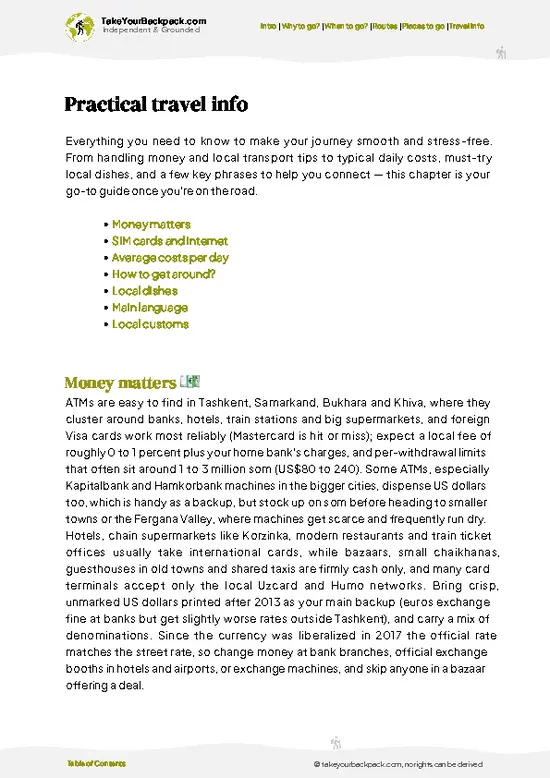
example page 0 from our offline Travel Guide for Uzbekistan
example page 1 from our offline Travel Guide for Uzbekistan
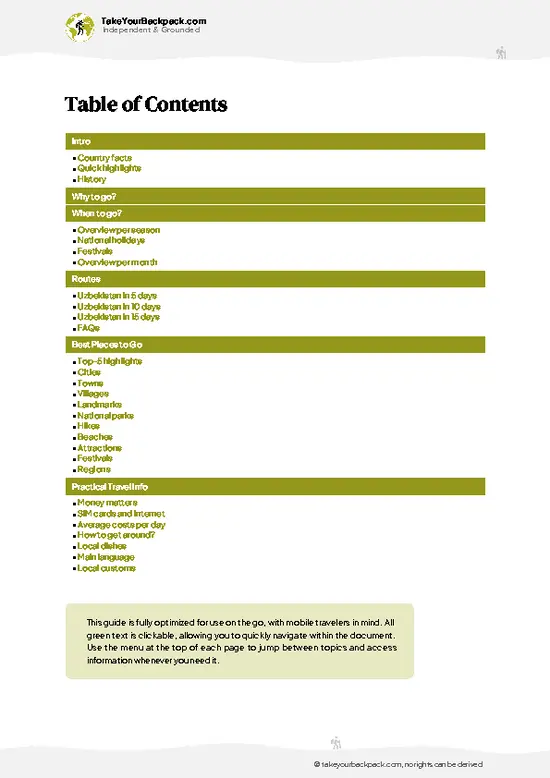
example page 2 from our offline Travel Guide for Uzbekistan
example page 3 from our offline Travel Guide for Uzbekistan
example page 4 from our offline Travel Guide for Uzbekistan
example page 5 from our offline Travel Guide for Uzbekistan
example page 6 from our offline Travel Guide for Uzbekistan
example page 7 from our offline Travel Guide for Uzbekistan
Loading the map 🌍
CLICK TO FILTER
cities
towns
villages
landmarks
national parks
hikes
beaches
attractions
festivals
regions
SHOW COUNTRY’S BESTSHOW ALL

✨ Why go?
Ranked #1 beach in Uzbekistan
Why Aydarkul Lake should be on your travel list

Most backpackers stop here for one reason: a night in a yurt on a desert lake is a rare combination in Central Asia. The yurt camps along the Aydarkul shore let you sleep on felt and cotton mattresses, eat what the fishermen caught that morning, and talk with other travelers around a fire. It costs little and asks nothing of you except a willingness to unplug.

The second pull is the setting itself. Aydarkul sits in the Kyzylkum desert, so the same day can hold a camel plod over dunes, a salty float in turquoise water, and an evening sky with no city glow. That mix is hard to find on the Silk Road circuit, where most stops are mosques and madrasas.

It also works well as a pause between Samarkand and the Nurata area, a slow day or two after the heavy sightseeing of the cities. Because it is … read more 👉
Most backpackers stop here for one reason: a night in a yurt on a desert lake is a rare combination in Central Asia. The yurt camps along the Aydarkul shore let you sleep on felt and cotton mattresses, eat what the fishermen caught that morning, and talk with other travelers around a fire. It costs little and asks nothing of you except a willingness to unplug.

The second pull is the setting itself. Aydarkul sits in the Kyzylkum desert, so the same day can hold a camel plod over dunes, a salty float in turquoise water, and an evening sky with no city glow. That mix is hard to find on the Silk Road circuit, where most stops are mosques and madrasas.

It also works well as a pause between Samarkand and the Nurata area, a slow day or two after the heavy sightseeing of the cities. Because it is a place where you do very little, it resets your energy before the next leg. Few other beaches in the country offer that kind of quiet.

💡 HighlightsThe experiences that define the visit

  1. Swimming in the saline water: Aydarkul’s water is only mildly brackish, and it is shallow and warm along many beaches by July and August. Wade out, lie back, and let the desert heat vanish. Rinse off afterward if you can.
  2. Sleeping in a lakeside yurt camp: The classic Aydarkul experience is a felt yurt a few steps from the water, with mattresses on the floor and shared meals under a canopy. Evenings often bring tea, music and conversation among travelers and local families. Mornings are silent, with only birds and lapping water.
  3. Sunset and sunrise over the lake: With a flat horizon and no hills, the sky does the work. The sun drops into the water in orange and pink bands, then rises the same way across the reeds. Both are worth setting an alarm or staying up for.
  4. Fresh lake fish meals: Local fishermen
… read more 👉
  1. Swimming in the saline water: Aydarkul’s water is only mildly brackish, and it is shallow and warm along many beaches by July and August. Wade out, lie back, and let the desert heat vanish. Rinse off afterward if you can.
  2. Sleeping in a lakeside yurt camp: The classic Aydarkul experience is a felt yurt a few steps from the water, with mattresses on the floor and shared meals under a canopy. Evenings often bring tea, music and conversation among travelers and local families. Mornings are silent, with only birds and lapping water.
  3. Sunset and sunrise over the lake: With a flat horizon and no hills, the sky does the work. The sun drops into the water in orange and pink bands, then rises the same way across the reeds. Both are worth setting an alarm or staying up for.
  4. Fresh lake fish meals: Local fishermen net carp and other freshwater species from the lake, and camps grill or fry them over coals or serve them in soup. Eat it with fresh flatbread and green tea at a table facing the water. It is simple, smoky and about as local as a meal gets.
  5. Camel rides and desert walks: Some camps keep camels for short rides along the shore and into the Kyzylkum dunes behind it. The pace is slow, the sand ripples are photogenic, and you see how quickly the green fringe of the lake gives way to barren desert. A walk at dusk is a free alternative.
For a first visit, the lakeside yurt night is the one to choose, because it gives you the sunset, the fish dinner, the swim and the stars in one go.
Spotted a mistake or missing something? Contact us.

🌤️ When to go?When to go for the best experience

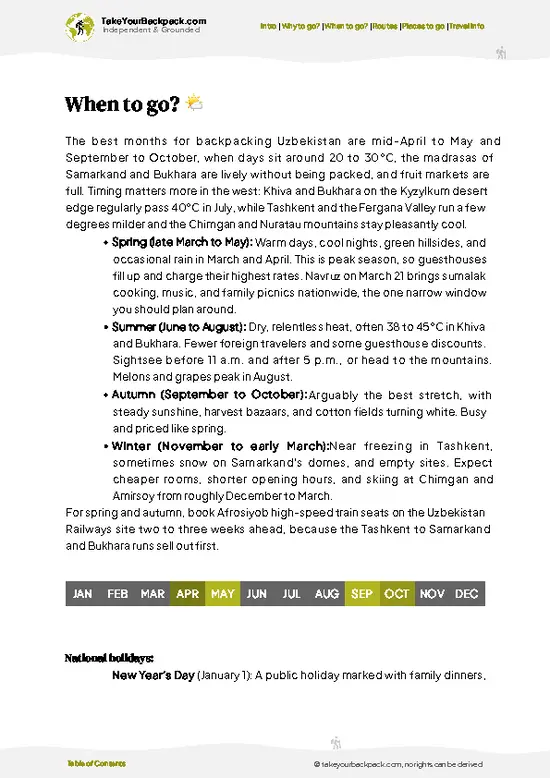
Late May through June and September are the months when Aydarkul Lake beach works best for swimming and sleeping in a yurt without suffering.
  • Spring (April to mid-May): Days run 15 to 24°C (59 to 75°F), the steppe is green, and the water is still cold at roughly 14 to 18°C (57 to 64°F). Nights drop near freezing early on, and the wind can be sharp.
  • Early Summer (late May to June): Highs reach 28 to 35°C (82 to 95°F), water warms past 20°C (68°F), and daylight stretches to about 15 hours. Yurt camps are open and quiet.
  • High Summer (July and August): Afternoons hit 36 to 41°C (97 to 106°F) with no shade. Water is bathtub warm at 25 to 28°C (77 to 82°F). Weekends fill with Uzbek families and prices at camps rise.
  • Autumn (September to October): Days of 20 to 30°C (68 to 86°F) and cool nights suit
… read more 👉
Late May through June and September are the months when Aydarkul Lake beach works best for swimming and sleeping in a yurt without suffering.
  • Spring (April to mid-May): Days run 15 to 24°C (59 to 75°F), the steppe is green, and the water is still cold at roughly 14 to 18°C (57 to 64°F). Nights drop near freezing early on, and the wind can be sharp.
  • Early Summer (late May to June): Highs reach 28 to 35°C (82 to 95°F), water warms past 20°C (68°F), and daylight stretches to about 15 hours. Yurt camps are open and quiet.
  • High Summer (July and August): Afternoons hit 36 to 41°C (97 to 106°F) with no shade. Water is bathtub warm at 25 to 28°C (77 to 82°F). Weekends fill with Uzbek families and prices at camps rise.
  • Autumn (September to October): Days of 20 to 30°C (68 to 86°F) and cool nights suit stargazing. Swimming is comfortable until about mid-September.
  • Winter (November to March): Expect -5 to 8°C (23 to 46°F), about 9.5 hours of daylight, and mostly shuttered camps.
Book a weekday in June or September to get the lowest prices and the emptiest shoreline.


source: climatestotravel.comJANJanuary: below average for travelingFEBFebruary: below average for travelingMARMarch: fair for travelingAPRApril: good for travelingMAYMay: excellent for travelingJUNJune: excellent for travelingJULJuly: excellent for travelingAUGAugust: excellent for travelingSEPSeptember: highly recommended for travelingOCTOctober: good for travelingNOVNovember: fair for travelingDECDecember: below average for traveling
uzbekistan-beach-aydarkul-lake
© Google |

✈️ The backpacker research shortcutUzbekistan Travel Guide

An offline-friendly backpacking guide with optimized travel routes, ranked highlights, transport advice, and the best areas to stay.
example page 0 from our offline Travel Guide for Uzbekistan
example page 1 from our offline Travel Guide for Uzbekistan
example page 2 from our offline Travel Guide for Uzbekistan
example page 3 from our offline Travel Guide for Uzbekistan
example page 4 from our offline Travel Guide for Uzbekistan
example page 5 from our offline Travel Guide for Uzbekistan
example page 6 from our offline Travel Guide for Uzbekistan
example page 7 from our offline Travel Guide for Uzbekistan
The digital guide (246 pages) contains:
✅ 74 highlights, ranked by travel appeal
✅ Optimized 5, 10 & 15-day travel routes
✅ Cities, national parks, landmarks, beaches
✅ How to get around
✅ Offline-friendly for travel without Wi-Fi
👉 Click to see all 30+ guide features

📅 Plan smarter in minutes, not weeks
✅ Month by month travel advice
✅ Festivals & national holidays
✅ Budget expectations

🗺️ Go to the right places, skip the overrated ones
✅ Honest pros & cons of destinations
✅ Top hikes, parks & viewpoints
✅ Lesser-known places most travelers miss
✅ Clear “worth it vs skip it” guidance

🛏️ Travel smoothly without rookie mistakes
✅ Best areas to stay
✅ Transport systems explained simply
✅ Common scams & safety advice
✅ SIM cards, money & practical tips

🌍 Understand the country, not just visit it
✅ Culture & traditions
✅ 52 Essential phrases & customs
✅ Festivals worth planning around
✅ Traveler-friendly historical context
✅ Insights that make places more meaningful

📱 Built for real travel conditions
✅ Fully downloadable PDF
✅ Works completely offline
✅ Optimized for phone use
✅ Useful in remote areas & buses
✅ Everything in one place
Stop searching, start planning
Get instant access to your full guide. 30‑day money-back guarantee.
+ Add another guide for just

By proceeding you agree to our terms.
Sent to your inbox immediately after payment • 100% Secure Checkout
Best Backpacking Travel Advisor 2025 tourism awardBest Backpacking
Travel Advisor
2025
What others say about Take Your Backpack Guides:
⭐⭐⭐⭐⭐
Fantastic, amazing amount of information!
⭐⭐⭐⭐⭐
My goodness this is amazing, it's what I've been looking for hats off too you!
⭐⭐⭐⭐⭐
I think this is absolutely BRILLIANT
⭐⭐⭐⭐
Very complete and informative. It's still missing places, but I gotta to commend you
⭐⭐⭐⭐⭐
This is truly amazing, thank you, can't wait to explore it with my kids!
⭐⭐⭐⭐⭐
Awesome resource, thank you!
⭐⭐⭐⭐⭐
This is amazing! Can't wait to explore the ones I haven't seen
⭐⭐⭐⭐
I love this! Well done, great idea.
⭐⭐⭐⭐⭐
Thanks for taking the time to make this gem!
⭐⭐⭐⭐⭐
This might be the best website I've ever seen.
⭐⭐⭐⭐⭐
Congratulations, and thank you so much for your work; it's incredibly valuable.
⭐⭐⭐⭐
In all seriousness I think you did a great job pointing out the important spots
⭐⭐⭐⭐⭐
10/10 very good
⭐⭐⭐⭐⭐
As someone who's only just starting to visit regularly this is awesome, thank you.
⭐⭐⭐⭐
Thank you very much! I'm going to visit my dad, it's going to be very useful!
⭐⭐⭐⭐⭐
This is really cool! We'll be travelling for the first time and this definitely come in handy.
⭐⭐⭐⭐⭐
You are now our minister of culture, congratulations 👨‍💼
⭐⭐⭐⭐⭐
Just wanted to tell you that this is a pearl! Going to follow your recommendations.
⭐⭐⭐⭐⭐
This is so cool. I'll definitely be using the resource for my travels soon.
⭐⭐⭐⭐⭐
This is very impressive! Good work.
⭐⭐⭐⭐⭐
This is an amazing and informative site. Very well done!

🛏️ Where to stay?How to pick the right area

The best base for backpackers is one of the yurt camps strung along the lake shore near Arnasay and Dustlik, because you wake up a few steps from the water. These camps are the social heart of the place. Beds are mattresses on the floor of a shared felt yurt, dinner is served at one long table or around a fire, and you will end up talking with Uzbek weekenders, overland cyclists and the occasional tour group. Expect roughly US$15 to 35 (about 190,000 to 450,000 UZS) per person with dinner and breakfast, and prices climb in July and August. Camps with a camel and a small boat for hire tend to be … read more 👉
The best base for backpackers is one of the yurt camps strung along the lake shore near Arnasay and Dustlik, because you wake up a few steps from the water. These camps are the social heart of the place. Beds are mattresses on the floor of a shared felt yurt, dinner is served at one long table or around a fire, and you will end up talking with Uzbek weekenders, overland cyclists and the occasional tour group. Expect roughly US$15 to 35 (about 190,000 to 450,000 UZS) per person with dinner and breakfast, and prices climb in July and August. Camps with a camel and a small boat for hire tend to be the liveliest. Solo travelers do well choosing a camp that sits close to others, since a few yurt clusters within walking distance share meals and campfires and the nights feel less isolated. If you prefer a real bed and a hot shower, Jizzakh city is the practical fallback, with simple guesthouses and a bus station, though it sits a couple of hours from the water. Nurata, a small town with a spring and fortress ruins, is a calmer alternative that pairs well with an overnight at the lake. Book ahead for summer weekends, since the shoreline has few options.

🛡️ SafetyStaying Safe: What Travelers Should Know

Aydarkul is a calm, shallow, salty inland lake with no tides, no rips and no dangerous marine life, so the main risks are sun and wind. Water along the sandy shore stays knee to waist deep for a long way out, which suits weaker swimmers. Waves are small until an afternoon wind kicks up, usually after midday, and then choppy water and blowing sand can make swimming unpleasant and boating unwise. Shade is scarce, and summer heat above 38°C (100°F) can catch you out, so carry a hat, a liter or two of water beyond what camps provide, and cover up between noon and 4 pm. There are no lifeguards or flags, so swim where the camp staff and families do. Near reedy patches mosquitoes get busy at dusk in summer, so repellent helps. Theft is rarely a problem at yurt camps, but keep your phone and passport … read more 👉
Aydarkul is a calm, shallow, salty inland lake with no tides, no rips and no dangerous marine life, so the main risks are sun and wind. Water along the sandy shore stays knee to waist deep for a long way out, which suits weaker swimmers. Waves are small until an afternoon wind kicks up, usually after midday, and then choppy water and blowing sand can make swimming unpleasant and boating unwise. Shade is scarce, and summer heat above 38°C (100°F) can catch you out, so carry a hat, a liter or two of water beyond what camps provide, and cover up between noon and 4 pm. There are no lifeguards or flags, so swim where the camp staff and families do. Near reedy patches mosquitoes get busy at dusk in summer, so repellent helps. Theft is rarely a problem at yurt camps, but keep your phone and passport with you rather than out on the sand while you swim.

FAQTraveler FAQ

The usual route is a taxi or shared car from Jizzakh to the shore near Arnasay, then a short ride to your yurt camp. From Tashkent it is about 300 km and 4 to 5 hours by road, and from Samarkand roughly 3 to 4 hours. Most travelers arrange a private driver for US$40 to 80 one way, or take the train or a shared taxi to Jizzakh and negotiate the last stretch, which often costs US$15 to 30. Many yurt camps will organize pickup if you book ahead.
Swimming is the best use of the lake, while surfing is not possible and snorkeling is poor. The water is shallow, salty and warm from June to mid-September, reaching 25 to 28°C (77 to 82°F) in July and August, and the calm surface makes floating easy. Waves are small, though afternoon wind can add chop, and visibility is murky, so there is little to see underwater. Camps rent boats and offer camel rides, and fishing is popular, so plan on a swim and a sunset paddle rather than any water sports.
The shoreline itself is free, and you can walk and swim along open stretches without a ticket. Money changes hands at the yurt camps, which charge roughly US$15 to 35 (about 190,000 to 450,000 UZS) per person including dinner and breakfast, and some ask a small fee for day visitors, often under US$5. Extras like camel rides, boat trips or fishing gear usually cost a few dollars up to US$15 each, and it is wise to carry cash in Uzbek som since card payment is rare.
⚠️ Things can change over time, so always validate details locally before you go.

Ideas for continuing your journey

Aydarkul Lake isn’t the only highlight in Uzbekistan. Explore all what Uzbekistan has to offer.
Country photo of Uzbekistan

We 💚 feedbackParting advice and final tips

Aim for a weekday in June or early September, and arrive in the late afternoon. The water is warm enough for a swim, the sand has stopped burning, and the camps are quiet. Stay for sunset, then walk a few steps from the fire and look up. Pack a light jacket, because the desert chills fast after dark, and mosquitoes by the reeds are worse than you expect.

✍️ Help improve this page!
The information on this page is based on in-depth research, insights shared by experienced travelers, and feedback from the local travel community in Uzbekistan. While every effort is made to keep the information accurate and current, conditions can change — so if you spot anything incorrect or outdated, please get in touch.


🙋‍♂️ Give feedback

👋 Meet the founderWho’s Behind Take Your Backpack?

Johan, backpacker and founder of TakeYourBackpackHi, I’m Johan (Netherlands 🇳🇱), the creator of TakeYourBackpack. Over the past 3 decades, I’ve backpacked through 90+ countries across six continents, gaining extensive experience with independent travel, long-term trips, and overland routes.

This site is built on a combination of firsthand travel experience and carefully curated insights from other backpackers. Many guides are based on places I’ve personally visited, while others bring together tips, observations, and practical advice shared by trusted travelers I’ve met along the way.

The goal is to provide realistic, experience-driven guidance — not generic itineraries — so you can explore destinations with better context, clearer expectations, and more confidence.