×

Uzbekistan🇺🇿 | best beachesWhere to Find the 2 Best beaches in Uzbekistan

Uzbekistan is doubly landlocked, so a beach here means a lake, a reservoir or the shrunken edge of the Aral Sea, never an ocean. Near Tashkent, mountain reservoir shores are easy, busy on weekends and cold-watered. Out in the Kyzylkum desert, lake yurt camps are quiet, salty-warm and cheap, but you need a driver or a shared ride. In the far northwest, the Aral coast is a stark, remote trip with almost no crowds and no swim-and-sunbathe routine. For backpacking or independent travel, I suggest matching the kind to your timing: go midweek, carry cash in som, and plan the transport first.

By Johan Kruseman 🇳🇱 | Updated October 19, 2026
Explore the best attractions in Uzbekistan

Why go?What Makes Them Special

Uzbekistan has no coastline and no beach culture in the Mediterranean or Southeast Asian sense, and that shapes everything. Swimming spots here are the product of Soviet-era water engineering and a continental desert climate. Lakes such as Aydarkul exist because floodwater was diverted in the 1960s, while the Aral Sea is the best-known casualty of cotton irrigation. That history makes these places strange and absorbing, but not polished.

Expect minimal infrastructure: few lifeguards, patchy toilets, limited shade and no gear rental outside the resort-style spots near Tashkent. What you get in exchange is space, open sky and local families picnicking rather than package tourists.

Before choosing Uzbekistan for beaches, know that this is a culture-and-cities country first. Swimming works best … read more 👉
Uzbekistan has no coastline and no beach culture in the Mediterranean or Southeast Asian sense, and that shapes everything. Swimming spots here are the product of Soviet-era water engineering and a continental desert climate. Lakes such as Aydarkul exist because floodwater was diverted in the 1960s, while the Aral Sea is the best-known casualty of cotton irrigation. That history makes these places strange and absorbing, but not polished.

Expect minimal infrastructure: few lifeguards, patchy toilets, limited shade and no gear rental outside the resort-style spots near Tashkent. What you get in exchange is space, open sky and local families picnicking rather than package tourists.

Before choosing Uzbekistan for beaches, know that this is a culture-and-cities country first. Swimming works best as a break between Samarkand, Bukhara and Khiva rather than as the reason for the trip. Modest dress is the norm, so women commonly swim in a T-shirt and leggings, and men keep to trunks or shorts. Water is often cold in mountain reservoirs, salty in desert lakes and unswimmable in much of the Aral basin. Bring your own sun cover, water and snacks, and treat the water as a bonus.
Evaluating the Top Choices
The list of best beaches in Uzbekistan is created based on beauty, vibe, water quality, activities, and surrounding scenery. If you feel a beach is missing in this list, please let us know.

When to go?When to Plan Your Trip

Best months for swimming: The best months are June to early September, when daytime highs run about 32 to 42°C and almost no rain falls, so lake water in the desert is warm enough to enjoy. The mountain reservoirs near Tashkent stay fresher, with water around 18 to 24°C in midsummer from snowmelt feeding them. July and August are the hottest, and in the Kyzylkum and Karakalpakstan afternoons can top 40°C, so plan swims for late afternoon and shade for midday.Shoulder seasons: May and late September are my favorite windows. Days sit around 24 to 30°C, the crowds thin and yurt camps are easier to book. Water is cool but fine for a quick dip by late May. April is the wettest stretch, with spring showers and cold nights, while October brings near-freezing evenings in the desert, so camps often … read more 👉
Best months for swimming: The best months are June to early September, when daytime highs run about 32 to 42°C and almost no rain falls, so lake water in the desert is warm enough to enjoy. The mountain reservoirs near Tashkent stay fresher, with water around 18 to 24°C in midsummer from snowmelt feeding them. July and August are the hottest, and in the Kyzylkum and Karakalpakstan afternoons can top 40°C, so plan swims for late afternoon and shade for midday.Shoulder seasons: May and late September are my favorite windows. Days sit around 24 to 30°C, the crowds thin and yurt camps are easier to book. Water is cool but fine for a quick dip by late May. April is the wettest stretch, with spring showers and cold nights, while October brings near-freezing evenings in the desert, so camps often close or go very basic by month's end.Peak periods and prices: Weekends in July and August fill the Tashkent-side shores with day-trippers, and roads back to the city can crawl on Sunday evenings. Go on a weekday and you often have the place to yourself. Camp and guesthouse prices barely move by season outside holidays, but 4x4 drivers for the Aral Sea may ask more in summer. From November to March, forget swimming completely: temperatures drop below freezing and the Aral steppe is bitterly windy.

beach hoppingTips for Visiting Multiple Destinations

How long to allow: A trip linking several beach areas in Uzbekistan needs 5 to 8 days, because the distances are long and the stops sit in very different corners of the country. Treat it as a swim-and-scenery extension of a classic city route, not a standalone loop.Which regions go together: The easiest cluster is Tashkent and its mountain reservoirs, about 1.5 to 2 hours from the capital by shared taxi or minibus. The Kyzylkum lakes pair naturally with Samarkand and Bukhara: Samarkand to Nurata is roughly 2.5 to 3 hours by road, and the camps sit another hour or so beyond. The Aral Sea belongs with Khiva and Nukus, which are 4 to 5 hours apart by road, then roughly 3 hours more from Nukus to the Aral coast by 4x4.

A sensible direction is east to west: Tashkent first, then Samarkand, the desert … read more 👉
How long to allow: A trip linking several beach areas in Uzbekistan needs 5 to 8 days, because the distances are long and the stops sit in very different corners of the country. Treat it as a swim-and-scenery extension of a classic city route, not a standalone loop.Which regions go together: The easiest cluster is Tashkent and its mountain reservoirs, about 1.5 to 2 hours from the capital by shared taxi or minibus. The Kyzylkum lakes pair naturally with Samarkand and Bukhara: Samarkand to Nurata is roughly 2.5 to 3 hours by road, and the camps sit another hour or so beyond. The Aral Sea belongs with Khiva and Nukus, which are 4 to 5 hours apart by road, then roughly 3 hours more from Nukus to the Aral coast by 4x4.

A sensible direction is east to west: Tashkent first, then Samarkand, the desert lakes, Bukhara, Khiva, and finally the Aral Sea. This keeps the hardest leg for last, when you have your rhythm. Allow one night at the lakes, one to two nights for the Aral trip, and half a day for a reservoir.Planning mistakes: The most common mistake is trying the Aral as a day trip from Khiva. Base yourself in Nukus or sleep near the coast instead. Another is underestimating desert driving times in summer heat, so start before 8 a.m. and keep at least 3 liters of water per person.

The ListThe Best beaches of Uzbekistan

1 Aydarkul Lake

Yurt camps, brackish shallows, grilled carp, Kyzylkum dunes

Wade into warm, calm shallows, sleep on floor mattresses in a felt yurt, and finish the day with smoky fish and green tea.

uzbekistan-beach-aydarkul-lake
© Google |

2 Lake Sarmish

Sarmishsay petroglyphs, Karatau gorge, pebbly shore, weekday quiet

Walk past Bronze Age carvings of ibex and hunters to a still, clear lake ringed by red-brown hills, then swim on a hot afternoon.

Loading the map 🌍

Expert viewInsights from Locals and Experts

How many to visit: I recommend two beach stops on a typical two-week trip. Uzbekistan's draw is its Silk Road cities, and each beach area costs a half to full day in transit alone. Two gives you one easy swim and one more distinctive experience without eating into the heritage sites.Choosing by travel style: If you want comfort and ease, pick a Tashkent-side reservoir: public transport works and food is available. If you want atmosphere and night skies, choose a desert lake yurt camp, where the draw is sunset, stars and a camel ride more than the swim. If you want bleak, strange landscapes, the Aral Sea region fits, but treat it as an expedition rather than a swim stop.What it costs: Plan on US$25 to 45 a day (about 300,000 to 550,000 UZS) including a basic bed, meals and local transport. … read more 👉
How many to visit: I recommend two beach stops on a typical two-week trip. Uzbekistan's draw is its Silk Road cities, and each beach area costs a half to full day in transit alone. Two gives you one easy swim and one more distinctive experience without eating into the heritage sites.Choosing by travel style: If you want comfort and ease, pick a Tashkent-side reservoir: public transport works and food is available. If you want atmosphere and night skies, choose a desert lake yurt camp, where the draw is sunset, stars and a camel ride more than the swim. If you want bleak, strange landscapes, the Aral Sea region fits, but treat it as an expedition rather than a swim stop.What it costs: Plan on US$25 to 45 a day (about 300,000 to 550,000 UZS) including a basic bed, meals and local transport. Reservoir shores near Tashkent cost little to nothing to enter, with shared taxis around US$3 to 6 each way and a lakeside meal around US$5 to 10. A yurt camp at the desert lakes usually runs US$20 to 35 per person with dinner and breakfast, plus US$10 to 20 for a camel ride. For the Aral coast, a 4x4 with driver is the main cost at roughly US$100 to 150 per vehicle per day, so split it with two or three others. Carry cash som, because card terminals are unreliable at camps.Safety on the water: Almost none of these shores have lifeguards. Mountain reservoir water is cold enough to cause cramps, and drownings happen most summer weekends, so stay near the edge, avoid alcohol before swimming and never swim alone. Desert lake water can be shallow for long stretches, with soft mud, so wear water shoes. In the Aral region, salt dust and heat are the bigger concerns: bring sun protection, 3 to 4 liters of water per person and a scarf.Cultural etiquette: Uzbekistan is relaxed but conservative. Swim in modest clothing: no topless sunbathing, and bikinis are best kept for private or camp-only stretches. Ask before photographing families, especially women and children. Alcohol on public shores draws disapproval, so keep it discreet or skip it. Drones need permits and can attract police attention near the Aral and other sensitive areas, so leave them at home. Tip drivers and camp hosts about 5 to 10 percent for good service, and expect meals to arrive with plenty of bread and tea whether you ordered them or not.

✈️ The backpacker research shortcutUzbekistan Travel Guide

An offline-friendly backpacking guide with optimized travel routes, ranked highlights, transport advice, and the best areas to stay.
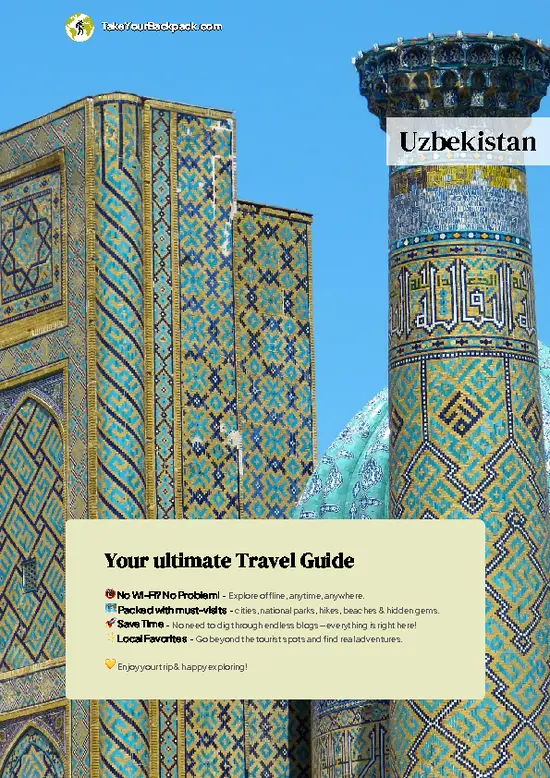
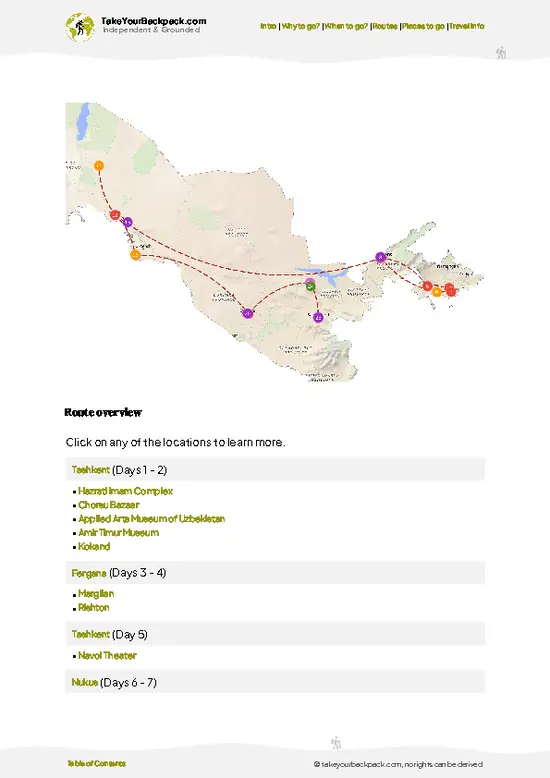
example page 0 from our offline Travel Guide for Uzbekistan
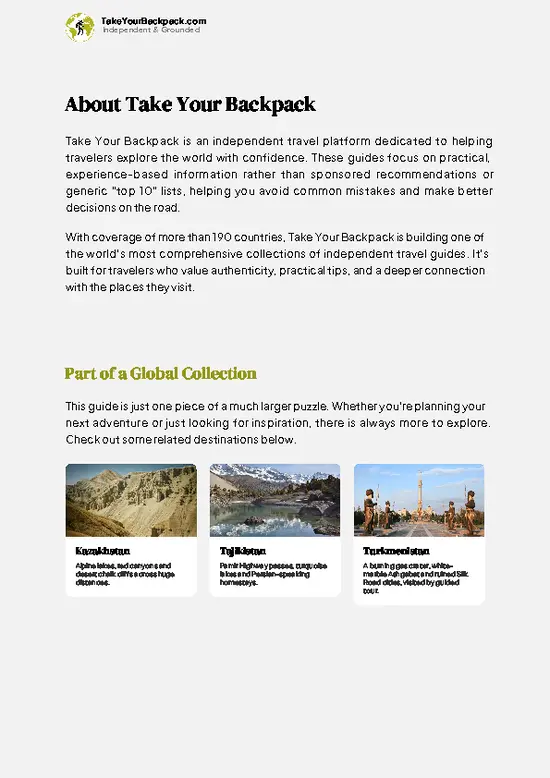
example page 1 from our offline Travel Guide for Uzbekistan
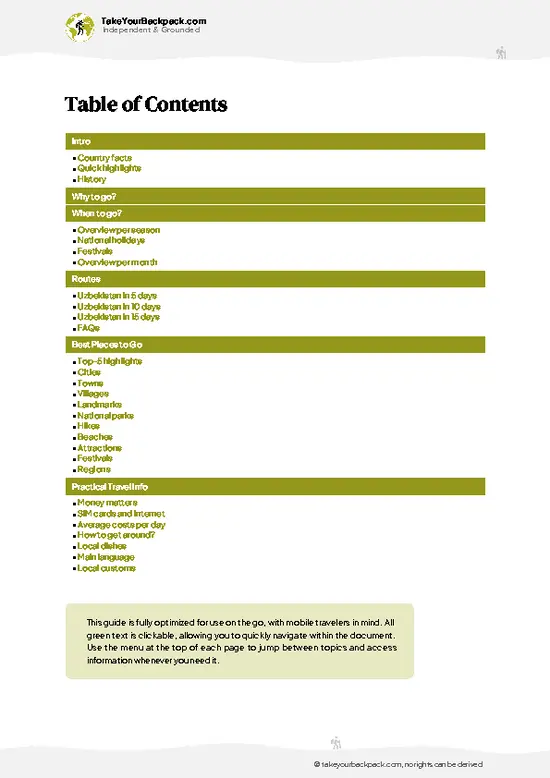
example page 2 from our offline Travel Guide for Uzbekistan
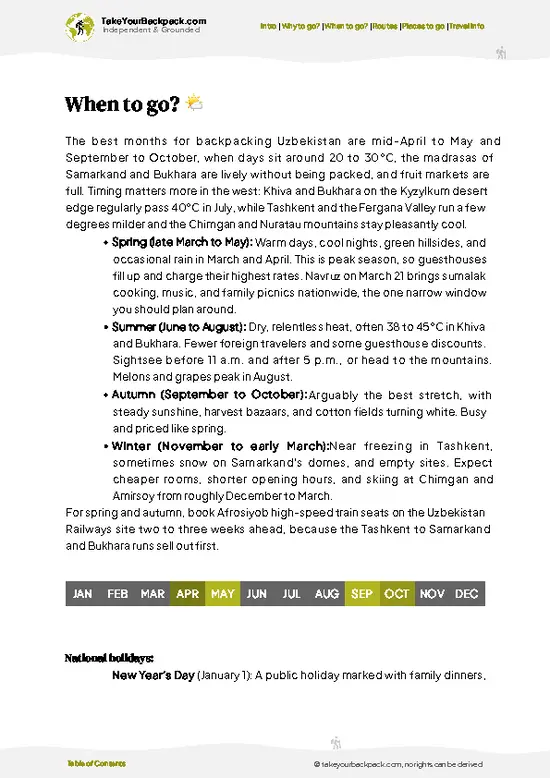
example page 3 from our offline Travel Guide for Uzbekistan
example page 4 from our offline Travel Guide for Uzbekistan
example page 5 from our offline Travel Guide for Uzbekistan
example page 6 from our offline Travel Guide for Uzbekistan
example page 7 from our offline Travel Guide for Uzbekistan
The digital guide (246 pages) contains:
✅ 74 highlights, ranked by travel appeal
✅ Optimized 5, 10 & 15-day travel routes
✅ Cities, national parks, landmarks, beaches
✅ How to get around
✅ Offline-friendly for travel without Wi-Fi
👉 Click to see all 30+ guide features

📅 Plan smarter in minutes, not weeks
✅ Month by month travel advice
✅ Festivals & national holidays
✅ Budget expectations

🗺️ Go to the right places, skip the overrated ones
✅ Honest pros & cons of destinations
✅ Top hikes, parks & viewpoints
✅ Lesser-known places most travelers miss
✅ Clear “worth it vs skip it” guidance

🛏️ Travel smoothly without rookie mistakes
✅ Best areas to stay
✅ Transport systems explained simply
✅ Common scams & safety advice
✅ SIM cards, money & practical tips

🌍 Understand the country, not just visit it
✅ Culture & traditions
✅ 52 Essential phrases & customs
✅ Festivals worth planning around
✅ Traveler-friendly historical context
✅ Insights that make places more meaningful

📱 Built for real travel conditions
✅ Fully downloadable PDF
✅ Works completely offline
✅ Optimized for phone use
✅ Useful in remote areas & buses
✅ Everything in one place
Stop searching, start planning
Get instant access to your full guide. 30‑day money-back guarantee.
+ Add another guide for just

By proceeding you agree to our terms.
Sent to your inbox immediately after payment • 100% Secure Checkout
Best Backpacking Travel Advisor 2025 tourism awardBest Backpacking
Travel Advisor
2025
What others say about Take Your Backpack Guides:
⭐⭐⭐⭐⭐
Fantastic, amazing amount of information!
⭐⭐⭐⭐⭐
My goodness this is amazing, it's what I've been looking for hats off too you!
⭐⭐⭐⭐⭐
I think this is absolutely BRILLIANT
⭐⭐⭐⭐
Very complete and informative. It's still missing places, but I gotta to commend you
⭐⭐⭐⭐⭐
This is truly amazing, thank you, can't wait to explore it with my kids!
⭐⭐⭐⭐⭐
Awesome resource, thank you!
⭐⭐⭐⭐⭐
This is amazing! Can't wait to explore the ones I haven't seen
⭐⭐⭐⭐
I love this! Well done, great idea.
⭐⭐⭐⭐⭐
Thanks for taking the time to make this gem!
⭐⭐⭐⭐⭐
This might be the best website I've ever seen.
⭐⭐⭐⭐⭐
Congratulations, and thank you so much for your work; it's incredibly valuable.
⭐⭐⭐⭐
In all seriousness I think you did a great job pointing out the important spots
⭐⭐⭐⭐⭐
10/10 very good
⭐⭐⭐⭐⭐
As someone who's only just starting to visit regularly this is awesome, thank you.
⭐⭐⭐⭐
Thank you very much! I'm going to visit my dad, it's going to be very useful!
⭐⭐⭐⭐⭐
This is really cool! We'll be travelling for the first time and this definitely come in handy.
⭐⭐⭐⭐⭐
You are now our minister of culture, congratulations 👨‍💼
⭐⭐⭐⭐⭐
Just wanted to tell you that this is a pearl! Going to follow your recommendations.
⭐⭐⭐⭐⭐
This is so cool. I'll definitely be using the resource for my travels soon.
⭐⭐⭐⭐⭐
This is very impressive! Good work.
⭐⭐⭐⭐⭐
This is an amazing and informative site. Very well done!

🛏️ Where to stay?Where to Stay: Uzbekistan Edition

Uzbekistan has a growing hostel scene, with dorm beds typically running 100,000 to 190,000 so’m (US$8 to 15) and family-run guesthouses with breakfast offering private rooms from about US$20 to 35. In Tashkent, Mirabad and the streets around Amir Timur Square put you near metro lines, cafés and the city’s modest bar scene, while the Chorsu area in the old town is cheaper and closer to the bazaar but quieter after dark. In Samarkand, beds clustered between the Registan and Gur-e-Amir keep the big monuments walkable. Staying inside Bukhara’s old town around Lyabi-Hauz or within Khiva’s walled Itchan Kala gives you the most atmosphere and very safe, sleepy nights, though nightlife is close to nonexistent. … read more 👉
Uzbekistan has a growing hostel scene, with dorm beds typically running 100,000 to 190,000 so’m (US$8 to 15) and family-run guesthouses with breakfast offering private rooms from about US$20 to 35. In Tashkent, Mirabad and the streets around Amir Timur Square put you near metro lines, cafés and the city’s modest bar scene, while the Chorsu area in the old town is cheaper and closer to the bazaar but quieter after dark. In Samarkand, beds clustered between the Registan and Gur-e-Amir keep the big monuments walkable. Staying inside Bukhara’s old town around Lyabi-Hauz or within Khiva’s walled Itchan Kala gives you the most atmosphere and very safe, sleepy nights, though nightlife is close to nonexistent.

If you enjoy meeting fellow travelers, consider choosing hostels with high ratings for atmosphere. On the other hand, if you prefer having your own space, a hotel might be a better option.

UzbekistanExplore Beyond This Category

👋 Meet the founderWho’s Behind Take Your Backpack?

Johan, backpacker and founder of TakeYourBackpackHi, I’m Johan (Netherlands 🇳🇱), the creator of TakeYourBackpack. Over the past 3 decades, I’ve backpacked through 90+ countries across six continents, gaining extensive experience with independent travel, long-term trips, and overland routes.

This site is built on a combination of firsthand travel experience and carefully curated insights from other backpackers. Many guides are based on places I’ve personally visited, while others bring together tips, observations, and practical advice shared by trusted travelers I’ve met along the way.

The goal is to provide realistic, experience-driven guidance — not generic itineraries — so you can explore destinations with better context, clearer expectations, and more confidence.