×

Uzbekistan🇺🇿 | attractionsKhiva Juma Mosqueforest of columns, skylights, wooden ceiling | things to do and best time to go

Explore Itchan KalaExplore Amir Timur Museum

Backpacking in Khiva Juma Mosque
👍 Recommendedattraction ranked #11
By Johan Kruseman 🇳🇱 | Updated September 4, 2026

Here’s what nobody tells you until you’re standing inside: Khiva’s Juma Mosque is the rare Silk Road site where you can actually escape the tour groups—if you time it right, you’ll have 200+ ancient wooden columns and a cool, shadowy hush almost to yourself. Tucked inside the walled Itchan Kala of Khiva, in western Uzbekistan, this mosque isn’t about gold or grandeur; it’s about atmosphere. The wow-factor is subtle: filtered light, the scent of old timber, and a sense of stepping into a living relic. It’s cheaper and less mobbed than Samarkand’s Registan, but less showy too. If you crave quiet, history you can touch, and a break from selfie-stick chaos, this is your spot.

Discover everything you want to know in the 📖 Uzbekistan Travel Guide.
Loading the map 🌍
CLICK TO FILTER
cities
towns
villages
landmarks
national parks
hikes
beaches
attractions
festivals
regions
SHOW COUNTRY’S BESTSHOW ALL

✨ Why go?
Ranked #11 attraction in Uzbekistan
What sets this place apart

The Khiva Juma Mosque isn’t just another photo op on Uzbekistan’s Silk Road circuit—it’s a raw, living slice of history that demands your attention. Yes, it draws crowds, especially during peak season, but that’s because it’s one of the few places where you can still feel the pulse of a thousand-year-old Islamic tradition in the air. The mosque’s claim to fame? Its forest of carved wooden columns, each telling a story of craftsmanship that survived centuries of upheaval. This isn’t just architecture; it’s a cultural anchor that connects you to Khiva’s role as a trading powerhouse and spiritual hub. Backpackers who make the trek here aren’t just ticking off a checklist—they’re marking a milestone on their Uzbekistan journey, where history, art, and faith collide in a way that’s both humbling … read more 👉
The Khiva Juma Mosque isn’t just another photo op on Uzbekistan’s Silk Road circuit—it’s a raw, living slice of history that demands your attention. Yes, it draws crowds, especially during peak season, but that’s because it’s one of the few places where you can still feel the pulse of a thousand-year-old Islamic tradition in the air. The mosque’s claim to fame? Its forest of carved wooden columns, each telling a story of craftsmanship that survived centuries of upheaval. This isn’t just architecture; it’s a cultural anchor that connects you to Khiva’s role as a trading powerhouse and spiritual hub. Backpackers who make the trek here aren’t just ticking off a checklist—they’re marking a milestone on their Uzbekistan journey, where history, art, and faith collide in a way that’s both humbling and electrifying. The effort to get here pays off in full.
Want to include Khiva Juma Mosque in your Uzbekistan route?
Create a personalized Uzbekistan itinerary that includes Khiva Juma Mosque and the places that fit your trip — based on your travel style, budget, and available time. Get your route in seconds.

Generate my trip

💡 HighlightsKey sights and experiences for travelers

The Forest of Wooden Columns
Forget the Instagram shots of empty, echoing halls. The Juma Mosque’s real magic is the hypnotic grid of 200+ carved wooden columns, each one a different age, style, and story. Some are over a thousand years old, their surfaces worn smooth by generations of hands and prayers. This isn’t just architecture—it’s a living time capsule. Walk among them and you’ll feel the centuries pressing in, the cool shade a relief from Khiva’s relentless sun. No two columns are exactly alike, and the subtle scent of ancient wood lingers in the air.


Light and Shadow Play
Skip the wide-angle lens. The real show happens when sunlight slants through the roof’s open slats, striping the prayer hall with shifting bands of gold and shadow. It’s a silent performance that changes by the minute. … read more 👉
The Forest of Wooden Columns
Forget the Instagram shots of empty, echoing halls. The Juma Mosque’s real magic is the hypnotic grid of 200+ carved wooden columns, each one a different age, style, and story. Some are over a thousand years old, their surfaces worn smooth by generations of hands and prayers. This isn’t just architecture—it’s a living time capsule. Walk among them and you’ll feel the centuries pressing in, the cool shade a relief from Khiva’s relentless sun. No two columns are exactly alike, and the subtle scent of ancient wood lingers in the air.


Light and Shadow Play
Skip the wide-angle lens. The real show happens when sunlight slants through the roof’s open slats, striping the prayer hall with shifting bands of gold and shadow. It’s a silent performance that changes by the minute. Stand still, and you’ll see why this place has inspired poets and painters for centuries. The interplay of light isn’t just pretty—it’s meditative, almost hypnotic, and it’s the closest you’ll get to time travel in Khiva.


The Acoustics Test
Whisper, and your voice carries. Clap, and the sound bounces in unexpected ways. The mosque’s low ceiling and forest of pillars create acoustics that are both intimate and uncanny. This isn’t a tourist trick—it’s the result of centuries-old engineering, designed for sermons and recitations before microphones existed. Try it yourself. You’ll understand why this space still feels alive, even when it’s empty.


Prayer Rugs and Local Life
This isn’t a museum. Locals still use the mosque, especially on Fridays. If you’re lucky enough to visit during prayer time, you’ll see the space fill with quiet purpose. The rugs are simple, the rituals unhurried. There’s no performance here—just the steady heartbeat of a community. It’s a rare, unscripted glimpse into real Uzbek faith, far from the curated tourist circuit.
Spotted a mistake or missing something? Contact us.

Things to do near Khiva Juma Mosque

Ratings based on Tripadvisor reviews. When you book through this link, you support our work at no extra cost to you.

🌤️ When to go?When to go for the best experience


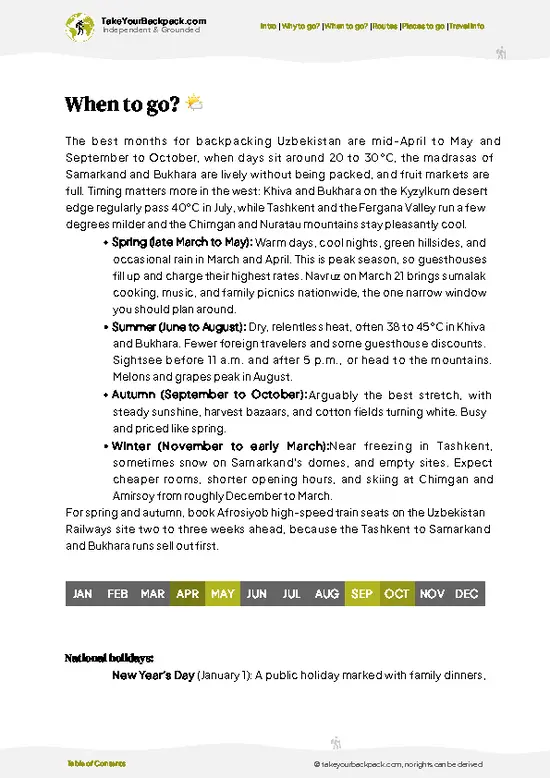
  • Weather: Khiva’s desert climate means scorching summers and chilly winters. From June to August, expect highs around 38-42°C (100-108°F), which can fry your enthusiasm. Spring (April-May) and autumn (September-October) offer milder, more bearable temperatures between 20-30°C (68-86°F).

  • Temperature: Winter months (December-February) dip to near freezing at night, around 0-5°C (32-41°F), so pack layers if you go then. Daytime can be pleasant but unpredictable.

  • Daylight Hours: Long summer days give you up to 14 hours of light, perfect for exploring but also means heat. Shorter winter days limit sightseeing time but reduce crowds.

  • Crowds: Peak tourist season aligns with spring and autumn when weather is ideal. Expect more groups and higher prices then. Winter sees fewer visitors, offering
read more 👉

  • Weather: Khiva’s desert climate means scorching summers and chilly winters. From June to August, expect highs around 38-42°C (100-108°F), which can fry your enthusiasm. Spring (April-May) and autumn (September-October) offer milder, more bearable temperatures between 20-30°C (68-86°F).

  • Temperature: Winter months (December-February) dip to near freezing at night, around 0-5°C (32-41°F), so pack layers if you go then. Daytime can be pleasant but unpredictable.

  • Daylight Hours: Long summer days give you up to 14 hours of light, perfect for exploring but also means heat. Shorter winter days limit sightseeing time but reduce crowds.

  • Crowds: Peak tourist season aligns with spring and autumn when weather is ideal. Expect more groups and higher prices then. Winter sees fewer visitors, offering a quieter, more intimate experience.

  • Seasonal Activities: Spring brings blooming desert flora and local festivals, adding cultural layers beyond the mosque itself. Autumn offers harvest celebrations and cooler evenings for wandering the old city.

  • Price Fluctuations: Accommodation and tours spike during spring and autumn. Winter months can be a bargain but come with the trade-off of colder weather and some closed services.


Pro-tip: Aim for late April or early October to dodge the worst heat and crowds while catching local life in full swing—this is when Khiva Juma Mosque feels less like a postcard and more like a lived-in story.


source: climatestotravel.comJANJanuary: good for travelingFEBFebruary: good for travelingMARMarch: highly recommended for travelingAPRApril: excellent for travelingMAYMay: excellent for travelingJUNJune: fair for travelingJULJuly: below average for travelingAUGAugust: below average for travelingSEPSeptember: excellent for travelingOCTOctober: excellent for travelingNOVNovember: highly recommended for travelingDECDecember: good for traveling
when-to-go

✈️ The backpacker research shortcutUzbekistan Travel Guide

An offline-friendly backpacking guide with optimized travel routes, ranked highlights, transport advice, and the best areas to stay.
example page 0 from our offline Travel Guide for Uzbekistan
example page 1 from our offline Travel Guide for Uzbekistan
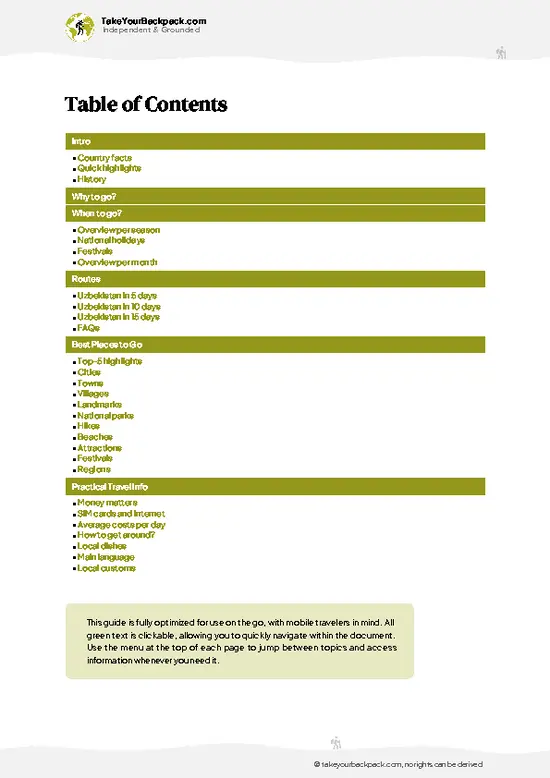
example page 2 from our offline Travel Guide for Uzbekistan
example page 3 from our offline Travel Guide for Uzbekistan
example page 4 from our offline Travel Guide for Uzbekistan
example page 5 from our offline Travel Guide for Uzbekistan
example page 6 from our offline Travel Guide for Uzbekistan
example page 7 from our offline Travel Guide for Uzbekistan
The digital guide (328 pages) contains:
94 highlights, ranked by travel appeal
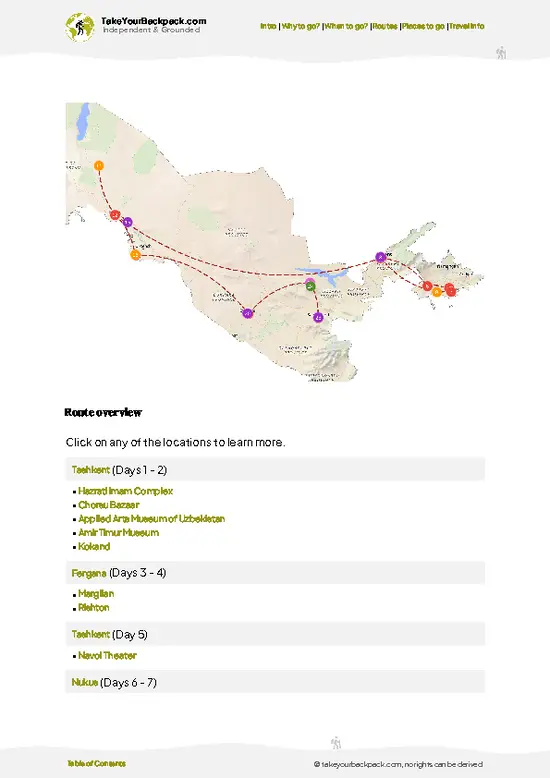
Optimized 5, 10 & 15-day travel routes
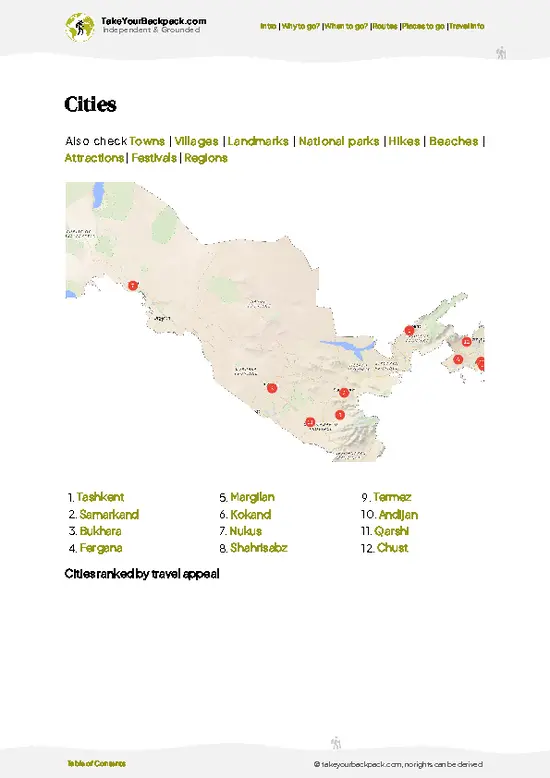
Cities, national parks, landmarks, beaches
How to get around
Offline-friendly for travel without Wi-Fi
👉 Click to see all 30+ guide features

📅 Plan smarter in minutes, not weeks
Month by month travel advice
Festivals & national holidays
Budget expectations

🗺️ Go to the right places, skip the overrated ones
Honest pros & cons of destinations
Top hikes, parks & viewpoints
Lesser-known places most travelers miss
Clear “worth it vs skip it” guidance

🛏️ Travel smoothly without rookie mistakes
Best areas to stay
Transport systems explained simply
Common scams & safety advice
SIM cards, money & practical tips

🌍 Understand the country, not just visit it
Culture & traditions
52 Essential phrases & customs
Festivals worth planning around
Traveler-friendly historical context
Insights that make places more meaningful

📱 Built for real travel conditions
Fully downloadable PDF
Works completely offline
Optimized for phone use
Useful in remote areas & buses
Everything in one place
Save weeks of stressful planning
Get instant access to your full guide. 30‑day money-back guarantee.
+ Add another guide for just US$7.80

By proceeding you agree to our terms.
Sent to your inbox immediately after payment • 100% Secure Checkout
Best Backpacking Travel Advisor 2025 tourism awardBest Backpacking
Travel Advisor
2025
What others say about Take Your Backpack Guides:
⭐⭐⭐⭐⭐
Fantastic, amazing amount of information!
⭐⭐⭐⭐⭐
My goodness this is amazing, it's what I've been looking for hats off too you!
⭐⭐⭐⭐⭐
I think this is absolutely BRILLIANT
⭐⭐⭐⭐
Very complete and informative. It's still missing places, but I gotta to commend you
⭐⭐⭐⭐⭐
This is truly amazing, thank you, can't wait to explore it with my kids!
⭐⭐⭐⭐⭐
Awesome resource, thank you!
⭐⭐⭐⭐⭐
This is amazing! Can't wait to explore the ones I haven't seen
⭐⭐⭐⭐
I love this! Well done, great idea.
⭐⭐⭐⭐⭐
Thanks for taking the time to make this gem!
⭐⭐⭐⭐⭐
This might be the best website I've ever seen.
⭐⭐⭐⭐⭐
Congratulations, and thank you so much for your work; it's incredibly valuable.
⭐⭐⭐⭐
In all seriousness I think you did a great job pointing out the important spots
⭐⭐⭐⭐⭐
10/10 very good
⭐⭐⭐⭐⭐
As someone who's only just starting to visit regularly this is awesome, thank you.
⭐⭐⭐⭐
Thank you very much! I'm going to visit my dad, it's going to be very useful!
⭐⭐⭐⭐⭐
This is really cool! We'll be travelling for the first time and this definitely come in handy.
⭐⭐⭐⭐⭐
You are now our minister of culture, congratulations 👨‍💼
⭐⭐⭐⭐⭐
Just wanted to tell you that this is a pearl! Going to follow your recommendations.
⭐⭐⭐⭐⭐
This is so cool. I'll definitely be using the resource for my travels soon.
⭐⭐⭐⭐⭐
This is very impressive! Good work.
⭐⭐⭐⭐⭐
This is an amazing and informative site. Very well done!

🛏️ Where to stay?Best areas to stay in Uzbekistan

Khiva’s old town, Itchan Kala, is where you want to be if you’re backpacking near the Juma Mosque. This walled city is the heart of Khiva’s history and the only place that puts you within easy walking distance of the mosque’s famous wooden columns and the maze of narrow alleys that make this spot feel like stepping into another century. Itchan Kala is safe, with a steady flow of tourists and locals, so you won’t be wandering alone in the dark. Plus, it’s where you’ll find the most social vibe among budget travelers—small guesthouses and family-run inns cluster here, making it easy to meet others … read more 👉
Khiva’s old town, Itchan Kala, is where you want to be if you’re backpacking near the Juma Mosque. This walled city is the heart of Khiva’s history and the only place that puts you within easy walking distance of the mosque’s famous wooden columns and the maze of narrow alleys that make this spot feel like stepping into another century. Itchan Kala is safe, with a steady flow of tourists and locals, so you won’t be wandering alone in the dark. Plus, it’s where you’ll find the most social vibe among budget travelers—small guesthouses and family-run inns cluster here, making it easy to meet others without the sterile feel of big hotels.

If you want to stretch your legs and save a few bucks, the neighborhoods just outside the walls offer a quieter, more local experience. You’ll trade some convenience for authenticity and a chance to see daily life beyond the tourist bubble. Either way, staying close to Itchan Kala means you’re not just visiting Khiva—you’re living it.

👛 Costs (as of 4 September 2026)What things cost and how to budget

As of the most recent estimates, the entrance fee for the Juma Mosque in Khiva, Uzbekistan, is approximately €2 to €4 for foreign visitors. This fee grants access to the mosque's unique architectural features, including its 218 wooden columns. Additional costs may apply for guided tours or photography, but specific details are not provided in the available sources.

source: lonelyplanet.com
⚠️ Prices can change and everyone travels differently, so take this as a rough guide. Hope it helps you plan your adventure!

FAQTraveler FAQ

30 to 45 minutes is sufficient to visit Khiva Juma Mosque. This allows time to explore the mosque's unique wooden columns and intricate architecture without rushing. It is part of the Itchan Kala complex, so you may want to allocate more time if visiting other nearby sites.
Yes, Khiva Juma Mosque is worth the entrance fee, which is typically included in the Itchan Kala ticket costing around 15,000 UZS (about $1.50). The mosque's historic significance and distinctive design, including its 213 wooden columns, make it a valuable cultural experience.
You get to Khiva Juma Mosque by entering the Itchan Kala fortress in Khiva, Uzbekistan. It is located centrally within the old town, accessible on foot from most guesthouses and hotels in Khiva. The nearest airport is Urgench, about 30 km away, with taxi or shared minibus options to Khiva.
⚠️ Things can change over time, so always validate details locally before you go.

Other Uzbek attractions near Khiva Juma Mosque

Explore more nearby:


💡 Not sure where to go next?
Create a personalized itinerary for Uzbekistan including Khiva Juma Mosque and the places that fit your trip.

Generate my itinerary

👉 Discover all attractions

Or checkout all Uzbekistan has to offer (think cities, towns, villages, national parks, hikes, beaches, festivals)
Country photo of Uzbekistan

We 💚 feedbackIs it worth it?

Khiva Juma Mosque isn’t some polished postcard spot—expect crowds, especially midday, and a modest entrance fee that feels steep for Uzbekistan. But step inside, and the forest of carved wooden columns grabs you. It’s not just architecture; it’s centuries of hands shaping stories in wood. That quiet moment beneath those beams? That’s the real magic here.

✍️ Help improve this page!
The information on this page is based on in-depth research, insights shared by experienced travelers, and feedback from the local travel community in Uzbekistan. While every effort is made to keep the information accurate and current, conditions can change — so if you spot anything incorrect or outdated, please get in touch.


🙋‍♂️ Give feedback

👋 Meet the founderWho’s Behind Take Your Backpack?

Johan, backpacker and founder of TakeYourBackpackHi, I’m Johan (Netherlands 🇳🇱), the creator of TakeYourBackpack. Over the past decade, I’ve backpacked through 80+ countries across six continents, gaining extensive experience with independent travel, long-term trips, and overland routes.

This site is built on a combination of firsthand travel experience and carefully curated insights from other backpackers. Many guides are based on places I’ve personally visited, while others bring together tips, observations, and practical advice shared by trusted travelers I’ve met along the way.

The goal is to provide realistic, experience-driven guidance — not generic itineraries — so you can explore destinations with better context, clearer expectations, and more confidence.

Get full Uzbekistan guide •
Instant download • 94 highlights • Full Offline guide