×

Uzbekistan🇺🇿 | townsKhivamudbrick walls, blue-tiled minarets, desert outpost | things to do and best time to go

Explore JizzahkExplore Moynaq

Backpacking in Khiva
🏆 Top picktown ranked #1
By Johan Kruseman 🇳🇱 | Updated June 7, 2026

Most people imagine Khiva as a polished open-air museum you just “pop into” on a Silk Road loop. The reality is better and harsher: it’s a small desert town at the far western edge of Uzbekistan, in Khorezm region, closer to Turkmenistan than to Tashkent, and getting there takes time. Inside the mud-brick walls of Itchan Kala, everything is compact and walkable; sunrise light on the minarets feels almost theatrical, and you can cross the whole old town in minutes. That’s the magic and the limitation. Khiva works best as a one- or two-night stop between Bukhara and Nukus, not as a long-term base. Trains and shared taxis connect it, but journeys are long and dry. Evenings are quiet, hostels are friendly but low-key, and you’ll meet other backpackers in courtyards rather than bars. It’s cheaper and calmer than Samarkand, more atmospheric than Nukus, and very safe, but once you’ve climbed the walls, eaten plov, and wandered the alleys, you’ve basically done it.

Discover everything you want to know in the 📖 Uzbekistan Travel Guide.
Loading the map 🌍
CLICK TO FILTER
cities
towns
villages
landmarks
national parks
hikes
beaches
attractions
festivals
regions
SHOW COUNTRY’S BESTSHOW ALL

✨ Why go?
Ranked #1 town in Uzbekistan
What makes this town worth visiting

Khiva is a backpacker’s waypoint in Uzbekistan, a place where the ancient meets the practical. It serves as a launchpad for nearby hikes in the Kyzylkum Desert and offers easy access to the cultural tapestry of the Silk Road. The walkable streets invite you to explore, with small-scale hostels and guesthouses that foster a friendly, communal vibe. You’ll find yourself sharing meals of plov and samsa with fellow travelers, creating connections over shared experiences.

Most backpackers tend to stay for a few days, soaking in the atmosphere rather than rushing through. It’s a haven for slow travelers and solo adventurers who appreciate the chance to linger, reflect, and engage with the local culture. The pace is relaxed, making it easy to strike up conversations with locals or fellow wanderers. … read more 👉
Khiva is a backpacker’s waypoint in Uzbekistan, a place where the ancient meets the practical. It serves as a launchpad for nearby hikes in the Kyzylkum Desert and offers easy access to the cultural tapestry of the Silk Road. The walkable streets invite you to explore, with small-scale hostels and guesthouses that foster a friendly, communal vibe. You’ll find yourself sharing meals of plov and samsa with fellow travelers, creating connections over shared experiences.

Most backpackers tend to stay for a few days, soaking in the atmosphere rather than rushing through. It’s a haven for slow travelers and solo adventurers who appreciate the chance to linger, reflect, and engage with the local culture. The pace is relaxed, making it easy to strike up conversations with locals or fellow wanderers.

While Khiva isn’t a nightlife hub, its charm lies in the quiet evenings spent wandering the illuminated minarets or sipping tea in a courtyard. If you’re looking for a place to recharge and immerse yourself in history, Khiva is more than just a stop; it’s a rewarding chapter in your journey.
Want to include Khiva in your Uzbekistan route?
Create a personalized Uzbekistan itinerary that includes Khiva and the places that fit your trip — based on your travel style, budget, and available time. Get your route in seconds.

Generate my trip

💡 HighlightsKey sights and experiences for travelers

  1. Ichan Kala (the walled inner town) — The heart of Khiva and a UNESCO site: wandering its packed lanes gives the clearest sense of the city’s history, with intact gates, courtyards, and everyday life rolled into a living museum rather than a staged one.
  2. Kalta Minor Minaret — That squat, glazed-tile stump you’ve seen in photos; it’s impossibly photogenic and a great spot to feel the old artisans’ ambition up close, plus the tile work is some of the richest in Khorezm.
  3. Islam Khodja Complex (minaret & madrasa) — The tallest minaret in Khiva and an elegant madrasa with a small museum; you can climb for a panorama over the red-tiled roofs of Ichan Kala and watch light hit Kalta Minor from across the square.
  4. Juma (Friday) Mosque — Famous for its hypostyle hall of wooden columns (many are carved
read more 👉
  1. Ichan Kala (the walled inner town) — The heart of Khiva and a UNESCO site: wandering its packed lanes gives the clearest sense of the city’s history, with intact gates, courtyards, and everyday life rolled into a living museum rather than a staged one.
  2. Kalta Minor Minaret — That squat, glazed-tile stump you’ve seen in photos; it’s impossibly photogenic and a great spot to feel the old artisans’ ambition up close, plus the tile work is some of the richest in Khorezm.
  3. Islam Khodja Complex (minaret & madrasa) — The tallest minaret in Khiva and an elegant madrasa with a small museum; you can climb for a panorama over the red-tiled roofs of Ichan Kala and watch light hit Kalta Minor from across the square.
  4. Juma (Friday) Mosque — Famous for its hypostyle hall of wooden columns (many are carved and re-used from pre-Islamic timbers); the interior is unexpectedly intimate and very different from the tile-heavy exteriors elsewhere.
  5. Kunya Ark (Old Fortress) — The khan’s citadel with museums, throne rooms and ramparts to climb; it’s where you get context on how Khiva was ruled and see original state rooms and carved plasterwork.
  6. Tosh-Hovli (Stone Palace) — The Khan’s sumptuous palace of courtyards, mirrored harem rooms and painted ceilings; the decorated private chambers give a good sense of elite life in 19th-century Khiva.
  7. Pakhlavan Mahmoud Mausoleum — A locally venerated shrine with beautiful tiled domes and a calm courtyard; it’s both an architectural highlight and a living spiritual site where locals still come to pay respects.
  8. Allakuli Khan Madrasah — One of the larger madrasahs inside Ichan Kala, now housing museum displays and craft stalls; the courtyard scene and facades are excellent for people-watching and photos.
  9. Khiva State Museum of History & Applied Arts — Small but well-curated: textiles, ceramics, local costumes and archaeological finds that explain the material culture behind the city’s ornate surfaces.
  10. Workshops and bazaar lanes inside Ichan Kala — Not a single building but a must-do: visit carpet weavers, woodcarvers and pottery studios where you can see crafts being made, try haggling, and pick up genuine local workmanship rather than tourist tat.
A few excellent day trips from Khiva include the Khorezm archaeological sites Toprak-Kala and Ayaz-Kala and the nearby regional center Urgench (museums and markets), all easily reachable by car or shared taxi.
Spotted a mistake or missing something? Contact us.

Things to do near Khiva

Ratings based on Tripadvisor reviews. When you book through this link, you support our work at no extra cost to you.

🏘️ NeighborhoodsNeighborhood guide to Khiva

Khiva is a living museum, where ancient architecture meets the pulse of daily life. Each neighborhood offers a unique flavor, making it essential to choose wisely for your backpacking adventure.

Itchan Kala: This is the heart of Khiva, where the UNESCO-listed old town comes alive. The vibe is steeped in history, with stunning minarets and intricate mosaics at every turn. It’s walkable, so you can easily explore the narrow streets. Costs are moderate; you’ll find budget hostels and local eateries. Perfect for short stays, but if you linger, you’ll soak in the atmosphere and discover hidden courtyards.

Dishan Kala: A quieter area, this neighborhood is less touristy, offering a more authentic experience. The scent of fresh bread wafts through the air from local bakeries. It’s still walkable, … read more 👉
Khiva is a living museum, where ancient architecture meets the pulse of daily life. Each neighborhood offers a unique flavor, making it essential to choose wisely for your backpacking adventure.

Itchan Kala: This is the heart of Khiva, where the UNESCO-listed old town comes alive. The vibe is steeped in history, with stunning minarets and intricate mosaics at every turn. It’s walkable, so you can easily explore the narrow streets. Costs are moderate; you’ll find budget hostels and local eateries. Perfect for short stays, but if you linger, you’ll soak in the atmosphere and discover hidden courtyards.

Dishan Kala: A quieter area, this neighborhood is less touristy, offering a more authentic experience. The scent of fresh bread wafts through the air from local bakeries. It’s still walkable, but expect to wander a bit more. Accommodation here is cheaper, making it ideal for longer stays. You’ll find a few local cafes, but nightlife is minimal—perfect for those seeking peace after a day of exploration.

Qush Begi: This area buzzes with life, especially in the evenings. Street vendors and local music create a lively atmosphere. It’s a bit more expensive, but you’ll find great food and a few bars. Walkability is decent, but you might want to use local transport for longer distances. Best for those who want a mix of culture and nightlife, especially if you’re staying for a few days.

Shahrisabz Street: A practical choice for transport access, this area connects you to the bus station and other cities. It’s less picturesque but offers budget accommodations and local markets. The vibe is more utilitarian, making it suitable for short stays or if you’re just passing through.

⌛️ 1 day1-day itinerary for Khiva

Khiva, with its labyrinthine streets and rich history, feels like stepping into a living museum. The air is thick with the scent of spices and the distant sound of artisans at work. This ancient Silk Road city is a tapestry of blue-tiled minarets and mud-brick walls, inviting you to explore its secrets.

Start your morning at the bustling local bazaar, where vendors hawk everything from vibrant textiles to fragrant dried fruits. Grab a cup of green tea and a fresh, flaky samsa (a savory pastry) from a street stall. The warmth of the sun on your back as you wander through the stalls sets the perfect tone for the day. Afterward, make your way to the iconic Kalta Minor Minaret. Standing at 26 meters, its turquoise tiles glimmer in the sunlight, and the view from the base is a great way to appreciate … read more 👉
Khiva, with its labyrinthine streets and rich history, feels like stepping into a living museum. The air is thick with the scent of spices and the distant sound of artisans at work. This ancient Silk Road city is a tapestry of blue-tiled minarets and mud-brick walls, inviting you to explore its secrets.

Start your morning at the bustling local bazaar, where vendors hawk everything from vibrant textiles to fragrant dried fruits. Grab a cup of green tea and a fresh, flaky samsa (a savory pastry) from a street stall. The warmth of the sun on your back as you wander through the stalls sets the perfect tone for the day. Afterward, make your way to the iconic Kalta Minor Minaret. Standing at 26 meters, its turquoise tiles glimmer in the sunlight, and the view from the base is a great way to appreciate the craftsmanship of Khiva.

In the afternoon, head to the Itchan Kala, the walled inner city. Here, the narrow alleys lead you to the stunning Kunya-Ark Citadel. Climb to the top for a panoramic view of the city, where the ochre buildings contrast beautifully with the blue sky. Don’t miss the lesser-known Tash Khauli Palace, a hidden treasure with intricate carvings and peaceful courtyards that often escape the tourist rush.

As evening approaches, find a spot in the charming neighborhood of Dishan-Kala. The golden hour casts a warm glow on the ancient walls, making it an ideal time for photography. Enjoy dinner at a local chaikhana (teahouse) where you can savor plov, a traditional rice dish, while listening to the soft hum of local musicians.

End your day by strolling through the quiet streets, the cool night air filled with the echoes of history. Each step in Khiva is a reminder that the journey is as rewarding as the destination.
Turn your Khiva visit into an Uzbekistan adventure
Build a complete Uzbekistan route with Khiva, hidden gems, must-see destinations, and realistic travel times included.

Generate my trip

🌤️ When to go?Seasonal considerations and timing


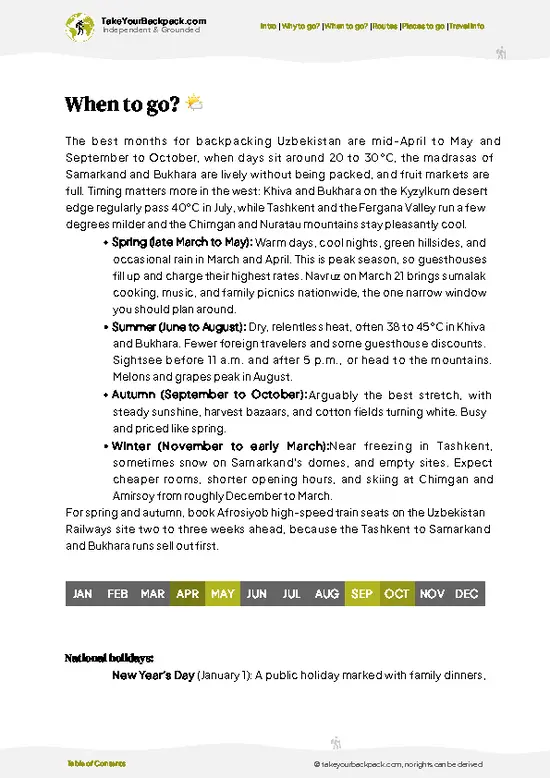
  • Weather: Khiva bakes under a desert sun most of the year. Summers scorch with highs often above 38°C (100°F), making midday exploration a sweat-soaked slog. Winters dip to a chilly 0°C (32°F) or below at night, with dry air that bites more than it chills.

  • Temperature: Spring (April-May) and autumn (September-October) offer the sweet spot—daytime highs hover between 20-25°C (68-77°F), perfect for wandering the ancient walls without overheating or bundling up.

  • Daylight Hours: Spring and autumn provide balanced daylight, roughly 12-14 hours, enough time to soak in the city’s intricate tilework and shadowed courtyards without rushing.

  • Crowds: Peak tourist season aligns with spring and autumn, so expect more visitors around major holidays. Winter sees fewer tourists, giving a quieter,
read more 👉

  • Weather: Khiva bakes under a desert sun most of the year. Summers scorch with highs often above 38°C (100°F), making midday exploration a sweat-soaked slog. Winters dip to a chilly 0°C (32°F) or below at night, with dry air that bites more than it chills.

  • Temperature: Spring (April-May) and autumn (September-October) offer the sweet spot—daytime highs hover between 20-25°C (68-77°F), perfect for wandering the ancient walls without overheating or bundling up.

  • Daylight Hours: Spring and autumn provide balanced daylight, roughly 12-14 hours, enough time to soak in the city’s intricate tilework and shadowed courtyards without rushing.

  • Crowds: Peak tourist season aligns with spring and autumn, so expect more visitors around major holidays. Winter sees fewer tourists, giving a quieter, more intimate vibe but with colder mornings.

  • Seasonal Activities: Spring brings blooming desert flowers and local festivals, while autumn hosts harvest celebrations and cooler evenings perfect for rooftop tea sessions.

  • Price Fluctuations: Accommodation and tours spike in spring and autumn. Winter offers the best deals but at the cost of colder, shorter days. Summer prices drop but so does comfort.


Pro-tip: Aim for late April or early October—when the light softens, the air smells of dry earth and spices, and Khiva’s ancient stones glow without the burn of the sun or the bite of frost.


source: climatestotravel.comJANJanuary: fair for travelingFEBFebruary: fair for travelingMARMarch: good for travelingAPRApril: excellent for travelingMAYMay: excellent for travelingJUNJune: fair for travelingJULJuly: below average for travelingAUGAugust: below average for travelingSEPSeptember: excellent for travelingOCTOctober: excellent for travelingNOVNovember: good for travelingDECDecember: fair for traveling
when-to-go

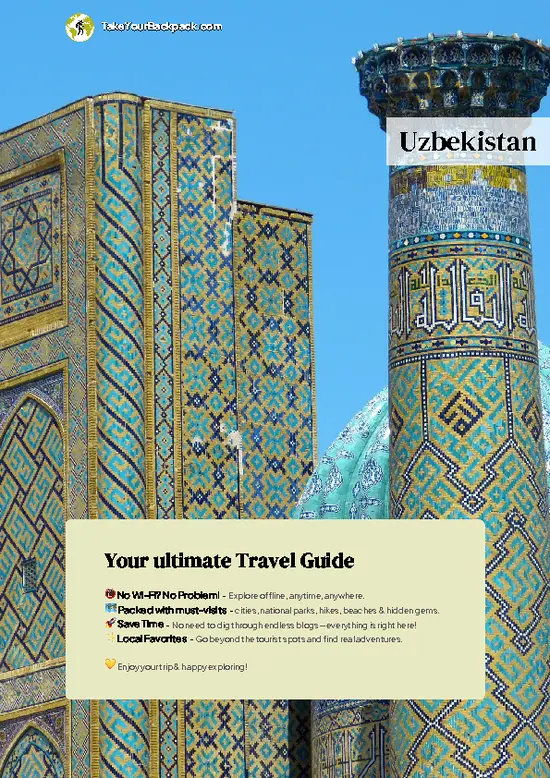
✈️ The backpacker research shortcutUzbekistan Travel Guide

An offline-friendly backpacking guide with optimized travel routes, ranked highlights, transport advice, and the best areas to stay.
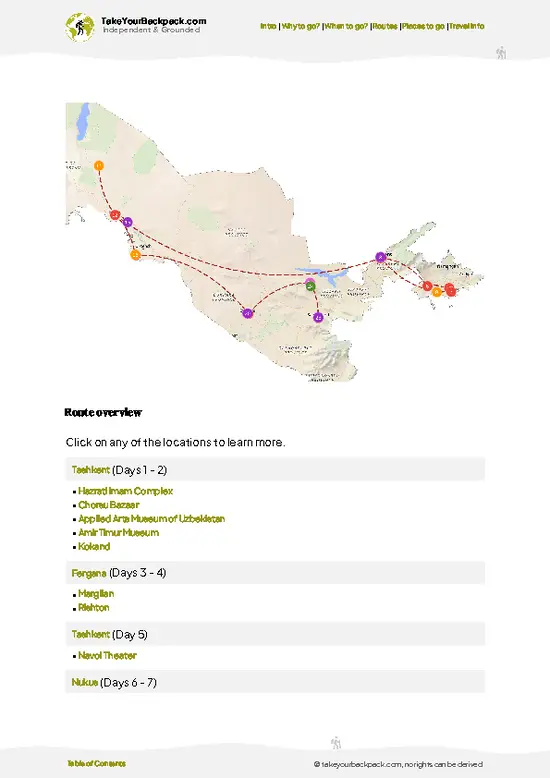
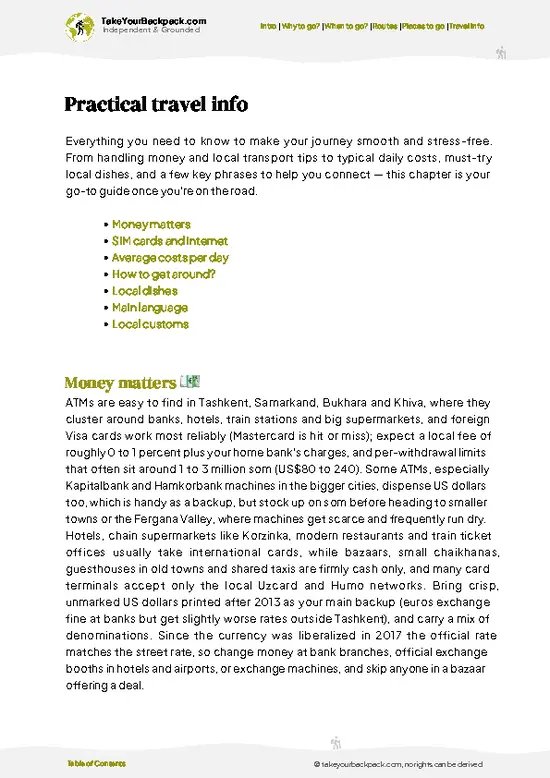
example page 0 from our offline Travel Guide for Uzbekistan
example page 1 from our offline Travel Guide for Uzbekistan
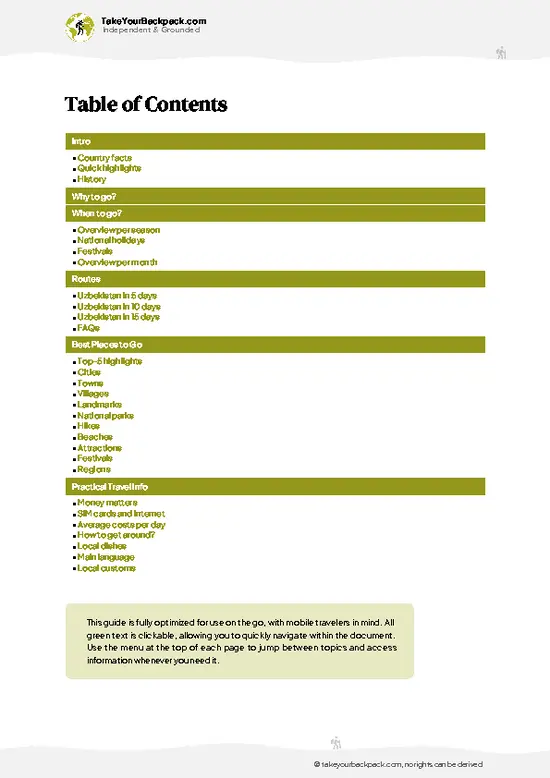
example page 2 from our offline Travel Guide for Uzbekistan
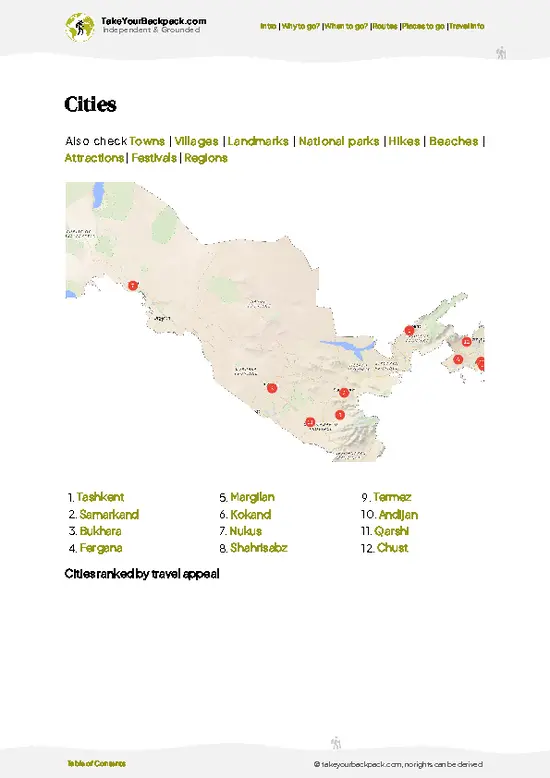
example page 3 from our offline Travel Guide for Uzbekistan
example page 4 from our offline Travel Guide for Uzbekistan
example page 5 from our offline Travel Guide for Uzbekistan
example page 6 from our offline Travel Guide for Uzbekistan
example page 7 from our offline Travel Guide for Uzbekistan
The digital guide (394 pages) contains:
110 highlights, ranked by travel appeal
Optimized 5, 10 & 15-day travel routes
Cities, national parks, landmarks, beaches
How to get around
Offline-friendly for travel without Wi-Fi
👉 Click to see all 30+ guide features

📅 Plan smarter in minutes, not weeks
Month by month travel advice
Festivals & national holidays
Budget expectations

🗺️ Go to the right places, skip the overrated ones
Honest pros & cons of destinations
Top hikes, parks & viewpoints
Lesser-known places most travelers miss
Clear “worth it vs skip it” guidance

🛏️ Travel smoothly without rookie mistakes
Best areas to stay
Transport systems explained simply
Common scams & safety advice
SIM cards, money & practical tips

🌍 Understand the country, not just visit it
Culture & traditions
52 Essential phrases & customs
Festivals worth planning around
Traveler-friendly historical context
Insights that make places more meaningful

📱 Built for real travel conditions
Fully downloadable PDF
Works completely offline
Optimized for phone use
Useful in remote areas & buses
Everything in one place
Save weeks of stressful planning
Get instant access to your full guide. 30‑day money-back guarantee.


By proceeding you agree to our terms.
Sent to your inbox immediately after payment • 100% Secure Checkout
Best Backpacking Travel Advisor 2025 tourism awardBest Backpacking
Travel Advisor
2025
What others say about Take Your Backpack Guides:
⭐⭐⭐⭐⭐
Fantastic, amazing amount of information!
⭐⭐⭐⭐⭐
My goodness this is amazing, it's what I've been looking for hats off too you!
⭐⭐⭐⭐⭐
I think this is absolutely BRILLIANT
⭐⭐⭐⭐
Very complete and informative. It's still missing places, but I gotta to commend you
⭐⭐⭐⭐⭐
This is truly amazing, thank you, can't wait to explore it with my kids!
⭐⭐⭐⭐⭐
Awesome resource, thank you!
⭐⭐⭐⭐⭐
This is amazing! Can't wait to explore the ones I haven't seen
⭐⭐⭐⭐
I love this! Well done, great idea.
⭐⭐⭐⭐⭐
Thanks for taking the time to make this gem!
⭐⭐⭐⭐⭐
This might be the best website I've ever seen.
⭐⭐⭐⭐⭐
Congratulations, and thank you so much for your work; it's incredibly valuable.
⭐⭐⭐⭐
In all seriousness I think you did a great job pointing out the important spots
⭐⭐⭐⭐⭐
10/10 very good
⭐⭐⭐⭐⭐
As someone who's only just starting to visit regularly this is awesome, thank you.
⭐⭐⭐⭐
Thank you very much! I'm going to visit my dad, it's going to be very useful!
⭐⭐⭐⭐⭐
This is really cool! We'll be travelling for the first time and this definitely come in handy.
⭐⭐⭐⭐⭐
You are now our minister of culture, congratulations 👨‍💼
⭐⭐⭐⭐⭐
Just wanted to tell you that this is a pearl! Going to follow your recommendations.
⭐⭐⭐⭐⭐
This is so cool. I'll definitely be using the resource for my travels soon.
⭐⭐⭐⭐⭐
This is very impressive! Good work.
⭐⭐⭐⭐⭐
This is an amazing and informative site. Very well done!

🛏️ Where to stay?Where staying makes the most sense

Khiva’s real heartbeat for backpackers pulses inside the old city walls, known as Itchan Kala. This compact, fortress-like neighborhood is where you want to drop your pack. The air here carries the dry, sun-baked scent of ancient mud bricks warmed by the relentless Uzbek sun. Itchan Kala isn’t just a place to crash; it’s a living museum where every narrow alley hums with history and every corner invites conversation. Staying here means you’re steps away from the main sights, so you can wander freely at dawn or dusk when the light softens and the crowds thin.

For solo travelers, Itchan Kala offers … read more 👉
Khiva’s real heartbeat for backpackers pulses inside the old city walls, known as Itchan Kala. This compact, fortress-like neighborhood is where you want to drop your pack. The air here carries the dry, sun-baked scent of ancient mud bricks warmed by the relentless Uzbek sun. Itchan Kala isn’t just a place to crash; it’s a living museum where every narrow alley hums with history and every corner invites conversation. Staying here means you’re steps away from the main sights, so you can wander freely at dawn or dusk when the light softens and the crowds thin.

For solo travelers, Itchan Kala offers a surprisingly social vibe. Hostels and guesthouses cluster near the main gates and the central square, creating natural hubs where you can meet fellow adventurers over shared meals or evening chai. The vibe is relaxed but lively, with a steady stream of backpackers swapping stories under the stars. Safety is a given here—locals are used to tourists and the atmosphere feels secure, even late at night.

Outside the walls, the city sprawls into quieter residential zones, but these lack the buzz and convenience that backpackers crave. You’d miss the spontaneous chats, the easy access to street food stalls, and the immersive atmosphere that makes Khiva feel like stepping back in time. Stick inside Itchan Kala to soak in the full experience without the hassle of taxis or long walks.

🚌 Getting aroundMoving around without the hassle

Khiva moves at a pace that feels like a slow dance with history. The sun casts long shadows over its ancient walls, and the air carries the faint scent of baked clay and spices from the market stalls. Time here isn’t measured by strict schedules but by the rhythm of daily life—shopkeepers opening their wooden doors, the call to prayer echoing softly, and tourists weaving through narrow alleys. It’s a place where intuition guides your steps more than timetables, but knowing the flow of transit options can turn wandering into a seamless adventure.


  • Walking: The heart of Khiva is compact and best explored on foot. The Old Town, Itchan Kala, is a maze of cobblestone streets where every corner reveals a carved door or a tiled minaret. Walking lets you soak in the texture of sun-warmed bricks
read more 👉
Khiva moves at a pace that feels like a slow dance with history. The sun casts long shadows over its ancient walls, and the air carries the faint scent of baked clay and spices from the market stalls. Time here isn’t measured by strict schedules but by the rhythm of daily life—shopkeepers opening their wooden doors, the call to prayer echoing softly, and tourists weaving through narrow alleys. It’s a place where intuition guides your steps more than timetables, but knowing the flow of transit options can turn wandering into a seamless adventure.


  • Walking: The heart of Khiva is compact and best explored on foot. The Old Town, Itchan Kala, is a maze of cobblestone streets where every corner reveals a carved door or a tiled minaret. Walking lets you soak in the texture of sun-warmed bricks and overhear local chatter. It’s free, flexible, and the only way to truly feel the pulse of the city.


  • Shared Taxis (Marshrutkas): These minibuses run between Khiva and nearby towns like Urgench or Nukus. They start early, around 7 AM, and run until late afternoon, costing just a few dollars. They’re cramped and noisy but fast—perfect if you want to cover ground without breaking the bank. Flag one down at the main bus station; don’t expect a fixed schedule, but they leave once full.


  • Bicycles: Renting a bike is a smart move for budget travelers who want to explore beyond the Old Town walls. Rentals are cheap, often under $5 a day, and the flat terrain makes pedaling easy. Early mornings or late afternoons are best to avoid the harsh midday sun. The breeze carries the scent of desert herbs, making each ride a sensory escape.


  • Horse-Drawn Carriages: A slower, more atmospheric option for short trips around Khiva’s outskirts. Prices vary but expect to negotiate—start low and meet in the middle. The clip-clop of hooves on stone streets adds a layer of authenticity, though it’s less practical for tight schedules or longer distances.


  • Local Buses: These are rare and irregular in Khiva itself but can be useful for reaching nearby villages. They’re the cheapest option, often under $1, but come with unpredictable timing and minimal comfort. Use them only if you’re flexible and up for a bit of local color.

👛 Costs (as of 25 June 2025)Travel costs and budget guide for Khiva

Backpacking in Khiva, Uzbekistan, offers a unique blend of history and culture, and knowing the daily costs helps you plan without surprises.
  • Dorm Accommodation: Expect to pay around $8 to $15 per night for a bed in a basic hostel dorm. These places are simple but clean, often with shared bathrooms and a communal vibe that’s perfect for meeting other travelers.
  • Meals: Local eateries serve hearty Uzbek dishes like plov and shashlik for about $3 to $6 per meal. Street food snacks and tea breaks are even cheaper, often under $1. If you opt for a tourist-oriented restaurant, prices can jump to $10 or more, but sticking to local spots keeps your budget tight and your experience authentic.
  • Local Transport: Khiva is compact, so most walking is free and practical. For longer trips or to reach nearby
read more 👉
Backpacking in Khiva, Uzbekistan, offers a unique blend of history and culture, and knowing the daily costs helps you plan without surprises.
  • Dorm Accommodation: Expect to pay around $8 to $15 per night for a bed in a basic hostel dorm. These places are simple but clean, often with shared bathrooms and a communal vibe that’s perfect for meeting other travelers.
  • Meals: Local eateries serve hearty Uzbek dishes like plov and shashlik for about $3 to $6 per meal. Street food snacks and tea breaks are even cheaper, often under $1. If you opt for a tourist-oriented restaurant, prices can jump to $10 or more, but sticking to local spots keeps your budget tight and your experience authentic.
  • Local Transport: Khiva is compact, so most walking is free and practical. For longer trips or to reach nearby sites, shared taxis or minibuses cost roughly $0.50 to $1 per ride. This low cost means you can explore without worrying about transport eating into your budget.
  • Basic Activities/Entry Fees: The main draw is the Itchan Kala fortress, with an entry fee around $5. Other museums and historic sites inside the old town charge between $1 and $3. These fees are modest but add up if you’re hitting multiple spots in a day.
  • Miscellaneous Expenses: Budget around $2 to $4 daily for water, snacks, or small souvenirs. Internet cafes and SIM cards are inexpensive, usually under $5 for decent data packages, keeping you connected without breaking the bank.

All told, a realistic daily budget for backpacking in Khiva ranges from about $20 on the lean side to $35 if you lean into a few extras. This balance lets you soak in the atmosphere of the ancient city without feeling pinched, making every dollar count toward the experience.
⚠️ Prices can change and everyone travels differently, so take this as a rough guide. Hope it helps you plan your adventure!

🚌 Day tripsEasy escapes and nearby places

Khiva is a fantastic base for exploring the rich tapestry of Uzbekistan’s history and culture. With its well-preserved architecture and vibrant atmosphere, you can easily venture out for day trips that pack a punch.

1. Ayaz Kala Fortress
Just an hour’s drive from Khiva, Ayaz Kala offers a glimpse into ancient fortifications that rise dramatically from the desert landscape. The ruins are a testament to the region’s storied past, and the panoramic views from the top are worth the climb. Bring water and snacks; the heat can be intense, especially in summer. Aim for early morning or late afternoon to catch the golden light painting the ruins. Expect to spend around $10 for transportation and entry. Many first-timers underestimate the desert’s chill at night, so pack a light jacket.


2. Toprak read more 👉
Khiva is a fantastic base for exploring the rich tapestry of Uzbekistan’s history and culture. With its well-preserved architecture and vibrant atmosphere, you can easily venture out for day trips that pack a punch.

1. Ayaz Kala Fortress
Just an hour’s drive from Khiva, Ayaz Kala offers a glimpse into ancient fortifications that rise dramatically from the desert landscape. The ruins are a testament to the region’s storied past, and the panoramic views from the top are worth the climb. Bring water and snacks; the heat can be intense, especially in summer. Aim for early morning or late afternoon to catch the golden light painting the ruins. Expect to spend around $10 for transportation and entry. Many first-timers underestimate the desert’s chill at night, so pack a light jacket.


2. Toprak Kala
About 50 kilometers from Khiva, Toprak Kala is another ancient fortress that whispers tales of the Silk Road. The site is less crowded, allowing for a more intimate experience. The journey takes about an hour, and you can usually negotiate a taxi for around $15 round trip. The best time to visit is spring or fall when the weather is mild. A common mistake is to rush through; take your time to soak in the silence and the remnants of history.


3. Kunya-Urgench
This UNESCO World Heritage site is just a 90-minute drive from Khiva and is home to stunning mausoleums and minarets that showcase the artistry of the Khorezm region. The architecture is breathtaking, especially the intricate tile work. Budget around $20 for transportation and entry fees. Early spring or late autumn is ideal for comfortable exploration. Many travelers overlook the local market nearby, where you can grab a quick bite of plov or fresh fruit.


4. Turtkul
A lesser-known destination, Turtkul is a quirky town that offers a peek into everyday Uzbek life. It’s about an hour away and can be reached by shared taxi for around $5. The town’s bustling bazaar is a sensory delight, filled with the scent of spices and the sound of haggling. Visit in the morning to catch the market at its liveliest. A common error is to skip the local eateries; don’t miss out on trying the freshly baked bread.


Each of these trips enhances your experience in Khiva, allowing you to dive deeper into the heart of Uzbekistan.
Want to know what more Uzbekistan offers?
The Uzbekistan Travel Guide describes 110 highlights, from cities to national parks, from beaches to hikes

Get the Travel Guide -

🛡️ SafetySafety Tips and Common Scams in Khiva

Khiva is generally safe, but a few practical tips can enhance your experience. The old town, with its stunning architecture, can feel like a maze. Stay aware of your surroundings, especially in crowded areas like the bazaars. Keep your belongings close; pickpockets can be a nuisance, particularly during busy times.

If you’re traveling solo, the evenings can be quiet. Stick to well-lit streets and consider dining at local eateries where you can mingle with other travelers. This not only keeps you safe but enriches your experience.

Scams are rare, but be cautious of overly friendly locals offering unsolicited help. They might expect a tip or lead you to shops with inflated prices. Always ask for prices upfront, especially for guided tours or taxi rides.

Embrace the quirks of Khiva—like the … read more 👉
Khiva is generally safe, but a few practical tips can enhance your experience. The old town, with its stunning architecture, can feel like a maze. Stay aware of your surroundings, especially in crowded areas like the bazaars. Keep your belongings close; pickpockets can be a nuisance, particularly during busy times.

If you’re traveling solo, the evenings can be quiet. Stick to well-lit streets and consider dining at local eateries where you can mingle with other travelers. This not only keeps you safe but enriches your experience.

Scams are rare, but be cautious of overly friendly locals offering unsolicited help. They might expect a tip or lead you to shops with inflated prices. Always ask for prices upfront, especially for guided tours or taxi rides.

Embrace the quirks of Khiva—like the occasional stray dog or the call to prayer echoing through the streets. These are part of its charm. Carry yourself with confidence, and you’ll unlock the true essence of this ancient city.

Other Uzbek towns near Khiva

Explore more nearby:

  • Khodjeyli—archaeological mounds, steppe edge, canal crossings| 136 km away
  • Uchkuduk—uranium mines, remote settlement, arid plains| 280 km away
  • Moynaq—ship graveyard, dried seabed, rusting hulks| 286 km away

💡 Not sure where to go next?
Create a personalized itinerary for Uzbekistan including Khiva and the places that fit your trip.

Generate my itinerary

👉 Discover all towns

Or checkout all Uzbekistan has to offer (think cities, towns, villages, national parks, hikes, beaches, festivals)
Country photo of Uzbekistan

We 💚 feedbackFinal thoughts on visiting Khiva

Khiva is a time capsule, where the air hums with history and the sun casts long shadows over ancient tiles. The best surprise? Stumbling upon a local artisan crafting intricate ceramics in a quiet workshop. It’s a reminder that the heart of Khiva beats in its people. Just a heads-up: the evenings can get chilly, so pack a light jacket. Embrace the stillness at dusk; it’s when the city reveals its true magic. You’ll feel like you’ve stepped into a story.

✍️ Help improve this page!
The information on this page is based on in-depth research, insights shared by experienced travelers, and feedback from the local travel community in Uzbekistan. While every effort is made to keep the information accurate and current, conditions can change — so if you spot anything incorrect or outdated, please get in touch.


🙋‍♂️ Give feedback

👋 Meet the founderWho’s Behind Take Your Backpack?

Johan, backpacker and founder of TakeYourBackpackHi, I’m Johan (Netherlands 🇳🇱), the creator of TakeYourBackpack. Over the past decade, I’ve backpacked through 80+ countries across six continents, gaining extensive experience with independent travel, long-term trips, and overland routes.

This site is built on a combination of firsthand travel experience and carefully curated insights from other backpackers. Many guides are based on places I’ve personally visited, while others bring together tips, observations, and practical advice shared by trusted travelers I’ve met along the way.

The goal is to provide realistic, experience-driven guidance — not generic itineraries — so you can explore destinations with better context, clearer expectations, and more confidence.

Get full Uzbekistan guide •
Instant download • 110 highlights • Full Offline guide