×

Uzbekistan🇺🇿 | townsMoynaqship graveyard, dried seabed, rusting hulks | things to do and best time to go

Explore KhivaExplore Nurata

Backpacking in Moynaq
🏆 Top picktown ranked #2
By Johan Kruseman 🇳🇱 | Updated June 6, 2026

Years ago Moynaq was a port town with gulls, fish smell, and water right at its edge; now you stand on a cliff of dust and salt, looking out over the ghost of the Aral Sea and a graveyard of rusted ships. It sits in the far northwest of Uzbekistan, in Karakalpakstan, a long haul from Tashkent or Samarkand and usually reached via Nukus. For backpackers, Moynaq isn’t a “hang out for a week” town; it’s a hard, quiet stop that makes the environmental story of Central Asia hit your gut. The pros: raw atmosphere, the ship cemetery, a small museum, big skies, and a sense of being very far from the usual Silk Road loop. The cons: long, tiring travel, limited food and beds, almost no nightlife, and few other travelers. It’s cheaper than Khiva, rougher than Nukus, and works best as a one‑night base or day trip, with everything walkable once you’re dropped in town.

Discover everything you want to know in the 📖 Uzbekistan Travel Guide.
Loading the map 🌍
CLICK TO FILTER
cities
towns
villages
landmarks
national parks
hikes
beaches
attractions
festivals
regions
SHOW COUNTRY’S BESTSHOW ALL

✨ Why go?
Ranked #2 town in Uzbekistan
What sets this place apart

Moynaq, once a bustling port town on the Aral Sea, now serves as a poignant backdrop for backpackers seeking a deeper connection to Uzbekistan’s history. Conveniently located near the remnants of the sea, it’s a launching pad for hikes into the surrounding desert landscapes. The walkable streets invite exploration, where you can stumble upon small-scale hostels and guesthouses that feel like home, often run by locals eager to share stories over a cup of tea.

The local food experiences are a treat; savor plov or fresh bread from a nearby bazaar, where the scents of spices linger in the air. Travelers often stay a few days, soaking in the friendly social atmosphere that encourages connection among solo travelers and small groups alike. It’s not a party town, but rather a place for slow travelersread more 👉
Moynaq, once a bustling port town on the Aral Sea, now serves as a poignant backdrop for backpackers seeking a deeper connection to Uzbekistan’s history. Conveniently located near the remnants of the sea, it’s a launching pad for hikes into the surrounding desert landscapes. The walkable streets invite exploration, where you can stumble upon small-scale hostels and guesthouses that feel like home, often run by locals eager to share stories over a cup of tea.

The local food experiences are a treat; savor plov or fresh bread from a nearby bazaar, where the scents of spices linger in the air. Travelers often stay a few days, soaking in the friendly social atmosphere that encourages connection among solo travelers and small groups alike. It’s not a party town, but rather a place for slow travelers to reflect and recharge. If you’re looking for a meaningful stop that balances history with the beauty of the desert, Moynaq is a worthy chapter in your journey.
Want to include Moynaq in your Uzbekistan route?
Create a personalized Uzbekistan itinerary that includes Moynaq and the places that fit your trip — based on your travel style, budget, and available time. Get your route in seconds.

Generate my trip

💡 HighlightsMust-see experiences and standout moments

  1. Ship Graveyard (Moynaq Ship Cemetery) — The rusting freighters stranded on the dried Aral Sea bed are the town’s signature sight: haunting, photogenic, and the single-best way to feel the scale of the ecological disaster and its human cost.
  2. Moynaq Aral Sea Museum — A small local museum with photos, fishing gear, oral histories and exhibits that explain how a once-thriving port turned into a town inland; it’s where context meets the wrecks outside.
  3. Old Port Ruins and Cranes — Walk among crumbling warehouses, gantry cranes and broken concrete where ships were once loaded; raw industrial archaeology and great vantage points for photos of the ships and salt flats.
  4. Former Shoreline and Exposed Seabed — You can actually walk out onto the dried seabed near town: salt flats, shell fragments,
read more 👉
  1. Ship Graveyard (Moynaq Ship Cemetery) — The rusting freighters stranded on the dried Aral Sea bed are the town’s signature sight: haunting, photogenic, and the single-best way to feel the scale of the ecological disaster and its human cost.
  2. Moynaq Aral Sea Museum — A small local museum with photos, fishing gear, oral histories and exhibits that explain how a once-thriving port turned into a town inland; it’s where context meets the wrecks outside.
  3. Old Port Ruins and Cranes — Walk among crumbling warehouses, gantry cranes and broken concrete where ships were once loaded; raw industrial archaeology and great vantage points for photos of the ships and salt flats.
  4. Former Shoreline and Exposed Seabed — You can actually walk out onto the dried seabed near town: salt flats, shell fragments, and the eerie openness give a visceral sense of how the landscape has changed.
  5. Fishermen’s Memorials and Statues — Scattered monuments around town commemorate the lost livelihoods and local victims of the Aral disaster; visiting them adds a human, reflective note to the ruins and museum.
  6. Moynaq Bazaar (Central Market) — A proper, working market where you’ll see daily life: local produce, basics, and chances to talk to residents about food, work and how the town has adapted.
  7. Local Mosque (Friday Mosque) — The town’s mosque is a living community spot; observing (or respectfully entering outside prayer times) gives you a glimpse into current cultural and religious life in Moynaq.
  8. House of Culture / Palace of Culture — A Soviet-era community center that still hosts events, performances and exhibitions; good for understanding the social/administrative history of the town and catching local life if something’s on.
  9. Moynaq Railway Station and Soviet Transport Remains — Old tracks, station architecture and waiting platforms tell the story of how Moynaq was once connected; it’s low-key but atmospheric for photography and historical context.
  10. Street Murals and Community Art Projects — Small-scale murals and art installations by locals and visiting artists pop up around town; they’re optimistic, informative, and an on-the-ground record of the town’s resilience.
A few easily reachable day-trip highlights outside Moynaq include the Ustyurt Plateau viewpoints and open steppe, drives along more of the exposed Aral Sea coastline to other ship-wreck clusters and abandoned villages, and (by longer road transfer) the regional capital Nukus with the Savitsky State Art Museum.
Spotted a mistake or missing something? Contact us.

🏘️ NeighborhoodsKey areas and districts to know

Moynaq, once a bustling port on the Aral Sea, now tells a story of resilience and transformation. Each neighborhood offers a unique slice of this narrative, perfect for backpackers seeking both adventure and insight.

Central Moynaq: This area is the heartbeat of the town. You’ll find local eateries serving hearty plov and fresh bread, with prices that won’t break the bank. The vibe is relaxed, making it easy to stroll through the streets and soak in the atmosphere. Walkability is high, and you can easily access the museum that chronicles the town’s history. Ideal for short stays, it’s close to transport options for day trips.

Old Port District: A haunting reminder of the Aral Sea’s past, this area is quieter, perfect for reflection. The remnants of old ships and the eerie landscape create … read more 👉
Moynaq, once a bustling port on the Aral Sea, now tells a story of resilience and transformation. Each neighborhood offers a unique slice of this narrative, perfect for backpackers seeking both adventure and insight.

Central Moynaq: This area is the heartbeat of the town. You’ll find local eateries serving hearty plov and fresh bread, with prices that won’t break the bank. The vibe is relaxed, making it easy to stroll through the streets and soak in the atmosphere. Walkability is high, and you can easily access the museum that chronicles the town’s history. Ideal for short stays, it’s close to transport options for day trips.

Old Port District: A haunting reminder of the Aral Sea’s past, this area is quieter, perfect for reflection. The remnants of old ships and the eerie landscape create a unique backdrop. It’s less touristy, so expect lower prices and a more authentic experience. While nightlife is sparse, the tranquility is perfect for longer stays where you can truly absorb the local culture.

New Moynaq: This neighborhood is emerging, with new cafes and shops popping up. It’s a blend of old and new, offering a lively atmosphere. Transport links are improving, making it easier to explore further afield. Great for those who want a mix of social life and local charm, it suits both short and extended visits.

⌛️ 1 day1-day itinerary for Moynaq

Moynaq, once a bustling port on the Aral Sea, now stands as a poignant reminder of environmental change. The ghostly ships rusting in the desert tell a story of loss and resilience. This town invites you to explore its unique history and the stark beauty of its surroundings.

Start your morning at the local market. The air is thick with the scent of spices and fresh produce. Engage with the vendors; their stories are as rich as the colors of their wares. Grab a hearty breakfast of plov from a nearby stall. It’s a simple dish, but the warmth and flavor will fuel your day.

After breakfast, head to the Ship Graveyard. This eerie yet fascinating site is just a short walk from the market. The skeletal remains of fishing boats, half-buried in sand, create a surreal landscape. Take your time here; … read more 👉
Moynaq, once a bustling port on the Aral Sea, now stands as a poignant reminder of environmental change. The ghostly ships rusting in the desert tell a story of loss and resilience. This town invites you to explore its unique history and the stark beauty of its surroundings.

Start your morning at the local market. The air is thick with the scent of spices and fresh produce. Engage with the vendors; their stories are as rich as the colors of their wares. Grab a hearty breakfast of plov from a nearby stall. It’s a simple dish, but the warmth and flavor will fuel your day.

After breakfast, head to the Ship Graveyard. This eerie yet fascinating site is just a short walk from the market. The skeletal remains of fishing boats, half-buried in sand, create a surreal landscape. Take your time here; the light shifts dramatically, offering perfect photo opportunities. Reflect on the impact of climate change as you wander among the rusting hulls.

In the afternoon, explore the nearby neighborhood of Kyzyl-Kum. This area is often overlooked by tourists but offers a glimpse into local life. Visit the small museum dedicated to the Aral Sea disaster. The exhibits are raw and emotional, providing context to what you’ve seen earlier.

As evening approaches, make your way to the waterfront. The sunset casts a golden hue over the desolate landscape, creating a hauntingly beautiful scene. Find a spot to sit and soak it all in. The stillness of the air, punctuated by distant bird calls, is a moment to cherish.

Wrap up your day with dinner at a local eatery. Try the lagman, a noodle dish that’s a comforting end to your journey. Moynaq may not be on every traveler’s radar, but its stories and sights will linger long after you leave.
Turn your Moynaq visit into an Uzbekistan adventure
Build a complete Uzbekistan route with Moynaq, hidden gems, must-see destinations, and realistic travel times included.

Generate my trip

🌤️ When to go?Best time to visit Moynaq


  • Weather: Moynaq sits in a desert steppe climate, so summers scorch with highs around 38°C (100°F), making midday hiking brutal. Winters dip below freezing, often hovering near -5°C (23°F), which can freeze the cracked earth and make the landscape feel otherworldly but harsh.

  • Temperature: Spring (April to June) and autumn (September to October) offer the sweet spot—daytime temps range from 15°C to 25°C (59°F to 77°F), perfect for exploring without overheating or bundling up.

  • Daylight Hours: Late spring and early autumn provide roughly 12 to 14 hours of daylight, giving you enough time to soak in the eerie, open spaces without rushing.

  • Crowds: Moynaq is off the beaten path year-round, but spring and autumn see a slight uptick in visitors—mostly researchers and adventurous backpackers—so
read more 👉

  • Weather: Moynaq sits in a desert steppe climate, so summers scorch with highs around 38°C (100°F), making midday hiking brutal. Winters dip below freezing, often hovering near -5°C (23°F), which can freeze the cracked earth and make the landscape feel otherworldly but harsh.

  • Temperature: Spring (April to June) and autumn (September to October) offer the sweet spot—daytime temps range from 15°C to 25°C (59°F to 77°F), perfect for exploring without overheating or bundling up.

  • Daylight Hours: Late spring and early autumn provide roughly 12 to 14 hours of daylight, giving you enough time to soak in the eerie, open spaces without rushing.

  • Crowds: Moynaq is off the beaten path year-round, but spring and autumn see a slight uptick in visitors—mostly researchers and adventurous backpackers—so you get company without losing solitude.

  • Seasonal Activities: Spring brings blooming desert flora and migratory birds, adding life to the barren salt flats. Autumn cools the air, making it ideal for long walks and photography without the summer glare.

  • Price Fluctuations: Accommodation and local transport prices stay fairly stable year-round due to low tourist volume, but spring and autumn might see a slight rise as demand nudges up.


Pro-tip: Aim for late April or early October mornings—cool air, soft light, and the quiet hum of a place that’s still reclaiming its story.


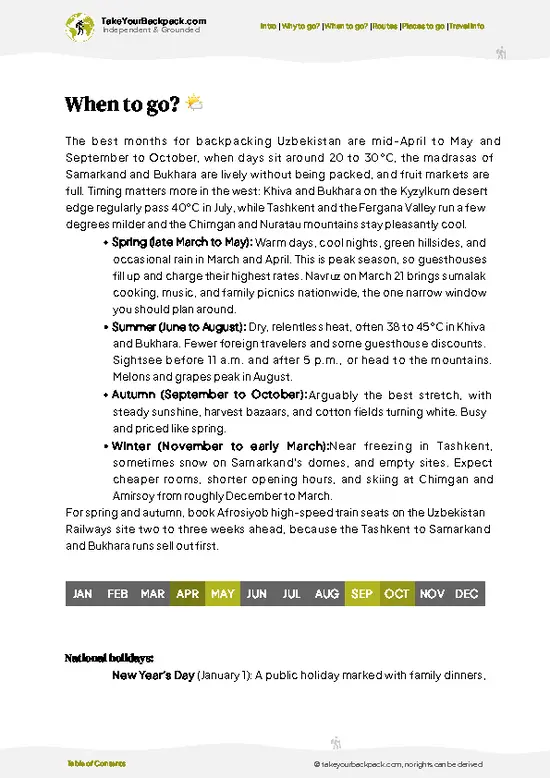
source: climatestotravel.comJANJanuary: fair for travelingFEBFebruary: fair for travelingMARMarch: good for travelingAPRApril: excellent for travelingMAYMay: excellent for travelingJUNJune: highly recommended for travelingJULJuly: below average for travelingAUGAugust: below average for travelingSEPSeptember: excellent for travelingOCTOctober: excellent for travelingNOVNovember: good for travelingDECDecember: fair for traveling
when-to-go

✈️ The backpacker research shortcutUzbekistan Travel Guide

An offline-friendly backpacking guide with optimized travel routes, ranked highlights, transport advice, and the best areas to stay.
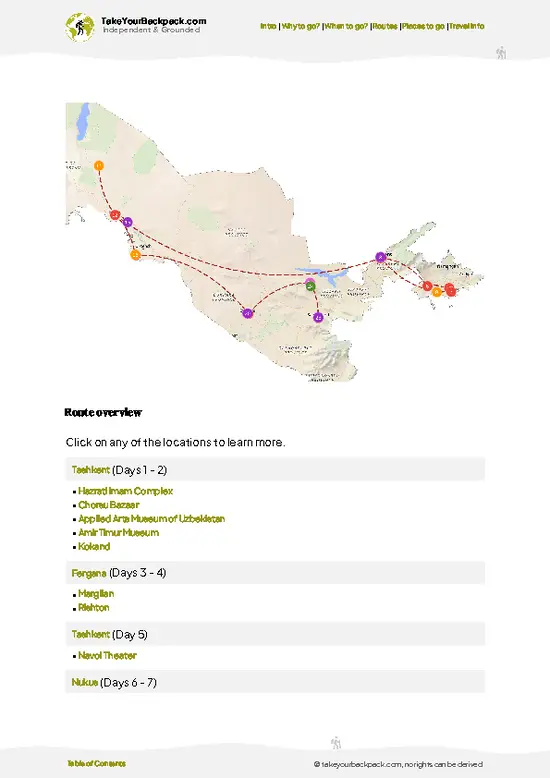
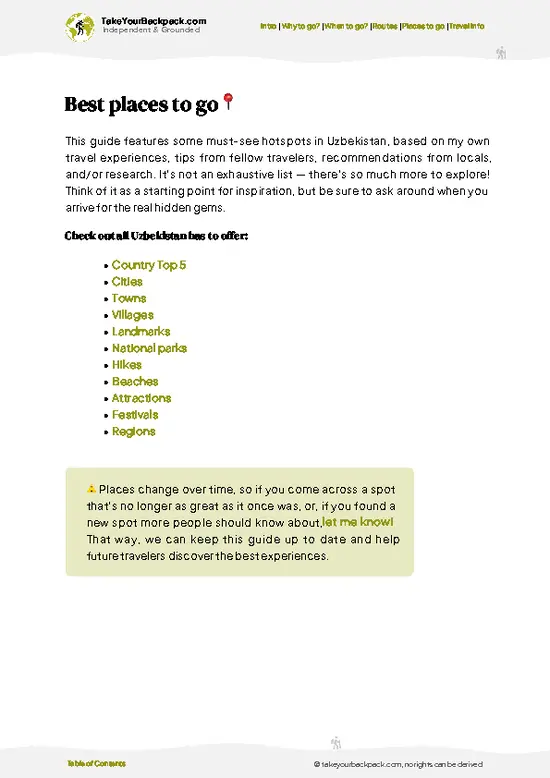
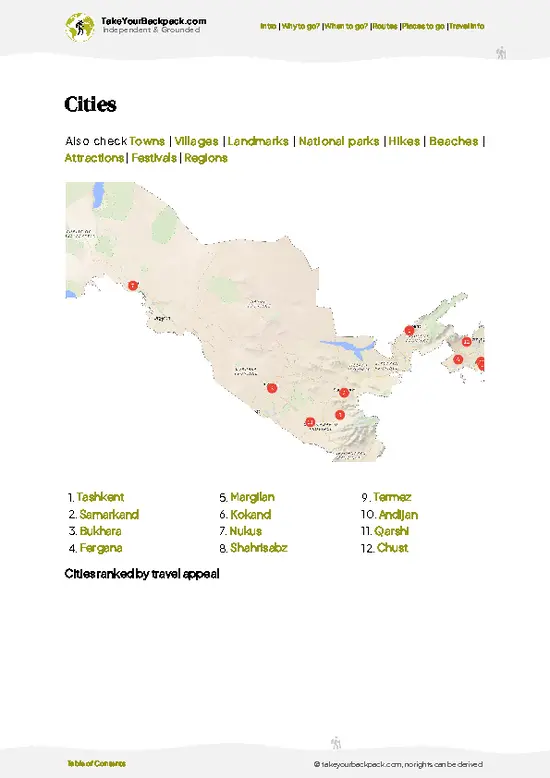
example page 0 from our offline Travel Guide for Uzbekistan
example page 1 from our offline Travel Guide for Uzbekistan
example page 2 from our offline Travel Guide for Uzbekistan
example page 3 from our offline Travel Guide for Uzbekistan
example page 4 from our offline Travel Guide for Uzbekistan
example page 5 from our offline Travel Guide for Uzbekistan
example page 6 from our offline Travel Guide for Uzbekistan
example page 7 from our offline Travel Guide for Uzbekistan
The digital guide (394 pages) contains:
110 highlights, ranked by travel appeal
Optimized 5, 10 & 15-day travel routes
Cities, national parks, landmarks, beaches
How to get around
Offline-friendly for travel without Wi-Fi
👉 Click to see all 30+ guide features

📅 Plan smarter in minutes, not weeks
Month by month travel advice
Festivals & national holidays
Budget expectations

🗺️ Go to the right places, skip the overrated ones
Honest pros & cons of destinations
Top hikes, parks & viewpoints
Lesser-known places most travelers miss
Clear “worth it vs skip it” guidance

🛏️ Travel smoothly without rookie mistakes
Best areas to stay
Transport systems explained simply
Common scams & safety advice
SIM cards, money & practical tips

🌍 Understand the country, not just visit it
Culture & traditions
52 Essential phrases & customs
Festivals worth planning around
Traveler-friendly historical context
Insights that make places more meaningful

📱 Built for real travel conditions
Fully downloadable PDF
Works completely offline
Optimized for phone use
Useful in remote areas & buses
Everything in one place
Save weeks of stressful planning
Get instant access to your full guide. 30‑day money-back guarantee.


By proceeding you agree to our terms.
Sent to your inbox immediately after payment • 100% Secure Checkout
Best Backpacking Travel Advisor 2025 tourism awardBest Backpacking
Travel Advisor
2025
What others say about Take Your Backpack Guides:
⭐⭐⭐⭐⭐
Fantastic, amazing amount of information!
⭐⭐⭐⭐⭐
My goodness this is amazing, it's what I've been looking for hats off too you!
⭐⭐⭐⭐⭐
I think this is absolutely BRILLIANT
⭐⭐⭐⭐
Very complete and informative. It's still missing places, but I gotta to commend you
⭐⭐⭐⭐⭐
This is truly amazing, thank you, can't wait to explore it with my kids!
⭐⭐⭐⭐⭐
Awesome resource, thank you!
⭐⭐⭐⭐⭐
This is amazing! Can't wait to explore the ones I haven't seen
⭐⭐⭐⭐
I love this! Well done, great idea.
⭐⭐⭐⭐⭐
Thanks for taking the time to make this gem!
⭐⭐⭐⭐⭐
This might be the best website I've ever seen.
⭐⭐⭐⭐⭐
Congratulations, and thank you so much for your work; it's incredibly valuable.
⭐⭐⭐⭐
In all seriousness I think you did a great job pointing out the important spots
⭐⭐⭐⭐⭐
10/10 very good
⭐⭐⭐⭐⭐
As someone who's only just starting to visit regularly this is awesome, thank you.
⭐⭐⭐⭐
Thank you very much! I'm going to visit my dad, it's going to be very useful!
⭐⭐⭐⭐⭐
This is really cool! We'll be travelling for the first time and this definitely come in handy.
⭐⭐⭐⭐⭐
You are now our minister of culture, congratulations 👨‍💼
⭐⭐⭐⭐⭐
Just wanted to tell you that this is a pearl! Going to follow your recommendations.
⭐⭐⭐⭐⭐
This is so cool. I'll definitely be using the resource for my travels soon.
⭐⭐⭐⭐⭐
This is very impressive! Good work.
⭐⭐⭐⭐⭐
This is an amazing and informative site. Very well done!

🛏️ Where to stay?Choosing the right base

Moynaq’s heart for backpackers beats strongest near the town center, where the dusty streets hum with local life and the scent of salty wind from the Aral Sea’s vanished shores lingers. This area is your best bet—not just for safety, but for plugging into the town’s raw, unfiltered vibe. Here, you’ll find small guesthouses and hostels that cater to budget travelers and solo adventurers, offering a chance to swap stories over chai or share a ride to the ship graveyard.

Unlike the quieter outskirts, the center keeps you close to the few cafes and markets where locals gather, making it easier to … read more 👉
Moynaq’s heart for backpackers beats strongest near the town center, where the dusty streets hum with local life and the scent of salty wind from the Aral Sea’s vanished shores lingers. This area is your best bet—not just for safety, but for plugging into the town’s raw, unfiltered vibe. Here, you’ll find small guesthouses and hostels that cater to budget travelers and solo adventurers, offering a chance to swap stories over chai or share a ride to the ship graveyard.

Unlike the quieter outskirts, the center keeps you close to the few cafes and markets where locals gather, making it easier to connect without feeling like a tourist spectacle. The streets are simple but alive, with the occasional stray dog and the chatter of fishermen mending nets. It’s not polished, but that’s the point: Moynaq’s charm is in its rugged honesty.

Staying here means you avoid the isolation of more residential or industrial zones, which lack social spaces and can feel disconnected after dark. The hostel scene is small but tight-knit, so expect a communal atmosphere where you’ll meet like-minded travelers. The light here—especially at dawn—casts a pale glow over the cracked earth, reminding you why this place is a pilgrimage for those chasing stories beyond the usual routes.

🚌 Getting aroundGetting around like a local

Moynaq moves at its own rhythm—less a clockwork town and more a place where time stretches and folds like the cracked earth beneath your boots. The air carries a dry, salty tang from the distant Aral Sea bed, and the sun beats down with an unrelenting honesty that leaves no room for dawdling. Here, schedules are suggestions, not laws. The locals navigate the dusty streets with a mix of patience and improvisation, and if you want to blend in, you’ll learn to read the subtle cues: a nod, a shout, a sudden burst of movement. This is a town where the journey is as much about feeling the pulse of the place as it is about getting from A to B. The transit options reflect that—rough around the edges but deeply practical, each with its own rhythm and character.


  • Walking: The most authentic way to
read more 👉
Moynaq moves at its own rhythm—less a clockwork town and more a place where time stretches and folds like the cracked earth beneath your boots. The air carries a dry, salty tang from the distant Aral Sea bed, and the sun beats down with an unrelenting honesty that leaves no room for dawdling. Here, schedules are suggestions, not laws. The locals navigate the dusty streets with a mix of patience and improvisation, and if you want to blend in, you’ll learn to read the subtle cues: a nod, a shout, a sudden burst of movement. This is a town where the journey is as much about feeling the pulse of the place as it is about getting from A to B. The transit options reflect that—rough around the edges but deeply practical, each with its own rhythm and character.


  • Walking: The most authentic way to experience Moynaq. The town is compact, and wandering on foot lets you soak in the cracked earth, the rusted skeletons of fishing boats, and the quiet resilience of a place that once thrived by the sea. No cost, no schedule—just your pace and the sun overhead.


  • Shared Taxi (Marshrutka): These minibuses run on a loose schedule, usually starting around 7 a.m. and tapering off by early evening. Fares hover around 500-700 UZS (less than a dollar), making them the budget traveler’s go-to for longer hops. They’re cramped and often packed, but the windows slide open to catch the dry breeze, and the driver’s call is part of the local soundtrack.


  • Bicycle Rental: For about 10,000-15,000 UZS per day, renting a bike is a smart way to cover more ground without losing the tactile connection to the landscape. The roads are rough, so a sturdy bike is a must, but the freedom to explore the outskirts—where the sea’s ghostly remains stretch wide—is worth every bump.


  • Local Hitchhiking: Not officially a transit option, but widely practiced and accepted. Drivers often stop for travelers, especially if you’re patient and polite. It’s free, unpredictable, and a chance to meet locals who can share stories about the town’s rise and fall. Just be ready for long waits under the harsh sun.


  • Motorbike Taxi: A faster, if less comfortable, alternative to shared taxis for short distances. Expect to pay around 10,000 UZS for a quick ride. Helmets are rare, so hold on tight and brace for the dust and wind whipping past.

👛 Costs (as of 24 June 2025)How expensive it really is

Backpacking in Moynaq, Uzbekistan, is a raw, off-the-beaten-path experience where your money stretches further than in bigger cities, but the trade-off is simplicity and a slower pace.
  • Dorm Accommodation: Expect basic guesthouses or hostels with shared rooms, often without the frills of hot water or heating in colder months. Prices hover around €5-€10 per night. The rooms are sparse but clean enough, with a faint scent of wood smoke or dried earth lingering in the air.
  • Meals: Local eateries serve hearty, no-nonsense Uzbek staples like plov and shurpa. A filling meal costs about €2-€4. Street food options like samsa or fresh bread from the clay ovens are even cheaper, around €0.50-€1.50. The taste is simple but grounding, with spices that hint at the desert’s heat.
  • Local Transport: Moynaq
read more 👉
Backpacking in Moynaq, Uzbekistan, is a raw, off-the-beaten-path experience where your money stretches further than in bigger cities, but the trade-off is simplicity and a slower pace.
  • Dorm Accommodation: Expect basic guesthouses or hostels with shared rooms, often without the frills of hot water or heating in colder months. Prices hover around €5-€10 per night. The rooms are sparse but clean enough, with a faint scent of wood smoke or dried earth lingering in the air.
  • Meals: Local eateries serve hearty, no-nonsense Uzbek staples like plov and shurpa. A filling meal costs about €2-€4. Street food options like samsa or fresh bread from the clay ovens are even cheaper, around €0.50-€1.50. The taste is simple but grounding, with spices that hint at the desert’s heat.
  • Local Transport: Moynaq is small, so most places are walkable. For longer trips, shared taxis or minibuses cost roughly €0.50-€1 per ride. The vehicles are often old, with cracked windows and a faint smell of diesel, but they get you where you need to go.
  • Basic Activities/Entry Fees: Visiting the Aral Sea ship graveyard or local museums usually costs around €1-€3. The experience is more about absorbing the haunting atmosphere than flashy displays, so the low price matches the raw, unpolished reality.
  • Miscellaneous Expenses: Bottled water, snacks, or small souvenirs like handmade crafts typically add up to €1-€3 daily. Keep cash handy as card payments are rare, and the market stalls have a dusty, sun-bleached feel.

All told, you’re looking at a daily budget of roughly €10-€20. It’s a modest sum for a place that demands patience and a taste for the rugged, but rewards you with an unfiltered glimpse into a fading landscape and a culture clinging to its roots.


source: uzbekistan.travel
⚠️ Prices can change and everyone travels differently, so take this as a rough guide. Hope it helps you plan your adventure!

🚌 Day tripsExploring the surroundings

Moynaq, once a bustling port town on the Aral Sea, is now a gateway to some of Uzbekistan’s most intriguing landscapes. Use it as your base, and you’ll find day trips that reveal the region’s rich history and stark beauty.

Aral Sea Remnants
A trip to the Aral Sea is a must. The haunting sight of abandoned ships rusting in the sand is surreal. It’s about a 1.5-hour drive from Moynaq, and you’ll want to budget around $10 for transport. The best time to visit is spring or early fall when the temperatures are mild. Many first-timers underestimate the emotional weight of this place; it’s not just a photo op but a stark reminder of environmental change. Take a moment to absorb the silence and the vastness.


Muynak Museum
Just a short walk from the town center, the Muynak Museum offers a … read more 👉
Moynaq, once a bustling port town on the Aral Sea, is now a gateway to some of Uzbekistan’s most intriguing landscapes. Use it as your base, and you’ll find day trips that reveal the region’s rich history and stark beauty.

Aral Sea Remnants
A trip to the Aral Sea is a must. The haunting sight of abandoned ships rusting in the sand is surreal. It’s about a 1.5-hour drive from Moynaq, and you’ll want to budget around $10 for transport. The best time to visit is spring or early fall when the temperatures are mild. Many first-timers underestimate the emotional weight of this place; it’s not just a photo op but a stark reminder of environmental change. Take a moment to absorb the silence and the vastness.


Muynak Museum
Just a short walk from the town center, the Muynak Museum offers a deep dive into the area’s maritime history. Expect to spend about an hour here, and entry is usually free or a small donation. The museum is best visited in the morning when the light filters through the windows, illuminating artifacts that tell stories of a lost sea. A common mistake is rushing through; linger over the exhibits to truly grasp the cultural significance.


Chimbay Village
Head to Chimbay, a traditional village about an hour from Moynaq. The journey costs around $5 for a shared taxi. Here, you can experience local life, from pottery-making to traditional cooking. The best time to visit is during the harvest season in late summer when the fields are alive with activity. Many backpackers miss the chance to engage with locals; don’t be shy—ask questions and share stories.


Ustyurt Plateau
For the adventurous, the Ustyurt Plateau is a breathtaking day trip. It takes about two hours to reach, costing around $15 for transport. The plateau offers stunning views and unique geological formations. Spring and fall are ideal for hiking, avoiding the scorching summer heat. A common error is underestimating the terrain; wear sturdy shoes and bring plenty of water. The landscape rewards those who venture out.
Want to know what more Uzbekistan offers?
The Uzbekistan Travel Guide describes 110 highlights, from cities to national parks, from beaches to hikes

Get the Travel Guide -

🛡️ SafetyTraveler Safety Guide

Moynaq, with its haunting landscapes and remnants of the Aral Sea, is generally safe for backpackers. However, a few practical tips can enhance your experience.

Stay aware in crowded areas, especially near the local market. Keep your belongings close; petty theft can happen, though it’s rare. If you’re solo, avoid wandering too far after dark. The town is quiet at night, and while it feels peaceful, it’s wise to stick to well-lit paths.

Scams are minimal, but be cautious with unofficial taxi drivers. Always agree on a fare beforehand. A common annoyance is the lack of clear signage; download offline maps to navigate confidently. Embrace the slower pace, and remember that patience is key. Engaging with locals can lead to genuine connections, making your journey richer.

Other Uzbek towns near Moynaq

Explore more nearby:

  • Khodjeyli—archaeological mounds, steppe edge, canal crossings| 154 km away
  • Khiva—mudbrick walls, blue-tiled minarets, desert outpost| 286 km away
  • Uchkuduk—uranium mines, remote settlement, arid plains| 410 km away

💡 Not sure where to go next?
Create a personalized itinerary for Uzbekistan including Moynaq and the places that fit your trip.

Generate my itinerary

👉 Discover all towns

Or checkout all Uzbekistan has to offer (think cities, towns, villages, national parks, hikes, beaches, festivals)
Country photo of Uzbekistan

We 💚 feedbackIs it worth it?

Moynaq is a haunting beauty, where the ghost of the Aral Sea lingers in the air. The rusting ships tell stories of a once-thriving fishing town. Expect a surreal vibe; it’s quiet, almost eerie, but that’s where the magic lies. Don’t miss the local museum—it’s a treasure trove of history. Just be ready for the heat; it can be relentless. Embrace the stillness, and let the place speak to you. You’ll leave with a piece of its soul.

✍️ Help improve this page!
The information on this page is based on in-depth research, insights shared by experienced travelers, and feedback from the local travel community in Uzbekistan. While every effort is made to keep the information accurate and current, conditions can change — so if you spot anything incorrect or outdated, please get in touch.


🙋‍♂️ Give feedback

👋 Meet the founderWho’s Behind Take Your Backpack?

Johan, backpacker and founder of TakeYourBackpackHi, I’m Johan (Netherlands 🇳🇱), the creator of TakeYourBackpack. Over the past decade, I’ve backpacked through 80+ countries across six continents, gaining extensive experience with independent travel, long-term trips, and overland routes.

This site is built on a combination of firsthand travel experience and carefully curated insights from other backpackers. Many guides are based on places I’ve personally visited, while others bring together tips, observations, and practical advice shared by trusted travelers I’ve met along the way.

The goal is to provide realistic, experience-driven guidance — not generic itineraries — so you can explore destinations with better context, clearer expectations, and more confidence.

Get full Uzbekistan guide •
Instant download • 110 highlights • Full Offline guide