v2.webp)
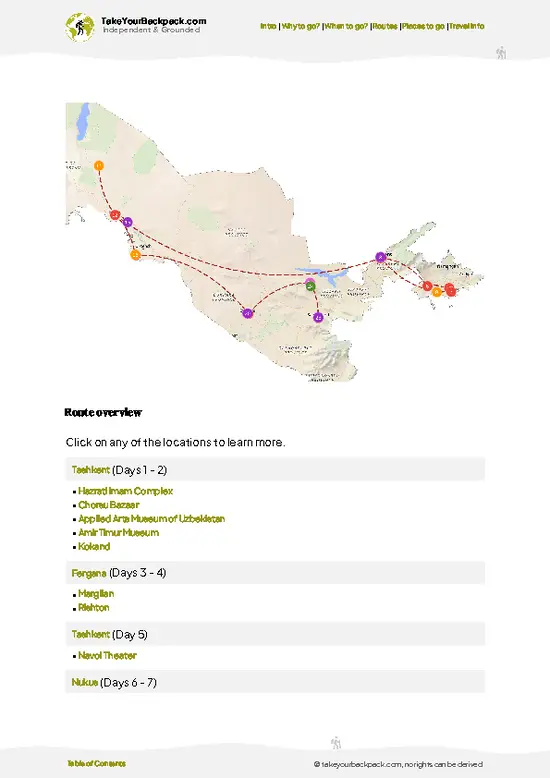
- Kalta Minor Minaret. The stubby, turquoise-glazed tower near the western gate is what most people search for. Muhammad Amin Khan began it in the 1850s meant to rise far higher, and it stopped when he died, leaving a fat, bright stump about 26 m tall. You cannot climb it, and viewing from the square is free. The late-afternoon light makes the tiles glow. Allow 20 to 30 minutes for photos and a look at the glazed patterns up close.
- Islam Khoja Minaret. Built in 1910, this is the tallest minaret in Uzbekistan at about 44 m. The climb up a narrow, dark spiral staircase of roughly 120 steps costs around US$2 to 4 (25,000 to 50,000 soum) and ends in small openings with a view over the flat roofs, domes and the desert edge beyond. Go at opening or near sunset, since the stairwell gets tight when groups
- Kalta Minor Minaret. The stubby, turquoise-glazed tower near the western gate is what most people search for. Muhammad Amin Khan began it in the 1850s meant to rise far higher, and it stopped when he died, leaving a fat, bright stump about 26 m tall. You cannot climb it, and viewing from the square is free. The late-afternoon light makes the tiles glow. Allow 20 to 30 minutes for photos and a look at the glazed patterns up close.
- Islam Khoja Minaret. Built in 1910, this is the tallest minaret in Uzbekistan at about 44 m. The climb up a narrow, dark spiral staircase of roughly 120 steps costs around US$2 to 4 (25,000 to 50,000 soum) and ends in small openings with a view over the flat roofs, domes and the desert edge beyond. Go at opening or near sunset, since the stairwell gets tight when groups arrive. Plan about 30 to 45 minutes including the small museum of applied arts at its base.
- Juma Mosque. Instead of a courtyard, this hall holds a forest of carved wooden columns, 213 by most counts, some dating back centuries and others replaced over time. Light drops in through roof openings, so the interior stays dim and cool in the summer. Entry is roughly US$1.5 to 2.5 (20,000 to 30,000 soum). Midday is a good time to duck in out of the heat. Give it 30 to 45 minutes and look for the oldest, darkest, most worn columns, with their intricate carved bases.
Spotted a mistake or missing something? Contact us.

Guided Tour to Ancient Fortresses and Cotton Fields with a Local

Uzbekistan 6 Days Private Tour Khiva-Bukhara-Samarkand by Train

Daytrip to Ancient Fortresses / Sunset in the Desert Fortress

One night in desert and fortresses

Khiva Private Airport Transfers


 Best Backpacking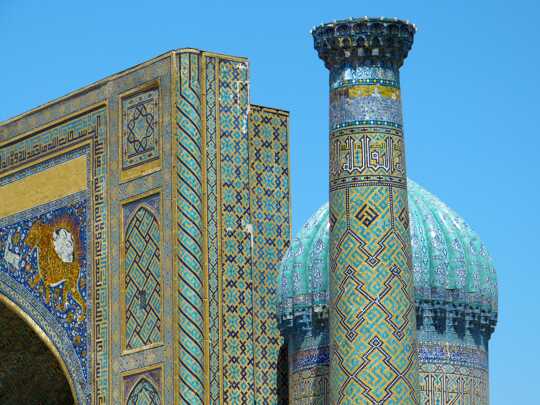
.jpg) Hi, I’m Johan (Netherlands 🇳🇱), the creator of TakeYourBackpack. Over the past 3 decades, I’ve backpacked through 90+ countries across six continents, gaining extensive experience with independent travel, long-term trips, and overland routes.
Hi, I’m Johan (Netherlands 🇳🇱), the creator of TakeYourBackpack. Over the past 3 decades, I’ve backpacked through 90+ countries across six continents, gaining extensive experience with independent travel, long-term trips, and overland routes.