×

Uzbekistan🇺🇿 | national parksKyzylkum Desert National Parksand dunes, saxaul groves, desert reptiles | things to do and best time to go

Explore Chimgan MountainsExplore Nuratau-Kyzylkum Biosphere Reserve

Backpacking in Kyzylkum Desert
By Johan Kruseman 🇳🇱 | Updated October 6, 2026

Most people arrive at Kyzylkum Desert National Park with one question: do you hire a driver for the whole thing, or try to piece it together alone? A driver wins, because the sand tracks are unmarked and public transport stops well short. The park sits in the Navoi and Bukhara regions of western Uzbekistan, with a Nurata-side approach that suits yurt stays. Expect empty dunes, saxaul scrub, and little shade. Unlike the lakeside yurt camps near Aydarkul, this is drier, quieter, and far less staged.

Discover everything you want to know in the 📖 Uzbekistan Travel Guide.


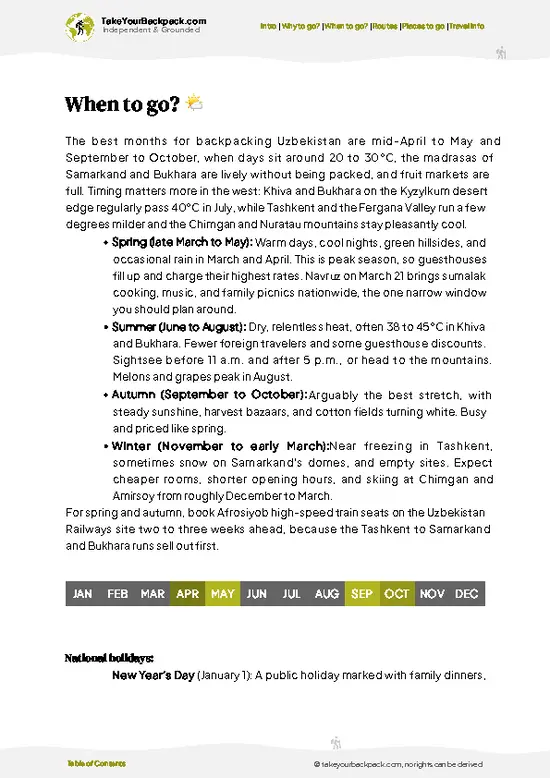
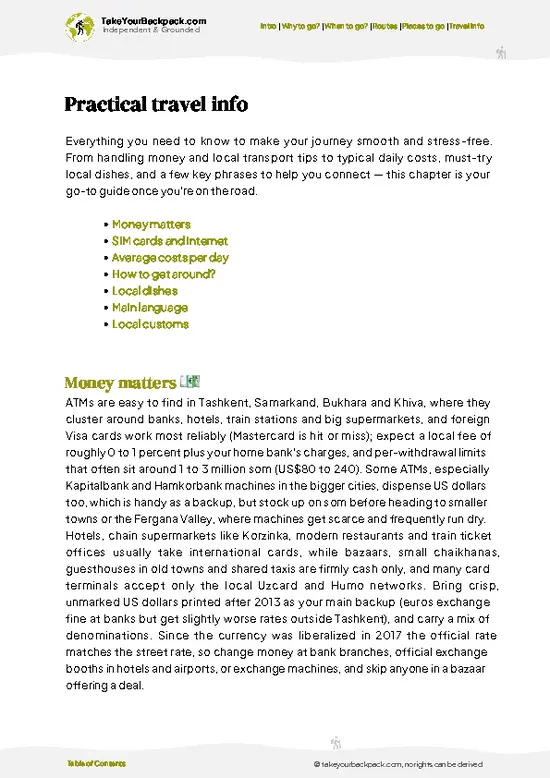
example page 0 from our offline Travel Guide for Uzbekistan
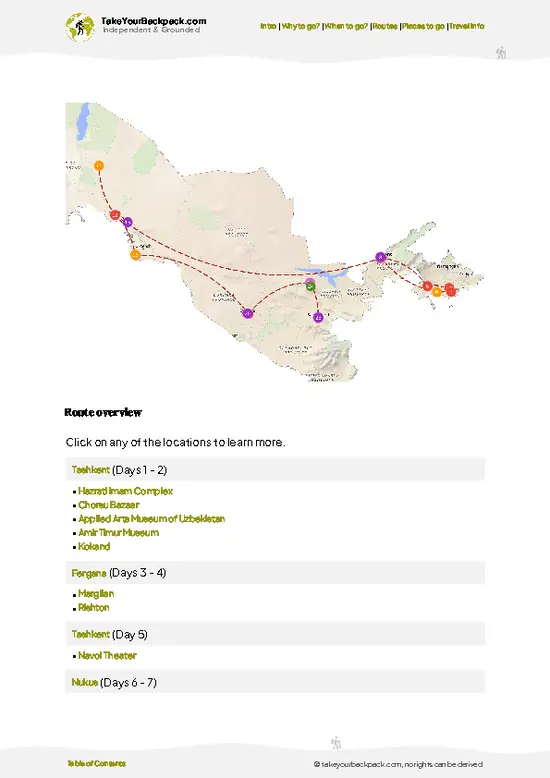
example page 1 from our offline Travel Guide for Uzbekistan
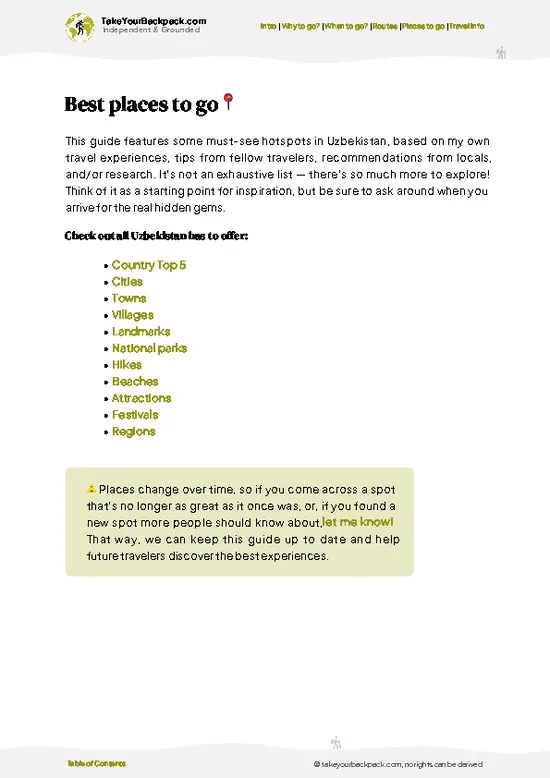
example page 2 from our offline Travel Guide for Uzbekistan
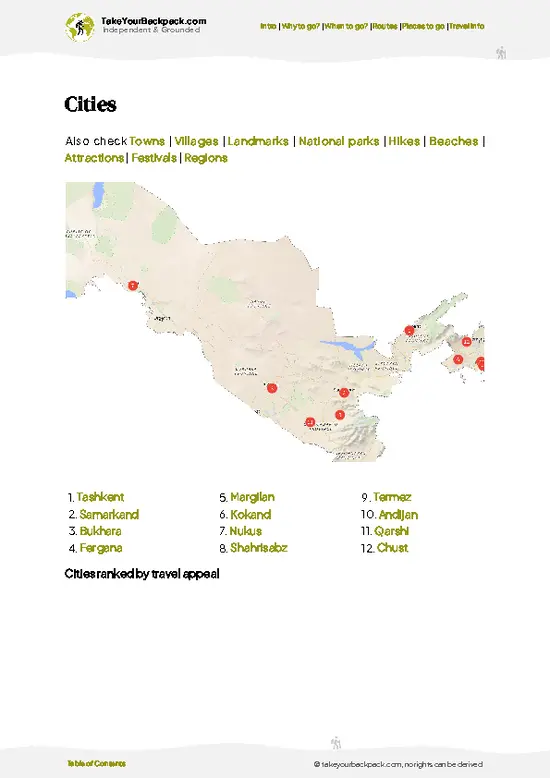
example page 3 from our offline Travel Guide for Uzbekistan
example page 4 from our offline Travel Guide for Uzbekistan
example page 5 from our offline Travel Guide for Uzbekistan
example page 6 from our offline Travel Guide for Uzbekistan
example page 7 from our offline Travel Guide for Uzbekistan
Loading the map 🌍
CLICK TO FILTER
cities
towns
villages
landmarks
national parks
hikes
beaches
attractions
festivals
regions
SHOW COUNTRY’S BESTSHOW ALL

✨ Why go?
Ranked #99 national park in Uzbekistan
What sets this place apart

Backpackers come for the quiet. The desert is huge, with red sand ridges rising above the Kyzylkum plains, and you can walk out from camp at dusk without seeing another group. Independent travelers like that nobody herds you along a fixed path. You can pair it with a village homestay, then watch stars with almost no light pollution from a felt blanket. Camel rides are short and cheap, and if you want to stretch your legs, the saxaul and dune walks need no permit-style planning. Tours exist, but a self-arranged day with a local driver gives you more freedom to stop for desert tortoises and lizard tracks in the sand.

💡 HighlightsThe experiences that define the visit

  1. Red Sand Dunes: The signature view, ridges of rust-colored sand that glow orange at sunset and are best walked barefoot at cooler hours.
  2. Saxaul Woodland: Twisted, leafless shrubs that anchor the sand and shelter foxes, birds, and reptiles. Odd and photogenic.
  3. Camel Caravan Rides: A slow walk over the dunes with a local handler. Short loops suit first-timers, and longer ones reach quieter ground.
  4. Desert Wildlife Spotting: Look for tortoises, monitor lizards, gerbils, and, if you are lucky, goitered gazelles in the open flats.
  5. Night Sky Viewing: With no town lights nearby, the Milky Way is clear on moonless nights. Bring a warm layer, since the sand cools fast.
  6. Yurt Camp Evenings: Felt tents, a fire, tea, and simple local food set the rhythm of an overnight stay.
  7. Dune Sunrise Walk: Ripples and animal
… read more 👉
  1. Red Sand Dunes: The signature view, ridges of rust-colored sand that glow orange at sunset and are best walked barefoot at cooler hours.
  2. Saxaul Woodland: Twisted, leafless shrubs that anchor the sand and shelter foxes, birds, and reptiles. Odd and photogenic.
  3. Camel Caravan Rides: A slow walk over the dunes with a local handler. Short loops suit first-timers, and longer ones reach quieter ground.
  4. Desert Wildlife Spotting: Look for tortoises, monitor lizards, gerbils, and, if you are lucky, goitered gazelles in the open flats.
  5. Night Sky Viewing: With no town lights nearby, the Milky Way is clear on moonless nights. Bring a warm layer, since the sand cools fast.
  6. Yurt Camp Evenings: Felt tents, a fire, tea, and simple local food set the rhythm of an overnight stay.
  7. Dune Sunrise Walk: Ripples and animal tracks show up sharply in low light before the sand heats up.
Start with the sunset on the Red Sand Dunes, because the light fades quickly and you will want the rest of the evening for the camp and the stars.
Spotted a mistake or missing something? Contact us.

🌤️ When to go?Best time to explore Kyzylkum Desert

Late March to May and late September to October are the windows when walking and camel trekking in the Kyzylkum are comfortable.
  • Spring (March to May): Days run 15 to 28°C (59 to 82°F), steppe flowers appear in April, and daylight stretches to about 13 hours. Sandstorms are possible.
  • Summer (June to August): Highs of 38 to 45°C (100 to 113°F) and little shade. Skip trekking.
  • Autumn (September to November): Warm days of 18 to 30°C (64 to 86°F), clear skies, and the busiest yurt-camp bookings.
  • Winter (December to February): Daytime sits near 0 to 8°C (32 to 46°F), nights fall below freezing, and daylight shrinks to roughly 9.5 hours. Camps mostly close and prices drop.
Book yurt camps a few weeks ahead for April and October.

source: climatestotravel.comJANJanuary: fair for travelingFEBFebruary: fair for travelingMARMarch: good for travelingAPRApril: excellent for travelingMAYMay: excellent for travelingJUNJune: highly recommended for travelingJULJuly: below average for travelingAUGAugust: below average for travelingSEPSeptember: excellent for travelingOCTOctober: excellent for travelingNOVNovember: good for travelingDECDecember: fair for traveling
when-to-go

✈️ The backpacker research shortcutUzbekistan Travel Guide

An offline-friendly backpacking guide with optimized travel routes, ranked highlights, transport advice, and the best areas to stay.
example page 0 from our offline Travel Guide for Uzbekistan
example page 1 from our offline Travel Guide for Uzbekistan
example page 2 from our offline Travel Guide for Uzbekistan
example page 3 from our offline Travel Guide for Uzbekistan
example page 4 from our offline Travel Guide for Uzbekistan
example page 5 from our offline Travel Guide for Uzbekistan
example page 6 from our offline Travel Guide for Uzbekistan
example page 7 from our offline Travel Guide for Uzbekistan
The digital guide (246 pages) contains:
✅ 74 highlights, ranked by travel appeal
✅ Optimized 5, 10 & 15-day travel routes
✅ Cities, national parks, landmarks, beaches
✅ How to get around
✅ Offline-friendly for travel without Wi-Fi
👉 Click to see all 30+ guide features

📅 Plan smarter in minutes, not weeks
✅ Month by month travel advice
✅ Festivals & national holidays
✅ Budget expectations

🗺️ Go to the right places, skip the overrated ones
✅ Honest pros & cons of destinations
✅ Top hikes, parks & viewpoints
✅ Lesser-known places most travelers miss
✅ Clear “worth it vs skip it” guidance

🛏️ Travel smoothly without rookie mistakes
✅ Best areas to stay
✅ Transport systems explained simply
✅ Common scams & safety advice
✅ SIM cards, money & practical tips

🌍 Understand the country, not just visit it
✅ Culture & traditions
✅ 52 Essential phrases & customs
✅ Festivals worth planning around
✅ Traveler-friendly historical context
✅ Insights that make places more meaningful

📱 Built for real travel conditions
✅ Fully downloadable PDF
✅ Works completely offline
✅ Optimized for phone use
✅ Useful in remote areas & buses
✅ Everything in one place
Stop searching, start planning
Get instant access to your full guide. 30‑day money-back guarantee.
+ Add another guide for just

By proceeding you agree to our terms.
Sent to your inbox immediately after payment • 100% Secure Checkout
Best Backpacking Travel Advisor 2025 tourism awardBest Backpacking
Travel Advisor
2025
What others say about Take Your Backpack Guides:
⭐⭐⭐⭐⭐
Fantastic, amazing amount of information!
⭐⭐⭐⭐⭐
My goodness this is amazing, it's what I've been looking for hats off too you!
⭐⭐⭐⭐⭐
I think this is absolutely BRILLIANT
⭐⭐⭐⭐
Very complete and informative. It's still missing places, but I gotta to commend you
⭐⭐⭐⭐⭐
This is truly amazing, thank you, can't wait to explore it with my kids!
⭐⭐⭐⭐⭐
Awesome resource, thank you!
⭐⭐⭐⭐⭐
This is amazing! Can't wait to explore the ones I haven't seen
⭐⭐⭐⭐
I love this! Well done, great idea.
⭐⭐⭐⭐⭐
Thanks for taking the time to make this gem!
⭐⭐⭐⭐⭐
This might be the best website I've ever seen.
⭐⭐⭐⭐⭐
Congratulations, and thank you so much for your work; it's incredibly valuable.
⭐⭐⭐⭐
In all seriousness I think you did a great job pointing out the important spots
⭐⭐⭐⭐⭐
10/10 very good
⭐⭐⭐⭐⭐
As someone who's only just starting to visit regularly this is awesome, thank you.
⭐⭐⭐⭐
Thank you very much! I'm going to visit my dad, it's going to be very useful!
⭐⭐⭐⭐⭐
This is really cool! We'll be travelling for the first time and this definitely come in handy.
⭐⭐⭐⭐⭐
You are now our minister of culture, congratulations 👨‍💼
⭐⭐⭐⭐⭐
Just wanted to tell you that this is a pearl! Going to follow your recommendations.
⭐⭐⭐⭐⭐
This is so cool. I'll definitely be using the resource for my travels soon.
⭐⭐⭐⭐⭐
This is very impressive! Good work.
⭐⭐⭐⭐⭐
This is an amazing and informative site. Very well done!

🛏️ Where to stay?Best areas to stay in Uzbekistan

Most backpackers sleep in yurt camps on the edge of the Kyzylkum rather than inside the protected zone, and the nearest base towns are Nukus, Bukhara, and Khiva. The yurt camps around Aydarkul Lake and near Nurata offer shared yurts with mattresses, dinner, and breakfast, usually US$20 to 35 per person, and many include a camel ride and a campfire under a very dark sky. Nurata town has simple guesthouses for US$15 to 25 and makes a practical stop for the Nurata mountains and its spring. Bukhara has the widest range of hostels (dorm beds US$8 to 15). Khiva suits trips heading toward the Ellikkala … read more 👉
Most backpackers sleep in yurt camps on the edge of the Kyzylkum rather than inside the protected zone, and the nearest base towns are Nukus, Bukhara, and Khiva. The yurt camps around Aydarkul Lake and near Nurata offer shared yurts with mattresses, dinner, and breakfast, usually US$20 to 35 per person, and many include a camel ride and a campfire under a very dark sky. Nurata town has simple guesthouses for US$15 to 25 and makes a practical stop for the Nurata mountains and its spring. Bukhara has the widest range of hostels (dorm beds US$8 to 15). Khiva suits trips heading toward the Ellikkala fortresses to the northwest. Expect basic pit toilets and limited showers at camps. Arrange transport through your guesthouse.

👛 Costs (as of 6 October 2026)Typical daily expenses

A realistic budget for the Kyzylkum is US$40 to 75 per day, mostly for the yurt camp and transport.
CategoryBudget RangeLocal Reality
Entrance and permitsUS$0 to 5Most areas are open desert with no ticket; some reserve zones charge small fees.
Accommodation (high season)US$20 to 35Shared yurt with dinner and breakfast included.
Local transportUS$10 to 20Shared taxi to Nurata or the camps; private driver costs more per person if split.
Food and suppliesUS$5 to 10Lunch, snacks, and bottled water from towns; camp meals are covered.
ActivitiesUS$5Camel ride or fire evening at camps is often a small add-on.
Total Daily BudgetUS$40 to 75Per person, per day, in high season.
⚠️ Prices can change and everyone travels differently, so take this as a rough guide. Hope it helps you plan your adventure!

🥾 TrailsScenic routes and wildlife spotting in Kyzylkum Desert

Hiking here means open desert walking rather than marked routes. There are no named, signposted trails, so most people follow ridgelines out from camp and loop back by their own footprints, or let a guide set the line. The terrain is soft sand, firm clay flats, and patches of saxaul scrub. Walking uphill in loose sand is tiring, so expect a 2 to 4 hour outing to feel harder than the distance suggests. Difficulty is easy to moderate, with heat and navigation as the real challenges. Carry more water than seems sensible, a hat, and a charged phone with an offline map.

Wildlife is small and shy. … read more 👉
Hiking here means open desert walking rather than marked routes. There are no named, signposted trails, so most people follow ridgelines out from camp and loop back by their own footprints, or let a guide set the line. The terrain is soft sand, firm clay flats, and patches of saxaul scrub. Walking uphill in loose sand is tiring, so expect a 2 to 4 hour outing to feel harder than the distance suggests. Difficulty is easy to moderate, with heat and navigation as the real challenges. Carry more water than seems sensible, a hat, and a charged phone with an offline map.

Wildlife is small and shy. Tortoises, lizards, snakes, and desert rodents leave tracks you can read at dawn, and birds gather near the scrub. Gazelles are rarer and keep their distance.

Getting there without your own vehicle is awkward. Trains and shared taxis reach towns on the edge of the desert, but the last stretch usually needs a pre-arranged driver or a camp transfer, and tracks can be rough. Crowds are minimal, with most visitors arriving on overnight stays from nearby cities. Camps charge for activities and meals rather than a single gate ticket, so settle on what is included before you go.
⚠️ Hiking info can sometimes be outdated or inaccurate. Before you hit the trail, check the latest conditions with locals. If you do spot anything that's off, I'd love to hear from you, so I can update it for fellow travelers.

🛡️ SafetyScams, Hazards, and Annoyances

The Kyzylkum is a low-risk place for hikers, and heat and water are the real concerns. Summer temperatures can exceed 40°C (104°F), so walk only at dawn, carry at least 4 liters of water per person per day, and wear a hat and long, light sleeves. Sand tracks are faint and mobile signal fades, so hire a local driver or guide rather than navigating alone. Nights drop sharply even in spring, so bring a warm layer. Snakes, scorpions, and spiders are present, so shake out shoes in the morning. Camels are placid, but approach them calmly from the side.

FAQTraveler FAQ

Two days and one night are enough for most backpackers. That allows a yurt camp stay near Aydarkul Lake or Nurata, a camel ride, and a sunset and sunrise on the dunes. Adding a third day lets you visit the Nurata fortress and spring or the Ellikkala sites.
Reaching the desert without a car is possible but slow. Shared taxis run from Bukhara or Samarkand to Nurata (about 3 to 4 hours), and from there camps usually arrange transfers for US$10 to 25. Independent walking in the sand is not practical, so most visitors book a driver through a guesthouse or camp.
There is generally no formal ticket for the open desert, though some protected areas and sites such as the Nurata reserve charge small fees of about US$1 to 5. Foreigners do not need a separate permit for typical yurt-camp visits. Border-zone areas and strict reserve zones can require permission, which camps and drivers arrange in advance.
⚠️ Things can change over time, so always validate details locally before you go.

Other Uzbek national parks near Kyzylkum Desert

Explore more nearby:


💡 Not sure where to go next?
Create a personalized itinerary for Uzbekistan including Kyzylkum Desert and the places that fit your trip.

Generate my itinerary

👉 Discover all national parks

Or checkout all Uzbekistan has to offer (think cities, towns, villages, national parks, hikes, beaches, festivals)
Country photo of Uzbekistan

We 💚 feedbackFinal thoughts on exploring Kyzylkum Desert

Slot the desert between Bukhara and Khiva, or add it before Samarkand if you are heading east, for a night of silence between two big city stops. Go for sunset, stay through dawn, and keep a scarf handy. The wind picks up sharply, and sand finds everything.

✍️ Help improve this page!
The information on this page is based on in-depth research, insights shared by experienced travelers, and feedback from the local travel community in Uzbekistan. While every effort is made to keep the information accurate and current, conditions can change — so if you spot anything incorrect or outdated, please get in touch.


🙋‍♂️ Give feedback

👋 Meet the founderWho’s Behind Take Your Backpack?

Johan, backpacker and founder of TakeYourBackpackHi, I’m Johan (Netherlands 🇳🇱), the creator of TakeYourBackpack. Over the past 3 decades, I’ve backpacked through 90+ countries across six continents, gaining extensive experience with independent travel, long-term trips, and overland routes.

This site is built on a combination of firsthand travel experience and carefully curated insights from other backpackers. Many guides are based on places I’ve personally visited, while others bring together tips, observations, and practical advice shared by trusted travelers I’ve met along the way.

The goal is to provide realistic, experience-driven guidance — not generic itineraries — so you can explore destinations with better context, clearer expectations, and more confidence.