v2.webp)
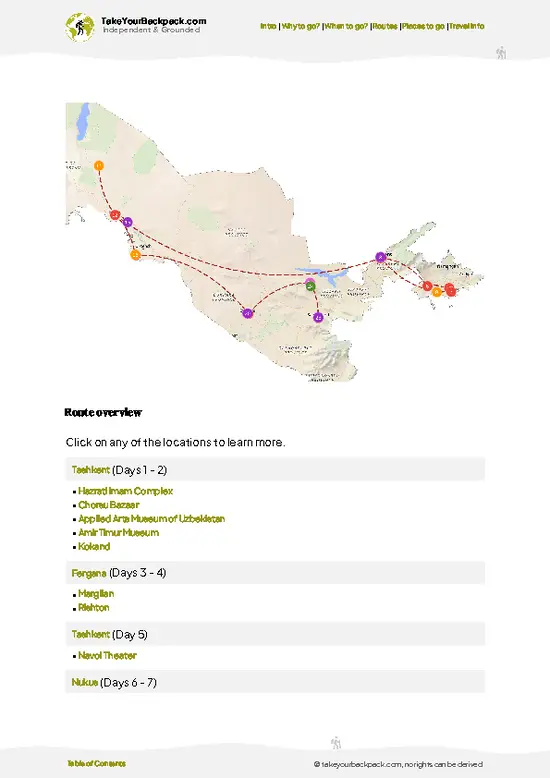
- Nurata Fortress (Alexander the Great ruins): The mud-brick remains on the hill above town are traditionally linked to Alexander the Great. Climb the slope for a wide view over the town, orchards and the desert beyond. Go in the morning or near sunset for softer light. Entry is usually free or only a small fee, and 45 minutes is enough.
- Chashma Sacred Spring: Clear spring water feeds a pool where large carp swim among visitors, and locals treat the place as holy. The shaded complex is a cool spot to sit at midday. Count on 1 hour and a small entrance fee, roughly US$1 to 2. Dress modestly.
- Juma (Friday) Mosque of Chashma: Beside the spring stands a mosque with carved wooden columns, one of the older religious buildings in the area. It is quiet outside prayer times. Allow 20 to 30 minutes, usually
- Nurata Fortress (Alexander the Great ruins): The mud-brick remains on the hill above town are traditionally linked to Alexander the Great. Climb the slope for a wide view over the town, orchards and the desert beyond. Go in the morning or near sunset for softer light. Entry is usually free or only a small fee, and 45 minutes is enough.
- Chashma Sacred Spring: Clear spring water feeds a pool where large carp swim among visitors, and locals treat the place as holy. The shaded complex is a cool spot to sit at midday. Count on 1 hour and a small entrance fee, roughly US$1 to 2. Dress modestly.
- Juma (Friday) Mosque of Chashma: Beside the spring stands a mosque with carved wooden columns, one of the older religious buildings in the area. It is quiet outside prayer times. Allow 20 to 30 minutes, usually included with the spring visit.
- Bazaar of Nurata: A modest local market where you can buy fresh bread, dried fruit, nuts and the suzani textiles the area is known for. Mornings are liveliest. Plan 30 to 60 minutes and bring small bills.
- Nurata Suzani and Craft Workshops: Local women embroider silk and cotton wall hangings here, and some will show you their stitching in a home or small workshop. Visiting is free, but expect to be offered purchases, with small pieces from around US$10 to 30. Plan 45 minutes.
Spotted a mistake or missing something? Contact us.


 Best Backpacking
.jpg) Hi, I’m Johan (Netherlands 🇳🇱), the creator of TakeYourBackpack. Over the past 3 decades, I’ve backpacked through 90+ countries across six continents, gaining extensive experience with independent travel, long-term trips, and overland routes.
Hi, I’m Johan (Netherlands 🇳🇱), the creator of TakeYourBackpack. Over the past 3 decades, I’ve backpacked through 90+ countries across six continents, gaining extensive experience with independent travel, long-term trips, and overland routes.